Content Modelling for VIEW
 Datasets Using Archetypes

            Koray Atalag1, Jim Warren1,2, Rod Jackson2
1.NIHI – University of Auckland
2.Department of Computer Science – University of Auckland
3.School of Population Health – University of Auckland
What’s VIEW
• Smart (!) name  Vascular Informatics using Epidemiology &
  the Web (VIEW)
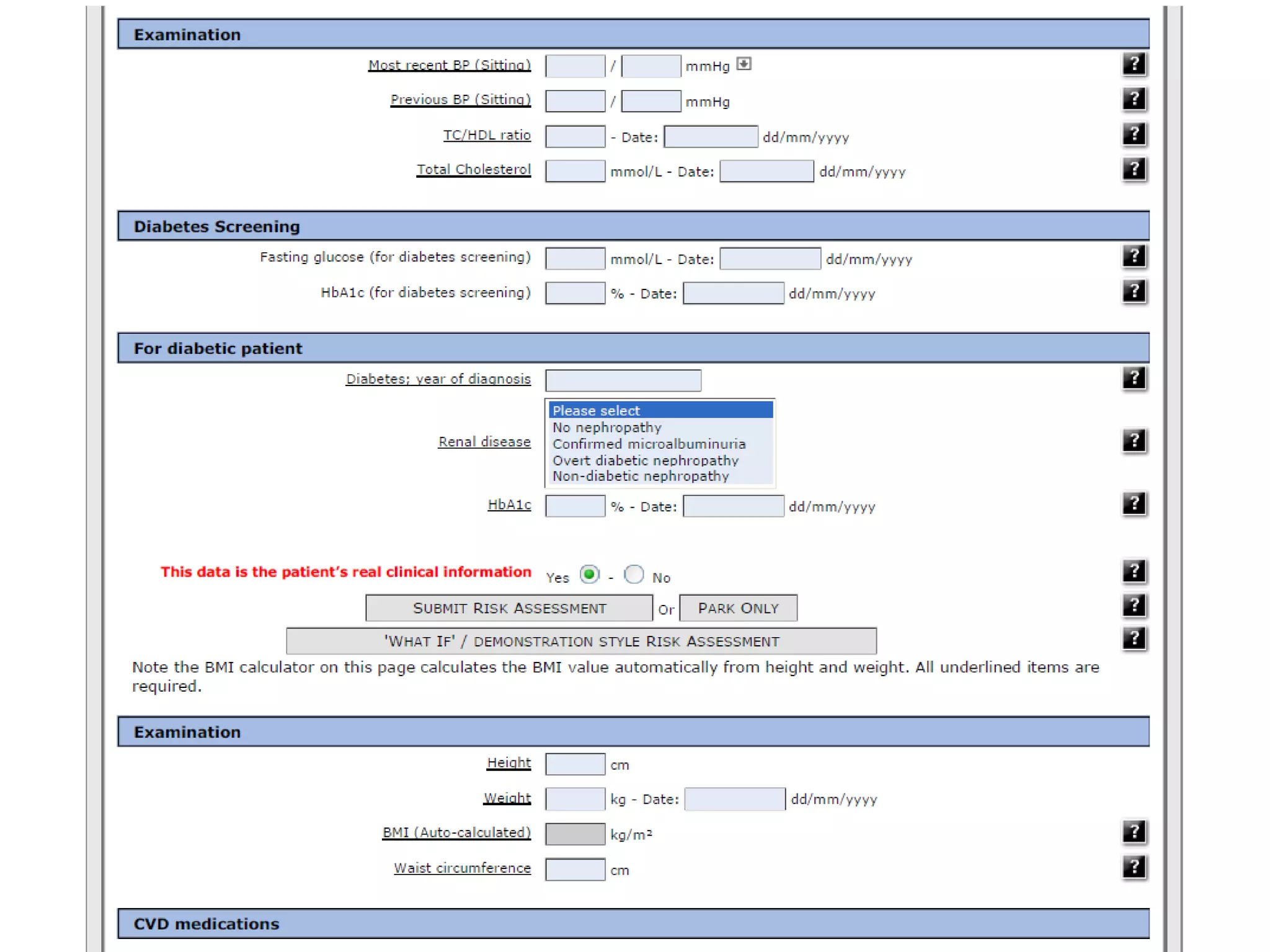
• Building on PREDICT CVD-DM (primary care)
   – Extending to secondary (acute Predict)
   – Improving risk prediction models
   – Creating a variation map/atlas of NZ
• Data linkages to:
   – National Mortality Register,
   – National Minimum Dataset (public and private hospital discharges)
   – National Pharmaceutical Collection (drugs dispensed from community
     pharmacies with government subsidy)
   – National PHO Enrolment Collection
   – Auckland regional CVD-relevant laboratory data from DML
   – TestSafe (in progress)
Objectives of this study
• Extend existing data management capabilities;
  – Define a canonical information model (openEHR)
  – Normalise and link external datasets
  – Ability to extend without compromising backward
    data compatibility – future-proofing
• Create a state-of-the-art research data
  repository
  – Transform existing datasets into full-EHR records
  – Data integration using model as map
  – Powerful semantic querying & stata on the fly
Archetypes
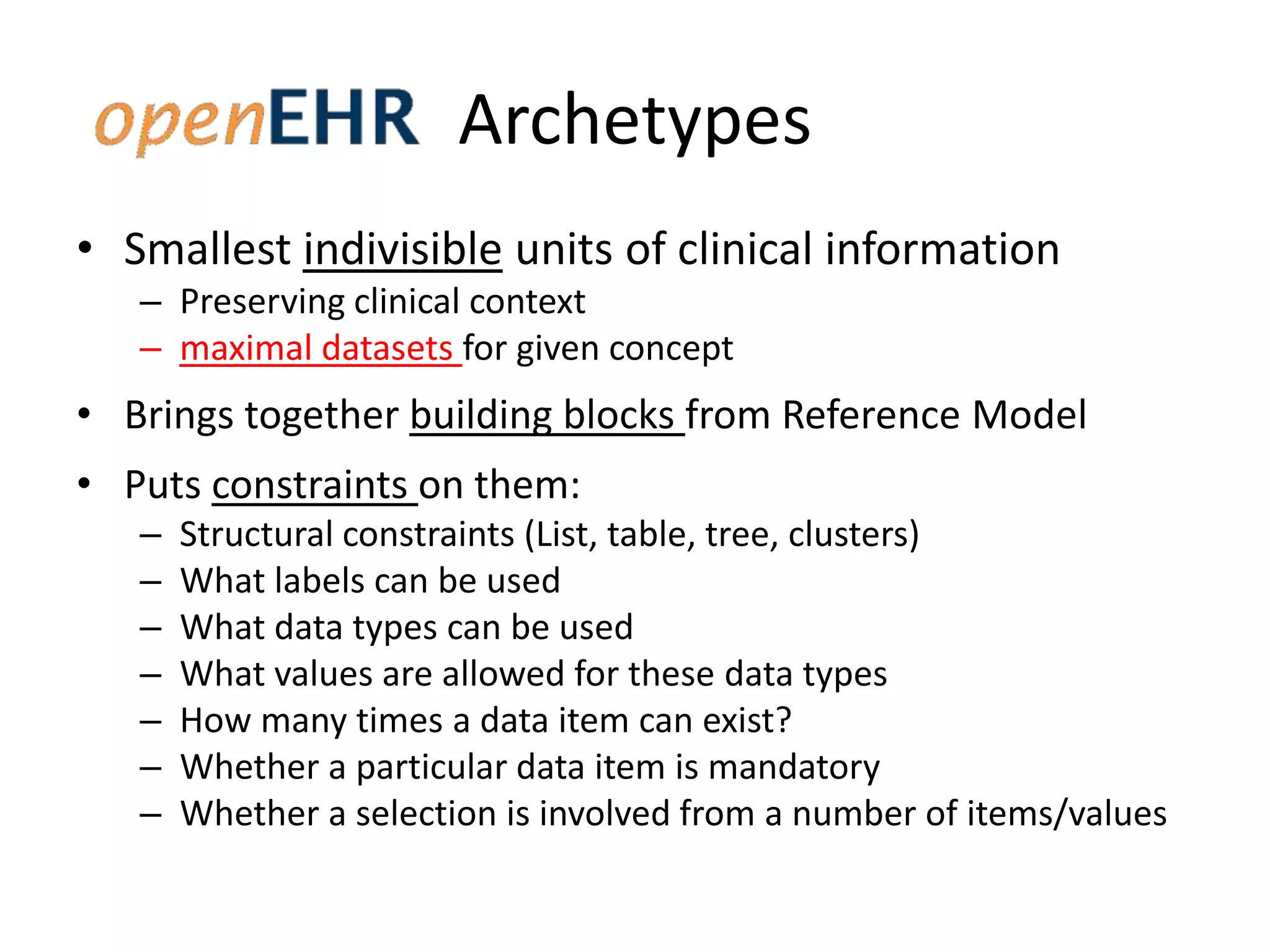
• Smallest indivisible units of clinical information
   – Preserving clinical context
   – maximal datasets for given concept
• Brings together building blocks from Reference Model
• Puts constraints on them:
   –   Structural constraints (List, table, tree, clusters)
   –   What labels can be used
   –   What data types can be used
   –   What values are allowed for these data types
   –   How many times a data item can exist?
   –   Whether a particular data item is mandatory
   –   Whether a selection is involved from a number of items/values
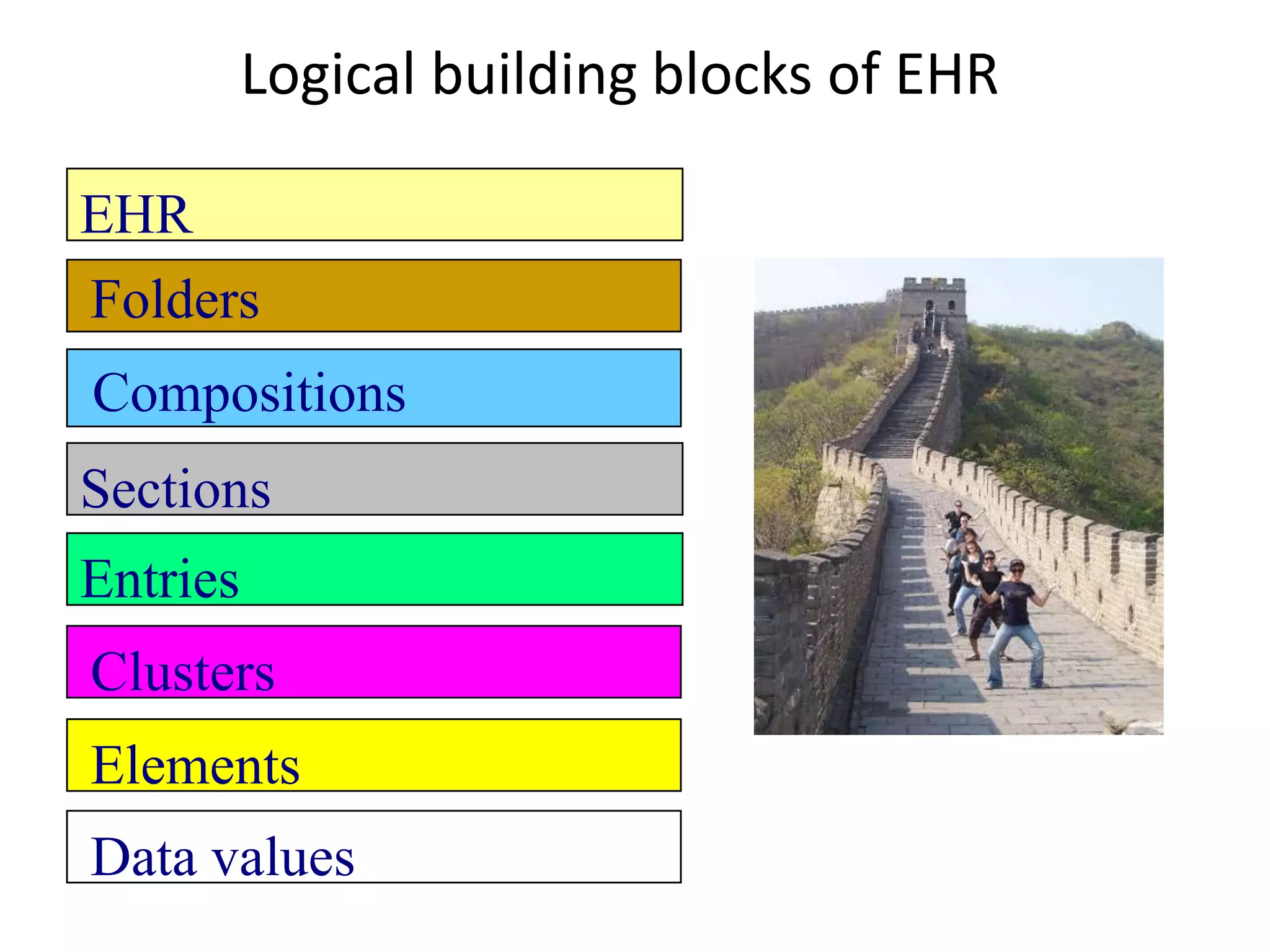
Logical building blocks of EHR

EHR
Folders
Compositions
Sections
Entries
Clusters
Elements
Data values
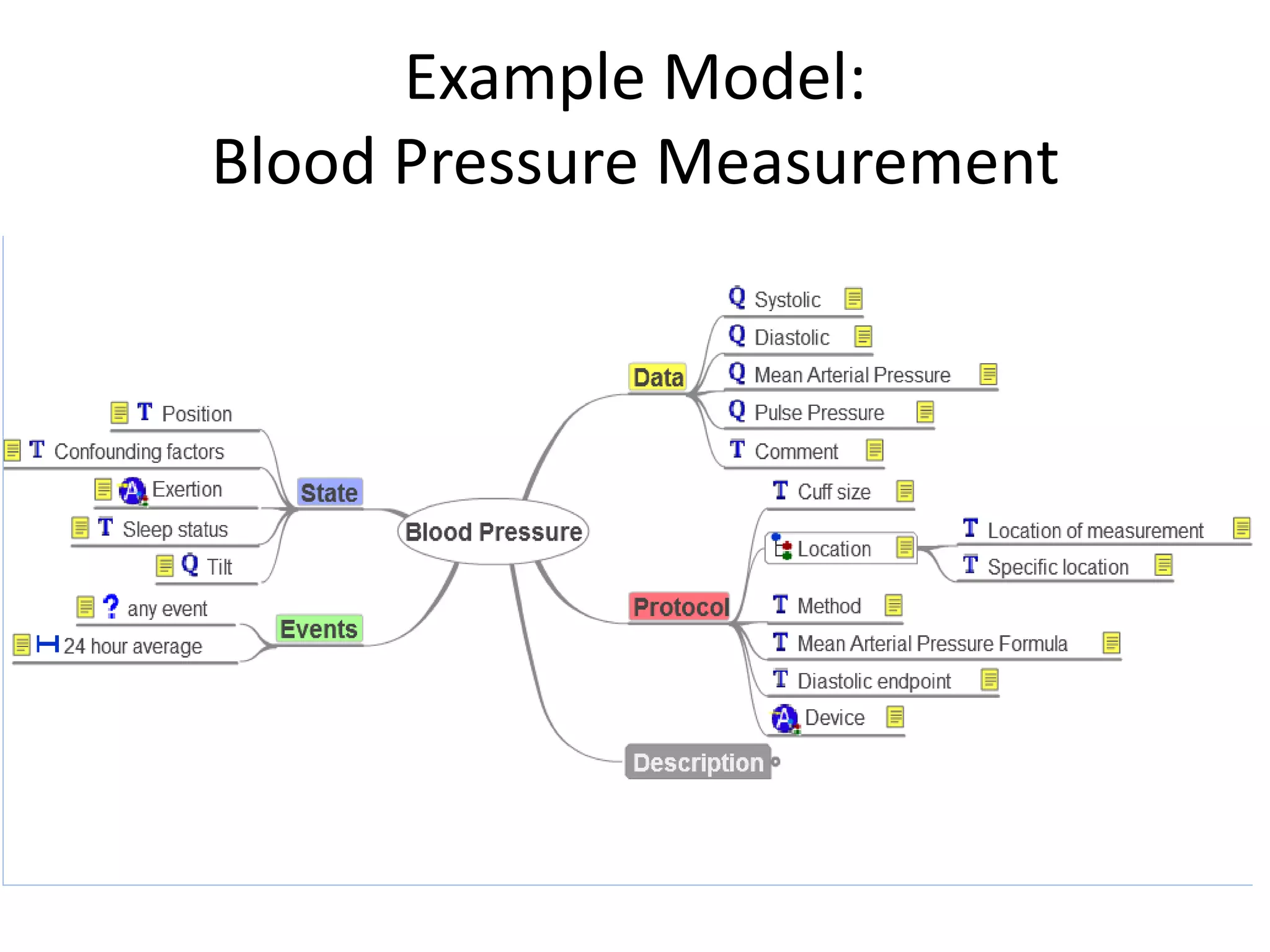
Example Model:
Blood Pressure Measurement
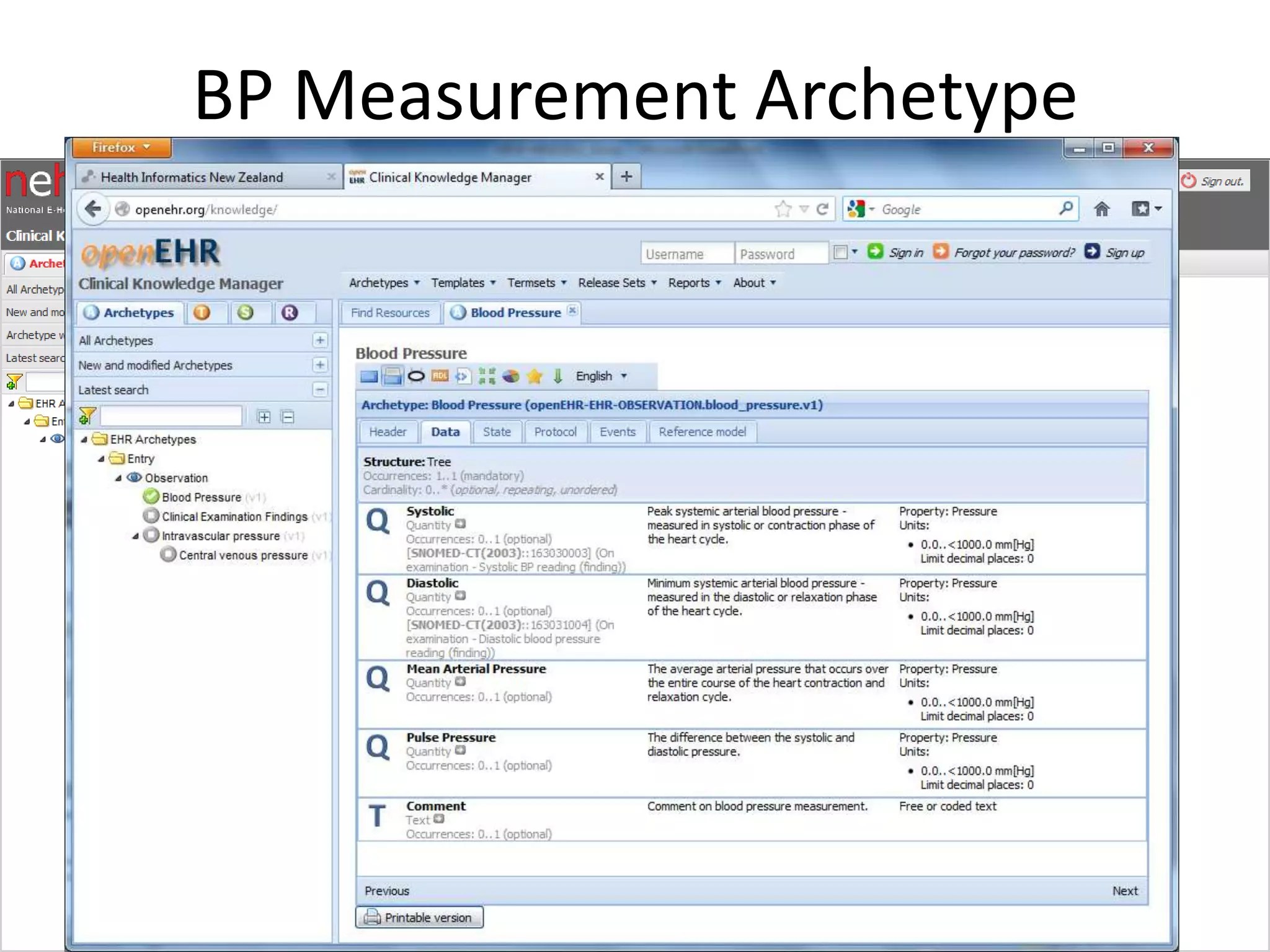
BP Measurement Archetype
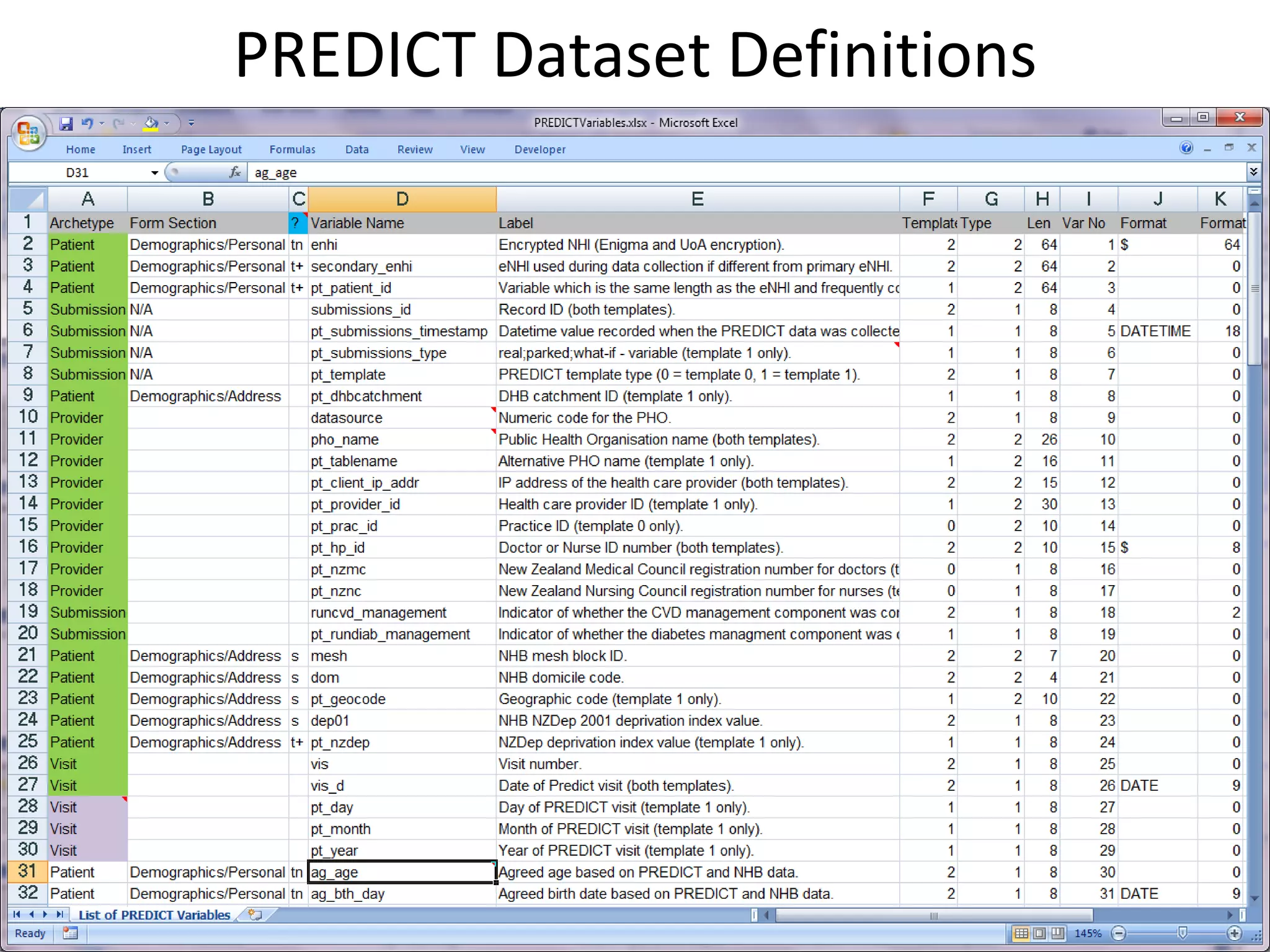
PREDICT Dataset Definitions
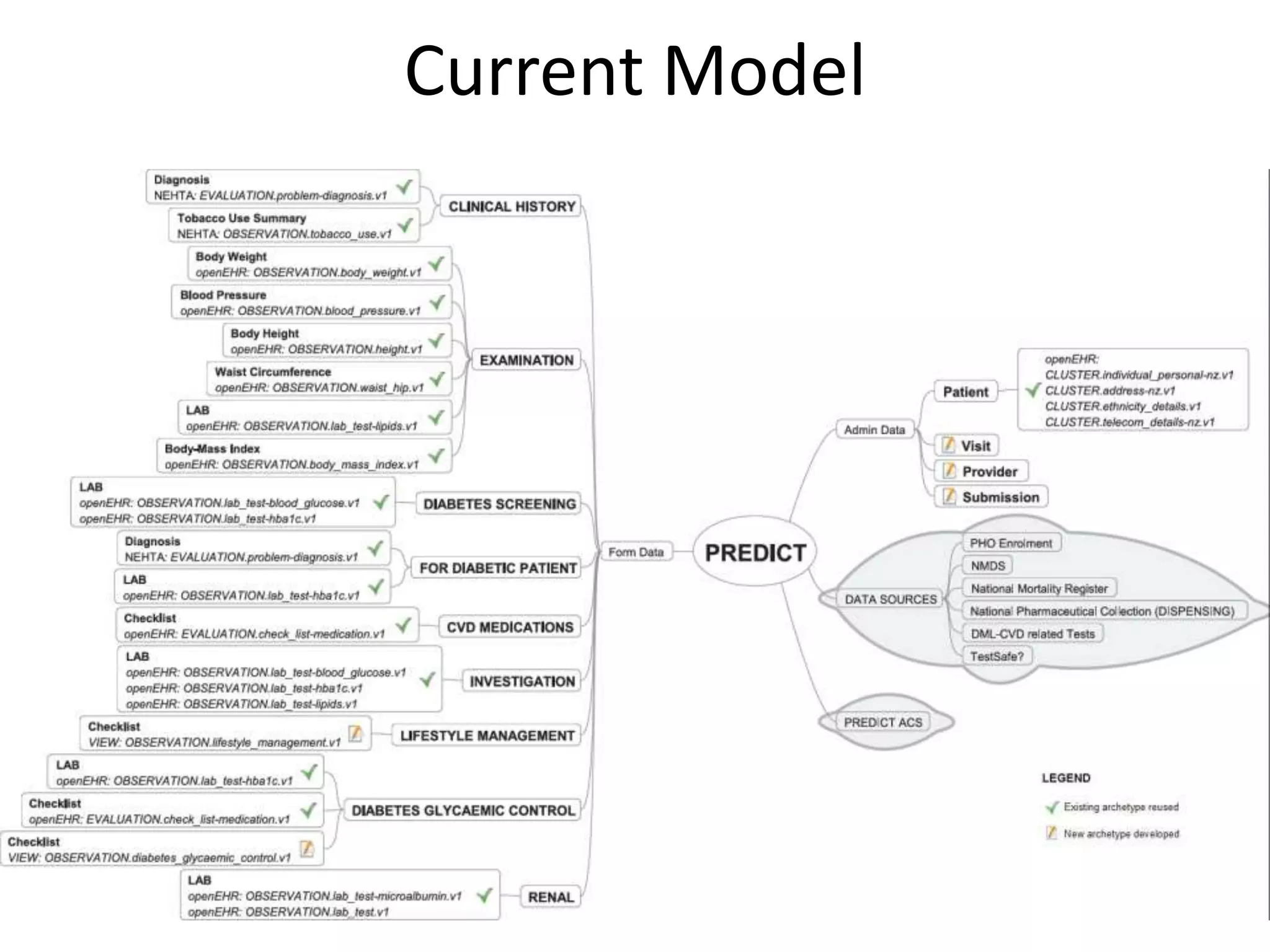
Current Model
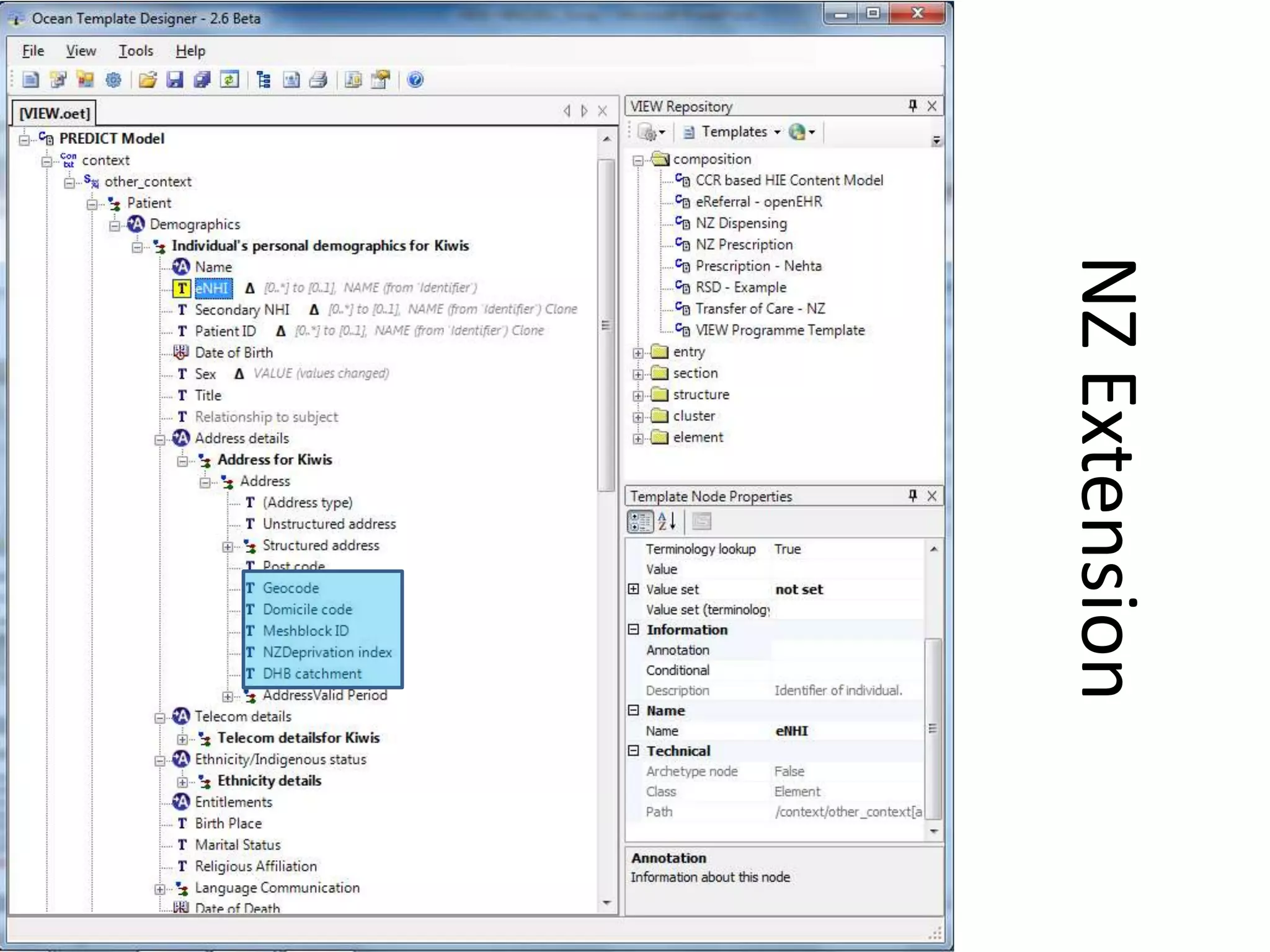
NZ Extension
Results
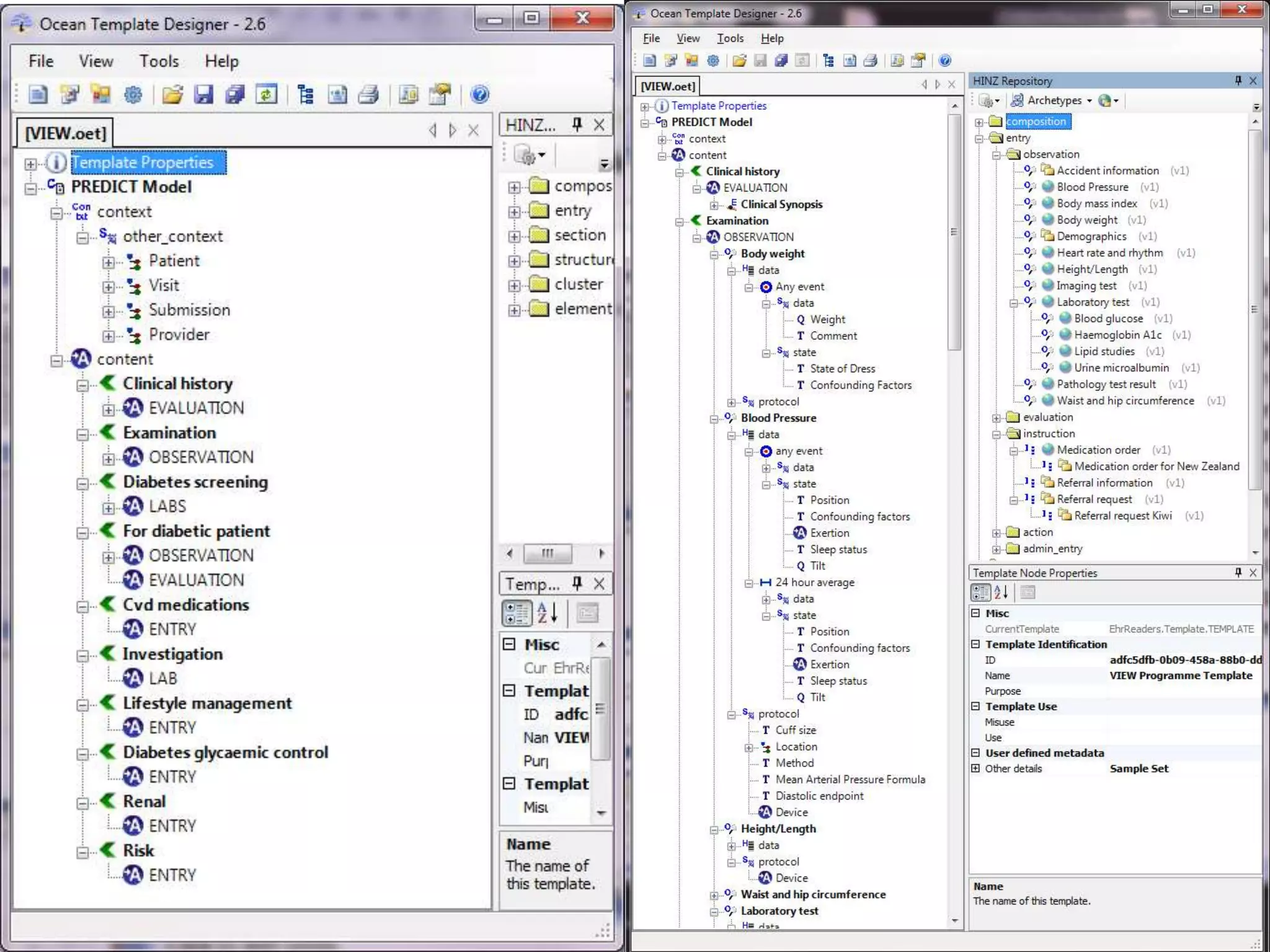
• Archetype based content model can faithfully
  represent PREDICT dataset
• Modelling:
   – two new archetypes‘Lifestyle Management’ and
     ‘Diabetic Glycaemic Control’ checklists
   – NZ extensions for demographics (DHB catchment,
     meshblock/domicile, geocode NZDep)
• Difficulty: overlap between openEHR and NEHTA
  repositories – different archetypes for tobacco use,
  laboratory results and diagnosis which we reused
   – Considering both repositories are evolving separately it is
     challenging to make definitive modelling decisions.
Potential Benefits
• High level of interoperability and increased
  data linkage ability
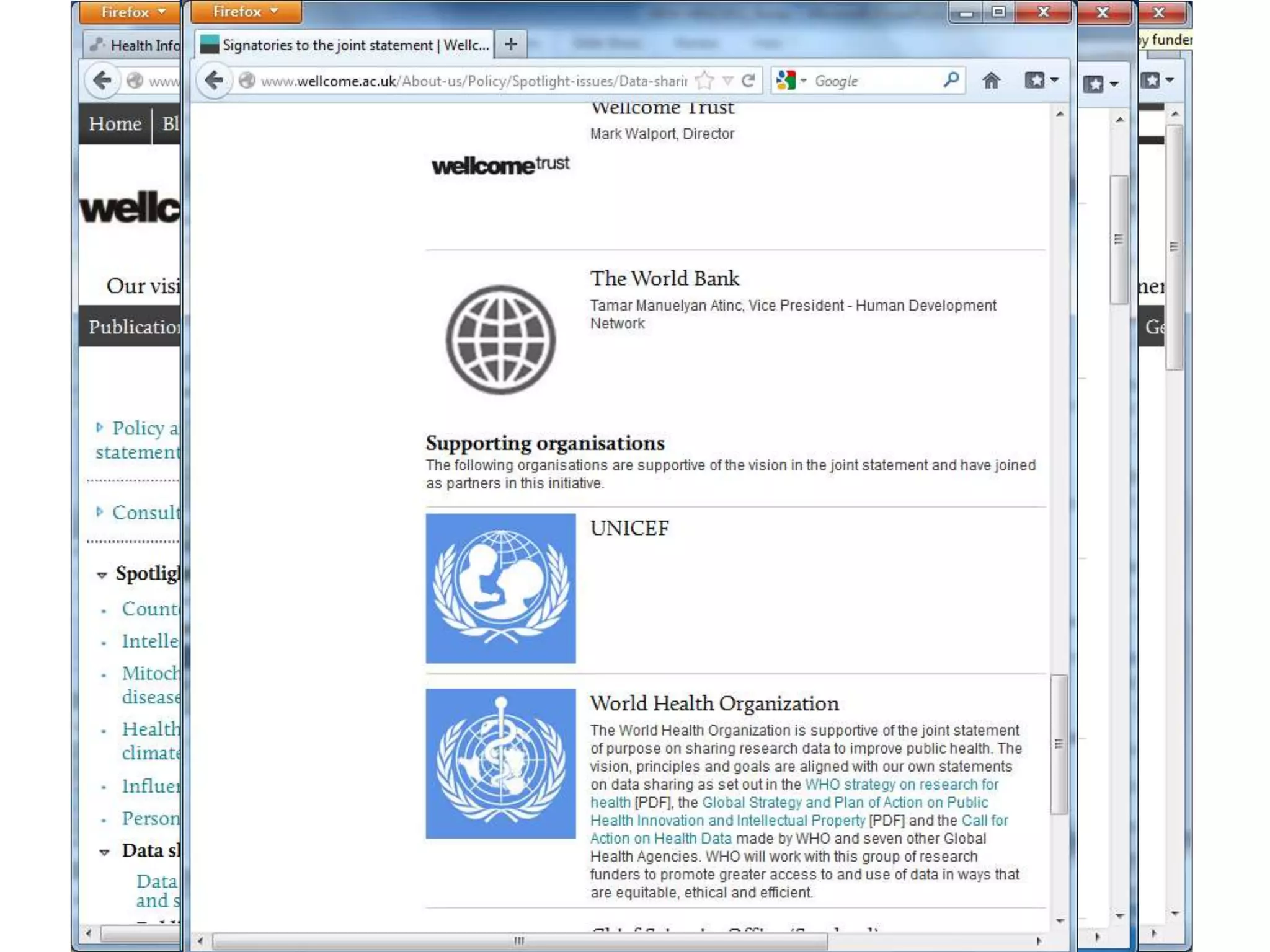
• Important for research data sharing
• Can sync more frequently (even real-time!)
• Can leverage biomedical ontologies (through
  Archetype terminology bindings and service)
• Can perform complex and fast queries on
  clinical data (real-time decision support)
Bigger Picture
• Interoperability for clinical information
  systems – great
  – But what about population health & research?
• Research data also sits in silos – mostly C
  Drives or even worse in memory sticks!
• Difficult to reuse beyond specific research
  purpose – clinical context usually lost
• No rigour in handling and sharing of data
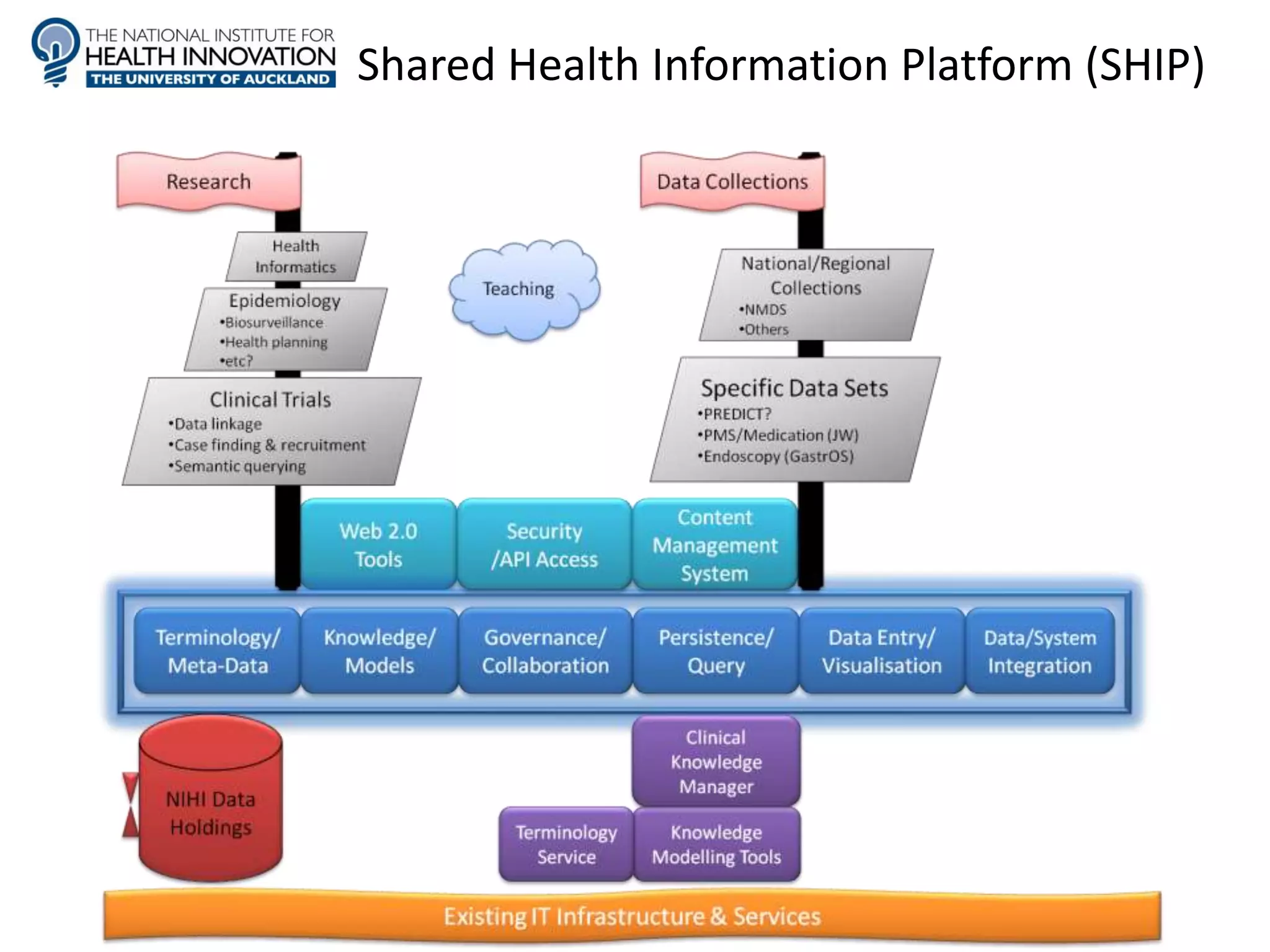
Shared Health Information Platform (SHIP)
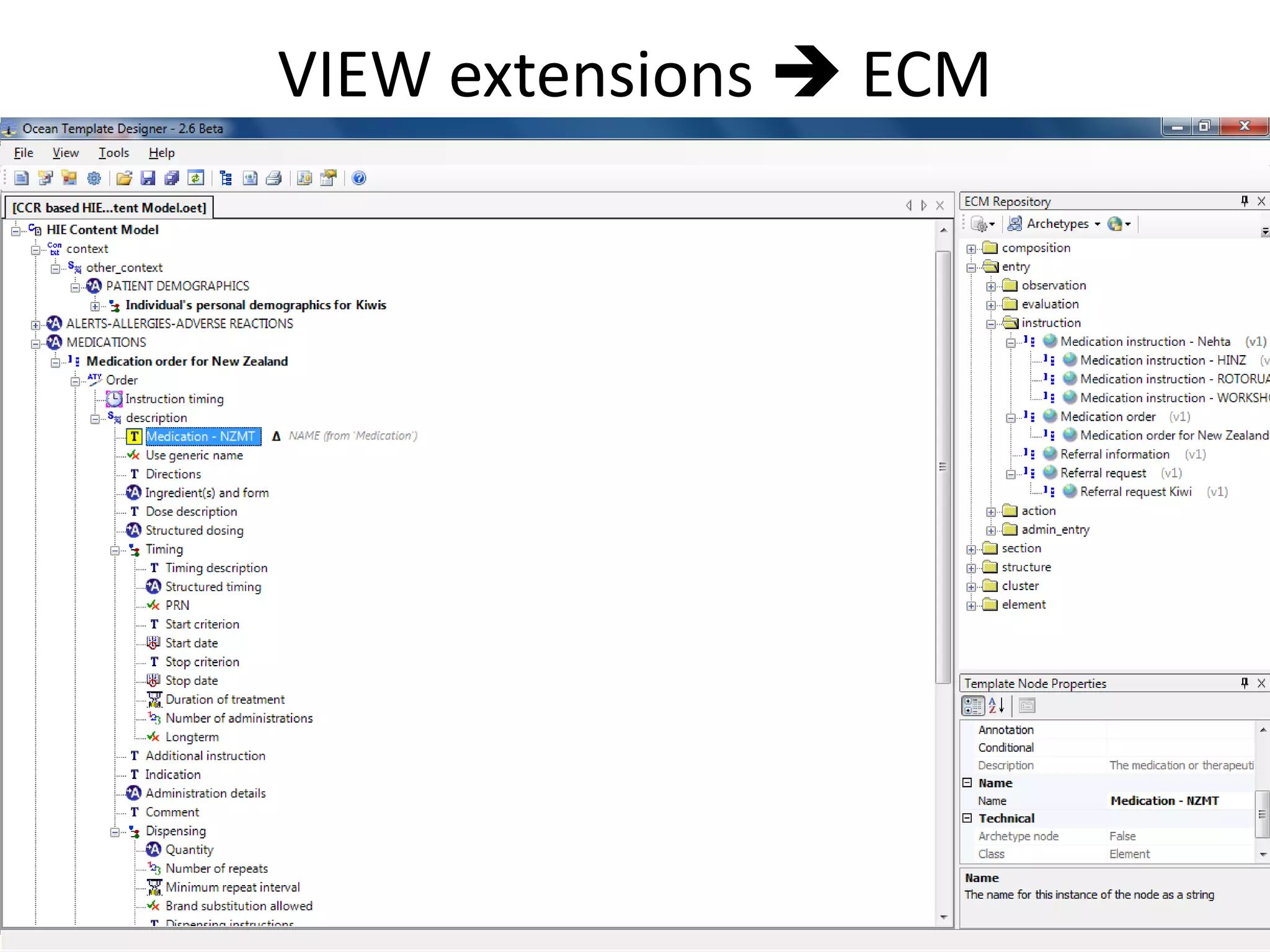
VIEW extensions  ECM
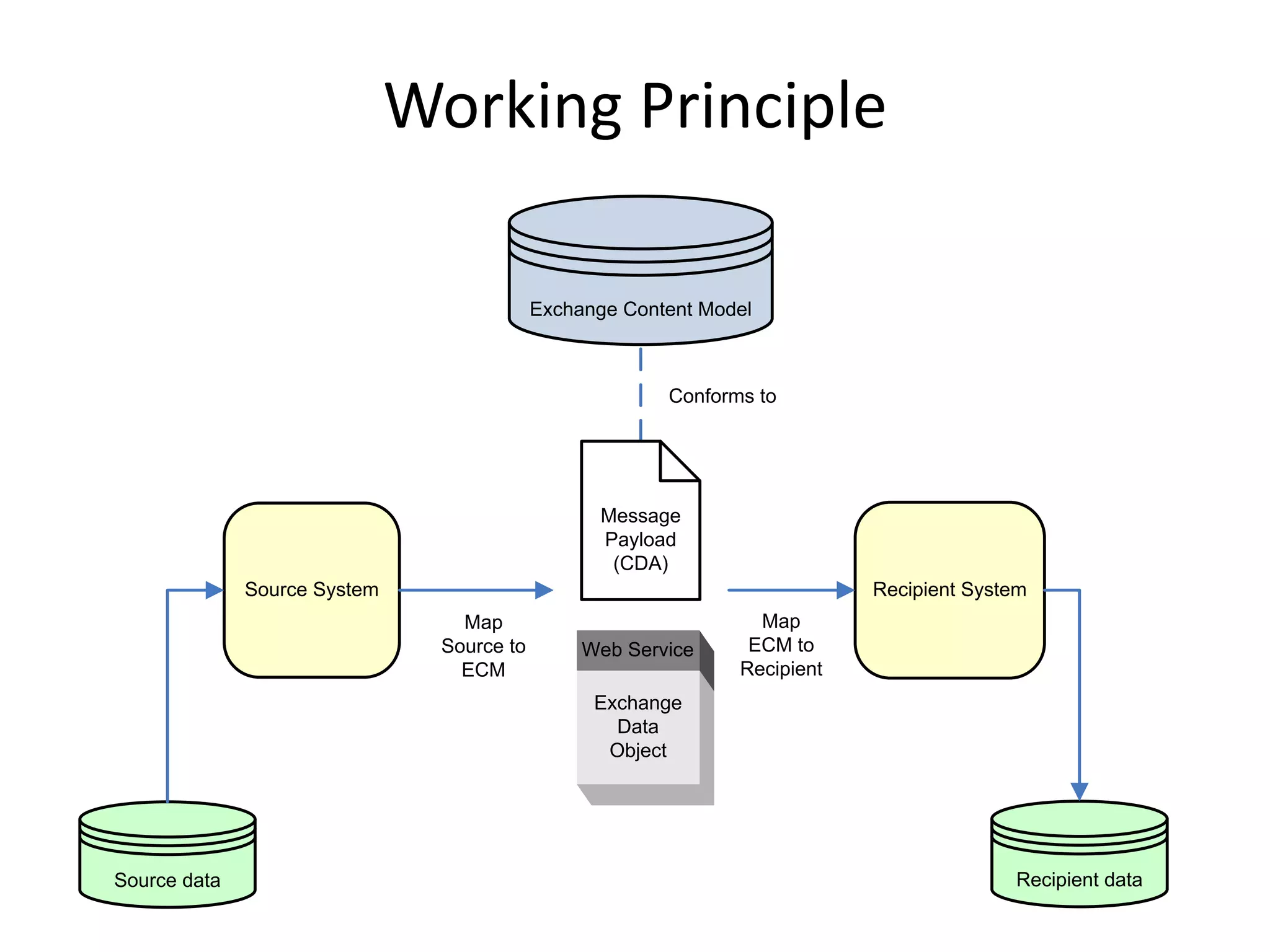
Working Principle

                                           Exchange Content Model


                                                        Conforms to


                                                  Message
                                                  Payload
                                                   (CDA)
              Source System                                                Recipient System
                                 Map                             Map
                               Source to        Web Service     ECM to
                                 ECM                           Recipient
                                                 Exchange
                                                   Data
                                                  Object


Source data                                                                              Recipient data
Questions / Further Info


 Koray Atalag, MD, PhD, FACHI
      k.atalag@nihi.auckland.ac.nz

Content Modelling for VIEW Datasets Using Archetypes

  • 1.
    Content Modelling forVIEW Datasets Using Archetypes Koray Atalag1, Jim Warren1,2, Rod Jackson2 1.NIHI – University of Auckland 2.Department of Computer Science – University of Auckland 3.School of Population Health – University of Auckland
  • 2.
    What’s VIEW • Smart(!) name  Vascular Informatics using Epidemiology & the Web (VIEW) • Building on PREDICT CVD-DM (primary care) – Extending to secondary (acute Predict) – Improving risk prediction models – Creating a variation map/atlas of NZ • Data linkages to: – National Mortality Register, – National Minimum Dataset (public and private hospital discharges) – National Pharmaceutical Collection (drugs dispensed from community pharmacies with government subsidy) – National PHO Enrolment Collection – Auckland regional CVD-relevant laboratory data from DML – TestSafe (in progress)
  • 4.
    Objectives of thisstudy • Extend existing data management capabilities; – Define a canonical information model (openEHR) – Normalise and link external datasets – Ability to extend without compromising backward data compatibility – future-proofing • Create a state-of-the-art research data repository – Transform existing datasets into full-EHR records – Data integration using model as map – Powerful semantic querying & stata on the fly
  • 5.
    Archetypes • Smallest indivisibleunits of clinical information – Preserving clinical context – maximal datasets for given concept • Brings together building blocks from Reference Model • Puts constraints on them: – Structural constraints (List, table, tree, clusters) – What labels can be used – What data types can be used – What values are allowed for these data types – How many times a data item can exist? – Whether a particular data item is mandatory – Whether a selection is involved from a number of items/values
  • 6.
    Logical building blocksof EHR EHR Folders Compositions Sections Entries Clusters Elements Data values
  • 7.
  • 8.
  • 9.
  • 10.
  • 11.
  • 13.
    Results • Archetype basedcontent model can faithfully represent PREDICT dataset • Modelling: – two new archetypes‘Lifestyle Management’ and ‘Diabetic Glycaemic Control’ checklists – NZ extensions for demographics (DHB catchment, meshblock/domicile, geocode NZDep) • Difficulty: overlap between openEHR and NEHTA repositories – different archetypes for tobacco use, laboratory results and diagnosis which we reused – Considering both repositories are evolving separately it is challenging to make definitive modelling decisions.
  • 14.
    Potential Benefits • Highlevel of interoperability and increased data linkage ability • Important for research data sharing • Can sync more frequently (even real-time!) • Can leverage biomedical ontologies (through Archetype terminology bindings and service) • Can perform complex and fast queries on clinical data (real-time decision support)
  • 15.
    Bigger Picture • Interoperabilityfor clinical information systems – great – But what about population health & research? • Research data also sits in silos – mostly C Drives or even worse in memory sticks! • Difficult to reuse beyond specific research purpose – clinical context usually lost • No rigour in handling and sharing of data
  • 17.
  • 20.
  • 21.
    Working Principle Exchange Content Model Conforms to Message Payload (CDA) Source System Recipient System Map Map Source to Web Service ECM to ECM Recipient Exchange Data Object Source data Recipient data
  • 22.
    Questions / FurtherInfo Koray Atalag, MD, PhD, FACHI k.atalag@nihi.auckland.ac.nz

Editor's Notes

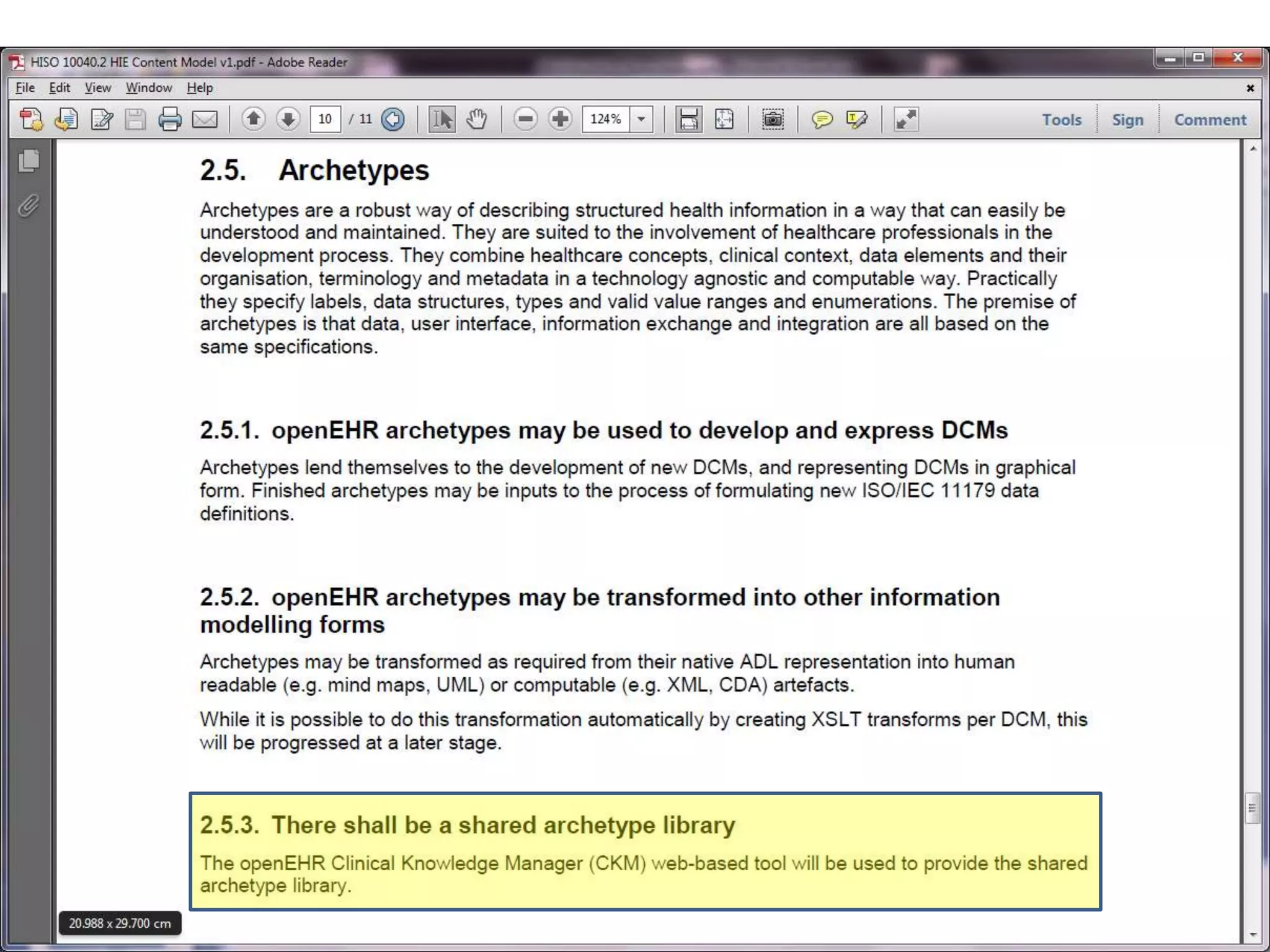
  • #19 Published by HISO (2012); Part of the Reference Architecture for Interoperability“To create a uniform model of health information to be reused by different eHealth Projects involving HIE”Consistent, Extensible, Interoperable and Future-Proof Data