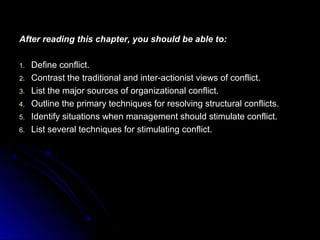
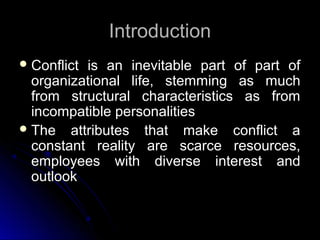
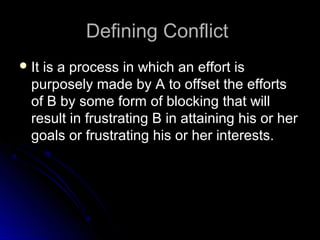
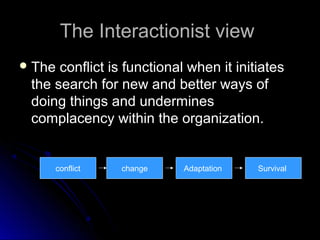
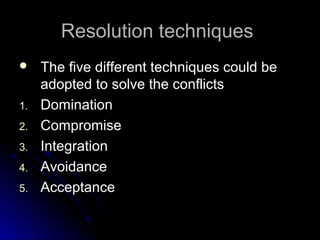
This document discusses organizational conflict and techniques for managing it. It defines conflict and contrasts traditional and interactionist views. The main sources of organizational conflict are mutual task dependence, one-way task dependence, horizontal differentiation, low formalization, dependence on scarce resources, different evaluation criteria, participative decision making, heterogeneity, status incongruence, role dissatisfaction, and communication distortion. Techniques for resolving conflicts include domination, compromise, integration, avoidance, acceptance, establishing superordinate goals, reducing interdependence, expanding resources, and mutual problem solving. The interactionist view sees some conflict as potentially beneficial in stimulating change, while excessive conflict can hinder effectiveness.