© 2010 Dorling Kindersley India Pvt. Ltd.
All rights reserved.
PowerPoint Presentation by Rajeesh Viswanathan
Jansons school of Business
Organization Theory
Structure, Design, and Applications
Third Revised Edition
Stephen P. Robbins and Mary Mathew
C H A P T E R
9
PART II: THE DETERMINANTS: WHAT CAUSES STRUCTURE?
An Overview
After reading this chapter, you should be able to:After reading this chapter, you should be able to:
• Describe the strategic choice argument.Describe the strategic choice argument.
• Present the case against strategic choice.Present the case against strategic choice.
• Identify the power-control assumptions about organizational decisionIdentify the power-control assumptions about organizational decision
making.making.
• Distinguish between power and authority.Distinguish between power and authority.
• Describe how an individual or group gains power.Describe how an individual or group gains power.
• Define politics.Define politics.
• Explain the power-control model of how structures emerge.Explain the power-control model of how structures emerge.
• Describe the power-control interpretation of technology and environment’sDescribe the power-control interpretation of technology and environment’s
role on structure.role on structure.
• Explain the power-control view of structural change.Explain the power-control view of structural change.
• Predict the degree of complexity, formalization, and centralization that thosePredict the degree of complexity, formalization, and centralization that those
in power prefer.in power prefer.
POWER CONTROLPOWER CONTROL
• IT IS AN ORGANIZATION’S STRUCTUREIT IS AN ORGANIZATION’S STRUCTURE
• POWER TO SELECT A STRUCTURE TO:POWER TO SELECT A STRUCTURE TO:
 THE MAXIMUM DEGREE POSSIBLETHE MAXIMUM DEGREE POSSIBLE
 MAINTAIN AND ENHANCE THEIR CONTROLMAINTAIN AND ENHANCE THEIR CONTROL
LOGIC OF STRATEGIC CHOICELOGIC OF STRATEGIC CHOICE
• Decision makers have more autonomy than that inferred by those arguing for
the dominance of
environmental, technological, or other forces
• Organizational effectiveness should be construed as a range instead of a
point. Organizational
effectiveness is not an optimum point of achievement
• Organizations occasionally have the power to manipulate and control their
environments.
Organizations are not always pawns being acted upon by their environments
• Perceptions and evaluations of events are an important intervening link
between environments and the actions of organizations
The Case Against Strategic choiceThe Case Against Strategic choice
• THE STRATEGIC-CHOICE ARGUMENT IS RESTRICTED BY TWOTHE STRATEGIC-CHOICE ARGUMENT IS RESTRICTED BY TWO
FACTS:FACTS:
i.i. COMMUNICATION LOCK AN ORGANIZATION INTO A LIMITEDCOMMUNICATION LOCK AN ORGANIZATION INTO A LIMITED
DOMAINDOMAIN
ii.ii. BARRIERS TO ENTRY IN MANY MARKETSBARRIERS TO ENTRY IN MANY MARKETS
• CONSTRAIN MANAGERS FROM DOING MUCH WITH THEIRCONSTRAIN MANAGERS FROM DOING MUCH WITH THEIR
DISCRETIONARY LATITUDEDISCRETIONARY LATITUDE
CHALLENGES TO CONTINGENCYCHALLENGES TO CONTINGENCY
PERSPECTIVEPERSPECTIVE
• CONTINGENCY PERSPECTIVE IS COMMITEDCONTINGENCY PERSPECTIVE IS COMMITED
TO RATIONALITYTO RATIONALITY
• THE DOMINANT COALITION AND TOPTHE DOMINANT COALITION AND TOP
MANAGEMENT ARE ASSUMED TO BE ONEMANAGEMENT ARE ASSUMED TO BE ONE
AND THE SAMEAND THE SAME
• THE DECISION MAKERS SHARE A COMMONTHE DECISION MAKERS SHARE A COMMON
PURPOSEPURPOSE
• CONTINGENCY VARIABLES-TECHNOLOGYCONTINGENCY VARIABLES-TECHNOLOGY
AND ENVIRONMENTAND ENVIRONMENT
CHALLENGES TO THE CONTINGENCYCHALLENGES TO THE CONTINGENCY
PERSPECTIVEPERSPECTIVE
• NON-RATIONALITYNON-RATIONALITY
• DIVERGENT INTERESTSDIVERGENT INTERESTS
• DOMINANT COALITIONSDOMINANT COALITIONS
• POWERPOWER
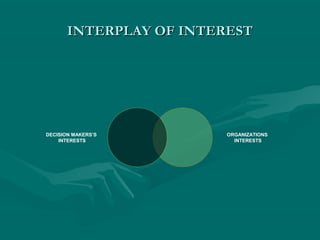
INTERPLAY OF INTERESTINTERPLAY OF INTEREST
ORGANIZATIONS
INTERESTS
DECISION MAKERS’S
INTERESTS
THE ROADS TO POWERTHE ROADS TO POWER
• HIERARCHICAL AUTHORITYHIERARCHICAL AUTHORITY
• CONTROL OF RESOURCESCONTROL OF RESOURCES
• NETWORK CENTRALITYNETWORK CENTRALITY
SYNTHESIZING THE POWER-SYNTHESIZING THE POWER-
CONTROL VIEWCONTROL VIEW
• STRUCTURAL DECISIONS AS A POLITICAL PROCESSSTRUCTURAL DECISIONS AS A POLITICAL PROCESS
• CONTINGENCY FACTORS AS CONSTRAINTSCONTINGENCY FACTORS AS CONSTRAINTS
• THE POWER-CONTROL MODELTHE POWER-CONTROL MODEL
IMPLICATIONS BASED ON THEIMPLICATIONS BASED ON THE
POWER-CONTROL VIEWPOWER-CONTROL VIEW
• TECHNOLOGY AND ENVIRONMENTTECHNOLOGY AND ENVIRONMENT
• STABILITY AND MECHANISTIC STRUCTURESSTABILITY AND MECHANISTIC STRUCTURES
• COMPLEXITYCOMPLEXITY
• FORMALIZATIONFORMALIZATION
• CENTRALIZATIONCENTRALIZATION

Ot chapter 9

  • 1.
    © 2010 DorlingKindersley India Pvt. Ltd. All rights reserved. PowerPoint Presentation by Rajeesh Viswanathan Jansons school of Business Organization Theory Structure, Design, and Applications Third Revised Edition Stephen P. Robbins and Mary Mathew C H A P T E R 9 PART II: THE DETERMINANTS: WHAT CAUSES STRUCTURE? An Overview
  • 2.
    After reading thischapter, you should be able to:After reading this chapter, you should be able to: • Describe the strategic choice argument.Describe the strategic choice argument. • Present the case against strategic choice.Present the case against strategic choice. • Identify the power-control assumptions about organizational decisionIdentify the power-control assumptions about organizational decision making.making. • Distinguish between power and authority.Distinguish between power and authority. • Describe how an individual or group gains power.Describe how an individual or group gains power. • Define politics.Define politics. • Explain the power-control model of how structures emerge.Explain the power-control model of how structures emerge. • Describe the power-control interpretation of technology and environment’sDescribe the power-control interpretation of technology and environment’s role on structure.role on structure. • Explain the power-control view of structural change.Explain the power-control view of structural change. • Predict the degree of complexity, formalization, and centralization that thosePredict the degree of complexity, formalization, and centralization that those in power prefer.in power prefer.
  • 3.
    POWER CONTROLPOWER CONTROL •IT IS AN ORGANIZATION’S STRUCTUREIT IS AN ORGANIZATION’S STRUCTURE • POWER TO SELECT A STRUCTURE TO:POWER TO SELECT A STRUCTURE TO:  THE MAXIMUM DEGREE POSSIBLETHE MAXIMUM DEGREE POSSIBLE  MAINTAIN AND ENHANCE THEIR CONTROLMAINTAIN AND ENHANCE THEIR CONTROL
  • 4.
    LOGIC OF STRATEGICCHOICELOGIC OF STRATEGIC CHOICE • Decision makers have more autonomy than that inferred by those arguing for the dominance of environmental, technological, or other forces • Organizational effectiveness should be construed as a range instead of a point. Organizational effectiveness is not an optimum point of achievement • Organizations occasionally have the power to manipulate and control their environments. Organizations are not always pawns being acted upon by their environments • Perceptions and evaluations of events are an important intervening link between environments and the actions of organizations
  • 5.
    The Case AgainstStrategic choiceThe Case Against Strategic choice • THE STRATEGIC-CHOICE ARGUMENT IS RESTRICTED BY TWOTHE STRATEGIC-CHOICE ARGUMENT IS RESTRICTED BY TWO FACTS:FACTS: i.i. COMMUNICATION LOCK AN ORGANIZATION INTO A LIMITEDCOMMUNICATION LOCK AN ORGANIZATION INTO A LIMITED DOMAINDOMAIN ii.ii. BARRIERS TO ENTRY IN MANY MARKETSBARRIERS TO ENTRY IN MANY MARKETS • CONSTRAIN MANAGERS FROM DOING MUCH WITH THEIRCONSTRAIN MANAGERS FROM DOING MUCH WITH THEIR DISCRETIONARY LATITUDEDISCRETIONARY LATITUDE
  • 6.
    CHALLENGES TO CONTINGENCYCHALLENGESTO CONTINGENCY PERSPECTIVEPERSPECTIVE • CONTINGENCY PERSPECTIVE IS COMMITEDCONTINGENCY PERSPECTIVE IS COMMITED TO RATIONALITYTO RATIONALITY • THE DOMINANT COALITION AND TOPTHE DOMINANT COALITION AND TOP MANAGEMENT ARE ASSUMED TO BE ONEMANAGEMENT ARE ASSUMED TO BE ONE AND THE SAMEAND THE SAME • THE DECISION MAKERS SHARE A COMMONTHE DECISION MAKERS SHARE A COMMON PURPOSEPURPOSE • CONTINGENCY VARIABLES-TECHNOLOGYCONTINGENCY VARIABLES-TECHNOLOGY AND ENVIRONMENTAND ENVIRONMENT
  • 7.
    CHALLENGES TO THECONTINGENCYCHALLENGES TO THE CONTINGENCY PERSPECTIVEPERSPECTIVE • NON-RATIONALITYNON-RATIONALITY • DIVERGENT INTERESTSDIVERGENT INTERESTS • DOMINANT COALITIONSDOMINANT COALITIONS • POWERPOWER
  • 8.
    INTERPLAY OF INTERESTINTERPLAYOF INTEREST ORGANIZATIONS INTERESTS DECISION MAKERS’S INTERESTS
  • 9.
    THE ROADS TOPOWERTHE ROADS TO POWER • HIERARCHICAL AUTHORITYHIERARCHICAL AUTHORITY • CONTROL OF RESOURCESCONTROL OF RESOURCES • NETWORK CENTRALITYNETWORK CENTRALITY
  • 10.
    SYNTHESIZING THE POWER-SYNTHESIZINGTHE POWER- CONTROL VIEWCONTROL VIEW • STRUCTURAL DECISIONS AS A POLITICAL PROCESSSTRUCTURAL DECISIONS AS A POLITICAL PROCESS • CONTINGENCY FACTORS AS CONSTRAINTSCONTINGENCY FACTORS AS CONSTRAINTS • THE POWER-CONTROL MODELTHE POWER-CONTROL MODEL
  • 11.
    IMPLICATIONS BASED ONTHEIMPLICATIONS BASED ON THE POWER-CONTROL VIEWPOWER-CONTROL VIEW • TECHNOLOGY AND ENVIRONMENTTECHNOLOGY AND ENVIRONMENT • STABILITY AND MECHANISTIC STRUCTURESSTABILITY AND MECHANISTIC STRUCTURES • COMPLEXITYCOMPLEXITY • FORMALIZATIONFORMALIZATION • CENTRALIZATIONCENTRALIZATION