ORIGIN AND EVOLUTION OF ANGIOSPERMS.
PRESENTEDBY
SHAIKHSHABNOOR
MSC 1
1203.
ORIGIN OF ANGIOSPERMS.
 SuddenAppearance in Cretaceous age.
 Charles Darwin describedit as “abominable mystery” due to poor records.
 Many considerable differences of opinionamong botanists.
 About their age (late Jurassicor early cretaceous).
 Place of origin(Articor pacific basin).
 Possible ancestors (various theories).
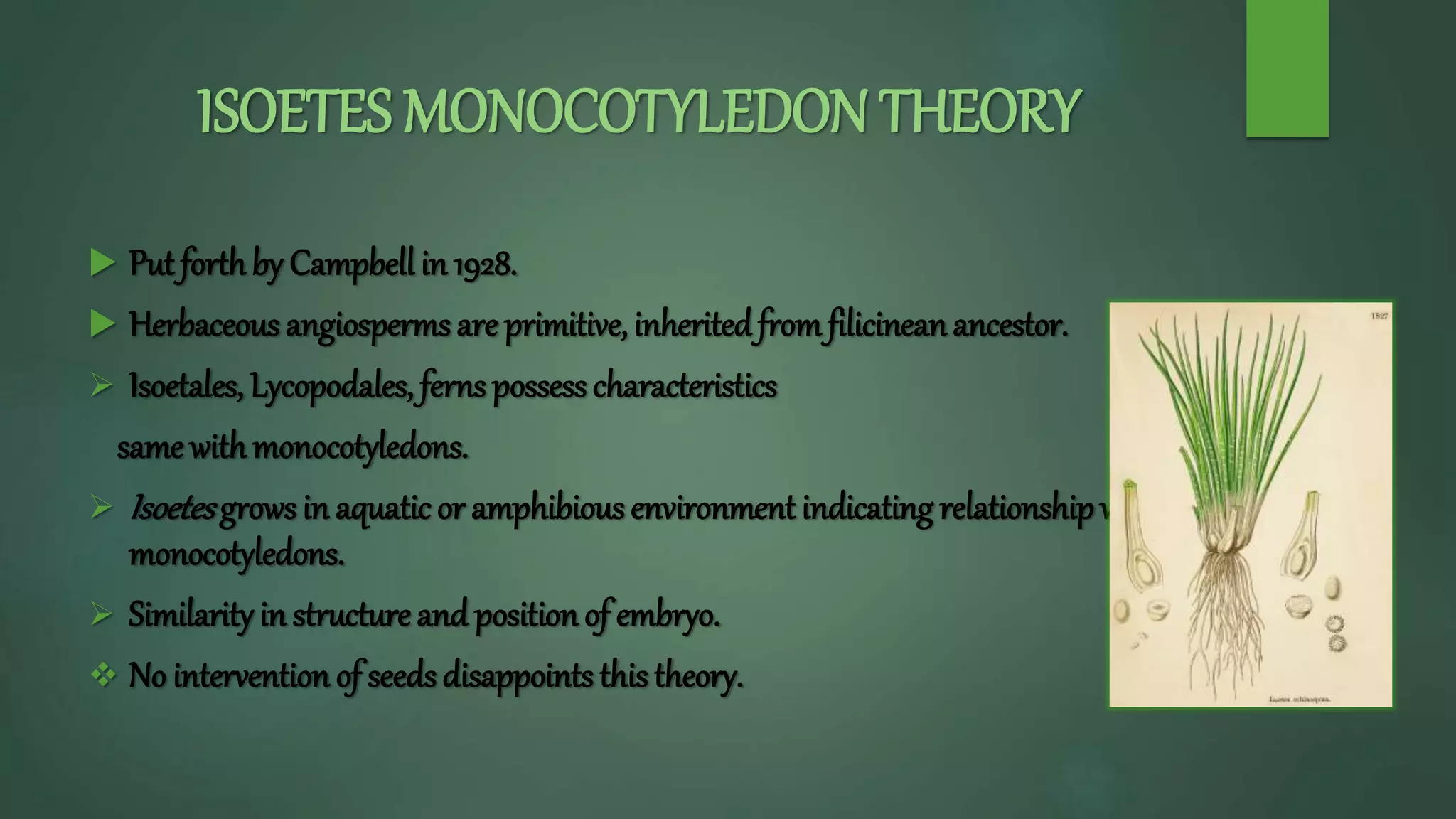
ISOETES MONOCOTYLEDON THEORY
 Put forthby Campbell in 1928.
 Herbaceous angiosperms are primitive, inheritedfromfilicineanancestor.
 Isoetales, Lycopodales, ferns possesscharacteristics
same withmonocotyledons.
 Isoetesgrows in aquatic or amphibious environment indicating relationshipwith
monocotyledons.
 Similarity in structure and positionof embryo.
 No intervention of seedsdisappoints this theory.
CONIFER-AMENTIFERAE THEORY
 Put forth by Engler (1882) andlater Rendle (1904).
 Found similarity of angiosperms withConifers.
 ConsideredAmentiferous groupas primitive
angiosperms.
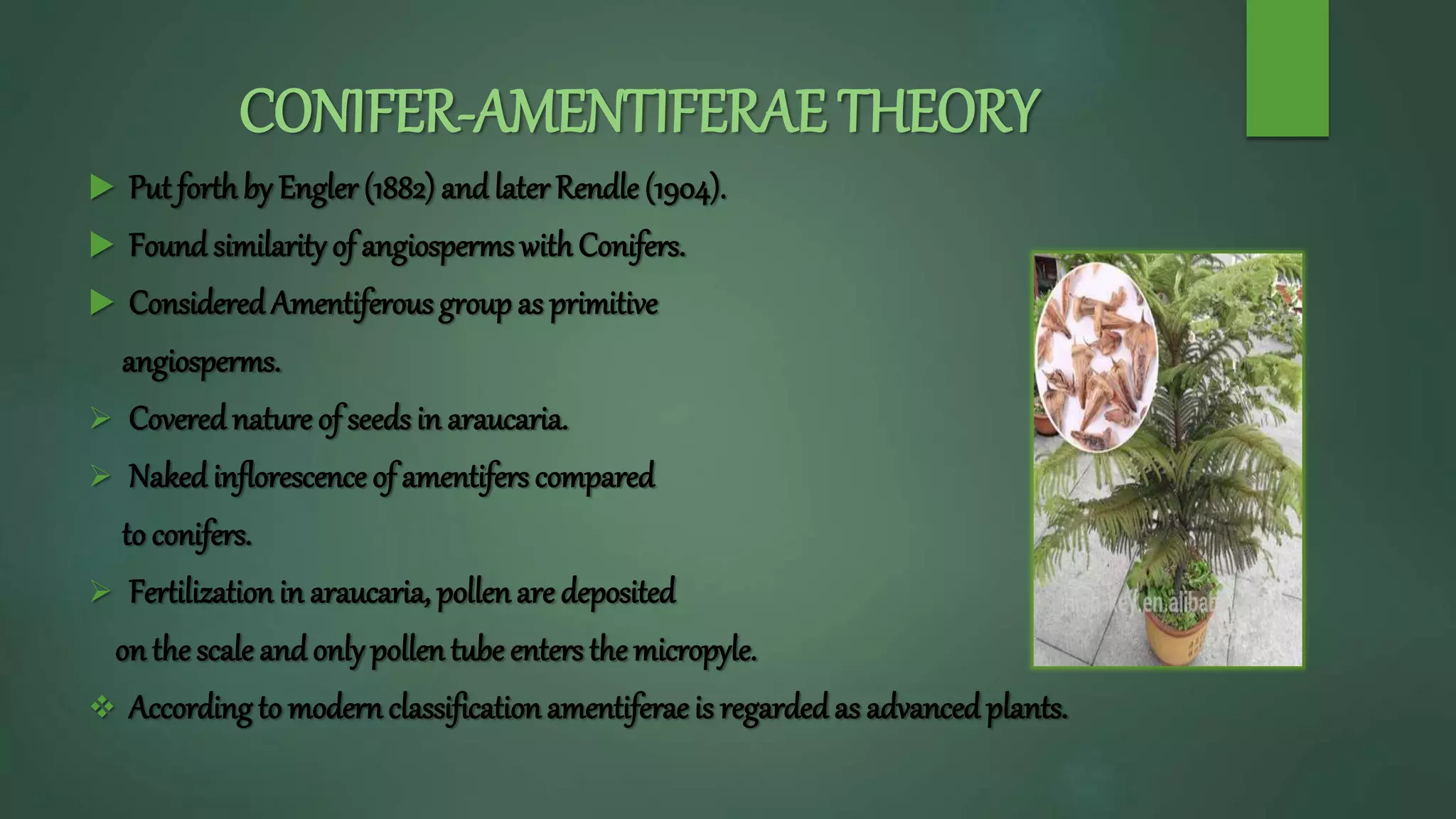
 Coverednature of seeds in araucaria.
 Naked inflorescence of amentifers compared
to conifers.
 Fertilizationin araucaria, pollenare deposited
on the scale andonly pollentube enters the micropyle.
 According to modernclassificationamentiferae is regardedas advancedplants.
GNETALES-ANGIOSPERMTHEORY
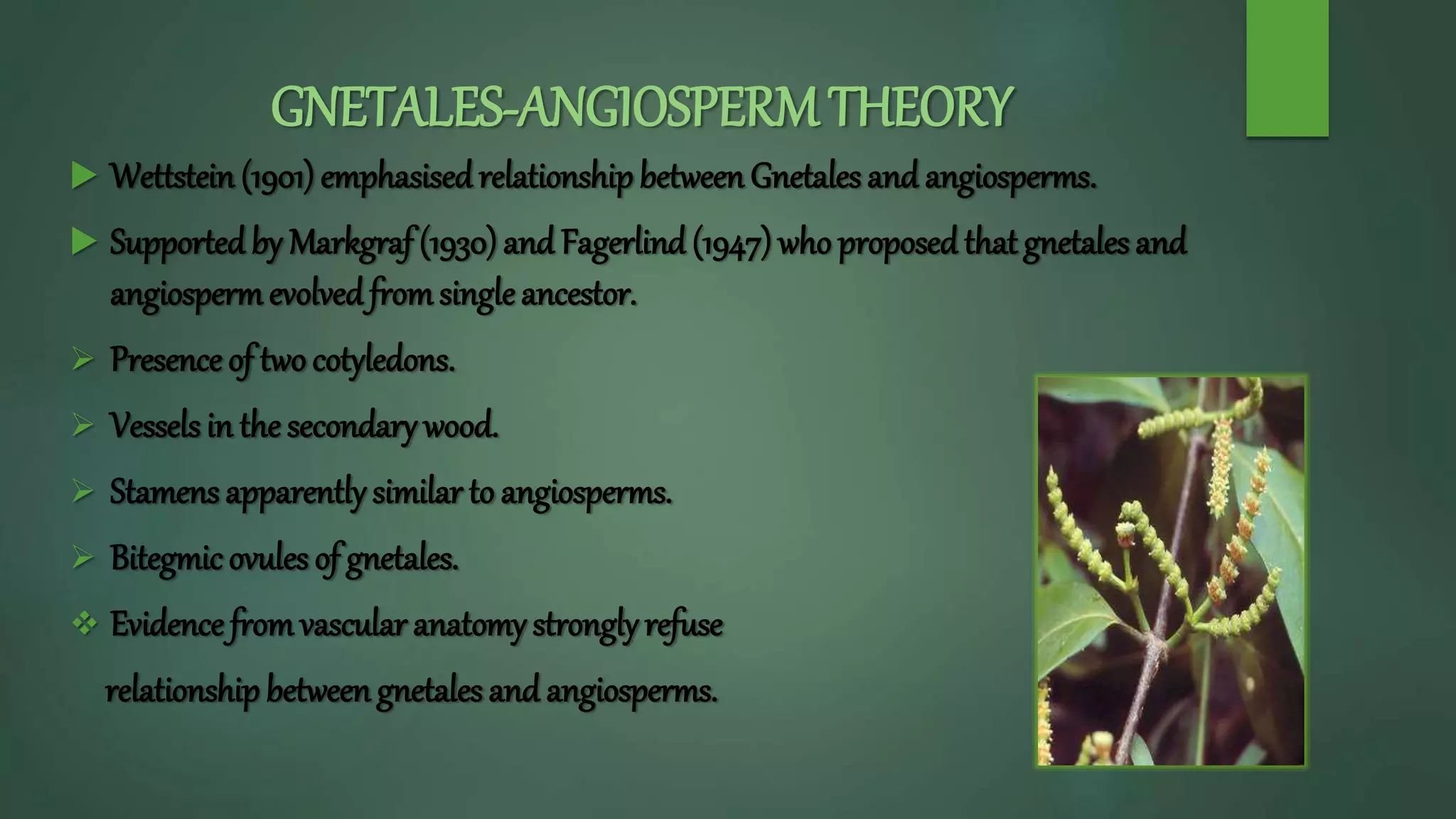
 Wettstein (1901) emphasisedrelationshipbetween Gnetales and angiosperms.
 Supportedby Markgraf (1930)and Fagerlind (1947) who proposed that gnetales and
angiospermevolvedfromsingleancestor.
 Presence of two cotyledons.
 Vessels in the secondary wood.
 Stamens apparently similar to angiosperms.
 Bitegmicovules of gnetales.
 Evidence fromvascular anatomy stronglyrefuse
relationshipbetweengnetales and angiosperms.
BENNETTITALEAN THEORY
 Put forthby Saporta and Marion (1885) and Arber and Parkin (1907).
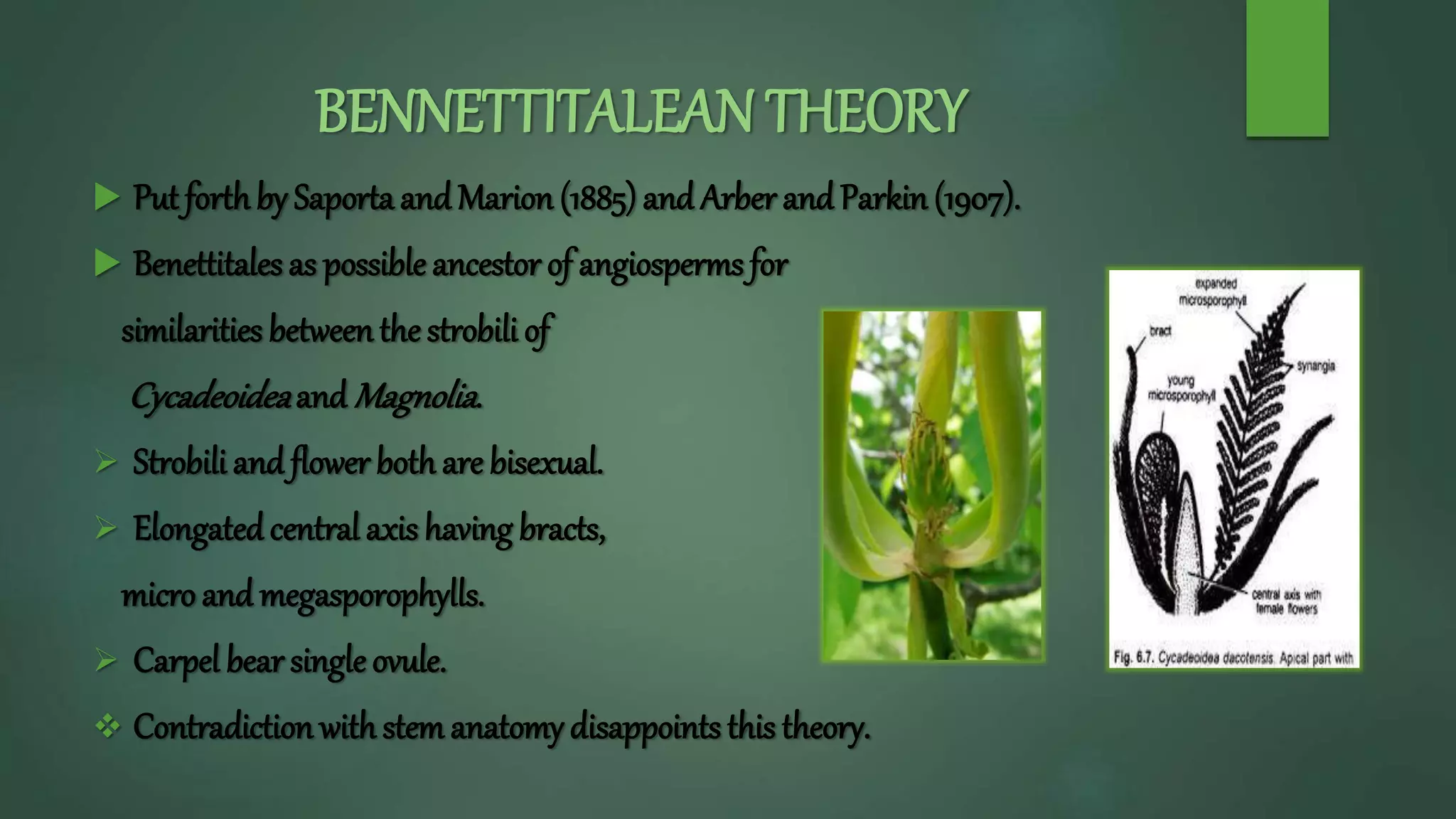
 Benettitales as possible ancestor of angiosperms for
similarities betweenthe strobili of
Cycadeoideaand Magnolia.
 Strobili and flower both are bisexual.
 Elongatedcentral axis having bracts,
micro and megasporophylls.
 Carpel bear single ovule.
 Contradiction with stemanatomy disappoints this theory.
CAYTONIALEAN THEORY
 Proposed by H. HamshawThomas (1925).
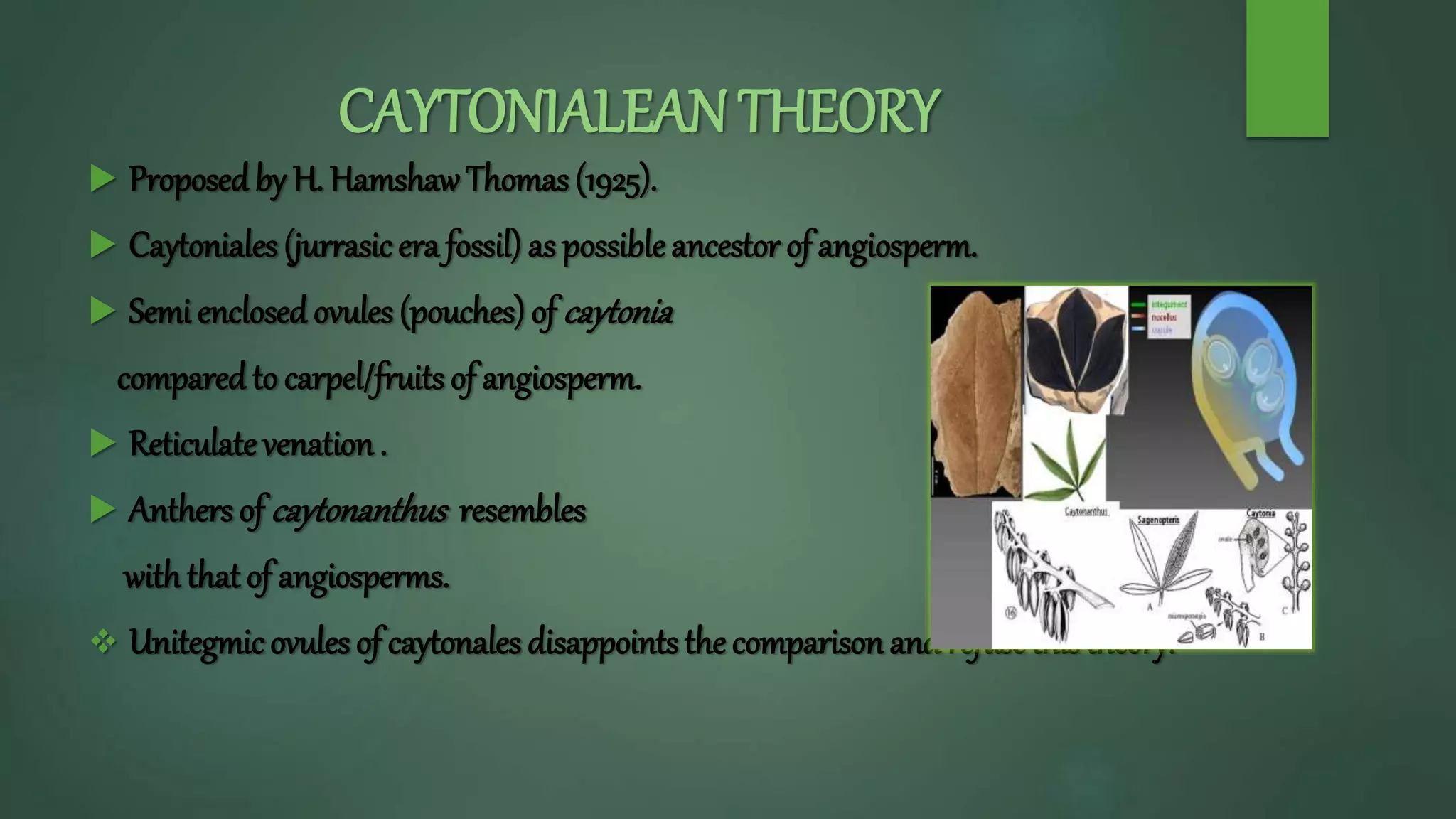
 Caytoniales (jurrasicera fossil) as possible ancestor of angiosperm.
 Semi enclosed ovules (pouches) of caytonia
comparedto carpel/fruits of angiosperm.
 Reticulatevenation.
 Anthers of caytonanthus resembles
with that of angiosperms.
 Unitegmicovules of caytonales disappoints the comparisonand refusethis theory.
PENTOXYLALEAN THEORY
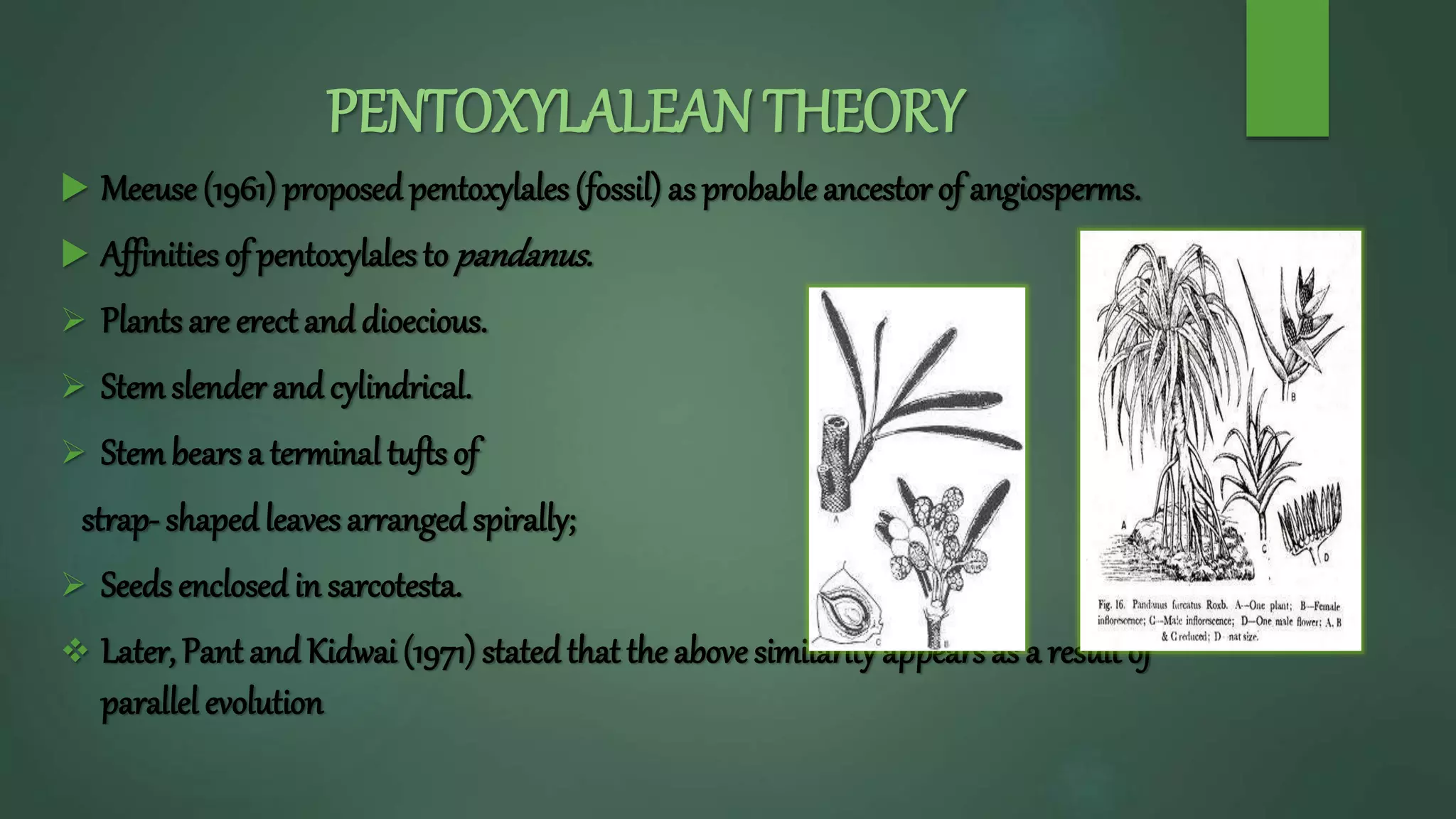
 Meeuse(1961) proposed pentoxylales (fossil) as probable ancestor of angiosperms.
 Affinities of pentoxylales to pandanus.
 Plants are erect and dioecious.
 Stemslender and cylindrical.
 Stembears a terminal tufts of
strap- shapedleaves arranged spirally;
 Seeds enclosed in sarcotesta.
 Later, Pant and Kidwai (1971) statedthat the above similarity appears as a result of
parallel evolution
EVOLUTION OF ANGIOSPERMS
 Different groups of angiosperms revealsdifferent linesof evolution.
 Primitive to highlyadvanced characters.
 Primitive characters:-
 Simple persistant leaves.
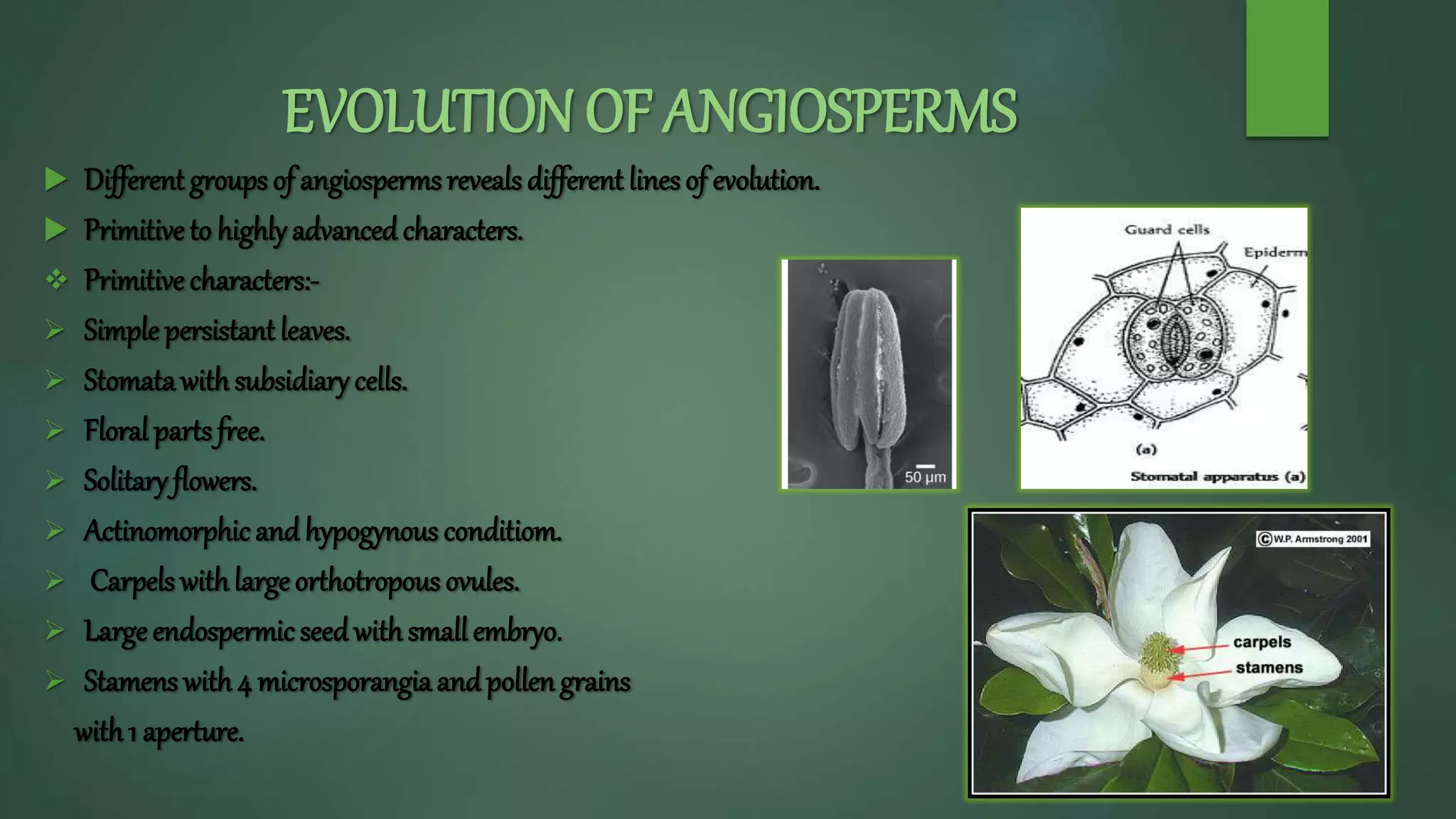
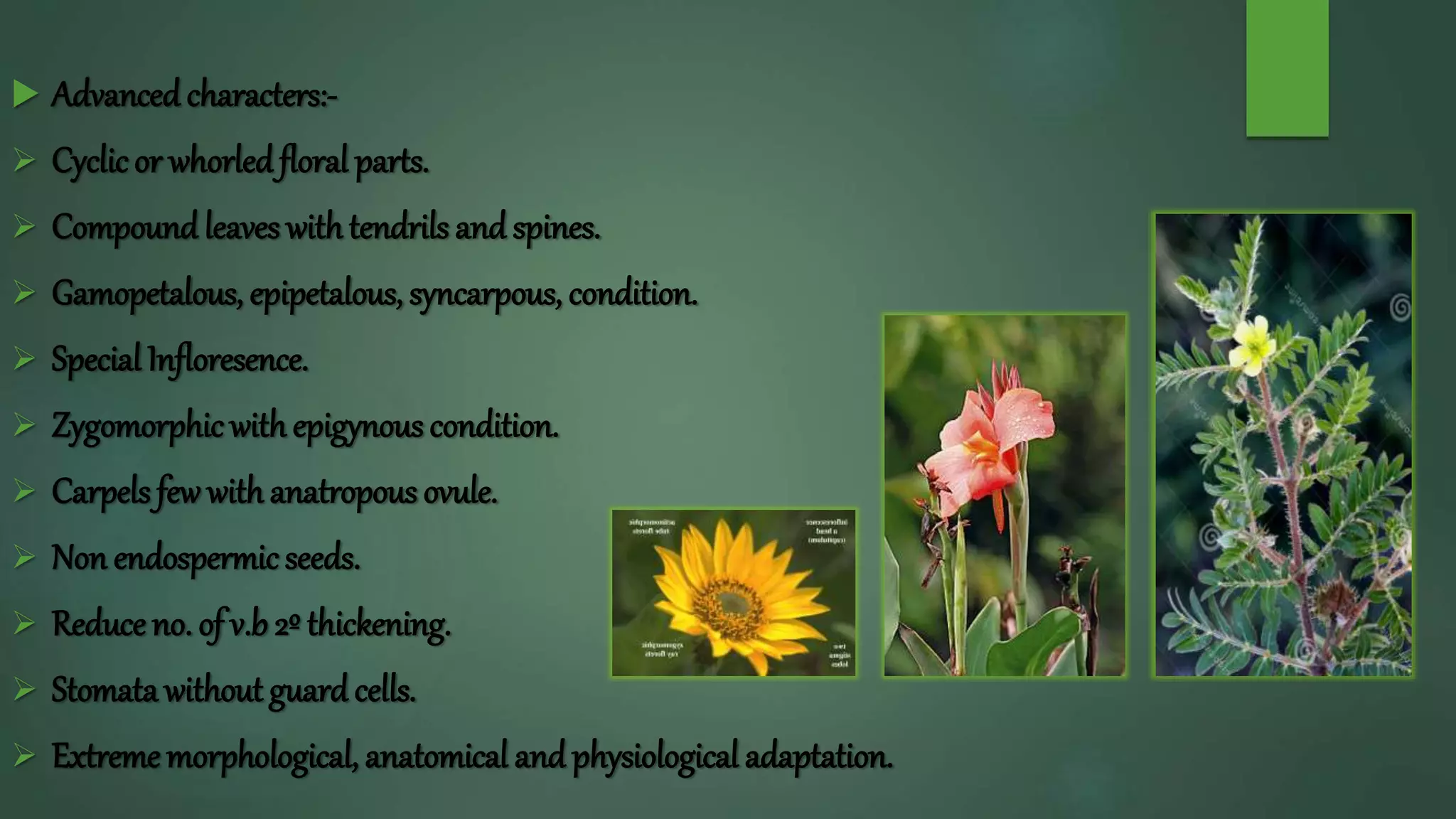
 Stomatawithsubsidiarycells.
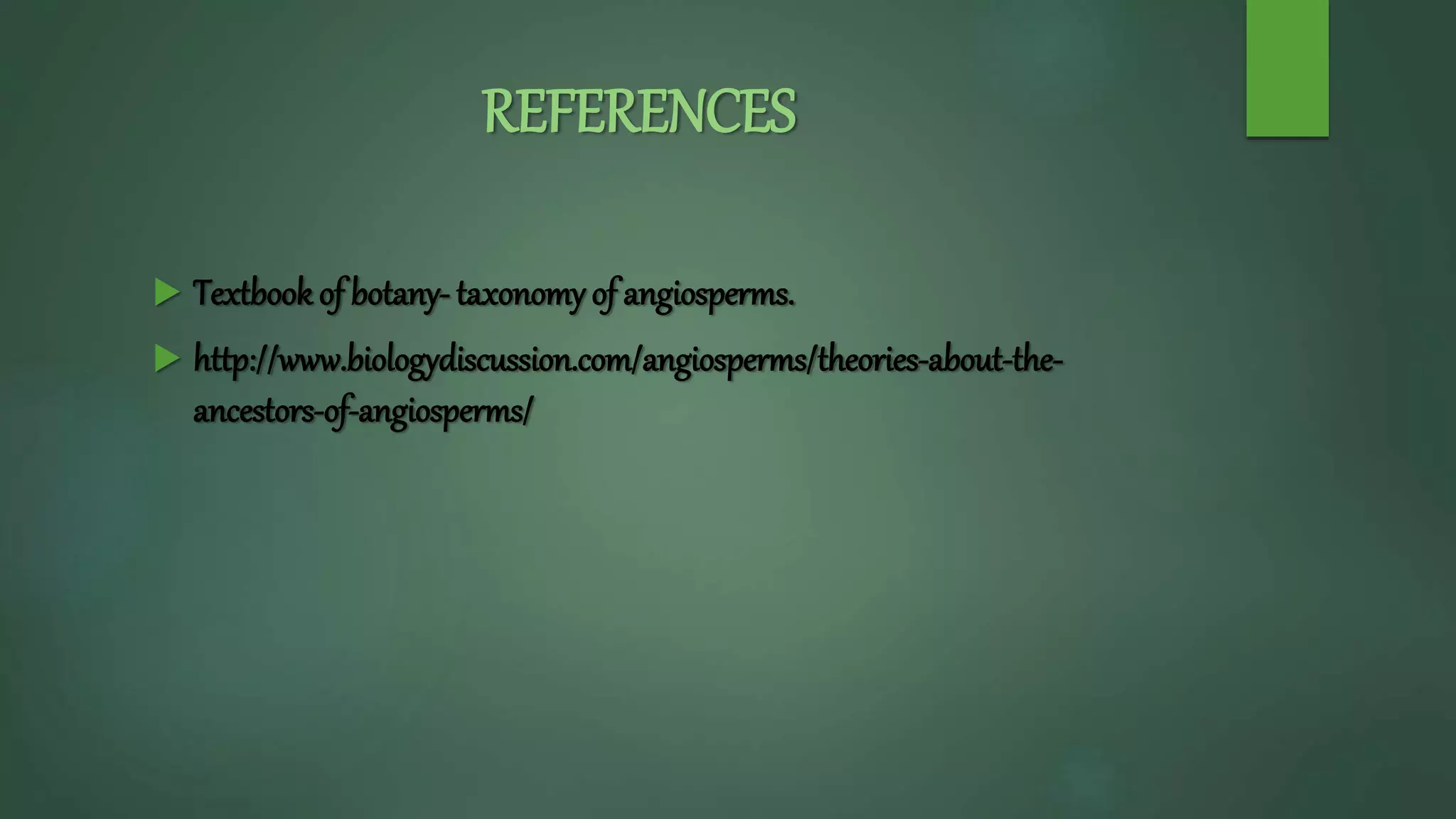
 Floral partsfree.
 Solitary flowers.
 Actinomorphic and hypogynous conditiom.
 Carpels withlargeorthotropous ovules.
 Large endospermicseedwithsmallembryo.
 Stamens with4 microsporangia andpollengrains
with1 aperture.
 Advanced characters:-
 Cyclicor whorledfloral parts.
 Compound leaves withtendrils and spines.
 Gamopetalous, epipetalous, syncarpous, condition.
 Special Infloresence.
 Zygomorphicwith epigynous condition.
 Carpels few withanatropous ovule.
 Non endospermicseeds.
 Reduce no. of v.b 2º thickening.
 Stomata without guard cells.
 Extreme morphological, anatomical and physiological adaptation.
REFERENCES
 Textbook of botany- taxonomy of angiosperms.
 http://www.biologydiscussion.com/angiosperms/theories-about-the-
ancestors-of-angiosperms/
Origin  and  evolution  of angiosperms

Origin and evolution of angiosperms

  • 1.
    ORIGIN AND EVOLUTIONOF ANGIOSPERMS. PRESENTEDBY SHAIKHSHABNOOR MSC 1 1203.
  • 2.
    ORIGIN OF ANGIOSPERMS. SuddenAppearance in Cretaceous age.  Charles Darwin describedit as “abominable mystery” due to poor records.  Many considerable differences of opinionamong botanists.  About their age (late Jurassicor early cretaceous).  Place of origin(Articor pacific basin).  Possible ancestors (various theories).
  • 3.
    ISOETES MONOCOTYLEDON THEORY Put forthby Campbell in 1928.  Herbaceous angiosperms are primitive, inheritedfromfilicineanancestor.  Isoetales, Lycopodales, ferns possesscharacteristics same withmonocotyledons.  Isoetesgrows in aquatic or amphibious environment indicating relationshipwith monocotyledons.  Similarity in structure and positionof embryo.  No intervention of seedsdisappoints this theory.
  • 4.
    CONIFER-AMENTIFERAE THEORY  Putforth by Engler (1882) andlater Rendle (1904).  Found similarity of angiosperms withConifers.  ConsideredAmentiferous groupas primitive angiosperms.  Coverednature of seeds in araucaria.  Naked inflorescence of amentifers compared to conifers.  Fertilizationin araucaria, pollenare deposited on the scale andonly pollentube enters the micropyle.  According to modernclassificationamentiferae is regardedas advancedplants.
  • 5.
    GNETALES-ANGIOSPERMTHEORY  Wettstein (1901)emphasisedrelationshipbetween Gnetales and angiosperms.  Supportedby Markgraf (1930)and Fagerlind (1947) who proposed that gnetales and angiospermevolvedfromsingleancestor.  Presence of two cotyledons.  Vessels in the secondary wood.  Stamens apparently similar to angiosperms.  Bitegmicovules of gnetales.  Evidence fromvascular anatomy stronglyrefuse relationshipbetweengnetales and angiosperms.
  • 6.
    BENNETTITALEAN THEORY  Putforthby Saporta and Marion (1885) and Arber and Parkin (1907).  Benettitales as possible ancestor of angiosperms for similarities betweenthe strobili of Cycadeoideaand Magnolia.  Strobili and flower both are bisexual.  Elongatedcentral axis having bracts, micro and megasporophylls.  Carpel bear single ovule.  Contradiction with stemanatomy disappoints this theory.
  • 7.
    CAYTONIALEAN THEORY  Proposedby H. HamshawThomas (1925).  Caytoniales (jurrasicera fossil) as possible ancestor of angiosperm.  Semi enclosed ovules (pouches) of caytonia comparedto carpel/fruits of angiosperm.  Reticulatevenation.  Anthers of caytonanthus resembles with that of angiosperms.  Unitegmicovules of caytonales disappoints the comparisonand refusethis theory.
  • 8.
    PENTOXYLALEAN THEORY  Meeuse(1961)proposed pentoxylales (fossil) as probable ancestor of angiosperms.  Affinities of pentoxylales to pandanus.  Plants are erect and dioecious.  Stemslender and cylindrical.  Stembears a terminal tufts of strap- shapedleaves arranged spirally;  Seeds enclosed in sarcotesta.  Later, Pant and Kidwai (1971) statedthat the above similarity appears as a result of parallel evolution
  • 9.
    EVOLUTION OF ANGIOSPERMS Different groups of angiosperms revealsdifferent linesof evolution.  Primitive to highlyadvanced characters.  Primitive characters:-  Simple persistant leaves.  Stomatawithsubsidiarycells.  Floral partsfree.  Solitary flowers.  Actinomorphic and hypogynous conditiom.  Carpels withlargeorthotropous ovules.  Large endospermicseedwithsmallembryo.  Stamens with4 microsporangia andpollengrains with1 aperture.
  • 10.
     Advanced characters:- Cyclicor whorledfloral parts.  Compound leaves withtendrils and spines.  Gamopetalous, epipetalous, syncarpous, condition.  Special Infloresence.  Zygomorphicwith epigynous condition.  Carpels few withanatropous ovule.  Non endospermicseeds.  Reduce no. of v.b 2º thickening.  Stomata without guard cells.  Extreme morphological, anatomical and physiological adaptation.
  • 11.
    REFERENCES  Textbook ofbotany- taxonomy of angiosperms.  http://www.biologydiscussion.com/angiosperms/theories-about-the- ancestors-of-angiosperms/