














Helping Students Get Organized
   & Self-Regulate Behavior for
           21st Century Success


             Angela M. Housand, Ph. D.
 University of North Carolina Wilmington
Confratute – University of Connecticut
NRC     The National Research Center
G/T      on the Gifted and Talented	


      www.gi%ed.uconn.edu	
  
Joe Renzulli and Sally Reis


And other amazing people…
Traded in My Last Name
angelahousand.com
Graduated and Got a Job…


   Watson School of Education
     Angela Housand, Ph.D.
      housanda@uncw.edu
This Week I Have the Honor…
What hinders
  student
 success?
This Week:
Self-Regulation & Gifted Students
Regulation of Affect
Regulation of Behavior
Regulation of Cognition
Self-Determined Success
Self-Regulated Learning
 Students are self-regulated when
 they are, “metacognatively,
 motivationally, and behaviorally
 active participants in their own
 learning process.”


                 (Zimmerman 1989, p. 329)
Active engagement in the
     learning process produces
       increases in academic
            performance.


(Ablard & Lipschultz, 1998; Ames, 1984; Corno, 1986, 1989; Dweck, 1986; Schunk & Rice; 1985,
1987, 1991; Zimmerman, 1989; Zimmerman & Martinez-Pons, 1990)

Self-Regulated Learning
•  Multi-faceted construct
  –  Metacognition
  –  Strategic Action
  –  Motivation

•  Enabling self-determined achievement

 (Boekaerts 1997; Boekaerts & Corno, 2005; Butler & Winne, 1995; Corno, 2001;
 Flavell, 1979; Perry, Phillips, & Hutchinson, 2006; Schunk & Zimmerman, 1998;
 Winne, 1995; Winne & Perry 2000; Zimmerman, 1989, 1990, 2000)
Self-Regulated Learning
•    Goal Setting                             •  Self-Monitoring
•    Planning                                 •  Appropriate
•    Self-Motivation                             Help-Seeking
•    Attention Control                        •  Self-Evaluation
•    Effective                                •  Self-Reflection
     Strategy Use
     (Boekaerts 1997; Boekaerts & Corno, 2005; Butler & Winne, 1995; Corno, 2001;
     Flavell, 1979; Perry, Phillips, & Hutchinson, 2006; Schunk & Zimmerman, 1998;
     Winne, 1995; Winne & Perry 2000; Zimmerman, 1989, 1990, 2000)
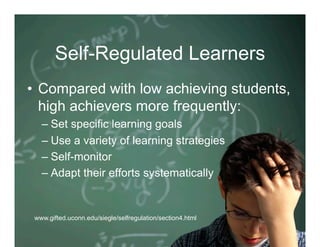
Self-Regulated Learners
•  Compared with low achieving students,
   high achievers more frequently:
   –  Set specific learning goals
   –  Use a variety of learning strategies
   –  Self-monitor
   –  Adapt their efforts systematically


 www.gifted.uconn.edu/siegle/selfregulation/section4.html
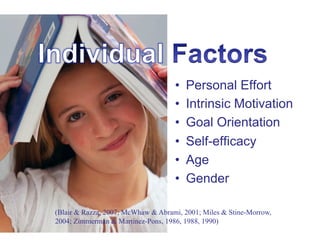
•    Personal Effort
                                    •    Intrinsic Motivation
                                    •    Goal Orientation
                                    •    Self-efficacy
                                    •    Age
                                    •    Gender

(Blair & Razza, 2007; McWhaw & Abrami, 2001; Miles & Stine-Morrow,
2004; Zimmerman & Martinez-Pons, 1986, 1988, 1990)
Gifted students tend to
               be more self-regulated
               than their average
               performing peers.


Self-Regulated Learners


                   (Zimmerman & Martinez-Pons, 1990)
There still exists a
 large degree of
 variation among
 gifted students in their
 use of strategies
 associated with self-
 regulated learning.


     Self-Regulated Learners
(Ablard & Lipschultz, 1998; Risemberg & Zimmerman, 1992; Zimmerman & Martinez-Pons, 1990)
Self-­‐Regulated	
  Learners	


  This	
  varia5on	
  may	
  explain	
  
                  why	
  some	
  gi<ed	
  students	
  
                  become	
  highly	
  
                  produc5ve,	
  contribu5ng	
  
                  members	
  of	
  society	
  and	
  
                  others	
  are	
  in	
  danger	
  of	
  
                  underachievement.	
  	
  
A  lthough there are many
possible explanations for
why one could fail, effort
and ability are the most
likely causes that students
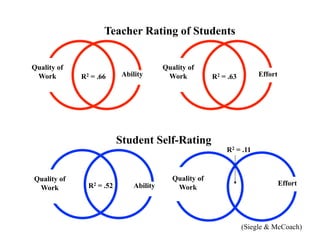
report.
                    – Good & Brophy
Teacher Rating of Students	


Quality of                                                  Quality of
 Work  	

     R2 = .66   	

         Ability   	

          Work  	

         R2 = .63   	

           Effort   	


                                  Student Self-Rating	

                                                                                   R2 = .11       	


Quality of                                                     Quality of
 Work    	

     R2 = .52       	

      Ability      	

       Work     	

                                     Effort   	


                                                                                                (Siegle & McCoach)
How can we, as educators, help
students take personal initiative
   in the process of learning?
How can we help students take
  responsibility for their own
          learning?
How can we help students
 achieve their potential?
Self-Regulation Requires
•  Regulation of affect
•  Regulation of behavior
•  Regulation of cognition


    (Boekaerts 1997; Boekaerts & Corno, 2005; Butler & Winne, 1995; Corno, 2001;
    Flavell, 1979; Perry, Phillips, & Hutchinson, 2006; Schunk & Zimmerman, 1998;
    Winne, 1995; Winne & Perry 2000; Zimmerman, 1989, 1990, 2000)
Dr. Carol Dweck:

            Fixed Mindset
                  vs.
           Growth Mindset
Mindset
Fixed Mindset:

          Believe traits are
          fixed or unchangeable

          Quantity of talent or
Mindset   intelligence finite
Growth Mindset:

          Believe traits can be
          developed w/ effort

          Accomplishment
          comes from practice
Mindset   and learning
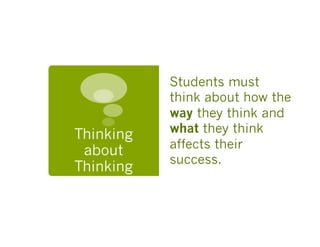
Students must
           think about how the
           way they think and
Thinking   what they think
           affects their
 about
           success.
Thinking
Regulation of Affect
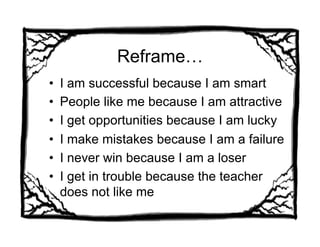
Reframe…
•    I am successful because I am smart
•    People like me because I am attractive
•    I get opportunities because I am lucky
•    I make mistakes because I am a failure
•    I never win because I am a loser
•    I get in trouble because the teacher
     does not like me
Reframe
•  I am successful because…
Reframe
•  People like me because…
Reframe
•  I make mistakes because…
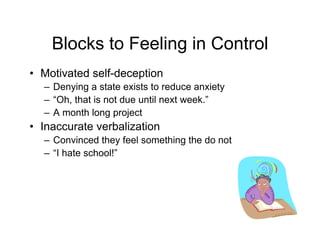
Blocks to Feeling in Control
•  Motivated self-deception
   –  Denying a state exists to reduce anxiety
   –  “Oh, that is not due until next week.”
   –  A month long project
•  Inaccurate verbalization
   –  Convinced they feel something the do not
   –  “I hate school!”
Blocks to Feeling in Control
•  Accessibility difficulties
   –  More processing required to form an attitude,
      more apt to lose track of what the attitude is
   –  “I used to be good at math, but the teacher is
      giving me a bad grade so I obviously am not good
      at math.”
Teacher Strategy

  Insiststudents’ own
  their feelings

   “Ifeel angry” vs.
    “You made me mad”
Teacher Strategy
  Helpstudents reframe by using
  verbs instead of adjectives to
  describe their feelings

  “I
    am successful because I am
  smart.” vs. “I am successful
  because I work hard.”
Influence
 On a clean sheet of paper, list the past five
  years vertically (2011, 2010, 2009…).
 Next to each year, list the most important
  event that occurred in your life during that
  year.
 Estimate the percentage of control or
  influence you had over each event.
Significant Influence
 When you reflect on your experience, do
  you find that you had more control than
  you thought?
 Students may feel that external forces
  control their lives.
 Modify the exercise:
   Last five months
   Last five weeks
Thinking about Achieving
•    What skills do I need to achieve this?
•    What help or assistance do I need?
•    What resources do I need?
•    What can block progress?
•    How will I maintain focus              in
     order to achieve this?
Reflecting on Achievement
•  Did I accomplish what I planned to
   achieve?
•  Was I distracted and how did I get back to
   my task?
•  Did I plan enough time?
•  In which situation did I     accomplish
   the most?
Being in the Moment
•  Can you change the past?
•  What are you doing now that is working?
 How can you do more of the same?
•  When you had a problem like this one
 before, what good solutions did you work
 out? Or Have you ever helped someone
 with a problem like this before?
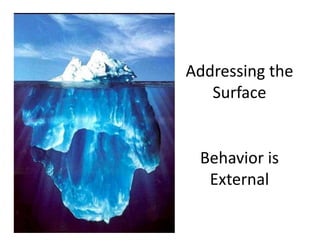
Addressing	
  the	
  
   Surface	


  Behavior	
  is	
  
   External	
  	
  
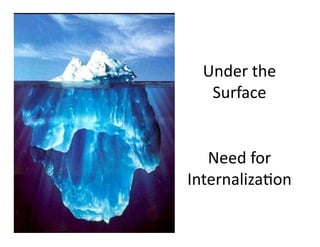
Under	
  the	
  
   Surface	


   Need	
  for	
  
Internaliza5on	
  
Overexcitabilities
 Characteristics that reveal
 a heightened response to
 stimuli
 Found more frequently in
 gifted population than
 general population
 Dabrowski and Piechowski
    People with SOR respond to sensation faster,
     with more intensity, or for a longer duration
     than those with typical sensory responsivity

    Considered a Sensory Modulation Disorder by
     some
    Behavioral responses
     ◦  Impulsivity
     ◦  Aggression
     ◦  Withdrawal
     ◦  Avoidance of sensation
    Emotional Responses
     ◦  Irritability
     ◦  Moodiness
     ◦  Inconsolability
     ◦  Poor Socialization
Sensory	
  Sensi5vity	
  
•  Greater	
  CNS	
  Arousal	
  
   –  Show	
  greater	
  responsiveness	
  
      to	
  sensory	
  s5muli	
  in	
  all	
  
      sensory	
  modali5es	
  
   –  Emits	
  more	
  voluntary	
  motor	
  
      ac5vity	
  
   –  More	
  reac5ve	
  emo5onally	
  
•  Might	
  also	
  explain	
  
   psychomotor	
  and	
  emo5onal	
  
   overexcitability	
  
Characteris5cs	
  of	
  People	
  with	
  
  High	
  Sensory	
  Sensi5vity	
  

                 •  Sense	
  of	
  being	
  different	
  
                 •  Need	
  to	
  take	
  frequent	
  
                    breaks	
  during	
  busy	
  days	
  
                 •  Conscious	
  arrangement	
  
                    of	
  lives	
  to	
  reduce	
  
                    s5mula5on	
  &	
  unwanted	
  
                    surprise	
  
Characteris5cs	
  of	
  People	
  with	
  
  High	
  Sensory	
  Sensi5vity	
  
                 •  Acknowledge	
  importance	
  
                    of	
  spiritual	
  and	
  inner	
  lives	
  
                    (including	
  dreams)	
  
                 •  Sense	
  that	
  difficul5es	
  
                    stemmed	
  from	
  fear	
  of	
  
                    failure	
  due	
  to	
  overarousal	
  
                     –  While	
  being	
  observed	
  
                     –  Feeling	
  judged	
  
                     –  During	
  compe55on	
  
Sensory	
  Sensi5vity	
  of	
  Gi<ed	
  

•  Tested	
  gi<ed	
  vs.	
  normed	
  sample	
  on	
  the	
  
   Sensory	
  Profile	
  (Dunn,	
  1999)	
  
•  Significant	
  differences	
  on	
  12	
  of	
  14	
  sensory	
  
   sec5ons	
  between	
  groups	
  
•  Gi<ed	
  children	
  are	
  more	
  sensi5ve	
  to	
  their	
  
   physical	
  environment	
  
•  More	
  affected	
  by	
  sensory	
  s5muli	
  	
  
Why address sensory sensitivity?

•  Sensory stimuli create CNS arousal which
   places demands upon the body
•  The intensity and duration of arousal affect
   responses to stimuli
•  Maximum and prolonged overload of
   information can be stressful
Why address sensory sensitivity?
•  To reduce stressors
•  To positively enhance the experience of
   the highly sensitive gifted individual
•  To be responsive to unique needs
•  To promote healthy working environments
•  To increase the sustainability of focus and
   effort in productive endeavors
Mindfulness
  Jon Kabat-Zinn, Ph.D.
  From the field of behavioral medicine
  Used to control
    Stress
    Pain
    Illness
  Initial research conducted at the
   University of Massachusetts Medical
   Center
Mindfulness Attitudes
  Non-judging
     Impartial witness to our own experience
     Cultivates emotional intelligence
  Patience
     Things unfold in their own time
     Delay of gratification
  Beginner’s Mind
     What we think we “know” impedes
      understanding
     Avoiding pre-conceived notions
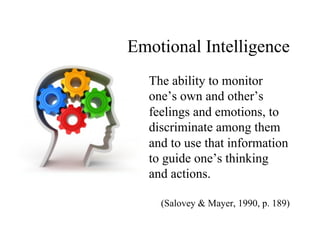
Emotional Intelligence
  The ability to monitor
  one’s own and other’s
  feelings and emotions, to
  discriminate among them
  and to use that information
  to guide one’s thinking
  and actions.

    (Salovey & Mayer, 1990, p. 189)
Mindfulness Attitudes
  Trust
     Developing a trust of yourself and your
      feelings
  Non-striving
     Seems counter intuitive
     Focusing on being clarifies what to strive for
  Acceptance
     Seeing things as they are
     Enables one to act appropriately no matter
      what is happening around them
Mindfulness Attitudes
  Letting Go
     Put aside the tendency to elevate some life
      experiences and reject others
     Cultivates emotional intelligence


  Mindfulness is mind training.
     “I am not thinking about that right now, I am
      observing – training my mind”
     “I am here to work on my mind”
Goal of Mindfulness
    Achieve a state of stability and calm
    Increase self-discipline
    Increase feelings of well-being
    Reduce feelings of dysphoria
    Increase self-awareness
Mindfulness How To
  Release Tension
    Sit comfortably, spine erect, feet on floor
    Allow arms to hang straight down with hands
     about 10-12 inches from body
    Close your eyes if it feels comfortable
    Identify areas of tension in your mind or
     body
    As you identify areas of tension, allow them
     to dissolve and flow down the arms and out
     the finger tips
Mindfulness How To
  Mind Training
    Sit comfortably, spine erect, feet on floor
    Close your eyes if it feels comfortable
    Bring your attention to your breath
       Nose, mouth, lungs, or belly – wherever you sense
        your breath
       Do not control breath, just observe
    Maintain your attention on your breathing
    When your mind wanders, simply let the
     thought go and return your focus to your
     breath
Mindfulness How To
  Focusing the mind is easier said than
   done
     Requires consistent practice
  Short and frequent
     5 to 15 minutes daily
  Don’t force it!
     When students loose focus, the time is up
     Work to extend time each day
Mindfulness
  Training the mind
  “I’m here to train my mind”
  “I’m here to work on my mind”
  Awake and calm
  Present mentally and physically
  Focus on the breath – observe, don’t
   control – just observe
  “I am not thinking about that right now, I
   am observing – training my mind”
Mindfulness
  Connecting the mind and body
  Feet flat on the floor
  sitting up straight – string pulling from
   the top of the head
  Presence – feel your feet, legs, abdomin,
   shoulders, arms, hands, neck, head
  Creates a feeling of physical stability
Regulation of Behavior
h]p://www.21stcenturyskills.org/	
  
72	
  
3


,339
    3,339
Technology Creates a World
That is Massively Interconnected


                                   75	
  
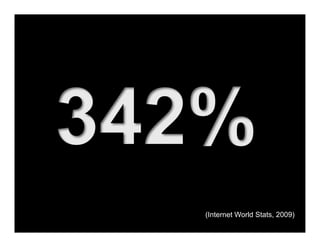
(Internet World Stats, 2009)
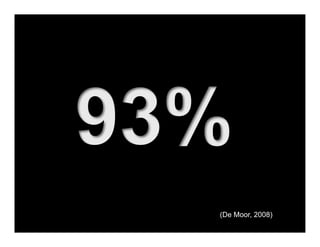
(De Moor, 2008)
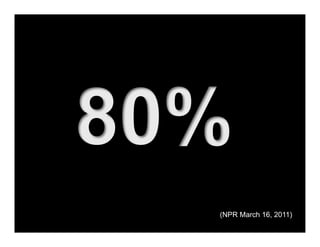
(NPR March 16, 2011)
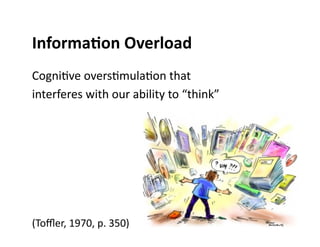
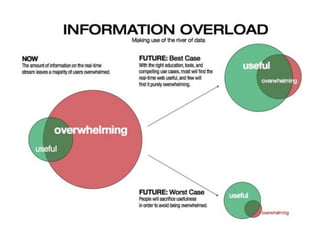
Digital Natives
Informa1on	
  Overload	
  
Cogni5ve	
  overs5mula5on	
  that	
  
interferes	
  with	
  our	
  ability	
  to	
  “think”	


(Toffler,	
  1970,	
  p.	
  350)	
  
  Accelerating  rate of new information
  Ease of duplication and transmission
  Increase in the available sources of
   information
  Contradictions and inaccuracies
  Lacking strategies to process information
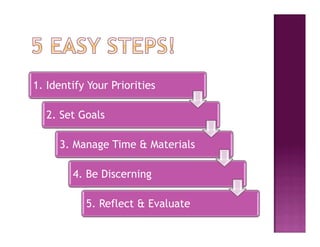
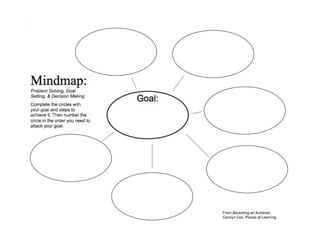
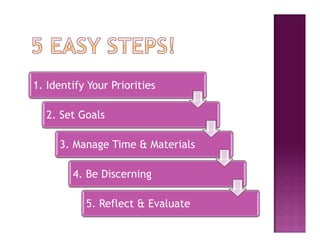
1. Identify Your Priorities

  2. Set Goals

     3. Manage Time & Materials

        4. Be Discerning

           5. Reflect & Evaluate
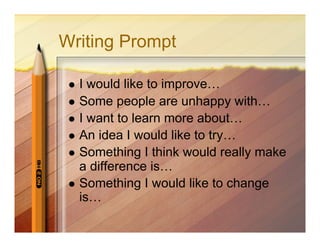
Writing Prompt

   I would like to improve…
   Some people are unhappy with…
   I want to learn more about…
   An idea I would like to try…
   Something I think would really make
    a difference is…
   Something I would like to change
    is…
Slifeweb.com	
  
Why Goal Setting?
Planned	
  direc5on	
  for	
  efforts	
  
Provides	
  clarity	
  for	
  assessment	
  
Opportunity	
  to	
  take	
  responsibility	
  
What does
goal setting
look like for
adults?
What is your personal definition
         of success?
Unrealistic Goals
  Goals set by other people
     May be in conflict with student values, beliefs, or
      desires
  Insufficient Information
      Need realistic understanding of what is being
       attempted
  Always Expecting Best
      Focus on raising student’s average performance
       and increasing consistency
Insufficient Goals
  Fear of Failure
    Fear prevents risk taking
    Failure is a positive: shows where room for
     improvement exists
  Taking it “too easy”
    Will not achieve anything of worth
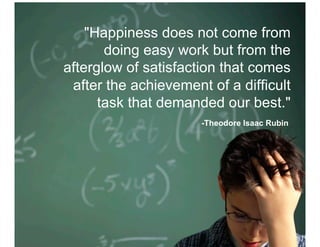
"Happiness does not come from
       doing easy work but from the
afterglow of satisfaction that comes
 after the achievement of a difficult
      task that demanded our best."
                      -Theodore Isaac Rubin
Teacher Strategy
  Help students set goals that are
  slightly out of their immediate
  reach, but not so far that they
  cannot achieve them

  Helpsstudents set goals that
  require your help
The greater danger for most
of us lies not in setting our
aim too high and falling short;

but in setting our aim too low,
and achieving our mark.
                 -Michelangelo
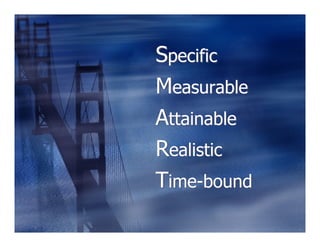
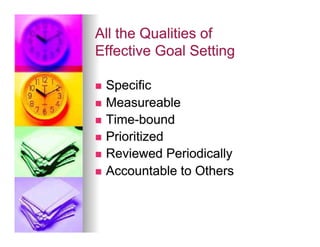
Specific
Measurable
Attainable
Realistic
Time-bound
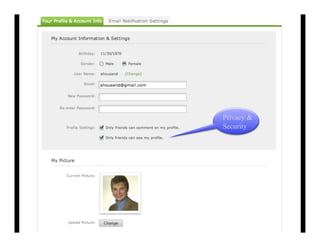
Privacy &
Security
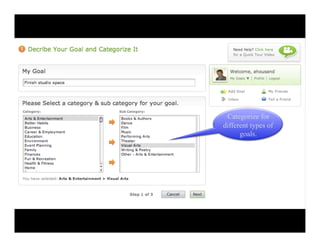
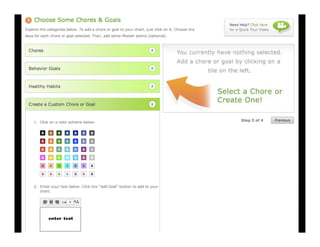
Categorize for
different types of
      goals.
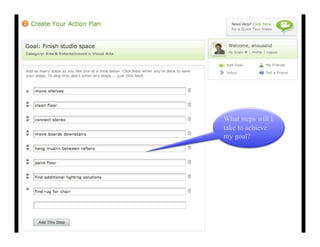
What steps will I
take to achieve
my goal?
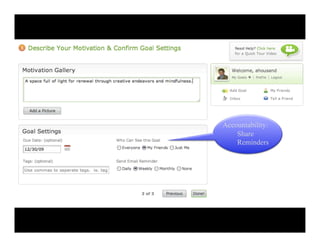
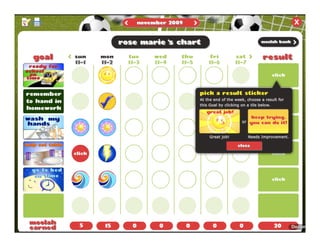
Accountability:
    Share
    Reminders
Monitor
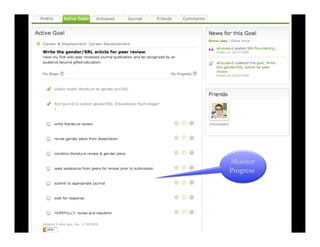
Progress
Reflect &
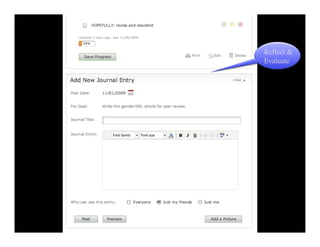
Evaluate
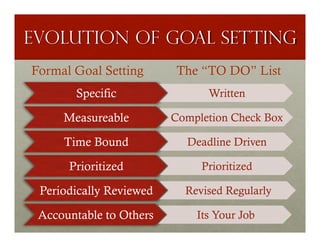
Specific                Written

    Measureable         Completion Check Box

    Time Bound            Deadline Driven

     Prioritized             Prioritized

Periodically Reviewed     Revised Regularly

Accountable to Others       Its Your Job
DO’s and DON’Ts
 of To Do Lists
Goal Setting Plan (Based on Heacox, 1991)
1. What is one area of your class performance that you really want to improve? (This is your long term
goal. It may take you several weeks, months, or even a whole school year to improve this goal.)
This goal is important to me because:
2. What is one thing that you can do NOW to help you reach your long-term goal? (This is your short-
term goal. You should be able to accomplish this goal in 2-4 weeks.)
3. What steps do you need to reach your short-term goal?
4. What things or people might keep you from reaching your goal? These are your obstacles.
5. What can you do to get around your obstacles? These are your solutions.
7. What special materials or help do you need to reach your goal? These are your resources.
8. How will you reward yourself when you achieve your goal? These are your incentives.
9. How and when will you check on your progress toward your goal? Who will help you to check on
your progress?
Checkpoint 1 Date: ____________________________________________________
Checkpoint 2 Date: ____________________________________________________


  I am committed to working toward achieving my short term goal.
Student's signature:        Today's date:
Witness (Teacher's) signature:
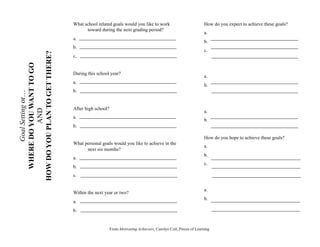
What school related goals would you like to work                            How do you expect to achieve these goals?
                                      toward during the next grading period?
                                                                                                            a.
                                a.
                                                                                                            b.
                                b.
HOW DO YOU PLAN TO GET THERE?                                                                               c.
                                c.
  WHERE DO YOU WANT TO GO


                                During this school year?
                                                                                                            a.
                                a.
                                                                                                            b.
                                b.
        Goal Setting or…


                                After high school?
             AND


                                                                                                            a.
                                a.
                                                                                                            b.
                                b.

                                                                                                            How do you hope to achieve these goals?
                                What personal goals would you like to achieve in the
                                                                                                            a.
                                      next six months?
                                                                                                            b.
                                a.
                                                                                                            c.
                                b.
                                c.


                                                                                                            a.
                                Within the next year or two?
                                                                                                            b.
                                a.
                                b.


                                                     From Motivating Achievers, Carolyn Coil, Pieces of Learning
Staying the Course"
"  Periodically review goals and modify to
   reflect changing priorities and
   experience"
"  Involve others in the goal: Inform,
   discuss, and share"
"  Engage with successful, motivated
   people who also set goals"
"  Create a “Goals Collage”"
Cyclical and Ongoing
Setting a New Goal
•  If goal was achieved easily, make next
   goal harder
•  If goal took to long to achieve, make
   next goal a little easier
•  If something was learned that leads to
   need for revision of other goals, do so
•  If skills were lacking, set goals to learn
   necessary skills
Attainment
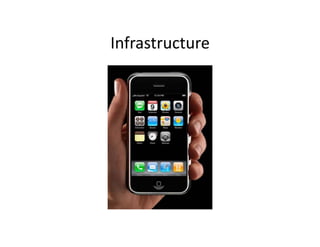
Infrastructure	
  
Infrastructure	
  
Infrastructure	
  
Infrastructure	
  
Infrastructure	
  
Infrastructure
One
Laptop per
Child
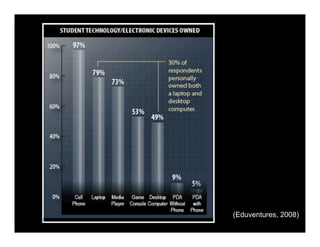
(Eduventures, 2008)
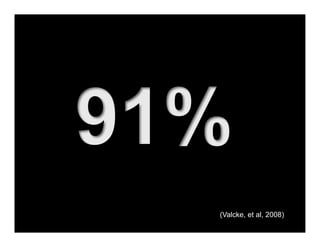
(Valcke, et al, 2008)
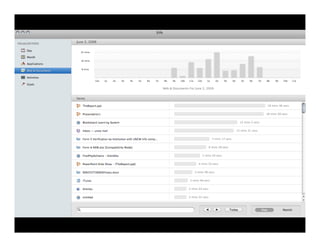
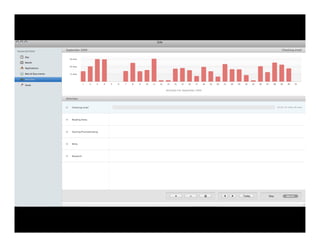
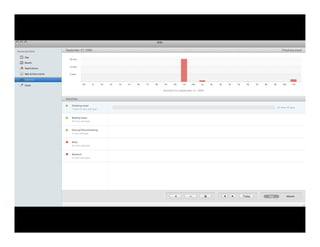
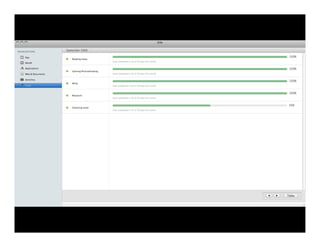
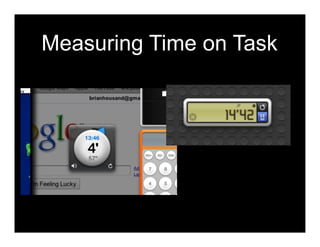
Measuring Time on Task
SET A GOAL

  TAKE A BREAK

 STAY ON TARGET

REWARD YOURSELF
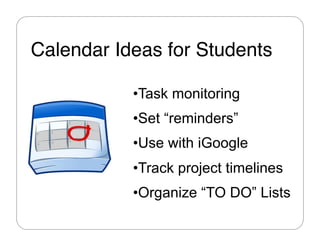
Calendar Ideas for Students"

           • Task monitoring
           • Set “reminders”
           • Use with iGoogle
           • Track project timelines
           • Organize “TO DO” Lists
Calendar Ideas for Teachers
  Create group calendars
  Provide assignment due dates
  Set project timelines
  Existing location for parent
   information
BE EFFICIENT
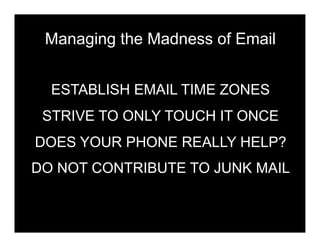
Managing the Madness of Email


  ESTABLISH EMAIL TIME ZONES
 STRIVE TO ONLY TOUCH IT ONCE
DOES YOUR PHONE REALLY HELP?
DO NOT CONTRIBUTE TO JUNK MAIL
“GET YOURSELF A FOLDER.”
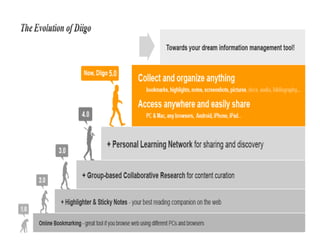
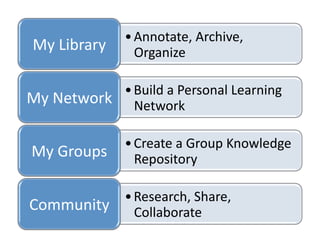
• Annotate,	
  Archive,	
  
 My	
  Library	
       Organize	
  

                 • Build	
  a	
  Personal	
  Learning	
  
My	
  Network	
   Network	
  

                  • Create	
  a	
  Group	
  Knowledge	
  
 My	
  Groups	
   Repository	
  

              • Research,	
  Share,	
  
Community	
   Collaborate	
  
Dropbox is software that syncs your
files online and across your computers."
How Much Space?


             2GB FREE


Install on      Invite     Share      Install
 another     a friend or      a      on your
computer.    colleague.    folder.   phone.
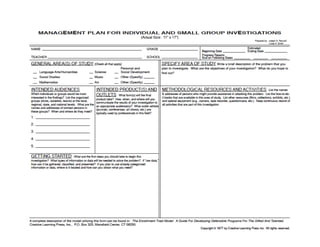
I
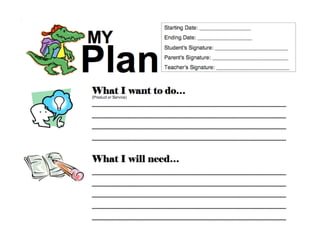
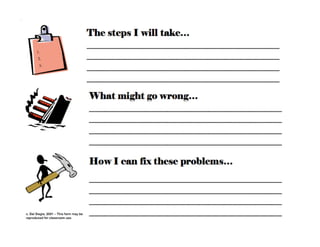
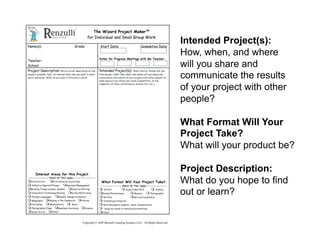
Intended Project(s):
How, when, and where
will you share and
communicate the results
of your project with other
people?

What Format Will Your
Project Take? "
What will your product be?

Project Description:
What do you hope to find
out or learn? "
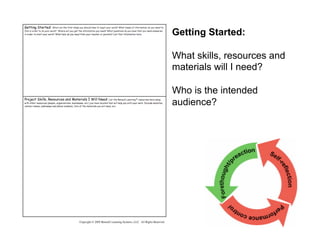
Getting Started:

What skills, resources and
materials will I need?

Who is the intended
audience?
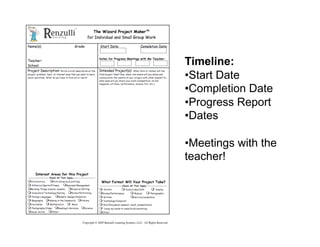
Timeline:
• Start Date
• Completion Date
• Progress Report
• Dates

• Meetings with the
teacher!
Organizational Strategies

•  The Environment
   Specific location for work
   Location should be distraction-free
   Set aside a specific time
   Daily, regardless of whether there is
    homework or not
   Supplies and resources available and
    accessible
Organizational Strategies

•  The Environment
   Specific location for work
   Location should be distraction-free
   Set aside a specific time
   Daily, regardless of whether there is
    homework or not
   Supplies and resources available and
    accessible

•  Still true, but…
Organizational Strategies

•  The Environment
   Specific location for work, but realize the
    digital environment is complex
   Location should be distraction-free
   Set aside a specific time, and work to
    increase focus
   Daily, but “down time” is good too 
   Supplies and resources available online
    and students need access to the internet
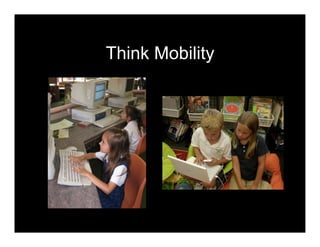
Think Mobility
Honor Diversity of Style!
"   Help students find an organizational
    system the fits their “style”"
"   Encourage them to develop their own
    systems"
"   Allow trial and error: Have patience to
    give system ideas a fair chance"
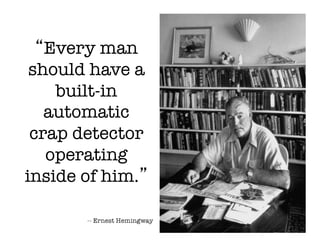
Every man
 should have a
    built-in
   automatic
 crap detector
   operating
inside of him.
+
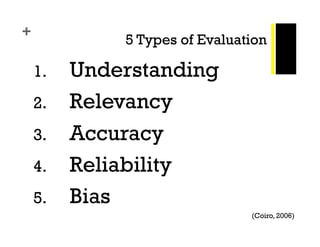
              5 Types of Evaluation

    1.    Understanding
    2.    Relevancy
    3.    Accuracy
    4.    Reliability
    5.    Bias
                                (Coiro, 2006)
http://www.google.com/educators
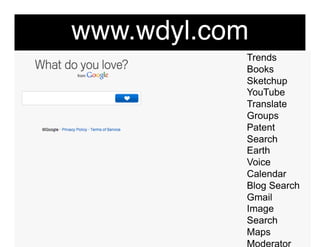
www.wdyl.com"
            Trends
            Books
            Sketchup
            YouTube
            Translate
            Groups
            Patent
            Search
            Earth
            Voice
            Calendar
            Blog Search
            Gmail
            Image
            Search
            Maps
            Moderator
agoogleaday.com"
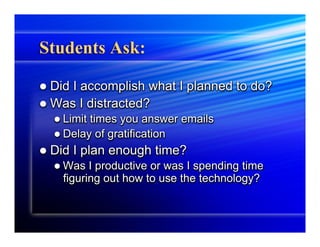
Students Ask:
Students Ask:
1. Identify Your Priorities

  2. Set Goals

     3. Manage Time & Materials

        4. Be Discerning

           5. Reflect & Evaluate
Regulation of Cognition
Metacognition
 One’s knowledge of his or her own
  cognitive processes or anything related
  to them (Flavell, 1976).
 Knowledge about when and how to use
  specific strategies for learning and
  problem solving
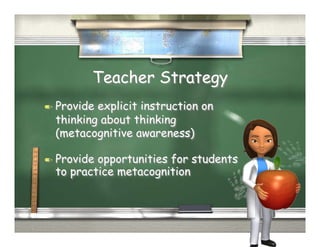
Teacher Strategy
  Provideexplicit instruction on
  thinking about thinking
  (metacognitive awareness)

  Provideopportunities for students
  to practice metacognition
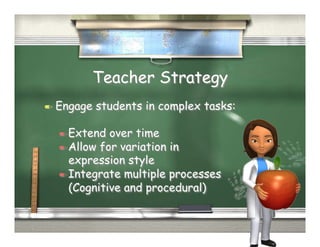
Teacher Strategy
  Engage   students in complex tasks:

   Extend  over time
   Allow for variation in
    expression style
   Integrate multiple processes
    (Cognitive and procedural)
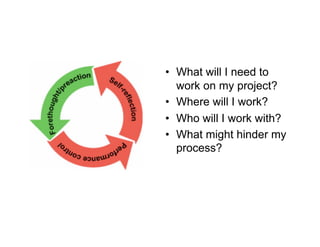
Individualized Projects
•  What will I need to
   work on my project?
•  Where will I work?
•  Who will I work with?
•  What might hinder my
   process?
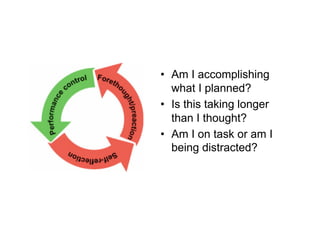
•  Am I accomplishing
   what I planned?
•  Is this taking longer
   than I thought?
•  Am I on task or am I
   being distracted?
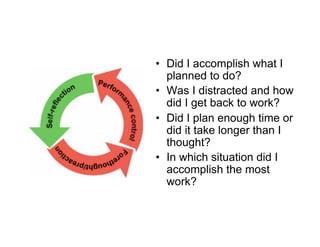
•  Did I accomplish what I
   planned to do?
•  Was I distracted and how
   did I get back to work?
•  Did I plan enough time or
   did it take longer than I
   thought?
•  In which situation did I
   accomplish the most
   work?
Teacher Strategy
  Encourage   risk-taking

  Ensure that students are
  sufficiently challenged so they
  have opportunities to fail
Teacher Strategy
  Encourage   risk-taking

  Ensure that students are
  sufficiently challenged so they
  have opportunities to fail

  YES,   let them fail!
Motivation
To be motivated means to be moved to do something
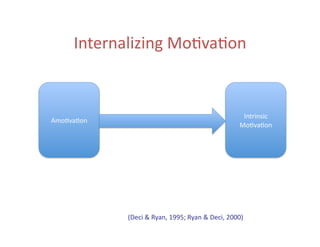
Internalizing	
  Mo5va5on	


                                                                             Intrinsic	
  
Amo5va5on	
  
                                                                            Mo5va5on	


                (Deci	
  &	
  Ryan,	
  1995;	
  Ryan	
  &	
  Deci,	
  2000)	
  
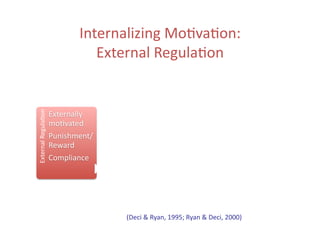
Internalizing	
  Mo5va5on:	
  
                                        External	
  Regula5on	
  
External	
  Regula5on	


                                              Introjec5on	


                                                                                           Iden5fca5on	


                                                                                                                              Itegra5on	
  
                            Externally	
                        Act	
  to	
  gain	
                          Behaviors	
                      Behaviors	
  
                            mo5vated	
                          approval	
                                   become	
                         become	
  
                            Punishment/	
                       Do	
  not	
  fully	
                         personally	
                     central	
  to	
  
                            Reward	
                            understand	
                                 important	
                      iden5ty	
  
                            Compliance	
                        purpose	


                                                                        (Deci	
  &	
  Ryan,	
  1995;	
  Ryan	
  &	
  Deci,	
  2000)	
  
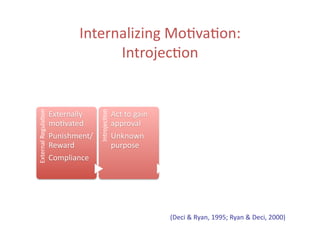
Internalizing	
  Mo5va5on:	
  
                                           Introjec5on	
  
External	
  Regula5on	


                                              Introjec5on	


                                                                                        Iden5fca5on	


                                                                                                                                  Itegra5on	
  
                            Externally	
                        Act	
  to	
  gain	
                       Behaviors	
                             Behaviors	
  
                            mo5vated	
                          approval	
                                become	
                                become	
  
                            Punishment/	
                       Unknown	
  	
                             personally	
                            central	
  to	
  
                            Reward	
                            purpose	
  	
                             important	
                             iden5ty	
  
                            Compliance	


                                                                                                     (Deci	
  &	
  Ryan,	
  1995;	
  Ryan	
  &	
  Deci,	
  2000)	
  
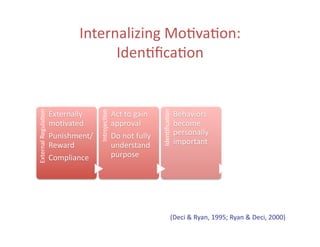
Internalizing	
  Mo5va5on:	
  
                                           Iden5fica5on	
  
External	
  Regula5on	


                                              Introjec5on	


                                                                                         Iden5fica5on	


                                                                                                                                   Integra5on	
  
                            Externally	
                        Act	
  to	
  gain	
                        Behaviors	
                              Behaviors	
  
                            mo5vated	
                          approval	
                                 become	
                                 become	
  
                            Punishment/	
                       Do	
  not	
  fully	
                       personally	
                             central	
  to	
  
                            Reward	
                            understand	
                               important	
                              iden5ty	
  
                            Compliance	
                        purpose	


                                                                                                      (Deci	
  &	
  Ryan,	
  1995;	
  Ryan	
  &	
  Deci,	
  2000)	
  
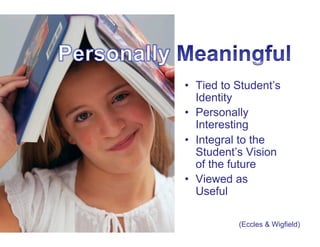
•  Tied to Student’s
   Identity
•  Personally
   Interesting
•  Integral to the
   Student’s Vision
   of the future
•  Viewed as
   Useful

           (Eccles & Wigfield)
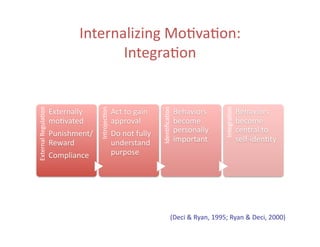
Internalizing	
  Mo5va5on:	
  
                                            Integra5on	
  
External	
  Regula5on	


                                              Introjec5on	


                                                                                         Iden5fica5on	


                                                                                                                                   Integra5on	
  
                            Externally	
                        Act	
  to	
  gain	
                        Behaviors	
                              Behaviors	
  
                            mo5vated	
                          approval	
                                 become	
                                 become	
  
                            Punishment/	
                       Do	
  not	
  fully	
                       personally	
                             central	
  to	
  
                            Reward	
                            understand	
                               important	
                              self-­‐iden5ty	
  
                            Compliance	
                        purpose	


                                                                                                      (Deci	
  &	
  Ryan,	
  1995;	
  Ryan	
  &	
  Deci,	
  2000)	
  
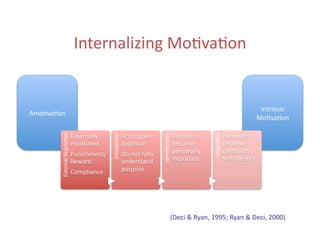
Internalizing	
  Mo5va5on	


                                                                                                                                                                            Intrinsic	
  
Amo5va5on	
  
                                                                                                                                                                           Mo5va5on	
  
           External	
  Regula5on	


                                                         Introjec5on	


                                                                                                    Iden5fica5on	


                                                                                                                                         Integra5on	
  
                                       Externally	
                        Act	
  to	
  gain	
                        Behaviors	
                         Behaviors	
  
                                       mo5vated	
                          approval	
                                 become	
                            become	
  
                                       Punishment/	
                       Do	
  not	
  fully	
                       personally	
                        central	
  to	
  
                                       Reward	
                            understand	
                               important	
                         self-­‐iden5ty	
  
                                       Compliance	
                        purpose	


                                                                                                                  (Deci	
  &	
  Ryan,	
  1995;	
  Ryan	
  &	
  Deci,	
  2000)	
  
Motivation
Diminished perception of competence
(self-efficacy), autonomy
(meaningfulness), or control
(environmental perception) leads to
lower motivation and a decreased
willingness to pursue goals and persist
in their attainment, thus limiting
overall educational growth.
COMPETENCE…
  Feelings of competence shape a person’s
  willingness to actively engage and persist
  in different behaviors.


                               (Bandura 1986, 1997)
SELF-EFFICACY…
   An individual’s personal judgment of his or
   her own ability to succeed in a specific
   context.


                                (Bandura 1986, 1997)
Self-efficacy influences:
  What activities we select
  How much effort we put forth

  How persistent we are in the face of difficulties

  The difficulty of the goals we set
Increasing Self-efficacy
  Past performance
  Vicarious experiences (observing others perform)

  Verbal persuasion 

  Physiological cues
Autonomy
Self-Determined Learners
•  Achieve highly
•  Learn conceptually
•  Stay in school


                        (Reeve, 2002)
Self-Determined Learners
•  Achieve highly
•  Learn conceptually
•  Stay in school

•  In large part, because their teachers
   support their autonomy rather than
   control their behavior
                                  (Reeve, 2002)
ON TARGET

            Autonomously-Motivated Students
                           vs.
               Control-Motivated Students

                  •  Higher academic achievement
                  •  Higher perceived competence
                  •  More positive emotionality
                  •  Higher self-worth

                                         (Reeve, 2002)
ON TARGET

            Autonomously-Motivated Students
                           vs.
               Control-Motivated Students

                  •  Preference for optimal challenge
                  •  Enjoy optimal challenge
                  •  Stronger perceptions of control
                  •  Greater creativity
                  •  Higher rates of retention
                                           (Reeve, 2002)
ON TARGET


               Educational Benefits of
            Autonomy-Supportive Teachers

                 •  Higher academic achievement
                 •  Higher perceived competence
                 •  More positive emotionality
                 •  Higher self-esteem

                                        (Reeve, 2002)
ON TARGET


               Educational Benefits of
            Autonomy-Supportive Teachers

                 •  Greater conceptual understanding
                 •  Greater flexibility in thinking
                 •  More information processing
                 •  Greater creativity
                 •  Higher rates of retention

                                          (Reeve, 2002)
ON TARGET


                 In Short…
            •  Autonomously motivated
               students thrive in
               educational settings

            •  Students benefit when
               teachers support their
               autonomy
                                   (Reeve, 2002)
Avoid Misconceptions

•  Autonomy support is not:
  – Permissiveness
  – Neglect
  – Independence
  – Laissez-faire interaction style
Avoid Misconceptions

•  Autonomy support and
   structure are two different
   classroom elements which
   have different aims and
   different effects
•  They are NOT the same, but
   can be mutually supportive
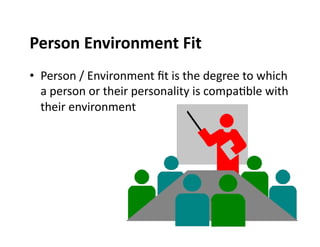
Person	
  Environment	
  Fit	
  
•  Person	
  /	
  Environment	
  fit	
  is	
  the	
  degree	
  to	
  which	
  
   a	
  person	
  or	
  their	
  personality	
  is	
  compa5ble	
  with	
  
   their	
  environment	
  
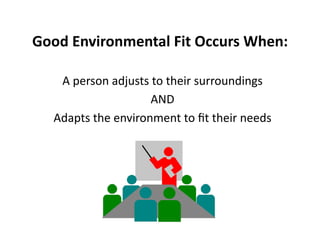
Good	
  Environmental	
  Fit	
  Occurs	
  When:	
  

     A	
  person	
  adjusts	
  to	
  their	
  surroundings	
  
                             AND	
  
    Adapts	
  the	
  environment	
  to	
  fit	
  their	
  needs	
  
Teacher Strategy
  Spend  less time holding
   instructional materials
  Provide time for independent work
  Provide hints but resist giving
   answers
  Encourage conversation
  Listen – even more than you do now
Teacher Strategy
  In   conversation w/ students
     Praise mastery
     Respond to student generated
      questions
     Make statements that are empathetic
      and rich in perspective taking
Teacher Strategy
  Avoid
    Directives  or “Taking Charge”
    Steering students toward a right
     answer
    Being critical or evaluative
    Motivating through external rewards
    Motivating through pressure
Teacher Strategy
  Students benefit from being
  listened to

  Students   suffer from being
  bossed
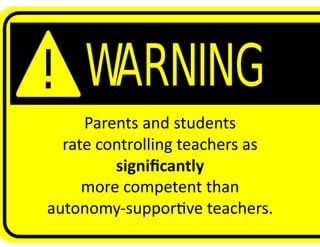
Parents	
  and	
  students	
  
  rate	
  controlling	
  teachers	
  as	
  	
  
            significantly	
  
     more	
  competent	
  than	
  
autonomy-­‐suppor5ve	
  teachers.	
  
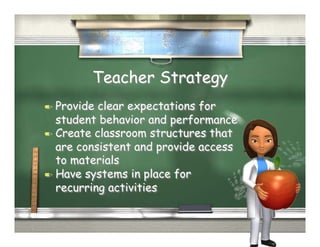
Teacher Strategy
  Provide clear expectations for
   student behavior and performance
  Create classroom structures that
   are consistent and provide access
   to materials
  Have systems in place for
   recurring activities
Failure is Part of the Process


Resilience
Perseverance
D
              I
              G
              I
              T
              A
              L	
     IMMIGRANTS	
  
              D
              I
              V
              I
              D
              E	
  
NATIVES	
  
Why	
  Do	
  We	
  
Ask	
  Kids	
  To	
  
UNPLUG	
  At	
  
 School?	
  
“From the standpoint of the
child…he is unable to apply in
daily life what he is learning
at school. That is the
isolation of the school - its
isolation from life.”
                       John Dewey
Thank You!
Questions?
What	
  might	
  you	
  reconsider	
  
about	
  your	
  classroom	
  prac5ce?	
  
List	
  three	
  poten5al	
  changes.	
  
Organize and Self-Regulate for Success

Organize and Self-Regulate for Success

  • 1.
    Helping Students GetOrganized & Self-Regulate Behavior for 21st Century Success Angela M. Housand, Ph. D. University of North Carolina Wilmington Confratute – University of Connecticut
  • 2.
    NRC The National Research Center G/T on the Gifted and Talented www.gi%ed.uconn.edu  
  • 3.
    Joe Renzulli andSally Reis And other amazing people…
  • 4.
    Traded in MyLast Name
  • 5.
  • 6.
    Graduated and Gota Job… Watson School of Education Angela Housand, Ph.D. housanda@uncw.edu
  • 7.
    This Week IHave the Honor…
  • 8.
    What hinders student success?
  • 9.
    This Week: Self-Regulation &Gifted Students Regulation of Affect Regulation of Behavior Regulation of Cognition Self-Determined Success
  • 10.
    Self-Regulated Learning Studentsare self-regulated when they are, “metacognatively, motivationally, and behaviorally active participants in their own learning process.” (Zimmerman 1989, p. 329)
  • 11.
    Active engagement inthe learning process produces increases in academic performance. (Ablard & Lipschultz, 1998; Ames, 1984; Corno, 1986, 1989; Dweck, 1986; Schunk & Rice; 1985, 1987, 1991; Zimmerman, 1989; Zimmerman & Martinez-Pons, 1990)
  • 12.
    Self-Regulated Learning •  Multi-facetedconstruct –  Metacognition –  Strategic Action –  Motivation •  Enabling self-determined achievement (Boekaerts 1997; Boekaerts & Corno, 2005; Butler & Winne, 1995; Corno, 2001; Flavell, 1979; Perry, Phillips, & Hutchinson, 2006; Schunk & Zimmerman, 1998; Winne, 1995; Winne & Perry 2000; Zimmerman, 1989, 1990, 2000)
  • 13.
    Self-Regulated Learning •  Goal Setting •  Self-Monitoring •  Planning •  Appropriate •  Self-Motivation Help-Seeking •  Attention Control •  Self-Evaluation •  Effective •  Self-Reflection Strategy Use (Boekaerts 1997; Boekaerts & Corno, 2005; Butler & Winne, 1995; Corno, 2001; Flavell, 1979; Perry, Phillips, & Hutchinson, 2006; Schunk & Zimmerman, 1998; Winne, 1995; Winne & Perry 2000; Zimmerman, 1989, 1990, 2000)
  • 14.
    Self-Regulated Learners •  Comparedwith low achieving students, high achievers more frequently: –  Set specific learning goals –  Use a variety of learning strategies –  Self-monitor –  Adapt their efforts systematically www.gifted.uconn.edu/siegle/selfregulation/section4.html
  • 15.
    •  Personal Effort •  Intrinsic Motivation •  Goal Orientation •  Self-efficacy •  Age •  Gender (Blair & Razza, 2007; McWhaw & Abrami, 2001; Miles & Stine-Morrow, 2004; Zimmerman & Martinez-Pons, 1986, 1988, 1990)
  • 16.
    Gifted students tendto be more self-regulated than their average performing peers. Self-Regulated Learners (Zimmerman & Martinez-Pons, 1990)
  • 17.
    There still existsa large degree of variation among gifted students in their use of strategies associated with self- regulated learning. Self-Regulated Learners (Ablard & Lipschultz, 1998; Risemberg & Zimmerman, 1992; Zimmerman & Martinez-Pons, 1990)
  • 18.
    Self-­‐Regulated  Learners    This  varia5on  may  explain   why  some  gi<ed  students   become  highly   produc5ve,  contribu5ng   members  of  society  and   others  are  in  danger  of   underachievement.    
  • 19.
    A lthoughthere are many possible explanations for why one could fail, effort and ability are the most likely causes that students report. – Good & Brophy
  • 20.
    Teacher Rating ofStudents Quality of Quality of Work R2 = .66 Ability Work R2 = .63 Effort Student Self-Rating R2 = .11 Quality of Quality of Work R2 = .52 Ability Work Effort (Siegle & McCoach)
  • 21.
    How can we,as educators, help students take personal initiative in the process of learning?
  • 22.
    How can wehelp students take responsibility for their own learning?
  • 23.
    How can wehelp students achieve their potential?
  • 24.
    Self-Regulation Requires •  Regulationof affect •  Regulation of behavior •  Regulation of cognition (Boekaerts 1997; Boekaerts & Corno, 2005; Butler & Winne, 1995; Corno, 2001; Flavell, 1979; Perry, Phillips, & Hutchinson, 2006; Schunk & Zimmerman, 1998; Winne, 1995; Winne & Perry 2000; Zimmerman, 1989, 1990, 2000)
  • 25.
    Dr. Carol Dweck: Fixed Mindset vs. Growth Mindset Mindset
  • 26.
    Fixed Mindset: Believe traits are fixed or unchangeable Quantity of talent or Mindset intelligence finite
  • 27.
    Growth Mindset: Believe traits can be developed w/ effort Accomplishment comes from practice Mindset and learning
  • 28.
    Students must think about how the way they think and Thinking what they think affects their about success. Thinking
  • 30.
  • 31.
    Reframe… •  I am successful because I am smart •  People like me because I am attractive •  I get opportunities because I am lucky •  I make mistakes because I am a failure •  I never win because I am a loser •  I get in trouble because the teacher does not like me
  • 32.
    Reframe •  I amsuccessful because…
  • 33.
  • 34.
    Reframe •  I makemistakes because…
  • 35.
    Blocks to Feelingin Control •  Motivated self-deception –  Denying a state exists to reduce anxiety –  “Oh, that is not due until next week.” –  A month long project •  Inaccurate verbalization –  Convinced they feel something the do not –  “I hate school!”
  • 36.
    Blocks to Feelingin Control •  Accessibility difficulties –  More processing required to form an attitude, more apt to lose track of what the attitude is –  “I used to be good at math, but the teacher is giving me a bad grade so I obviously am not good at math.”
  • 37.
    Teacher Strategy   Insiststudents’own their feelings  “Ifeel angry” vs. “You made me mad”
  • 38.
    Teacher Strategy   Helpstudentsreframe by using verbs instead of adjectives to describe their feelings   “I am successful because I am smart.” vs. “I am successful because I work hard.”
  • 39.
    Influence  On a cleansheet of paper, list the past five years vertically (2011, 2010, 2009…).  Next to each year, list the most important event that occurred in your life during that year.  Estimate the percentage of control or influence you had over each event.
  • 40.
    Significant Influence  When youreflect on your experience, do you find that you had more control than you thought?  Students may feel that external forces control their lives.  Modify the exercise:  Last five months  Last five weeks
  • 41.
    Thinking about Achieving •  What skills do I need to achieve this? •  What help or assistance do I need? •  What resources do I need? •  What can block progress? •  How will I maintain focus in order to achieve this?
  • 42.
    Reflecting on Achievement • Did I accomplish what I planned to achieve? •  Was I distracted and how did I get back to my task? •  Did I plan enough time? •  In which situation did I accomplish the most?
  • 43.
    Being in theMoment •  Can you change the past? •  What are you doing now that is working? How can you do more of the same? •  When you had a problem like this one before, what good solutions did you work out? Or Have you ever helped someone with a problem like this before?
  • 44.
    Addressing  the   Surface   Behavior  is   External    
  • 45.
    Under  the   Surface   Need  for   Internaliza5on  
  • 46.
    Overexcitabilities  Characteristics that reveal a heightened response to stimuli  Found more frequently in gifted population than general population  Dabrowski and Piechowski
  • 47.
      People with SOR respond to sensation faster, with more intensity, or for a longer duration than those with typical sensory responsivity   Considered a Sensory Modulation Disorder by some
  • 48.
      Behavioral responses ◦  Impulsivity ◦  Aggression ◦  Withdrawal ◦  Avoidance of sensation   Emotional Responses ◦  Irritability ◦  Moodiness ◦  Inconsolability ◦  Poor Socialization
  • 49.
    Sensory  Sensi5vity   • Greater  CNS  Arousal   –  Show  greater  responsiveness   to  sensory  s5muli  in  all   sensory  modali5es   –  Emits  more  voluntary  motor   ac5vity   –  More  reac5ve  emo5onally   •  Might  also  explain   psychomotor  and  emo5onal   overexcitability  
  • 50.
    Characteris5cs  of  People  with   High  Sensory  Sensi5vity   •  Sense  of  being  different   •  Need  to  take  frequent   breaks  during  busy  days   •  Conscious  arrangement   of  lives  to  reduce   s5mula5on  &  unwanted   surprise  
  • 51.
    Characteris5cs  of  People  with   High  Sensory  Sensi5vity   •  Acknowledge  importance   of  spiritual  and  inner  lives   (including  dreams)   •  Sense  that  difficul5es   stemmed  from  fear  of   failure  due  to  overarousal   –  While  being  observed   –  Feeling  judged   –  During  compe55on  
  • 52.
    Sensory  Sensi5vity  of  Gi<ed   •  Tested  gi<ed  vs.  normed  sample  on  the   Sensory  Profile  (Dunn,  1999)   •  Significant  differences  on  12  of  14  sensory   sec5ons  between  groups   •  Gi<ed  children  are  more  sensi5ve  to  their   physical  environment   •  More  affected  by  sensory  s5muli    
  • 53.
    Why address sensorysensitivity? •  Sensory stimuli create CNS arousal which places demands upon the body •  The intensity and duration of arousal affect responses to stimuli •  Maximum and prolonged overload of information can be stressful
  • 54.
    Why address sensorysensitivity? •  To reduce stressors •  To positively enhance the experience of the highly sensitive gifted individual •  To be responsive to unique needs •  To promote healthy working environments •  To increase the sustainability of focus and effort in productive endeavors
  • 55.
    Mindfulness   Jon Kabat-Zinn,Ph.D.   From the field of behavioral medicine   Used to control   Stress   Pain   Illness   Initial research conducted at the University of Massachusetts Medical Center
  • 56.
    Mindfulness Attitudes   Non-judging   Impartial witness to our own experience   Cultivates emotional intelligence   Patience   Things unfold in their own time   Delay of gratification   Beginner’s Mind   What we think we “know” impedes understanding   Avoiding pre-conceived notions
  • 57.
    Emotional Intelligence The ability to monitor one’s own and other’s feelings and emotions, to discriminate among them and to use that information to guide one’s thinking and actions. (Salovey & Mayer, 1990, p. 189)
  • 58.
    Mindfulness Attitudes   Trust   Developing a trust of yourself and your feelings   Non-striving   Seems counter intuitive   Focusing on being clarifies what to strive for   Acceptance   Seeing things as they are   Enables one to act appropriately no matter what is happening around them
  • 59.
    Mindfulness Attitudes   LettingGo   Put aside the tendency to elevate some life experiences and reject others   Cultivates emotional intelligence   Mindfulness is mind training.   “I am not thinking about that right now, I am observing – training my mind”   “I am here to work on my mind”
  • 60.
    Goal of Mindfulness   Achieve a state of stability and calm   Increase self-discipline   Increase feelings of well-being   Reduce feelings of dysphoria   Increase self-awareness
  • 61.
    Mindfulness How To  Release Tension   Sit comfortably, spine erect, feet on floor   Allow arms to hang straight down with hands about 10-12 inches from body   Close your eyes if it feels comfortable   Identify areas of tension in your mind or body   As you identify areas of tension, allow them to dissolve and flow down the arms and out the finger tips
  • 62.
    Mindfulness How To  Mind Training   Sit comfortably, spine erect, feet on floor   Close your eyes if it feels comfortable   Bring your attention to your breath   Nose, mouth, lungs, or belly – wherever you sense your breath   Do not control breath, just observe   Maintain your attention on your breathing   When your mind wanders, simply let the thought go and return your focus to your breath
  • 63.
    Mindfulness How To  Focusing the mind is easier said than done   Requires consistent practice   Short and frequent   5 to 15 minutes daily   Don’t force it!   When students loose focus, the time is up   Work to extend time each day
  • 64.
    Mindfulness   Training themind   “I’m here to train my mind”   “I’m here to work on my mind”   Awake and calm   Present mentally and physically   Focus on the breath – observe, don’t control – just observe   “I am not thinking about that right now, I am observing – training my mind”
  • 65.
    Mindfulness   Connecting themind and body   Feet flat on the floor   sitting up straight – string pulling from the top of the head   Presence – feel your feet, legs, abdomin, shoulders, arms, hands, neck, head   Creates a feeling of physical stability
  • 67.
  • 70.
  • 72.
  • 73.
    3 ,339 3,339
  • 75.
    Technology Creates aWorld That is Massively Interconnected 75  
  • 76.
  • 77.
  • 78.
  • 79.
  • 80.
    Informa1on  Overload   Cogni5ve  overs5mula5on  that   interferes  with  our  ability  to  “think”   (Toffler,  1970,  p.  350)  
  • 81.
      Accelerating rate of new information   Ease of duplication and transmission   Increase in the available sources of information   Contradictions and inaccuracies   Lacking strategies to process information
  • 84.
    1. Identify YourPriorities 2. Set Goals 3. Manage Time & Materials 4. Be Discerning 5. Reflect & Evaluate
  • 86.
    Writing Prompt  I would like to improve…   Some people are unhappy with…   I want to learn more about…   An idea I would like to try…   Something I think would really make a difference is…   Something I would like to change is…
  • 88.
  • 100.
    Why Goal Setting? Planned  direc5on  for  efforts   Provides  clarity  for  assessment   Opportunity  to  take  responsibility  
  • 101.
  • 102.
    What is yourpersonal definition of success?
  • 103.
    Unrealistic Goals   Goalsset by other people   May be in conflict with student values, beliefs, or desires   Insufficient Information   Need realistic understanding of what is being attempted   Always Expecting Best   Focus on raising student’s average performance and increasing consistency
  • 104.
    Insufficient Goals   Fearof Failure   Fear prevents risk taking   Failure is a positive: shows where room for improvement exists   Taking it “too easy”   Will not achieve anything of worth
  • 105.
    "Happiness does notcome from doing easy work but from the afterglow of satisfaction that comes after the achievement of a difficult task that demanded our best." -Theodore Isaac Rubin
  • 106.
    Teacher Strategy   Helpstudents set goals that are slightly out of their immediate reach, but not so far that they cannot achieve them   Helpsstudents set goals that require your help
  • 107.
    The greater dangerfor most of us lies not in setting our aim too high and falling short; but in setting our aim too low, and achieving our mark. -Michelangelo
  • 108.
  • 110.
  • 111.
  • 112.
    What steps willI take to achieve my goal?
  • 113.
    Accountability: Share Reminders
  • 114.
  • 115.
  • 120.
    Specific Written Measureable Completion Check Box Time Bound Deadline Driven Prioritized Prioritized Periodically Reviewed Revised Regularly Accountable to Others Its Your Job
  • 124.
    DO’s and DON’Ts of To Do Lists
  • 125.
    Goal Setting Plan(Based on Heacox, 1991) 1. What is one area of your class performance that you really want to improve? (This is your long term goal. It may take you several weeks, months, or even a whole school year to improve this goal.) This goal is important to me because: 2. What is one thing that you can do NOW to help you reach your long-term goal? (This is your short- term goal. You should be able to accomplish this goal in 2-4 weeks.) 3. What steps do you need to reach your short-term goal? 4. What things or people might keep you from reaching your goal? These are your obstacles. 5. What can you do to get around your obstacles? These are your solutions. 7. What special materials or help do you need to reach your goal? These are your resources. 8. How will you reward yourself when you achieve your goal? These are your incentives. 9. How and when will you check on your progress toward your goal? Who will help you to check on your progress? Checkpoint 1 Date: ____________________________________________________ Checkpoint 2 Date: ____________________________________________________ I am committed to working toward achieving my short term goal. Student's signature: Today's date: Witness (Teacher's) signature:
  • 126.
    What school relatedgoals would you like to work How do you expect to achieve these goals? toward during the next grading period? a. a. b. b. HOW DO YOU PLAN TO GET THERE? c. c. WHERE DO YOU WANT TO GO During this school year? a. a. b. b. Goal Setting or… After high school? AND a. a. b. b. How do you hope to achieve these goals? What personal goals would you like to achieve in the a. next six months? b. a. c. b. c. a. Within the next year or two? b. a. b. From Motivating Achievers, Carolyn Coil, Pieces of Learning
  • 130.
    Staying the Course" " Periodically review goals and modify to reflect changing priorities and experience" "  Involve others in the goal: Inform, discuss, and share" "  Engage with successful, motivated people who also set goals" "  Create a “Goals Collage”"
  • 131.
  • 132.
    Setting a NewGoal •  If goal was achieved easily, make next goal harder •  If goal took to long to achieve, make next goal a little easier •  If something was learned that leads to need for revision of other goals, do so •  If skills were lacking, set goals to learn necessary skills
  • 133.
  • 136.
  • 137.
  • 138.
  • 139.
  • 140.
  • 141.
  • 142.
  • 143.
  • 144.
  • 145.
  • 147.
    SET A GOAL TAKE A BREAK STAY ON TARGET REWARD YOURSELF
  • 149.
    Calendar Ideas forStudents" • Task monitoring • Set “reminders” • Use with iGoogle • Track project timelines • Organize “TO DO” Lists
  • 150.
    Calendar Ideas forTeachers   Create group calendars   Provide assignment due dates   Set project timelines   Existing location for parent information
  • 151.
  • 152.
    Managing the Madnessof Email ESTABLISH EMAIL TIME ZONES STRIVE TO ONLY TOUCH IT ONCE DOES YOUR PHONE REALLY HELP? DO NOT CONTRIBUTE TO JUNK MAIL
  • 156.
  • 165.
    • Annotate,  Archive,   My  Library   Organize   • Build  a  Personal  Learning   My  Network   Network   • Create  a  Group  Knowledge   My  Groups   Repository   • Research,  Share,   Community   Collaborate  
  • 167.
    Dropbox is softwarethat syncs your files online and across your computers."
  • 168.
    How Much Space? 2GB FREE Install on Invite Share Install another a friend or a on your computer. colleague. folder. phone.
  • 170.
  • 173.
    Intended Project(s): How, when,and where will you share and communicate the results of your project with other people? What Format Will Your Project Take? " What will your product be? Project Description: What do you hope to find out or learn? "
  • 174.
    Getting Started: What skills,resources and materials will I need? Who is the intended audience?
  • 175.
    Timeline: • Start Date • Completion Date • ProgressReport • Dates • Meetings with the teacher!
  • 177.
    Organizational Strategies •  TheEnvironment  Specific location for work  Location should be distraction-free  Set aside a specific time  Daily, regardless of whether there is homework or not  Supplies and resources available and accessible
  • 178.
    Organizational Strategies •  TheEnvironment  Specific location for work  Location should be distraction-free  Set aside a specific time  Daily, regardless of whether there is homework or not  Supplies and resources available and accessible •  Still true, but…
  • 179.
    Organizational Strategies •  TheEnvironment  Specific location for work, but realize the digital environment is complex  Location should be distraction-free  Set aside a specific time, and work to increase focus  Daily, but “down time” is good too  Supplies and resources available online and students need access to the internet
  • 180.
  • 181.
    Honor Diversity ofStyle! "   Help students find an organizational system the fits their “style”" "   Encourage them to develop their own systems" "   Allow trial and error: Have patience to give system ideas a fair chance"
  • 187.
    Every man shouldhave a built-in automatic crap detector operating inside of him.
  • 188.
    + 5 Types of Evaluation 1.  Understanding 2.  Relevancy 3.  Accuracy 4.  Reliability 5.  Bias (Coiro, 2006)
  • 189.
  • 190.
    www.wdyl.com" Trends Books Sketchup YouTube Translate Groups Patent Search Earth Voice Calendar Blog Search Gmail Image Search Maps Moderator
  • 191.
  • 193.
  • 194.
  • 195.
    1. Identify YourPriorities 2. Set Goals 3. Manage Time & Materials 4. Be Discerning 5. Reflect & Evaluate
  • 198.
  • 199.
    Metacognition  One’s knowledge ofhis or her own cognitive processes or anything related to them (Flavell, 1976).  Knowledge about when and how to use specific strategies for learning and problem solving
  • 202.
    Teacher Strategy   Provideexplicitinstruction on thinking about thinking (metacognitive awareness)   Provideopportunities for students to practice metacognition
  • 203.
    Teacher Strategy   Engage students in complex tasks:  Extend over time  Allow for variation in expression style  Integrate multiple processes (Cognitive and procedural)
  • 204.
  • 205.
    •  What willI need to work on my project? •  Where will I work? •  Who will I work with? •  What might hinder my process?
  • 206.
    •  Am Iaccomplishing what I planned? •  Is this taking longer than I thought? •  Am I on task or am I being distracted?
  • 207.
    •  Did Iaccomplish what I planned to do? •  Was I distracted and how did I get back to work? •  Did I plan enough time or did it take longer than I thought? •  In which situation did I accomplish the most work?
  • 208.
    Teacher Strategy   Encourage risk-taking   Ensure that students are sufficiently challenged so they have opportunities to fail
  • 209.
    Teacher Strategy   Encourage risk-taking   Ensure that students are sufficiently challenged so they have opportunities to fail   YES, let them fail!
  • 210.
    Motivation To be motivatedmeans to be moved to do something
  • 211.
    Internalizing  Mo5va5on   Intrinsic   Amo5va5on   Mo5va5on   (Deci  &  Ryan,  1995;  Ryan  &  Deci,  2000)  
  • 212.
    Internalizing  Mo5va5on:   External  Regula5on   External  Regula5on   Introjec5on   Iden5fca5on   Itegra5on   Externally   Act  to  gain   Behaviors   Behaviors   mo5vated   approval   become   become   Punishment/   Do  not  fully   personally   central  to   Reward   understand   important   iden5ty   Compliance   purpose     (Deci  &  Ryan,  1995;  Ryan  &  Deci,  2000)  
  • 213.
    Internalizing  Mo5va5on:   Introjec5on   External  Regula5on   Introjec5on   Iden5fca5on   Itegra5on   Externally   Act  to  gain   Behaviors   Behaviors   mo5vated   approval   become   become   Punishment/   Unknown     personally   central  to   Reward   purpose     important   iden5ty   Compliance   (Deci  &  Ryan,  1995;  Ryan  &  Deci,  2000)  
  • 214.
    Internalizing  Mo5va5on:   Iden5fica5on   External  Regula5on   Introjec5on   Iden5fica5on   Integra5on   Externally   Act  to  gain   Behaviors   Behaviors   mo5vated   approval   become   become   Punishment/   Do  not  fully   personally   central  to   Reward   understand   important   iden5ty   Compliance   purpose     (Deci  &  Ryan,  1995;  Ryan  &  Deci,  2000)  
  • 215.
    •  Tied toStudent’s Identity •  Personally Interesting •  Integral to the Student’s Vision of the future •  Viewed as Useful (Eccles & Wigfield)
  • 216.
    Internalizing  Mo5va5on:   Integra5on   External  Regula5on   Introjec5on   Iden5fica5on   Integra5on   Externally   Act  to  gain   Behaviors   Behaviors   mo5vated   approval   become   become   Punishment/   Do  not  fully   personally   central  to   Reward   understand   important   self-­‐iden5ty   Compliance   purpose     (Deci  &  Ryan,  1995;  Ryan  &  Deci,  2000)  
  • 217.
    Internalizing  Mo5va5on   Intrinsic   Amo5va5on   Mo5va5on   External  Regula5on   Introjec5on   Iden5fica5on   Integra5on   Externally   Act  to  gain   Behaviors   Behaviors   mo5vated   approval   become   become   Punishment/   Do  not  fully   personally   central  to   Reward   understand   important   self-­‐iden5ty   Compliance   purpose     (Deci  &  Ryan,  1995;  Ryan  &  Deci,  2000)  
  • 218.
    Motivation Diminished perception ofcompetence (self-efficacy), autonomy (meaningfulness), or control (environmental perception) leads to lower motivation and a decreased willingness to pursue goals and persist in their attainment, thus limiting overall educational growth.
  • 219.
    COMPETENCE… Feelingsof competence shape a person’s willingness to actively engage and persist in different behaviors. (Bandura 1986, 1997)
  • 220.
    SELF-EFFICACY… An individual’s personal judgment of his or her own ability to succeed in a specific context. (Bandura 1986, 1997)
  • 221.
    Self-efficacy influences:   Whatactivities we select   How much effort we put forth   How persistent we are in the face of difficulties   The difficulty of the goals we set
  • 222.
    Increasing Self-efficacy   Pastperformance   Vicarious experiences (observing others perform)   Verbal persuasion    Physiological cues
  • 223.
  • 224.
    Self-Determined Learners •  Achievehighly •  Learn conceptually •  Stay in school (Reeve, 2002)
  • 225.
    Self-Determined Learners •  Achievehighly •  Learn conceptually •  Stay in school •  In large part, because their teachers support their autonomy rather than control their behavior (Reeve, 2002)
  • 226.
    ON TARGET Autonomously-Motivated Students vs. Control-Motivated Students •  Higher academic achievement •  Higher perceived competence •  More positive emotionality •  Higher self-worth (Reeve, 2002)
  • 227.
    ON TARGET Autonomously-Motivated Students vs. Control-Motivated Students •  Preference for optimal challenge •  Enjoy optimal challenge •  Stronger perceptions of control •  Greater creativity •  Higher rates of retention (Reeve, 2002)
  • 228.
    ON TARGET Educational Benefits of Autonomy-Supportive Teachers •  Higher academic achievement •  Higher perceived competence •  More positive emotionality •  Higher self-esteem (Reeve, 2002)
  • 229.
    ON TARGET Educational Benefits of Autonomy-Supportive Teachers •  Greater conceptual understanding •  Greater flexibility in thinking •  More information processing •  Greater creativity •  Higher rates of retention (Reeve, 2002)
  • 230.
    ON TARGET In Short… •  Autonomously motivated students thrive in educational settings •  Students benefit when teachers support their autonomy (Reeve, 2002)
  • 231.
    Avoid Misconceptions •  Autonomysupport is not: – Permissiveness – Neglect – Independence – Laissez-faire interaction style
  • 232.
    Avoid Misconceptions •  Autonomysupport and structure are two different classroom elements which have different aims and different effects •  They are NOT the same, but can be mutually supportive
  • 233.
    Person  Environment  Fit   •  Person  /  Environment  fit  is  the  degree  to  which   a  person  or  their  personality  is  compa5ble  with   their  environment  
  • 235.
    Good  Environmental  Fit  Occurs  When:   A  person  adjusts  to  their  surroundings   AND   Adapts  the  environment  to  fit  their  needs  
  • 236.
    Teacher Strategy   Spend less time holding instructional materials   Provide time for independent work   Provide hints but resist giving answers   Encourage conversation   Listen – even more than you do now
  • 237.
    Teacher Strategy   In conversation w/ students   Praise mastery   Respond to student generated questions   Make statements that are empathetic and rich in perspective taking
  • 238.
    Teacher Strategy   Avoid   Directives or “Taking Charge”   Steering students toward a right answer   Being critical or evaluative   Motivating through external rewards   Motivating through pressure
  • 239.
    Teacher Strategy   Studentsbenefit from being listened to   Students suffer from being bossed
  • 240.
    Parents  and  students   rate  controlling  teachers  as     significantly   more  competent  than   autonomy-­‐suppor5ve  teachers.  
  • 241.
    Teacher Strategy   Provideclear expectations for student behavior and performance   Create classroom structures that are consistent and provide access to materials   Have systems in place for recurring activities
  • 242.
    Failure is Partof the Process Resilience Perseverance
  • 243.
    D I G I T A L   IMMIGRANTS   D I V I D E   NATIVES  
  • 244.
    Why  Do  We   Ask  Kids  To   UNPLUG  At   School?  
  • 246.
    “From the standpointof the child…he is unable to apply in daily life what he is learning at school. That is the isolation of the school - its isolation from life.” John Dewey
  • 247.
  • 249.
  • 250.
    What  might  you  reconsider   about  your  classroom  prac5ce?   List  three  poten5al  changes.