Understanding and Reversing
Underachievement in Gifted Students
Lisa Rubenstein, Ph.D.
Ball State University
Indiana Association for the Gifted Conference
December 14, 2015
The best moments in our lives are not the passive, receptive,
relaxing times. The best moments usually occur when a person’s
body or mind is stretched to its limits in a voluntary effort to
accomplish something difficult and worthwhile.
(Csikszentmihalyi, 1990)
26%Persistent Patterns
Defining
Underachievement
Why define?
Right?
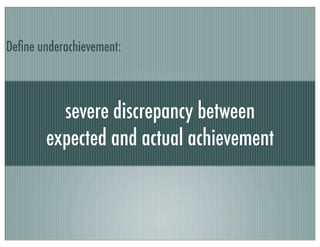
severe discrepancy between
expected and actual achievement
Define underachievement:
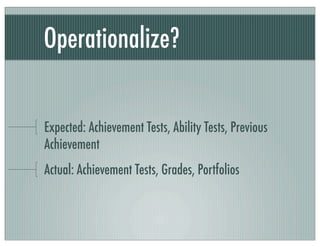
Operationalize?
Expected: Achievement Tests, Ability Tests, Previous
Achievement
Actual: Achievement Tests, Grades, Portfolios
Identifying
Underachievement
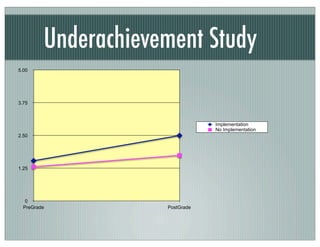
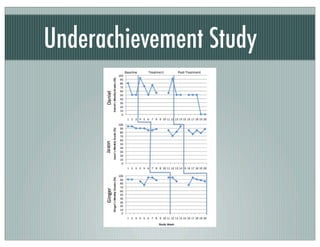
Underachievement Study
0
1.25
2.50
3.75
5.00
PreGrade PostGrade
Implementation
No Implementation
Underachievement Study
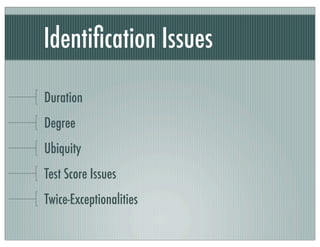
Identification Issues
Duration
Degree
Ubiquity
Test Score Issues
Twice-Exceptionalities
Potential Causes
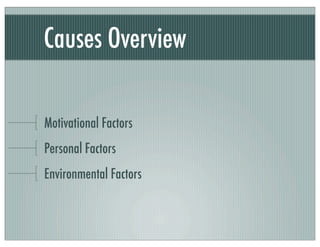
Causes Overview
Motivational Factors
Personal Factors
Environmental Factors
Strategies to Promote
Achievement
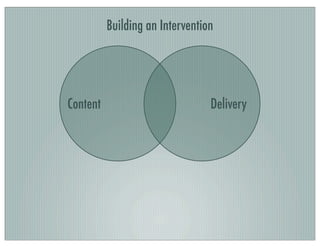
Content Delivery
Building an Intervention
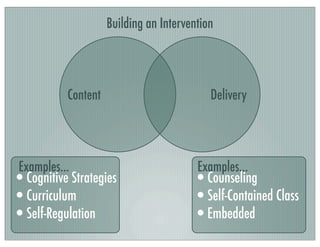
Content Delivery
Building an Intervention
•Cognitive Strategies
•Curriculum
•Self-Regulation
Examples...
•Counseling
•Self-Contained Class
•Embedded
Examples...
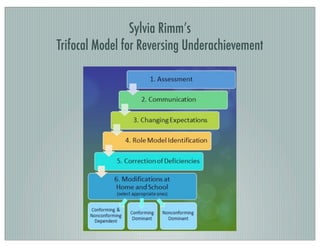
Tale of Two Models
Sylvia Rimm’s
Trifocal Model for Reversing Underachievement
Achievement
Orientation Model
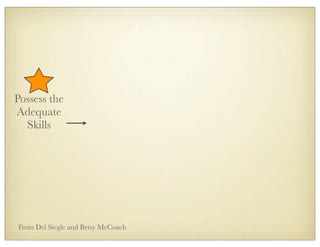
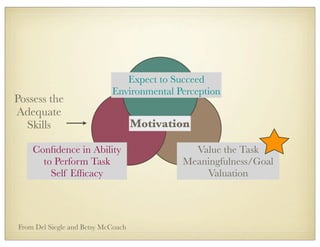
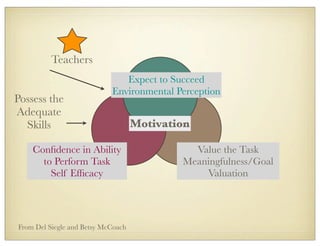
Possess the
Adequate
Skills
From Del Siegle and Betsy McCoach
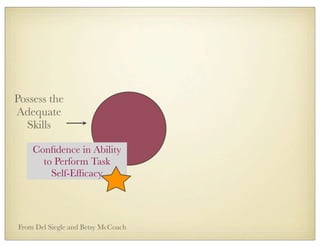
Confidence in Ability
to Perform Task
Self-Efficacy
Possess the
Adequate
Skills
From Del Siegle and Betsy McCoach
Stable/Fixed
Flexible
OR
Types of Praise
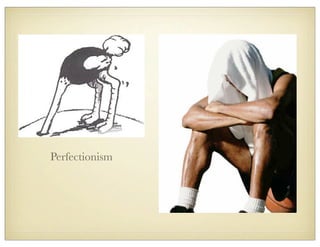
Perfectionism
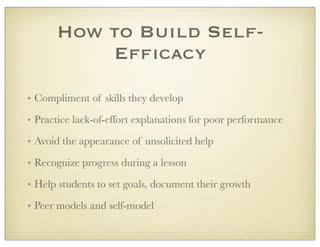
How to Build Self-
Efficacy
• Compliment of skills they develop
• Practice lack-of-effort explanations for poor performance
• Avoid the appearance of unsolicited help
• Recognize progress during a lesson
• Help students to set goals, document their growth
• Peer models and self-model
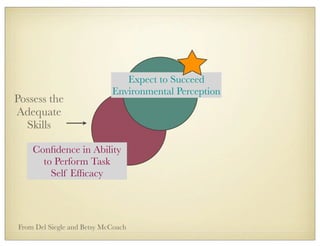
Expect to Succeed
Environmental Perception
Confidence in Ability
to Perform Task
Self Efficacy
Possess the
Adequate
Skills
From Del Siegle and Betsy McCoach
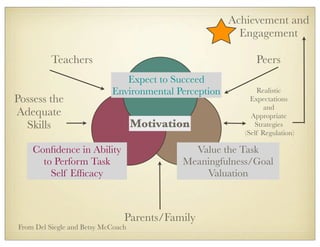
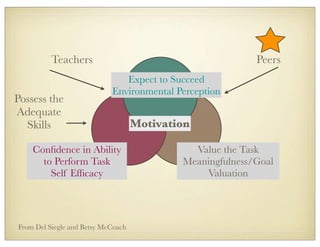
Motivation
Expect to Succeed
Environmental Perception
Confidence in Ability
to Perform Task
Self Efficacy
Value the Task
Meaningfulness/Goal
Valuation
Possess the
Adequate
Skills
From Del Siegle and Betsy McCoach
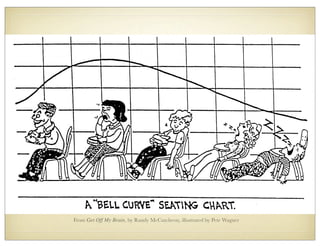
From Get Off My Brain, by Randy McCutcheon, illustrated by Pete Wagner
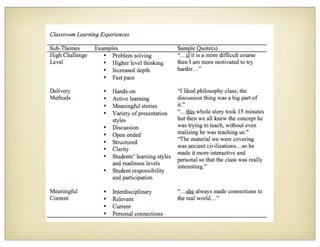
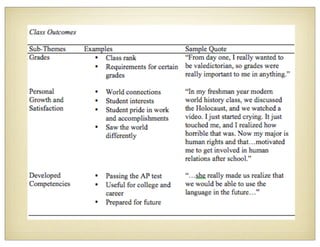
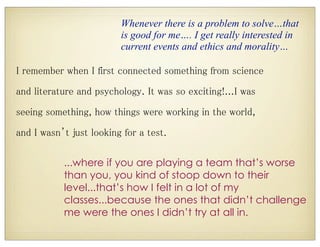
I remember when I first connected something from science
and literature and psychology. It was so exciting!...I was
seeing something, how things were working in the world,
and I wasn’t just looking for a test.
...where if you are playing a team that’s worse
than you, you kind of stoop down to their
level...that’s how I felt in a lot of my
classes...because the ones that didn’t challenge
me were the ones I didn’t try at all in.
Whenever there is a problem to solve…that
is good for me…. I get really interested in
current events and ethics and morality…
Motivation
Expect to Succeed
Environmental Perception
Confidence in Ability
to Perform Task
Self Efficacy
Value the Task
Meaningfulness/Goal
Valuation
Possess the
Adequate
Skills
Teachers
From Del Siegle and Betsy McCoach
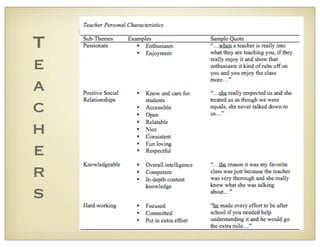
T
e
a
c
h
e
r
s
Motivation
Expect to Succeed
Environmental Perception
Confidence in Ability
to Perform Task
Self Efficacy
Value the Task
Meaningfulness/Goal
Valuation
Possess the
Adequate
Skills
Teachers Peers
From Del Siegle and Betsy McCoach
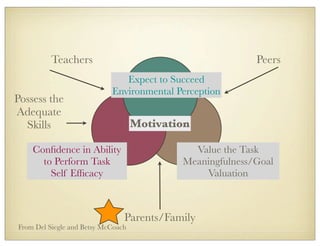
Motivation
Expect to Succeed
Environmental Perception
Confidence in Ability
to Perform Task
Self Efficacy
Value the Task
Meaningfulness/Goal
Valuation
Possess the
Adequate
Skills
Teachers Peers
Parents/Family
From Del Siegle and Betsy McCoach
Motivation
Expect to Succeed
Environmental Perception
Confidence in Ability
to Perform Task
Self Efficacy
Value the Task
Meaningfulness/Goal
Valuation
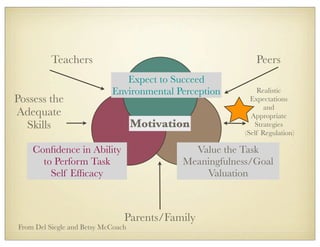
Possess the
Adequate
Skills
Realistic
Expectations
and
Appropriate
Strategies
(Self Regulation)
Teachers Peers
Parents/Family
From Del Siegle and Betsy McCoach
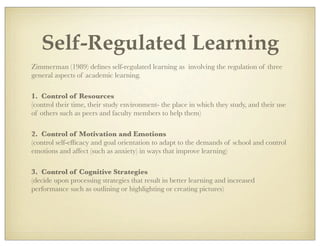
Self-Regulated Learning
Zimmerman (1989) defines self-regulated learning as involving the regulation of three
general aspects of academic learning.
1. Control of Resources
(control their time, their study environment- the place in which they study, and their use
of others such as peers and faculty members to help them)
2. Control of Motivation and Emotions
(control self-efficacy and goal orientation to adapt to the demands of school and control
emotions and affect (such as anxiety) in ways that improve learning)
3. Control of Cognitive Strategies
(decide upon processing strategies that result in better learning and increased
performance such as outlining or highlighting or creating pictures)
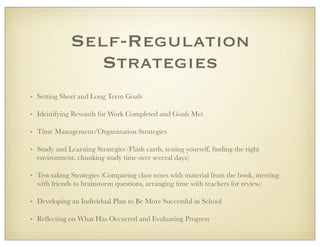
Self-Regulation
Strategies
• Setting Short and Long Term Goals
• Identifying Rewards for Work Completed and Goals Met
• Time Management/Organization Strategies
• Study and Learning Strategies (Flash cards, testing yourself, finding the right
environment, chunking study time over several days)
• Test-taking Strategies (Comparing class notes with material from the book, meeting
with friends to brainstorm questions, arranging time with teachers for review)
• Developing an Individual Plan to Be More Successful in School
• Reflecting on What Has Occurred and Evaluating Progress
Motivation
Expect to Succeed
Environmental Perception
Confidence in Ability
to Perform Task
Self Efficacy
Value the Task
Meaningfulness/Goal
Valuation
Possess the
Adequate
Skills
Realistic
Expectations
and
Appropriate
Strategies
(Self Regulation)
Teachers Peers
Parents/Family
From Del Siegle and Betsy McCoach
Achievement and
Engagement
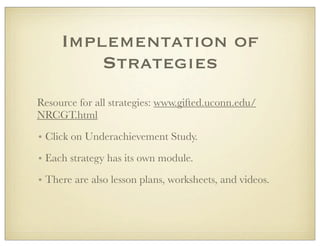
Implementation of
Strategies
Resource for all strategies: www.gifted.uconn.edu/
NRCGT.html
• Click on Underachievement Study.
• Each strategy has its own module.
• There are also lesson plans, worksheets, and videos.
Plan
Define.
Identify.
Intervene.
Questions?
lmrubenstein@bsu.edu
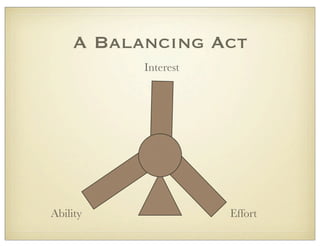
EffortAbility
Interest
A Balancing Act
IAG Underachievement

IAG Underachievement