ORGANIC POULTRY
PRODUCTION
Codex Alimentarius
Commission
 “ a holistic production management
system which promotes and enhances
agro-ecosystem, health including
bio-diversity, biological cycles and
soil biological activity”.
What is “organic”?
 “Organic agriculture is an ecological production
management system that promotes and enhances
biodiversity, biological cycles and soil biological
activity.
 It is based on minimal use of off-farm inputs and on
management practices that restore, maintain and
enhance ecological harmony.”
(National (UK) Organic Standards Board, April 1995).
Why an organic standard?
 “National (USA) standards for organic food production
were designed to bring about a greater uniformity in
the production, manufacture, and marketing of organic
products.
 With a national standard, consumers across the
country can go into any store and have full confidence
that any food product labeled as “organic” meets a
consistent standard, no matter where it was made.”
(Federal Register, March 13, 2000).
National organic standards
Board (NOSB), USA
 The NOSB includes
 3 environmentalist representatives,
 4 organic farmers/ranchers,
 3 consumer representatives,
 1 organic retailer,
 2 organic processors,
 1 scientist, and
 1 certifying agent.
Requirement for 100% Organic Feed
 The producer of an organic livestock
operation must provide livestock with a total
feed ration comprised of agricultural
products, including pasture and forage, that
are organically produced and, if applicable,
organically handled
Contd..
 The producer of an organic operation must not
 Use animal drugs, including hormones, to promote growth
 Provide feed supplements or additives in amounts above those
needed for
 Use plastics
 Feed formulas containing urea or manure;
 Feed mammalian or poultry slaughter by-products to mammals or
poultry; or
 Use feed, feed additives, and feed supplements in violation of the
Federal Food, Drug, and Cosmetic Act.
 adequate nutrition and health maintenance for the species at its
specific stage of life;
adequate nutrition and health maintenance for the species at its
specific stage of life;
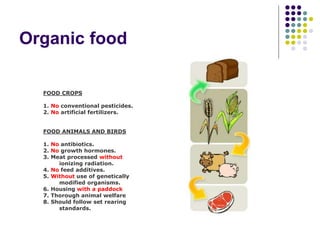
Organic food
FOOD CROPS
1. No conventional pesticides.
2. No artificial fertilizers.
FOOD ANIMALS AND BIRDS
1. No antibiotics.
2. No growth hormones.
3. Meat processed without
ionizing radiation.
4. No feed additives.
5. Without use of genetically
modified organisms.
6. Housing with a paddock
7. Thorough animal welfare
8. Should follow set rearing
standards.
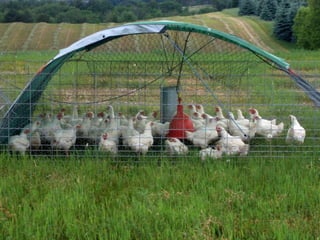
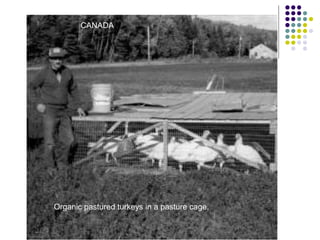
Organic pastured turkeys in a pasture cage.
CANADA
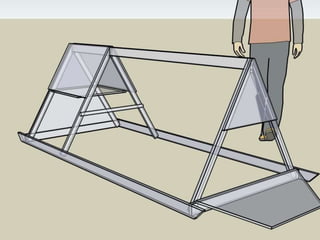
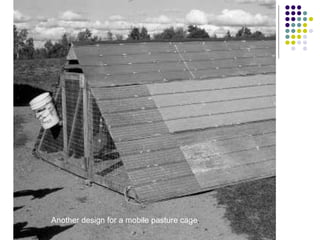
Another design for a mobile pasture cage.
In Canada
 No antibiotics or meat by-products are
allowed in the feed
 Each bird is required to have two square feet
of floor space.
 One can buy conventional chicks but they
have to be raised organically from birth
 Eggs produced in this system would be
known as ‘organic’ eggs.
Canadian standards…continue
 Omega 3 – Laying hens in this system are fed a diet
enriched with feeds high in omega 3 fatty acids.
 This is normally done by adding flax seed to the laying
ration.
 It can also be achieved by pasturing the layers.
 Resent research has shown the omega 3 fatty acids to
be beneficial to human health.
 Chickens fed a ration high in omega 3 will produce
eggs much higher in omega 3 fatty acids than the
conventionally intensive reared bird.
International Federation of Organic Association
Movement , IFOAM, Victoria, Canada .2002
 One of the goal in organic farming is respect
for the physiological and behavioral needs of
livestock
 Total ban on feeding of “GMO” diet
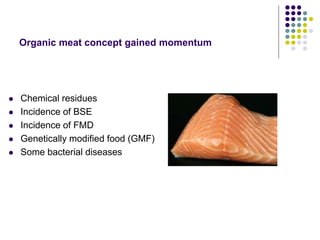
Organic meat concept gained momentum
 Chemical residues
 Incidence of BSE
 Incidence of FMD
 Genetically modified food (GMF)
 Some bacterial diseases
Primary characteristics
 A legally defined standard
 A registered,documented, inspected trail
 Operate to the highest levels of animal welfare
 No routine drugs
 No growth promotors
 No animal offal, feed additives
 Sick animals to be organically treated.
 Atleast 70% of the feed must be grown to organic standards.
 Should follow a defined withdrawal period.
ITC 1999
Sale of organic food – US $ 13.5 billions.
 Denmark
 France
 Germany
 Netherlands
 Sweden
 Switzerland
 UK
 Austria
 Italy
 USA
 Japan
Growth rate
 Organic trade growing @ 5% to 40%.
 Organic production grow @ 20% annually.
 Sale expected to reach
US$ 80 billions in 2008 (ITC, 2002).
Source: 2007 OTA Manufacturer
Survey
 Total U.S. organic sales, including food and
non-food products, were $17.7 billion in 2006,
up 21 percent from 2005.
 They are estimated to have reached $21.2
billion in 2007, and are projected to surpass
$25 billion in 2008.
(Latest available data)
Organic scenario
 Nearly 30.4 million hectares were managed organically by more than
700,000 farms in 138 countries in 2006,
 As in previous years, Australia led with the most organic land (12.3 million
hectares), followed by China (2.3 million hectares) and Argentina (2.2
million hectares).
 The United States was fourth, with 1.6 million hectares in 2005 (latest
available statistics).
 The ten countries with the most organic land represented a combined total
of nearly 24 million hectares, more than three quarters of the world’s
organic land.
 Other countries in the top ten were Italy, Uruguay, Spain, Brazil, Germany,
and the United Kingdom.
 Based on distribution by continent, Oceania led with 42 percent of organic
area, followed by Europe (24 percent), Latin America (16 percent), Asia (20
percent), North America (7 percent), and Africa (1 percent).
 However, according to the report summary, the proportion of organically
managed land to conventionally managed is highest in countries in
Europe.
(Source: The World of Organic Agriculture: Statistics & Emerging Trends 2008)
Demand and growth
 Global demand for organic products
continues to grow, with sales increasing by
over $5 billion a year, according to The World
of Organic Agriculture: Statistics & Emerging
Trends 2008.
In the world market
 Highest market - Europe ( UK,
Germany, Italy, France)
Followed by - USA
Third place - Japan
In USA
 Organic poultry meat alone constitute 64% of
the total organic meat production.
 However, major growth was noticed in
production of organic eggs and organic milk.
In UK
 Around 5% of the total meat production is
organic
 In this, a major share (42%) is organic beef.
In European Union
 GERMANY is the largest consumer of
organic food
 Consumption in 1993 was 5%
 Increased to 20% in 1997.
 DENMARK 40% of total milk production and
0.5% of total beef production was organic in
1998.
 50,000 pigs slaughtered and 5000 tonnes of
eggs produced were organic in 1998.
In AUSTRIA
 9% of milk produced was organic
 Organic beef production was to a
considerable extent.
 In FRANCE, dairy is the fastest growing
segment in organic food production.
In ARGENTINA
 268 tons of organic beef produced in 1998.
 Out of which 80% was exported.
In BRAZIL
 Organic meat production is estimated to be
increasing about 10% per year.
Carcass quality
 Organic production may lead to lower quality of
carcass and meat
 due to a reduced energy supply and growth
performance as a consequence of more locomotive
activity and
 uncontrolled environmental condition which increase
the energy requirement with consequent increase of
feed conversion, but
 greater locomotive activity reduces abdominal fat
and favoured muscle mass development
(Lewis et al., 1997).
Carcass quality
 a beef cattle in conventional finishing has
heavier carcass, larger rib eye areas and less
marbling than in organic finishing.
Woodward et al. (1999)
Carcass quality
 The production of lean carcass to meet
consumer’s demand of low fat pork has
resulted into decrease in intra muscular fat
which may reduce the eating quality.
Amino acid supplementation
 Although amino acid supplementation to
conventional pig diet resulted into increased
pig performance,but it produced fatty carcass
(Sundrum et al., 2001).
Physico-chemical qualities
 Organic meat is high in moisture, but low in
fat and energy.
 Lower water holding capacity and
 pH caused more cooking loss in organic meat
than conventional meat.
Physico-chemical qualities
 Enfalt et al. (1997) suggested a lower pH in
Longissimus lumberum and Biceps femoris of outdoor
reared pigs as a consequence of better
utilization of all substrate other than glycogen
during transportation to the slaughter house.
Physico-chemical qualities
 The pH is known to influence the structure of
myofibril and consequently water binding capacity
and thereby colour of the meat.
 No influence noticed on Tenderness
 But sheer value is higher in organically produced
animals (Farmer et al., 1997), presumably as a
consequence of their greater motor activity.
Advantages of organic meat production
a) Ensures strict animal welfare measures.
b) Better for environment
c) Better sustainability of production
d) Continuation of traditions and culture.
e) Boost to traditional technologies.
f) It is ‘safer’(antibiotic / chemical / drug/ pesticide free meat).
g) It has better protein quality (proteins of organic
pork were less denatured than those of traditional pork during
cooking).
Advantages of organic meat production
h) It has lower content of carcinogenic nitrogen
and thus reduces carcinogenic problems.
i) Organic meat taste equal to or better than
traditional meat.
j) Veterinary costs are generally significantly
lower than conventional farm (?)
Advantages of organic meat production
k) Greater mobility reduced abdominal fat and
favoured muscle mass development in broilers.
l) Motor activity increased breast percentage in
chicken.
m) Motor activity favours myogenesis against
lipogenesis
NEGATIVE
ASPECTS
Microbial qualities
 People who eat organic and natural food are eight
times more prone to attack by new strain of E. coli
bacteria (0157:H7) than rest of the population.
 Organically grown poultry is most contaminated
product and according to USDA, 99% of broiler
chicken carcass were contaminated with faecal
E.coli (Cummins et al., 2001).
Limitations
(i) Processing or preservation of meat and meat product
is difficult without use of certain chemicals
e.g., trisodium polyphosphate, sodium nitrate.
• It is practically difficult to provide a large locomotion area as
prescribed in EEC Regulation on organic livestock farming,
• eg. 6.0 m indoors +4.5 m outdoors - for dairy cows
1.5 m indoors + 1.1 m outdoors - calves
1.3 m indoors + 1.0 m outdoors - fattening pigs
1600 cm indoors + 4 m outdoors - laying hens
(Sundrum, 2001).
Limitations
(iii) Prolonged drug withdrawal period ends in deterioration of animal
welfare.
(iv) In order to control external parasites, sheep must be
dipped in an insecticide. It is now being realized that the
most common conventional dips contain potentially dangerous
chemicals (organo-phosphorus compounds), which are not
allowed under organic regulations. If organic farmers have
parasite problems in their sheep, they must use other
chemicals, which are safer, but unfortunately more expensive,
than the organo-phosphates.
Limitations
(v) Internal parasitic worms are another
headache for any livestock farmer. The
conventional method for control is to
routinely dose the animals with drugs.
The organic approach is to say that
prevention is better than cure, and that
proper rotation of pastures should enable
the farmer to avoid re-infection of his
flock or herd.
Limitations
 PRODUCTION COST IS TOO HIGH
AND
MAY BE REGARDED UNFIT/ LESS FIT
FOR DEVELOPING COUNTRIES
LIKE INDIA
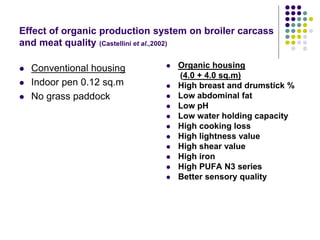
Effect of organic production system on broiler carcass
and meat quality (Castellini et al.,2002)
 Conventional housing
 Indoor pen 0.12 sq.m
 No grass paddock
 Organic housing
(4.0 + 4.0 sq.m)
 High breast and drumstick %
 Low abdominal fat
 Low pH
 Low water holding capacity
 High cooking loss
 High lightness value
 High shear value
 High iron
 High PUFA N3 series
 Better sensory quality
How long will it take to convert
my land?
 Most arable, horticultural and grass-based
farms may take a 24-month conversion
period when the land must be managed to full
organic standards
 Land used specifically for poultry and pigs
may be eligible for a reduced conversion
period.
What are prohibited inputs under
organic rules?
 synthetic fertilisers, herbicides and synthetic
pesticides. Prohibited inputs for livestock
include all organophosphate treatments, the
unauthorised use of routine veterinary
treatments, such as routine worming, and the
unauthorised feeding of non-organic
feedstuffs which might contain genetically
modified (GM) material.
Do I have to convert all my land?
 You are not required to convert all land on a holding. However,
the area should be large enough to be a viable and sustainable
production unit.
 If you are thinking of converting only part of the holding, you
will need to make sure the organic area is physically separated
from any non-organic land on the same holding by means of
stock-proof fences or hedges. You will also need to maintain
separate records, invoices and accounts for the organic business.
What stocking rate is allowed?
 Maximum outdoor stocking rates (birds/hectare):
Layers Broilers Turkeys Ducks Geese Guinea fowl
1,000 2,500 800 2,000 600 2,500
 However, EU regulations prohibit manure applications in excess
of 170kg N/ha per year on the whole agricultural area used. For
poultry, this effectively sets a maximum stocking density
equivalent to 230 laying hens/ha, and 3.5 batches of 580 table
birds/ha over the farm as a whole.
What type of feed is required?
Organic poultry must be fed on a ration that contains a minimum
of 60% certified organic feed. The balance can be made up of ‘in
conversion’ feeds, which are harvested during the second year of
organic conversion, or additional certified organic feed.
Most feed companies registered with SA Certification will sell acceptable
rations under the SA standards.No more than 15% of the ration should come from
approved non-organic feeds.
The maximum non-organic feed allowance is:
• 15% until 31 December 2007,
• 10% from 1 January 2008 to 31 December 2009,
• 5% from 1 January 2010 to 31 December 2011.
These percentages are calculated on an annual dry matter basis
of feeds from agricultural origin. The maximum daily non-organic
allowance remains at 25%.
Can fish meal be a part of the
ration?
Yes.
Due to the ban on synthetic amino acids in
organic rations under the EU organic
livestock regulation, fish meal can now be
included in all poultry rations.
Does the land ranged by poultry
have to be rested?
Yes.
For table birds there is a requirement to rest the
pasture for eight weeks in any one calendar
year.
For laying birds the pasture should be rested
for at least nine months after each batch of
birds.
How does a flock of laying hens
become organic?
Producers must use organic pullets (reared
organically from less than three days old to
point of lay) where available.
Which breeds are best?
Producers can use commercial hybrids or
traditional breeds as they wish.
In many cases the quality of the rearing is
more important than the breed.
What system of management
can be used?
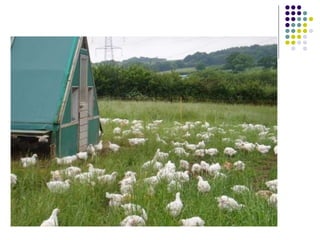
Free range.
Mobile houses are preferred, as they allow grazing
areas to be rotated, and because fixed houses tend
to have less pasture in close proximity
However, fixed houses are permitted if other
management requirements are met.
What sort of housing is suitable?
Houses should provide enough space for birds
to move around freely. SA standards favour
buildings which house not more than 500
birds and are mobile.
However, over 500 – and up to 2,000 birds –
may be allowed in one housing group on a
‘restricted basis’;
Should there be any litter in the
houses?
Yes. There should always be litter for birds to
scratch in, and chopped straw makes the
best manure.
The standards require that litter must be
regularly replenished and kept in a dry and
friable condition.
Are there requirements for the
dimensions of the house?
Yes. The requirements are:
• Stocking rates: maximum six birds/sq.m
• Perch space: minimum 18 cm/bird
• Individual nest boxes: maximum six birds/nest
• Communal nests: minimum 120 sq.cm/bird
• Slatted floor area: maximum 50%
• Exit/entry pop-holes: minimum 4m/100m2 floor area
• Area of poultry houses: maximum 1,600sq.m per
unit.
Can the house have a slatted
floor?
Yes.
Fixed houses with a solid floor can have part of
the area slatted with a collection area for
droppings. Slats may make up 50% of the
floor area
Is artificial lighting permitted?
Yes.
Artificial lighting will normally be necessary to ensure
continuity of egg production. However, ‘daylight’
should not exceed 16 hours and should only extend
the day in the morning.
The day must end with a natural dusk.
Batteries, solar powered units and small wind
generators are often used for mobile houses to
provide lighting and to power other services in the
house.
What about brooding?
Chicks can be brooded within their field house
or in a specialised brooding house. They
should be encouraged to start ranging as
early as possible.
Are there any specific
requirements for the house?
Yes.
The house must provide a minimum internal
stocking density for broilers and ducks of
21kg/sq.m (10 birds) in fixed housing, and 30
kg/sq.m (maximum 16 birds) in mobile
housing.
For turkeys and geese this equates to two
birds/m2.
What about arrangements for on-
farm slaughter?
Many organic producers kill and process birds
on the farm.
Dry plucking is recommended but wet plucking
is permitted.
What if the birds are sent to a
slaughterhouse?
If meat is to be marketed as organic, the
animals must be slaughtered and butchered
by operators who are registered with an
organic inspection body and subject to an
annual inspection process.
Can beaks be trimmed to prevent
feather pecking?
Beak-trimming is prohibited under SA
standards. Pullets should be ordered well in
advance to ensure that birds are not beak-
trimmed.
What can I use to treat external
parasites?
Houses should be thoroughly disinfected between batches
with iodoform, steam, blowtorch or lime, depending on the
materials used for construction.
Attention should be paid to house construction: a good design with
washable surfaces and without hard-to-clean cracks and cavities
will help to ensure a parasite-free house.
If treatment is required, there are various plant-based or
physically acting products that may be effective. As a last resort,
a cypermethrin product can be used with permission.
What about vaccination?
Vaccines should only be used if there is a
known disease risk on the farm, or
neighbouring farm, which cannot be
controlled by any other means
How can coccidiosis be
controlled?
Like many other poultry diseases, coccidiosis can be successfully
controlled through good management, proper cleaning and
disinfection of houses.
Ensure litter is kept dry and clean by replacing regularly, and
that a proper rotation of poultry pasture is maintained. Where
these fail, it would be possible to obtain permission from your
certification body to treat with a coccidiostat, on veterinary
advice, and a vaccine may be considered for the future.
What about roundworms and
tape worms?
If pasture is well rested these parasites should
not pose too much of a problem.
Is there a market for organic
eggs?
 Yes and No
Conclusion
 Though, organic meat production is in
practice since 12-15 years in the world
market, it is yet to mark a position.
 Developing countries may take about10
years to conceive the concept.
 Organic meat are generally more tough.
 In the current situation, the food animals may
be ranked organic,….
Goat – Sheep – Rabbit – Pig – Broiler- Cattle
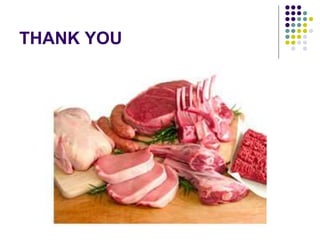
THANK YOU

Organic poultry production

  • 1.
  • 2.
    Codex Alimentarius Commission  “a holistic production management system which promotes and enhances agro-ecosystem, health including bio-diversity, biological cycles and soil biological activity”.
  • 3.
    What is “organic”? “Organic agriculture is an ecological production management system that promotes and enhances biodiversity, biological cycles and soil biological activity.  It is based on minimal use of off-farm inputs and on management practices that restore, maintain and enhance ecological harmony.” (National (UK) Organic Standards Board, April 1995).
  • 4.
    Why an organicstandard?  “National (USA) standards for organic food production were designed to bring about a greater uniformity in the production, manufacture, and marketing of organic products.  With a national standard, consumers across the country can go into any store and have full confidence that any food product labeled as “organic” meets a consistent standard, no matter where it was made.” (Federal Register, March 13, 2000).
  • 5.
    National organic standards Board(NOSB), USA  The NOSB includes  3 environmentalist representatives,  4 organic farmers/ranchers,  3 consumer representatives,  1 organic retailer,  2 organic processors,  1 scientist, and  1 certifying agent.
  • 6.
    Requirement for 100%Organic Feed  The producer of an organic livestock operation must provide livestock with a total feed ration comprised of agricultural products, including pasture and forage, that are organically produced and, if applicable, organically handled
  • 7.
    Contd..  The producerof an organic operation must not  Use animal drugs, including hormones, to promote growth  Provide feed supplements or additives in amounts above those needed for  Use plastics  Feed formulas containing urea or manure;  Feed mammalian or poultry slaughter by-products to mammals or poultry; or  Use feed, feed additives, and feed supplements in violation of the Federal Food, Drug, and Cosmetic Act.  adequate nutrition and health maintenance for the species at its specific stage of life; adequate nutrition and health maintenance for the species at its specific stage of life;
  • 8.
    Organic food FOOD CROPS 1.No conventional pesticides. 2. No artificial fertilizers. FOOD ANIMALS AND BIRDS 1. No antibiotics. 2. No growth hormones. 3. Meat processed without ionizing radiation. 4. No feed additives. 5. Without use of genetically modified organisms. 6. Housing with a paddock 7. Thorough animal welfare 8. Should follow set rearing standards.
  • 17.
    Organic pastured turkeysin a pasture cage. CANADA
  • 18.
    Another design fora mobile pasture cage.
  • 19.
    In Canada  Noantibiotics or meat by-products are allowed in the feed  Each bird is required to have two square feet of floor space.  One can buy conventional chicks but they have to be raised organically from birth  Eggs produced in this system would be known as ‘organic’ eggs.
  • 20.
    Canadian standards…continue  Omega3 – Laying hens in this system are fed a diet enriched with feeds high in omega 3 fatty acids.  This is normally done by adding flax seed to the laying ration.  It can also be achieved by pasturing the layers.  Resent research has shown the omega 3 fatty acids to be beneficial to human health.  Chickens fed a ration high in omega 3 will produce eggs much higher in omega 3 fatty acids than the conventionally intensive reared bird.
  • 21.
    International Federation ofOrganic Association Movement , IFOAM, Victoria, Canada .2002  One of the goal in organic farming is respect for the physiological and behavioral needs of livestock  Total ban on feeding of “GMO” diet
  • 22.
    Organic meat conceptgained momentum  Chemical residues  Incidence of BSE  Incidence of FMD  Genetically modified food (GMF)  Some bacterial diseases
  • 23.
    Primary characteristics  Alegally defined standard  A registered,documented, inspected trail  Operate to the highest levels of animal welfare  No routine drugs  No growth promotors  No animal offal, feed additives  Sick animals to be organically treated.  Atleast 70% of the feed must be grown to organic standards.  Should follow a defined withdrawal period.
  • 24.
    ITC 1999 Sale oforganic food – US $ 13.5 billions.  Denmark  France  Germany  Netherlands  Sweden  Switzerland  UK  Austria  Italy  USA  Japan
  • 25.
    Growth rate  Organictrade growing @ 5% to 40%.  Organic production grow @ 20% annually.  Sale expected to reach US$ 80 billions in 2008 (ITC, 2002).
  • 26.
    Source: 2007 OTAManufacturer Survey  Total U.S. organic sales, including food and non-food products, were $17.7 billion in 2006, up 21 percent from 2005.  They are estimated to have reached $21.2 billion in 2007, and are projected to surpass $25 billion in 2008. (Latest available data)
  • 27.
    Organic scenario  Nearly30.4 million hectares were managed organically by more than 700,000 farms in 138 countries in 2006,  As in previous years, Australia led with the most organic land (12.3 million hectares), followed by China (2.3 million hectares) and Argentina (2.2 million hectares).  The United States was fourth, with 1.6 million hectares in 2005 (latest available statistics).  The ten countries with the most organic land represented a combined total of nearly 24 million hectares, more than three quarters of the world’s organic land.  Other countries in the top ten were Italy, Uruguay, Spain, Brazil, Germany, and the United Kingdom.  Based on distribution by continent, Oceania led with 42 percent of organic area, followed by Europe (24 percent), Latin America (16 percent), Asia (20 percent), North America (7 percent), and Africa (1 percent).  However, according to the report summary, the proportion of organically managed land to conventionally managed is highest in countries in Europe. (Source: The World of Organic Agriculture: Statistics & Emerging Trends 2008)
  • 28.
    Demand and growth Global demand for organic products continues to grow, with sales increasing by over $5 billion a year, according to The World of Organic Agriculture: Statistics & Emerging Trends 2008.
  • 29.
    In the worldmarket  Highest market - Europe ( UK, Germany, Italy, France) Followed by - USA Third place - Japan
  • 30.
    In USA  Organicpoultry meat alone constitute 64% of the total organic meat production.  However, major growth was noticed in production of organic eggs and organic milk.
  • 31.
    In UK  Around5% of the total meat production is organic  In this, a major share (42%) is organic beef.
  • 32.
    In European Union GERMANY is the largest consumer of organic food  Consumption in 1993 was 5%  Increased to 20% in 1997.  DENMARK 40% of total milk production and 0.5% of total beef production was organic in 1998.  50,000 pigs slaughtered and 5000 tonnes of eggs produced were organic in 1998.
  • 33.
    In AUSTRIA  9%of milk produced was organic  Organic beef production was to a considerable extent.  In FRANCE, dairy is the fastest growing segment in organic food production.
  • 34.
    In ARGENTINA  268tons of organic beef produced in 1998.  Out of which 80% was exported.
  • 35.
    In BRAZIL  Organicmeat production is estimated to be increasing about 10% per year.
  • 36.
    Carcass quality  Organicproduction may lead to lower quality of carcass and meat  due to a reduced energy supply and growth performance as a consequence of more locomotive activity and  uncontrolled environmental condition which increase the energy requirement with consequent increase of feed conversion, but  greater locomotive activity reduces abdominal fat and favoured muscle mass development (Lewis et al., 1997).
  • 37.
    Carcass quality  abeef cattle in conventional finishing has heavier carcass, larger rib eye areas and less marbling than in organic finishing. Woodward et al. (1999)
  • 38.
    Carcass quality  Theproduction of lean carcass to meet consumer’s demand of low fat pork has resulted into decrease in intra muscular fat which may reduce the eating quality.
  • 39.
    Amino acid supplementation Although amino acid supplementation to conventional pig diet resulted into increased pig performance,but it produced fatty carcass (Sundrum et al., 2001).
  • 40.
    Physico-chemical qualities  Organicmeat is high in moisture, but low in fat and energy.  Lower water holding capacity and  pH caused more cooking loss in organic meat than conventional meat.
  • 41.
    Physico-chemical qualities  Enfaltet al. (1997) suggested a lower pH in Longissimus lumberum and Biceps femoris of outdoor reared pigs as a consequence of better utilization of all substrate other than glycogen during transportation to the slaughter house.
  • 42.
    Physico-chemical qualities  ThepH is known to influence the structure of myofibril and consequently water binding capacity and thereby colour of the meat.  No influence noticed on Tenderness  But sheer value is higher in organically produced animals (Farmer et al., 1997), presumably as a consequence of their greater motor activity.
  • 43.
    Advantages of organicmeat production a) Ensures strict animal welfare measures. b) Better for environment c) Better sustainability of production d) Continuation of traditions and culture. e) Boost to traditional technologies. f) It is ‘safer’(antibiotic / chemical / drug/ pesticide free meat). g) It has better protein quality (proteins of organic pork were less denatured than those of traditional pork during cooking).
  • 44.
    Advantages of organicmeat production h) It has lower content of carcinogenic nitrogen and thus reduces carcinogenic problems. i) Organic meat taste equal to or better than traditional meat. j) Veterinary costs are generally significantly lower than conventional farm (?)
  • 45.
    Advantages of organicmeat production k) Greater mobility reduced abdominal fat and favoured muscle mass development in broilers. l) Motor activity increased breast percentage in chicken. m) Motor activity favours myogenesis against lipogenesis
  • 46.
  • 47.
    Microbial qualities  Peoplewho eat organic and natural food are eight times more prone to attack by new strain of E. coli bacteria (0157:H7) than rest of the population.  Organically grown poultry is most contaminated product and according to USDA, 99% of broiler chicken carcass were contaminated with faecal E.coli (Cummins et al., 2001).
  • 48.
    Limitations (i) Processing orpreservation of meat and meat product is difficult without use of certain chemicals e.g., trisodium polyphosphate, sodium nitrate. • It is practically difficult to provide a large locomotion area as prescribed in EEC Regulation on organic livestock farming, • eg. 6.0 m indoors +4.5 m outdoors - for dairy cows 1.5 m indoors + 1.1 m outdoors - calves 1.3 m indoors + 1.0 m outdoors - fattening pigs 1600 cm indoors + 4 m outdoors - laying hens (Sundrum, 2001).
  • 49.
    Limitations (iii) Prolonged drugwithdrawal period ends in deterioration of animal welfare. (iv) In order to control external parasites, sheep must be dipped in an insecticide. It is now being realized that the most common conventional dips contain potentially dangerous chemicals (organo-phosphorus compounds), which are not allowed under organic regulations. If organic farmers have parasite problems in their sheep, they must use other chemicals, which are safer, but unfortunately more expensive, than the organo-phosphates.
  • 50.
    Limitations (v) Internal parasiticworms are another headache for any livestock farmer. The conventional method for control is to routinely dose the animals with drugs. The organic approach is to say that prevention is better than cure, and that proper rotation of pastures should enable the farmer to avoid re-infection of his flock or herd.
  • 51.
    Limitations  PRODUCTION COSTIS TOO HIGH AND MAY BE REGARDED UNFIT/ LESS FIT FOR DEVELOPING COUNTRIES LIKE INDIA
  • 52.
    Effect of organicproduction system on broiler carcass and meat quality (Castellini et al.,2002)  Conventional housing  Indoor pen 0.12 sq.m  No grass paddock  Organic housing (4.0 + 4.0 sq.m)  High breast and drumstick %  Low abdominal fat  Low pH  Low water holding capacity  High cooking loss  High lightness value  High shear value  High iron  High PUFA N3 series  Better sensory quality
  • 53.
    How long willit take to convert my land?  Most arable, horticultural and grass-based farms may take a 24-month conversion period when the land must be managed to full organic standards  Land used specifically for poultry and pigs may be eligible for a reduced conversion period.
  • 54.
    What are prohibitedinputs under organic rules?  synthetic fertilisers, herbicides and synthetic pesticides. Prohibited inputs for livestock include all organophosphate treatments, the unauthorised use of routine veterinary treatments, such as routine worming, and the unauthorised feeding of non-organic feedstuffs which might contain genetically modified (GM) material.
  • 55.
    Do I haveto convert all my land?  You are not required to convert all land on a holding. However, the area should be large enough to be a viable and sustainable production unit.  If you are thinking of converting only part of the holding, you will need to make sure the organic area is physically separated from any non-organic land on the same holding by means of stock-proof fences or hedges. You will also need to maintain separate records, invoices and accounts for the organic business.
  • 56.
    What stocking rateis allowed?  Maximum outdoor stocking rates (birds/hectare): Layers Broilers Turkeys Ducks Geese Guinea fowl 1,000 2,500 800 2,000 600 2,500  However, EU regulations prohibit manure applications in excess of 170kg N/ha per year on the whole agricultural area used. For poultry, this effectively sets a maximum stocking density equivalent to 230 laying hens/ha, and 3.5 batches of 580 table birds/ha over the farm as a whole.
  • 57.
    What type offeed is required? Organic poultry must be fed on a ration that contains a minimum of 60% certified organic feed. The balance can be made up of ‘in conversion’ feeds, which are harvested during the second year of organic conversion, or additional certified organic feed. Most feed companies registered with SA Certification will sell acceptable rations under the SA standards.No more than 15% of the ration should come from approved non-organic feeds. The maximum non-organic feed allowance is: • 15% until 31 December 2007, • 10% from 1 January 2008 to 31 December 2009, • 5% from 1 January 2010 to 31 December 2011. These percentages are calculated on an annual dry matter basis of feeds from agricultural origin. The maximum daily non-organic allowance remains at 25%.
  • 58.
    Can fish mealbe a part of the ration? Yes. Due to the ban on synthetic amino acids in organic rations under the EU organic livestock regulation, fish meal can now be included in all poultry rations.
  • 59.
    Does the landranged by poultry have to be rested? Yes. For table birds there is a requirement to rest the pasture for eight weeks in any one calendar year. For laying birds the pasture should be rested for at least nine months after each batch of birds.
  • 60.
    How does aflock of laying hens become organic? Producers must use organic pullets (reared organically from less than three days old to point of lay) where available.
  • 61.
    Which breeds arebest? Producers can use commercial hybrids or traditional breeds as they wish. In many cases the quality of the rearing is more important than the breed.
  • 62.
    What system ofmanagement can be used? Free range. Mobile houses are preferred, as they allow grazing areas to be rotated, and because fixed houses tend to have less pasture in close proximity However, fixed houses are permitted if other management requirements are met.
  • 63.
    What sort ofhousing is suitable? Houses should provide enough space for birds to move around freely. SA standards favour buildings which house not more than 500 birds and are mobile. However, over 500 – and up to 2,000 birds – may be allowed in one housing group on a ‘restricted basis’;
  • 64.
    Should there beany litter in the houses? Yes. There should always be litter for birds to scratch in, and chopped straw makes the best manure. The standards require that litter must be regularly replenished and kept in a dry and friable condition.
  • 65.
    Are there requirementsfor the dimensions of the house? Yes. The requirements are: • Stocking rates: maximum six birds/sq.m • Perch space: minimum 18 cm/bird • Individual nest boxes: maximum six birds/nest • Communal nests: minimum 120 sq.cm/bird • Slatted floor area: maximum 50% • Exit/entry pop-holes: minimum 4m/100m2 floor area • Area of poultry houses: maximum 1,600sq.m per unit.
  • 66.
    Can the househave a slatted floor? Yes. Fixed houses with a solid floor can have part of the area slatted with a collection area for droppings. Slats may make up 50% of the floor area
  • 67.
    Is artificial lightingpermitted? Yes. Artificial lighting will normally be necessary to ensure continuity of egg production. However, ‘daylight’ should not exceed 16 hours and should only extend the day in the morning. The day must end with a natural dusk. Batteries, solar powered units and small wind generators are often used for mobile houses to provide lighting and to power other services in the house.
  • 68.
    What about brooding? Chickscan be brooded within their field house or in a specialised brooding house. They should be encouraged to start ranging as early as possible.
  • 69.
    Are there anyspecific requirements for the house? Yes. The house must provide a minimum internal stocking density for broilers and ducks of 21kg/sq.m (10 birds) in fixed housing, and 30 kg/sq.m (maximum 16 birds) in mobile housing. For turkeys and geese this equates to two birds/m2.
  • 70.
    What about arrangementsfor on- farm slaughter? Many organic producers kill and process birds on the farm. Dry plucking is recommended but wet plucking is permitted.
  • 71.
    What if thebirds are sent to a slaughterhouse? If meat is to be marketed as organic, the animals must be slaughtered and butchered by operators who are registered with an organic inspection body and subject to an annual inspection process.
  • 72.
    Can beaks betrimmed to prevent feather pecking? Beak-trimming is prohibited under SA standards. Pullets should be ordered well in advance to ensure that birds are not beak- trimmed.
  • 73.
    What can Iuse to treat external parasites? Houses should be thoroughly disinfected between batches with iodoform, steam, blowtorch or lime, depending on the materials used for construction. Attention should be paid to house construction: a good design with washable surfaces and without hard-to-clean cracks and cavities will help to ensure a parasite-free house. If treatment is required, there are various plant-based or physically acting products that may be effective. As a last resort, a cypermethrin product can be used with permission.
  • 74.
    What about vaccination? Vaccinesshould only be used if there is a known disease risk on the farm, or neighbouring farm, which cannot be controlled by any other means
  • 75.
    How can coccidiosisbe controlled? Like many other poultry diseases, coccidiosis can be successfully controlled through good management, proper cleaning and disinfection of houses. Ensure litter is kept dry and clean by replacing regularly, and that a proper rotation of poultry pasture is maintained. Where these fail, it would be possible to obtain permission from your certification body to treat with a coccidiostat, on veterinary advice, and a vaccine may be considered for the future.
  • 76.
    What about roundwormsand tape worms? If pasture is well rested these parasites should not pose too much of a problem.
  • 77.
    Is there amarket for organic eggs?  Yes and No
  • 78.
    Conclusion  Though, organicmeat production is in practice since 12-15 years in the world market, it is yet to mark a position.  Developing countries may take about10 years to conceive the concept.  Organic meat are generally more tough.  In the current situation, the food animals may be ranked organic,…. Goat – Sheep – Rabbit – Pig – Broiler- Cattle
  • 79.