Organisational Change
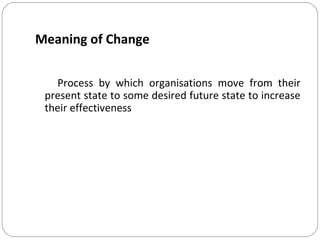
Meaning of Change
Process by which organisations move from their
present state to some desired future state to increase
their effectiveness
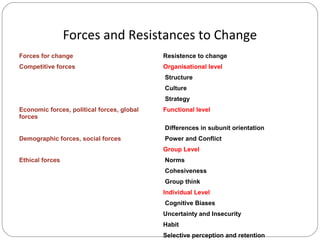
Forces and Resistances to Change
Forces for change

Resistence to change

Competitive forces

Organisational level
Structure
Culture
Strategy

Economic forces, political forces, global
forces

Functional level
Differences in subunit orientation

Demographic forces, social forces

Power and Conflict
Group Level

Ethical forces

Norms
Cohesiveness
Group think
Individual Level
Cognitive Biases
Uncertainty and Insecurity
Habit
Selective perception and retention
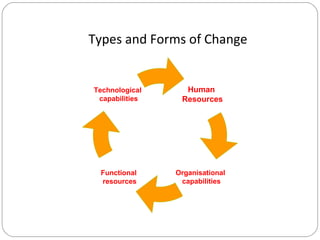
Types and Forms of Change

Technological
capabilities

Human
Resources

Functional
resources

Organisational
capabilities
Evolutionary Change (E-Change)
 Evolutionary change is Gradual, incremental, and

specifically or narrowly focused
 Not a drastic or sudden altering of basic nature of the

organizations strategy and structure but a constant
attempt to improve, adapt and adjust strategy and
structure to accommodate to the changes taking place in
the environment
Instruments of E-Change
 Sociatechnical systems theory
 Total quality management
 Creation of Empowered Flexible workers and Flexible work

teams
 When will be Call for next Change
Revolutionary change (R-Change)
 Rapid,sudden,drastic,broadly focused or Organisations

wide
 A bold attempt to quickly find new ways to be effective
 Result in radical shift in ways of doing things,new goals

and a new structure
 Repercussions at all levels*

Corporate,divisional,functional,group and individual.
Instruments of R-change
Reengineering
Restructuring and
Innovation
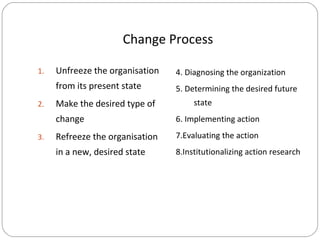
Change Process

2.

Unfreeze the organisation

4. Diagnosing the organization

from its present state

1.

5. Determining the desired future

Make the desired type of

state

change
3.

6. Implementing action

Refreeze the organisation

7.Evaluating the action

in a new, desired state

8.Institutionalizing action research
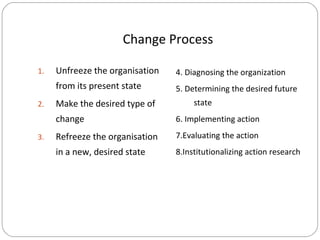
Change Process

2.

Unfreeze the organisation

4. Diagnosing the organization

from its present state

1.

5. Determining the desired future

Make the desired type of

state

change
3.

6. Implementing action

Refreeze the organisation

7.Evaluating the action

in a new, desired state

8.Institutionalizing action research

Org change unit iv

  • 1.
  • 2.
    Meaning of Change Processby which organisations move from their present state to some desired future state to increase their effectiveness
  • 3.
    Forces and Resistancesto Change Forces for change Resistence to change Competitive forces Organisational level Structure Culture Strategy Economic forces, political forces, global forces Functional level Differences in subunit orientation Demographic forces, social forces Power and Conflict Group Level Ethical forces Norms Cohesiveness Group think Individual Level Cognitive Biases Uncertainty and Insecurity Habit Selective perception and retention
  • 4.
    Types and Formsof Change Technological capabilities Human Resources Functional resources Organisational capabilities
  • 5.
    Evolutionary Change (E-Change) Evolutionary change is Gradual, incremental, and specifically or narrowly focused  Not a drastic or sudden altering of basic nature of the organizations strategy and structure but a constant attempt to improve, adapt and adjust strategy and structure to accommodate to the changes taking place in the environment
  • 6.
    Instruments of E-Change Sociatechnical systems theory  Total quality management  Creation of Empowered Flexible workers and Flexible work teams  When will be Call for next Change
  • 7.
    Revolutionary change (R-Change) Rapid,sudden,drastic,broadly focused or Organisations wide  A bold attempt to quickly find new ways to be effective  Result in radical shift in ways of doing things,new goals and a new structure  Repercussions at all levels* Corporate,divisional,functional,group and individual.
  • 8.
  • 9.
    Change Process 2. Unfreeze theorganisation 4. Diagnosing the organization from its present state 1. 5. Determining the desired future Make the desired type of state change 3. 6. Implementing action Refreeze the organisation 7.Evaluating the action in a new, desired state 8.Institutionalizing action research
  • 10.
    Change Process 2. Unfreeze theorganisation 4. Diagnosing the organization from its present state 1. 5. Determining the desired future Make the desired type of state change 3. 6. Implementing action Refreeze the organisation 7.Evaluating the action in a new, desired state 8.Institutionalizing action research