I NATURE OF PLANNED CHANGE & PRACTITIONER ORGANIZATIONAL DEVELOPMENT Introduction to Organization Development The Nature of Planned Change
Introduction to Organization Development
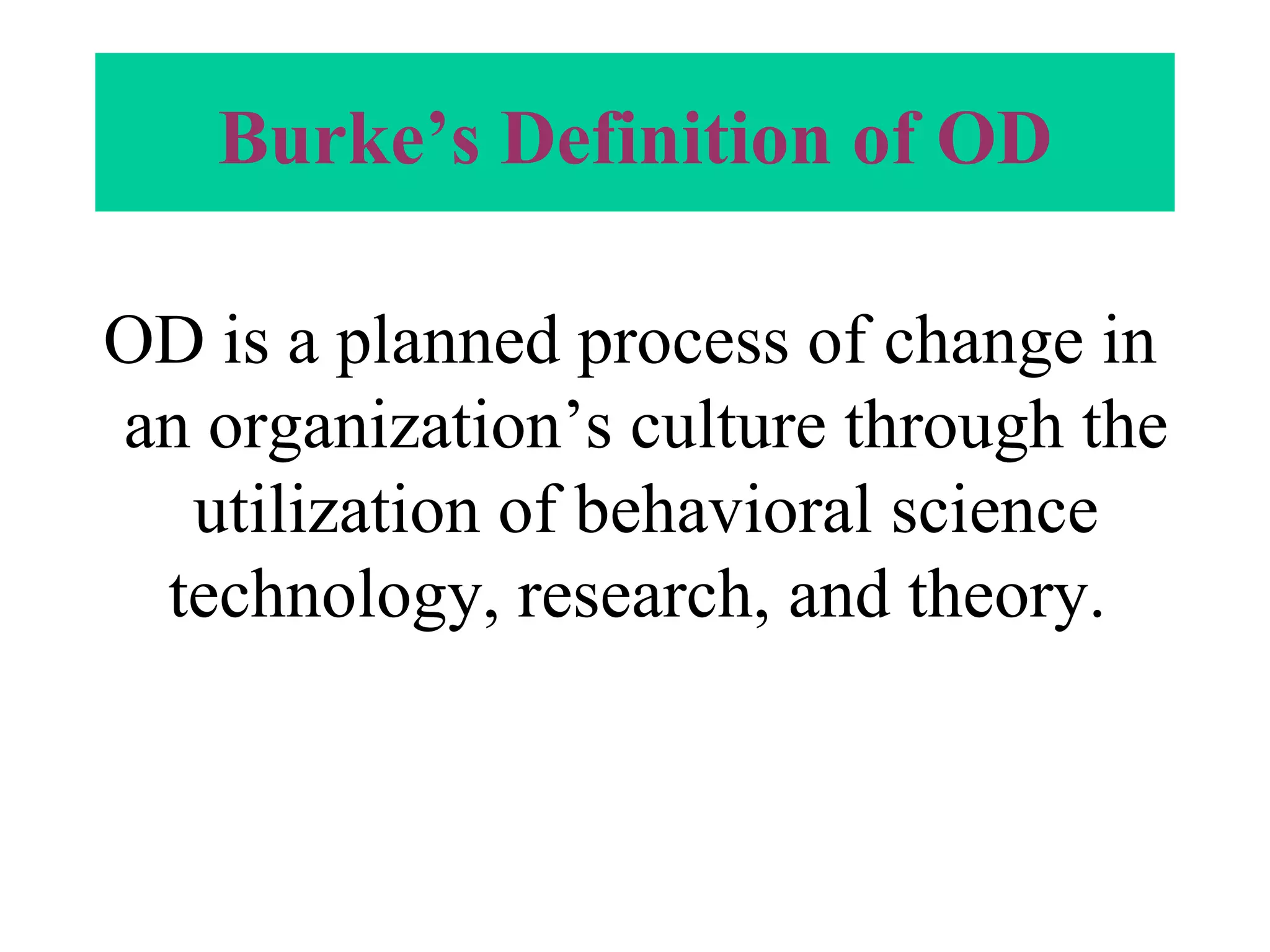
Burke’s Definition of OD OD is a planned process of change in an organization’s culture through the utilization of behavioral science technology, research, and theory.
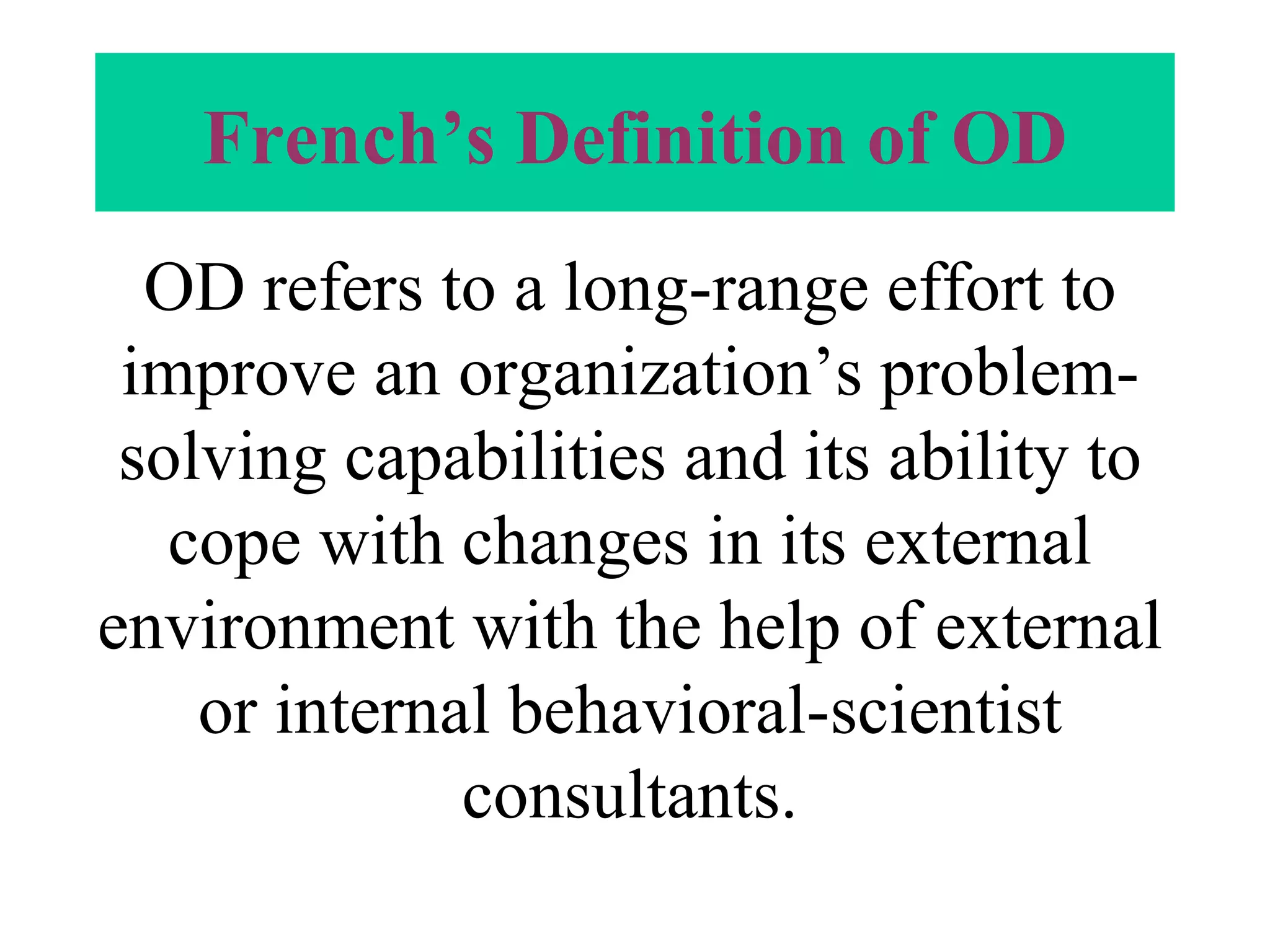
French’s Definition of OD OD refers to a long-range effort to improve an organization’s problem-solving capabilities and its ability to cope with changes in its external environment with the help of external or internal behavioral-scientist consultants.
Beckhard’s Definition of OD OD is an effort (1) planned, (2) organization-wide, and (3) managed from the top, to (4) increase organization effectiveness and health through (5) planned interventions in the organization’s “processes,” using behavioral science knowledge.
Beer’s Definition of OD OD is a system-wide process of data collection, diagnosis, action planning, intervention, and evaluation aimed at: (1) enhancing congruence between organizational structure, process, strategy, people, and culture; (2) developing new and creative organizational solutions; and (3) developing the organization’s self-renewing capacity. It occurs through collaboration of organizational members working with a change agent using behavioral science theory, research, and technology.
Organization Development is... a systemwide application and transfer of behavioral science knowledge to the planned development, improvement, and reinforcement of the strategies, structures, and processes that lead to organization effectiveness.
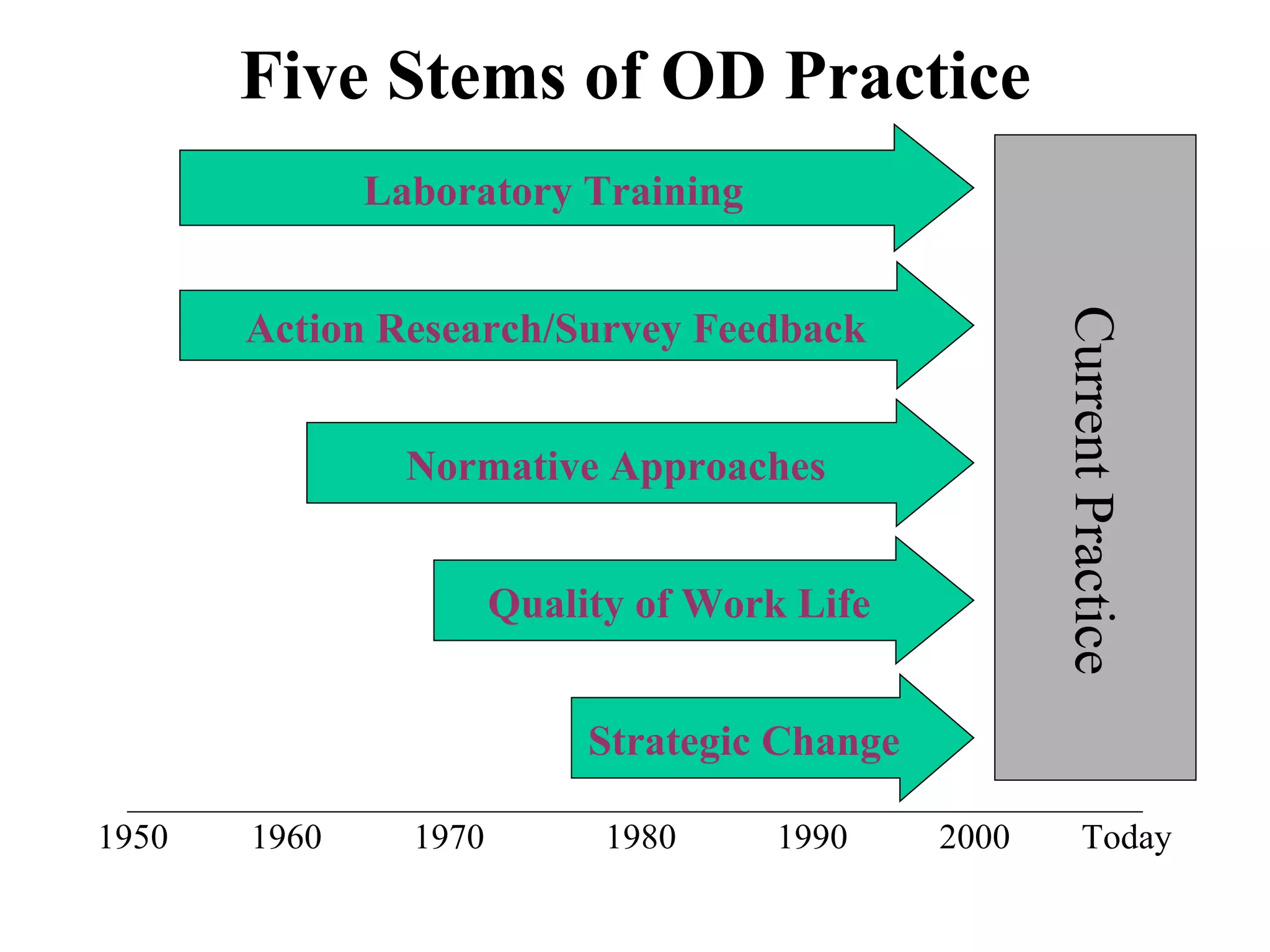
Five Stems of OD Practice 1950   1960   1970 1980   1990   2000  Today Current Practice Laboratory Training Action Research/Survey Feedback Normative Approaches Quality of Work Life Strategic Change
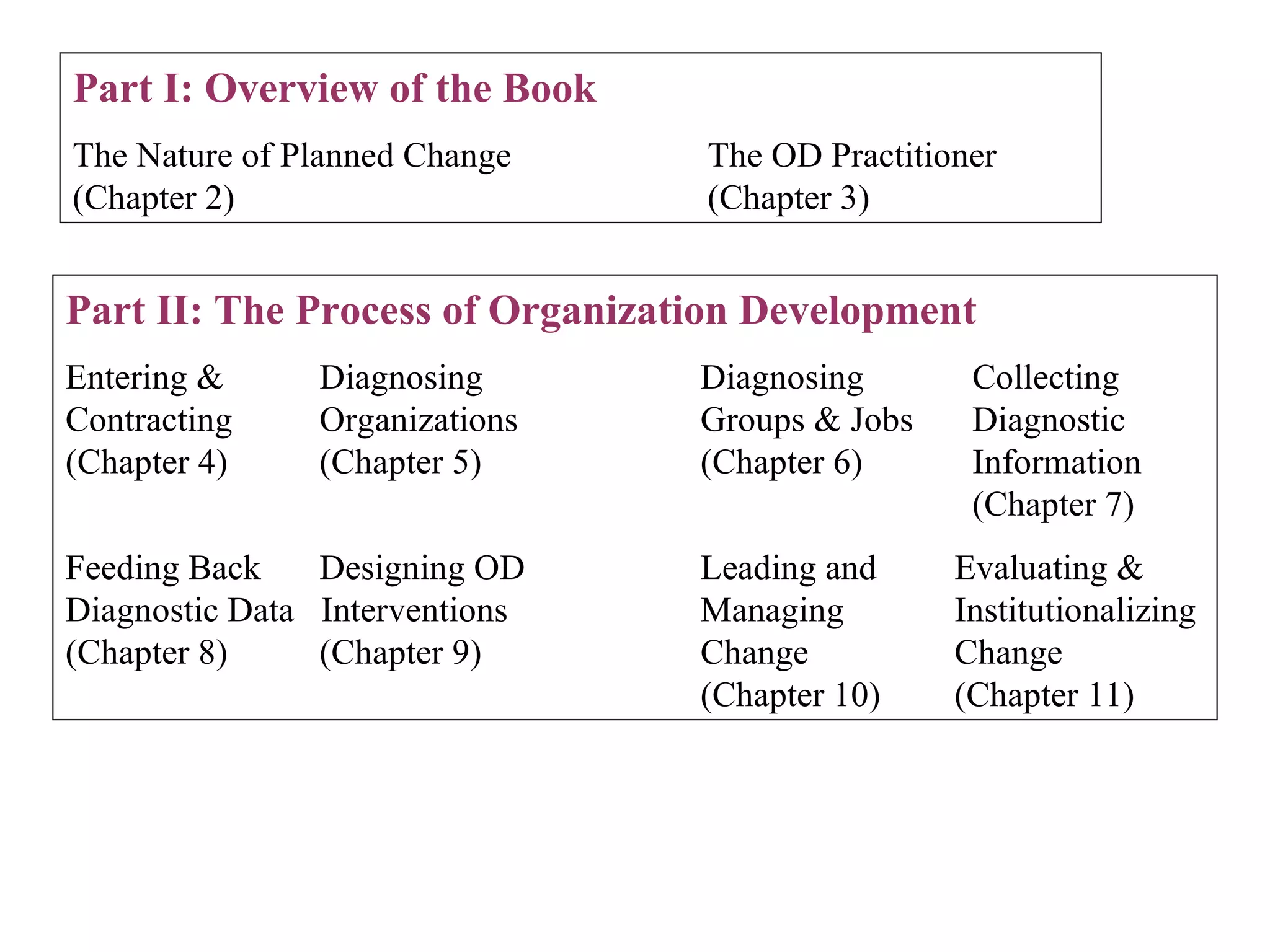
Part I: Overview of the Book The Nature of Planned Change The OD Practitioner (Chapter 2) (Chapter 3) Part II: The Process of Organization Development Entering & Diagnosing Diagnosing   Collecting  Contracting Organizations   Groups & Jobs    Diagnostic (Chapter 4) (Chapter 5)   (Chapter 6)   Information   (Chapter 7) Feeding Back Designing OD Leading and Evaluating & Diagnostic Data  Interventions Managing  Institutionalizing (Chapter 8) (Chapter 9) Change Change (Chapter 10) (Chapter 11)
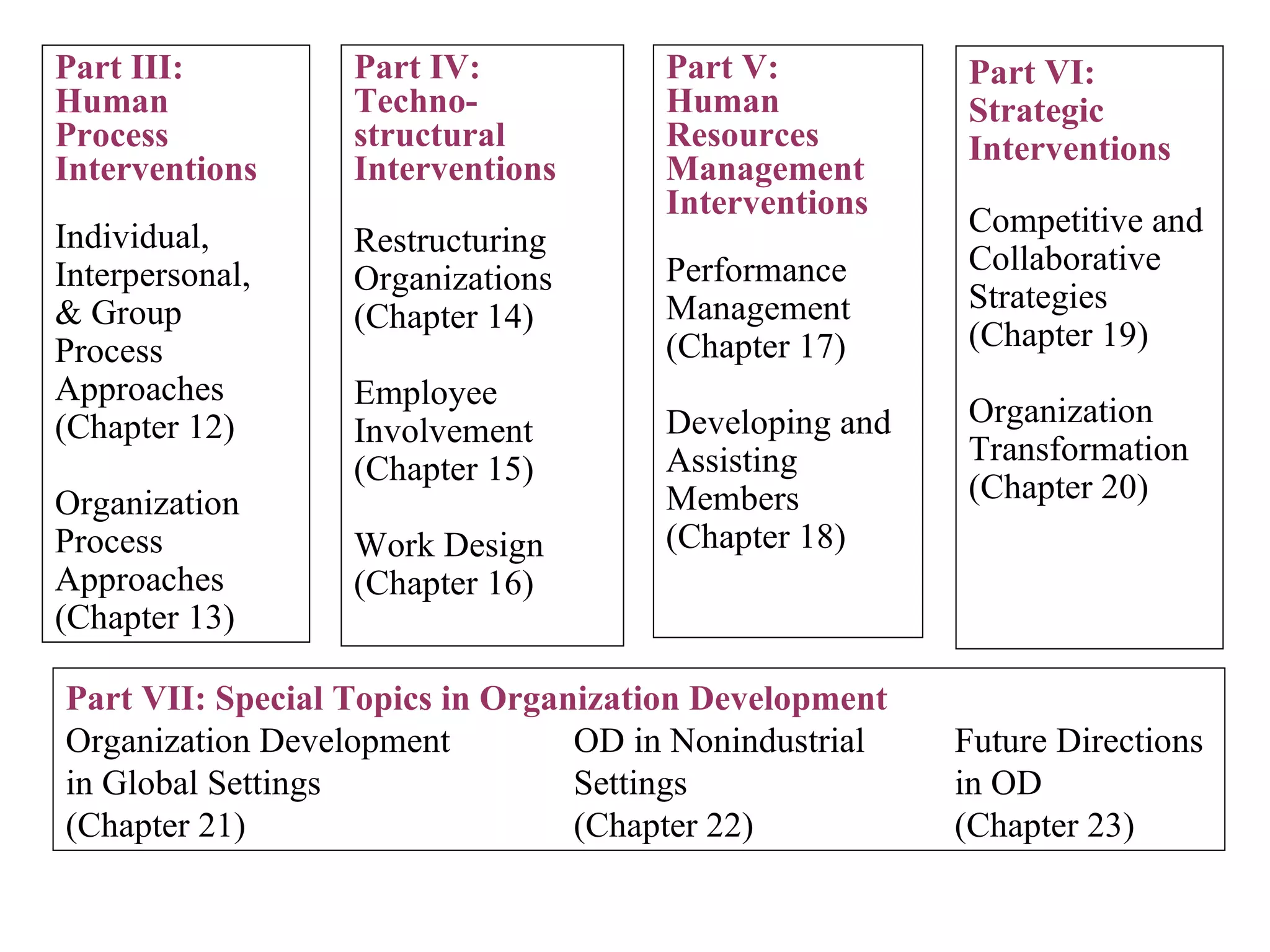
Part III: Human Process Interventions Individual,  Interpersonal, & Group Process Approaches (Chapter 12) Organization Process Approaches (Chapter 13) Part IV: Techno-structural Interventions Restructuring Organizations (Chapter 14) Employee  Involvement (Chapter 15) Work Design (Chapter 16) Part V: Human Resources Management Interventions Performance Management (Chapter 17) Developing and Assisting  Members (Chapter 18) Part VI: Strategic Interventions Competitive and Collaborative Strategies (Chapter 19) Organization Transformation (Chapter 20) Part VII: Special Topics in Organization Development Organization Development OD in Nonindustrial Future Directions  in Global Settings   Settings in OD (Chapter 21)   (Chapter 22) (Chapter 23)
The Nature of Planned Change
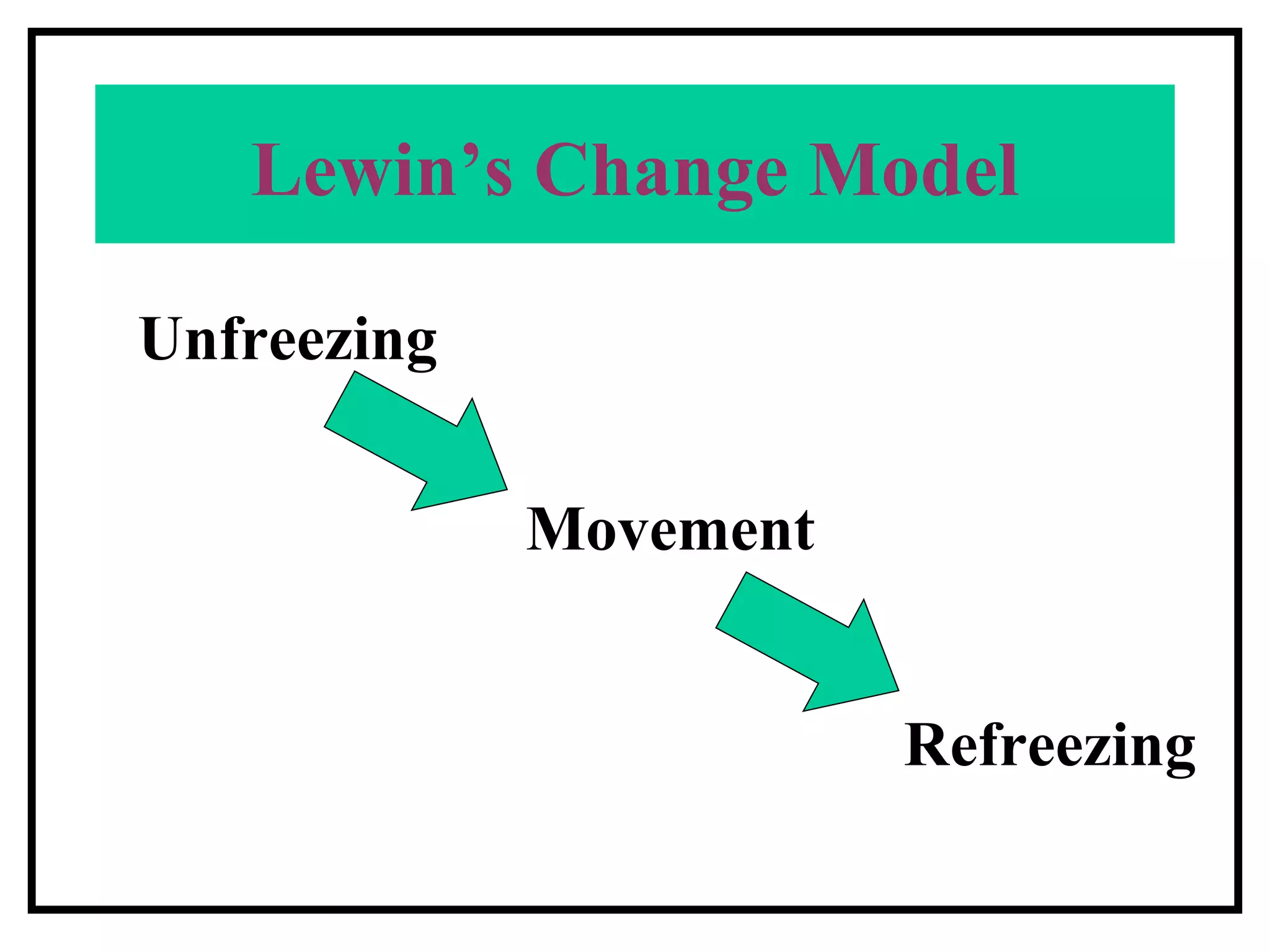
Lewin’s Change Model Unfreezing Movement Refreezing
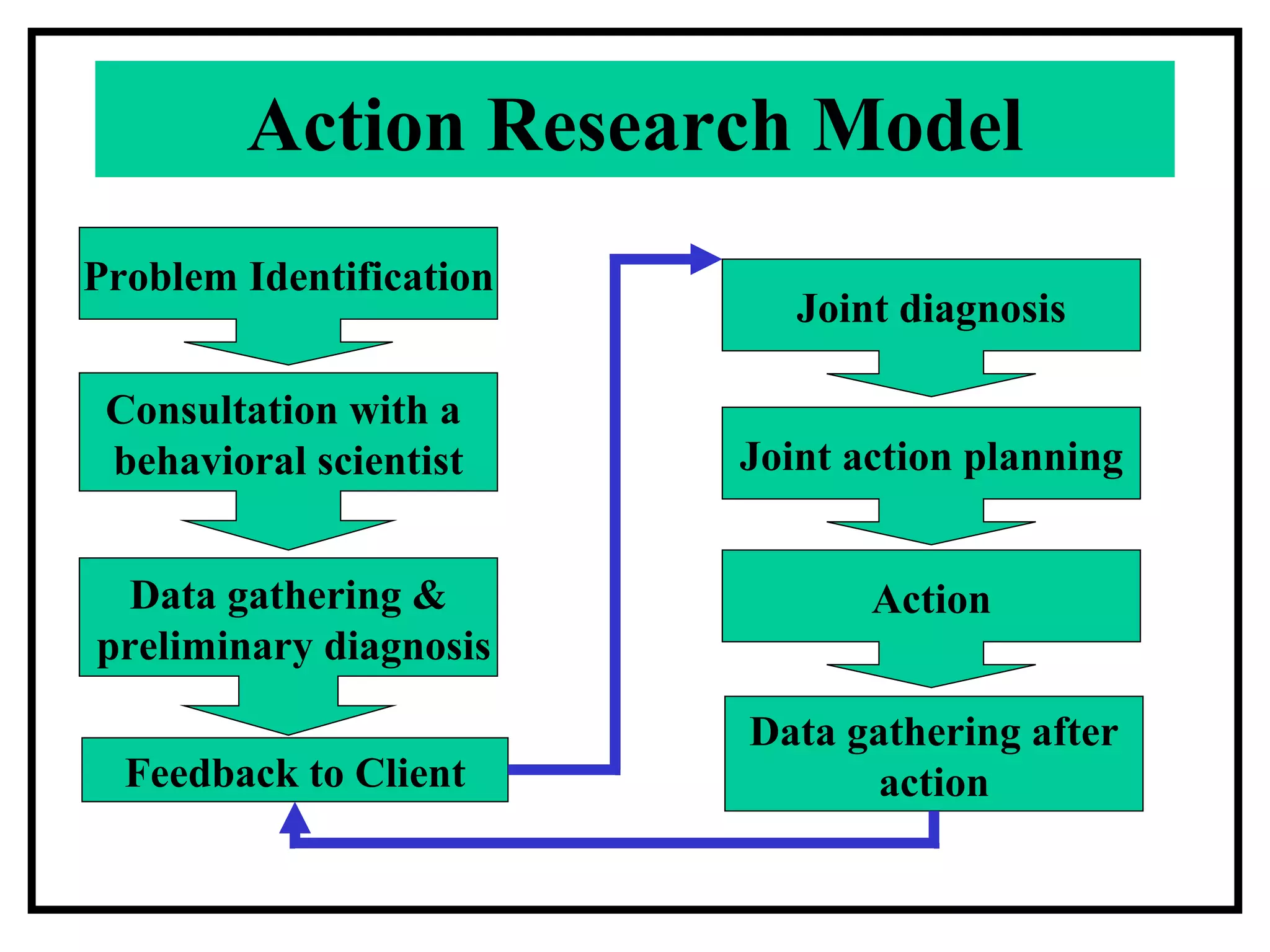
Action Research Model Feedback to Client Data gathering after action Problem Identification Joint action planning Consultation with a  behavioral scientist Data gathering & preliminary diagnosis Joint diagnosis Action
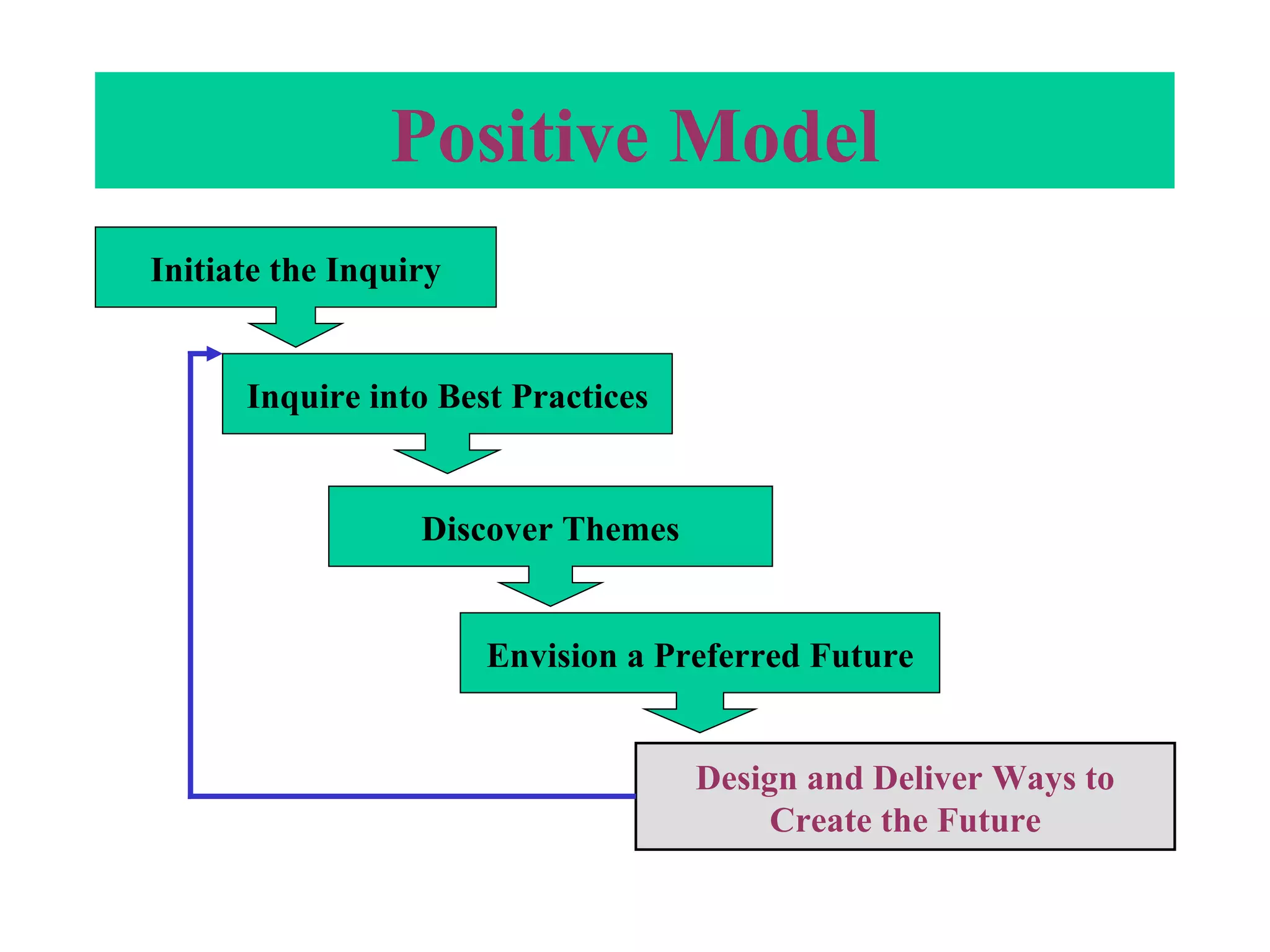
Initiate the Inquiry Inquire into Best Practices Discover Themes Envision a Preferred Future Design and Deliver Ways to Create the Future Positive Model
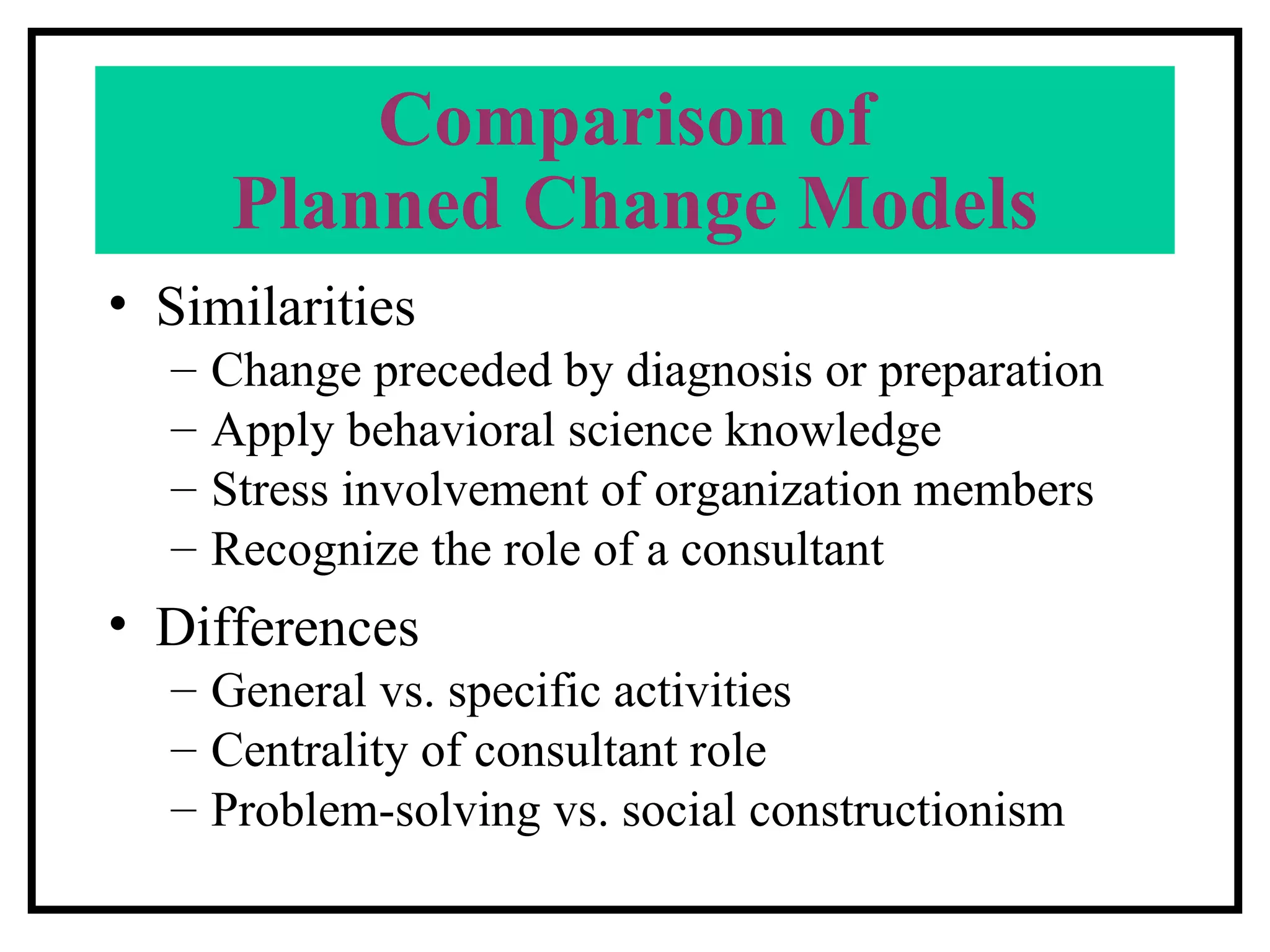
Comparison of  Planned Change Models Similarities Change preceded by diagnosis or preparation Apply behavioral science knowledge Stress involvement of organization members Recognize the role of a consultant Differences General vs. specific activities Centrality of consultant role Problem-solving vs. social constructionism
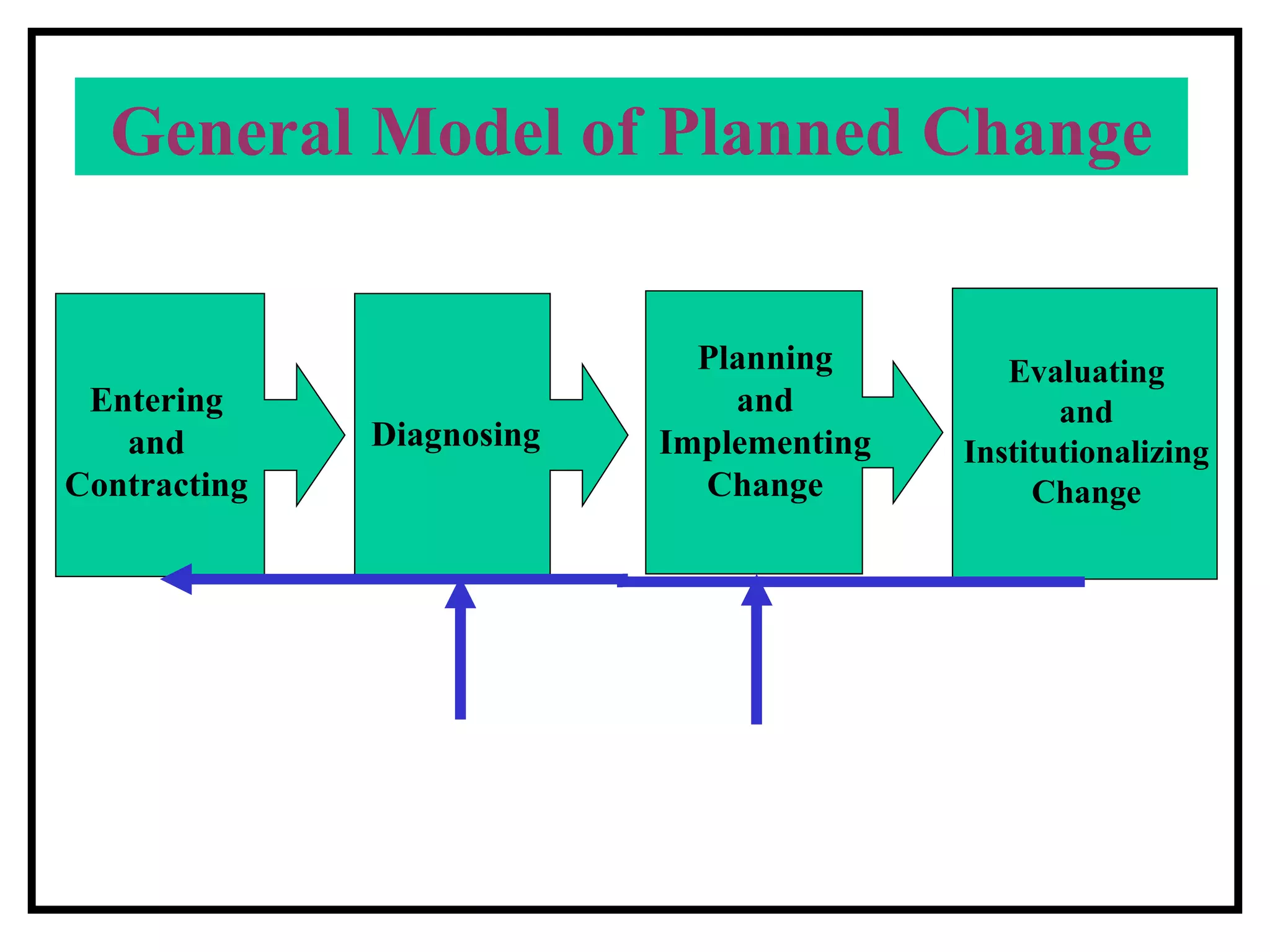
General Model of Planned Change Evaluating and Institutionalizing Change Planning and Implementing Change Diagnosing Entering and Contracting
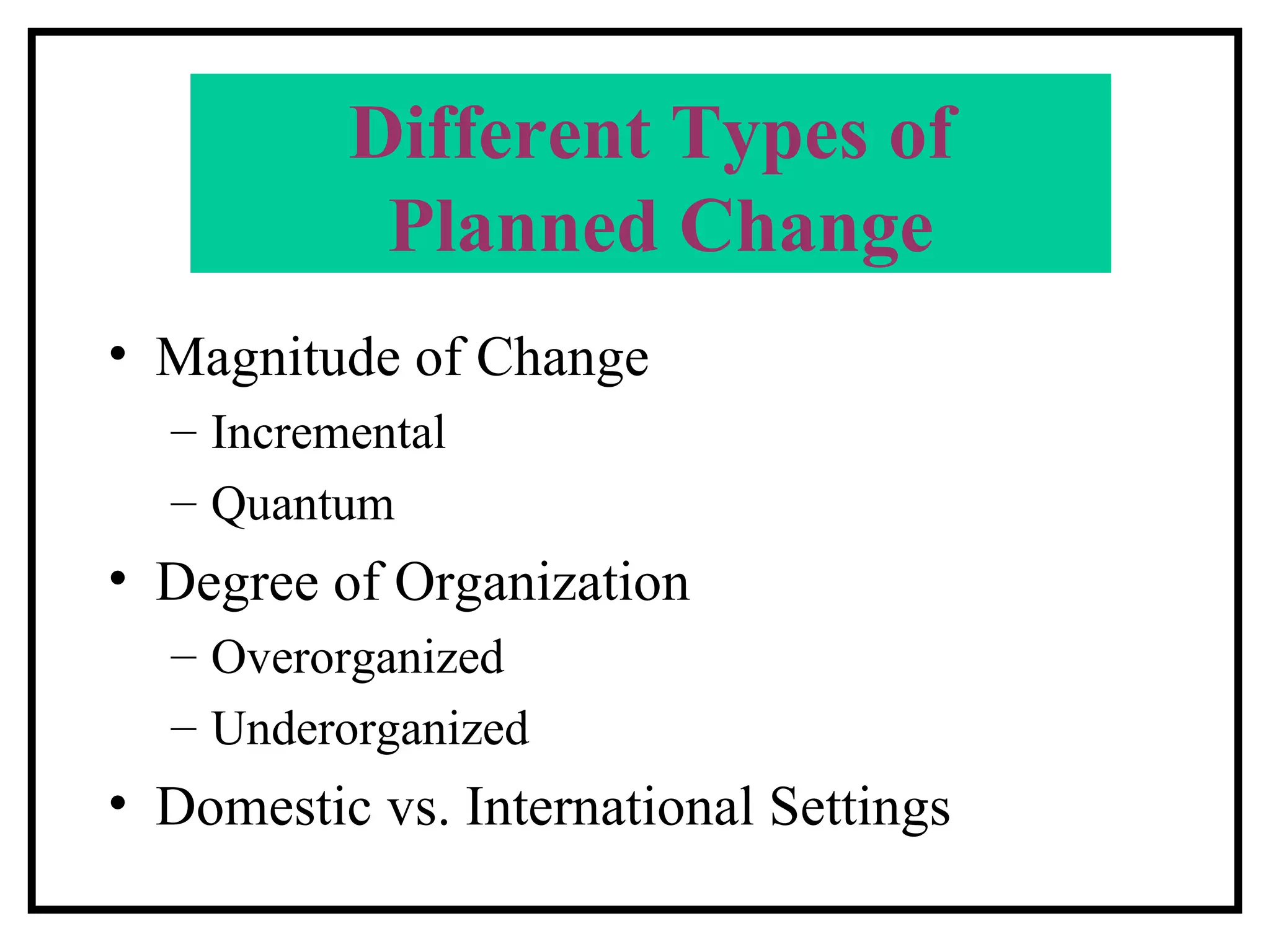
Different Types of  Planned Change Magnitude of Change Incremental Quantum Degree of Organization Overorganized Underorganized Domestic vs. International Settings
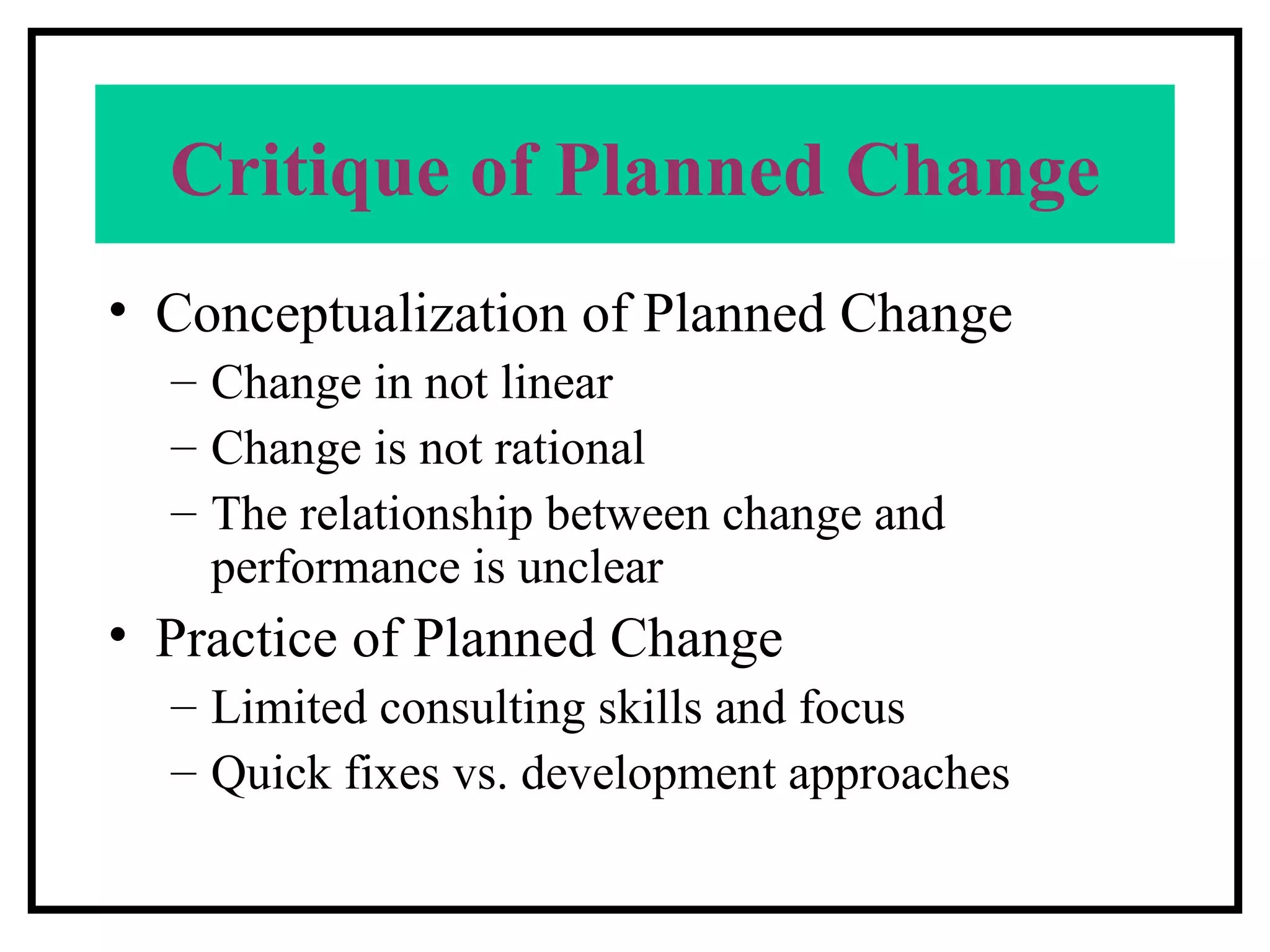
Critique of Planned Change Conceptualization of Planned Change Change in not linear Change is not rational The relationship between change and performance is unclear Practice of Planned Change Limited consulting skills and focus Quick fixes vs. development approaches
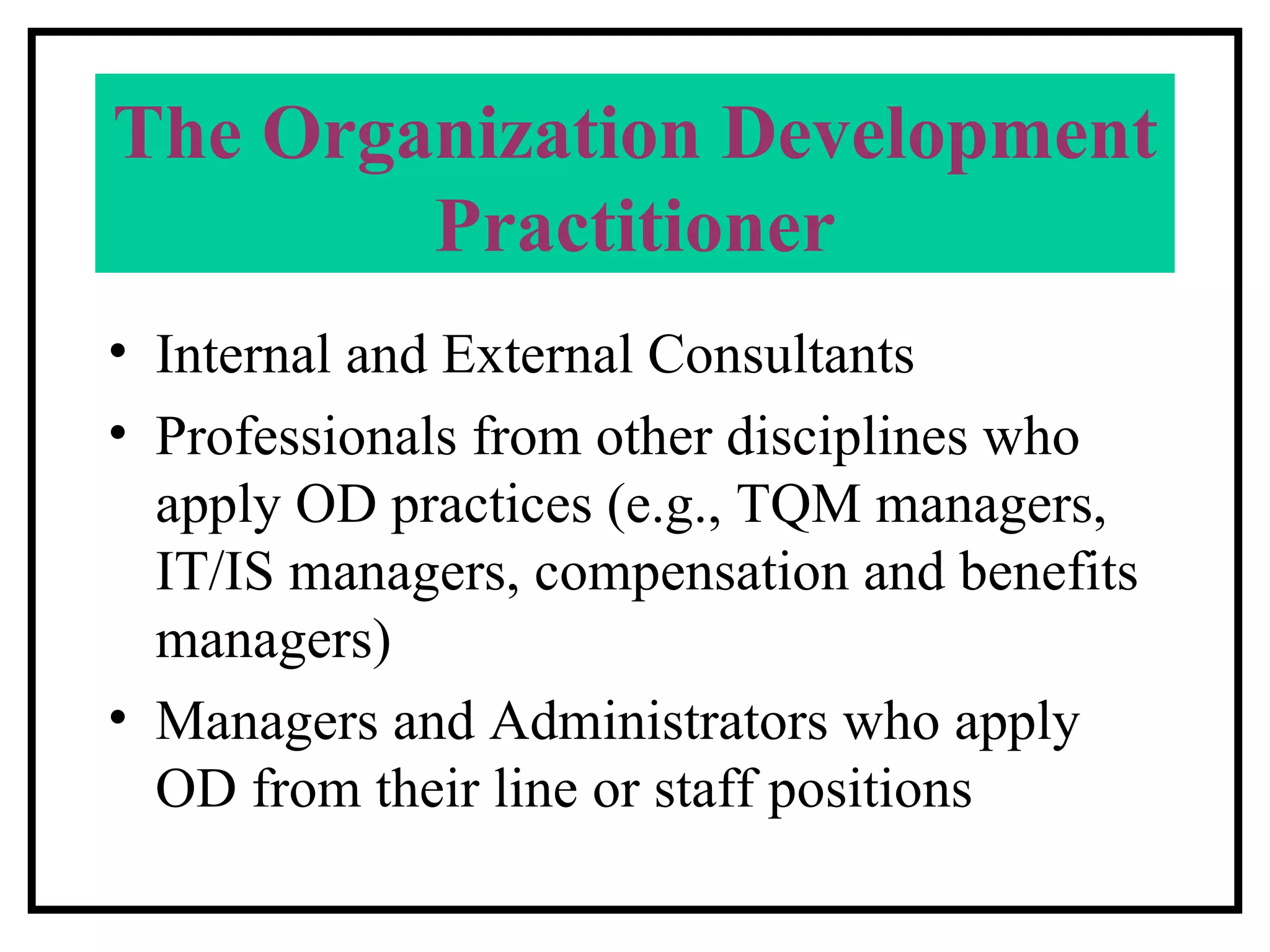
The Organization Development Practitioner Internal and External Consultants Professionals from other disciplines who apply OD practices (e.g., TQM managers, IT/IS managers, compensation and benefits managers) Managers and Administrators who apply OD from their line or staff positions
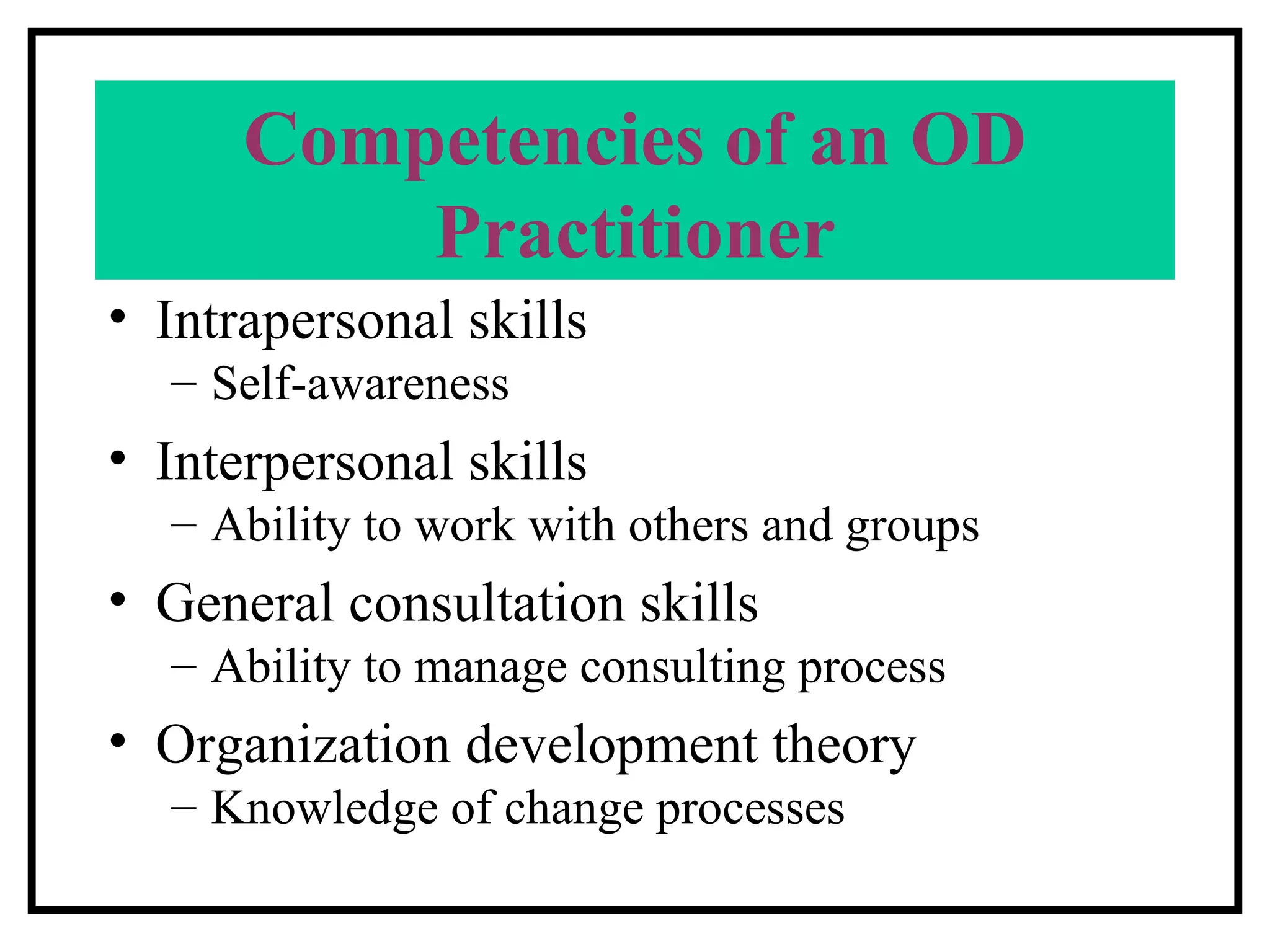
Competencies of an OD Practitioner Intrapersonal skills Self-awareness Interpersonal skills Ability to work with others and groups General consultation skills Ability to manage consulting process Organization development theory Knowledge of change processes
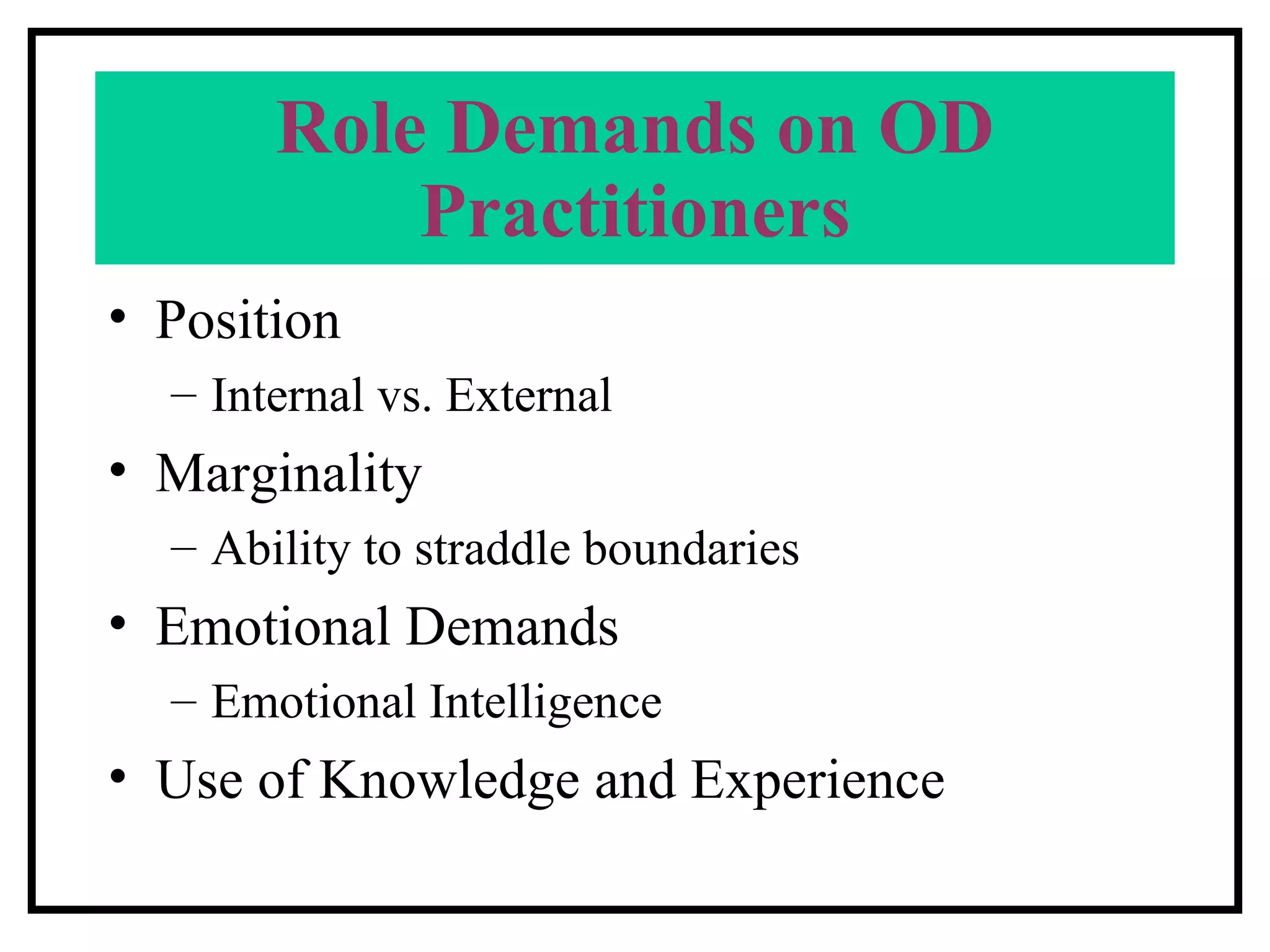
Role Demands on OD Practitioners Position Internal vs. External Marginality Ability to straddle boundaries Emotional Demands  Emotional Intelligence Use of Knowledge and Experience
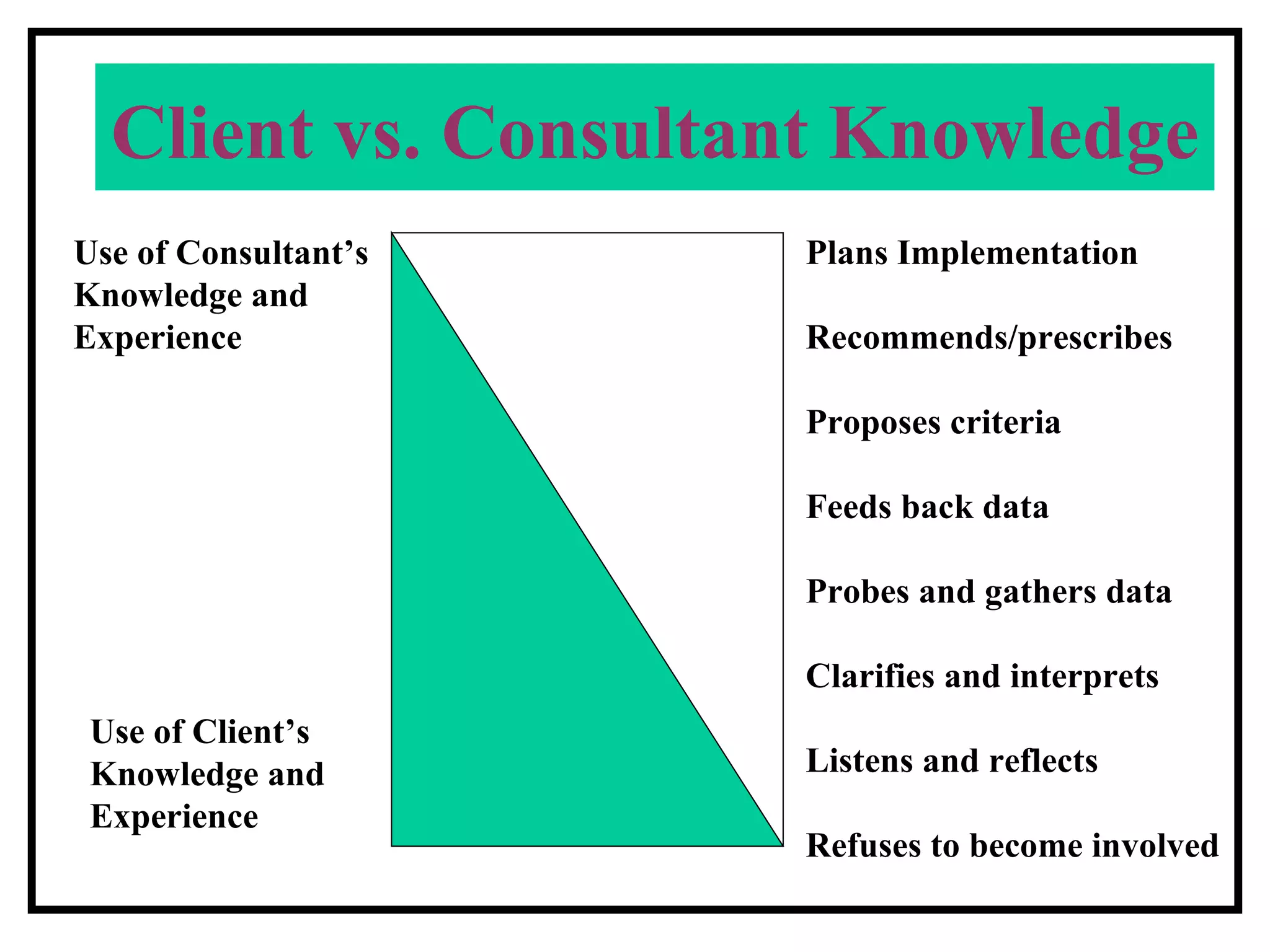
Client vs. Consultant Knowledge Plans Implementation Recommends/prescribes Proposes criteria Feeds back data Probes and gathers data Clarifies and interprets Listens and reflects Refuses to become involved Use of Consultant’s Knowledge and Experience Use of Client’s Knowledge and Experience
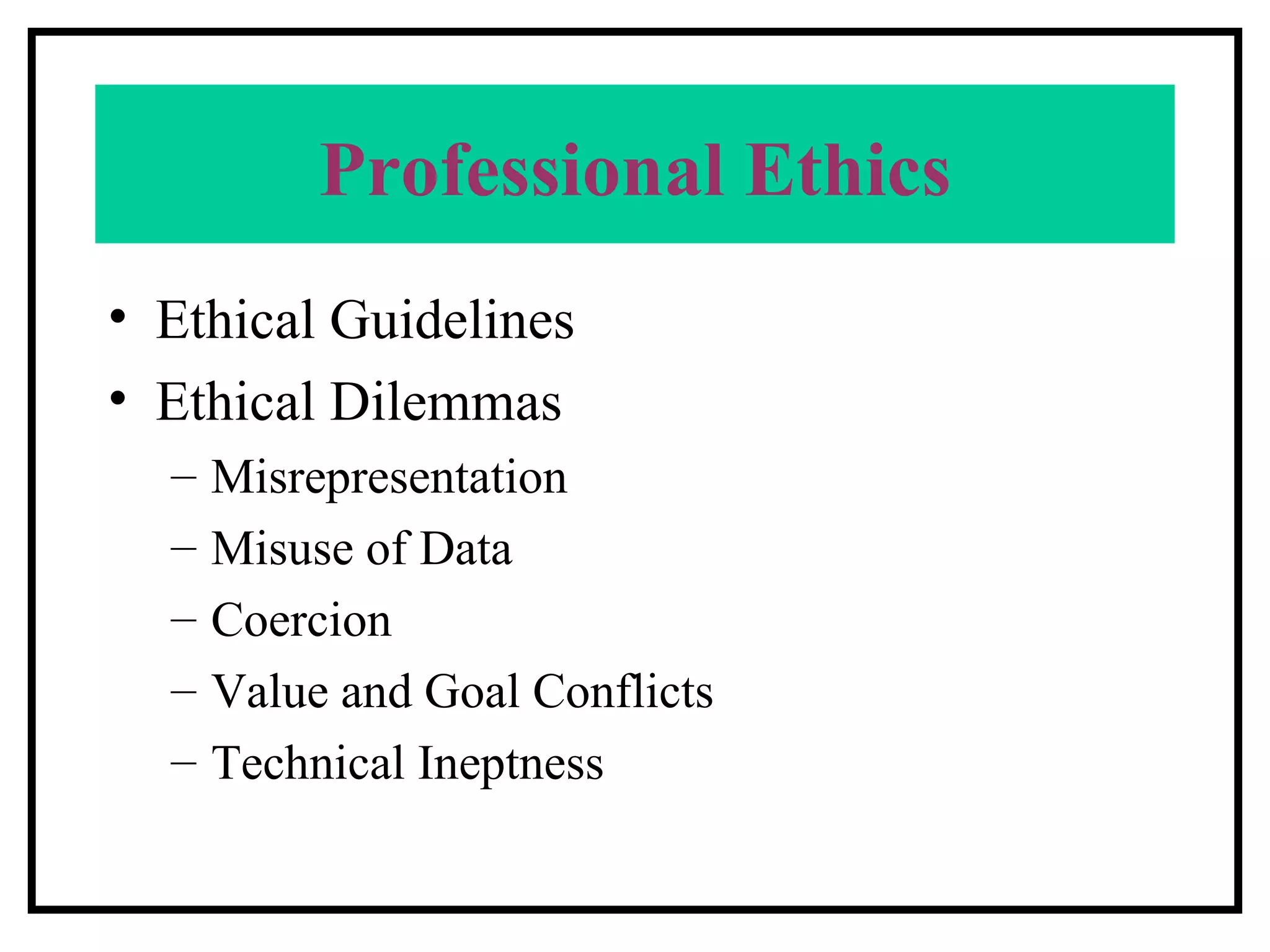
Professional Ethics Ethical Guidelines Ethical Dilemmas Misrepresentation Misuse of Data Coercion Value and Goal Conflicts Technical Ineptness
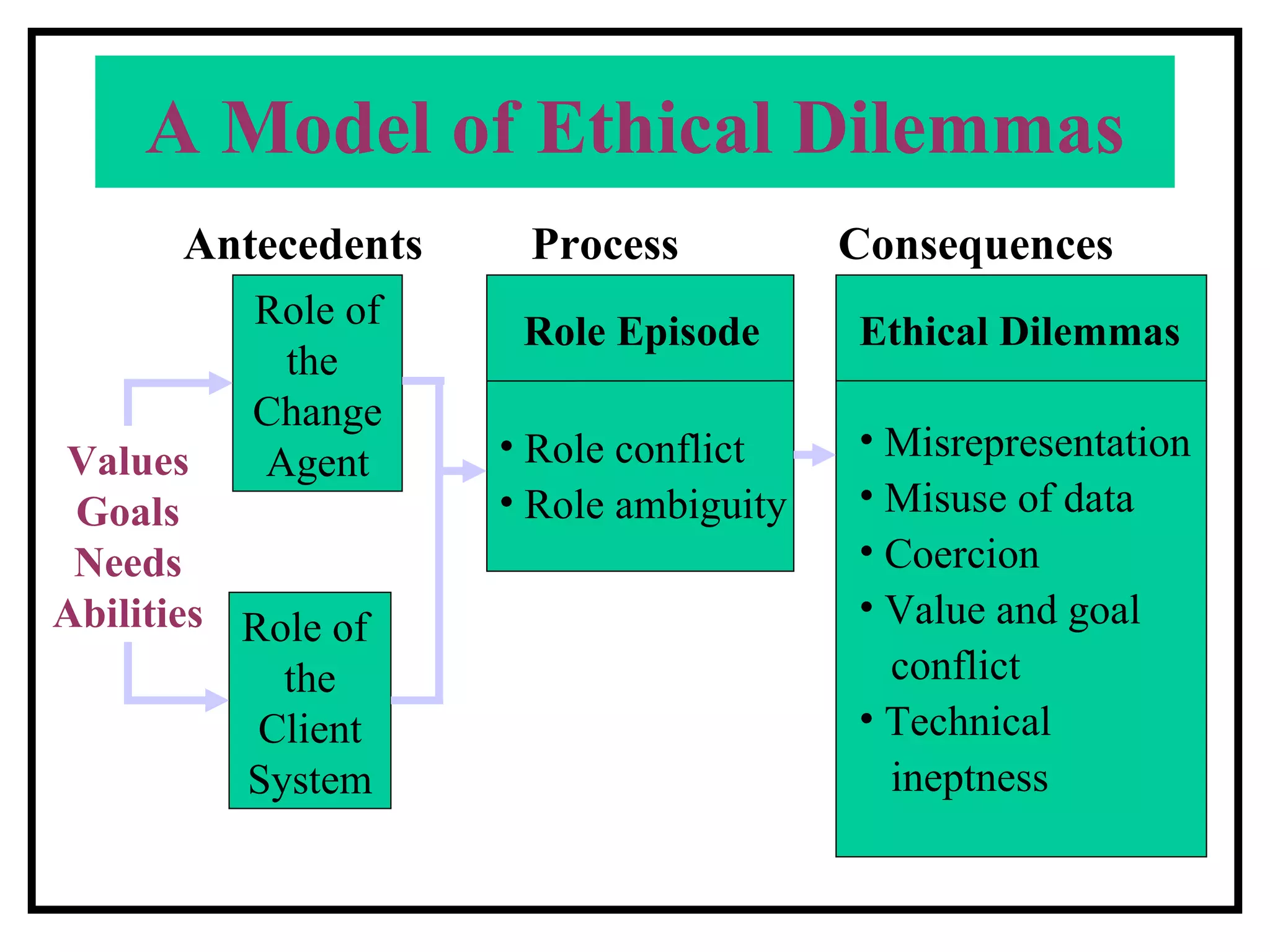
A Model of Ethical Dilemmas   Antecedents   Process     Consequences Ethical Dilemmas Misrepresentation Misuse of data Coercion Value and goal conflict Technical  ineptness Role Episode Role conflict Role ambiguity Role of the  Change Agent Role of  the Client System Values Goals Needs Abilities

Part1 Over View

  • 1.
    I NATURE OFPLANNED CHANGE & PRACTITIONER ORGANIZATIONAL DEVELOPMENT Introduction to Organization Development The Nature of Planned Change
  • 2.
  • 3.
    Burke’s Definition ofOD OD is a planned process of change in an organization’s culture through the utilization of behavioral science technology, research, and theory.
  • 4.
    French’s Definition ofOD OD refers to a long-range effort to improve an organization’s problem-solving capabilities and its ability to cope with changes in its external environment with the help of external or internal behavioral-scientist consultants.
  • 5.
    Beckhard’s Definition ofOD OD is an effort (1) planned, (2) organization-wide, and (3) managed from the top, to (4) increase organization effectiveness and health through (5) planned interventions in the organization’s “processes,” using behavioral science knowledge.
  • 6.
    Beer’s Definition ofOD OD is a system-wide process of data collection, diagnosis, action planning, intervention, and evaluation aimed at: (1) enhancing congruence between organizational structure, process, strategy, people, and culture; (2) developing new and creative organizational solutions; and (3) developing the organization’s self-renewing capacity. It occurs through collaboration of organizational members working with a change agent using behavioral science theory, research, and technology.
  • 7.
    Organization Development is...a systemwide application and transfer of behavioral science knowledge to the planned development, improvement, and reinforcement of the strategies, structures, and processes that lead to organization effectiveness.
  • 8.
    Five Stems ofOD Practice 1950 1960 1970 1980 1990 2000 Today Current Practice Laboratory Training Action Research/Survey Feedback Normative Approaches Quality of Work Life Strategic Change
  • 9.
    Part I: Overviewof the Book The Nature of Planned Change The OD Practitioner (Chapter 2) (Chapter 3) Part II: The Process of Organization Development Entering & Diagnosing Diagnosing Collecting Contracting Organizations Groups & Jobs Diagnostic (Chapter 4) (Chapter 5) (Chapter 6) Information (Chapter 7) Feeding Back Designing OD Leading and Evaluating & Diagnostic Data Interventions Managing Institutionalizing (Chapter 8) (Chapter 9) Change Change (Chapter 10) (Chapter 11)
  • 10.
    Part III: HumanProcess Interventions Individual, Interpersonal, & Group Process Approaches (Chapter 12) Organization Process Approaches (Chapter 13) Part IV: Techno-structural Interventions Restructuring Organizations (Chapter 14) Employee Involvement (Chapter 15) Work Design (Chapter 16) Part V: Human Resources Management Interventions Performance Management (Chapter 17) Developing and Assisting Members (Chapter 18) Part VI: Strategic Interventions Competitive and Collaborative Strategies (Chapter 19) Organization Transformation (Chapter 20) Part VII: Special Topics in Organization Development Organization Development OD in Nonindustrial Future Directions in Global Settings Settings in OD (Chapter 21) (Chapter 22) (Chapter 23)
  • 11.
    The Nature ofPlanned Change
  • 12.
    Lewin’s Change ModelUnfreezing Movement Refreezing
  • 13.
    Action Research ModelFeedback to Client Data gathering after action Problem Identification Joint action planning Consultation with a behavioral scientist Data gathering & preliminary diagnosis Joint diagnosis Action
  • 14.
    Initiate the InquiryInquire into Best Practices Discover Themes Envision a Preferred Future Design and Deliver Ways to Create the Future Positive Model
  • 15.
    Comparison of Planned Change Models Similarities Change preceded by diagnosis or preparation Apply behavioral science knowledge Stress involvement of organization members Recognize the role of a consultant Differences General vs. specific activities Centrality of consultant role Problem-solving vs. social constructionism
  • 16.
    General Model ofPlanned Change Evaluating and Institutionalizing Change Planning and Implementing Change Diagnosing Entering and Contracting
  • 17.
    Different Types of Planned Change Magnitude of Change Incremental Quantum Degree of Organization Overorganized Underorganized Domestic vs. International Settings
  • 18.
    Critique of PlannedChange Conceptualization of Planned Change Change in not linear Change is not rational The relationship between change and performance is unclear Practice of Planned Change Limited consulting skills and focus Quick fixes vs. development approaches
  • 19.
    The Organization DevelopmentPractitioner Internal and External Consultants Professionals from other disciplines who apply OD practices (e.g., TQM managers, IT/IS managers, compensation and benefits managers) Managers and Administrators who apply OD from their line or staff positions
  • 20.
    Competencies of anOD Practitioner Intrapersonal skills Self-awareness Interpersonal skills Ability to work with others and groups General consultation skills Ability to manage consulting process Organization development theory Knowledge of change processes
  • 21.
    Role Demands onOD Practitioners Position Internal vs. External Marginality Ability to straddle boundaries Emotional Demands Emotional Intelligence Use of Knowledge and Experience
  • 22.
    Client vs. ConsultantKnowledge Plans Implementation Recommends/prescribes Proposes criteria Feeds back data Probes and gathers data Clarifies and interprets Listens and reflects Refuses to become involved Use of Consultant’s Knowledge and Experience Use of Client’s Knowledge and Experience
  • 23.
    Professional Ethics EthicalGuidelines Ethical Dilemmas Misrepresentation Misuse of Data Coercion Value and Goal Conflicts Technical Ineptness
  • 24.
    A Model ofEthical Dilemmas Antecedents Process Consequences Ethical Dilemmas Misrepresentation Misuse of data Coercion Value and goal conflict Technical ineptness Role Episode Role conflict Role ambiguity Role of the Change Agent Role of the Client System Values Goals Needs Abilities