Organizational Change
Organization
 Organization is a social system.
 All parts of organization affect all other parts
 Anything happening at one end is transmitted to the other end
 Interrelationship between the elements & environment
 Orderly behavior – equilibrium
 Becomes an established way of life
 Disturbance to this naturally exercises pressure
 Evokes a reaction – acceptance/rejection
Organizational Change
 Organizational change is the process by which organization move
from their present state to some desired future state to increase
effectiveness.
 When an organization system is disturbed by some internal or
external forces change frequently occur or any alteration which
occur in the overall work environment of an organization.
Characteristics of O.C
 Change happen for the pressure of both internal and external forces in the
organization.
 Change in any part of the organization affect the whole organization.
 Change may affect people , structure, technology, and other element of the
organization.
 Change also affect the rate of speed and degree of significance of the
organization.
 Change may be reactive or proactive.
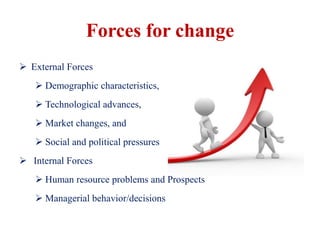
Forces for change
 External Forces
 Demographic characteristics,
 Technological advances,
 Market changes, and
 Social and political pressures
 Internal Forces
 Human resource problems and Prospects
 Managerial behavior/decisions
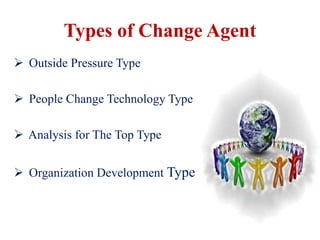
Types of Change Agent
 Outside Pressure Type
 People Change Technology Type
 Analysis for The Top Type
 Organization Development Type
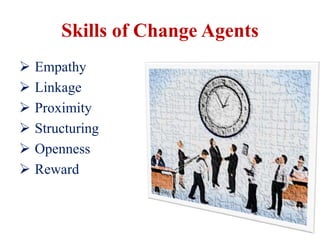
Skills of Change Agents
 Empathy
 Linkage
 Proximity
 Structuring
 Openness
 Reward
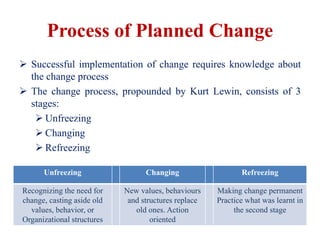
Process of Planned Change
 Successful implementation of change requires knowledge about
the change process
 The change process, propounded by Kurt Lewin, consists of 3
stages:
 Unfreezing
 Changing
 Refreezing
Unfreezing Changing Refreezing
Recognizing the need for
change, casting aside old
values, behavior, or
Organizational structures
New values, behaviours
and structures replace
old ones. Action
oriented
Making change permanent
Practice what was learnt in
the second stage
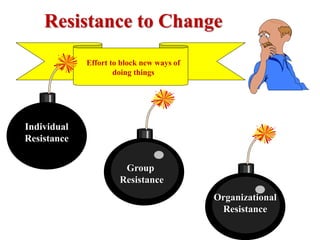
Resistance to Change
Effort to block new ways of
doing things
Individual
Resistance
Group
Resistance
Organizational
Resistance
Individual Resistance
Below are stated some reasons why people resists changes. Some of these
appear to be rational or emotional. These reasons are:-
 Economic factors
 Habits
 Insecurity
 Lack of communication
 Extend of change
 Psychological factors
 Social factors
Group Resistance
Most organizational changes have impact on formal groups in
the organization the main reason. why the groups resists
change is that they fear that their cohesiveness or existence
is threatened by it.
Organizational Resistance
 Threat to power
 Group inertia
 Organizational structure
 Threat to specialization
 Resource constants
 Sunk costs
Organizational change

Organizational change

  • 1.
  • 2.
    Organization  Organization isa social system.  All parts of organization affect all other parts  Anything happening at one end is transmitted to the other end  Interrelationship between the elements & environment  Orderly behavior – equilibrium  Becomes an established way of life  Disturbance to this naturally exercises pressure  Evokes a reaction – acceptance/rejection
  • 3.
    Organizational Change  Organizationalchange is the process by which organization move from their present state to some desired future state to increase effectiveness.  When an organization system is disturbed by some internal or external forces change frequently occur or any alteration which occur in the overall work environment of an organization.
  • 4.
    Characteristics of O.C Change happen for the pressure of both internal and external forces in the organization.  Change in any part of the organization affect the whole organization.  Change may affect people , structure, technology, and other element of the organization.  Change also affect the rate of speed and degree of significance of the organization.  Change may be reactive or proactive.
  • 5.
    Forces for change External Forces  Demographic characteristics,  Technological advances,  Market changes, and  Social and political pressures  Internal Forces  Human resource problems and Prospects  Managerial behavior/decisions
  • 6.
    Types of ChangeAgent  Outside Pressure Type  People Change Technology Type  Analysis for The Top Type  Organization Development Type
  • 7.
    Skills of ChangeAgents  Empathy  Linkage  Proximity  Structuring  Openness  Reward
  • 8.
    Process of PlannedChange  Successful implementation of change requires knowledge about the change process  The change process, propounded by Kurt Lewin, consists of 3 stages:  Unfreezing  Changing  Refreezing Unfreezing Changing Refreezing Recognizing the need for change, casting aside old values, behavior, or Organizational structures New values, behaviours and structures replace old ones. Action oriented Making change permanent Practice what was learnt in the second stage
  • 9.
    Resistance to Change Effortto block new ways of doing things Individual Resistance Group Resistance Organizational Resistance
  • 10.
    Individual Resistance Below arestated some reasons why people resists changes. Some of these appear to be rational or emotional. These reasons are:-  Economic factors  Habits  Insecurity  Lack of communication  Extend of change  Psychological factors  Social factors
  • 11.
    Group Resistance Most organizationalchanges have impact on formal groups in the organization the main reason. why the groups resists change is that they fear that their cohesiveness or existence is threatened by it.
  • 12.
    Organizational Resistance  Threatto power  Group inertia  Organizational structure  Threat to specialization  Resource constants  Sunk costs