Presented by 
MUHAMMAD SHAN
 Lewin’s Force Field Theory of Change 
 Kotter’s Eight Step plan 
 Action Research 
Organizational Development
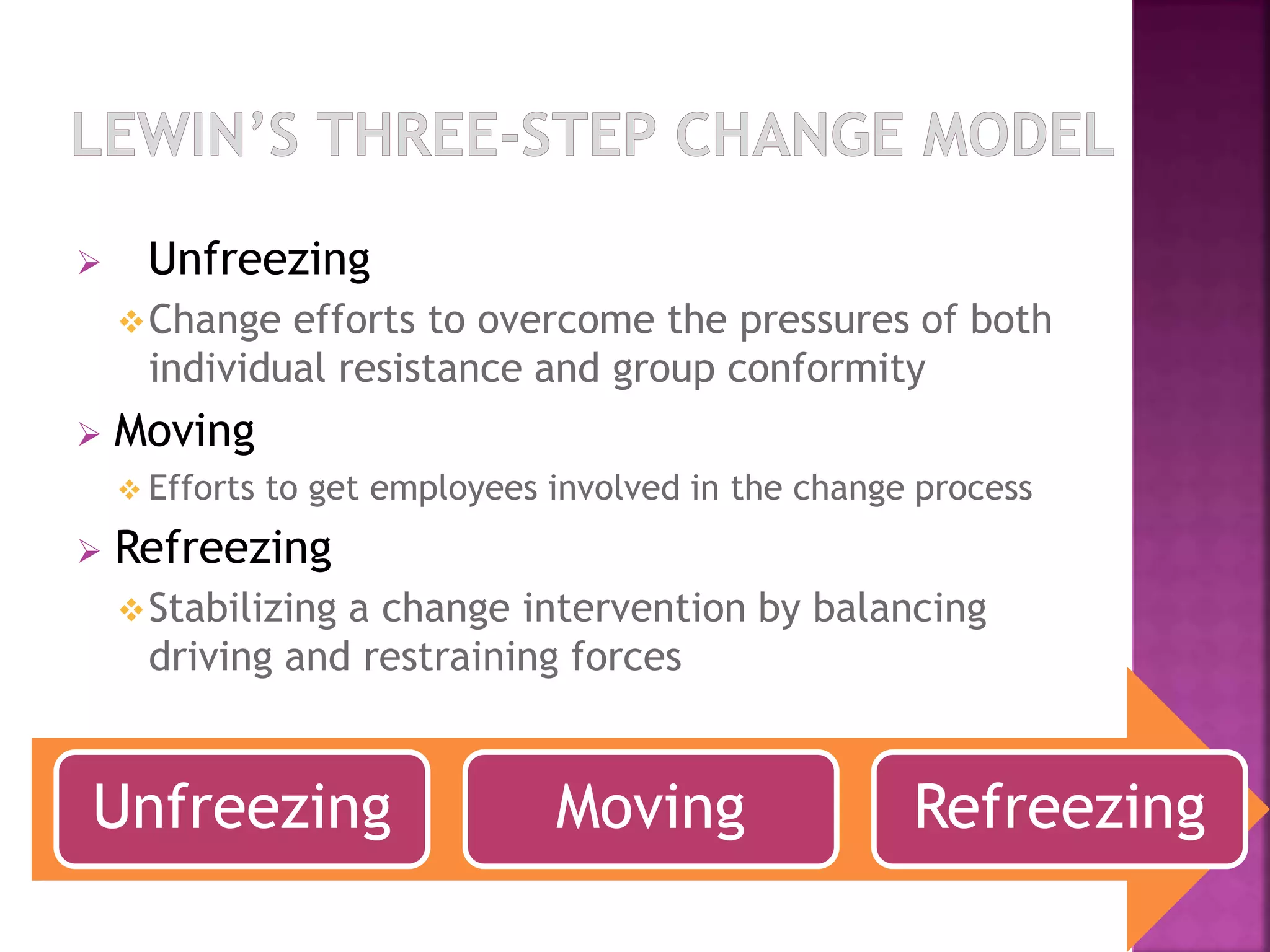
 Unfreezing 
Change efforts to overcome the pressures of both 
individual resistance and group conformity 
 Moving 
 Efforts to get employees involved in the change process 
 Refreezing 
Stabilizing a change intervention by balancing 
driving and restraining forces 
Unfreezing Moving Refreezing
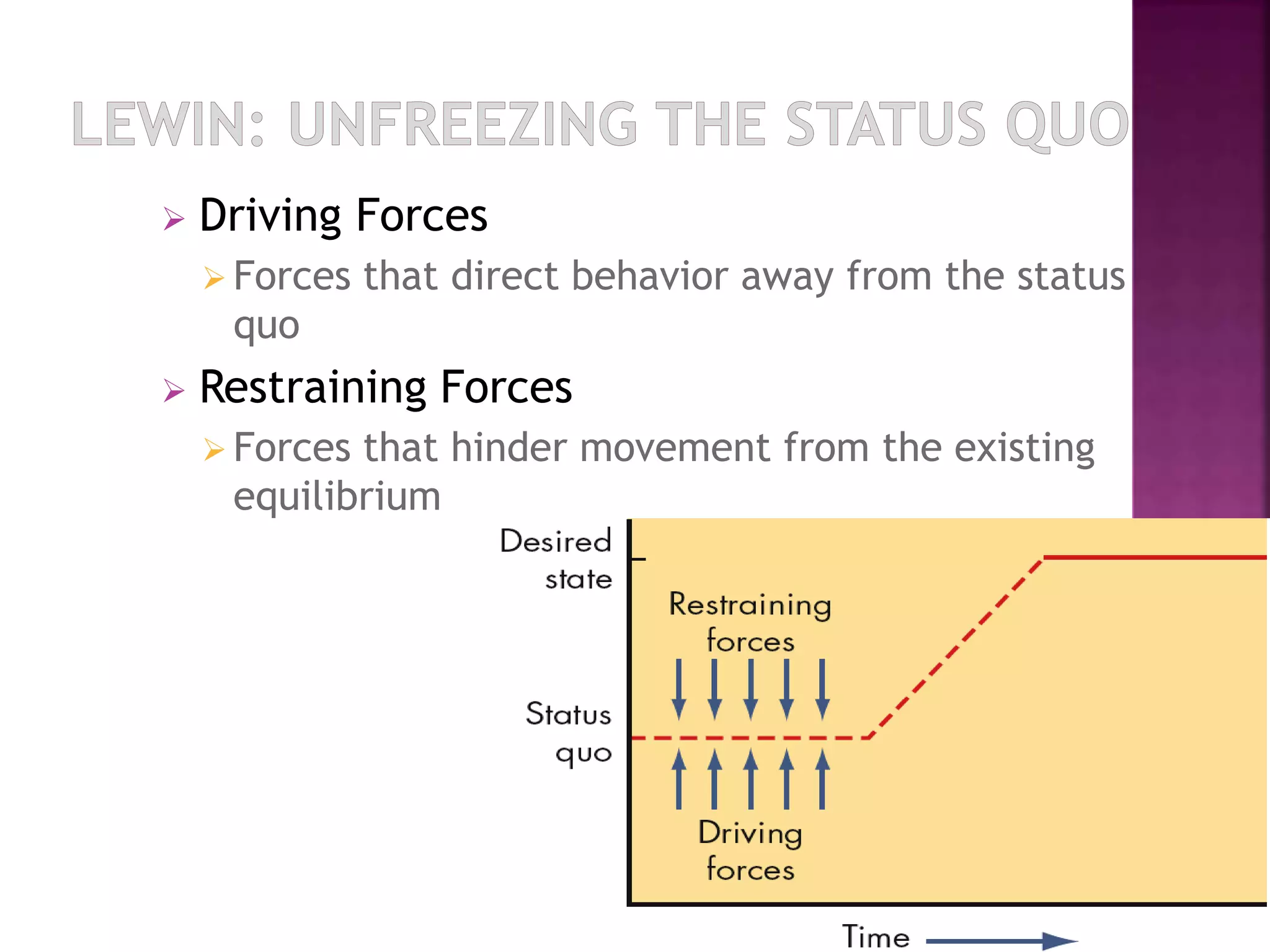
 Driving Forces 
 Forces that direct behavior away from the status 
quo 
 Restraining Forces 
 Forces that hinder movement from the existing 
equilibrium
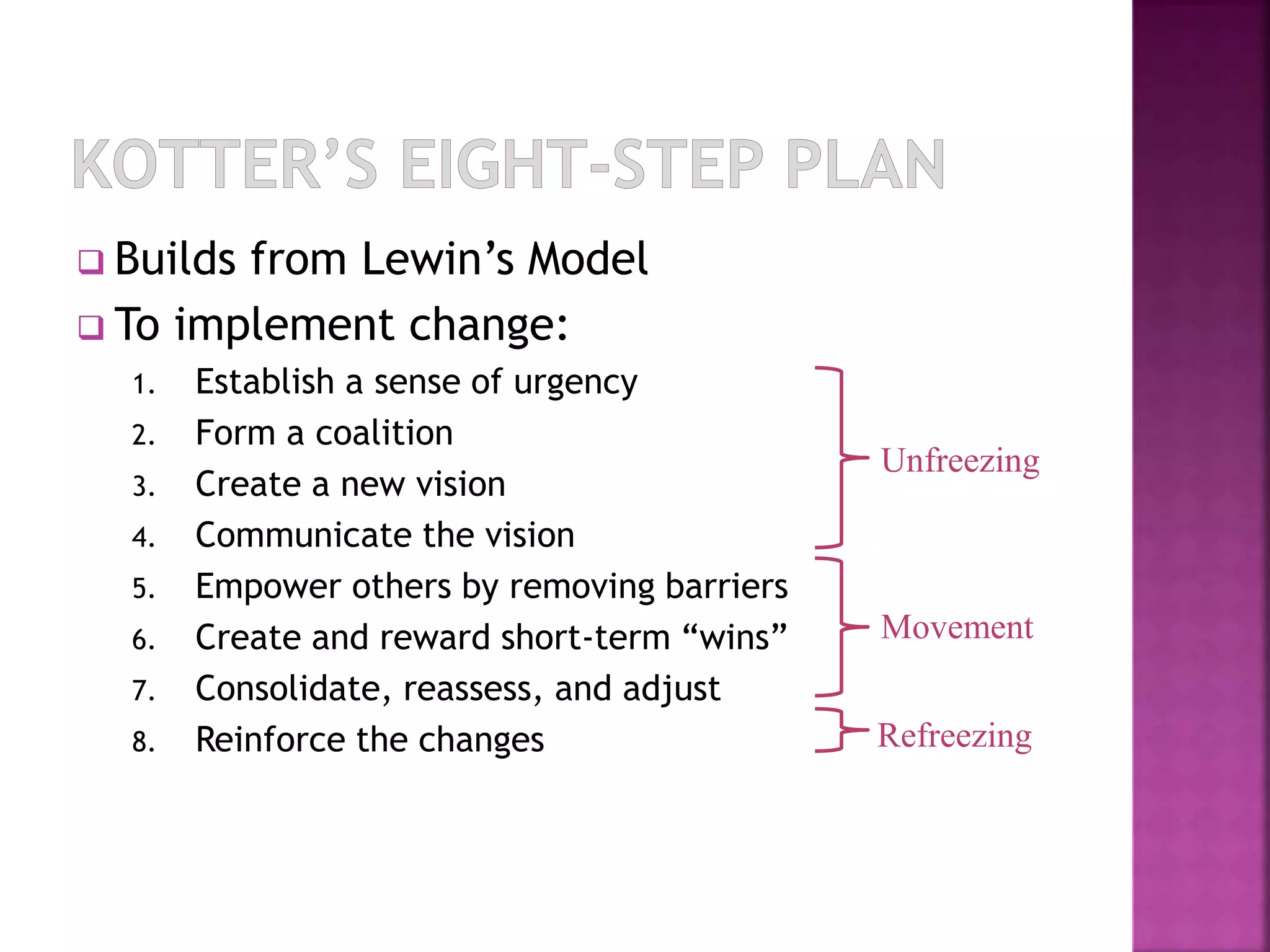
 Builds from Lewin’s Model 
 To implement change: 
1. Establish a sense of urgency 
2. Form a coalition 
3. Create a new vision 
4. Communicate the vision 
5. Empower others by removing barriers 
6. Create and reward short-term “wins” 
7. Consolidate, reassess, and adjust 
8. Reinforce the changes 
Unfreezing 
Movement 
Refreezing
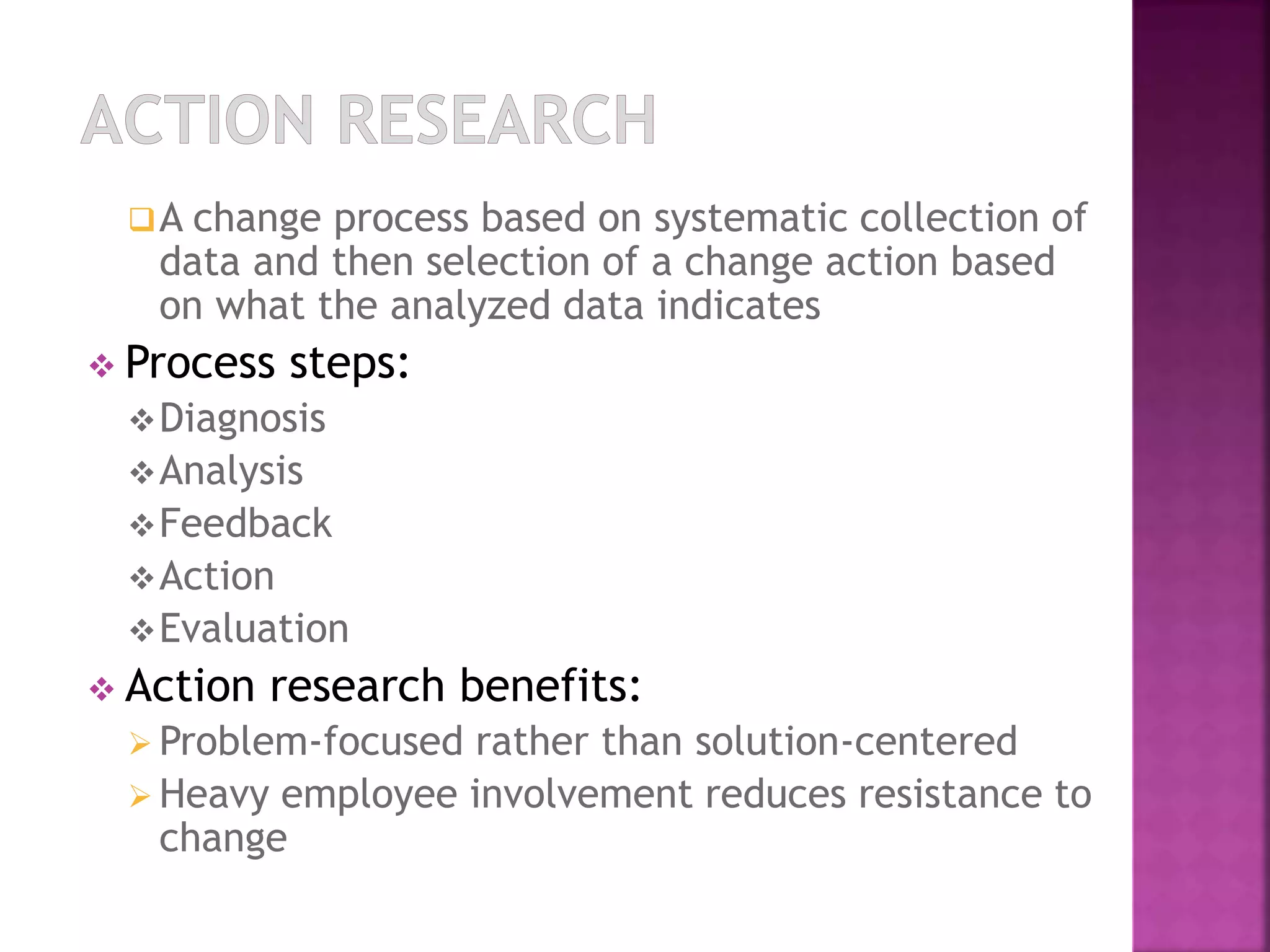
A change process based on systematic collection of 
data and then selection of a change action based 
on what the analyzed data indicates 
 Process steps: 
Diagnosis 
Analysis 
Feedback 
Action 
Evaluation 
 Action research benefits: 
 Problem-focused rather than solution-centered 
Heavy employee involvement reduces resistance to 
change
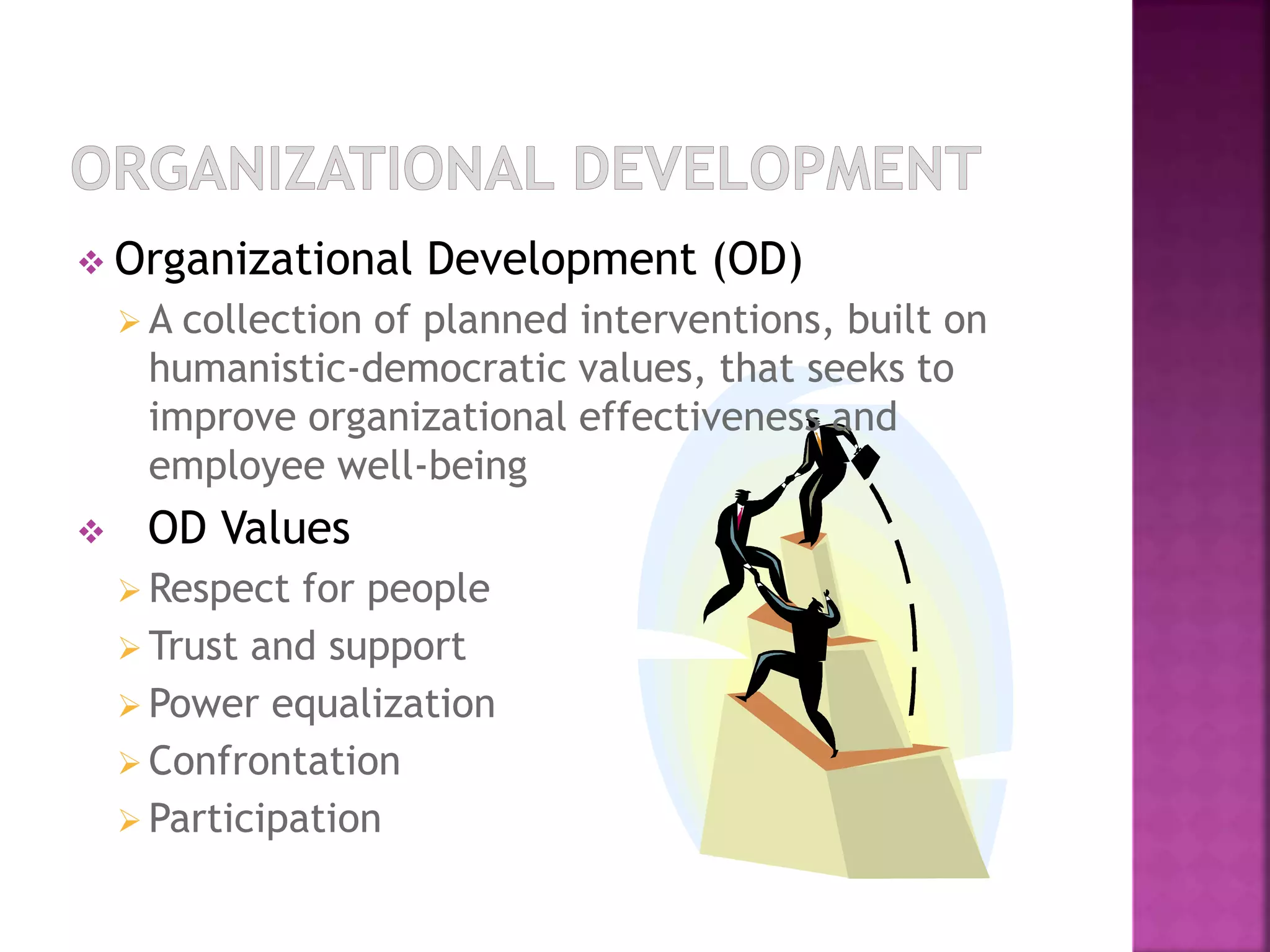
 Organizational Development (OD) 
 A collection of planned interventions, built on 
humanistic-democratic values, that seeks to 
improve organizational effectiveness and 
employee well-being 
 OD Values 
 Respect for people 
 Trust and support 
 Power equalization 
 Confrontation 
 Participation
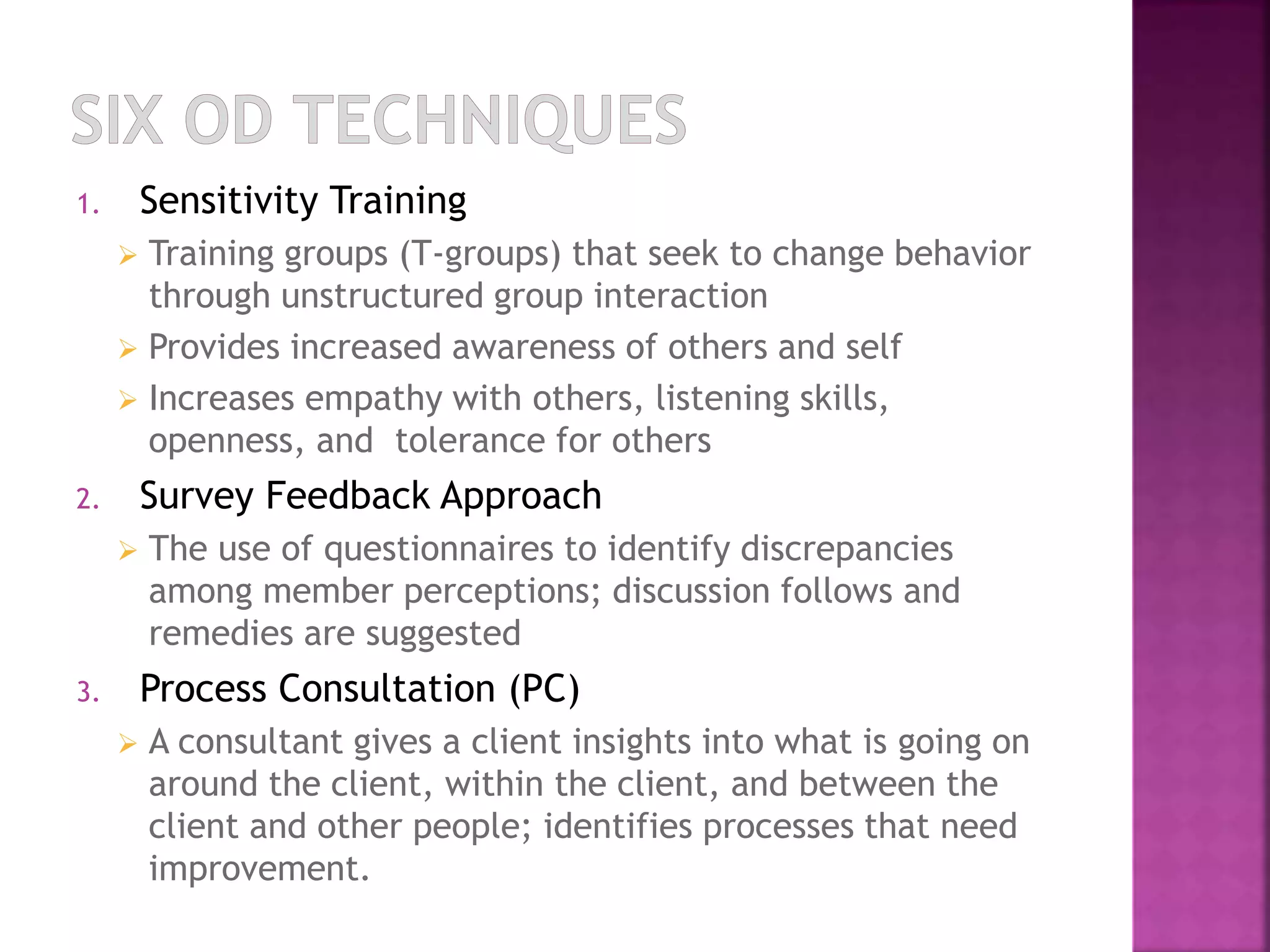
1. Sensitivity Training 
 Training groups (T-groups) that seek to change behavior 
through unstructured group interaction 
 Provides increased awareness of others and self 
 Increases empathy with others, listening skills, 
openness, and tolerance for others 
2. Survey Feedback Approach 
 The use of questionnaires to identify discrepancies 
among member perceptions; discussion follows and 
remedies are suggested 
3. Process Consultation (PC) 
 A consultant gives a client insights into what is going on 
around the client, within the client, and between the 
client and other people; identifies processes that need 
improvement.
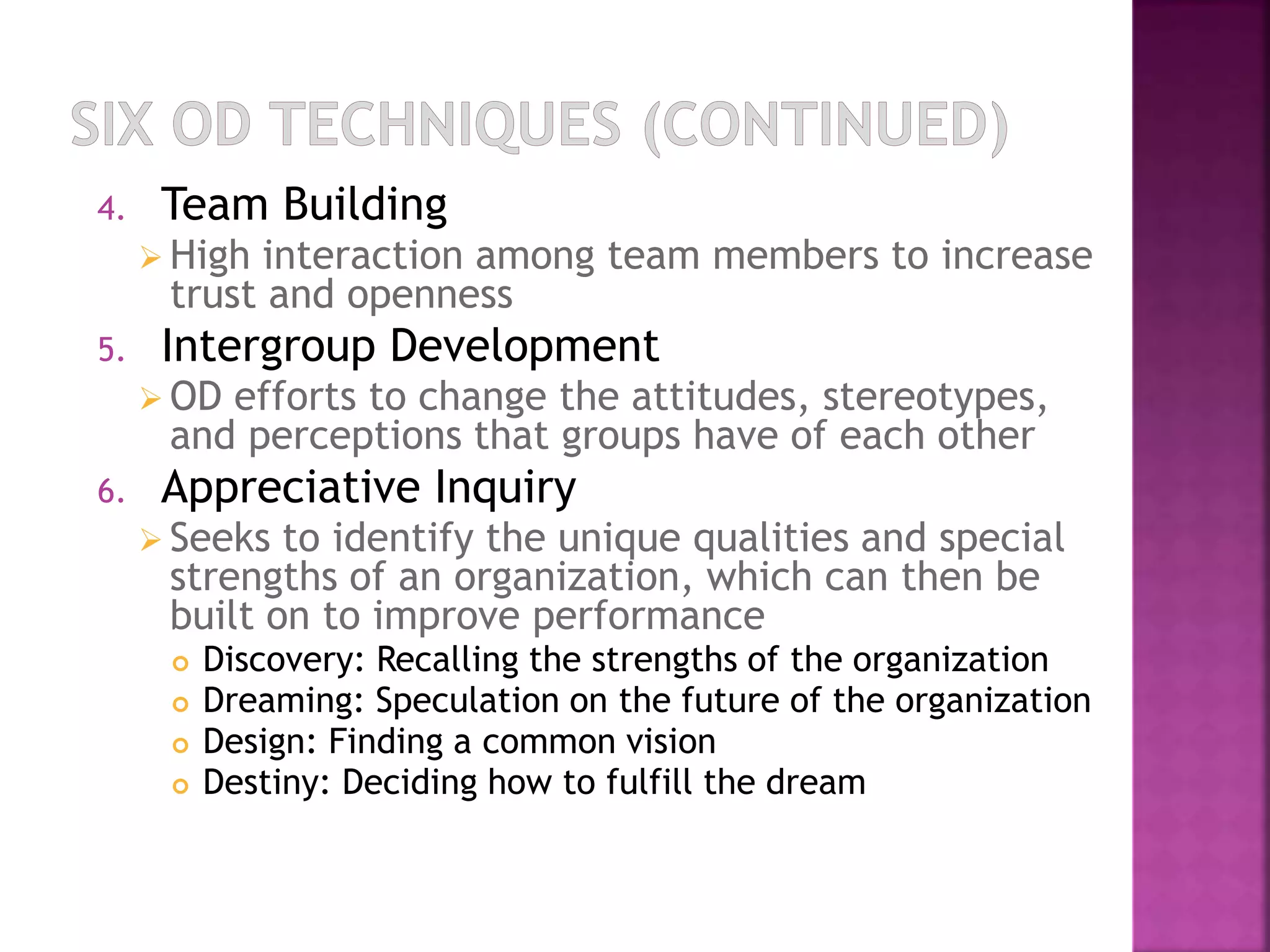
4. Team Building 
 High interaction among team members to increase 
trust and openness 
5. Intergroup Development 
 OD efforts to change the attitudes, stereotypes, 
and perceptions that groups have of each other 
6. Appreciative Inquiry 
 Seeks to identify the unique qualities and special 
strengths of an organization, which can then be 
built on to improve performance 
 Discovery: Recalling the strengths of the organization 
 Dreaming: Speculation on the future of the organization 
 Design: Finding a common vision 
 Destiny: Deciding how to fulfill the dream
Lewin’s three step change model

Lewin’s three step change model

  • 1.
  • 3.
     Lewin’s ForceField Theory of Change  Kotter’s Eight Step plan  Action Research Organizational Development
  • 4.
     Unfreezing Changeefforts to overcome the pressures of both individual resistance and group conformity  Moving  Efforts to get employees involved in the change process  Refreezing Stabilizing a change intervention by balancing driving and restraining forces Unfreezing Moving Refreezing
  • 5.
     Driving Forces  Forces that direct behavior away from the status quo  Restraining Forces  Forces that hinder movement from the existing equilibrium
  • 6.
     Builds fromLewin’s Model  To implement change: 1. Establish a sense of urgency 2. Form a coalition 3. Create a new vision 4. Communicate the vision 5. Empower others by removing barriers 6. Create and reward short-term “wins” 7. Consolidate, reassess, and adjust 8. Reinforce the changes Unfreezing Movement Refreezing
  • 7.
    A change processbased on systematic collection of data and then selection of a change action based on what the analyzed data indicates  Process steps: Diagnosis Analysis Feedback Action Evaluation  Action research benefits:  Problem-focused rather than solution-centered Heavy employee involvement reduces resistance to change
  • 8.
     Organizational Development(OD)  A collection of planned interventions, built on humanistic-democratic values, that seeks to improve organizational effectiveness and employee well-being  OD Values  Respect for people  Trust and support  Power equalization  Confrontation  Participation
  • 9.
    1. Sensitivity Training  Training groups (T-groups) that seek to change behavior through unstructured group interaction  Provides increased awareness of others and self  Increases empathy with others, listening skills, openness, and tolerance for others 2. Survey Feedback Approach  The use of questionnaires to identify discrepancies among member perceptions; discussion follows and remedies are suggested 3. Process Consultation (PC)  A consultant gives a client insights into what is going on around the client, within the client, and between the client and other people; identifies processes that need improvement.
  • 10.
    4. Team Building  High interaction among team members to increase trust and openness 5. Intergroup Development  OD efforts to change the attitudes, stereotypes, and perceptions that groups have of each other 6. Appreciative Inquiry  Seeks to identify the unique qualities and special strengths of an organization, which can then be built on to improve performance  Discovery: Recalling the strengths of the organization  Dreaming: Speculation on the future of the organization  Design: Finding a common vision  Destiny: Deciding how to fulfill the dream

Editor's Notes

  • #5 Lewin offers a three-step model to help facilitate the change process. He sets forth that change efforts need to “unfreeze” individual resistance and group conformity to help them move forward and then you need to refreeze the changes by balancing driving and restraining forces. This will help to move people through the change process and solidify the desired behaviors/outcomes moving forward.
  • #6 In the unfreezing stage Lewin identifies driving and restraining forces. Driving forces are those that direct behavior away from the status quo. Restraining forces are those that hinder movement from the existing equilibrium.
  • #7 Kotter also offers a model to look at change that builds on the initial ideas of Lewin. He sets forth the following eight steps: Establish a sense of urgency Form a coalition Create a new vision Communicate the vision Empower others by removing barriers Create and reward short-term “wins” Consolidate, reassess, and adjust Reinforce the changes
  • #8 Action research is another theory about change that says that the change process is based on a systematic collection of data and then selection of a change action based on what the data tells you. The process would be to diagnose the situation, analyze the data, obtain feedback from the data, take action, and then evaluate. The benefits of this approach is that it focuses on the problem instead of jumping to the solution and it also gets employees involved, thereby reducing their resistance to change.
  • #9 Organizational development is an area of study that is set up to determine what an organization needs to improve their effectiveness and employee well being. Some organizational development values include respect for people, trust and support, power equalization, confrontation, and participation.
  • #10 There are six commonly used organizational development techniques. The first is sensitivity training that sets up groups that seek to change behavior through unstructured group interaction by providing an environment of increased awareness of others and of themselves. This increases their empathy, listening skills, openness, and tolerance for others. The second technique is the survey feedback approach where the organization will use a questionnaire to identify discrepancies among member perceptions and then follow up with discussions and plans for improvement. Process consultation is the third technique. In this technique there is a consultant involved who gives the clients some insights into what is happening in the organization and helps to identify a process for improvement.
  • #11 The fourth technique is engaging in team building tools to increase trust and openness through increased interactions. Intergroup development is an organizational development tool that attempts to change the attitudes, stereotypes, and perceptions that groups may have of each other. Finally, the sixth commonly used technique is appreciative inquiry. This process seeks to identify the unique qualities and special strengths of an organization which they then use to build on to improve performance through a process. This process includes discovery (identifying the strengths of the organization), dreaming (speculating on the future of the organization), designing (finding a common vision), and destiny (deciding how to fulfill the dream).