Organizational Change &
Development
PPT-1
By… Raghav Sir
Meaning…….
 When there is a difference in our previous condition, it is called a change.
For ex: earlier work was done in a factory manually, but the same is now
done with the help of electronic machine. This has brought a change in the
earlier condition of workers working in this factory.
 Any alteration which occurs in the overall work environment of an
organization.
 In other words, change means of alteration of status quo or making things
difference.
Nature……
 Disturbs the old equilibrium : (Alteration of status quo)
 It May affects the whole organization or parts in degrees
 A continuous process
 Change requires a change agent. (Change agent is the person who
implement the change in an organization.)
 Change is resisted by people.
 Change takes place due to two factors: (Internal & External Factors)
Factors / Causes of Change……
 External
 Technological changes
 Changes in marketing conditions
 Social changes
 Political & legal changes
 Internal
 Nature of the work force
 Change in managerial personnel
 Deficiency in existing organization
Types of change
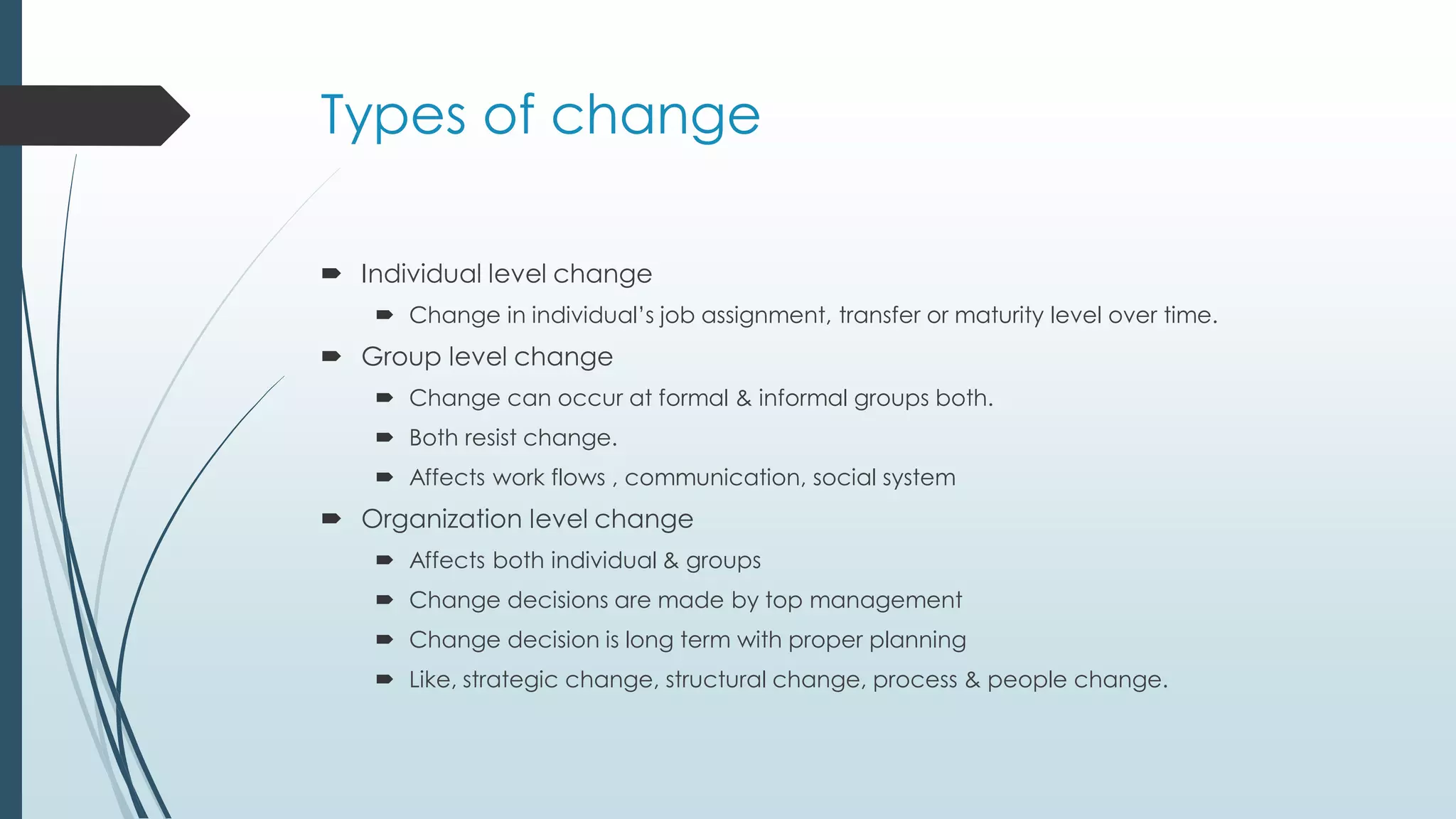
 Individual level change
 Change in individual’s job assignment, transfer or maturity level over time.
 Group level change
 Change can occur at formal & informal groups both.
 Both resist change.
 Affects work flows , communication, social system
 Organization level change
 Affects both individual & groups
 Change decisions are made by top management
 Change decision is long term with proper planning
 Like, strategic change, structural change, process & people change.
Types of change
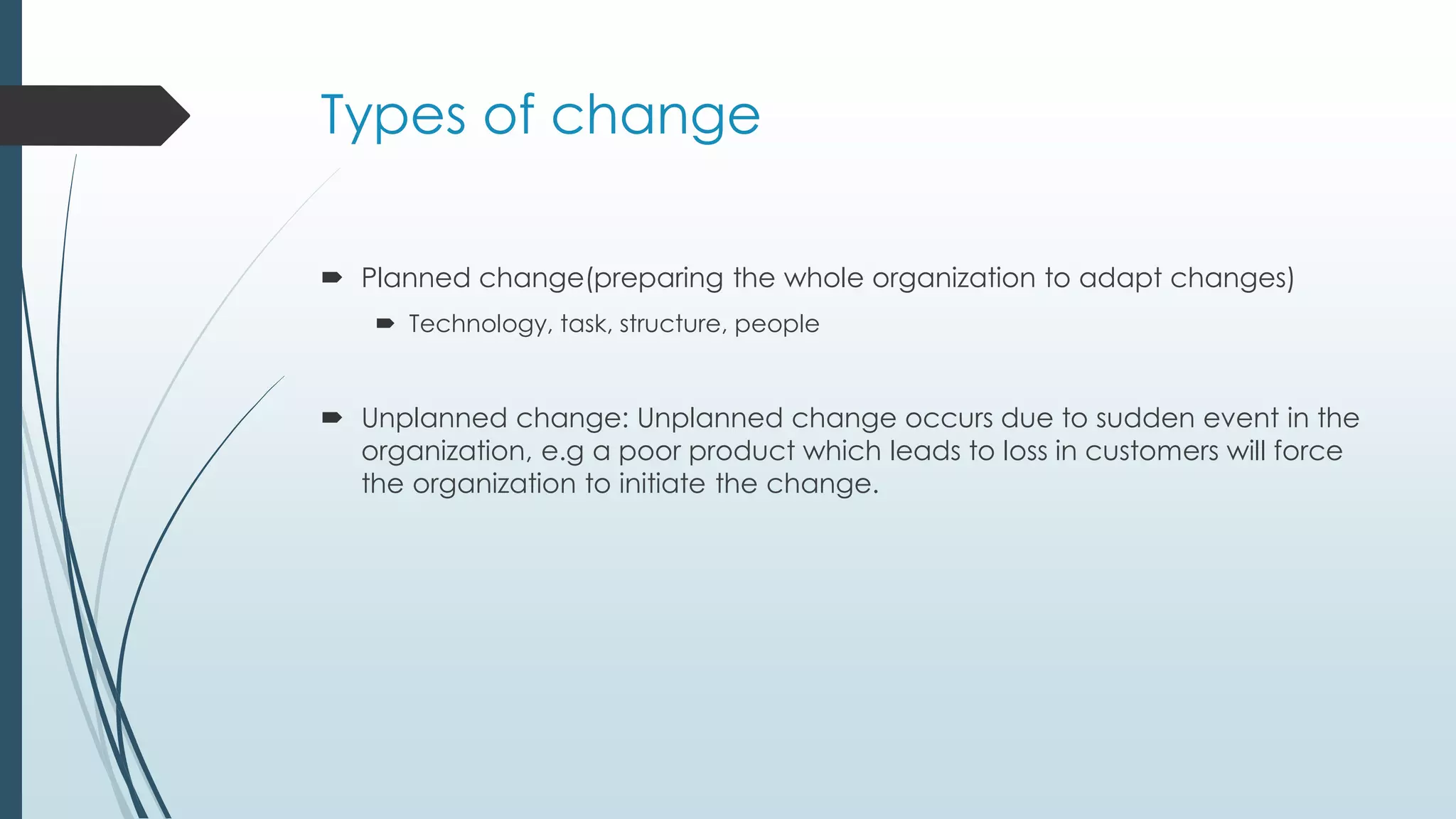
 Planned change(preparing the whole organization to adapt changes)
 Technology, task, structure, people
 Unplanned change: Unplanned change occurs due to sudden event in the
organization, e.g a poor product which leads to loss in customers will force
the organization to initiate the change.
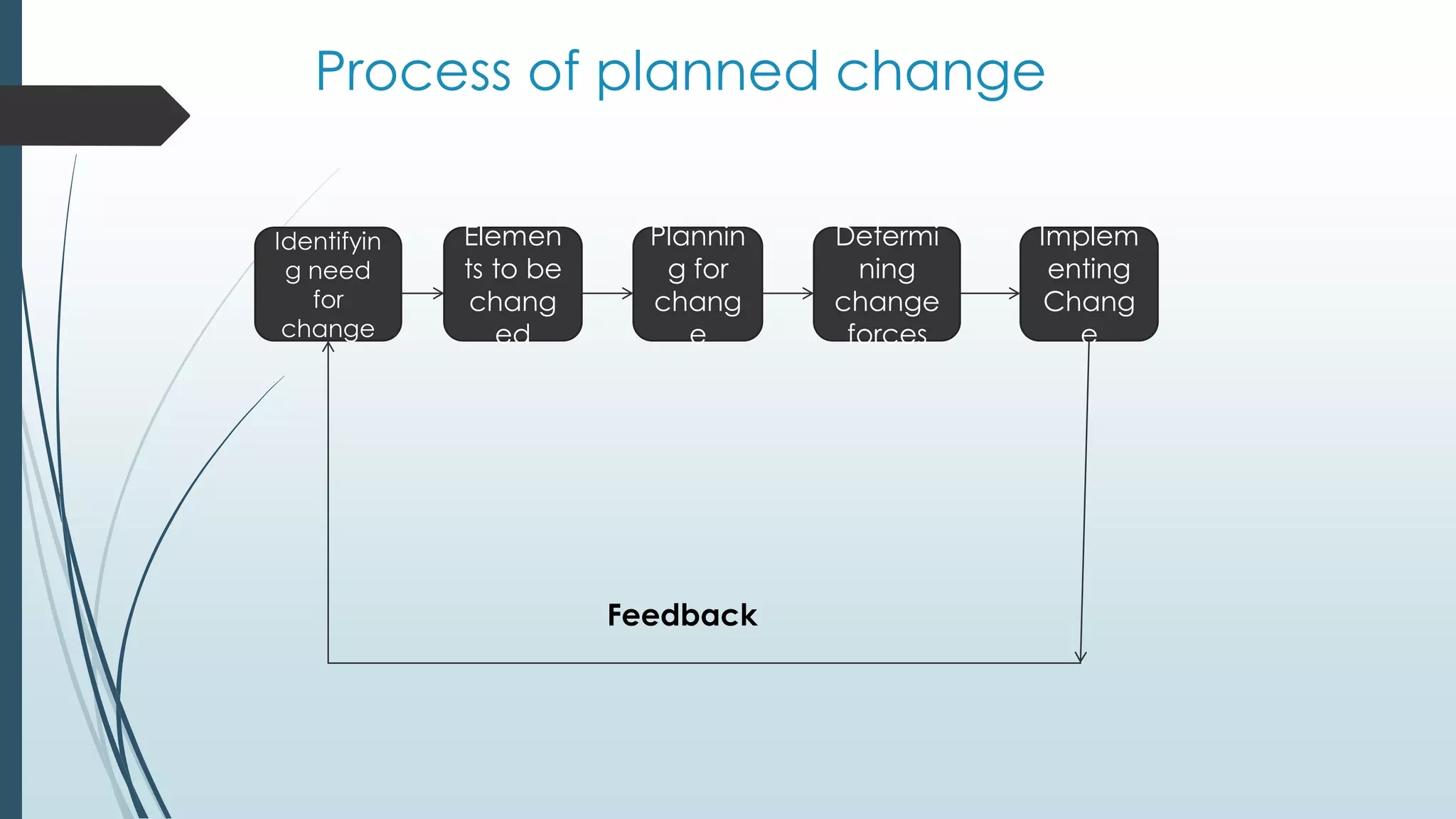
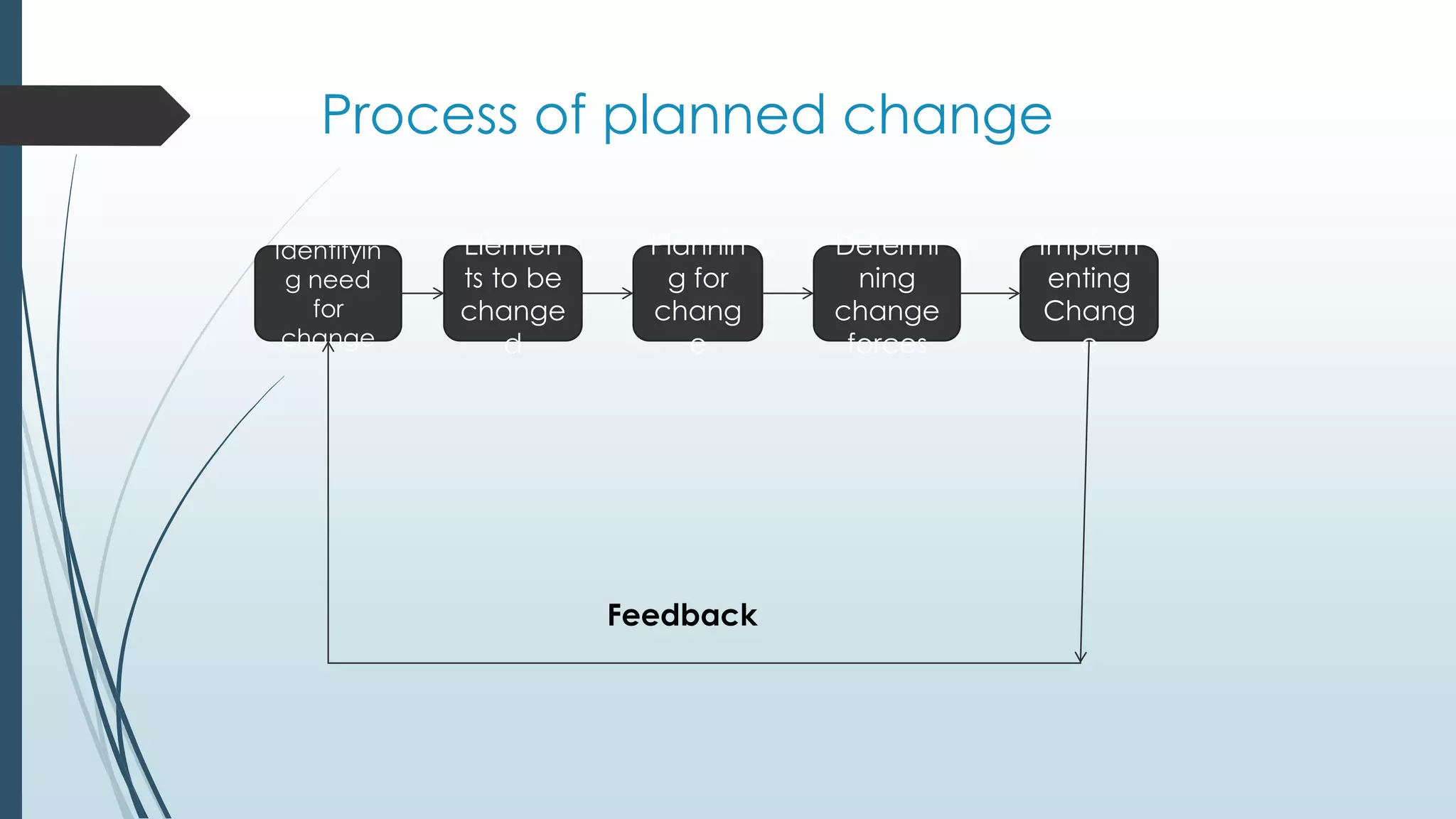
Process of planned change
Identifyin
g need
for
change
Elemen
ts to be
chang
ed
Plannin
g for
chang
e
Determi
ning
change
forces
Implem
enting
Chang
e
Feedback
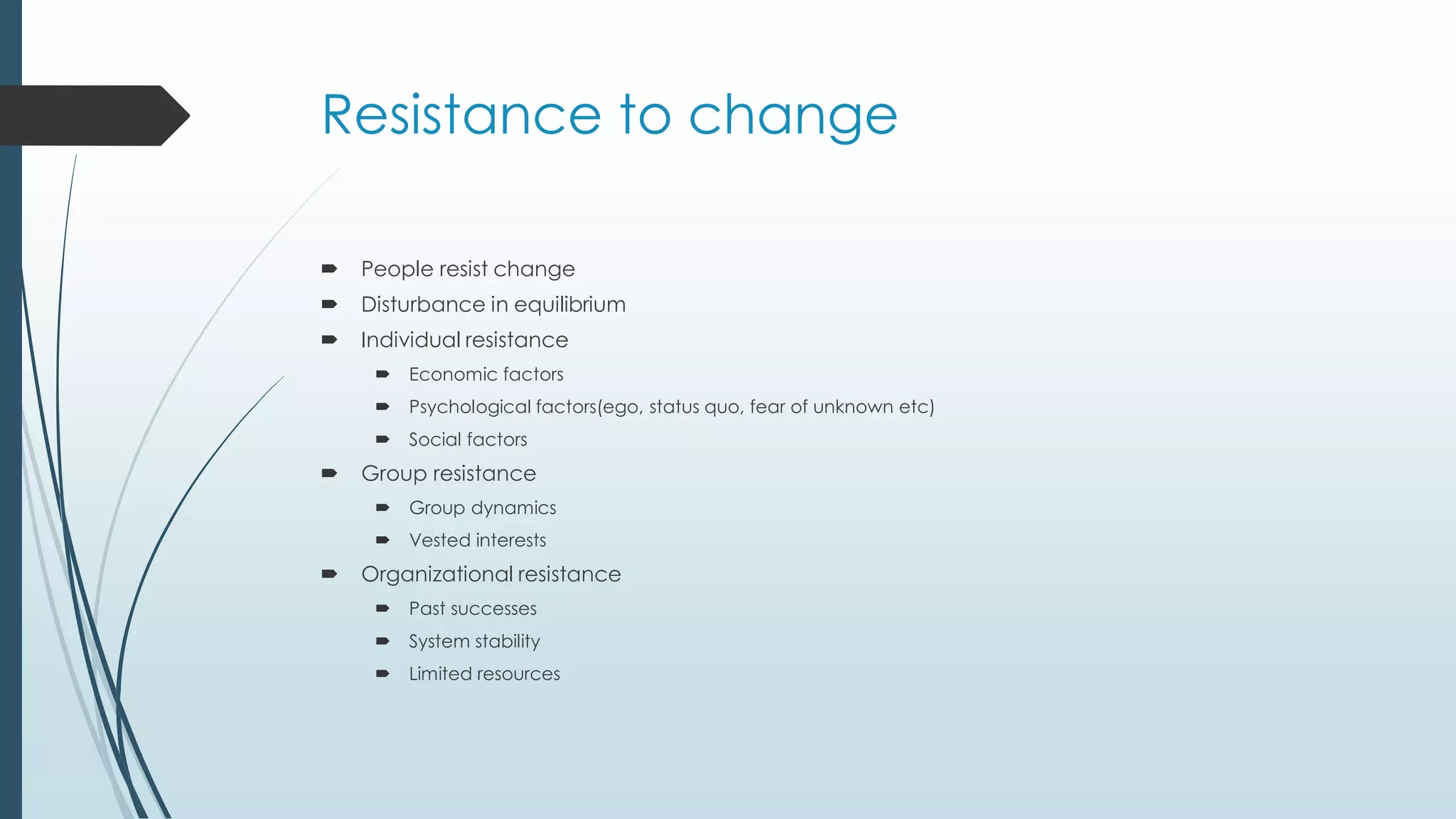
Resistance to change
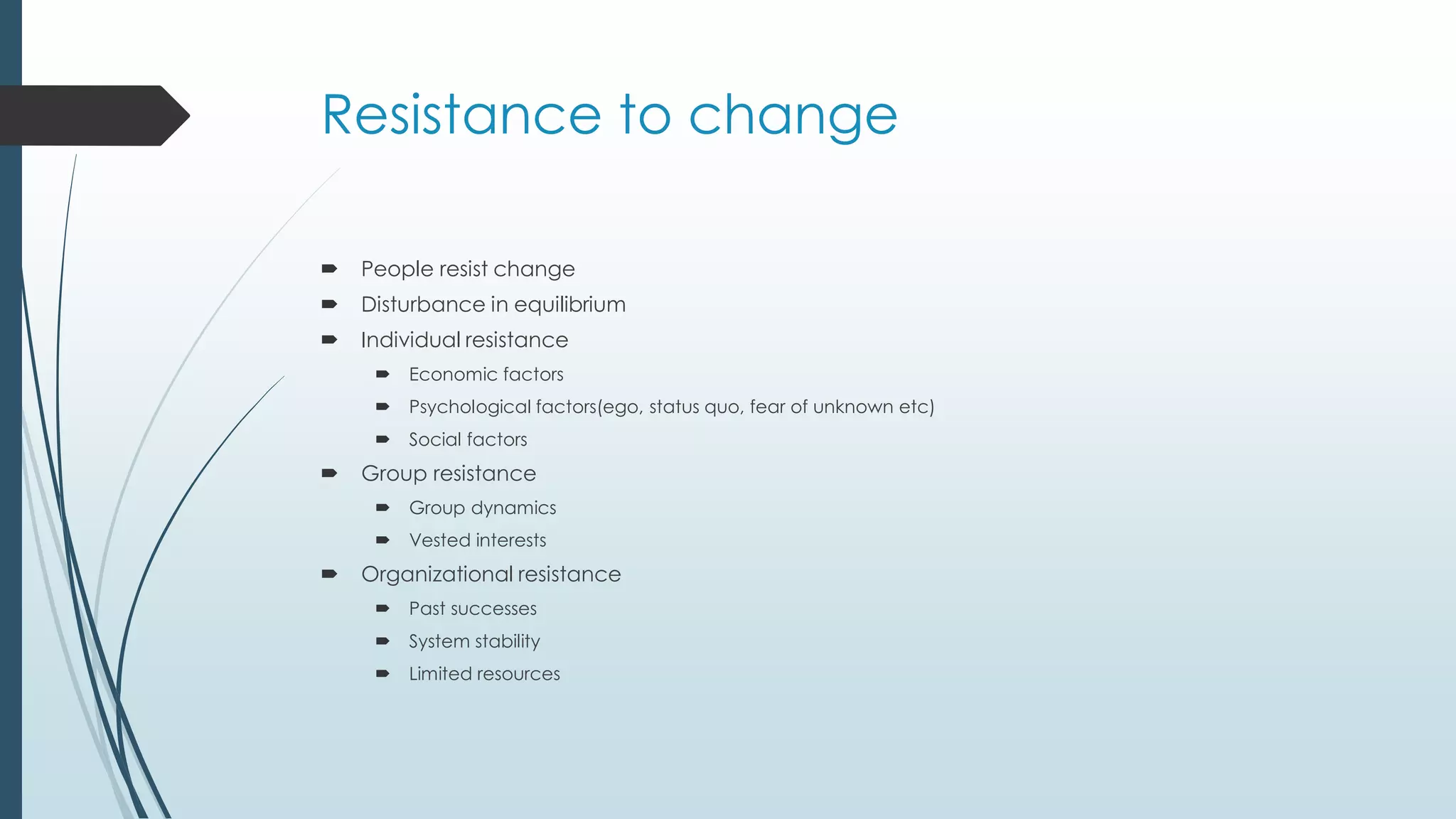
 People resist change
 Disturbance in equilibrium
 Individual resistance
 Economic factors
 Psychological factors(ego, status quo, fear of unknown etc)
 Social factors
 Group resistance
 Group dynamics
 Vested interests
 Organizational resistance
 Past successes
 System stability
 Limited resources
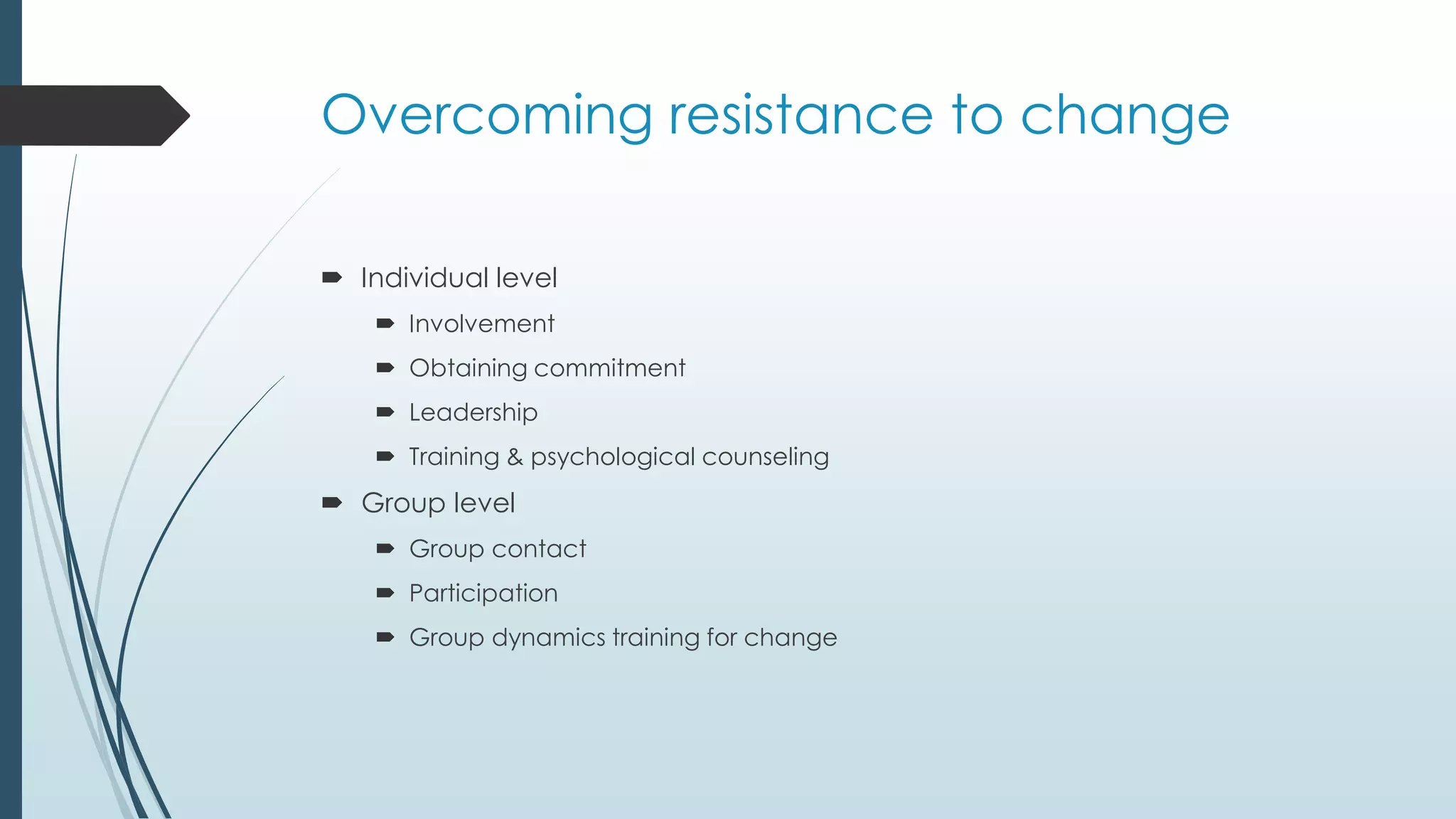
Overcoming resistance to change
 Individual level
 Involvement
 Obtaining commitment
 Leadership
 Training & psychological counseling
 Group level
 Group contact
 Participation
 Group dynamics training for change
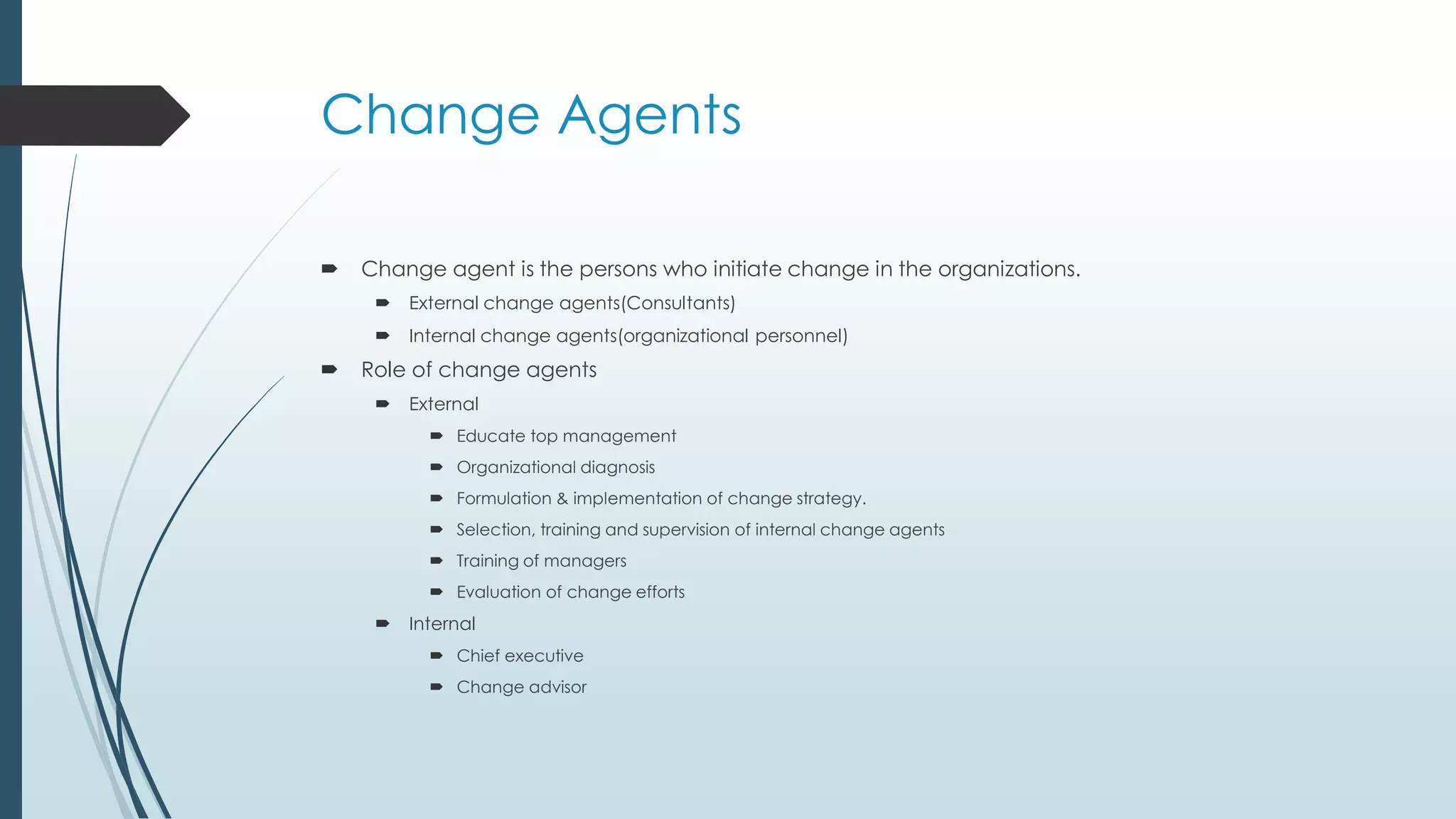
Change Agents
 Change agent is the persons who initiate change in the organizations.
 External change agents(Consultants)
 Internal change agents(organizational personnel)
 Role of change agents
 External
 Educate top management
 Organizational diagnosis
 Formulation & implementation of change strategy.
 Selection, training and supervision of internal change agents
 Training of managers
 Evaluation of change efforts
 Internal
 Chief executive
 Change advisor
Organizational Change &
Development
Meaning…….
 When there is a difference in our previous condition, it is called a change.
For ex: earlier work was done in a factory manually, but the same is now
done with the help of electronic machine. This has brought a change in the
earlier condition of workers working in this factory.
 Any alteration which occurs in the overall work environment of an
organization.
 In other words, change means of alteration of status quo or making things
difference.
Nature……
 Disturbs the old equilibrium : (Alteration of status quo)
 It May affects the whole organization or parts in degrees
 A continuous process
 Change requires a change agent. (Change agent is the person who
implement the change in an organization.)
 Change is resisted by people.
 Change takes place due to two factors: (Internal & External Factors)
Factors / Causes of Change……
 External
 Technological changes
 Changes in marketing conditions
 Social changes
 Political & legal changes
 Internal
 Nature of the work force
 Change in managerial personnel
 Deficiency in existing organization
Types of change
 Individual level change
 Change in individual’s job assignment, transfer or maturity level over time.
 Group level change
 Change can occur at formal & informal groups both.
 Both resist change.
 Affects work flows , communication, social system
 Organization level change
 Affects both individual & groups
 Change decisions are made by top management
 Change decision is long term with proper planning
 Like, strategic change, structural change, process & people change.
Types of change
 Planned change(preparing the whole organization to adapt changes)
 Technology, task, structure, people
 Unplanned change: Unplanned change occurs due to sudden event in the
organization, e.g a poor product which leads to loss in customers will force
the organization to initiate the change.
Process of planned change
Identifyin
g need
for
change
Elemen
ts to be
change
d
Plannin
g for
chang
e
Determi
ning
change
forces
Implem
enting
Chang
e
Feedback
Resistance to change
 People resist change
 Disturbance in equilibrium
 Individual resistance
 Economic factors
 Psychological factors(ego, status quo, fear of unknown etc)
 Social factors
 Group resistance
 Group dynamics
 Vested interests
 Organizational resistance
 Past successes
 System stability
 Limited resources
Overcoming resistance to change
 Individual level
 Involvement
 Obtaining commitment
 Leadership
 Training & psychological counseling
 Group level
 Group contact
 Participation
 Group dynamics training for change
Change Agents
 Change agent is the persons who initiate change in the organizations.
 External change agents(Consultants)
 Internal change agents(organizational personnel)
 Role of change agents
 External
 Educate top management
 Organizational diagnosis
 Formulation & implementation of change strategy.
 Selection, training and supervision of internal change agents
 Training of managers
 Evaluation of change efforts
 Internal
 Chief executive
 Change advisor

Organizational Change & Development ppt-1.pdf

  • 1.
  • 2.
    Meaning…….  When thereis a difference in our previous condition, it is called a change. For ex: earlier work was done in a factory manually, but the same is now done with the help of electronic machine. This has brought a change in the earlier condition of workers working in this factory.  Any alteration which occurs in the overall work environment of an organization.  In other words, change means of alteration of status quo or making things difference.
  • 3.
    Nature……  Disturbs theold equilibrium : (Alteration of status quo)  It May affects the whole organization or parts in degrees  A continuous process  Change requires a change agent. (Change agent is the person who implement the change in an organization.)  Change is resisted by people.  Change takes place due to two factors: (Internal & External Factors)
  • 4.
    Factors / Causesof Change……  External  Technological changes  Changes in marketing conditions  Social changes  Political & legal changes  Internal  Nature of the work force  Change in managerial personnel  Deficiency in existing organization
  • 5.
    Types of change Individual level change  Change in individual’s job assignment, transfer or maturity level over time.  Group level change  Change can occur at formal & informal groups both.  Both resist change.  Affects work flows , communication, social system  Organization level change  Affects both individual & groups  Change decisions are made by top management  Change decision is long term with proper planning  Like, strategic change, structural change, process & people change.
  • 6.
    Types of change Planned change(preparing the whole organization to adapt changes)  Technology, task, structure, people  Unplanned change: Unplanned change occurs due to sudden event in the organization, e.g a poor product which leads to loss in customers will force the organization to initiate the change.
  • 7.
    Process of plannedchange Identifyin g need for change Elemen ts to be chang ed Plannin g for chang e Determi ning change forces Implem enting Chang e Feedback
  • 8.
    Resistance to change People resist change  Disturbance in equilibrium  Individual resistance  Economic factors  Psychological factors(ego, status quo, fear of unknown etc)  Social factors  Group resistance  Group dynamics  Vested interests  Organizational resistance  Past successes  System stability  Limited resources
  • 9.
    Overcoming resistance tochange  Individual level  Involvement  Obtaining commitment  Leadership  Training & psychological counseling  Group level  Group contact  Participation  Group dynamics training for change
  • 10.
    Change Agents  Changeagent is the persons who initiate change in the organizations.  External change agents(Consultants)  Internal change agents(organizational personnel)  Role of change agents  External  Educate top management  Organizational diagnosis  Formulation & implementation of change strategy.  Selection, training and supervision of internal change agents  Training of managers  Evaluation of change efforts  Internal  Chief executive  Change advisor
  • 11.
  • 12.
    Meaning…….  When thereis a difference in our previous condition, it is called a change. For ex: earlier work was done in a factory manually, but the same is now done with the help of electronic machine. This has brought a change in the earlier condition of workers working in this factory.  Any alteration which occurs in the overall work environment of an organization.  In other words, change means of alteration of status quo or making things difference.
  • 13.
    Nature……  Disturbs theold equilibrium : (Alteration of status quo)  It May affects the whole organization or parts in degrees  A continuous process  Change requires a change agent. (Change agent is the person who implement the change in an organization.)  Change is resisted by people.  Change takes place due to two factors: (Internal & External Factors)
  • 14.
    Factors / Causesof Change……  External  Technological changes  Changes in marketing conditions  Social changes  Political & legal changes  Internal  Nature of the work force  Change in managerial personnel  Deficiency in existing organization
  • 15.
    Types of change Individual level change  Change in individual’s job assignment, transfer or maturity level over time.  Group level change  Change can occur at formal & informal groups both.  Both resist change.  Affects work flows , communication, social system  Organization level change  Affects both individual & groups  Change decisions are made by top management  Change decision is long term with proper planning  Like, strategic change, structural change, process & people change.
  • 16.
    Types of change Planned change(preparing the whole organization to adapt changes)  Technology, task, structure, people  Unplanned change: Unplanned change occurs due to sudden event in the organization, e.g a poor product which leads to loss in customers will force the organization to initiate the change.
  • 17.
    Process of plannedchange Identifyin g need for change Elemen ts to be change d Plannin g for chang e Determi ning change forces Implem enting Chang e Feedback
  • 18.
    Resistance to change People resist change  Disturbance in equilibrium  Individual resistance  Economic factors  Psychological factors(ego, status quo, fear of unknown etc)  Social factors  Group resistance  Group dynamics  Vested interests  Organizational resistance  Past successes  System stability  Limited resources
  • 19.
    Overcoming resistance tochange  Individual level  Involvement  Obtaining commitment  Leadership  Training & psychological counseling  Group level  Group contact  Participation  Group dynamics training for change
  • 20.
    Change Agents  Changeagent is the persons who initiate change in the organizations.  External change agents(Consultants)  Internal change agents(organizational personnel)  Role of change agents  External  Educate top management  Organizational diagnosis  Formulation & implementation of change strategy.  Selection, training and supervision of internal change agents  Training of managers  Evaluation of change efforts  Internal  Chief executive  Change advisor