By,
Ms. Ekta S Patel
Assistant Professor
A medication (also referred to as medicine,
pharmaceutical drug, or simply drug) is a drug used to
diagnose, cure, treat, or prevent disease.
A substance used in treating disease or relieving pain.
It is define as a substance used to promote health, to
prevent and cure disease.
1. Right patient
Check the name on
the prescription and wristband.
Ideally, use 2 or more identifiers
and ask patient to
identify themselves.
2. Right medication
Check the name of the medication,
brand names should be avoided.
Check the expiry date.
Check the prescription.
Make sure medications, especially
antibiotics, are reviewed regularly.
3. Right dose
Check the prescription.
Confirm appropriateness of the
dose using the BNF or local
guidelines.
If necessary, calculate the dose
and have another nurse
calculate the dose as well.
4. Right route
Again, check the order and
appropriateness of the route
prescribed.
Confirm that the patient can
take or receive the medication
by the ordered route.
5. Right time
Check the frequency of the prescribed
medication.
Double-check that you are giving the
prescribed at the correct time.
Confirm when the last dose was
given.
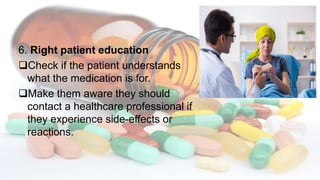
6. Right patient education
Check if the patient understands
what the medication is for.
Make them aware they should
contact a healthcare professional if
they experience side-effects or
reactions.
7. Right documentation
Ensure you have signed for the
medication AFTER it has been
administered.
Ensure the medication is
prescribed correctly with a start
and end date if appropriate.
8. Right to refuse
Ensure you have the patient
consent to administer
medications.
Be aware that patients do have a
right to refuse medication if they
have the capacity to do so.
9. Right assessment
Check your patient
actually needs the
medication.
Check for
contraindications.
Baseline observations if
required.
10. Right evaluation
Ensure the medication is
working the way it should.
Ensure medications are
reviewed regularly.
Ongoing observations if
required.
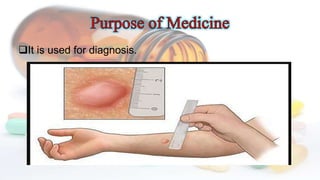
It is used for diagnosis.
It treats the disease conditions
To prevent health alteration.
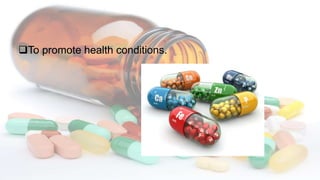
To promote health conditions.
To treat infections allergic and inflammation.
To relive pain.