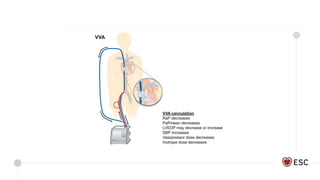
ECMO: optimising support
Susanna Price MD PhD
Consultant Cardiologist & Intensivist
Royal Brompton Hospital, NHLI, Imperial College, London, UK
Conflict of interest?
• None
2
Heart rescue: the role of mechanical circulatory
support in the management of severe refractory
cardiogenic shock.
Sayer, Gabriel; Baker, Joshua; Parks, Kimberly
Current Opinion in Critical Care. 18(5):409-416, October
2012.
DOI: 10.1097/MCC.0b013e328357f1e6
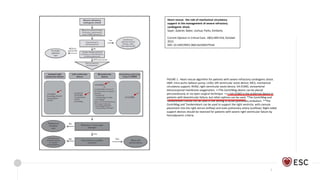
FIGURE 1 . Heart rescue algorithm for patients with severe refractory cardiogenic shock.
IABP, intra-aortic balloon pump; LVAD, left ventricular assist device; MCS, mechanical
circulatory support; RVAD, right ventricular assist device; VA ECMO, venoarterial
extracorporeal membrane oxygenation. ++The CentriMag device can be placed
percutaneously or via open surgical technique. ++++VA ECMO is the preferred device in
patients with biventricular failure, but other options can be used. *The CentriMag and
TandemHeart should not be used in the setting of acute pulmonary embolism. **The
CentriMag and TandemHeart can be used to support the right ventricle, with cannula
placement into the right atrium (inflow) and main pulmonary artery (outflow). Right-sided
support devices should be reserved for patients with severe right ventricular failure by
hemodynamic criteria.
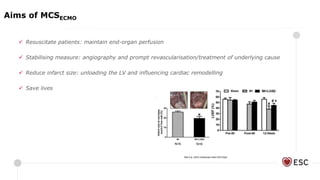
 Resuscitate patients: maintain end-organ perfusion
 Stabilising measure: angiography and prompt revascularisation/treatment of underlying cause
 Reduce infarct size: unloading the LV and influencing cardiac remodelling
 Save lives
Aims of MCSECMO
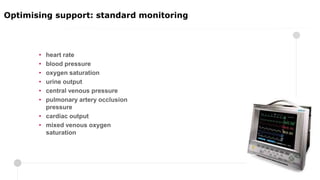
• heart rate
• blood pressure
• oxygen saturation
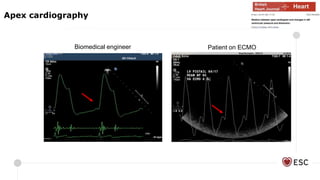
• urine output
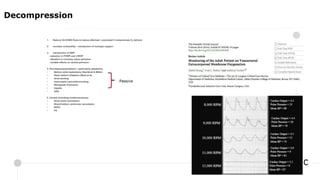
• central venous pressure
• pulmonary artery occlusion
pressure
• cardiac output
• mixed venous oxygen
saturation
Optimising support: standard monitoring
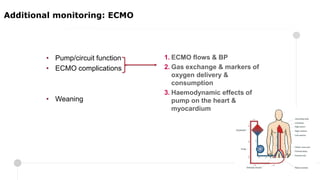
1. ECMO flows & BP
2. Gas exchange & markers of
oxygen delivery &
consumption
3. Haemodynamic effects of
pump on the heart &
myocardium
• Pump/circuit function
• ECMO complications
• Weaning
Additional monitoring: ECMO
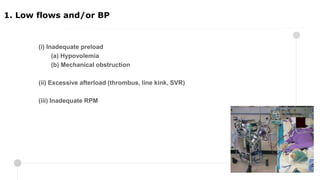
(i) Inadequate preload
(a) Hypovolemia
(b) Mechanical obstruction
(ii) Excessive afterload (thrombus, line kink, SVR)
(iii) Inadequate RPM
1. Low flows and/or BP
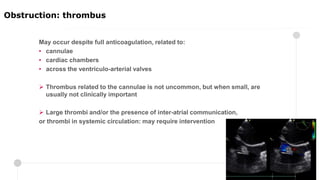
May occur despite full anticoagulation, related to:
• cannulae
• cardiac chambers
• across the ventriculo-arterial valves
 Thrombus related to the cannulae is not uncommon, but when small, are
usually not clinically important
 Large thrombi and/or the presence of inter-atrial communication,
or thrombi in systemic circulation: may require intervention
Obstruction: thrombus
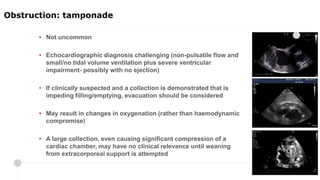
• Not uncommon
• Echocardiographic diagnosis challenging (non-pulsatile flow and
small/no tidal volume ventilation plus severe ventricular
impairment- possibly with no ejection)
• If clinically suspected and a collection is demonstrated that is
impeding filling/emptying, evacuation should be considered
• May result in changes in oxygenation (rather than haemodynamic
compromise)
• A large collection, even causing significant compression of a
cardiac chamber, may have no clinical relevance until weaning
from extracorporeal support is attempted
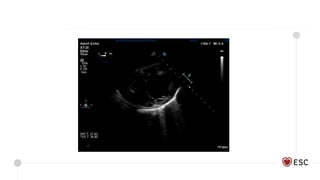
Localised right atrial collection
Obstruction: tamponade
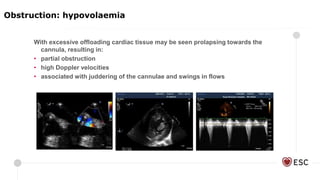
With excessive offloading cardiac tissue may be seen prolapsing towards the
cannula, resulting in:
• partial obstruction
• high Doppler velocities
• associated with juddering of the cannulae and swings in flows
Cannula with thrombus
Obstruction: hypovolaemia
Cannula with thrombus
☑
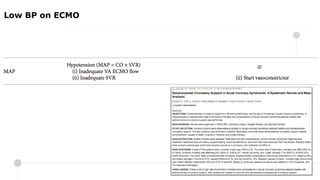
Low BP on ECMO
• Inadequate/excessive CO2 removal
• Inadequate oxygenation
- the right heart
- the left heart
2. Gas exchange
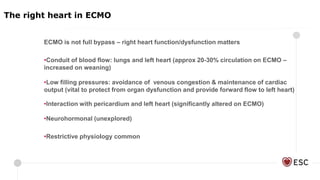
ECMO is not full bypass – right heart function/dysfunction matters
•Conduit of blood flow: lungs and left heart (approx 20-30% circulation on ECMO –
increased on weaning)
•Low filling pressures: avoidance of venous congestion & maintenance of cardiac
output (vital to protect from organ dysfunction and provide forward flow to left heart)
•Interaction with pericardium and left heart (significantly altered on ECMO)
•Neurohormonal (unexplored)
•Restrictive physiology common
The right heart in ECMO
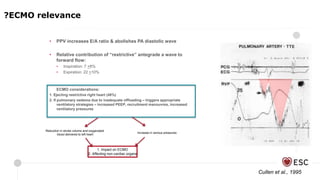
• PPV increases E/A ratio & abolishes PA diastolic wave
• Relative contribution of “restrictive” antegrade a wave to
forward flow:
• Inspiration: 7 +8%
• Expiration: 22 +10%
ECMO considerations:
1. Ejecting restrictive right heart (48%)
2. If pulmonary oedema due to inadequate offloading – triggers appropriate
ventilatory strategies – increased PEEP, recruitment manouvres, increased
ventilatory pressures
Cullen et al., 1995
Reduction in stroke volume and oxygenated
blood delivered to left heart
Increase in venous pressures
1. Impact on ECMO
2. Affecting non-cardiac organs
?ECMO relevance
☑
• Inadequate/excessive CO2 removal
• Inadequate oxygenation - the right heart
- the left heart
2. Gas exchange
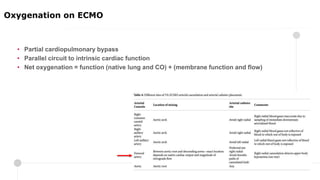
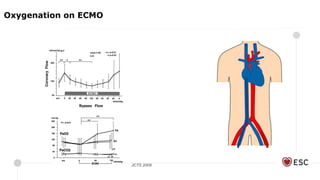
• Partial cardiopulmonary bypass
• Parallel circuit to intrinsic cardiac function
• Net oxygenation = function (native lung and CO) + (membrane function and flow)
Oxygenation on ECMO
JCTS 2009
Oxygenation on ECMO
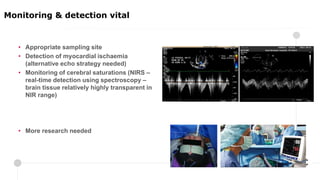
• Appropriate sampling site
• Detection of myocardial ischaemia
(alternative echo strategy needed)
• Monitoring of cerebral saturations (NIRS –
real-time detection using spectroscopy –
brain tissue relatively highly transparent in
NIR range)
• More research needed
Monitoring & detection vital
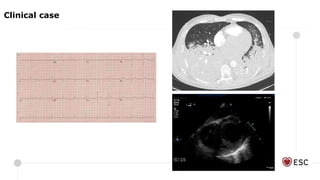
Clinical case
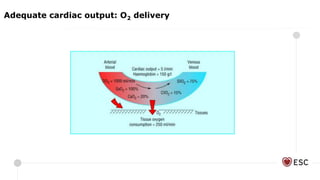
Adequate cardiac output: O2 delivery
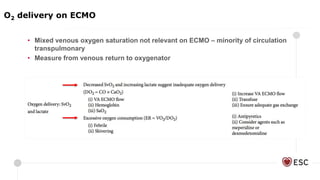
• Mixed venous oxygen saturation not relevant on ECMO – minority of circulation
transpulmonary
• Measure from venous return to oxygenator
O2 delivery on ECMO
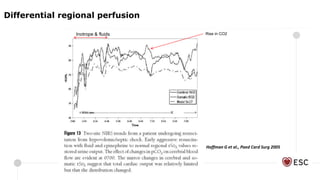
Hoffman G et al., Paed Card Surg 2005
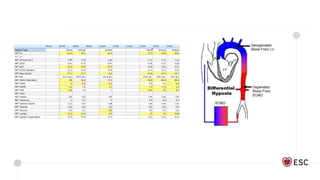
Inotrope & fluids Rise in CO2
Differential regional perfusion
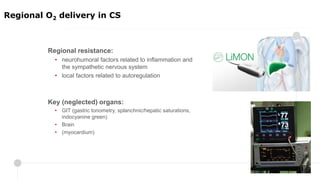
Regional resistance:
• neurohumoral factors related to inflammation and
the sympathetic nervous system
• local factors related to autoregulation
Key (neglected) organs:
• GIT (gastric tonometry, splanchnic/hepatic saturations,
indocyanine green)
• Brain
• (myocardium)
Regional O2 delivery in CS
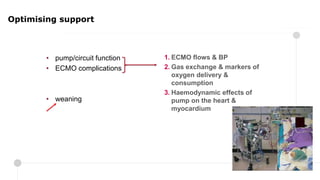
1. ECMO flows & BP
2. Gas exchange & markers of
oxygen delivery &
consumption
3. Haemodynamic effects of
pump on the heart &
myocardium
• pump/circuit function
• ECMO complications
• weaning
Monitoring on ECMO
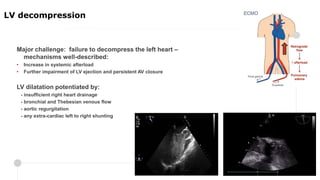
Major challenge: failure to decompress the left heart –
mechanisms well-described:
• Increase in systemic afterload
• Further impairment of LV ejection and persistent AV closure
LV dilatation potentiated by:
- insufficient right heart drainage
- bronchial and Thebesian venous flow
- aortic regurgitation
- any extra-cardiac left to right shunting
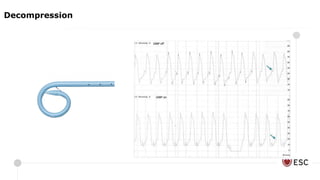
LV decompression
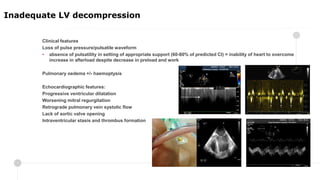
Clinical features
Loss of pulse pressure/pulsatile waveform
• absence of pulsatility in setting of appropriate support (60-80% of predicted CI) = inability of heart to overcome
increase in afterload despite decrease in preload and work
Pulmonary oedema +/- haemoptysis
Echocardiographic features:
Progressive ventricular dilatation
Worsening mitral regurgitation
Retrograde pulmonary vein systolic flow
Lack of aortic valve opening
Intraventricular stasis and thrombus formation
Inadequate LV decompression
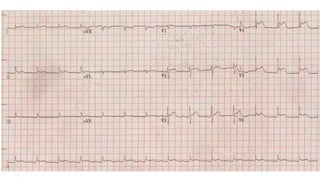
Biomedical engineer Patient on ECMO
Apex cardiography
1. Reduce VA ECMO flows to reduce afterload – precluded if compromises O2 delivery
2. Increase contractility – introduction of inotropic support
3. Introduction of IABP
- reduction in PCWP and LVEDP
- alteration in coronary artery perfusion
- variable effects on carotid perfusion
4. Percutaneous/peripheral – particularly paediatrics
• Balloon atrial septostomy (Rashkind & Miller)
• Static balloon dilatation (Ward et al)
• atrial stenting
• trans-septal cannulation/venting
• Retrograde transaortic
• Impella
• iVAC
5. Central (including minithoracotomy):
• Direct atrial cannulation
• Direct/indirect ventricular cannulation
• RUPV
• PA
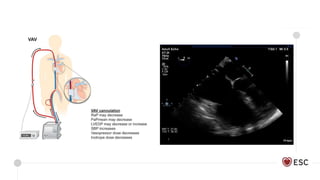
Passive
Decompression
Decompression
1. ECMO flows & BP
2. Gas exchange & markers of
oxygen delivery &
consumption
3. Haemodynamic effects of
pump on the heart &
myocardium
• pump/circuit function
• ECMO complications
• weaning
Optimising support
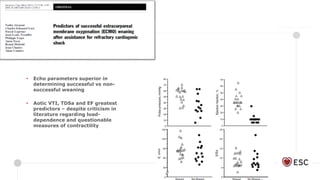
• Echo parameters superior in
determining successful vs non-
successful weaning
• Aotic VTI, TDSa and EF greatest
predictors – despite criticism in
literature regarding load-
dependence and questionable
measures of contractility
Int Care Med 2011
Echo parameters
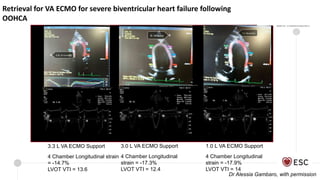
Retrieval for VA ECMO for severe biventricular heart failure following
OOHCA
3.3 L VA ECMO Support
4 Chamber Longitudinal strain
= -14.7%
LVOT VTI = 13.6
3.0 L VA ECMO Support
4 Chamber Longitudinal
strain = -17.3%
LVOT VTI = 12.4
1.0 L VA ECMO Support
4 Chamber Longitudinal
strain = -17.9%
LVOT VTI = 14
Dr Alessia Gambaro, with permission
CS: a multisystem disease
40
Weaning?
ECMO: optimising support
Susanna Price MD PhD
Consultant Cardiologist & Intensivist
Royal Brompton Hospital, NHLI, Imperial College, London, UK

Optimising support by Dr Susanna Price

  • 1.
    ECMO: optimising support SusannaPrice MD PhD Consultant Cardiologist & Intensivist Royal Brompton Hospital, NHLI, Imperial College, London, UK
  • 2.
  • 4.
    2 Heart rescue: therole of mechanical circulatory support in the management of severe refractory cardiogenic shock. Sayer, Gabriel; Baker, Joshua; Parks, Kimberly Current Opinion in Critical Care. 18(5):409-416, October 2012. DOI: 10.1097/MCC.0b013e328357f1e6 FIGURE 1 . Heart rescue algorithm for patients with severe refractory cardiogenic shock. IABP, intra-aortic balloon pump; LVAD, left ventricular assist device; MCS, mechanical circulatory support; RVAD, right ventricular assist device; VA ECMO, venoarterial extracorporeal membrane oxygenation. ++The CentriMag device can be placed percutaneously or via open surgical technique. ++++VA ECMO is the preferred device in patients with biventricular failure, but other options can be used. *The CentriMag and TandemHeart should not be used in the setting of acute pulmonary embolism. **The CentriMag and TandemHeart can be used to support the right ventricle, with cannula placement into the right atrium (inflow) and main pulmonary artery (outflow). Right-sided support devices should be reserved for patients with severe right ventricular failure by hemodynamic criteria.
  • 5.
     Resuscitate patients:maintain end-organ perfusion  Stabilising measure: angiography and prompt revascularisation/treatment of underlying cause  Reduce infarct size: unloading the LV and influencing cardiac remodelling  Save lives Aims of MCSECMO
  • 6.
    • heart rate •blood pressure • oxygen saturation • urine output • central venous pressure • pulmonary artery occlusion pressure • cardiac output • mixed venous oxygen saturation Optimising support: standard monitoring
  • 7.
    1. ECMO flows& BP 2. Gas exchange & markers of oxygen delivery & consumption 3. Haemodynamic effects of pump on the heart & myocardium • Pump/circuit function • ECMO complications • Weaning Additional monitoring: ECMO
  • 8.
    (i) Inadequate preload (a)Hypovolemia (b) Mechanical obstruction (ii) Excessive afterload (thrombus, line kink, SVR) (iii) Inadequate RPM 1. Low flows and/or BP
  • 9.
    May occur despitefull anticoagulation, related to: • cannulae • cardiac chambers • across the ventriculo-arterial valves  Thrombus related to the cannulae is not uncommon, but when small, are usually not clinically important  Large thrombi and/or the presence of inter-atrial communication, or thrombi in systemic circulation: may require intervention Obstruction: thrombus
  • 10.
    • Not uncommon •Echocardiographic diagnosis challenging (non-pulsatile flow and small/no tidal volume ventilation plus severe ventricular impairment- possibly with no ejection) • If clinically suspected and a collection is demonstrated that is impeding filling/emptying, evacuation should be considered • May result in changes in oxygenation (rather than haemodynamic compromise) • A large collection, even causing significant compression of a cardiac chamber, may have no clinical relevance until weaning from extracorporeal support is attempted Localised right atrial collection Obstruction: tamponade
  • 11.
    With excessive offloadingcardiac tissue may be seen prolapsing towards the cannula, resulting in: • partial obstruction • high Doppler velocities • associated with juddering of the cannulae and swings in flows Cannula with thrombus Obstruction: hypovolaemia
  • 12.
  • 13.
    • Inadequate/excessive CO2removal • Inadequate oxygenation - the right heart - the left heart 2. Gas exchange
  • 14.
    ECMO is notfull bypass – right heart function/dysfunction matters •Conduit of blood flow: lungs and left heart (approx 20-30% circulation on ECMO – increased on weaning) •Low filling pressures: avoidance of venous congestion & maintenance of cardiac output (vital to protect from organ dysfunction and provide forward flow to left heart) •Interaction with pericardium and left heart (significantly altered on ECMO) •Neurohormonal (unexplored) •Restrictive physiology common The right heart in ECMO
  • 15.
    • PPV increasesE/A ratio & abolishes PA diastolic wave • Relative contribution of “restrictive” antegrade a wave to forward flow: • Inspiration: 7 +8% • Expiration: 22 +10% ECMO considerations: 1. Ejecting restrictive right heart (48%) 2. If pulmonary oedema due to inadequate offloading – triggers appropriate ventilatory strategies – increased PEEP, recruitment manouvres, increased ventilatory pressures Cullen et al., 1995 Reduction in stroke volume and oxygenated blood delivered to left heart Increase in venous pressures 1. Impact on ECMO 2. Affecting non-cardiac organs ?ECMO relevance
  • 16.
    ☑ • Inadequate/excessive CO2removal • Inadequate oxygenation - the right heart - the left heart 2. Gas exchange
  • 17.
    • Partial cardiopulmonarybypass • Parallel circuit to intrinsic cardiac function • Net oxygenation = function (native lung and CO) + (membrane function and flow) Oxygenation on ECMO
  • 18.
  • 19.
    • Appropriate samplingsite • Detection of myocardial ischaemia (alternative echo strategy needed) • Monitoring of cerebral saturations (NIRS – real-time detection using spectroscopy – brain tissue relatively highly transparent in NIR range) • More research needed Monitoring & detection vital
  • 20.
  • 26.
  • 27.
    • Mixed venousoxygen saturation not relevant on ECMO – minority of circulation transpulmonary • Measure from venous return to oxygenator O2 delivery on ECMO
  • 28.
    Hoffman G etal., Paed Card Surg 2005 Inotrope & fluids Rise in CO2 Differential regional perfusion
  • 29.
    Regional resistance: • neurohumoralfactors related to inflammation and the sympathetic nervous system • local factors related to autoregulation Key (neglected) organs: • GIT (gastric tonometry, splanchnic/hepatic saturations, indocyanine green) • Brain • (myocardium) Regional O2 delivery in CS
  • 30.
    1. ECMO flows& BP 2. Gas exchange & markers of oxygen delivery & consumption 3. Haemodynamic effects of pump on the heart & myocardium • pump/circuit function • ECMO complications • weaning Monitoring on ECMO
  • 31.
    Major challenge: failureto decompress the left heart – mechanisms well-described: • Increase in systemic afterload • Further impairment of LV ejection and persistent AV closure LV dilatation potentiated by: - insufficient right heart drainage - bronchial and Thebesian venous flow - aortic regurgitation - any extra-cardiac left to right shunting LV decompression
  • 32.
    Clinical features Loss ofpulse pressure/pulsatile waveform • absence of pulsatility in setting of appropriate support (60-80% of predicted CI) = inability of heart to overcome increase in afterload despite decrease in preload and work Pulmonary oedema +/- haemoptysis Echocardiographic features: Progressive ventricular dilatation Worsening mitral regurgitation Retrograde pulmonary vein systolic flow Lack of aortic valve opening Intraventricular stasis and thrombus formation Inadequate LV decompression
  • 33.
    Biomedical engineer Patienton ECMO Apex cardiography
  • 34.
    1. Reduce VAECMO flows to reduce afterload – precluded if compromises O2 delivery 2. Increase contractility – introduction of inotropic support 3. Introduction of IABP - reduction in PCWP and LVEDP - alteration in coronary artery perfusion - variable effects on carotid perfusion 4. Percutaneous/peripheral – particularly paediatrics • Balloon atrial septostomy (Rashkind & Miller) • Static balloon dilatation (Ward et al) • atrial stenting • trans-septal cannulation/venting • Retrograde transaortic • Impella • iVAC 5. Central (including minithoracotomy): • Direct atrial cannulation • Direct/indirect ventricular cannulation • RUPV • PA Passive Decompression
  • 35.
  • 36.
    1. ECMO flows& BP 2. Gas exchange & markers of oxygen delivery & consumption 3. Haemodynamic effects of pump on the heart & myocardium • pump/circuit function • ECMO complications • weaning Optimising support
  • 37.
    • Echo parameterssuperior in determining successful vs non- successful weaning • Aotic VTI, TDSa and EF greatest predictors – despite criticism in literature regarding load- dependence and questionable measures of contractility Int Care Med 2011 Echo parameters
  • 38.
    Retrieval for VAECMO for severe biventricular heart failure following OOHCA 3.3 L VA ECMO Support 4 Chamber Longitudinal strain = -14.7% LVOT VTI = 13.6 3.0 L VA ECMO Support 4 Chamber Longitudinal strain = -17.3% LVOT VTI = 12.4 1.0 L VA ECMO Support 4 Chamber Longitudinal strain = -17.9% LVOT VTI = 14 Dr Alessia Gambaro, with permission
  • 39.
  • 40.
  • 41.
    ECMO: optimising support SusannaPrice MD PhD Consultant Cardiologist & Intensivist Royal Brompton Hospital, NHLI, Imperial College, London, UK

Editor's Notes

  • #4 Common monitored variables: relate to the basis for the clinical diagnosis of cardiogenic shock: heart rate, BP, saturations, filling pressures, cardiac output and venous oxygen saturations
  • #6 Aims – resuscitation ++++++++treat the underlying cause ++++++++++++ And in some patients, minimise the infarct size (data limited)
  • #7 Common monitored variables: relate to the basis for the clinical diagnosis of cardiogenic shock: heart rate, BP, saturations, filling pressures, cardiac output and venous oxygen saturations
  • #8 Additional monitoring required on ECMO – relates to pump/circuit function & complications 3 areas (read through) + weaning
  • #9 Flows and BP Low flow? Preload – afterload - RPM
  • #10 Obstruction – a number of causes – thrombus is common & may occur even in the event of adequate anticoagulation Patient on central VA, see thrombus obstructing the inlet cannula
  • #11 Tamponade – againnot uncommon esp post cardiac surgery – echo can be challenging – If its a problem, then consider evacuaton – but only if you have to…
  • #12 May also get obtruction due to hypovolaemia – may relate to either trial or or av – and may be detrimental in terms of LVOTO and causing pulmonary oedema with MR – imortant to make the diagnosis
  • #13 What if BP is low – either due to VA ECMO flow… dealt wiht Or inadequate SVR – in which case start vasoconstrictor
  • #14 2. Gas exchange – what’s that got to do with haemodynamic monitoring Rh, lh
  • #15 Why does the right heart matter – ECMO is not full CPB Roles of right heart must be respected Third – the roles fo the right heart absolutely must be respected – in particular with respect to maintaining adequate pulmonary flow for gas exchange, and second to maintain low filling pressures – protecting from organ dysfunction and providing adequate fillign of the heart
  • #16 The relevance when it comes to ventilation and intensive care is this – PPV abolishes A wave – casusign retrograde waves in the IVC during inspirtion – so, on ECMO (48% of patients ejecting restrictive right heart) – if you develop pulmonary oedema (potentially related to inadequate drainage of the left heart) a number of manouvres wil be undertaken – includign increasign PEEP, PiP and recruitment. The net effect in the restrictive RV is to reduce forward SV and oxygenated blood, increse enous pressure – with net effects on ECMO and also non-cardiac organs
  • #18 What of oxygenation and the left heart As said ECMO is partial cpb Parallel function – how the body receives oxygenation depends upon both of these – labelled right radial – explain why in the next slide
  • #19 Delivery of oxygenated blood to descending aorta, mixed with more deoxygenated blood comign from the heart – can result in lower body being oxygenated and upper deoxytenated. Lv ao and fa differences – combined with reduction oincoronary flow may result potentially in desaturation
  • #20 Monitoring and detection of this desaturation to vital organs is crucial – sampling site – yes Detectoin of myocardial ischaemia can be challenging – long mr and pes – cannot rely on rwma with partially bypassed heart Monitoring of cerbral saturations – non invasively – NIRS – real time detection using spectroscopy -
  • #27 Cardiac output (pressure & flow) required to provide adequate oxygen delivery to tissues DO2I = CaO2 x CI x 10, where CaO2 = (Hb x SaO2 x 1.34)+dissolved O2 VO2I = (CaO2 – CvO2) x CI x 10, where CvO2 = (Hb x SvO2 x 1.34)+dissolved O2 Normal mixed venous saturations 70-75%, & vary with: CO, muscle activity, anaemia, hypoxaemia (decrease) Sepsis, hypothermia, muscle relaxation (increase) Persistently <50% suggest tissue ischaemia What about whether the haemodynamics are adequate? Generally will use sum of intrinsic plus pump, and look at ixed venous saturations as substitute – normal 70-75 and vary with --- if less than 50% tissue ischaemia (also may see rise in lactate)
  • #28 How do we measure this in ECMO? Mixed venous sats from PA cath not helpful - so look at venous return to oxygenator Inad deliv – flow, Hb, sats – increase flow, tx, gas exchange Xs consumption – antipyretics, consider other agents
  • #29 This only gives us a view on gobal – peripjeral or generla saturations do not give us a view – jere in borderline CO can see that rise in co2 dilates, increased satns but at the cost of reduction in cerebral sats..
  • #30 So we need to get smarter – esp in SIRS that is cs – Need to look at key organs What can we do to address this: Start to look at regional perfusion and delivery – particularly of the organ systems that are thought to be the main drivers of the inflammatory response. Look at regional perfusion of the organs that we cannot support or maybe are not supporting as well as we might like to think...
  • #31 Common monitored variables: relate to the basis for the clinical diagnosis of cardiogenic shock: heart rate, BP, saturations, filling pressures, cardiac output and venous oxygen saturations
  • #32 Main challenge is to ensure decompress – increase in afterload may result in loss of ejection – av closure -
  • #33 Clinically – loss of pulse pressure/pulsatile waveform None in face of appropariet support suggests inability of ehart to overcome increase in afterload despite decreae in preload and work – pul oedema and haemoptysis Echo features - - can be challenging in face fo partially bypassed heart…
  • #34 Does this work today – yes – one from BME – EDP here, phono also seen Pt on ECMO – seen on right -
  • #35 Seen – number of things you can do – outlined in this paper…. Reduce flows, Increase contractility IABP Drainage -
  • #36 Once recognised – a number of strategies exist that may improve the situation – nice overveiw in this review paper Reduce flows Increase contractility Utilisation of IABP Percutaneous or central decompression This in and of itself would be subject of a whole talk – in particular where it comes to measurement and assessment…. As you as surgeons are the experts in this I am not going to dwell on how to – but rather how to identify early when you should do this – frequently done too late…
  • #37 Common monitored variables: relate to the basis for the clinical diagnosis of cardiogenic shock: heart rate, BP, saturations, filling pressures, cardiac output and venous oxygen saturations
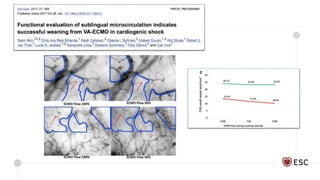
  • #40 a Microcirculatory alterations in successfully weaned (SW) vs not successfully weaned (NSW) patients during weaning attempts with baseline flow (F100) and 50% of the baseline flow (F50). Examples are shown of microcirculation in the same sublingual area in two patients during F100 and F50. Images were taken from a 51-year-old man, there was cardiac recovery 3 days after tentamen suicidii with 900 mg of amlodipine and 1600 mg of hydrochlorothiazide in the same sublingual area during a weaning attempt on day 3, with no alterations in microcirculation (F100, veno-arterial extracorporeal membrane oxygenation (VA-ECMO) flow 6.1 L/min; mean arterial pressure (MAP) 77 mmHg and F50, VA-ECMO flow 3 L/min; MAP 74 mmHg). b Images were taken from a 26-year-old woman with stable human immunodeficiency virus infection (HIV) developed myocarditis and biventricular heart failure. After 4 weeks, there was no improvement in cardiac function. The microcirculatory images were documented during four weaning attempts without improvement. The same sublingual area was also used during the last weaning attempt, which showed obvious persisting deterioration in microcirculation (blue zones) (F100, VA-ECMO flow 4.7 L/min; MAP 75 mmHg and F50, VA-ECMO flow 2.7 L/min; MAP 67 mmHg). c Changes in total vessel density (TVD) in small vessels during non-successful (day 2, red) and successful (day 4, green) weaning attempts in patient 7. This 65-year-old man suffered from cardiogenic shock after coronary artery bypass graft (CABG) surgery