ROLE OF
EXTRACORPOREAL MEMBRANE
OXYGENATION (ECMO) AND
CONTINUOUS RENAL
REPLACEMENT THERAPY(CRRT)
IN ICU
Moderator : Dr. Fauzia Shifaat (Asst.prof)
Deptt. of anesthesiology CCM & PM, GMC
srinagar
Presenter : Dr Mohsin farooq
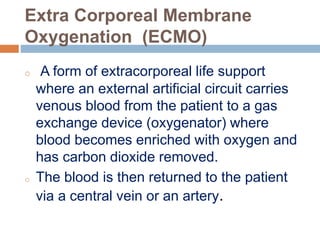
Extra Corporeal Membrane
Oxygenation (ECMO)
o A form of extracorporeal life support
where an external artificial circuit carries
venous blood from the patient to a gas
exchange device (oxygenator) where
blood becomes enriched with oxygen and
has carbon dioxide removed.
o The blood is then returned to the patient
via a central vein or an artery.
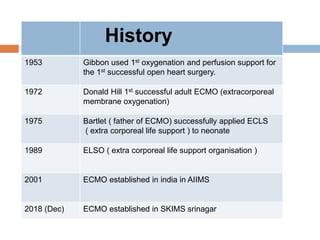
History
1953 Gibbon used 1st oxygenation and perfusion support for
the 1st successful open heart surgery.
1972 Donald Hill 1st successful adult ECMO (extracorporeal
membrane oxygenation)
1975 Bartlet ( father of ECMO) successfully applied ECLS
( extra corporeal life support ) to neonate
1989 ELSO ( extra corporeal life support organisation )
2001 ECMO established in india in AIIMS
2018 (Dec) ECMO established in SKIMS srinagar
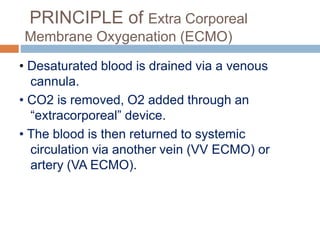
PRINCIPLE of Extra Corporeal
Membrane Oxygenation (ECMO)
• Desaturated blood is drained via a venous
cannula.
• CO2 is removed, O2 added through an
“extracorporeal” device.
• The blood is then returned to systemic
circulation via another vein (VV ECMO) or
artery (VA ECMO).
INDICATIONS OF Extra Corporeal
Membrane Oxygenation (ECMO)
 ELSO GUIDELINES: Acute
severe cardiac failure or
respiratory failure with high
mortality risk and reversible and
non-responsive to optimal
conventional therapy.
 ECLS is considered at 50% mortality
risk and indicated at 80% risk.
GUIDELINES FOR ADULT
RESPIRATORY FAILURE
 INCLUSION CRITERIA:
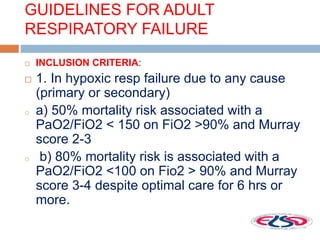
 1. In hypoxic resp failure due to any cause
(primary or secondary)
o a) 50% mortality risk associated with a
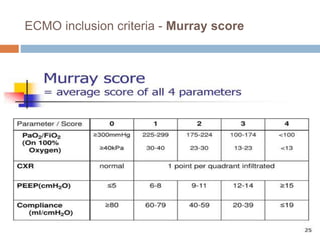
PaO2/FiO2 < 150 on FiO2 >90% and Murray
score 2-3
o b) 80% mortality risk is associated with a
PaO2/FiO2 <100 on Fio2 > 90% and Murray
score 3-4 despite optimal care for 6 hrs or
more.
GUIDELINES FOR ADULT RESPIRATORY
FAILURE
 2. CO2 retention on Mechanical Ventilation
despite high Pplat (>30cm H2O)
 3. Need for intubation in a patient on lung
transplant list
 4. Severe air leak syndrome
 5. Immediate cardiac or respiratory collapse
(Pulmonary Embolism, blocked airway -
unresponsive to optimal care)
ECMO inclusion criteria - Murray score
ELSO GUIDELINES FOR
CARDIAC FAILURE
 Cardiogenic shock :-
o Inadequate tissue perfusion manifested as hypotension and
low cardiac output despite adequate intravascular volume.
o Shock persists despite volume administration, ionotropes and
vasoconstrictors and intraaortic balloon pump.
 Typical causes : -
o Acute myocardial infarction
o Myocarditis
o Decompensated chronic cardiac failure
o Post cardiotomy shock
o Peripartum cardiomyopathy
 Septic shock
ECMO serves as a BRIDGING THERAPY
Used as a :-
•Bridge to recovery :– i.e., buying time for patient to
recover .
• Bridge to transplant :- provide support to patient
while awaiting suitable donor organ.
CONTRAINDICATIONS
 Chronic organ dysfunction ( Cirrhosis,
renal failure)
 Terminal Malignancy
 Contraindication to anticoagulation
 Immunosuppression
 CNS haemorrhage which is recent or
expanding.
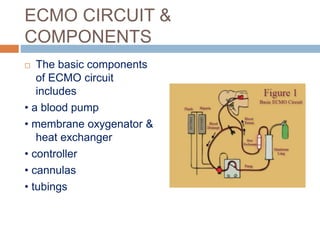
ECMO CIRCUIT &
COMPONENTS
 The basic components
of ECMO circuit
includes
• a blood pump
• membrane oxygenator &
heat exchanger
• controller
• cannulas
• tubings
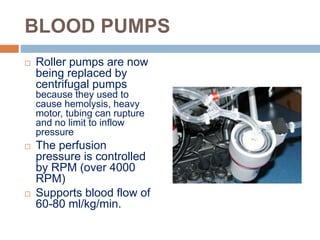
BLOOD PUMPS
 Roller pumps are now
being replaced by
centrifugal pumps
because they used to
cause hemolysis, heavy
motor, tubing can rupture
and no limit to inflow
pressure
 The perfusion
pressure is controlled
by RPM (over 4000
RPM)
 Supports blood flow of
60-80 ml/kg/min.
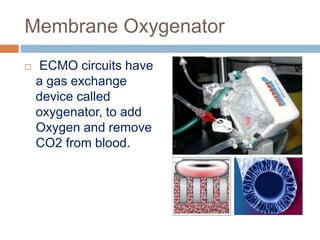
Membrane Oxygenator
 ECMO circuits have
a gas exchange
device called
oxygenator, to add
Oxygen and remove
CO2 from blood.
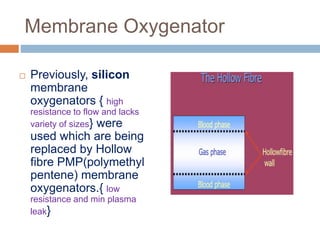
Membrane Oxygenator
 Previously, silicon
membrane
oxygenators { high
resistance to flow and lacks
variety of sizes} were
used which are being
replaced by Hollow
fibre PMP(polymethyl
pentene) membrane
oxygenators.{ low
resistance and min plasma
leak}
Types of Extra Corporeal
Membrane Oxygenation (ECMO)
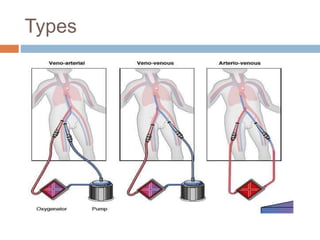
The most common are
 veno-arterial (VA) ECMO .
 veno-venous (VV) ECMO.
 Arterio –venous (AV) ECMO
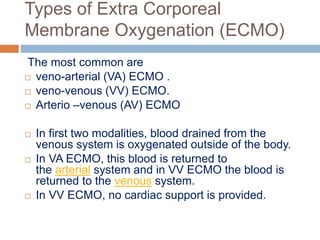
 In first two modalities, blood drained from the
venous system is oxygenated outside of the body.
 In VA ECMO, this blood is returned to
the arterial system and in VV ECMO the blood is
returned to the venous system.
 In VV ECMO, no cardiac support is provided.
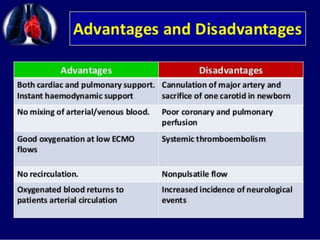
Types
Veno-arterial ECMO
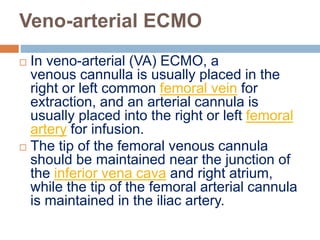
 In veno-arterial (VA) ECMO, a
venous cannulla is usually placed in the
right or left common femoral vein for
extraction, and an arterial cannula is
usually placed into the right or left femoral
artery for infusion.
 The tip of the femoral venous cannula
should be maintained near the junction of
the inferior vena cava and right atrium,
while the tip of the femoral arterial cannula
is maintained in the iliac artery.
VA ECMO
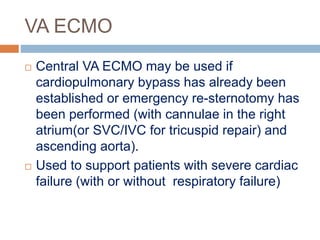
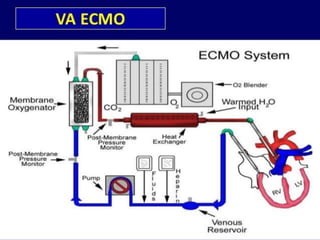
 Central VA ECMO may be used if
cardiopulmonary bypass has already been
established or emergency re-sternotomy has
been performed (with cannulae in the right
atrium(or SVC/IVC for tricuspid repair) and
ascending aorta).
 Used to support patients with severe cardiac
failure (with or without respiratory failure)
.
.
 .
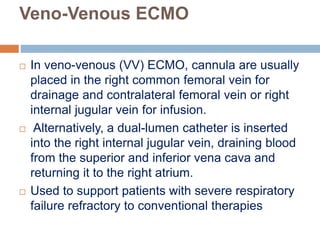
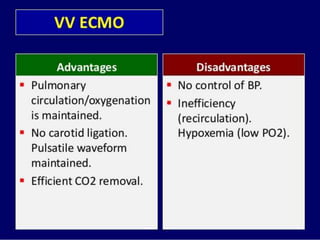
Veno-Venous ECMO
 In veno-venous (VV) ECMO, cannula are usually
placed in the right common femoral vein for
drainage and contralateral femoral vein or right
internal jugular vein for infusion.
 Alternatively, a dual-lumen catheter is inserted
into the right internal jugular vein, draining blood
from the superior and inferior vena cava and
returning it to the right atrium.
 Used to support patients with severe respiratory
failure refractory to conventional therapies
.
 .
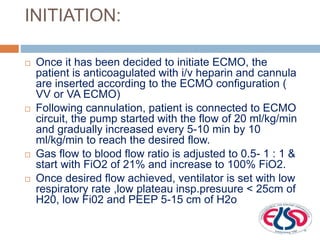
INITIATION:
 Once it has been decided to initiate ECMO, the
patient is anticoagulated with i/v heparin and cannula
are inserted according to the ECMO configuration (
VV or VA ECMO)
 Following cannulation, patient is connected to ECMO
circuit, the pump started with the flow of 20 ml/kg/min
and gradually increased every 5-10 min by 10
ml/kg/min to reach the desired flow.
 Gas flow to blood flow ratio is adjusted to 0.5- 1 : 1 &
start with FiO2 of 21% and increase to 100% FiO2.
 Once desired flow achieved, ventilator is set with low
respiratory rate ,low plateau insp.presuure < 25cm of
H20, low Fi02 and PEEP 5-15 cm of H2o
Reasonable targets are :
 An arterial oxy Hb saturation of- >90% for VA
ECMO,
 >75% for VV ECMO
 A venous oxy Hb saturation of 70-80% for VA
ECMO
 Adequate tissue perfusion as determined by
arterial blood pressure, venous oxygen
saturation and blood lactate level.
MAINTENANCE & MONITORING
 Once the initial respiratory and hemodynamic goals
have been achieved ,blood flow is maintained at that
rate.
 Continuous venous oximetry, Pressure monitoring
(MAP, prepump P, pre and post oxygenator P), vital
parameters (HR, RR, TEMP), Flow rates (blood flow
rate at 60-80 ml/kg/min), neurological status, vascular
status to be monitored.
 Anticoagulation is sustained during ECMO with a
continuous infusion of unfractionated heparin, titrated
with activated clotting time(ACT) of 180-210 sec.
WEANING & TRIAL OFF OF ECMO
 INDICATIONS :
 For patients with Respiratory failure,
improvements in radiographic appearance,
pulmonary compliance and arterial oxyHb
saturation.
 With cardiac failure, enhanced aortic pulsatility
correlates with improved left ventricular output.
 One or more trials of taking the patient off of
ECMO should be performed prior to
discontinuing ECMO permanently.
WEANING:
Decrease flow in steps to 1 L/min at FiO2 100% OR
Decrease flow to 2L/min then decrease sweep gas FiO2 to
maintain PaO2 >95%
When SaO2 stable on these settings- pao2 >95 & paco2<50 for
1 hour trial off.
- VV ECMO trials are performed by stopping the sweep gas and
cap off the oxygenator. If lung function is adequate for 1
hour,patient is ready for decannulation.
- VA ECMO trials need clamping of both drainage and infusion
lines, while allowing to circulate through a bridge between the
arterial and venous limbs.
-VA ECMO trials are generally shorter duration than VV ECMO
trials because of higher risk of thrombus formation.
COMPLICATIONS
 Bleeding
o Occurs in 30-40% of patients on ECMO
o Due to continuous heparin infusion ,thrombocytopenia
and platelet dysfunction.
 Thromboembolism
It is more common with VA ECMO than VV ECMO as
infusion is into systemic circulation.
 Cannulation related
o Vessel perforation with Haemorrhage.
o Arterial dissection
o Infection at cannula site
o Decannulation
Complications
 Heparin induced thrombocytopenia
 VV ECMO specific complications
o Recirculation
 VA ECMO specific complications
o Pulmonary haemorrhage
o Cardiac thrombosis
o Coronary or cerebral hypoxia
 Neurological complications
.
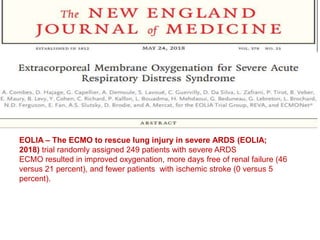
EOLIA – The ECMO to rescue lung injury in severe ARDS (EOLIA;
2018) trial randomly assigned 249 patients with severe ARDS
ECMO resulted in improved oxygenation, more days free of renal failure (46
versus 21 percent), and fewer patients with ischemic stroke (0 versus 5
percent).
Recent advances
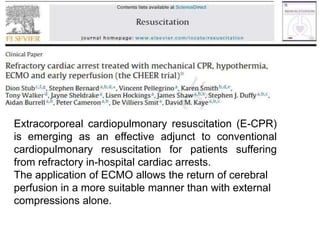
Extracorporeal cardiopulmonary resuscitation (E-CPR)
is emerging as an effective adjunct to conventional
cardiopulmonary resuscitation for patients suffering
from refractory in-hospital cardiac arrests.
The application of ECMO allows the return of cerebral
perfusion in a more suitable manner than with external
compressions alone.
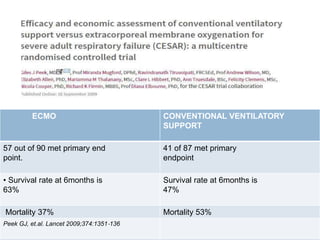
ECMO CONVENTIONAL VENTILATORY
SUPPORT
57 out of 90 met primary end
point.
41 of 87 met primary
endpoint
• Survival rate at 6months is
63%
Survival rate at 6months is
47%
Mortality 37% Mortality 53%
Peek GJ, et.al. Lancet 2009;374:1351‐136
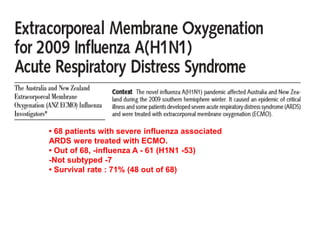
• 68 patients with severe influenza associated
ARDS were treated with ECMO.
• Out of 68, -influenza A - 61 (H1N1 -53)
-Not subtyped -7
• Survival rate : 71% (48 out of 68)
CRRT
Continuous Renal Replacement
Therapy
Continuous Renal Replacement
Therapy (CRRT)
 Is an extracorporeal blood purification
therapy intended to substitute for impaired
renal function over an extended period of
time and applied for or aimed at being
applied for 24 hours /day
Principles of CRRT clearance
 CRRT clearance of solute is dependent on the following:
o The molecule size of the solute.
o The pore size of the semi-permeable membrane.
o The higher the ultrafiltration rate (UFR), the greater the
solute clearance.
o Small molecules easily pass through a membrane driven
by diffusion and convection.
o Middle and large size molecules are cleared primarily by
convection.
o Semi-permeable membrane remove solutes with a
molecular weight of up to 50,000 Daltons.
o Plasma proteins or substances highly protein—bound
will not be cleared.
Principles of CRRT
 Sieving Coefficient
◦ The ability of a substance to pass through a
membrane from the blood compartment of the
hemofilter to the fluid compartment.
◦ A sieving coefficient of 1 will allow free passage
of a substance; but at a coefficient of 0, the
substance is unable to pass.
Indications
Life-threatening
indications
 Hyperkalemia
 Metabolic Acidosis
 Pulmonary edema
 Uremic
complications
 Fluid removal in
congestive heart failure &
Fluid management in
multi organ failure.
 Cytokine manipulation in
sepsis.
 Treatment of drug
overdose.(salicylate,lithium,
valproic acid, metformin etc)
Renal indications Non renal
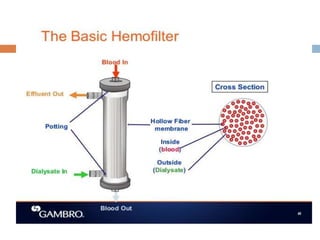
Advantages : CRRT closely mimics
the native kidney
• Slow, gentle and continuously reduce risk for
hypotension.
• Well tolerated by hemodynamically unstable
patients.
• Prevent further damage to kidney tissue.
• Promote healing and renal recovery.
• Regulates electrolytes, acid-base balance.
• Removes large amounts of fluid and waste
products over time.
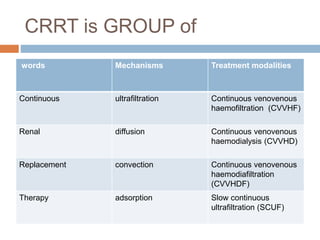
CRRT is GROUP of
words Mechanisms Treatment modalities
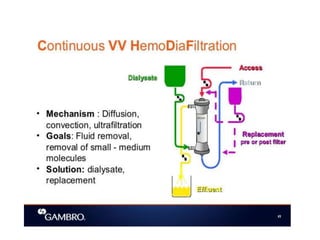
Continuous ultrafiltration Continuous venovenous
haemofiltration (CVVHF)
Renal diffusion Continuous venovenous
haemodialysis (CVVHD)
Replacement convection Continuous venovenous
haemodiafiltration
(CVVHDF)
Therapy adsorption Slow continuous
ultrafiltration (SCUF)
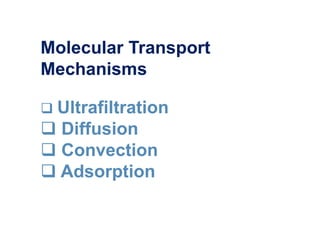
Molecular Transport
Mechanisms
 Ultrafiltration
 Diffusion
 Convection
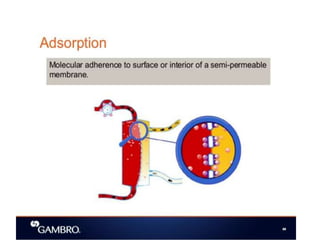
 Adsorption
.
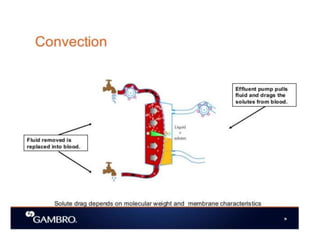
Haemofiltration
 Haemofiltration is a convective process whereby
a hydrostatic pressure gradient is used to filter
plasma, water, and solute across a membrane.
This is analogous to the process within the renal
corpuscle. The underlying mechanism is that of
‘solute drag’ where appropriately sized
molecules are pulled along with the mass
movement of solvent, traditionally termed
ultrafiltration (UF).
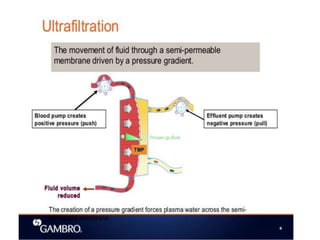
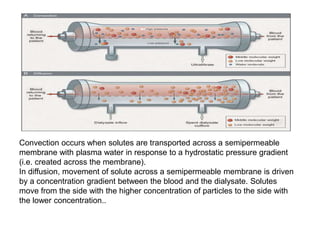
Convection occurs when solutes are transported across a semipermeable
membrane with plasma water in response to a hydrostatic pressure gradient
(i.e. created across the membrane).
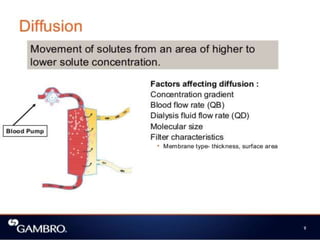
In diffusion, movement of solute across a semipermeable membrane is driven
by a concentration gradient between the blood and the dialysate. Solutes
move from the side with the higher concentration of particles to the side with
the lower concentration..
.
Timing
 The timing of commencement of RRT in critically ill
patients is highly subjective.
The classical criteria for initiating therapy include:
 Hyperkalemia (potassium >6.5 mmol l−1 or rapidly
rising).
 Refractory fluid overload.
 Metabolic acidosis.
 Certain drug and alcohol intoxications.
 Signs of uraemia, such as pericarditis or
encephalopathy.
.
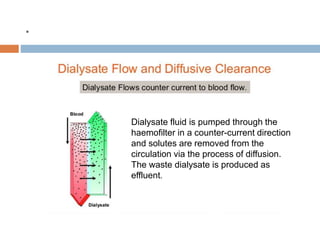
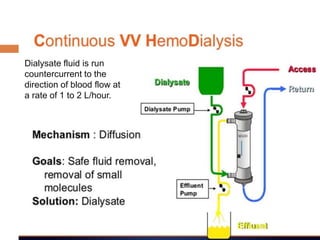
Dialysate fluid is pumped through the
haemofilter in a counter-current direction
and solutes are removed from the
circulation via the process of diffusion.
The waste dialysate is produced as
effluent.
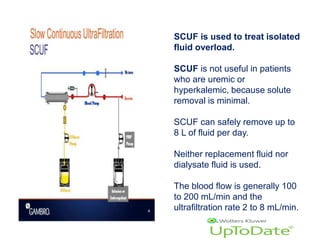
SCUF is used to treat isolated
fluid overload.
SCUF is not useful in patients
who are uremic or
hyperkalemic, because solute
removal is minimal.
SCUF can safely remove up to
8 L of fluid per day.
Neither replacement fluid nor
dialysate fluid is used.
The blood flow is generally 100
to 200 mL/min and the
ultrafiltration rate 2 to 8 mL/min.
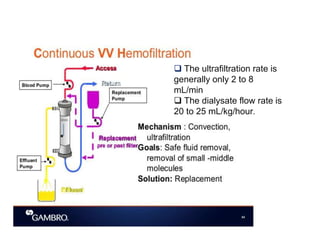
 The ultrafiltration rate is
generally only 2 to 8
mL/min
 The dialysate flow rate is
20 to 25 mL/kg/hour.
.
Dialysate fluid is run
countercurrent to the
direction of blood flow at
a rate of 1 to 2 L/hour.
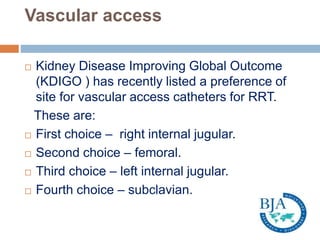
Vascular access
 Kidney Disease Improving Global Outcome
(KDIGO ) has recently listed a preference of
site for vascular access catheters for RRT.
These are:
 First choice – right internal jugular.
 Second choice – femoral.
 Third choice – left internal jugular.
 Fourth choice – subclavian.
.
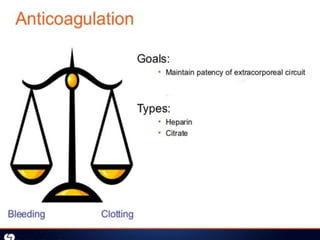
Anticoagulation
 As with all extracorporeal circuits, the use of RRT mandates the
consideration of anticoagulation. This can be systemic or regional.
 Systemic :Heparin
 If patients develop HIT ,use either the danaparoid or argatroban
 Regional anticoagulation: Citrate
 Benefits of regional citrate anticoagulation:
 it avoids systemic anticoagulation; it does not cause HIT
Potential disadvantages include metabolic complications :
 alkalosis (attributable to the conversion of citrate to bicarbonate),
 acidosis (due to citrate accumulation),
 hypocalcaemia, and hypomagnesaemia (attributable to binding with
the citrate–calcium complex).
Discontinuation of therapy
 RRT is usually continued until the patient shows
evidence of recovery of native renal function.
 The primary manifestation of recovery is often an
increase in urine output: a urine output of more than
400 ml per day.
 Recovery may also be evidenced by a progressive
decline in serum creatinine during steady-state
RRT.
 More objective assessment of recovery is obtained
by the measurement of creatinine clearance.
Complications
 Vascular access:
o Bleeding
o Hemotoma
o Infection
o Catheter dysfunction
 Fluid volume deficit :
o Excessive fluid removal without appropriate fluid replenishment
 Hypotension
o Intravascular volume depletion
o Underlying cardiac dysfunction
Complications
 Electrolyte imbalances
o Inadequate replenishment of electrolytes by intravenous infusion,
o Inadequate replenishment of bicarbonate loss during CRRT
o Hypophosphatemia
o Hypomagnesemia
o Hypocalcemia
 Acid/base imbalance
 Blood loss
o Clotting of hemofilter
o Inadvertent disconnection in the CRRT system
o Hemorrhage due to over-anticoagulation
o Blood filter leaks
.
 .

Ecmo and crrt

  • 1.
    ROLE OF EXTRACORPOREAL MEMBRANE OXYGENATION(ECMO) AND CONTINUOUS RENAL REPLACEMENT THERAPY(CRRT) IN ICU Moderator : Dr. Fauzia Shifaat (Asst.prof) Deptt. of anesthesiology CCM & PM, GMC srinagar Presenter : Dr Mohsin farooq
  • 2.
    Extra Corporeal Membrane Oxygenation(ECMO) o A form of extracorporeal life support where an external artificial circuit carries venous blood from the patient to a gas exchange device (oxygenator) where blood becomes enriched with oxygen and has carbon dioxide removed. o The blood is then returned to the patient via a central vein or an artery.
  • 3.
    History 1953 Gibbon used1st oxygenation and perfusion support for the 1st successful open heart surgery. 1972 Donald Hill 1st successful adult ECMO (extracorporeal membrane oxygenation) 1975 Bartlet ( father of ECMO) successfully applied ECLS ( extra corporeal life support ) to neonate 1989 ELSO ( extra corporeal life support organisation ) 2001 ECMO established in india in AIIMS 2018 (Dec) ECMO established in SKIMS srinagar
  • 4.
    PRINCIPLE of ExtraCorporeal Membrane Oxygenation (ECMO) • Desaturated blood is drained via a venous cannula. • CO2 is removed, O2 added through an “extracorporeal” device. • The blood is then returned to systemic circulation via another vein (VV ECMO) or artery (VA ECMO).
  • 5.
    INDICATIONS OF ExtraCorporeal Membrane Oxygenation (ECMO)  ELSO GUIDELINES: Acute severe cardiac failure or respiratory failure with high mortality risk and reversible and non-responsive to optimal conventional therapy.  ECLS is considered at 50% mortality risk and indicated at 80% risk.
  • 6.
    GUIDELINES FOR ADULT RESPIRATORYFAILURE  INCLUSION CRITERIA:  1. In hypoxic resp failure due to any cause (primary or secondary) o a) 50% mortality risk associated with a PaO2/FiO2 < 150 on FiO2 >90% and Murray score 2-3 o b) 80% mortality risk is associated with a PaO2/FiO2 <100 on Fio2 > 90% and Murray score 3-4 despite optimal care for 6 hrs or more.
  • 7.
    GUIDELINES FOR ADULTRESPIRATORY FAILURE  2. CO2 retention on Mechanical Ventilation despite high Pplat (>30cm H2O)  3. Need for intubation in a patient on lung transplant list  4. Severe air leak syndrome  5. Immediate cardiac or respiratory collapse (Pulmonary Embolism, blocked airway - unresponsive to optimal care)
  • 8.
  • 9.
    ELSO GUIDELINES FOR CARDIACFAILURE  Cardiogenic shock :- o Inadequate tissue perfusion manifested as hypotension and low cardiac output despite adequate intravascular volume. o Shock persists despite volume administration, ionotropes and vasoconstrictors and intraaortic balloon pump.  Typical causes : - o Acute myocardial infarction o Myocarditis o Decompensated chronic cardiac failure o Post cardiotomy shock o Peripartum cardiomyopathy  Septic shock
  • 10.
    ECMO serves asa BRIDGING THERAPY Used as a :- •Bridge to recovery :– i.e., buying time for patient to recover . • Bridge to transplant :- provide support to patient while awaiting suitable donor organ.
  • 11.
    CONTRAINDICATIONS  Chronic organdysfunction ( Cirrhosis, renal failure)  Terminal Malignancy  Contraindication to anticoagulation  Immunosuppression  CNS haemorrhage which is recent or expanding.
  • 12.
    ECMO CIRCUIT & COMPONENTS The basic components of ECMO circuit includes • a blood pump • membrane oxygenator & heat exchanger • controller • cannulas • tubings
  • 13.
    BLOOD PUMPS  Rollerpumps are now being replaced by centrifugal pumps because they used to cause hemolysis, heavy motor, tubing can rupture and no limit to inflow pressure  The perfusion pressure is controlled by RPM (over 4000 RPM)  Supports blood flow of 60-80 ml/kg/min.
  • 14.
    Membrane Oxygenator  ECMOcircuits have a gas exchange device called oxygenator, to add Oxygen and remove CO2 from blood.
  • 15.
    Membrane Oxygenator  Previously,silicon membrane oxygenators { high resistance to flow and lacks variety of sizes} were used which are being replaced by Hollow fibre PMP(polymethyl pentene) membrane oxygenators.{ low resistance and min plasma leak}
  • 16.
    Types of ExtraCorporeal Membrane Oxygenation (ECMO) The most common are  veno-arterial (VA) ECMO .  veno-venous (VV) ECMO.  Arterio –venous (AV) ECMO  In first two modalities, blood drained from the venous system is oxygenated outside of the body.  In VA ECMO, this blood is returned to the arterial system and in VV ECMO the blood is returned to the venous system.  In VV ECMO, no cardiac support is provided.
  • 17.
  • 18.
    Veno-arterial ECMO  Inveno-arterial (VA) ECMO, a venous cannulla is usually placed in the right or left common femoral vein for extraction, and an arterial cannula is usually placed into the right or left femoral artery for infusion.  The tip of the femoral venous cannula should be maintained near the junction of the inferior vena cava and right atrium, while the tip of the femoral arterial cannula is maintained in the iliac artery.
  • 19.
    VA ECMO  CentralVA ECMO may be used if cardiopulmonary bypass has already been established or emergency re-sternotomy has been performed (with cannulae in the right atrium(or SVC/IVC for tricuspid repair) and ascending aorta).  Used to support patients with severe cardiac failure (with or without respiratory failure)
  • 20.
  • 21.
  • 22.
    Veno-Venous ECMO  Inveno-venous (VV) ECMO, cannula are usually placed in the right common femoral vein for drainage and contralateral femoral vein or right internal jugular vein for infusion.  Alternatively, a dual-lumen catheter is inserted into the right internal jugular vein, draining blood from the superior and inferior vena cava and returning it to the right atrium.  Used to support patients with severe respiratory failure refractory to conventional therapies
  • 23.
  • 24.
    INITIATION:  Once ithas been decided to initiate ECMO, the patient is anticoagulated with i/v heparin and cannula are inserted according to the ECMO configuration ( VV or VA ECMO)  Following cannulation, patient is connected to ECMO circuit, the pump started with the flow of 20 ml/kg/min and gradually increased every 5-10 min by 10 ml/kg/min to reach the desired flow.  Gas flow to blood flow ratio is adjusted to 0.5- 1 : 1 & start with FiO2 of 21% and increase to 100% FiO2.  Once desired flow achieved, ventilator is set with low respiratory rate ,low plateau insp.presuure < 25cm of H20, low Fi02 and PEEP 5-15 cm of H2o
  • 25.
    Reasonable targets are:  An arterial oxy Hb saturation of- >90% for VA ECMO,  >75% for VV ECMO  A venous oxy Hb saturation of 70-80% for VA ECMO  Adequate tissue perfusion as determined by arterial blood pressure, venous oxygen saturation and blood lactate level.
  • 26.
    MAINTENANCE & MONITORING Once the initial respiratory and hemodynamic goals have been achieved ,blood flow is maintained at that rate.  Continuous venous oximetry, Pressure monitoring (MAP, prepump P, pre and post oxygenator P), vital parameters (HR, RR, TEMP), Flow rates (blood flow rate at 60-80 ml/kg/min), neurological status, vascular status to be monitored.  Anticoagulation is sustained during ECMO with a continuous infusion of unfractionated heparin, titrated with activated clotting time(ACT) of 180-210 sec.
  • 27.
    WEANING & TRIALOFF OF ECMO  INDICATIONS :  For patients with Respiratory failure, improvements in radiographic appearance, pulmonary compliance and arterial oxyHb saturation.  With cardiac failure, enhanced aortic pulsatility correlates with improved left ventricular output.  One or more trials of taking the patient off of ECMO should be performed prior to discontinuing ECMO permanently.
  • 28.
    WEANING: Decrease flow insteps to 1 L/min at FiO2 100% OR Decrease flow to 2L/min then decrease sweep gas FiO2 to maintain PaO2 >95% When SaO2 stable on these settings- pao2 >95 & paco2<50 for 1 hour trial off. - VV ECMO trials are performed by stopping the sweep gas and cap off the oxygenator. If lung function is adequate for 1 hour,patient is ready for decannulation. - VA ECMO trials need clamping of both drainage and infusion lines, while allowing to circulate through a bridge between the arterial and venous limbs. -VA ECMO trials are generally shorter duration than VV ECMO trials because of higher risk of thrombus formation.
  • 29.
    COMPLICATIONS  Bleeding o Occursin 30-40% of patients on ECMO o Due to continuous heparin infusion ,thrombocytopenia and platelet dysfunction.  Thromboembolism It is more common with VA ECMO than VV ECMO as infusion is into systemic circulation.  Cannulation related o Vessel perforation with Haemorrhage. o Arterial dissection o Infection at cannula site o Decannulation
  • 30.
    Complications  Heparin inducedthrombocytopenia  VV ECMO specific complications o Recirculation  VA ECMO specific complications o Pulmonary haemorrhage o Cardiac thrombosis o Coronary or cerebral hypoxia  Neurological complications
  • 31.
    . EOLIA – TheECMO to rescue lung injury in severe ARDS (EOLIA; 2018) trial randomly assigned 249 patients with severe ARDS ECMO resulted in improved oxygenation, more days free of renal failure (46 versus 21 percent), and fewer patients with ischemic stroke (0 versus 5 percent).
  • 32.
    Recent advances Extracorporeal cardiopulmonaryresuscitation (E-CPR) is emerging as an effective adjunct to conventional cardiopulmonary resuscitation for patients suffering from refractory in-hospital cardiac arrests. The application of ECMO allows the return of cerebral perfusion in a more suitable manner than with external compressions alone.
  • 33.
    ECMO CONVENTIONAL VENTILATORY SUPPORT 57out of 90 met primary end point. 41 of 87 met primary endpoint • Survival rate at 6months is 63% Survival rate at 6months is 47% Mortality 37% Mortality 53% Peek GJ, et.al. Lancet 2009;374:1351‐136
  • 34.
    • 68 patientswith severe influenza associated ARDS were treated with ECMO. • Out of 68, -influenza A - 61 (H1N1 -53) -Not subtyped -7 • Survival rate : 71% (48 out of 68)
  • 36.
  • 37.
    Continuous Renal Replacement Therapy(CRRT)  Is an extracorporeal blood purification therapy intended to substitute for impaired renal function over an extended period of time and applied for or aimed at being applied for 24 hours /day
  • 38.
    Principles of CRRTclearance  CRRT clearance of solute is dependent on the following: o The molecule size of the solute. o The pore size of the semi-permeable membrane. o The higher the ultrafiltration rate (UFR), the greater the solute clearance. o Small molecules easily pass through a membrane driven by diffusion and convection. o Middle and large size molecules are cleared primarily by convection. o Semi-permeable membrane remove solutes with a molecular weight of up to 50,000 Daltons. o Plasma proteins or substances highly protein—bound will not be cleared.
  • 39.
    Principles of CRRT Sieving Coefficient ◦ The ability of a substance to pass through a membrane from the blood compartment of the hemofilter to the fluid compartment. ◦ A sieving coefficient of 1 will allow free passage of a substance; but at a coefficient of 0, the substance is unable to pass.
  • 40.
    Indications Life-threatening indications  Hyperkalemia  MetabolicAcidosis  Pulmonary edema  Uremic complications  Fluid removal in congestive heart failure & Fluid management in multi organ failure.  Cytokine manipulation in sepsis.  Treatment of drug overdose.(salicylate,lithium, valproic acid, metformin etc) Renal indications Non renal
  • 41.
    Advantages : CRRTclosely mimics the native kidney • Slow, gentle and continuously reduce risk for hypotension. • Well tolerated by hemodynamically unstable patients. • Prevent further damage to kidney tissue. • Promote healing and renal recovery. • Regulates electrolytes, acid-base balance. • Removes large amounts of fluid and waste products over time.
  • 42.
    CRRT is GROUPof words Mechanisms Treatment modalities Continuous ultrafiltration Continuous venovenous haemofiltration (CVVHF) Renal diffusion Continuous venovenous haemodialysis (CVVHD) Replacement convection Continuous venovenous haemodiafiltration (CVVHDF) Therapy adsorption Slow continuous ultrafiltration (SCUF)
  • 43.
    Molecular Transport Mechanisms  Ultrafiltration Diffusion  Convection  Adsorption
  • 44.
  • 45.
    Haemofiltration  Haemofiltration isa convective process whereby a hydrostatic pressure gradient is used to filter plasma, water, and solute across a membrane. This is analogous to the process within the renal corpuscle. The underlying mechanism is that of ‘solute drag’ where appropriately sized molecules are pulled along with the mass movement of solvent, traditionally termed ultrafiltration (UF).
  • 47.
    Convection occurs whensolutes are transported across a semipermeable membrane with plasma water in response to a hydrostatic pressure gradient (i.e. created across the membrane). In diffusion, movement of solute across a semipermeable membrane is driven by a concentration gradient between the blood and the dialysate. Solutes move from the side with the higher concentration of particles to the side with the lower concentration..
  • 49.
  • 51.
    Timing  The timingof commencement of RRT in critically ill patients is highly subjective. The classical criteria for initiating therapy include:  Hyperkalemia (potassium >6.5 mmol l−1 or rapidly rising).  Refractory fluid overload.  Metabolic acidosis.  Certain drug and alcohol intoxications.  Signs of uraemia, such as pericarditis or encephalopathy.
  • 52.
    . Dialysate fluid ispumped through the haemofilter in a counter-current direction and solutes are removed from the circulation via the process of diffusion. The waste dialysate is produced as effluent.
  • 53.
    SCUF is usedto treat isolated fluid overload. SCUF is not useful in patients who are uremic or hyperkalemic, because solute removal is minimal. SCUF can safely remove up to 8 L of fluid per day. Neither replacement fluid nor dialysate fluid is used. The blood flow is generally 100 to 200 mL/min and the ultrafiltration rate 2 to 8 mL/min.
  • 54.
     The ultrafiltrationrate is generally only 2 to 8 mL/min  The dialysate flow rate is 20 to 25 mL/kg/hour.
  • 55.
    . Dialysate fluid isrun countercurrent to the direction of blood flow at a rate of 1 to 2 L/hour.
  • 57.
    Vascular access  KidneyDisease Improving Global Outcome (KDIGO ) has recently listed a preference of site for vascular access catheters for RRT. These are:  First choice – right internal jugular.  Second choice – femoral.  Third choice – left internal jugular.  Fourth choice – subclavian.
  • 58.
  • 59.
    Anticoagulation  As withall extracorporeal circuits, the use of RRT mandates the consideration of anticoagulation. This can be systemic or regional.  Systemic :Heparin  If patients develop HIT ,use either the danaparoid or argatroban  Regional anticoagulation: Citrate  Benefits of regional citrate anticoagulation:  it avoids systemic anticoagulation; it does not cause HIT Potential disadvantages include metabolic complications :  alkalosis (attributable to the conversion of citrate to bicarbonate),  acidosis (due to citrate accumulation),  hypocalcaemia, and hypomagnesaemia (attributable to binding with the citrate–calcium complex).
  • 60.
    Discontinuation of therapy RRT is usually continued until the patient shows evidence of recovery of native renal function.  The primary manifestation of recovery is often an increase in urine output: a urine output of more than 400 ml per day.  Recovery may also be evidenced by a progressive decline in serum creatinine during steady-state RRT.  More objective assessment of recovery is obtained by the measurement of creatinine clearance.
  • 61.
    Complications  Vascular access: oBleeding o Hemotoma o Infection o Catheter dysfunction  Fluid volume deficit : o Excessive fluid removal without appropriate fluid replenishment  Hypotension o Intravascular volume depletion o Underlying cardiac dysfunction
  • 62.
    Complications  Electrolyte imbalances oInadequate replenishment of electrolytes by intravenous infusion, o Inadequate replenishment of bicarbonate loss during CRRT o Hypophosphatemia o Hypomagnesemia o Hypocalcemia  Acid/base imbalance  Blood loss o Clotting of hemofilter o Inadvertent disconnection in the CRRT system o Hemorrhage due to over-anticoagulation o Blood filter leaks
  • 63.