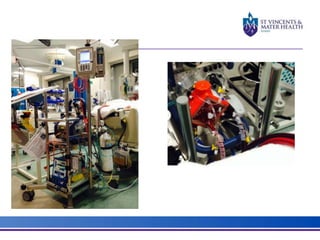
What’s new in extracorporeal life 
support 
Hergen Buscher
Definition 
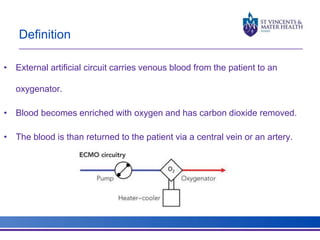
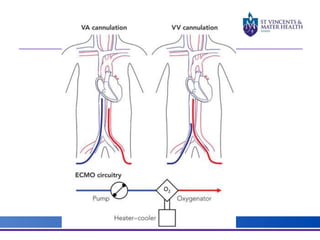
• External artificial circuit carries venous blood from the patient to an 
oxygenator. 
• Blood becomes enriched with oxygen and has carbon dioxide removed. 
• The blood is than returned to the patient via a central vein or an artery.
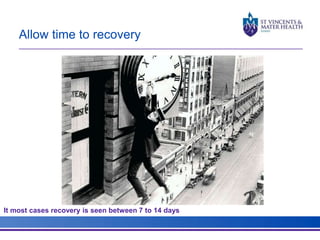
Allow time to recovery 
It most cases recovery is seen between 7 to 14 days
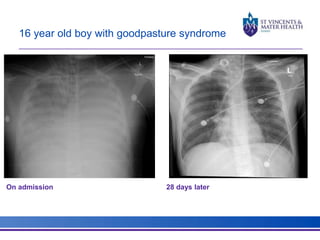
16 year old boy with goodpasture syndrome 
On admission 28 days later
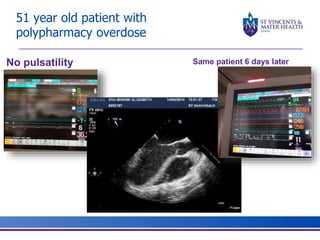
51 year old patient with 
polypharmacy overdose 
No pulsatility Same patient 6 days later
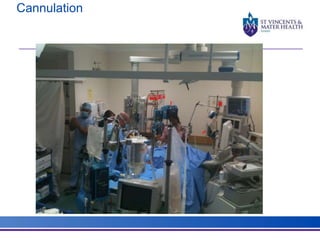
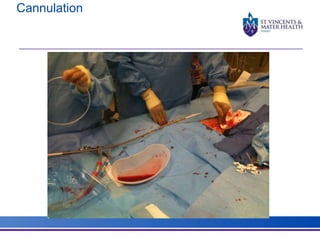
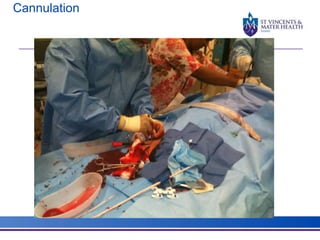
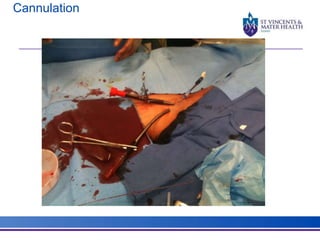
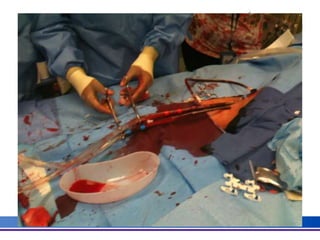
Cannulation
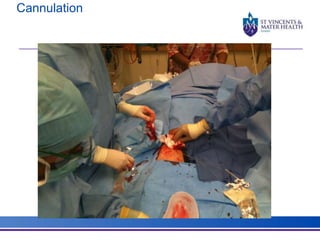
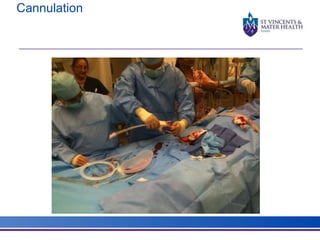
Cannulation
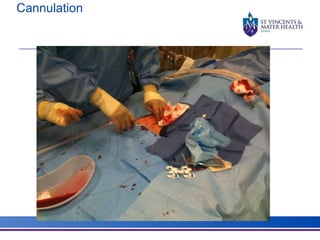
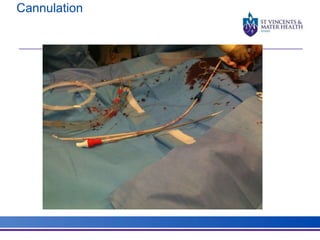
Cannulation
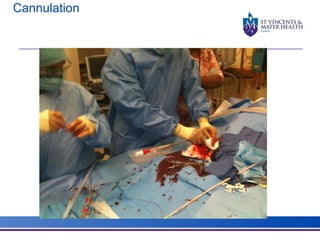
Cannulation
Cannulation
Cannulation
Cannulation
Cannulation
Cannulation
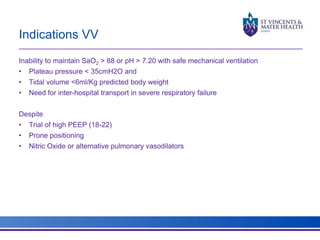
Indications VV 
Inability to maintain SaO2 > 88 or pH > 7.20 with safe mechanical ventilation 
• Plateau pressure < 35cmH2O and 
• Tidal volume <6ml/Kg predicted body weight 
• Need for inter-hospital transport in severe respiratory failure 
Despite 
• Trial of high PEEP (18-22) 
• Prone positioning 
• Nitric Oxide or alternative pulmonary vasodilators
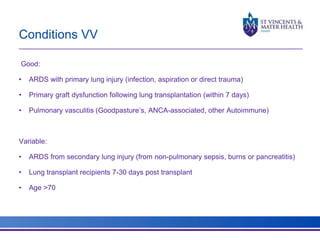
Conditions VV 
Good: 
• ARDS with primary lung injury (infection, aspiration or direct trauma) 
• Primary graft dysfunction following lung transplantation (within 7 days) 
• Pulmonary vasculitis (Goodpasture’s, ANCA-associated, other Autoimmune) 
Variable: 
• ARDS from secondary lung injury (from non-pulmonary sepsis, burns or pancreatitis) 
• Lung transplant recipients 7-30 days post transplant 
• Age >70
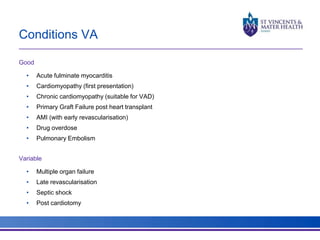
Conditions VA 
Good 
• Acute fulminate myocarditis 
• Cardiomyopathy (first presentation) 
• Chronic cardiomyopathy (suitable for VAD) 
• Primary Graft Failure post heart transplant 
• AMI (with early revascularisation) 
• Drug overdose 
• Pulmonary Embolism 
Variable 
• Multiple organ failure 
• Late revascularisation 
• Septic shock 
• Post cardiotomy
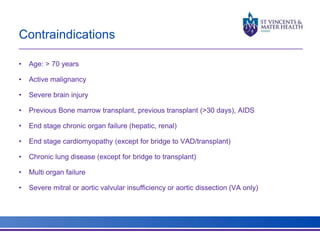
Contraindications 
• Age: > 70 years 
• Active malignancy 
• Severe brain injury 
• Previous Bone marrow transplant, previous transplant (>30 days), AIDS 
• End stage chronic organ failure (hepatic, renal) 
• End stage cardiomyopathy (except for bridge to VAD/transplant) 
• Chronic lung disease (except for bridge to transplant) 
• Multi organ failure 
• Severe mitral or aortic valvular insufficiency or aortic dissection (VA only)
ARE THESE PROVEN 
INDICATIONS?
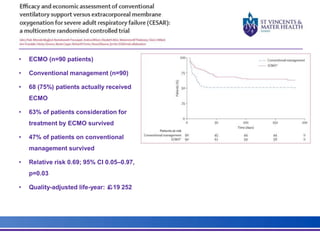
• ECMO (n=90 patients) 
• Conventional management (n=90) 
• 68 (75%) patients actually received 
ECMO 
• 63% of patients consideration for 
treatment by ECMO survived 
• 47% of patients on conventional 
management survived 
• Relative risk 0.69; 95% CI 0.05–0.97, 
p=0.03 
• Quality-adjusted life-year: £19 252
Research 
EXTRACORPOREAL MEMBRANE OXYGENATION (ECMO) FOR SEVERE 
ACUTE RESPIRATORY DISTRESS SYNDROME (ARDS) 
A multicenter, randomized, controlled open trial 
EOLIA : ECMO to rescue Lung Injury in severe ARDS 
Promoter: 
Département de la Recherche Clinique et du Développement (DRCD) 
Assistance Publique–Hôpitaux de Paris
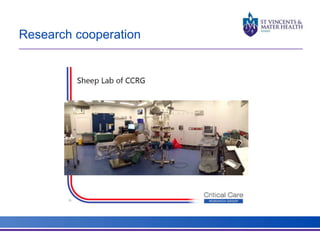
Research cooperation
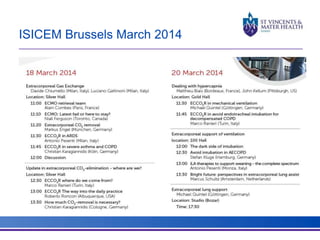
ISICEM Brussels March 2014 
Brussels presentations
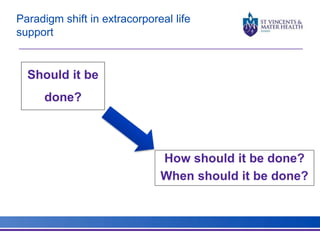
Paradigm shift in extracorporeal life 
support 
Should it be 
done? 
How should it be done? 
When should it be done?
Key points of modern ECMO management
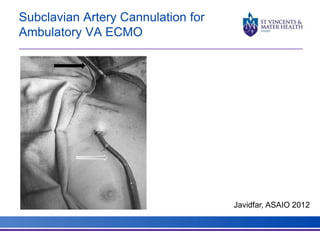
Subclavian Artery Cannulation for 
Ambulatory VA ECMO 
Javidfar, ASAIO 2012
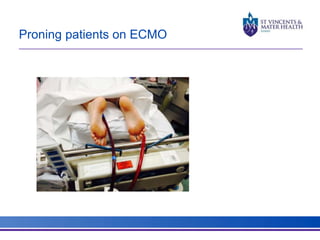
Proning patients on ECMO
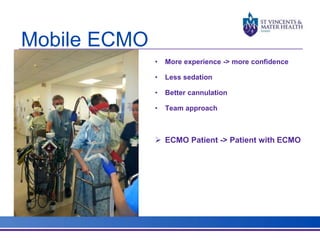
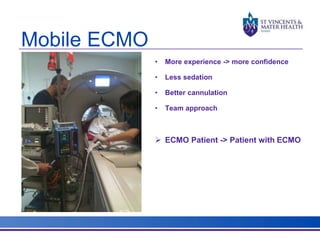
Mobile ECMO 
• More experience -> more confidence 
• Less sedation 
• Better cannulation 
• Team approach 
 ECMO Patient -> Patient with ECMO
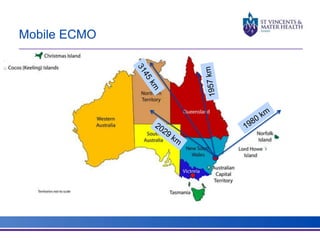
Mobile ECMO 
• More experience -> more confidence 
• Less sedation 
• Better cannulation 
• Team approach 
 ECMO Patient -> Patient with ECMO
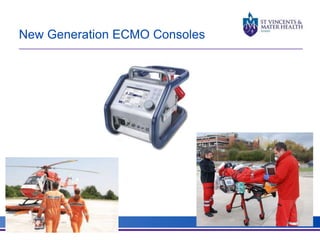
New Generation ECMO Consoles
Mobile ECMO
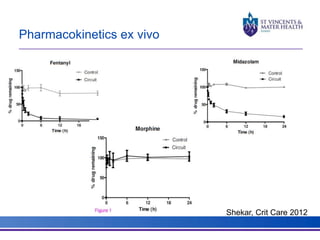
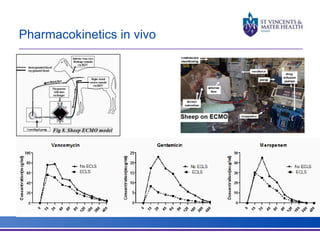
Pharmacokinetics ex vivo 
Shekar, Crit Care 2012
Pharmacokinetics in vivo
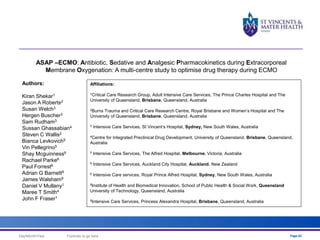
ASAP –ECMO: Antibiotic, Sedative and Analgesic Pharmacokinetics during Extracorporeal 
Membrane Oxygenation: A multi-centre study to optimise drug therapy during ECMO 
Authors: 
Kiran Shekar1 
Jason A Roberts2 
Susan Welch3 
Hergen Buscher3 
Sam Rudham3 
Sussan Ghassabian4 
Steven C Wallis2 
Bianca Levkovich5 
Vin Pellegrino5 
Shay Mcguinness6 
Rachael Parke6 
Paul Forrest6 
Adrian G Barnett8 
James Walsham9 
Daniel V Mullany1 
Maree T Smith4 
John F Fraser1 
Affiliations: 
1Critical Care Research Group, Adult Intensive Care Services, The Prince Charles Hospital and The 
University of Queensland, Brisbane, Queensland, Australia 
2Burns Trauma and Critical Care Research Centre, Royal Brisbane and Women’s Hospital and The 
University of Queensland, Brisbane, Queensland, Australia 
3 Intensive Care Services, St Vincent’s Hospital, Sydney, New South Wales, Australia 
4Centre for Integrated Preclinical Drug Development, University of Queensland, Brisbane, Queensland, 
Australia 
5 Intensive Care Services, The Alfred Hospital, Melbourne, Victoria, Australia 
6 Intensive Care Services, Auckland City Hospital, Auckland, New Zealand 
6 Intensive Care services, Royal Prince Alfred Hospital, Sydney, New South Wales, Australia 
8Institute of Health and Biomedical Innovation, School of Public Health & Social Work, Queensland 
University of Technology, Queensland, Australia 
9Intensive Care Services, Princess Alexandra Hospital, Brisbane, Queensland, Australia 
Day/Month/Year Footnote to go here Page 42
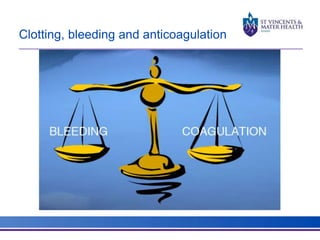
Clotting, bleeding and anticoagulation
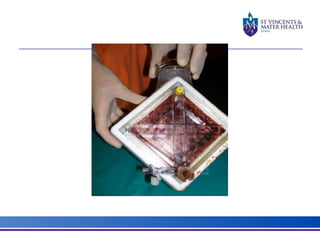
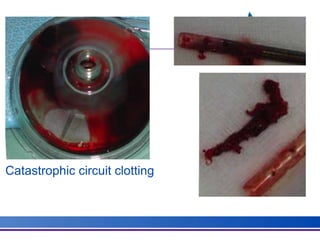
Catastrophic circuit clotting
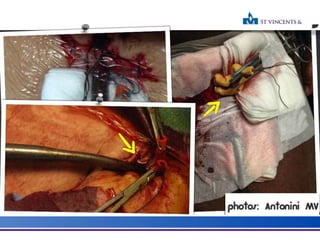
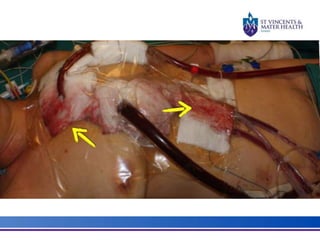
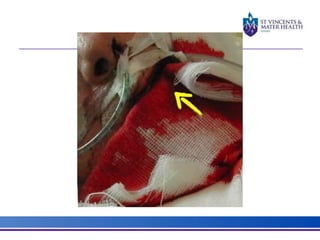
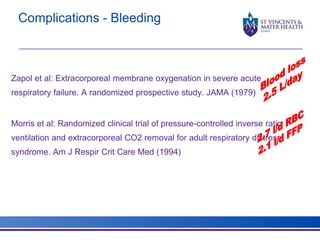
Complications - Bleeding 
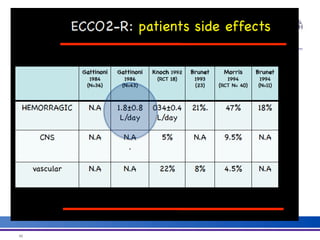
Zapol et al: Extracorporeal membrane oxygenation in severe acute 
respiratory failure. A randomized prospective study. JAMA (1979) 
Morris et al: Randomized clinical trial of pressure-controlled inverse ratio 
ventilation and extracorporeal CO2 removal for adult respiratory distress 
syndrome. Am J Respir Crit Care Med (1994)
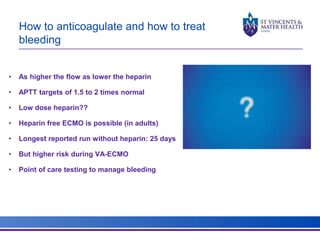
How to anticoagulate and how to treat 
bleeding 
• As higher the flow as lower the heparin 
• APTT targets of 1.5 to 2 times normal 
• Low dose heparin?? 
• Heparin free ECMO is possible (in adults) 
• Longest reported run without heparin: 25 days 
• But higher risk during VA-ECMO 
• Point of care testing to manage bleeding
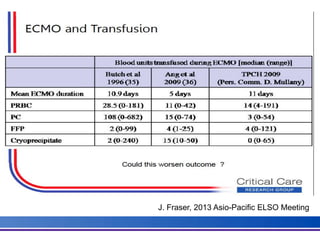
J. Fraser, 2013 Asio-Pacific ELSO Meeting
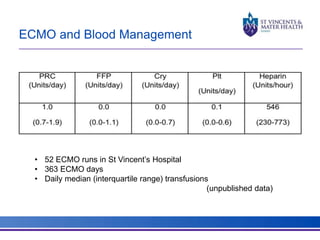
ECMO and Blood Management 
• 52 ECMO runs in St Vincent’s Hospital 
• 363 ECMO days 
• Daily median (interquartile range) transfusions 
(unpublished data)
When to do it 
NEW AND EVOLVING 
INDICATIONS
Evolving indications 
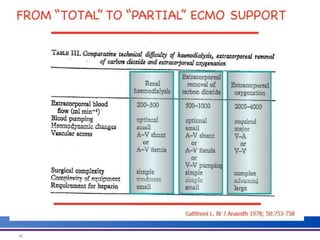
EXTRACORPOREAL CO2 
REMOVAL (ECCOR)
55
56
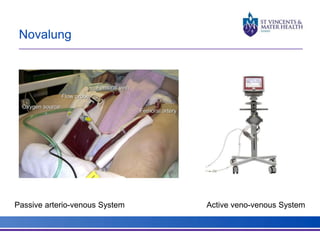
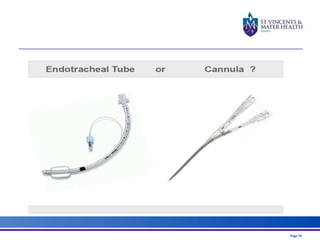
Novalung 
Passive arterio-venous System Active veno-venous System
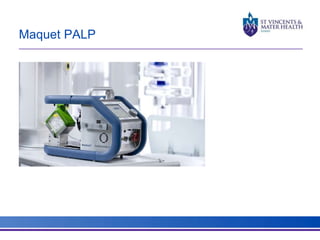
Maquet PALP
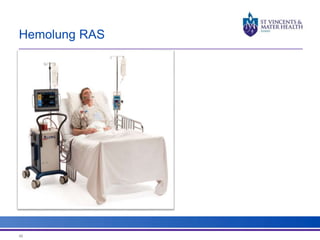
Hemolung RAS 
59
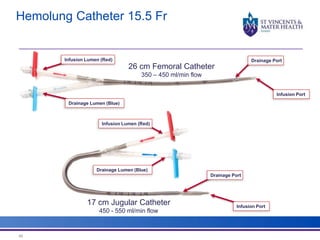
Hemolung Catheter 15.5 Fr 
60 
26 cm Femoral Catheter 
350 – 450 ml/min flow 
Infusion Lumen (Red) 
Drainage Lumen (Blue) 
17 cm Jugular Catheter 
450 - 550 ml/min flow 
Drainage Port 
Infusion Port 
Infusion Lumen (Red) 
Drainage Lumen (Blue) 
Drainage Port 
Infusion Port
• Blood Flow 
350-450 ml/min 
• CO2 Removal 
30% - 50% of total CO2 production
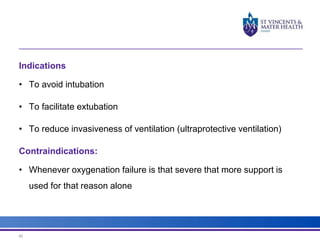
Indications 
• To avoid intubation 
• To facilitate extubation 
• To reduce invasiveness of ventilation (ultraprotective ventilation) 
Contraindications: 
• Whenever oxygenation failure is that severe that more support is 
used for that reason alone 
62
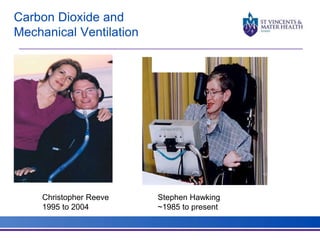
Carbon Dioxide and 
Mechanical Ventilation 
Christopher Reeve Stephen Hawking 
1995 to 2004 ~1985 to present
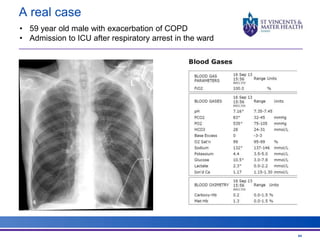
A real case 
64 
• 59 year old male with exacerbation of COPD 
• Admission to ICU after respiratory arrest in the ward
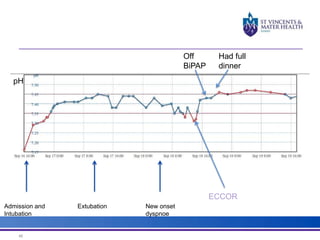
Admission and 
Intubation 
65 
Extubation New onset 
dyspnoe 
ECCOR 
Off 
BiPAP 
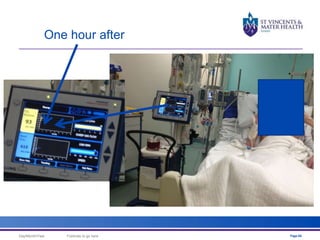
Had full 
dinner 
pH
One hour after 
Day/Month/Year Footnote to go here Page 66
67 
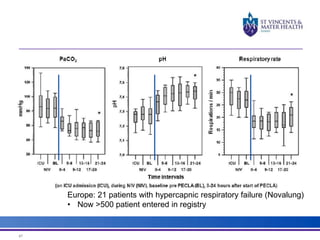
Europe: 21 patients with hypercapnic respiratory failure (Novalung) 
• Now >500 patient entered in registry
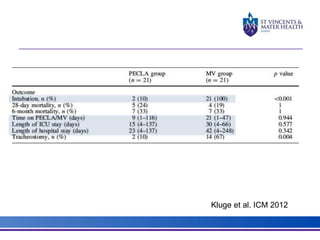
Kluge et al. ICM 2012
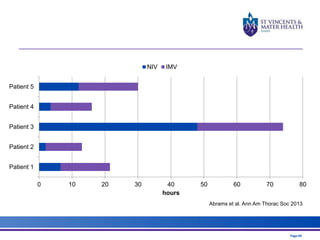
NIV IMV 
0 10 20 30 40 50 60 70 80 
Page 69 
Patient 5 
Patient 4 
Patient 3 
Patient 2 
Patient 1 
hours 
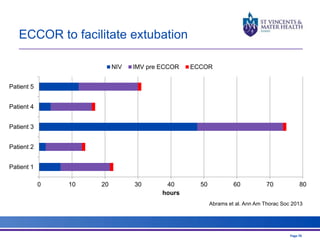
Abrams et al. Ann Am Thorac Soc 2013
NIV IMV pre ECCOR ECCOR 
0 10 20 30 40 50 60 70 80 
Page 70 
Patient 5 
Patient 4 
Patient 3 
Patient 2 
Patient 1 
hours 
Abrams et al. Ann Am Thorac Soc 2013 
ECCOR to facilitate extubation
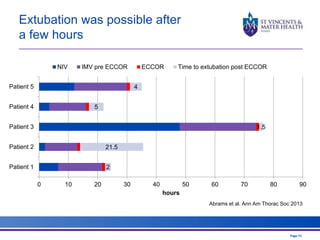
Extubation was possible after 
a few hours 
Page 71 
NIV IMV pre ECCOR ECCOR Time to extubation post ECCOR 
21.5 
2 
1.5 
5 
4 
0 10 20 30 40 50 60 70 80 90 
Patient 5 
Patient 4 
Patient 3 
Patient 2 
Patient 1 
hours 
Abrams et al. Ann Am Thorac Soc 2013
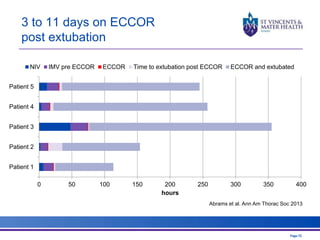
3 to 11 days on ECCOR 
post extubation 
NIV IMV pre ECCOR ECCOR Time to extubation post ECCOR ECCOR and extubated 
0 50 100 150 200 250 300 350 400 
Page 72 
Patient 5 
Patient 4 
Patient 3 
Patient 2 
Patient 1 
hours 
Abrams et al. Ann Am Thorac Soc 2013
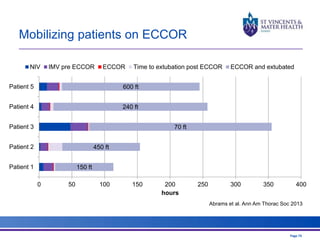
Mobilizing patients on ECCOR 
NIV IMV pre ECCOR ECCOR Time to extubation post ECCOR ECCOR and extubated 
Page 73 
150 ft 
450 ft 
70 ft 
600 ft 
240 ft 
0 50 100 150 200 250 300 350 400 
Patient 5 
Patient 4 
Patient 3 
Patient 2 
Patient 1 
hours 
Abrams et al. Ann Am Thorac Soc 2013
Page 74
Where to use it: ARDS 
• Mortality rate up to 45% despite lung protective ventilation 
• Lung hyperinflation in 30% 
• TV<4 ml/kg (ultraprotective ventilation) 
• Hypercapnia 
• Immunosuppression 
• impairs pulmonary epithelial repair 
• worsens right heart function 
• barrier to achieve LPV
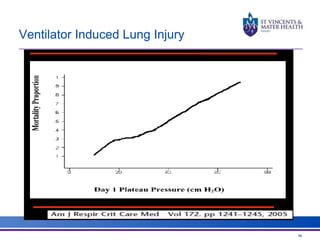
Ventilator Induced Lung Injury 
76
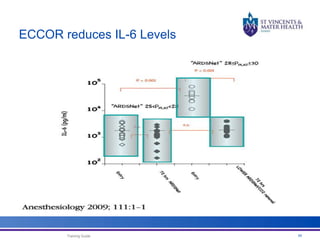
ECCOR reduces IL-6 Levels 
Training Guide 77
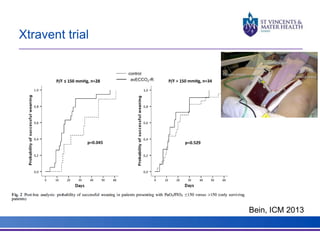
Xtravent trial 
Bein, ICM 2013
Cardiac Support
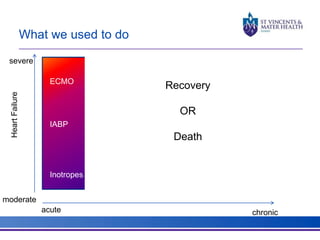
What we used to do 
severe 
moderate 
ECMO 
IABP 
Inotropes 
Recovery 
Tandem Heart, Impella, Levitronix….. 
OR 
Death 
Durable VADs 
Heart Transplantation 
acute chronic 
Heart Failure
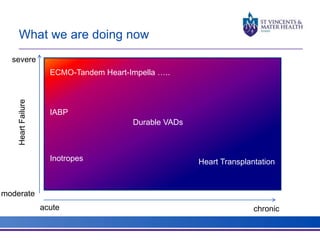
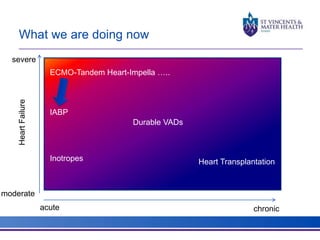
What we are doing now 
severe 
moderate 
ECMO-Tandem Heart-Impella ….. 
IABP 
Inotropes 
Durable VADs 
Heart Transplantation 
acute chronic 
Heart Failure
What we are doing now 
severe 
moderate 
ECMO-Tandem Heart-Impella ….. 
IABP 
Inotropes 
Durable VADs 
Heart Transplantation 
acute chronic 
Heart Failure
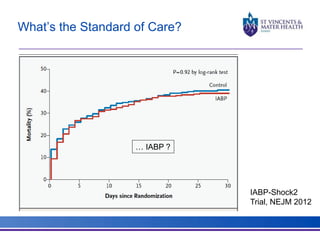
IABP-Shock2 
Trial, NEJM 2012 
What’s the Standard of Care? 
… IABP ?
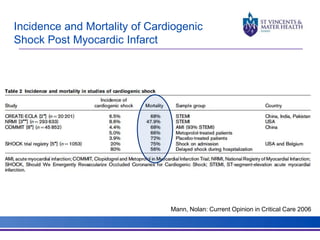
Incidence and Mortality of Cardiogenic 
Shock Post Myocardic Infarct 
Mann, Nolan: Current Opinion in Critical Care 2006
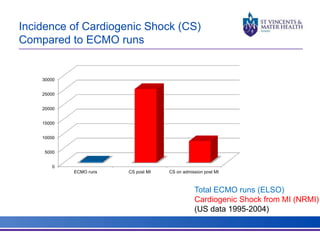
Incidence of Cardiogenic Shock (CS) 
Compared to ECMO runs 
30000 
25000 
20000 
15000 
10000 
5000 
0 
ECMO runs CS post MI CS on admission post MI 
Total ECMO runs (ELSO) 
Cardiogenic Shock from MI (NRMI) 
(US data 1995-2004)
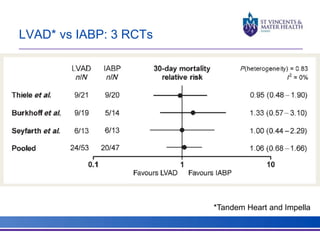
LVAD* vs IABP: 3 RCTs 
*Tandem Heart and Impella
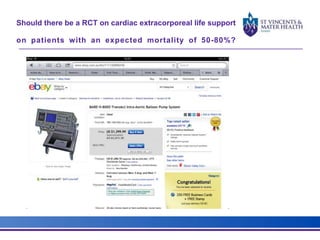
Should there be a RCT on cardiac extracorporeal life support 
on patients with an expected mortality of 50-80%?
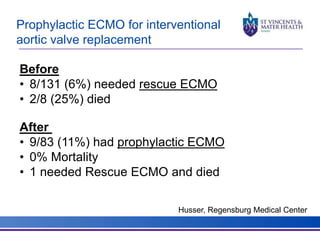
Prophylactic ECMO for interventional 
aortic valve replacement 
Before 
• 8/131 (6%) needed rescue ECMO 
• 2/8 (25%) died 
After 
• 9/83 (11%) had prophylactic ECMO 
• 0% Mortality 
• 1 needed Rescue ECMO and died 
Husser, Regensburg Medical Center
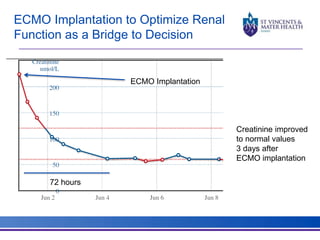
ECMO Implantation to Optimize Renal 
Function as a Bridge to Decision 
ECMO Implantation 
72 hours 
Creatinine improved 
to normal values 
3 days after 
ECMO implantation
ECMO could be more than a rescue 
treatment in cardiogenic shock
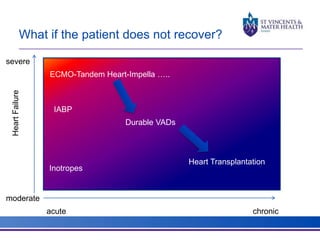
What if the patient does not recover? 
severe 
moderate 
IABP 
Inotropes 
Durable VADs 
Heart Transplantation 
acute chronic 
Heart Failure 
ECMO-Tandem Heart-Impella …..
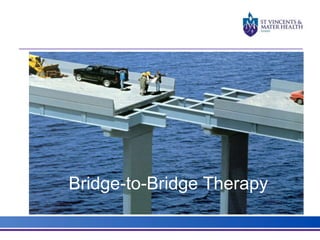
Bridge-to-Bridge Therapy
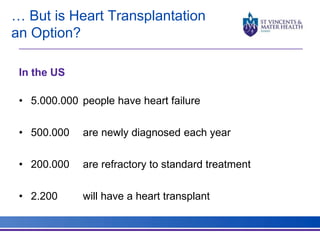
… But is Heart Transplantation 
an Option? 
In the US 
• 5.000.000 people have heart failure 
• 500.000 are newly diagnosed each year 
• 200.000 are refractory to standard treatment 
• 2.200 will have a heart transplant
“TREATING CONGESTIVE HEART 
FAILURE WITH CARDIAC 
TRANSPLANTATION IS 
ANALOGOUS TO TREATING 
POVERTY WITH LOTTERY 
TICKETS” 
R. Robbins 
Director of the Stanford Institute of Cardiovascular Medicine
QUESTION 
Who should be offered a VAD as a 
destination therapy?
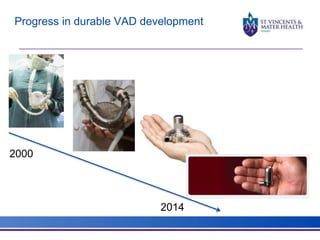
Progress in durable VAD development 
2000 
2014
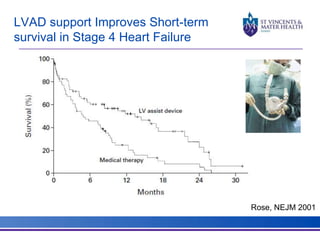
Rose, NEJM 2001 
LVAD support Improves Short-term 
survival in Stage 4 Heart Failure
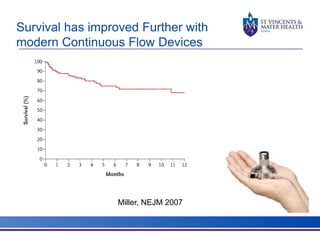
Survival has improved Further with 
modern Continuous Flow Devices 
Miller, NEJM 2007
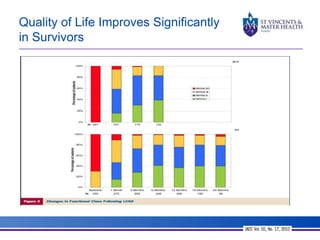
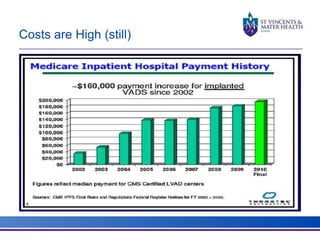
Quality of Life Improves Significantly 
in Survivors
Costs are High (still)
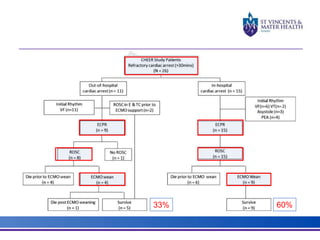
33% 60%
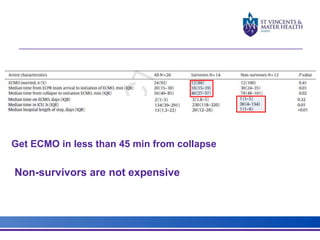
Get ECMO in less than 45 min from collapse 
Non-survivors are not expensive
One of our cases 
• 58 year old male presented to ED on a Sunday morning 
• Found on the street, GCS 12, hypothermia (32.1 C) 
• 08:01 VF cardiac arrest in ED 
• 08:10 call for E-CPR 
• 08:15 team arrives, 5 shocks, now asystolic 
• 08:20 start of cannulation 
• 08:38 total of 37 min of CPR, 5 shocks, 10mg adrenalin total 
• 08:39 start of ECMO, CPR ceased 
• 08:44 patients localized to the ETT, still asystolic, sedation given 
• 08:51 temperature up to 34.5 C, VF 
• 08:52 one shock, ROSC 
• 24 hrs of temperature control at 36.0 C 
• Pt. decannulated, extubated on day 1 
• Ward the next day
Summary 
• ECMO has been used as rescue therapy for many indications and has 
shown to be safe and to improve outcome 
• Extracorporeal life support devices become less invasive and more 
integrated in general patient care 
• Durable VADs evolve rapidly and become safer for long term treatment and 
destination therapy 
• Further studies are needed to investigate the rule of ECMO (and other 
mechanical support devices) for high risk patients 
• Patient selection and ethical considerations remain essential
ECMO Update - ICN NSW 2014

ECMO Update - ICN NSW 2014

  • 1.
    What’s new inextracorporeal life support Hergen Buscher
  • 3.
    Definition • Externalartificial circuit carries venous blood from the patient to an oxygenator. • Blood becomes enriched with oxygen and has carbon dioxide removed. • The blood is than returned to the patient via a central vein or an artery.
  • 5.
    Allow time torecovery It most cases recovery is seen between 7 to 14 days
  • 6.
    16 year oldboy with goodpasture syndrome On admission 28 days later
  • 7.
    51 year oldpatient with polypharmacy overdose No pulsatility Same patient 6 days later
  • 10.
  • 11.
  • 12.
  • 13.
  • 14.
  • 15.
  • 16.
  • 17.
  • 18.
  • 20.
    Indications VV Inabilityto maintain SaO2 > 88 or pH > 7.20 with safe mechanical ventilation • Plateau pressure < 35cmH2O and • Tidal volume <6ml/Kg predicted body weight • Need for inter-hospital transport in severe respiratory failure Despite • Trial of high PEEP (18-22) • Prone positioning • Nitric Oxide or alternative pulmonary vasodilators
  • 21.
    Conditions VV Good: • ARDS with primary lung injury (infection, aspiration or direct trauma) • Primary graft dysfunction following lung transplantation (within 7 days) • Pulmonary vasculitis (Goodpasture’s, ANCA-associated, other Autoimmune) Variable: • ARDS from secondary lung injury (from non-pulmonary sepsis, burns or pancreatitis) • Lung transplant recipients 7-30 days post transplant • Age >70
  • 22.
    Conditions VA Good • Acute fulminate myocarditis • Cardiomyopathy (first presentation) • Chronic cardiomyopathy (suitable for VAD) • Primary Graft Failure post heart transplant • AMI (with early revascularisation) • Drug overdose • Pulmonary Embolism Variable • Multiple organ failure • Late revascularisation • Septic shock • Post cardiotomy
  • 23.
    Contraindications • Age:> 70 years • Active malignancy • Severe brain injury • Previous Bone marrow transplant, previous transplant (>30 days), AIDS • End stage chronic organ failure (hepatic, renal) • End stage cardiomyopathy (except for bridge to VAD/transplant) • Chronic lung disease (except for bridge to transplant) • Multi organ failure • Severe mitral or aortic valvular insufficiency or aortic dissection (VA only)
  • 24.
    ARE THESE PROVEN INDICATIONS?
  • 25.
    • ECMO (n=90patients) • Conventional management (n=90) • 68 (75%) patients actually received ECMO • 63% of patients consideration for treatment by ECMO survived • 47% of patients on conventional management survived • Relative risk 0.69; 95% CI 0.05–0.97, p=0.03 • Quality-adjusted life-year: £19 252
  • 26.
    Research EXTRACORPOREAL MEMBRANEOXYGENATION (ECMO) FOR SEVERE ACUTE RESPIRATORY DISTRESS SYNDROME (ARDS) A multicenter, randomized, controlled open trial EOLIA : ECMO to rescue Lung Injury in severe ARDS Promoter: Département de la Recherche Clinique et du Développement (DRCD) Assistance Publique–Hôpitaux de Paris
  • 28.
  • 29.
    ISICEM Brussels March2014 Brussels presentations
  • 30.
    Paradigm shift inextracorporeal life support Should it be done? How should it be done? When should it be done?
  • 31.
    Key points ofmodern ECMO management
  • 34.
    Subclavian Artery Cannulationfor Ambulatory VA ECMO Javidfar, ASAIO 2012
  • 35.
  • 36.
    Mobile ECMO •More experience -> more confidence • Less sedation • Better cannulation • Team approach  ECMO Patient -> Patient with ECMO
  • 37.
    Mobile ECMO •More experience -> more confidence • Less sedation • Better cannulation • Team approach  ECMO Patient -> Patient with ECMO
  • 38.
  • 39.
  • 40.
    Pharmacokinetics ex vivo Shekar, Crit Care 2012
  • 41.
  • 42.
    ASAP –ECMO: Antibiotic,Sedative and Analgesic Pharmacokinetics during Extracorporeal Membrane Oxygenation: A multi-centre study to optimise drug therapy during ECMO Authors: Kiran Shekar1 Jason A Roberts2 Susan Welch3 Hergen Buscher3 Sam Rudham3 Sussan Ghassabian4 Steven C Wallis2 Bianca Levkovich5 Vin Pellegrino5 Shay Mcguinness6 Rachael Parke6 Paul Forrest6 Adrian G Barnett8 James Walsham9 Daniel V Mullany1 Maree T Smith4 John F Fraser1 Affiliations: 1Critical Care Research Group, Adult Intensive Care Services, The Prince Charles Hospital and The University of Queensland, Brisbane, Queensland, Australia 2Burns Trauma and Critical Care Research Centre, Royal Brisbane and Women’s Hospital and The University of Queensland, Brisbane, Queensland, Australia 3 Intensive Care Services, St Vincent’s Hospital, Sydney, New South Wales, Australia 4Centre for Integrated Preclinical Drug Development, University of Queensland, Brisbane, Queensland, Australia 5 Intensive Care Services, The Alfred Hospital, Melbourne, Victoria, Australia 6 Intensive Care Services, Auckland City Hospital, Auckland, New Zealand 6 Intensive Care services, Royal Prince Alfred Hospital, Sydney, New South Wales, Australia 8Institute of Health and Biomedical Innovation, School of Public Health & Social Work, Queensland University of Technology, Queensland, Australia 9Intensive Care Services, Princess Alexandra Hospital, Brisbane, Queensland, Australia Day/Month/Year Footnote to go here Page 42
  • 43.
    Clotting, bleeding andanticoagulation
  • 45.
  • 49.
    Complications - Bleeding Zapol et al: Extracorporeal membrane oxygenation in severe acute respiratory failure. A randomized prospective study. JAMA (1979) Morris et al: Randomized clinical trial of pressure-controlled inverse ratio ventilation and extracorporeal CO2 removal for adult respiratory distress syndrome. Am J Respir Crit Care Med (1994)
  • 50.
    How to anticoagulateand how to treat bleeding • As higher the flow as lower the heparin • APTT targets of 1.5 to 2 times normal • Low dose heparin?? • Heparin free ECMO is possible (in adults) • Longest reported run without heparin: 25 days • But higher risk during VA-ECMO • Point of care testing to manage bleeding
  • 51.
    J. Fraser, 2013Asio-Pacific ELSO Meeting
  • 52.
    ECMO and BloodManagement • 52 ECMO runs in St Vincent’s Hospital • 363 ECMO days • Daily median (interquartile range) transfusions (unpublished data)
  • 53.
    When to doit NEW AND EVOLVING INDICATIONS
  • 54.
  • 55.
  • 56.
  • 57.
    Novalung Passive arterio-venousSystem Active veno-venous System
  • 58.
  • 59.
  • 60.
    Hemolung Catheter 15.5Fr 60 26 cm Femoral Catheter 350 – 450 ml/min flow Infusion Lumen (Red) Drainage Lumen (Blue) 17 cm Jugular Catheter 450 - 550 ml/min flow Drainage Port Infusion Port Infusion Lumen (Red) Drainage Lumen (Blue) Drainage Port Infusion Port
  • 61.
    • Blood Flow 350-450 ml/min • CO2 Removal 30% - 50% of total CO2 production
  • 62.
    Indications • Toavoid intubation • To facilitate extubation • To reduce invasiveness of ventilation (ultraprotective ventilation) Contraindications: • Whenever oxygenation failure is that severe that more support is used for that reason alone 62
  • 63.
    Carbon Dioxide and Mechanical Ventilation Christopher Reeve Stephen Hawking 1995 to 2004 ~1985 to present
  • 64.
    A real case 64 • 59 year old male with exacerbation of COPD • Admission to ICU after respiratory arrest in the ward
  • 65.
    Admission and Intubation 65 Extubation New onset dyspnoe ECCOR Off BiPAP Had full dinner pH
  • 66.
    One hour after Day/Month/Year Footnote to go here Page 66
  • 67.
    67 Europe: 21patients with hypercapnic respiratory failure (Novalung) • Now >500 patient entered in registry
  • 68.
    Kluge et al.ICM 2012
  • 69.
    NIV IMV 010 20 30 40 50 60 70 80 Page 69 Patient 5 Patient 4 Patient 3 Patient 2 Patient 1 hours Abrams et al. Ann Am Thorac Soc 2013
  • 70.
    NIV IMV preECCOR ECCOR 0 10 20 30 40 50 60 70 80 Page 70 Patient 5 Patient 4 Patient 3 Patient 2 Patient 1 hours Abrams et al. Ann Am Thorac Soc 2013 ECCOR to facilitate extubation
  • 71.
    Extubation was possibleafter a few hours Page 71 NIV IMV pre ECCOR ECCOR Time to extubation post ECCOR 21.5 2 1.5 5 4 0 10 20 30 40 50 60 70 80 90 Patient 5 Patient 4 Patient 3 Patient 2 Patient 1 hours Abrams et al. Ann Am Thorac Soc 2013
  • 72.
    3 to 11days on ECCOR post extubation NIV IMV pre ECCOR ECCOR Time to extubation post ECCOR ECCOR and extubated 0 50 100 150 200 250 300 350 400 Page 72 Patient 5 Patient 4 Patient 3 Patient 2 Patient 1 hours Abrams et al. Ann Am Thorac Soc 2013
  • 73.
    Mobilizing patients onECCOR NIV IMV pre ECCOR ECCOR Time to extubation post ECCOR ECCOR and extubated Page 73 150 ft 450 ft 70 ft 600 ft 240 ft 0 50 100 150 200 250 300 350 400 Patient 5 Patient 4 Patient 3 Patient 2 Patient 1 hours Abrams et al. Ann Am Thorac Soc 2013
  • 74.
  • 75.
    Where to useit: ARDS • Mortality rate up to 45% despite lung protective ventilation • Lung hyperinflation in 30% • TV<4 ml/kg (ultraprotective ventilation) • Hypercapnia • Immunosuppression • impairs pulmonary epithelial repair • worsens right heart function • barrier to achieve LPV
  • 76.
  • 77.
    ECCOR reduces IL-6Levels Training Guide 77
  • 78.
  • 79.
  • 80.
    What we usedto do severe moderate ECMO IABP Inotropes Recovery Tandem Heart, Impella, Levitronix….. OR Death Durable VADs Heart Transplantation acute chronic Heart Failure
  • 81.
    What we aredoing now severe moderate ECMO-Tandem Heart-Impella ….. IABP Inotropes Durable VADs Heart Transplantation acute chronic Heart Failure
  • 82.
    What we aredoing now severe moderate ECMO-Tandem Heart-Impella ….. IABP Inotropes Durable VADs Heart Transplantation acute chronic Heart Failure
  • 83.
    IABP-Shock2 Trial, NEJM2012 What’s the Standard of Care? … IABP ?
  • 84.
    Incidence and Mortalityof Cardiogenic Shock Post Myocardic Infarct Mann, Nolan: Current Opinion in Critical Care 2006
  • 85.
    Incidence of CardiogenicShock (CS) Compared to ECMO runs 30000 25000 20000 15000 10000 5000 0 ECMO runs CS post MI CS on admission post MI Total ECMO runs (ELSO) Cardiogenic Shock from MI (NRMI) (US data 1995-2004)
  • 86.
    LVAD* vs IABP:3 RCTs *Tandem Heart and Impella
  • 87.
    Should there bea RCT on cardiac extracorporeal life support on patients with an expected mortality of 50-80%?
  • 88.
    Prophylactic ECMO forinterventional aortic valve replacement Before • 8/131 (6%) needed rescue ECMO • 2/8 (25%) died After • 9/83 (11%) had prophylactic ECMO • 0% Mortality • 1 needed Rescue ECMO and died Husser, Regensburg Medical Center
  • 89.
    ECMO Implantation toOptimize Renal Function as a Bridge to Decision ECMO Implantation 72 hours Creatinine improved to normal values 3 days after ECMO implantation
  • 90.
    ECMO could bemore than a rescue treatment in cardiogenic shock
  • 91.
    What if thepatient does not recover? severe moderate IABP Inotropes Durable VADs Heart Transplantation acute chronic Heart Failure ECMO-Tandem Heart-Impella …..
  • 92.
  • 93.
    … But isHeart Transplantation an Option? In the US • 5.000.000 people have heart failure • 500.000 are newly diagnosed each year • 200.000 are refractory to standard treatment • 2.200 will have a heart transplant
  • 94.
    “TREATING CONGESTIVE HEART FAILURE WITH CARDIAC TRANSPLANTATION IS ANALOGOUS TO TREATING POVERTY WITH LOTTERY TICKETS” R. Robbins Director of the Stanford Institute of Cardiovascular Medicine
  • 95.
    QUESTION Who shouldbe offered a VAD as a destination therapy?
  • 96.
    Progress in durableVAD development 2000 2014
  • 97.
    Rose, NEJM 2001 LVAD support Improves Short-term survival in Stage 4 Heart Failure
  • 98.
    Survival has improvedFurther with modern Continuous Flow Devices Miller, NEJM 2007
  • 99.
    Quality of LifeImproves Significantly in Survivors
  • 100.
  • 102.
  • 103.
    Get ECMO inless than 45 min from collapse Non-survivors are not expensive
  • 104.
    One of ourcases • 58 year old male presented to ED on a Sunday morning • Found on the street, GCS 12, hypothermia (32.1 C) • 08:01 VF cardiac arrest in ED • 08:10 call for E-CPR • 08:15 team arrives, 5 shocks, now asystolic • 08:20 start of cannulation • 08:38 total of 37 min of CPR, 5 shocks, 10mg adrenalin total • 08:39 start of ECMO, CPR ceased • 08:44 patients localized to the ETT, still asystolic, sedation given • 08:51 temperature up to 34.5 C, VF • 08:52 one shock, ROSC • 24 hrs of temperature control at 36.0 C • Pt. decannulated, extubated on day 1 • Ward the next day
  • 105.
    Summary • ECMOhas been used as rescue therapy for many indications and has shown to be safe and to improve outcome • Extracorporeal life support devices become less invasive and more integrated in general patient care • Durable VADs evolve rapidly and become safer for long term treatment and destination therapy • Further studies are needed to investigate the rule of ECMO (and other mechanical support devices) for high risk patients • Patient selection and ethical considerations remain essential

Editor's Notes

  • #8 How much is the nonpulsatile ECMO flow and how much is the heart contributing? There are other clues besides just echo. Here is an extreme example of what is potentially possible with ECMO. Still alive? See the CO2 trace, also the difference in oxygenation (color difference of the 2 cannula with O2 extraction that continues if still alive)
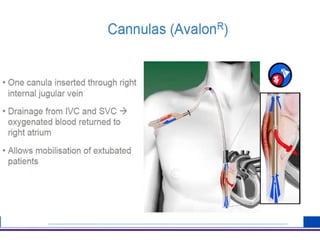
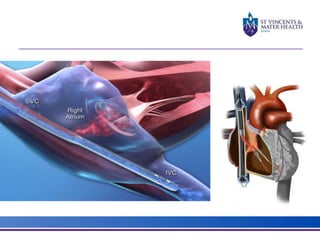
  • #33 The Avalon catheter is frequently used in MSICU. With this cannula correct positioning is vital-we will see why with the next slide.
  • #34 The blood gets taken in from the IVC and SVC ports and returned through a single port that needs to be positioned in the central part of the RA.
  • #76 The reported incidence of acute respiratory distress syndrome ranges from 7 to 59 per 100,000 people with an associated with a mortality rate of 40 to 45%. This rate remains unacceptably high despite the introduction of lung protective. When surveyed, health care providers reported that hypercapnia or its related effects were significant barriers to achieving LPV. Studies have shown that while 6  ml.kg-1 is superior to 12  ml.kg-1 and <4 ml.kg-1 might be superior to 6 ml.kg-1 [9-11]. Hypercapnia harms injured lung through immunosuppression and impaired pulmonary epithelial repair. Furthermore, hypercapnia worsens right heart failure and is undesirable in patients with elevated intracranial pressure.