OPTICS 
SUBMITTED BY 
SARANYA R S 
PHYSICAL SCIENCE 
REG NO:13971023 
KUCTE KUMARAPURAM
OPTICS 
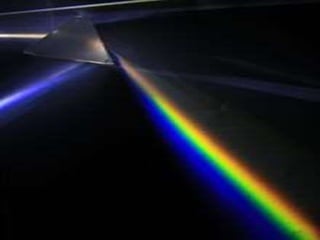
Optics is the branch of physics which involves the behavior 
and properties of light, including its interactions 
with matter and the construction of instruments that use 
or detect it. Optics usually describes the behavior 
of visible, ultraviolet, and infra red-light. Because light is 
an electromagnetic wave, other forms of electromagnetic 
radiation such as X-rays, microwaves, and radio waves exhibit 
similar properties.
GEOMETRIC OPTICS 
Geometric optics, treats light as a collection 
of rays that travel in straight lines and bend 
when they pass through or reflect from 
surfaces.
PHYSICAL OPTICS 
Physical optics is a more comprehensive 
model of light, which includes wave effects 
such as diffraction and interference that 
cannot be accounted for in geometric 
optics.
Optical science is relevant to and studied in 
many related disciplines including astronomy, 
various engineering fields, photography, 
and medicine (particularly ophthalmology and 
optometry). Practical applications of optics are 
found in a variety of technologies and 
everyday objects, including mirrors, 
lenses, telescopes, microscopes, lasers, 
and fiber optics
OPTICAL FIBER 
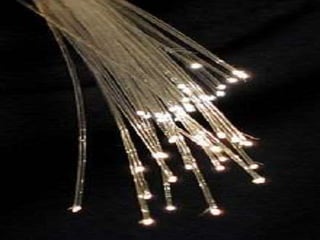
An optical fiber (or optical fiber) is a flexible, transparent 
fiber made of extruded glass (silica) or plastic, slightly 
thicker than a human hair. It can function as a waveguide, or 
“light pipe, to transmit light between the two ends of the 
fiber. Power over Fiber(POF) optic cables can also work to 
deliver an electric current for low-power electric devices. 
The field of applied science and engineering concerned with 
the design and application of optical fibers is known as fiber 
optics.
USES 
Communication 
Optical fiber can be used as a medium for 
telecommunication and computer networking because it 
is flexible and can be bundled as cables. It is especially 
advantageous for long-distance communications, 
because light propagates through the fiber with little 
attenuation compared to electrical cables. This allows 
long distances to be spanned with few repeaters.
ADVANTAGES 
1. Bandwidth - Fiber optic cables have a much greater bandwidth 
than metal cables. The amount of information that can be 
transmitted per unit time of fiber over other transmission media is 
its most significant advantage. 
2. Low Power Loss - An optical fiber offers low power loss. This 
allows for longer transmission distances. 
3. Interference - Fiber optic cables are immune to electromagnetic 
interference. It can also be run in electrically noisy environments 
without concern as electrical noise will not affect fiber.
4.Size - In comparison to copper, a fiber optic cable has 
nearly 4.5 times as much capacity as the wire cable 
has and a cross sectional area that is 30 times less. 
5.Weight - Fiber optic cables are much thinner and 
lighter than metal wires. They also occupy less space 
with cables of the same information capacity. Lighter 
weight makes fiber easier to install.
DISADVANTAGES 
1.Cost - Cables are expensive to install but last longer than copper cables. 
2.Transmission - transmission on optical fiber requires repeating at 
distance intervals. 
3. Fragile - Fibers can be broken or have transmission loses when wrapped 
around curves of only a few centimeters radius. However by encasing 
fibers in a plastic sheath, it is difficult to bend the cable into a small enough 
radius to break the fiber. 
4. Protection - Optical fibers require more protection around the cable 
compared to copper.

Optics

  • 1.
    OPTICS SUBMITTED BY SARANYA R S PHYSICAL SCIENCE REG NO:13971023 KUCTE KUMARAPURAM
  • 2.
    OPTICS Optics isthe branch of physics which involves the behavior and properties of light, including its interactions with matter and the construction of instruments that use or detect it. Optics usually describes the behavior of visible, ultraviolet, and infra red-light. Because light is an electromagnetic wave, other forms of electromagnetic radiation such as X-rays, microwaves, and radio waves exhibit similar properties.
  • 4.
    GEOMETRIC OPTICS Geometricoptics, treats light as a collection of rays that travel in straight lines and bend when they pass through or reflect from surfaces.
  • 5.
    PHYSICAL OPTICS Physicaloptics is a more comprehensive model of light, which includes wave effects such as diffraction and interference that cannot be accounted for in geometric optics.
  • 6.
    Optical science isrelevant to and studied in many related disciplines including astronomy, various engineering fields, photography, and medicine (particularly ophthalmology and optometry). Practical applications of optics are found in a variety of technologies and everyday objects, including mirrors, lenses, telescopes, microscopes, lasers, and fiber optics
  • 7.
    OPTICAL FIBER Anoptical fiber (or optical fiber) is a flexible, transparent fiber made of extruded glass (silica) or plastic, slightly thicker than a human hair. It can function as a waveguide, or “light pipe, to transmit light between the two ends of the fiber. Power over Fiber(POF) optic cables can also work to deliver an electric current for low-power electric devices. The field of applied science and engineering concerned with the design and application of optical fibers is known as fiber optics.
  • 10.
    USES Communication Opticalfiber can be used as a medium for telecommunication and computer networking because it is flexible and can be bundled as cables. It is especially advantageous for long-distance communications, because light propagates through the fiber with little attenuation compared to electrical cables. This allows long distances to be spanned with few repeaters.
  • 11.
    ADVANTAGES 1. Bandwidth- Fiber optic cables have a much greater bandwidth than metal cables. The amount of information that can be transmitted per unit time of fiber over other transmission media is its most significant advantage. 2. Low Power Loss - An optical fiber offers low power loss. This allows for longer transmission distances. 3. Interference - Fiber optic cables are immune to electromagnetic interference. It can also be run in electrically noisy environments without concern as electrical noise will not affect fiber.
  • 12.
    4.Size - Incomparison to copper, a fiber optic cable has nearly 4.5 times as much capacity as the wire cable has and a cross sectional area that is 30 times less. 5.Weight - Fiber optic cables are much thinner and lighter than metal wires. They also occupy less space with cables of the same information capacity. Lighter weight makes fiber easier to install.
  • 13.
    DISADVANTAGES 1.Cost -Cables are expensive to install but last longer than copper cables. 2.Transmission - transmission on optical fiber requires repeating at distance intervals. 3. Fragile - Fibers can be broken or have transmission loses when wrapped around curves of only a few centimeters radius. However by encasing fibers in a plastic sheath, it is difficult to bend the cable into a small enough radius to break the fiber. 4. Protection - Optical fibers require more protection around the cable compared to copper.