GENE REGULATION IN PROKARYOTES
Presented by Faisal khan
Roll NO 19
BS-GENETICS-19
Introduction
 In prokaryotic organisms, genes synthesis different types of proteins which needed in
different stages.
 All theseproteinsare not needed atonetime. Most of protein are synthesis in different
times.
 However, some genes are constantly transcribed and expressed inall cellsatall time,because
theirproduct are constantly needed in allcells. Such genesarecalled constitutivegenesor
house keeping genes.
 somegenesexpressed only in some typeof cellsor on specialoccasion. Such genes are called
non constitutive or luxury genes.
 The control of gene expression or protein synthesis is called generegulation.
 The regulation of gene expression in prokaryotic cells occurs at the transcriptional
level.
 Theregulation may be negativeorpositive.
 i)Negativeregulation
 ii)Positiveregulation:
i)Negative regulation:
 In Negative regulation an inhibitor or repressor is present in thecell.
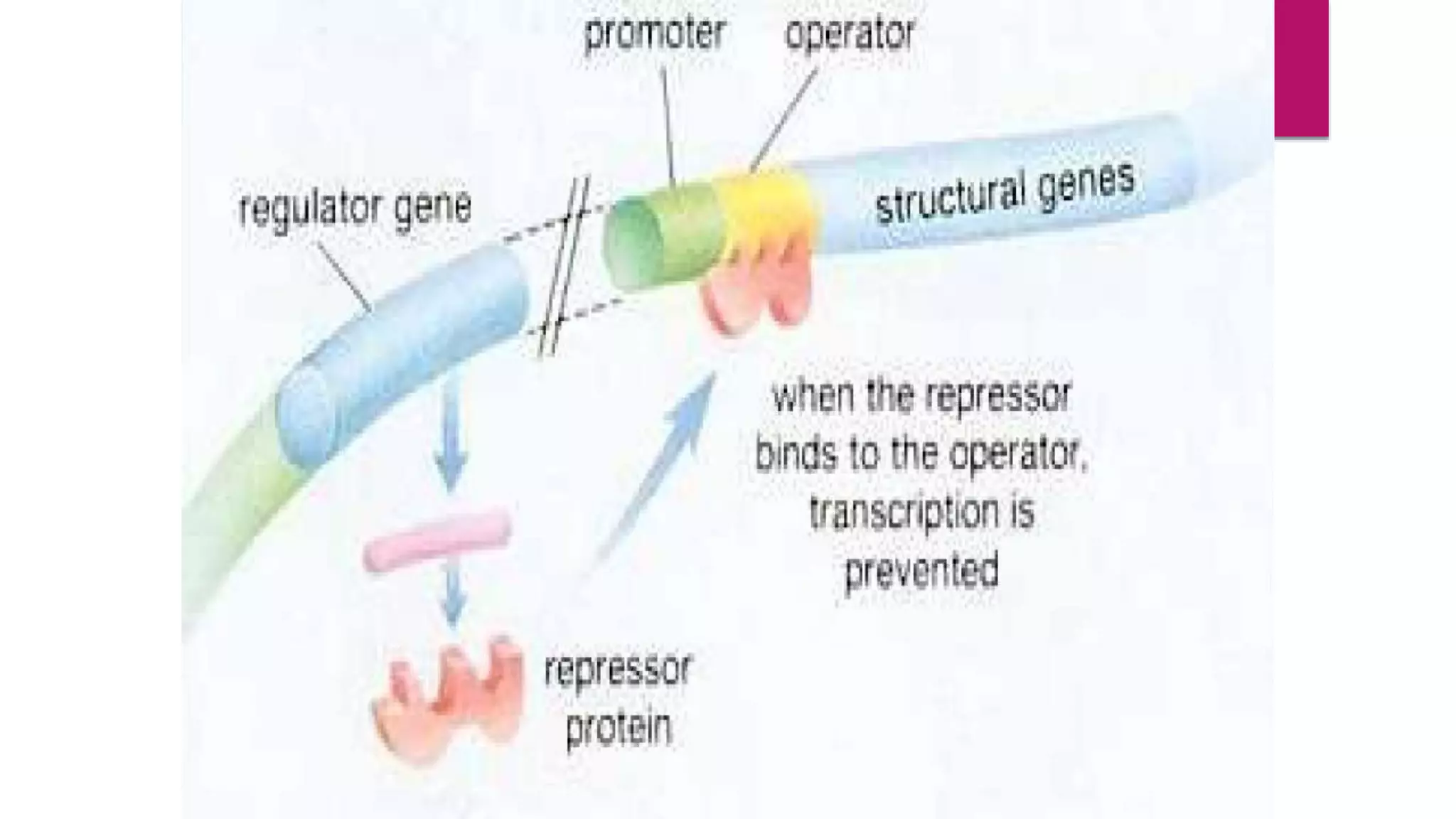
 . A repressor is a DNA or RNA-binding protein that bind to an operator
region to block the action of RNA polymerase.
 Activators bind to the promoter to enhance the binding of RNA
polymerase. that increases transcriptionof ageneorsetof genes.
 Mostactivatorsare DNA binding proteins that bind to promoter. The DNA
site bound by theactivator is referred toas an "activator site.
 Eg:The catabolite activator protein(CAP; also known as cAMP repressor
protein, CRP) activates transcription at the lac operon of the bacteriumE.coli.
ii)Positive regulation:
In positive regulation, aninducer molecule activates the promoter,
which promotes transcription of mRNA.
 In inducible gene regulation the structural gene or genesare
induced or ‘switch on’ toproduce mRNA
 The substancewhich induces thegene forprotein synthesis is
known asinducer.
 Thegenecomplex responsible for thesynthesisof inducible
enzymes is called inducible system.
 Eg:lacoperon
OPERON MODEL
 Francis Jacob and Jacques Monad (1961),explained that gene regulation isby operon
model.
 Theoperon model for lactosecatabolism iscalled lac operon.
 An operon isagroupof closely linked structuregenes and associated controlgenes.
 Theoperonconsistof regulatorygene, structural gene, operator and promotersite.
STRUCTURE OF LAC OPERON
1.Regulatorygene:
 The regulatorygene is the i gene thatcode for the
repressorprotein
 This i gene is expressed in all the time hence it is also
known as a constitutivegene.
2.Structural genes:
 Three structural genes lac z,lacy,laca involved in the
synthesisof enzymes for the lactosecatabolism.
 The 3 genesas transcribed asapolycistronicmRNA.
 Lac z code forBeta galactosidase
 Lacycode for Lac permease
 Lac acode for Transacetylase
3.Promoter
A promoter is a sequence of DNA needed to turn a gene on or off. The process of
transcription is initiated at the promoter.
4.Operator
Operator – a segment of DNA to which a repressor binds.
Negative control of lac operon
 The lac repressor is synthesized through the activity of lac i gene called the
regulatorgene.
 This repressor is an allosteric protein(A protein whose shape is changed when it
bindsa particular molecule).
 i)it bind the operatorsite ii)it bind the lactosesugar(inducer)
 In theabsenceof inducer, DNA binding siteof repressor is functional.
 The repressorprotein binds to the DNA at theoperator site of the lac locus and
blocks the transcription of lac genes by RNApolymerase.
 The lac enzyme synthesis is inhibited.
Positive control of lac operon
 It is an additional regulatory mechanism which allows the lac operon
to sense the presence of glucose,an alternativeand preferred energy
source to lactose.
 If glucoseand lactoseare both present,cellswill use up the glucose
first.
 The presence of glucose in the cell switch off the lac operon by a
mechanism called catabolitereperssion, which involves a protein
called catabolite activator protein(CAP)
Gene regulation in prokaryotes

Gene regulation in prokaryotes

  • 1.
    GENE REGULATION INPROKARYOTES Presented by Faisal khan Roll NO 19 BS-GENETICS-19
  • 2.
    Introduction  In prokaryoticorganisms, genes synthesis different types of proteins which needed in different stages.  All theseproteinsare not needed atonetime. Most of protein are synthesis in different times.  However, some genes are constantly transcribed and expressed inall cellsatall time,because theirproduct are constantly needed in allcells. Such genesarecalled constitutivegenesor house keeping genes.  somegenesexpressed only in some typeof cellsor on specialoccasion. Such genes are called non constitutive or luxury genes.
  • 3.
     The controlof gene expression or protein synthesis is called generegulation.  The regulation of gene expression in prokaryotic cells occurs at the transcriptional level.  Theregulation may be negativeorpositive.  i)Negativeregulation  ii)Positiveregulation:
  • 4.
    i)Negative regulation:  InNegative regulation an inhibitor or repressor is present in thecell.  . A repressor is a DNA or RNA-binding protein that bind to an operator region to block the action of RNA polymerase.  Activators bind to the promoter to enhance the binding of RNA polymerase. that increases transcriptionof ageneorsetof genes.  Mostactivatorsare DNA binding proteins that bind to promoter. The DNA site bound by theactivator is referred toas an "activator site.  Eg:The catabolite activator protein(CAP; also known as cAMP repressor protein, CRP) activates transcription at the lac operon of the bacteriumE.coli.
  • 5.
    ii)Positive regulation: In positiveregulation, aninducer molecule activates the promoter, which promotes transcription of mRNA.  In inducible gene regulation the structural gene or genesare induced or ‘switch on’ toproduce mRNA  The substancewhich induces thegene forprotein synthesis is known asinducer.  Thegenecomplex responsible for thesynthesisof inducible enzymes is called inducible system.  Eg:lacoperon
  • 6.
    OPERON MODEL  FrancisJacob and Jacques Monad (1961),explained that gene regulation isby operon model.
  • 7.
     Theoperon modelfor lactosecatabolism iscalled lac operon.  An operon isagroupof closely linked structuregenes and associated controlgenes.  Theoperonconsistof regulatorygene, structural gene, operator and promotersite.
  • 9.
    STRUCTURE OF LACOPERON 1.Regulatorygene:  The regulatorygene is the i gene thatcode for the repressorprotein  This i gene is expressed in all the time hence it is also known as a constitutivegene. 2.Structural genes:  Three structural genes lac z,lacy,laca involved in the synthesisof enzymes for the lactosecatabolism.
  • 10.
     The 3genesas transcribed asapolycistronicmRNA.  Lac z code forBeta galactosidase  Lacycode for Lac permease  Lac acode for Transacetylase 3.Promoter A promoter is a sequence of DNA needed to turn a gene on or off. The process of transcription is initiated at the promoter. 4.Operator Operator – a segment of DNA to which a repressor binds.
  • 11.
    Negative control oflac operon  The lac repressor is synthesized through the activity of lac i gene called the regulatorgene.  This repressor is an allosteric protein(A protein whose shape is changed when it bindsa particular molecule).  i)it bind the operatorsite ii)it bind the lactosesugar(inducer)  In theabsenceof inducer, DNA binding siteof repressor is functional.  The repressorprotein binds to the DNA at theoperator site of the lac locus and blocks the transcription of lac genes by RNApolymerase.  The lac enzyme synthesis is inhibited.
  • 13.
    Positive control oflac operon  It is an additional regulatory mechanism which allows the lac operon to sense the presence of glucose,an alternativeand preferred energy source to lactose.  If glucoseand lactoseare both present,cellswill use up the glucose first.  The presence of glucose in the cell switch off the lac operon by a mechanism called catabolitereperssion, which involves a protein called catabolite activator protein(CAP)