

OPERATIVE INTERVENTION
IN
OBSTETRICS
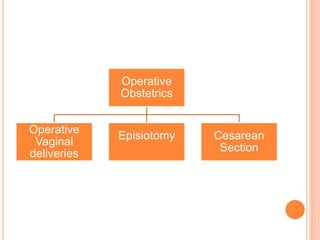
Operative
Obstetrics
Operative
Vaginal
deliveries
Episiotomy Cesarean
Section
Operative vaginal
delivery
Delivery of baby vaginally using
an instrument.
INDICATIONS FOR OVD
No indication is
absolute
• Prolonged 2nd
stage of labor
• Fetal
compromise
• Maternal benefit
to shortened 2nd
stage
Contraindications
• Gestation of
less than 35
week
• Breech
presentation
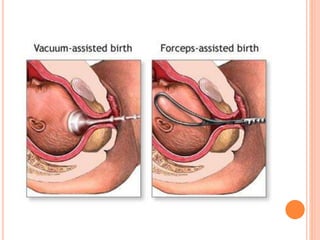
TYPES
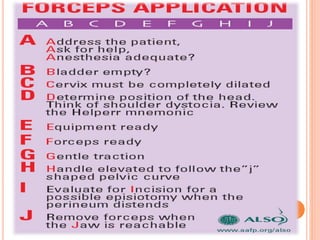
A. Forceps Delivery
B. Vacuum Extraction
PREREQUISITES FOR OVD
 Informed consent
 Vertex
 Engaged
 ≥34 weeks (vacuum delivery)
 Fully dilated
 Membranes ruptured
 Adequate maternal pelvis
 Adequate anesthesia
 Maternal empty bladder
 Backup plan
 Ongoing fetal and maternal assessment
PREREQUISITES FOR OVD
 Informed consent
 Vertex
 Engaged
 ≥34 weeks (vacuum delivery)
 Fully dilated
 Membranes ruptured
 Adequate maternal pelvis
 Adequate anesthesia
 Maternal empty bladder
 Backup plan
 Ongoing fetal and maternal assessment
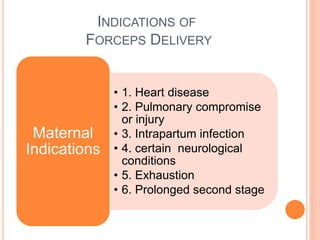
INDICATIONS OF
FORCEPS DELIVERY
• 1. Heart disease
• 2. Pulmonary compromise
or injury
• 3. Intrapartum infection
• 4. certain neurological
conditions
• 5. Exhaustion
• 6. Prolonged second stage
Maternal
Indications
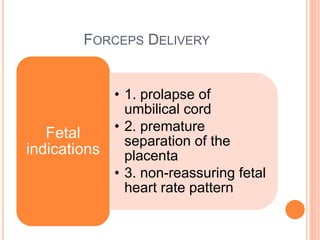
FORCEPS DELIVERY
• 1. prolapse of
umbilical cord
• 2. premature
separation of the
placenta
• 3. non-reassuring fetal
heart rate pattern
Fetal
indications
B.VACUUM EXTRACTION
Principle
 Creation of an artificial caput by attaching a
traction device by suction to the fetal scalp
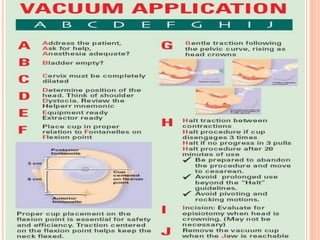
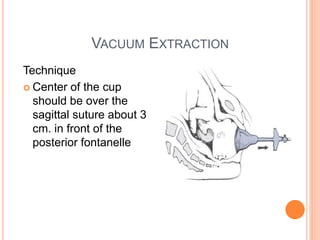
VACUUM EXTRACTION
Technique
 Center of the cup
should be over the
sagittal suture about 3
cm. in front of the
posterior fontanelle
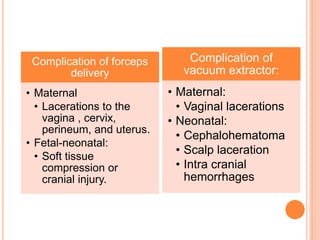
Complication of forceps
delivery
• Maternal
• Lacerations to the
vagina , cervix,
perineum, and uterus.
• Fetal-neonatal:
• Soft tissue
compression or
cranial injury.
Complication of
vacuum extractor:
• Maternal:
• Vaginal lacerations
• Neonatal:
• Cephalohematoma
• Scalp laceration
• Intra cranial
hemorrhages
CESAREAN DELIVERY
 Birth of a fetus through incisions in
the abdominal wall (laparotomy) and
the uterine wall (hysterectomy).
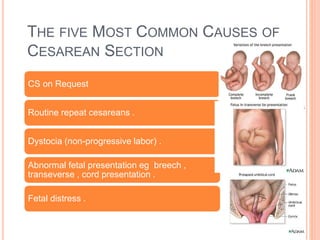
THE FIVE MOST COMMON CAUSES OF
CESAREAN SECTION
CS on Request
Routine repeat cesareans .
Dystocia (non-progressive labor) .
Abnormal fetal presentation eg breech ,
transeverse , cord presentation .
Fetal distress .
CESAREAN DELIVERY
Criteria for timing of repeat cesarean:
1. FHT have been documented for 20 weeks by
fetoscope or 30 weeks by doppler.
2. 36 wks. Since a +serum or urine HcG
3. US with CRL at 6-11 wks compatible with 39 wks.
4. US at 12-20 wks compatible with 39 weeks
determined by clinical Hx & PE
Elective caesarian section
(Planned operation)
Advantages are:-
Patient with empty stomach and surgeon
usually with full breakfast
Best anesthetist available at that time
Best assistant and nursing staff.
Disadvantages are :-
If wrong judgment, premature child may be
born.
Cervix may not be dilated and hence poor
drainage of lochia
Lower segment is not formed and hence
uterine incision in lower part of upper
segment.
Emergency caesarian
section (Unplanned)
Working under adverse circumstances:-
Patient may be with full stomach and
surgeon may be with empty belly
Odd working hours either of day or
night
Anesthetist, assistant and nursing staff
may not be of your choice
Advantage is :-
Mature child as patient is in labor
Cervix is open, better drainage of
lochia.
Lower segment is well formed
CESAREAN DELIVERY
Abdominal Incisions
1. Vertical Incision
quickest to make
greater chance of dehiscence
2. Pfannenstiel Incision
cosmetically better, stronger
less chance of dehiscence
exposure not as good
CESAREAN DELIVERY
Types of uterine incisions
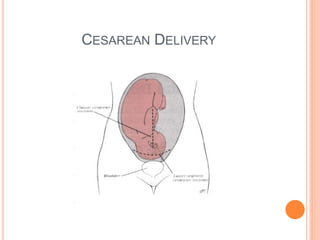
1. Classical
vertical incision into the body of uterus
Indications:
a. Lower segment cannot be exposed
b. transverse lie
c. placenta previa, anteriorly located
d. Lower segment not formed
ABDOMINAL OPERATIONS: CESAREAN
DELIVERY
2. Low Segment Transverse
 easier to repair
 located at a site least likely to rupture in a
subsequent pregnancy
 Does not promote adherence of bowel or omentum
to the incisional line
CESAREAN DELIVERY
COMPLICATIONS
•Bowel damage
•U T damage
•Placenta
previa
•hemorrhage
Intra
operative
COMPLICATIONS(CONTINUED..)
• 1.infection
• 2.endometriosis
• 3. embolism
• 4.psychological
Post
oprative
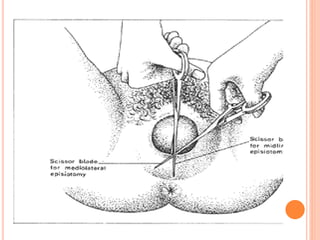
PURPOSE OF EPISIOTOMY:
“A surgical incision of the perineum
usually performed to enlarge the vaginal
opening and assist in childbirth.”
EPISIOTOMY:
The purpose is to increase the diameter of the soft
tissue pelvic outlet, thereby preventing perineal
lacerations, facilitating delivery, and reducing the time
for expulsion of the infant.
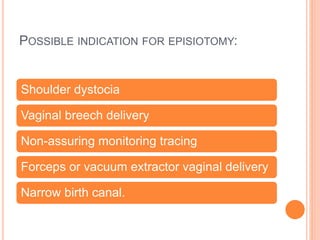
POSSIBLE INDICATION FOR EPISIOTOMY:
Shoulder dystocia
Vaginal breech delivery
Non-assuring monitoring tracing
Forceps or vacuum extractor vaginal delivery
Narrow birth canal.
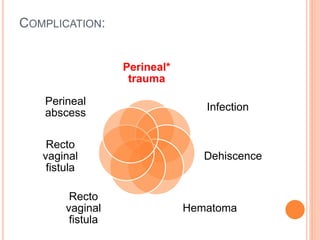
COMPLICATION:
Perineal*
trauma
Infection
Dehiscence
Hematoma
Recto
vaginal
fistula
Recto
vaginal
fistula
Perineal
abscess
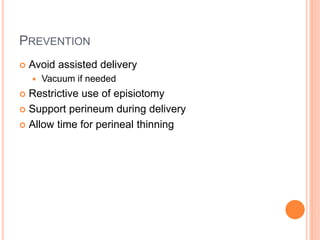
PREVENTION
 Avoid assisted delivery
 Vacuum if needed
 Restrictive use of episiotomy
 Support perineum during delivery
 Allow time for perineal thinning
THANK YOU
By
Muhammad Bilal
Roll no 08-111

Operative obstetrics by Dr muhammad bilal

  • 2.
  • 3.
  • 4.
  • 5.
    Delivery of babyvaginally using an instrument.
  • 6.
    INDICATIONS FOR OVD Noindication is absolute • Prolonged 2nd stage of labor • Fetal compromise • Maternal benefit to shortened 2nd stage Contraindications • Gestation of less than 35 week • Breech presentation
  • 7.
  • 8.
    PREREQUISITES FOR OVD Informed consent  Vertex  Engaged  ≥34 weeks (vacuum delivery)  Fully dilated  Membranes ruptured  Adequate maternal pelvis  Adequate anesthesia  Maternal empty bladder  Backup plan  Ongoing fetal and maternal assessment
  • 9.
    PREREQUISITES FOR OVD Informed consent  Vertex  Engaged  ≥34 weeks (vacuum delivery)  Fully dilated  Membranes ruptured  Adequate maternal pelvis  Adequate anesthesia  Maternal empty bladder  Backup plan  Ongoing fetal and maternal assessment
  • 12.
    INDICATIONS OF FORCEPS DELIVERY •1. Heart disease • 2. Pulmonary compromise or injury • 3. Intrapartum infection • 4. certain neurological conditions • 5. Exhaustion • 6. Prolonged second stage Maternal Indications
  • 13.
    FORCEPS DELIVERY • 1.prolapse of umbilical cord • 2. premature separation of the placenta • 3. non-reassuring fetal heart rate pattern Fetal indications
  • 14.
    B.VACUUM EXTRACTION Principle  Creationof an artificial caput by attaching a traction device by suction to the fetal scalp
  • 16.
    VACUUM EXTRACTION Technique  Centerof the cup should be over the sagittal suture about 3 cm. in front of the posterior fontanelle
  • 17.
    Complication of forceps delivery •Maternal • Lacerations to the vagina , cervix, perineum, and uterus. • Fetal-neonatal: • Soft tissue compression or cranial injury. Complication of vacuum extractor: • Maternal: • Vaginal lacerations • Neonatal: • Cephalohematoma • Scalp laceration • Intra cranial hemorrhages
  • 18.
    CESAREAN DELIVERY  Birthof a fetus through incisions in the abdominal wall (laparotomy) and the uterine wall (hysterectomy).
  • 19.
    THE FIVE MOSTCOMMON CAUSES OF CESAREAN SECTION CS on Request Routine repeat cesareans . Dystocia (non-progressive labor) . Abnormal fetal presentation eg breech , transeverse , cord presentation . Fetal distress .
  • 20.
    CESAREAN DELIVERY Criteria fortiming of repeat cesarean: 1. FHT have been documented for 20 weeks by fetoscope or 30 weeks by doppler. 2. 36 wks. Since a +serum or urine HcG 3. US with CRL at 6-11 wks compatible with 39 wks. 4. US at 12-20 wks compatible with 39 weeks determined by clinical Hx & PE
  • 21.
    Elective caesarian section (Plannedoperation) Advantages are:- Patient with empty stomach and surgeon usually with full breakfast Best anesthetist available at that time Best assistant and nursing staff. Disadvantages are :- If wrong judgment, premature child may be born. Cervix may not be dilated and hence poor drainage of lochia Lower segment is not formed and hence uterine incision in lower part of upper segment. Emergency caesarian section (Unplanned) Working under adverse circumstances:- Patient may be with full stomach and surgeon may be with empty belly Odd working hours either of day or night Anesthetist, assistant and nursing staff may not be of your choice Advantage is :- Mature child as patient is in labor Cervix is open, better drainage of lochia. Lower segment is well formed
  • 22.
    CESAREAN DELIVERY Abdominal Incisions 1.Vertical Incision quickest to make greater chance of dehiscence 2. Pfannenstiel Incision cosmetically better, stronger less chance of dehiscence exposure not as good
  • 23.
    CESAREAN DELIVERY Types ofuterine incisions 1. Classical vertical incision into the body of uterus Indications: a. Lower segment cannot be exposed b. transverse lie c. placenta previa, anteriorly located d. Lower segment not formed
  • 24.
    ABDOMINAL OPERATIONS: CESAREAN DELIVERY 2.Low Segment Transverse  easier to repair  located at a site least likely to rupture in a subsequent pregnancy  Does not promote adherence of bowel or omentum to the incisional line
  • 25.
  • 26.
    COMPLICATIONS •Bowel damage •U Tdamage •Placenta previa •hemorrhage Intra operative
  • 27.
    COMPLICATIONS(CONTINUED..) • 1.infection • 2.endometriosis •3. embolism • 4.psychological Post oprative
  • 28.
    PURPOSE OF EPISIOTOMY: “Asurgical incision of the perineum usually performed to enlarge the vaginal opening and assist in childbirth.” EPISIOTOMY: The purpose is to increase the diameter of the soft tissue pelvic outlet, thereby preventing perineal lacerations, facilitating delivery, and reducing the time for expulsion of the infant.
  • 30.
    POSSIBLE INDICATION FOREPISIOTOMY: Shoulder dystocia Vaginal breech delivery Non-assuring monitoring tracing Forceps or vacuum extractor vaginal delivery Narrow birth canal.
  • 31.
  • 33.
    PREVENTION  Avoid assisteddelivery  Vacuum if needed  Restrictive use of episiotomy  Support perineum during delivery  Allow time for perineal thinning
  • 34.