
Open Courses and Informal Learning in a Web 2.0 world:
                A research agenda


                         Stian Håklev, OISE/University of Toronto
International Conference of Educational Technology and Computer, Changchun, July 15, 2011
                          July 11, 2011 - Creative Commons BY
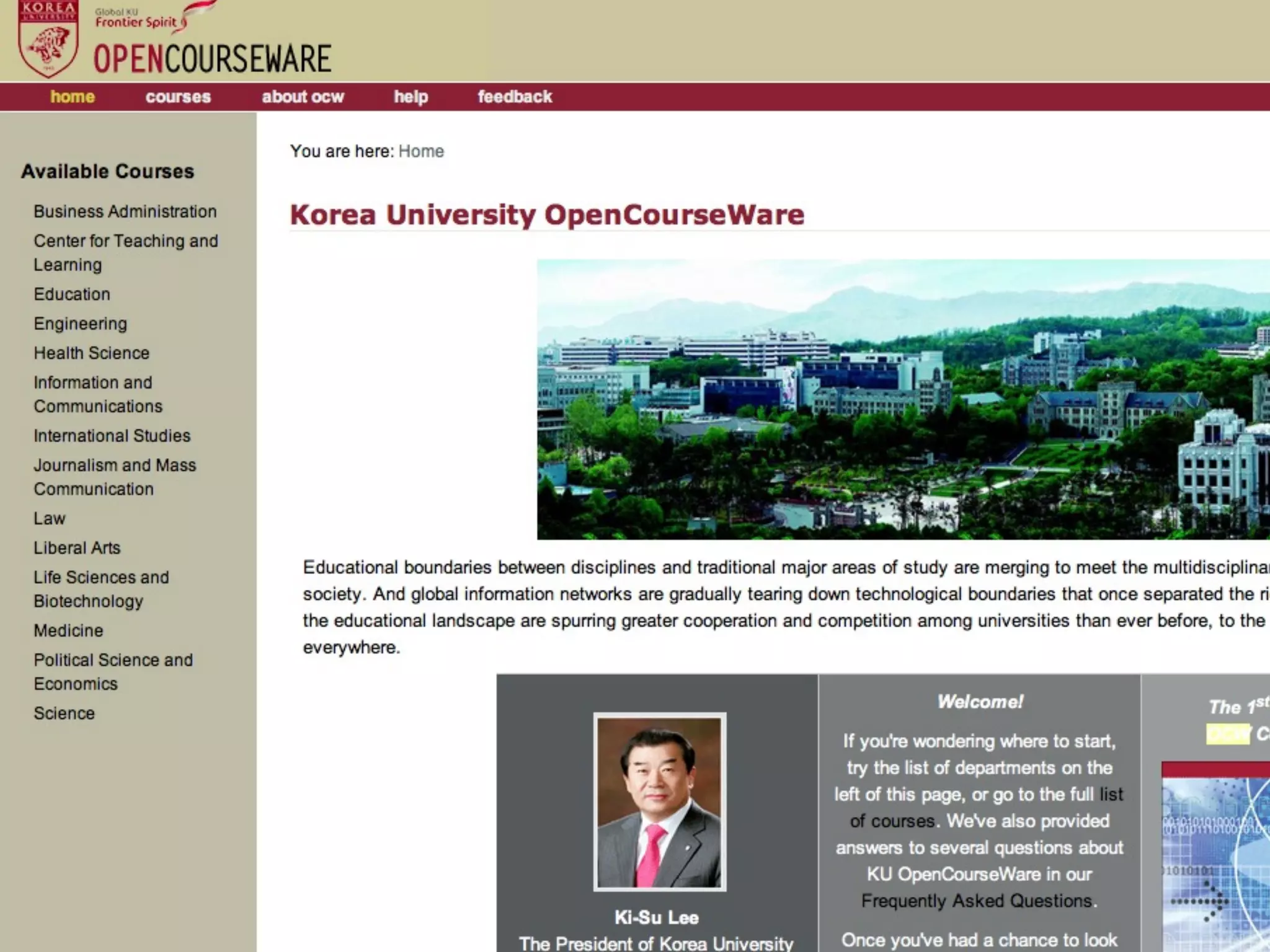
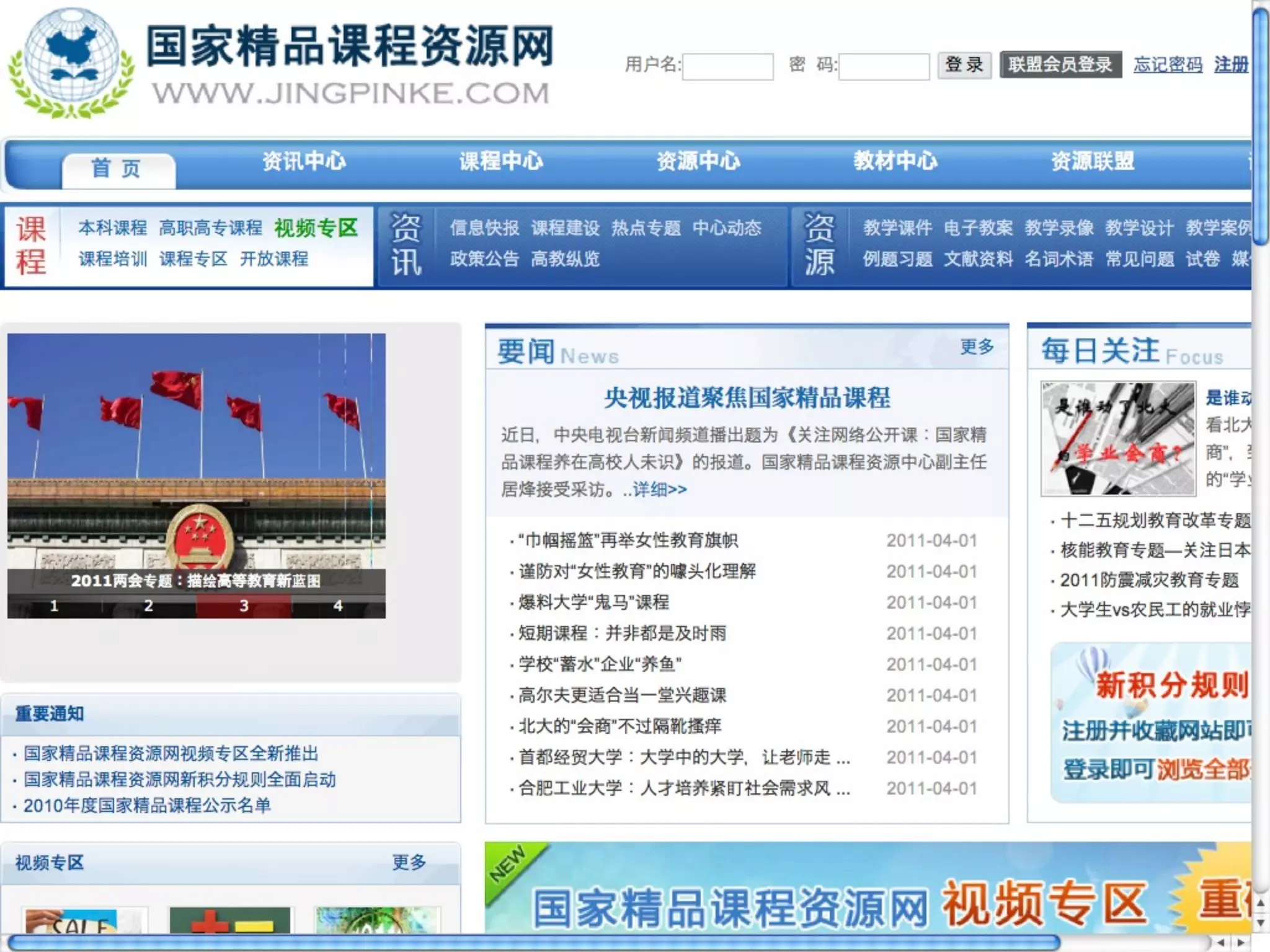
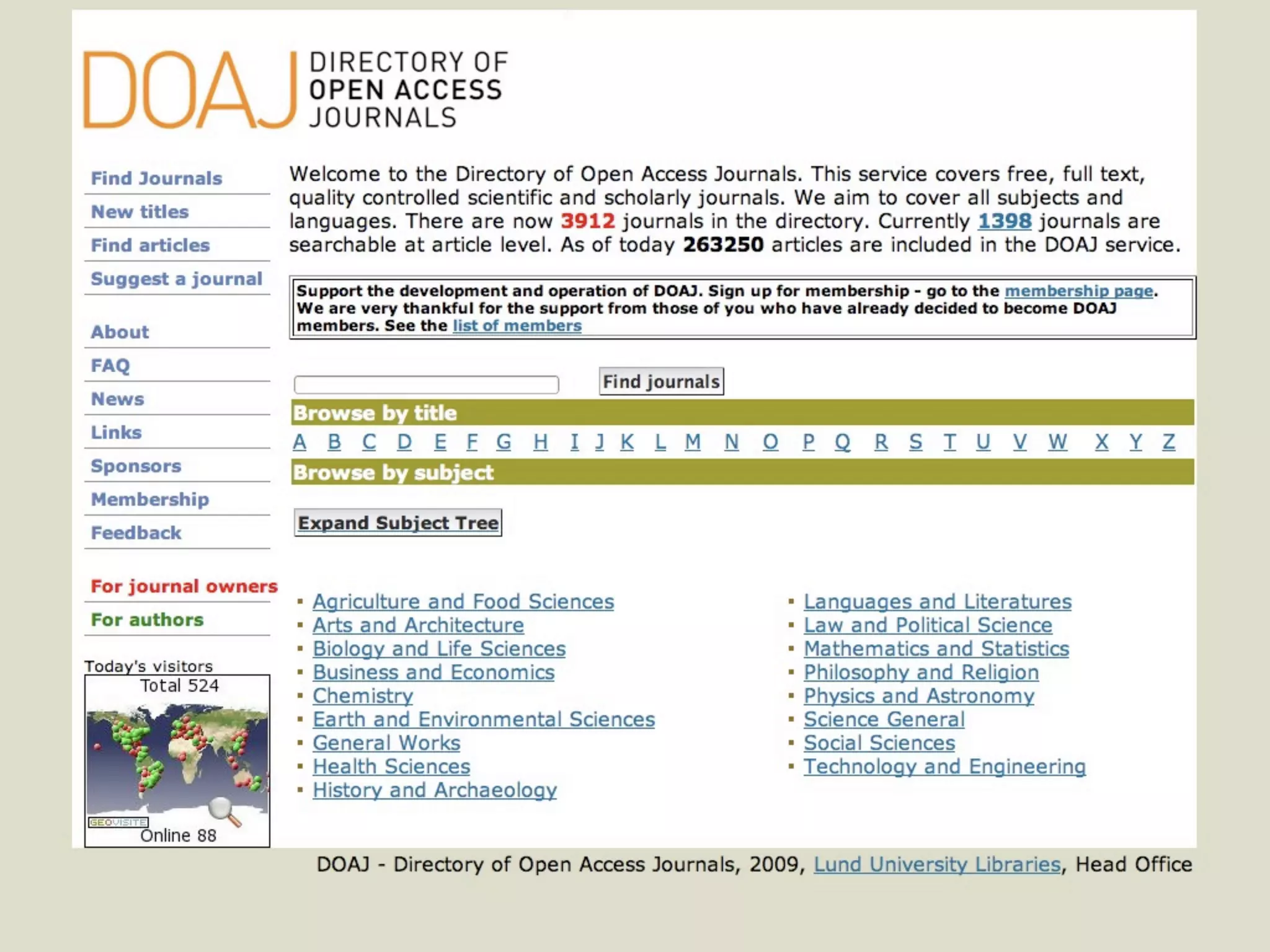
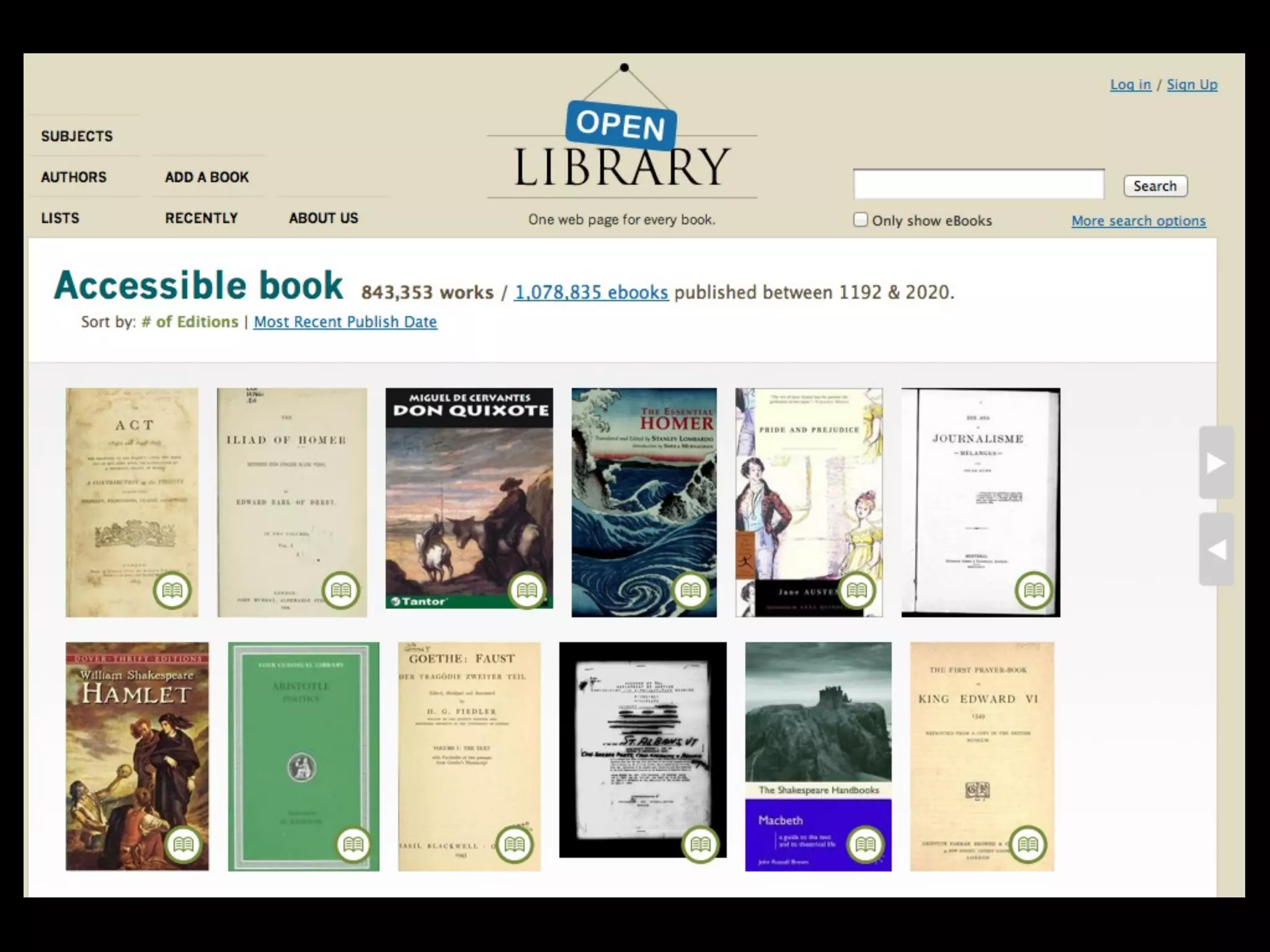
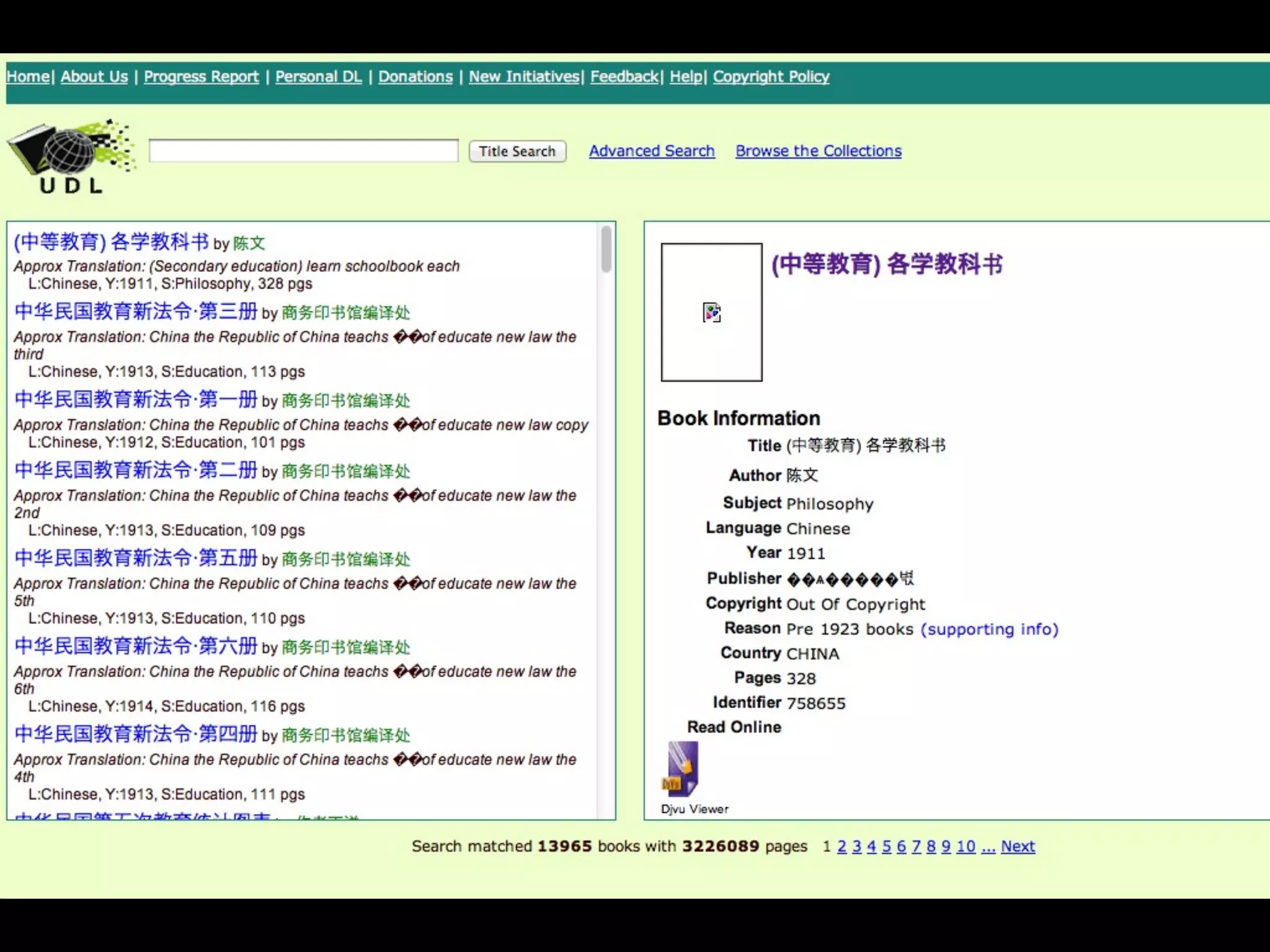
An abundance of resources
3
4
doaj


 5
Still many questions about production, formats,
                   metadata, etc.

But more importantly, how do self-learners use this
 to learn? And how can we support their learning?
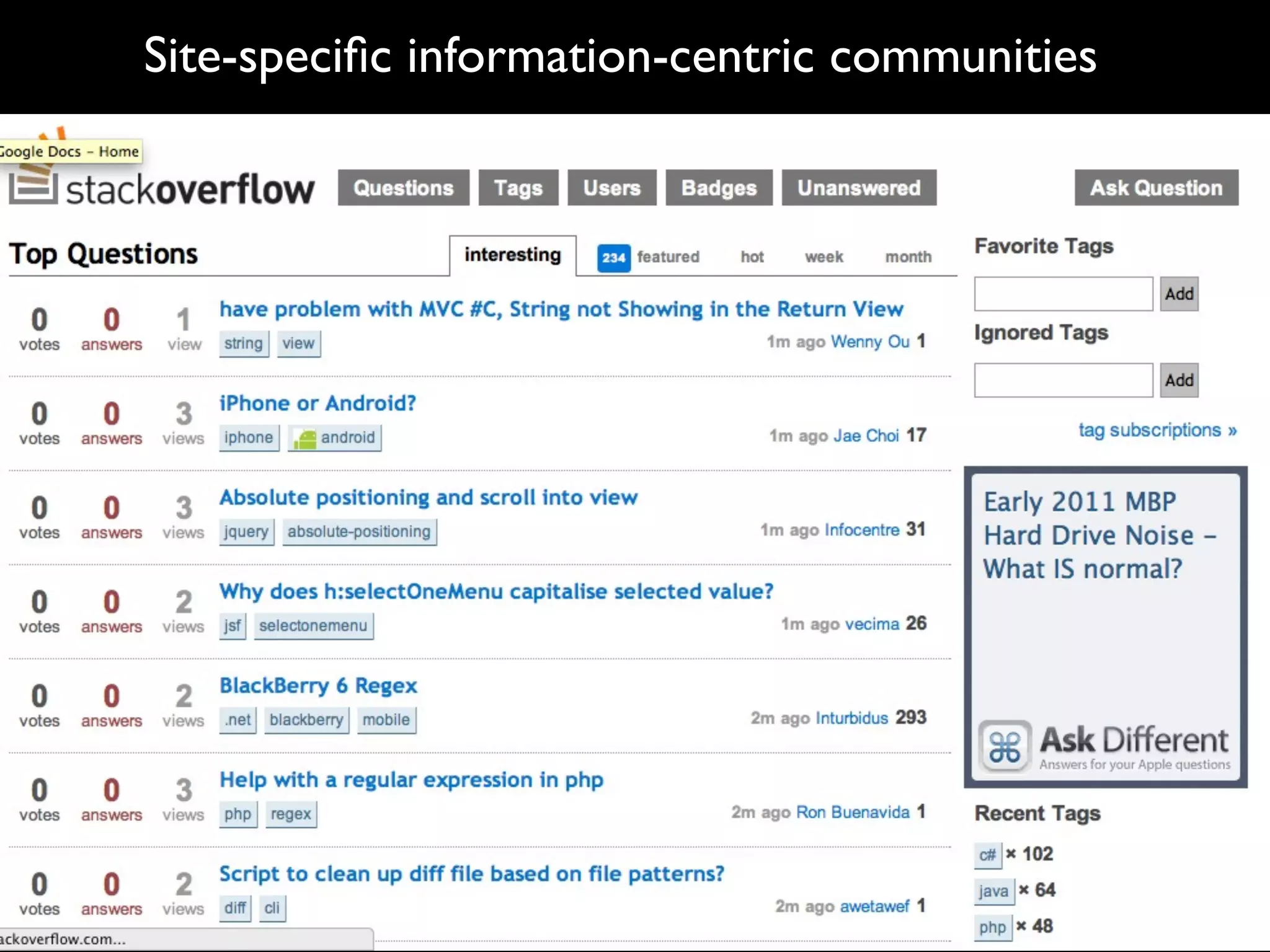
Site-specific information-centric communities
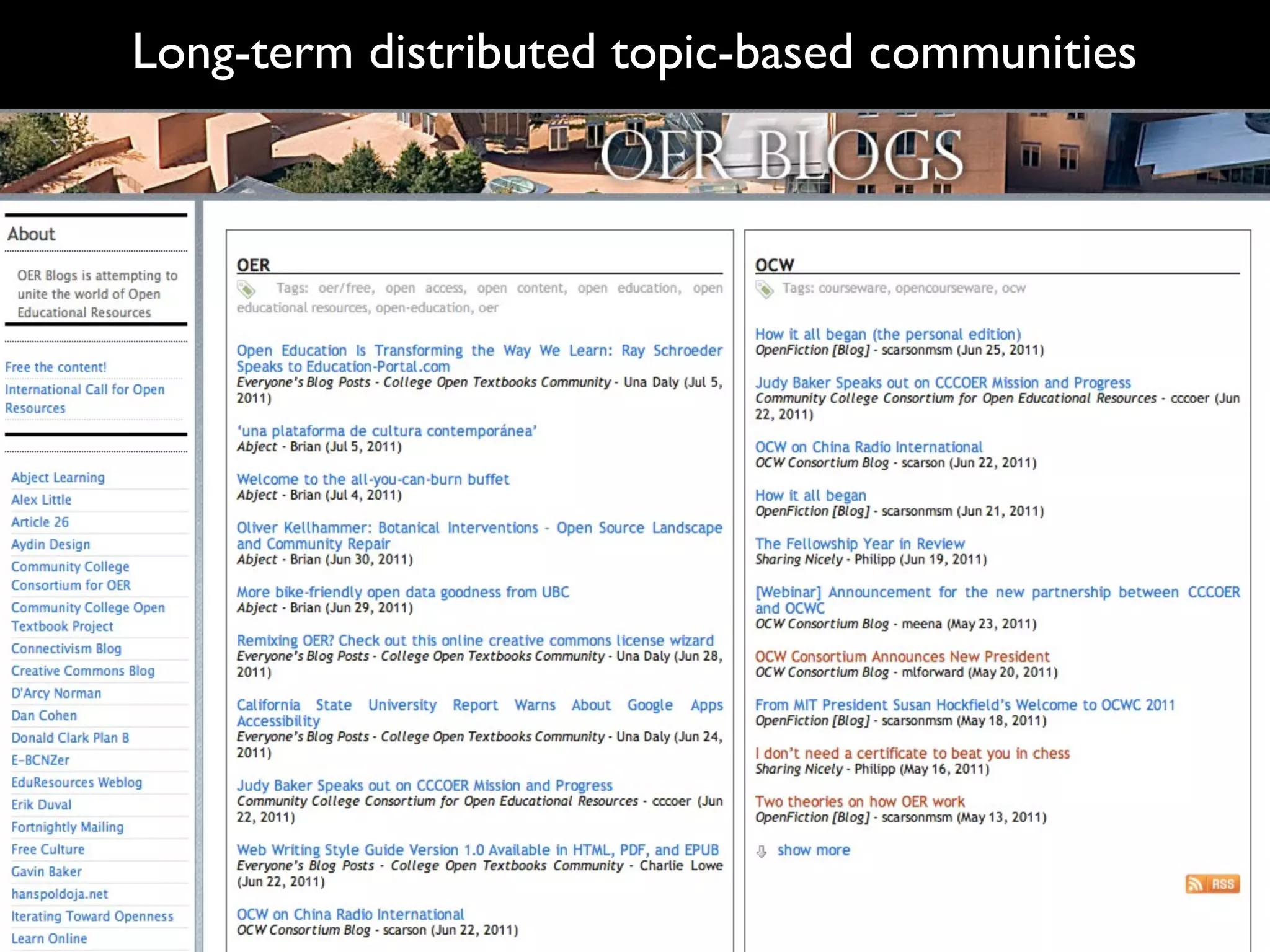
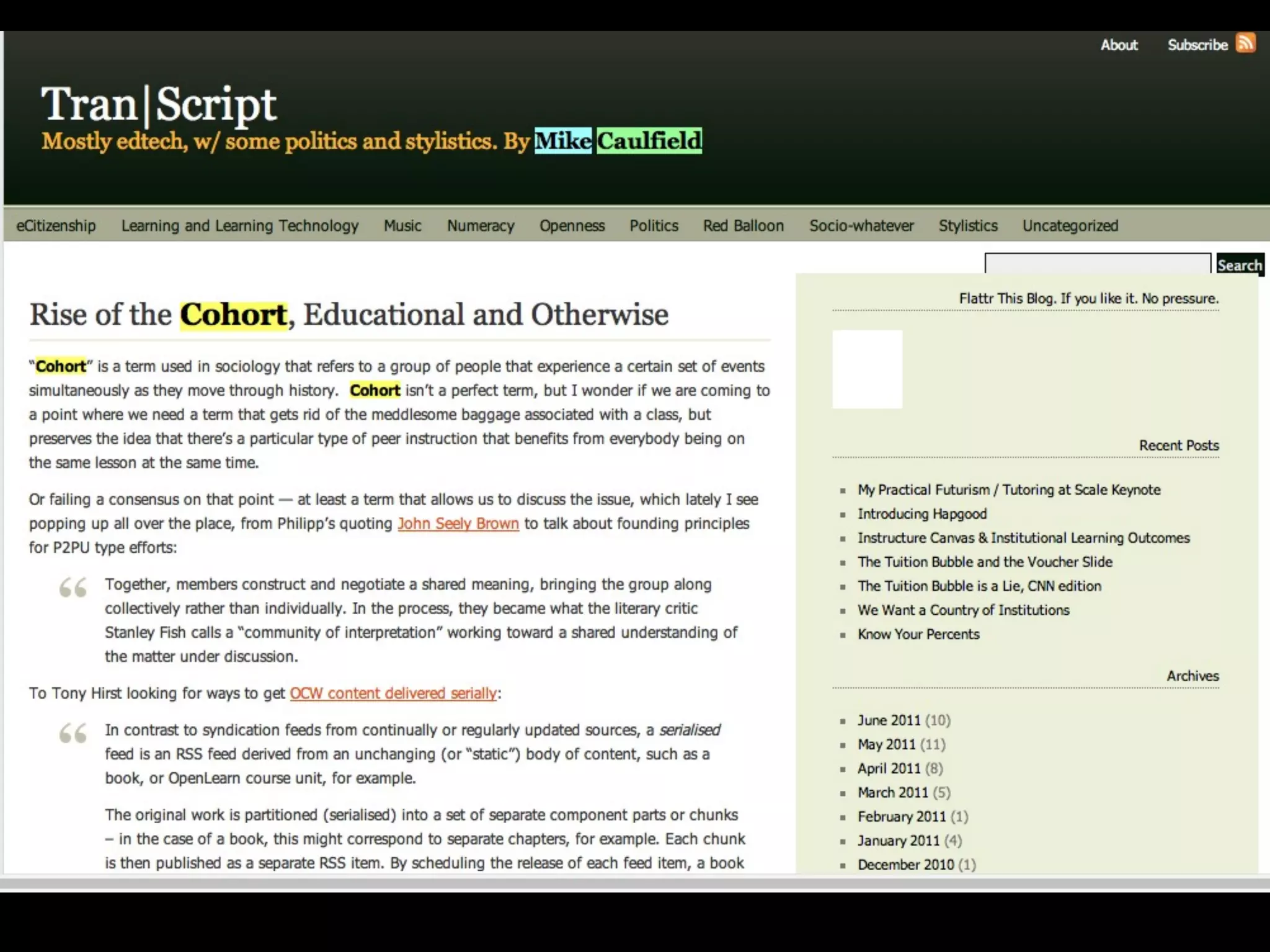
Long-term distributed topic-based communities
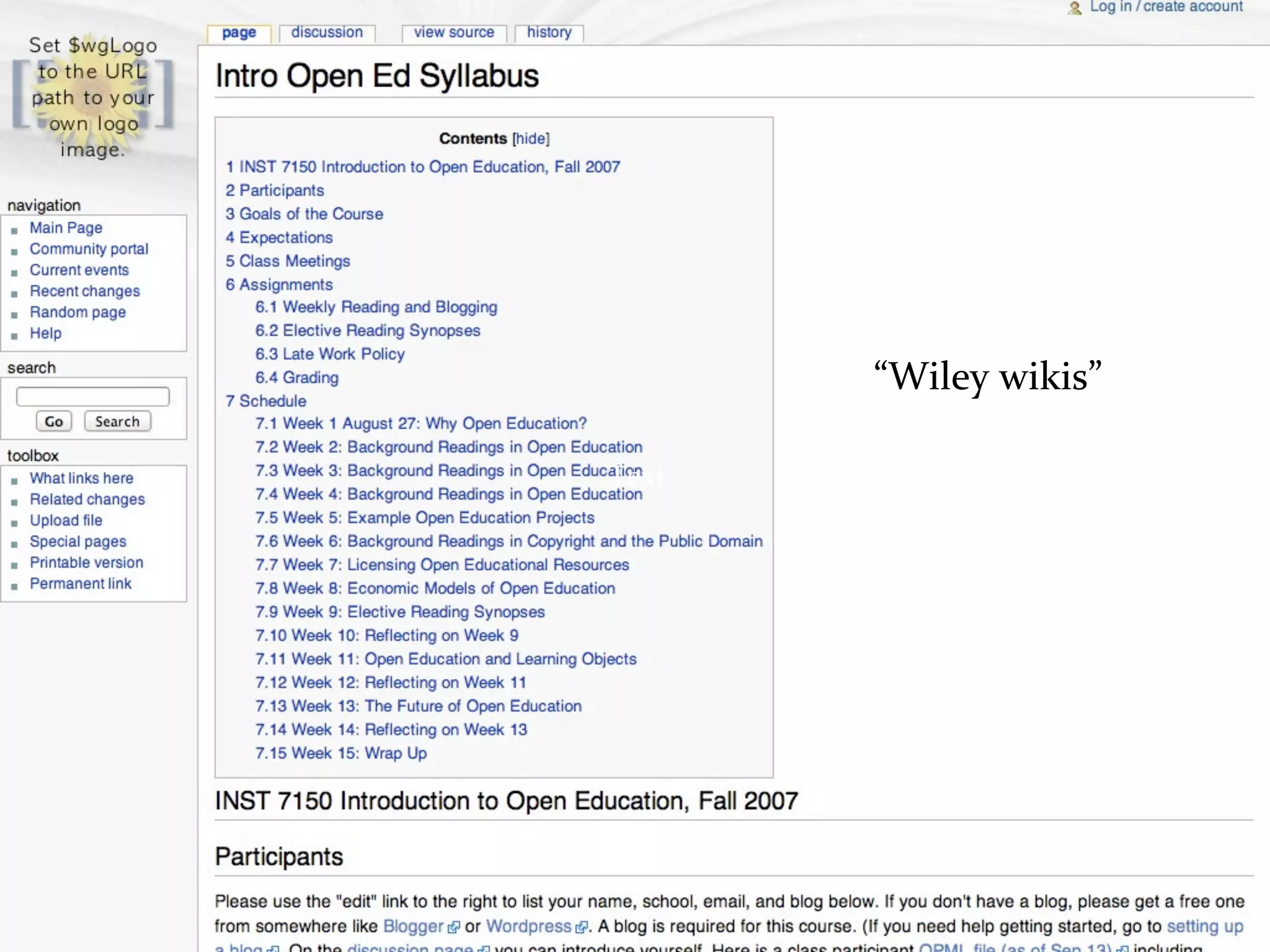
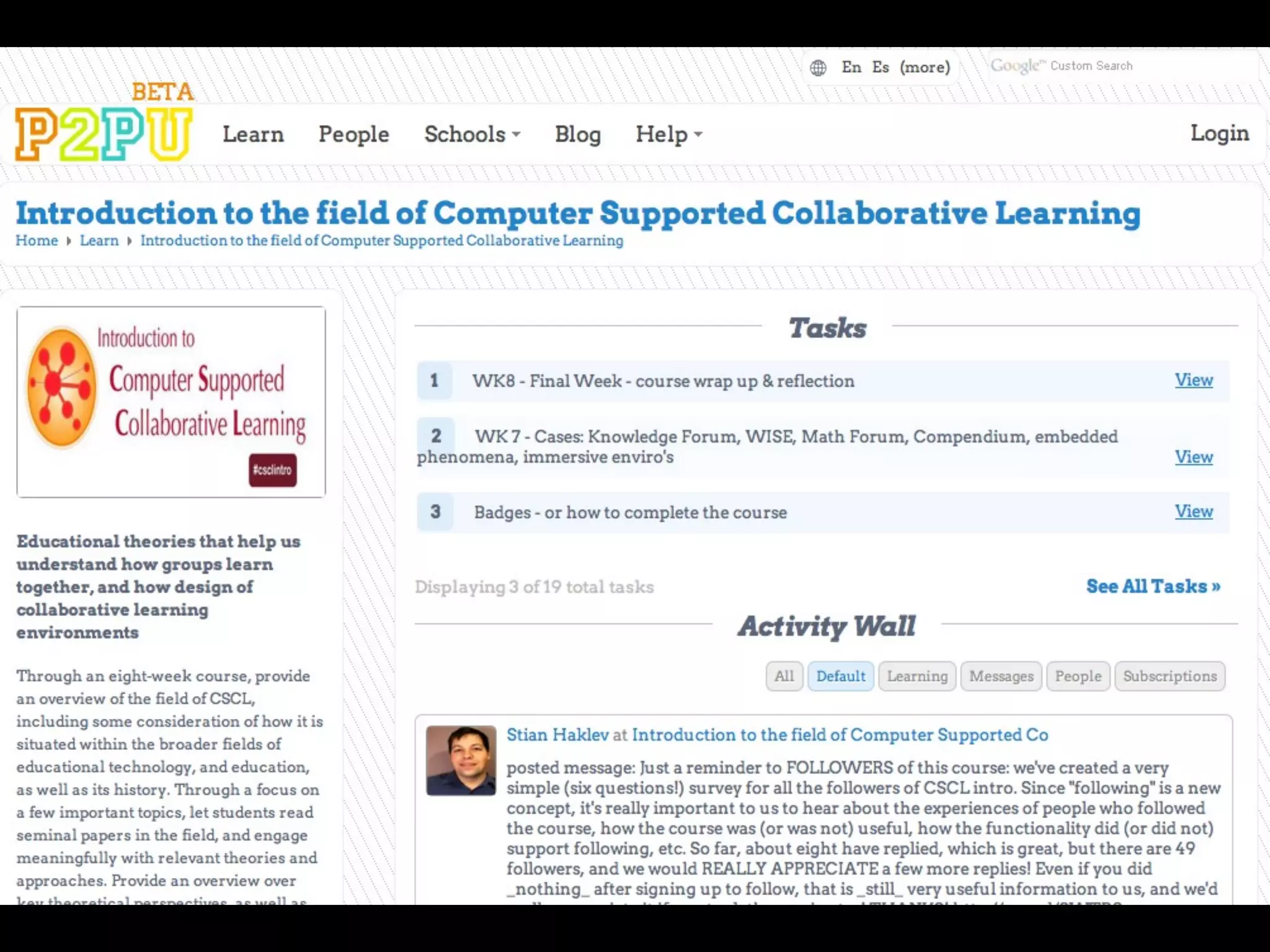
intro	
  open	
  ed	
  I


                      “Wiley	
  wikis”

          Text


           12
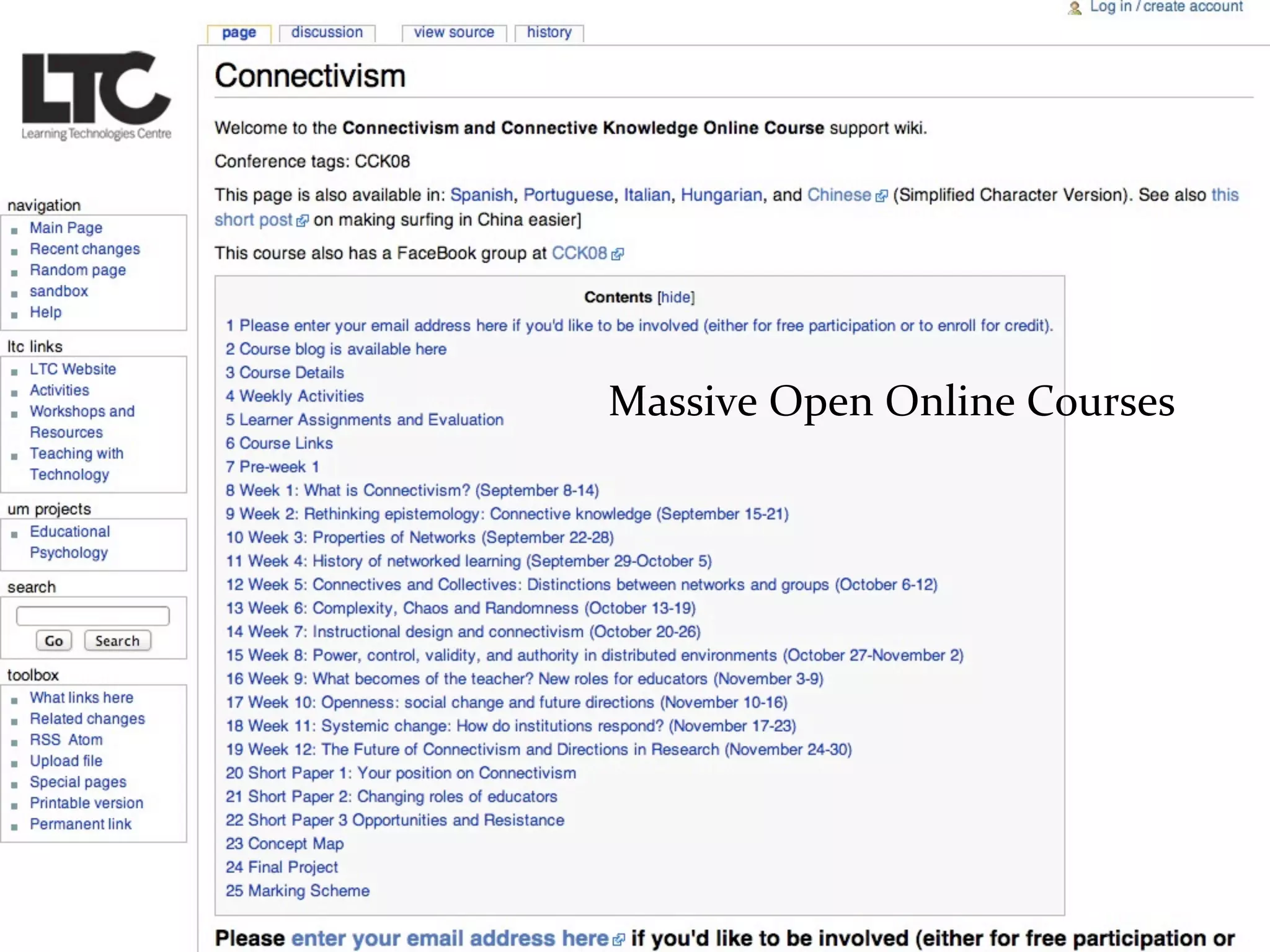
connnectivism	
  cour


         Massive	
  Open	
  Online	
  Courses


          13
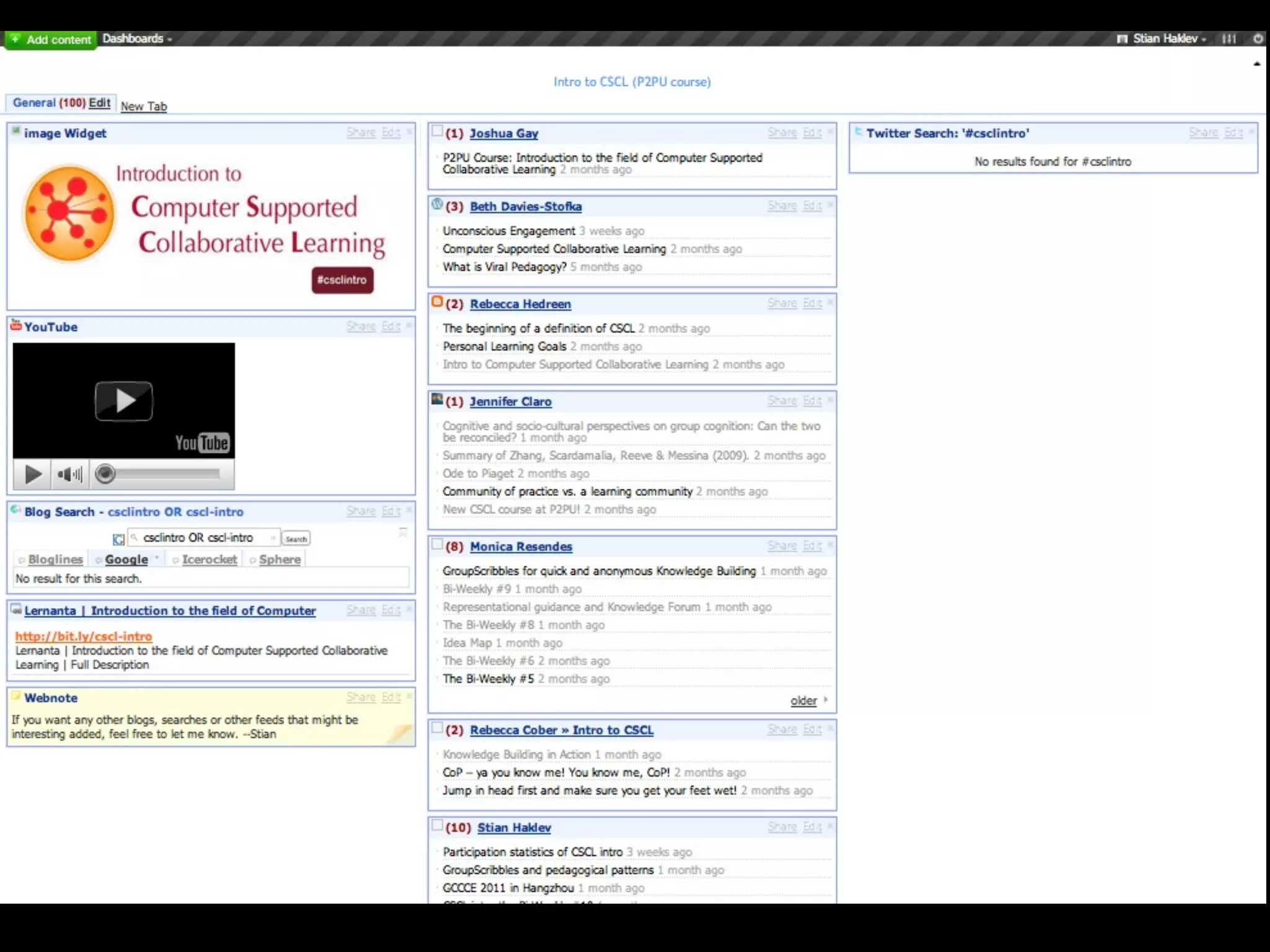
Interesting issues related to this course
Time spent on meta-issues, and role of
    instructors in an open course
Dimensions of course “openness”


transparency (people can see what we write)
Dimensions of course “openness”


transparency (people can see what we write)
no grades/coercion
Dimensions of course “openness”


transparency (people can see what we write)
no grades/coercion
no certification/assessment
Dimensions of course “openness”


transparency (people can see what we write)
no grades/coercion
no certification/assessment
less credibility/authority of instructors
Dimensions of course “openness”


transparency (people can see what we write)
no grades/coercion
no certification/assessment
less credibility/authority of instructors
instructors have less training/knowledge of subject area
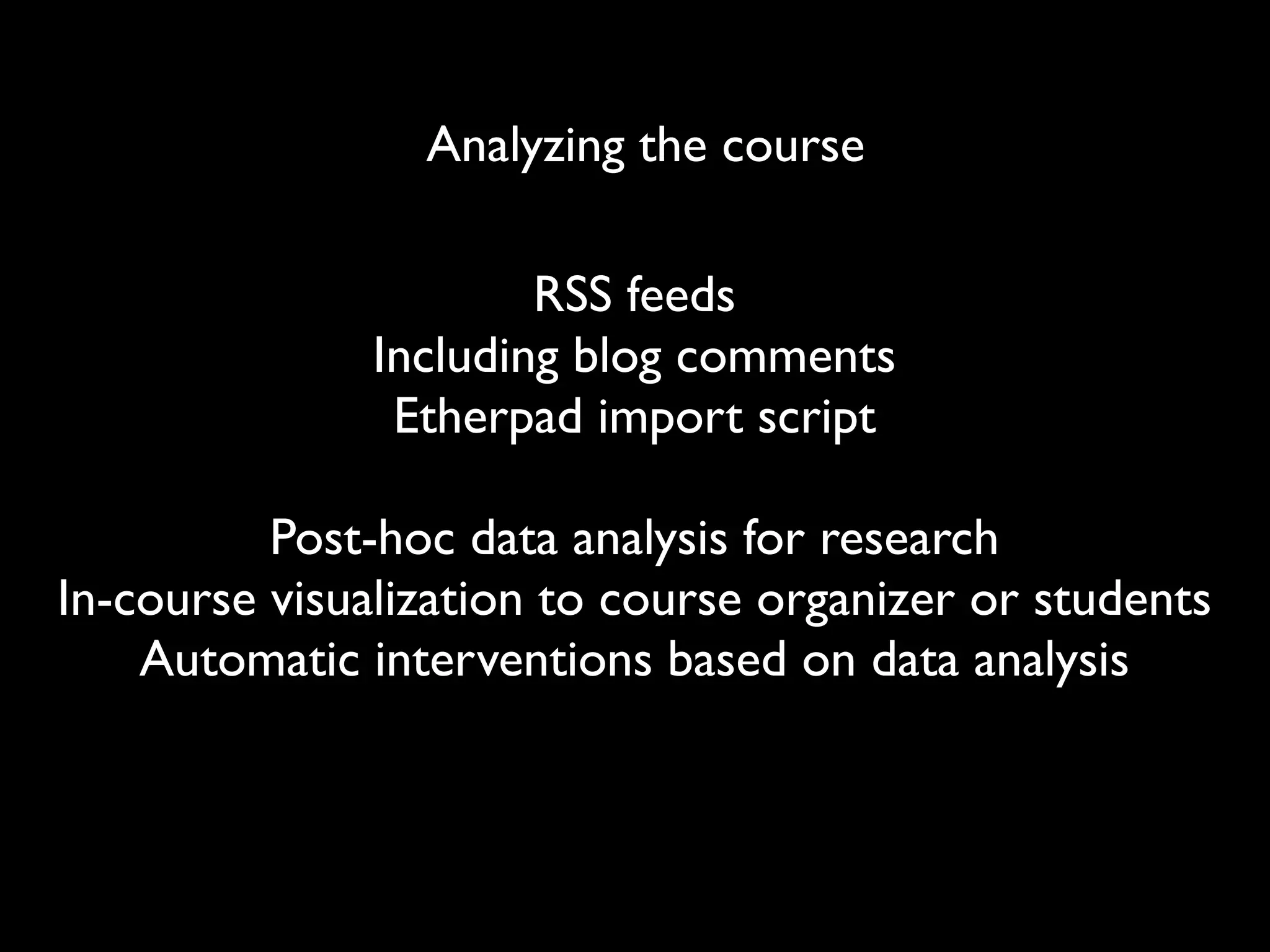
Analyzing the course


    RSS feeds
Analyzing the course


        RSS feeds
Including blog comments
Analyzing the course


        RSS feeds
Including blog comments
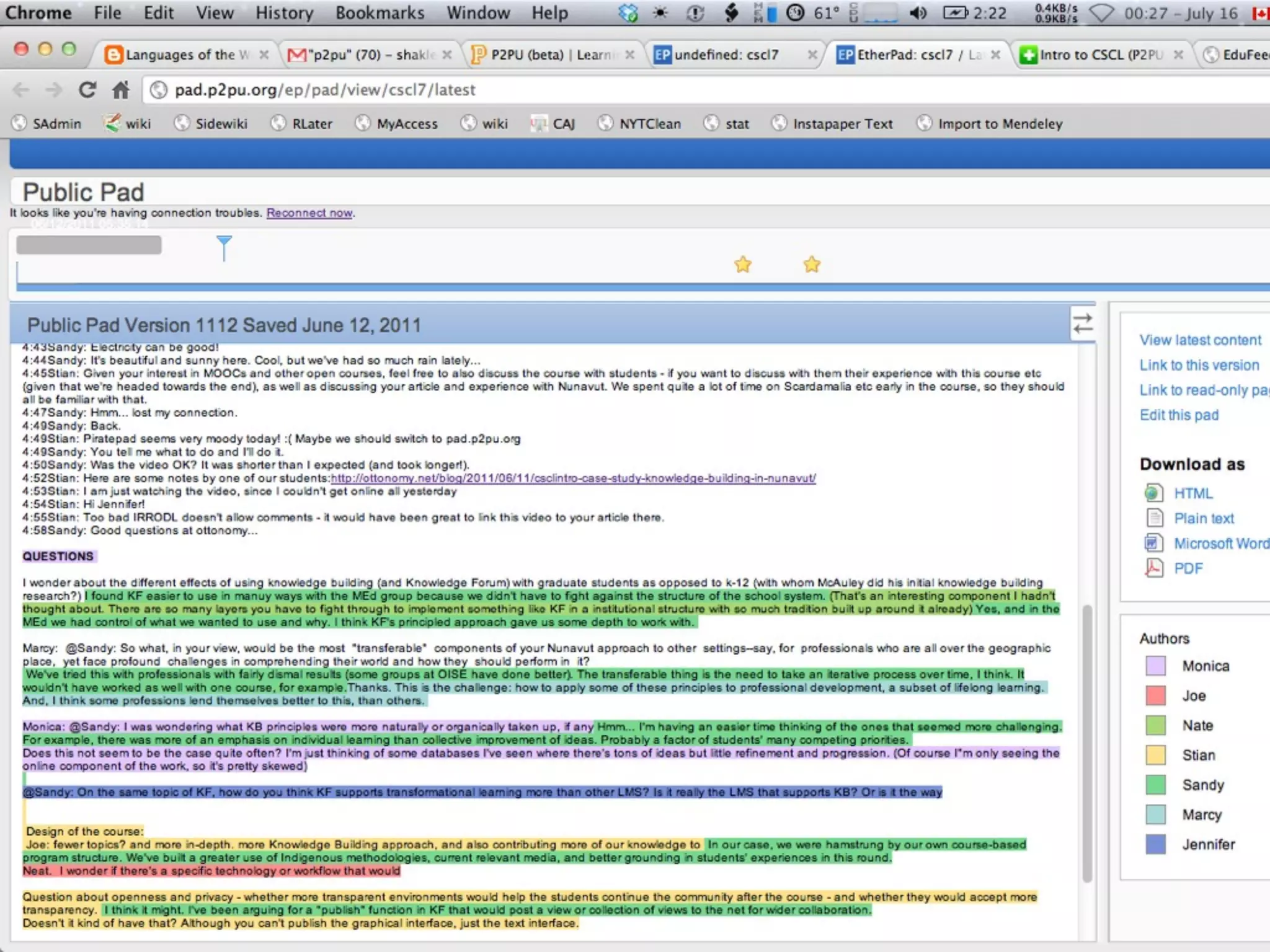
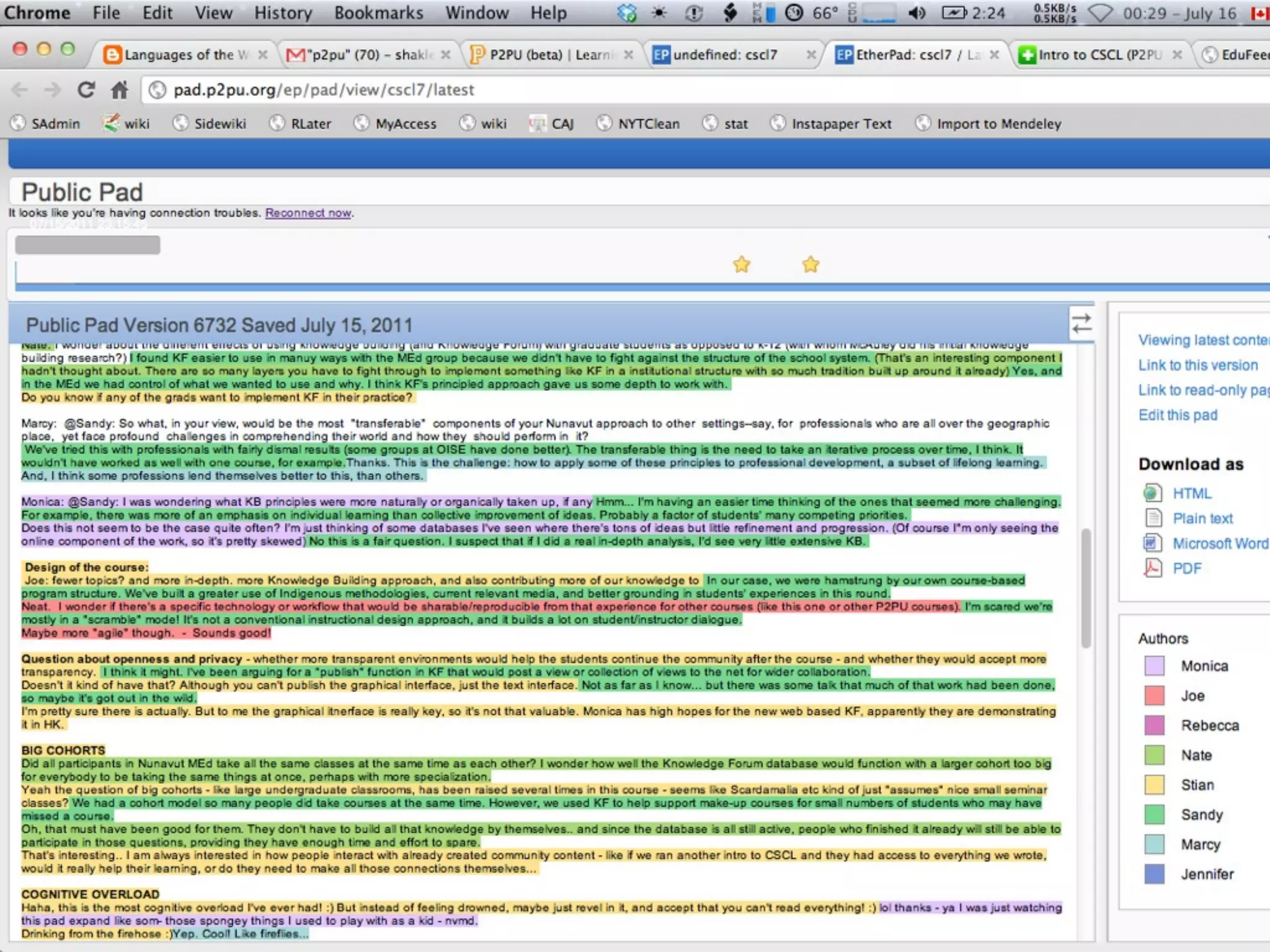
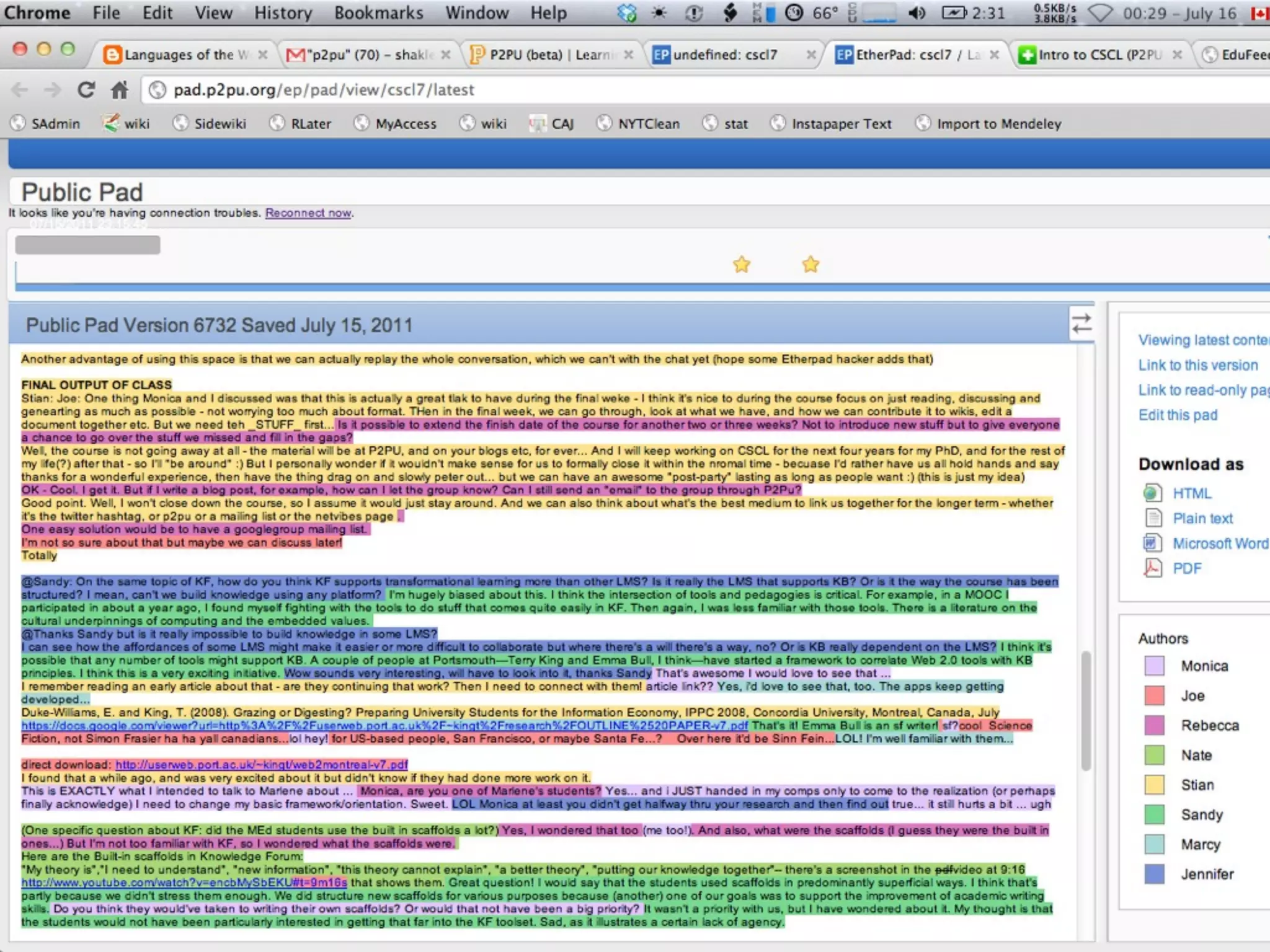
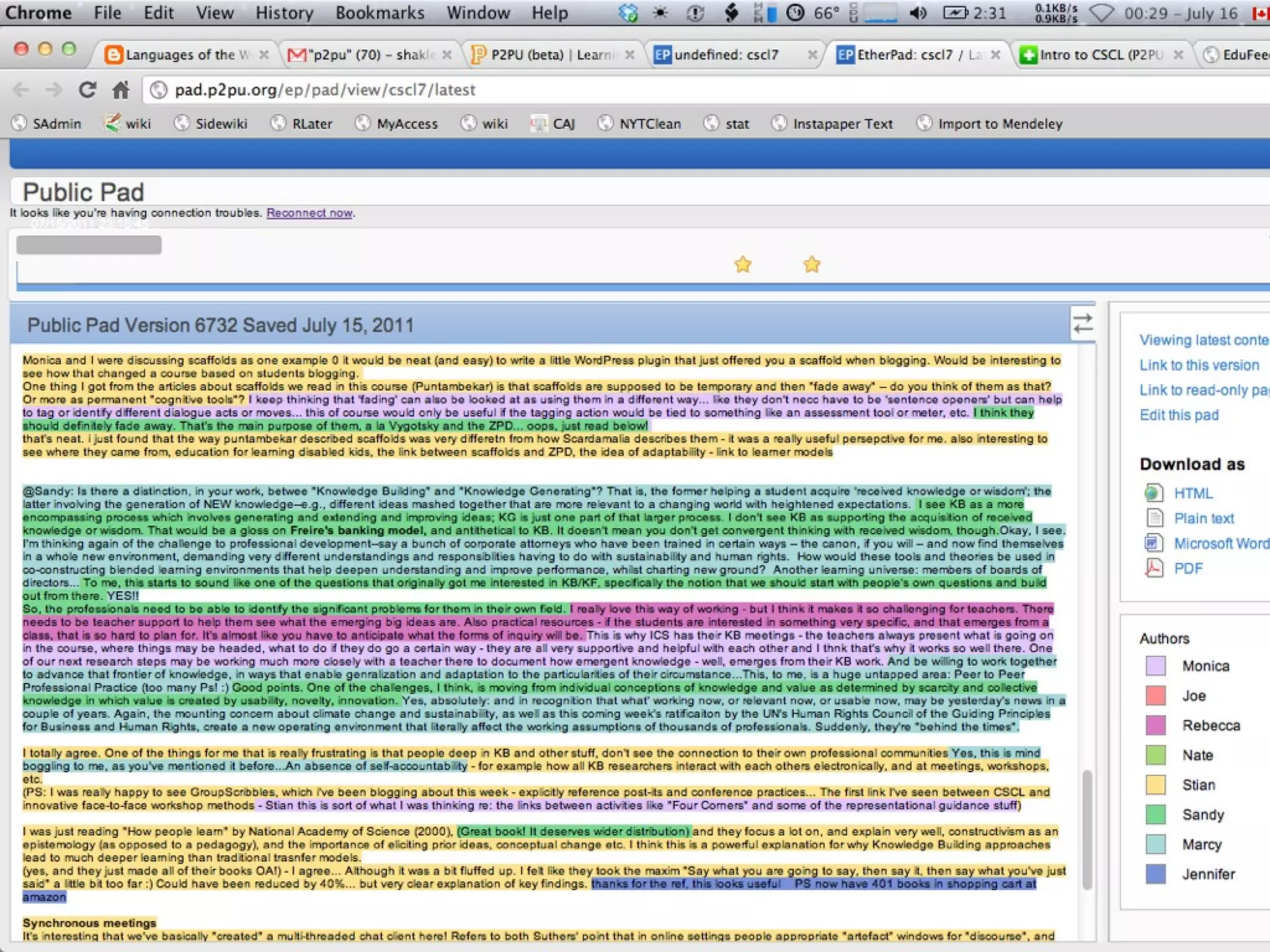
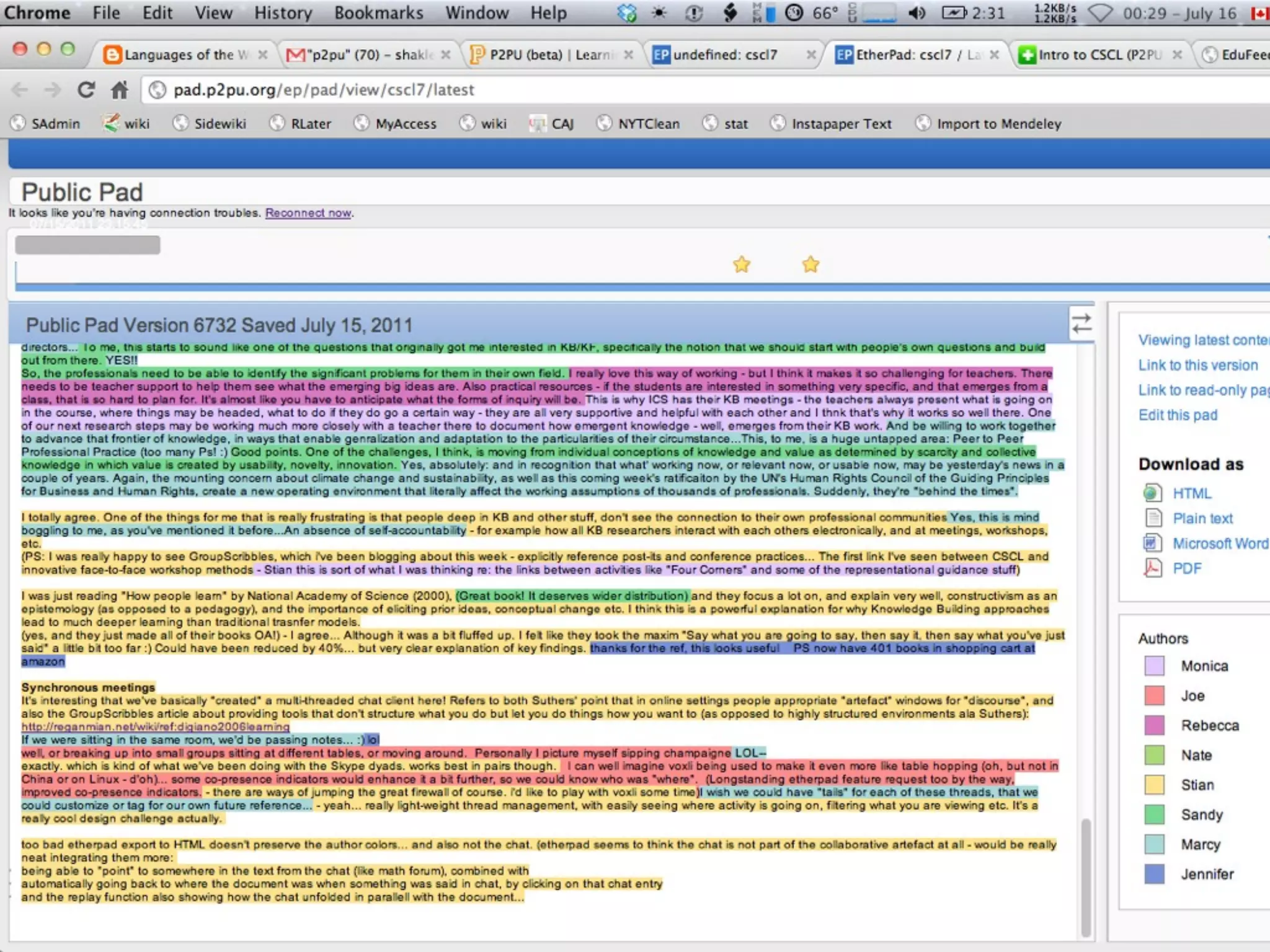
 Etherpad import script
Analyzing the course


            RSS feeds
    Including blog comments
     Etherpad import script

Post-hoc data analysis for research
Analyzing the course


                       RSS feeds
               Including blog comments
                Etherpad import script

          Post-hoc data analysis for research
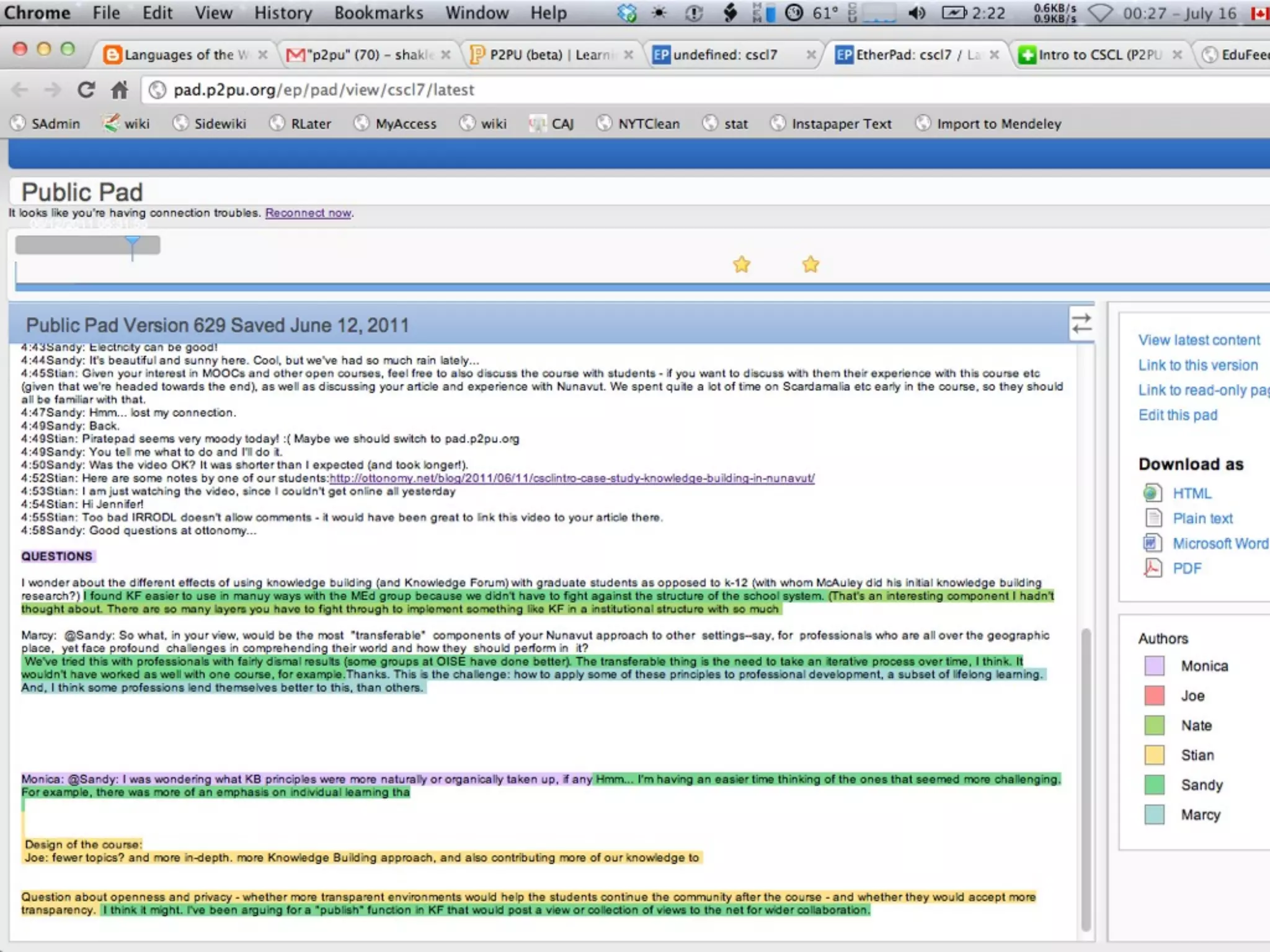
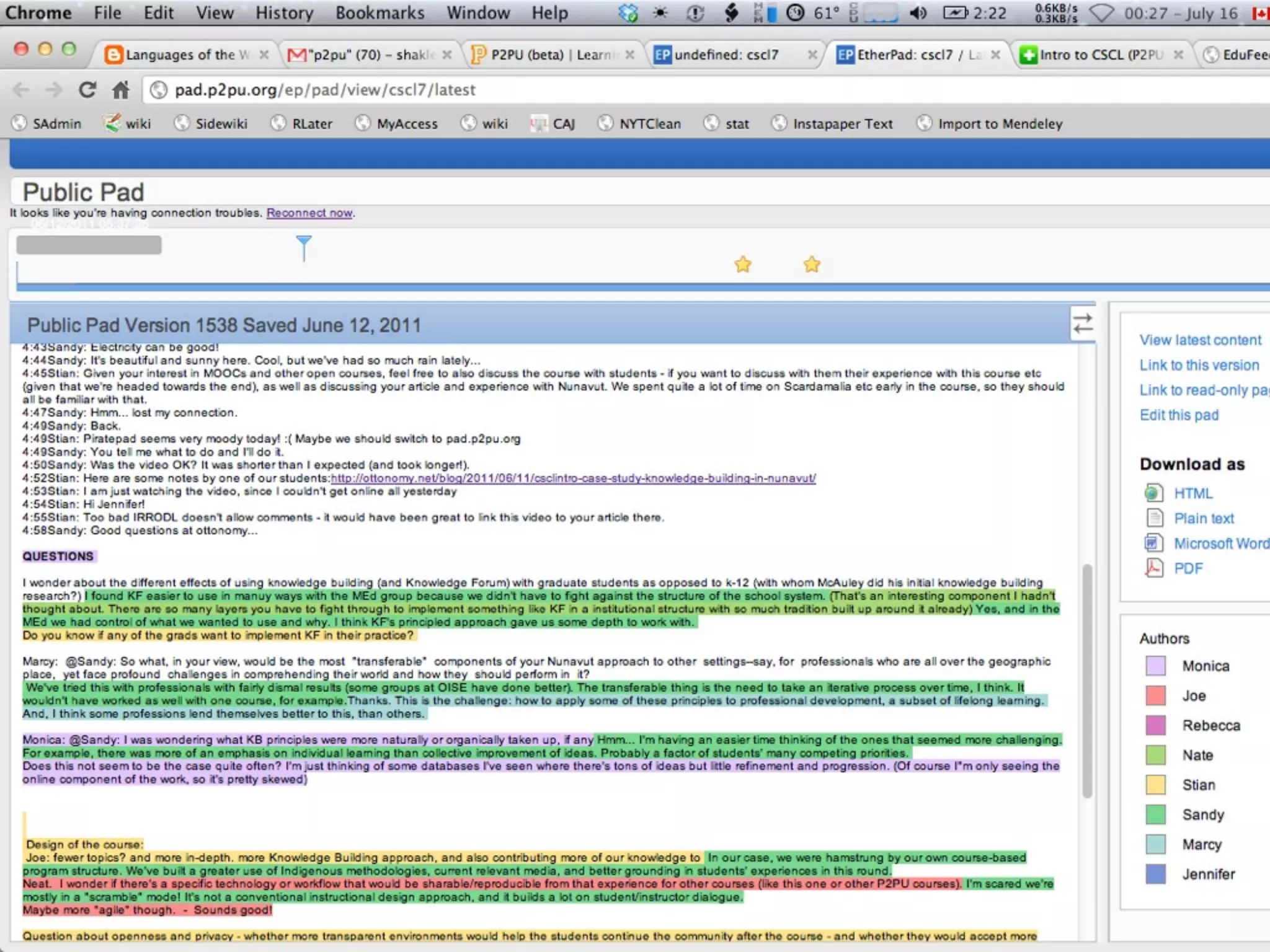
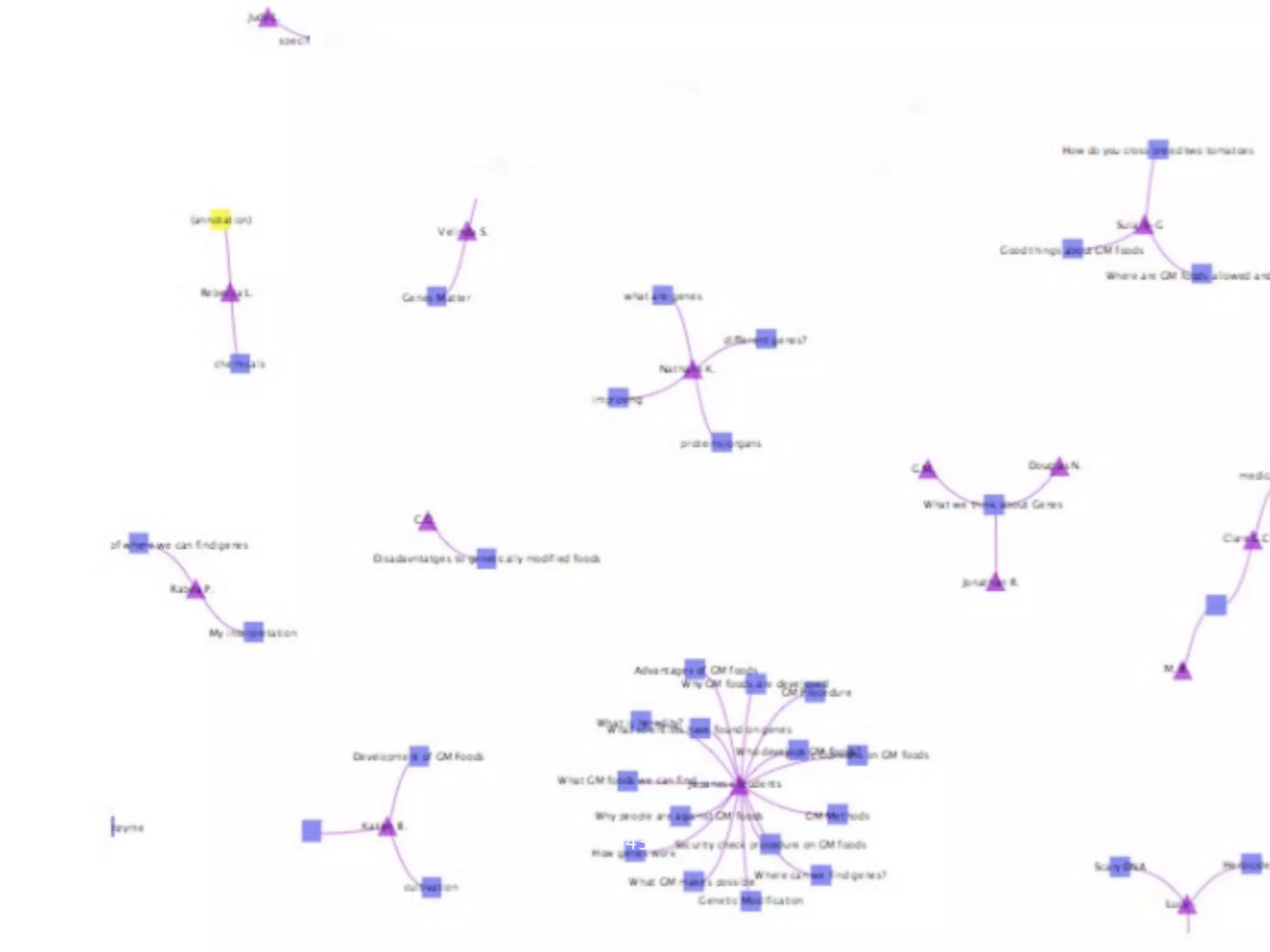
In-course visualization to course organizer or students
35
43
36


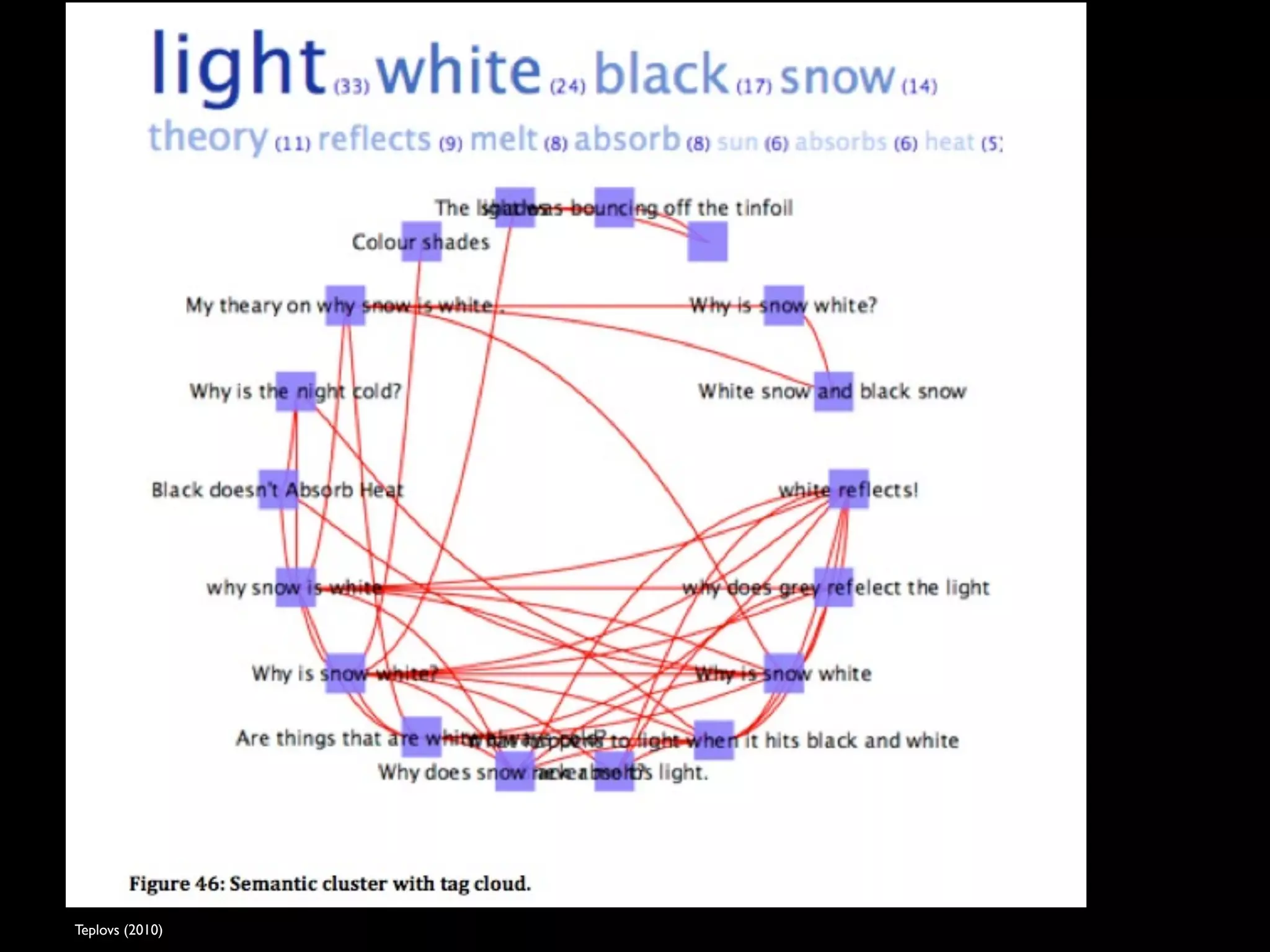
Teplovs (2010)
Analyzing the course

                       RSS feeds
               Including blog comments
                Etherpad import script

          Post-hoc data analysis for research
In-course visualization to course organizer or students
    Automatic interventions based on data analysis
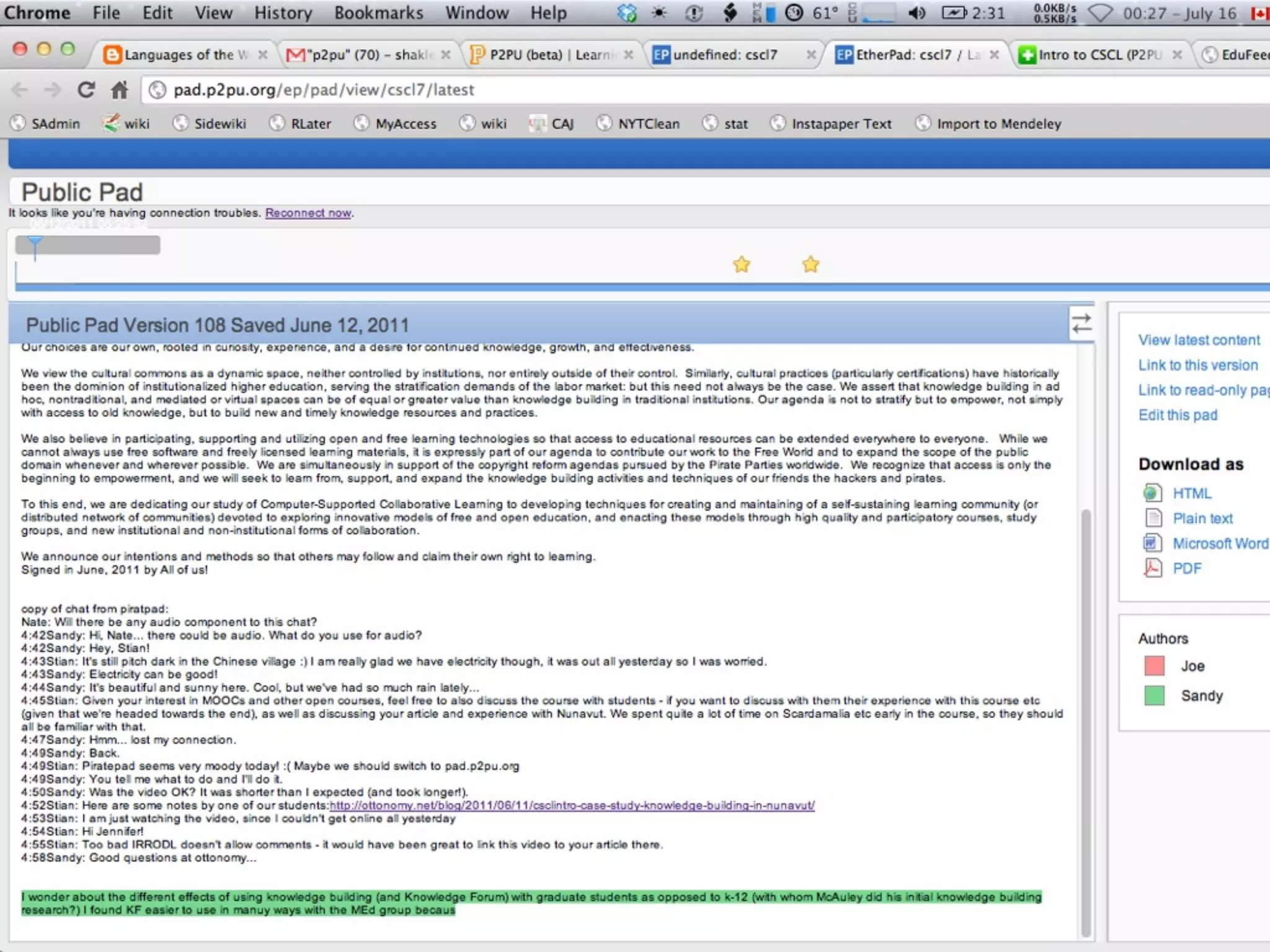
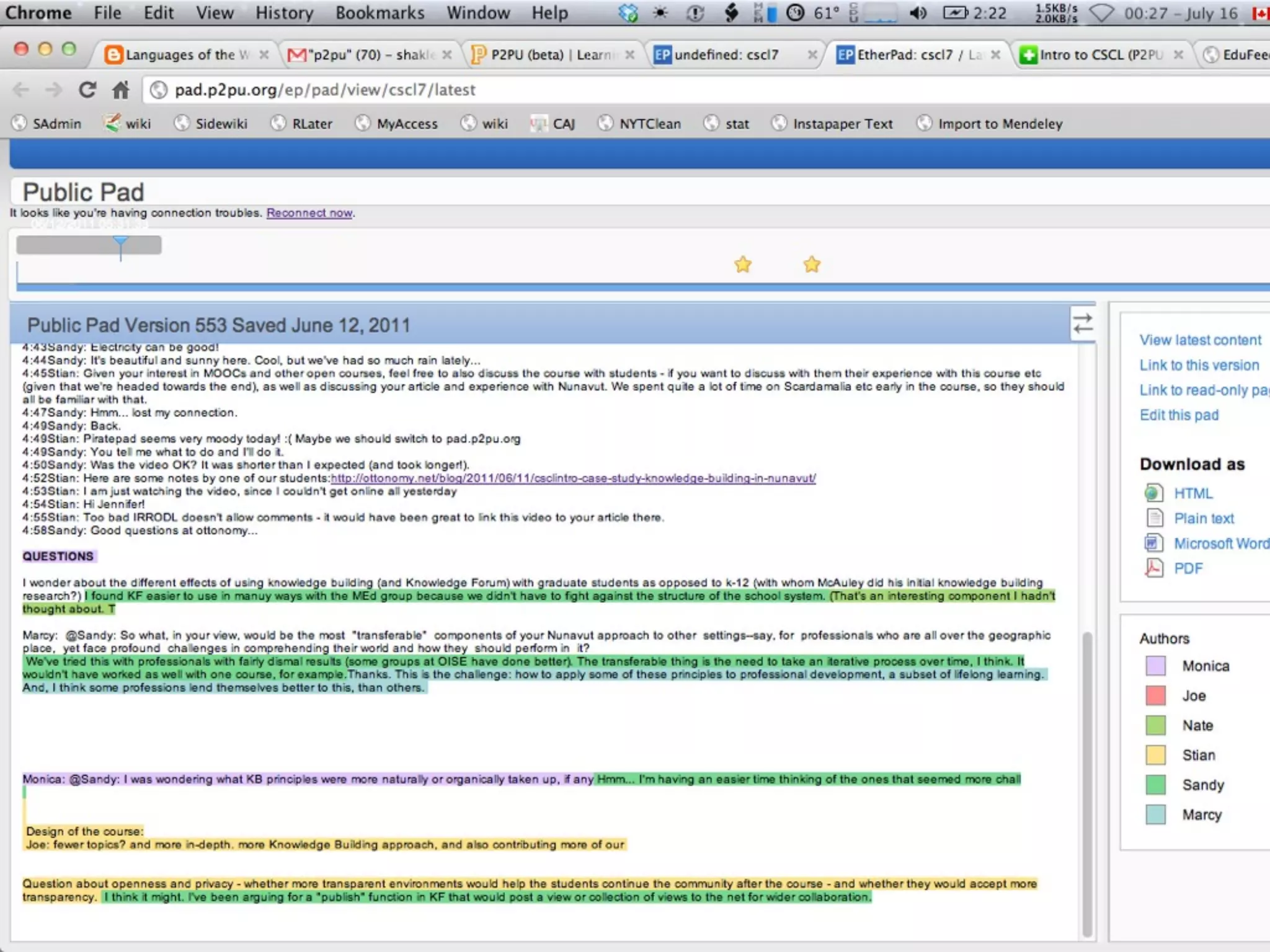
Two models of a course

    stimulus-response vs.
divergence-convergence cycle

      improvable ideas
Stimulus,
    response,
    stimulus,
    response,
        ...,
end of the course
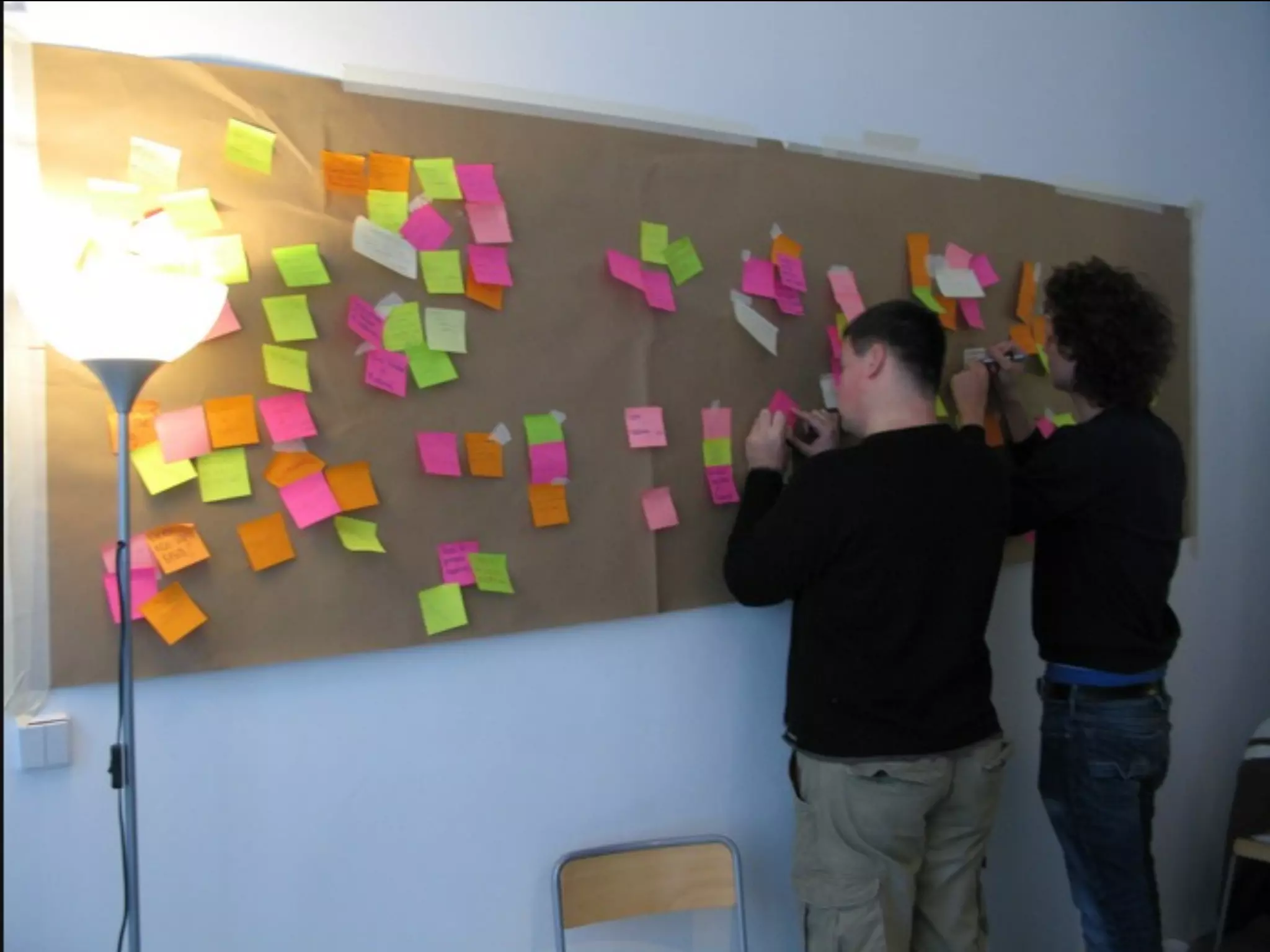
Cycle of divergence and
     convergence +
     final product -
representation that can
 be shared with others
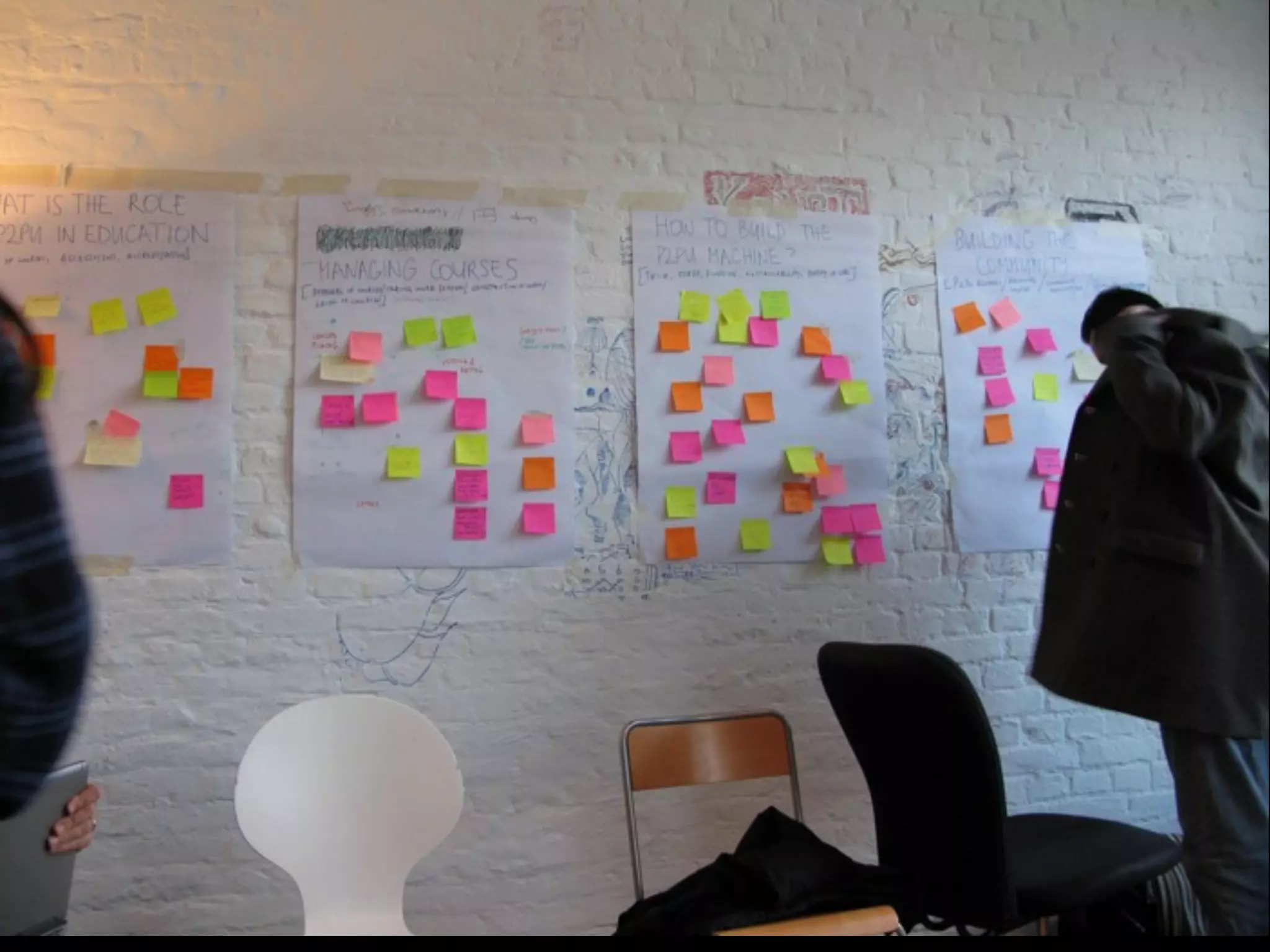
Ideas are not fixed in
one spot - affords emergent
understanding of categories,
       connections
Ideas are not fixed in
one spot - affords emergent
understanding of categories,
       connections

 Always have a shared up-
 to-date representation of
the “state of the knowledge
  of the group” - enables
      knowledge talks
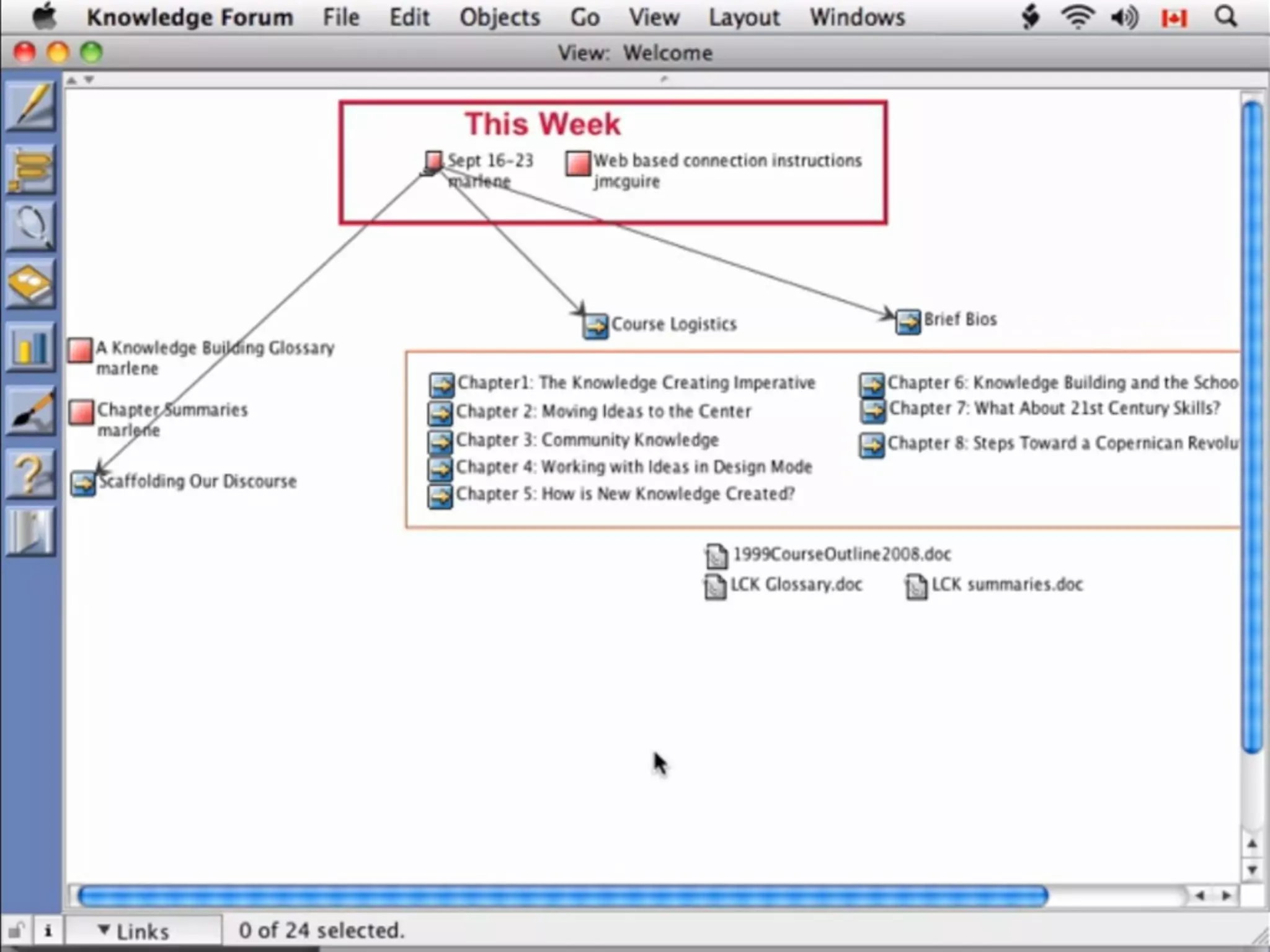
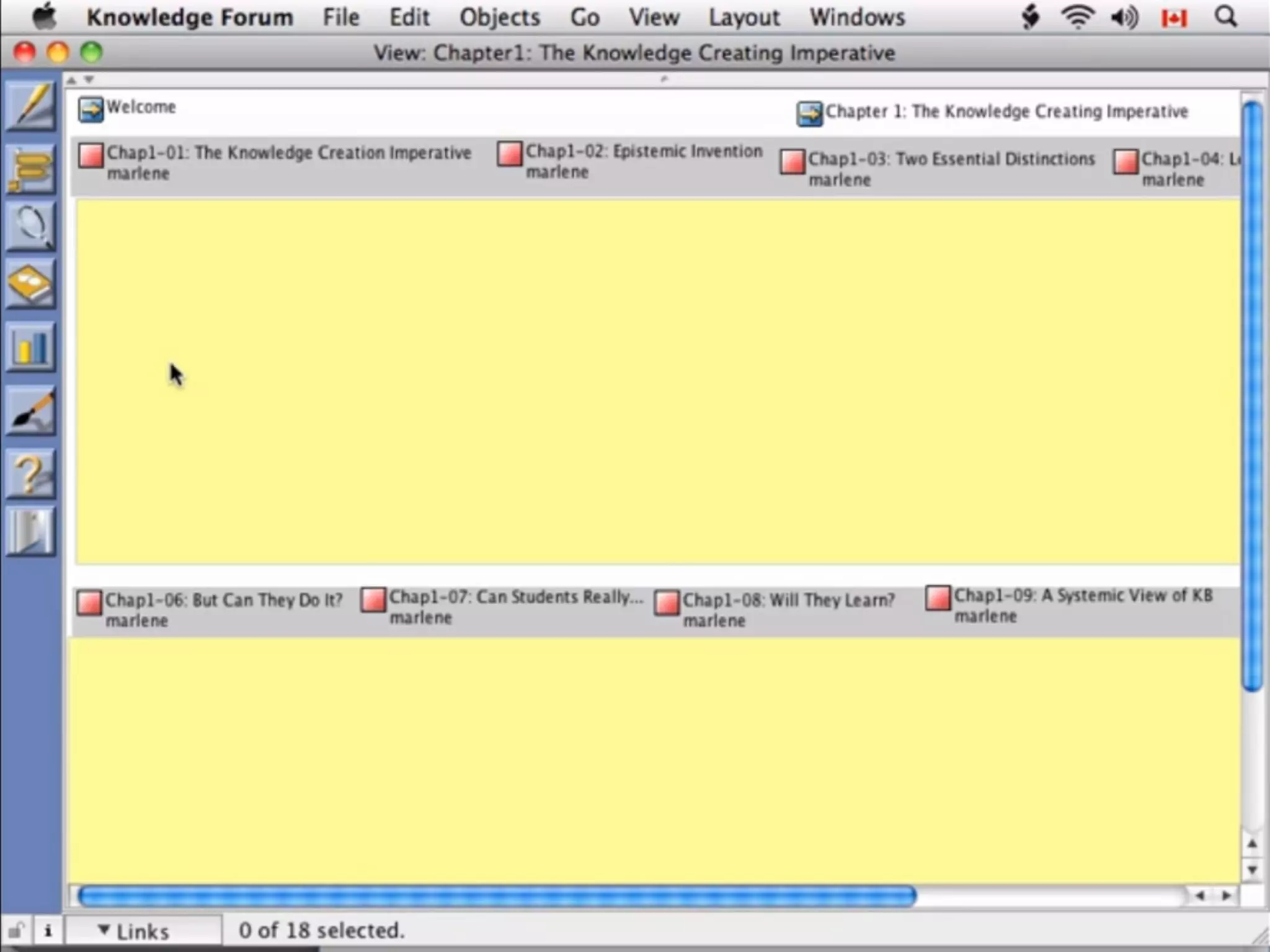
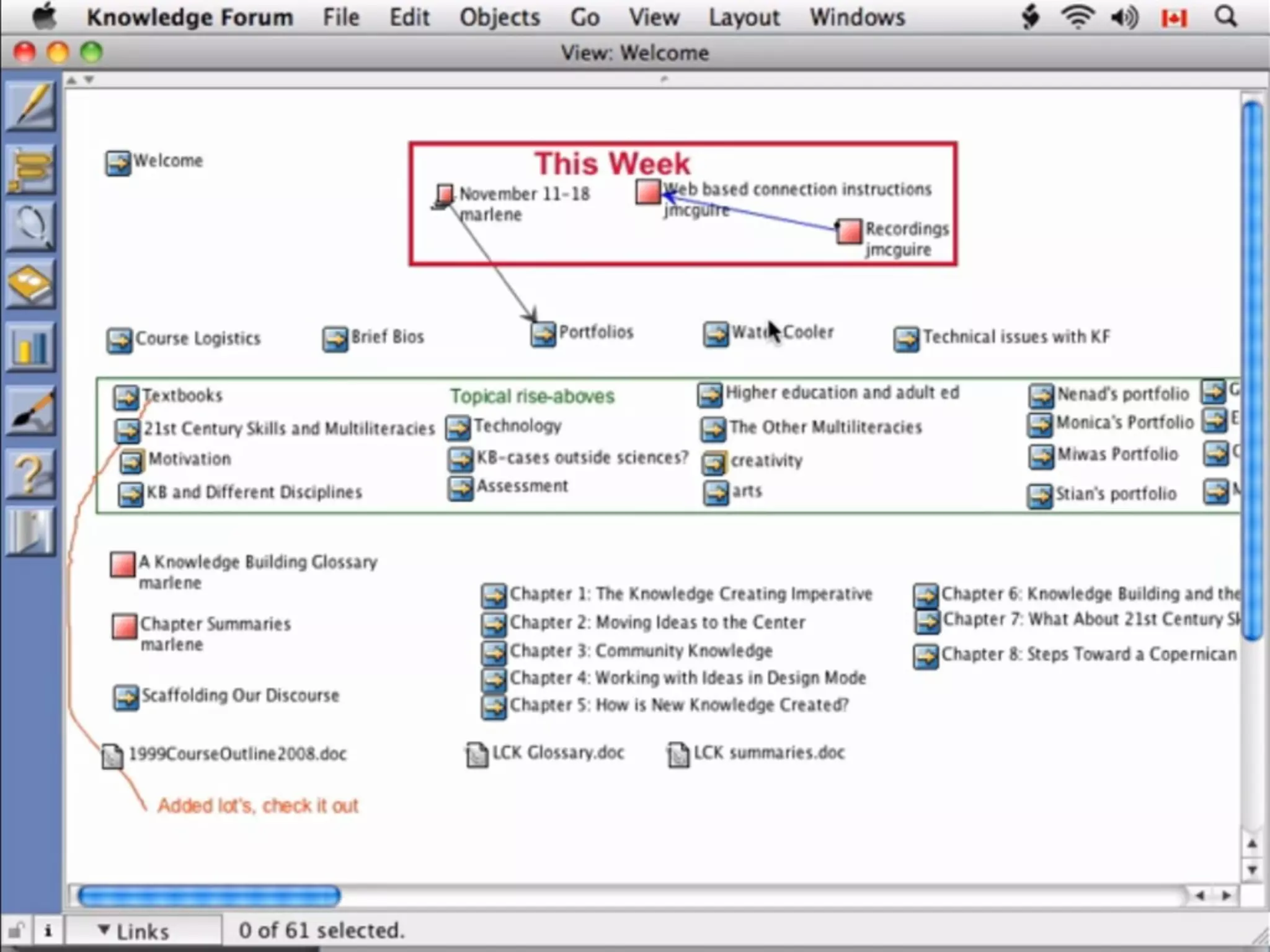
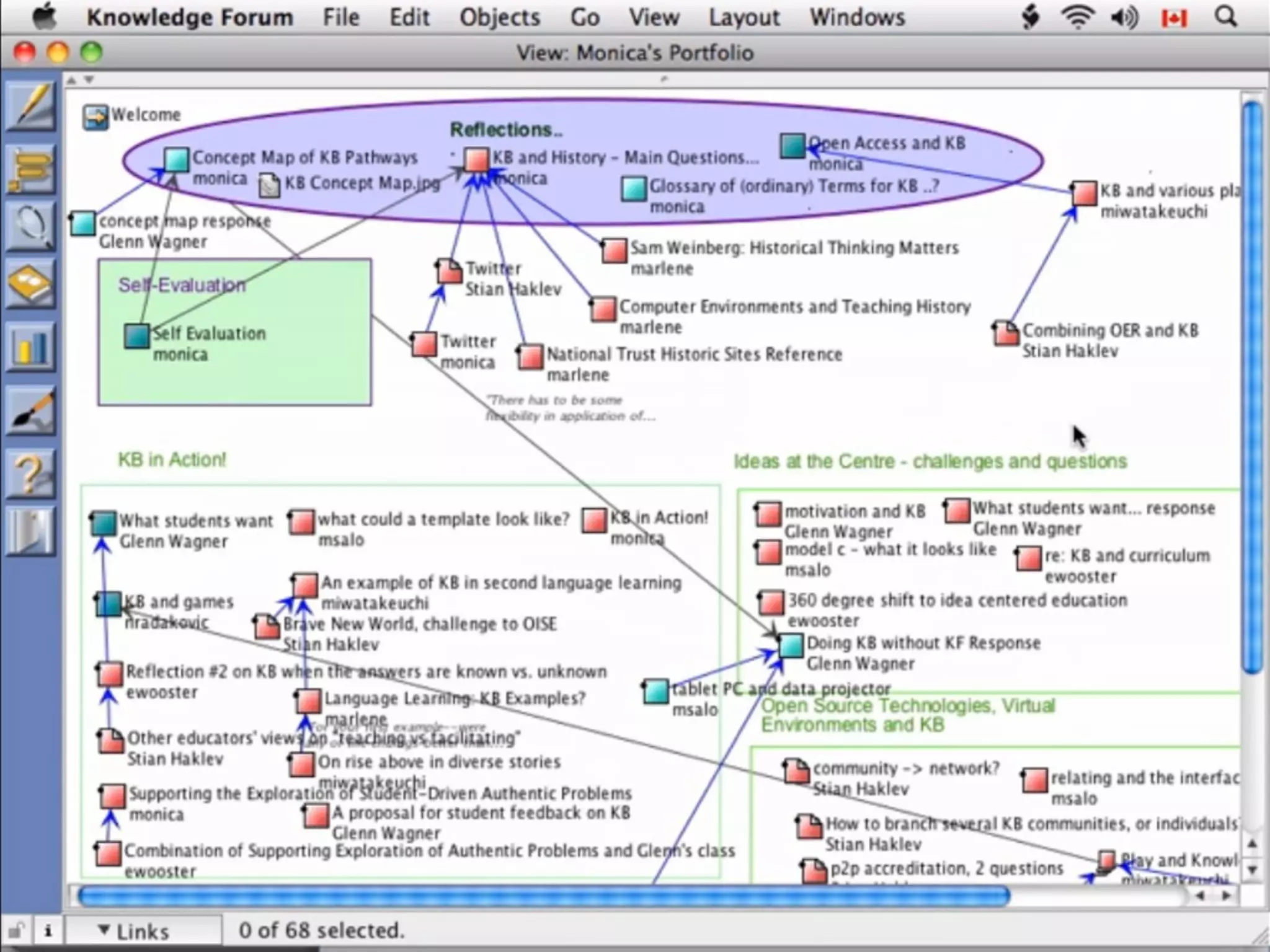
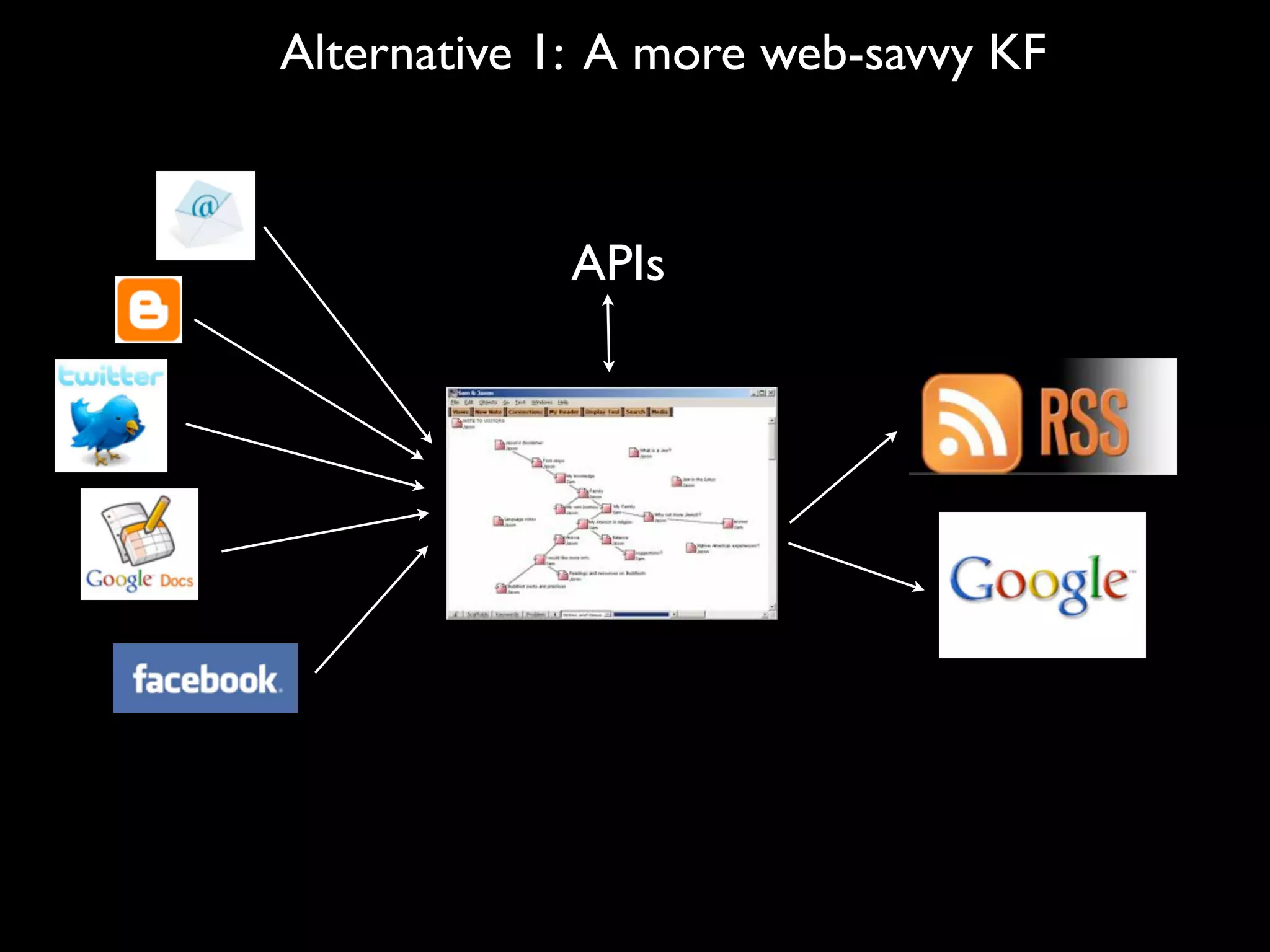
Alternative 1: A more web-savvy KF


            APIs
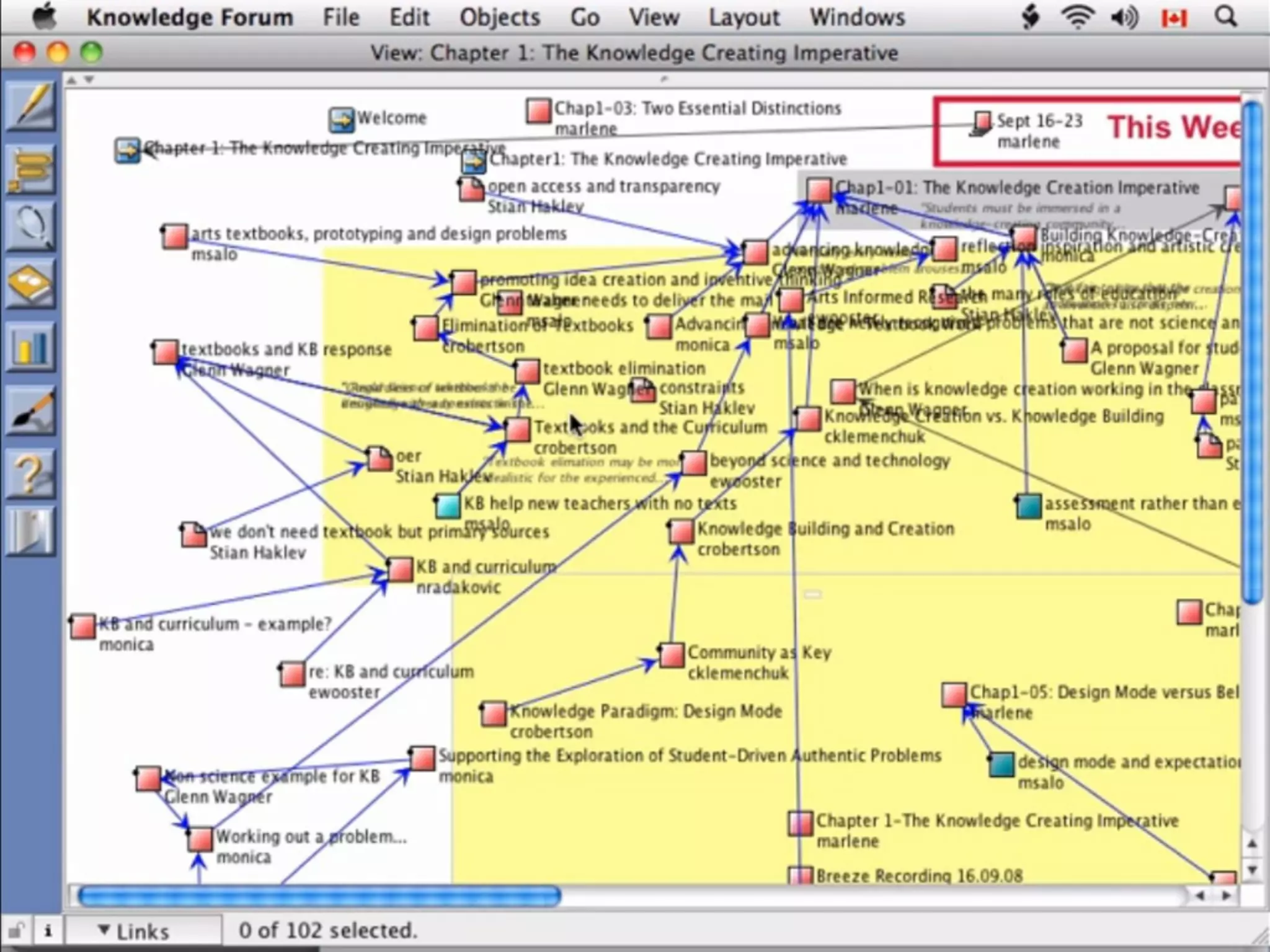
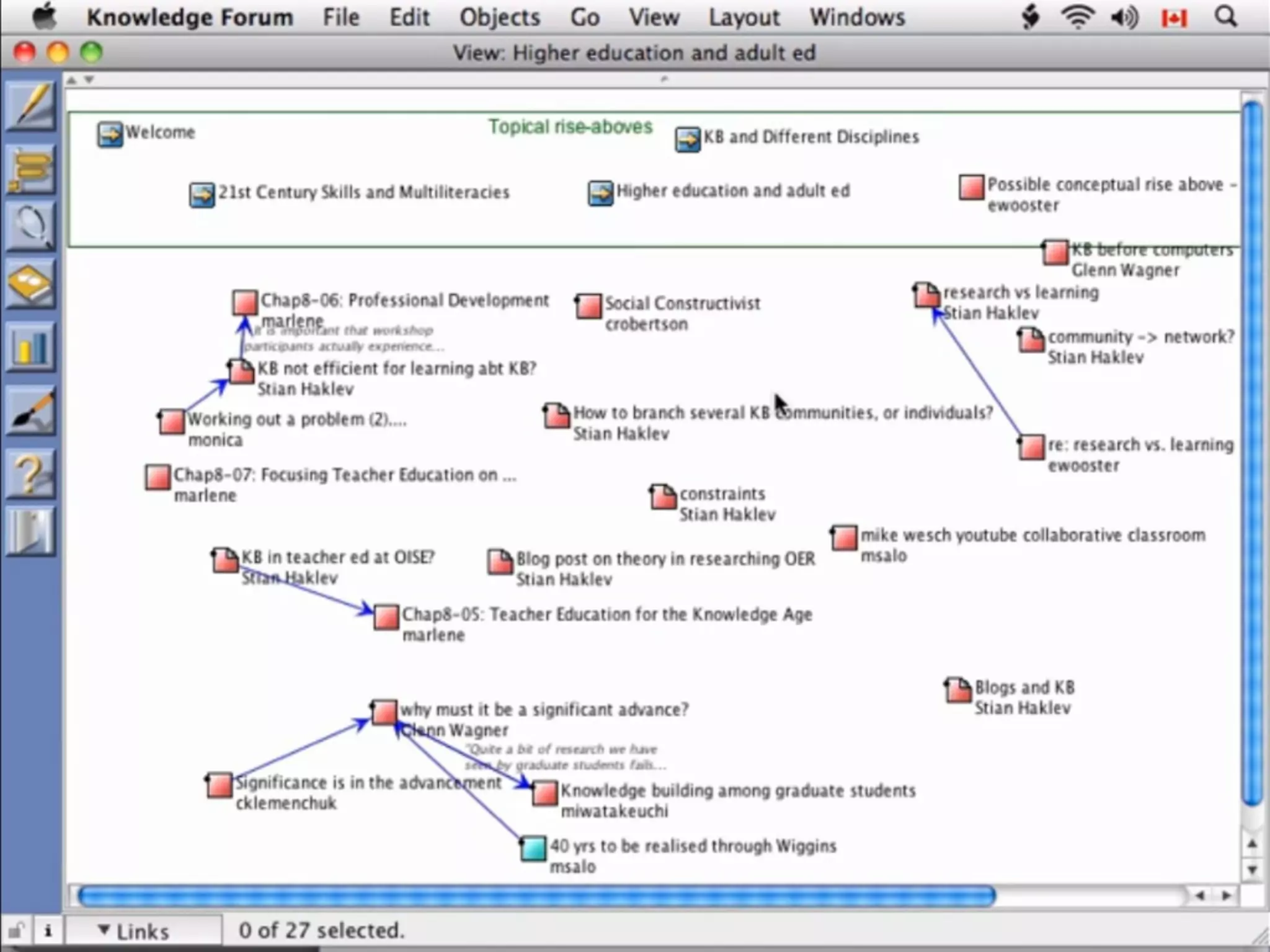
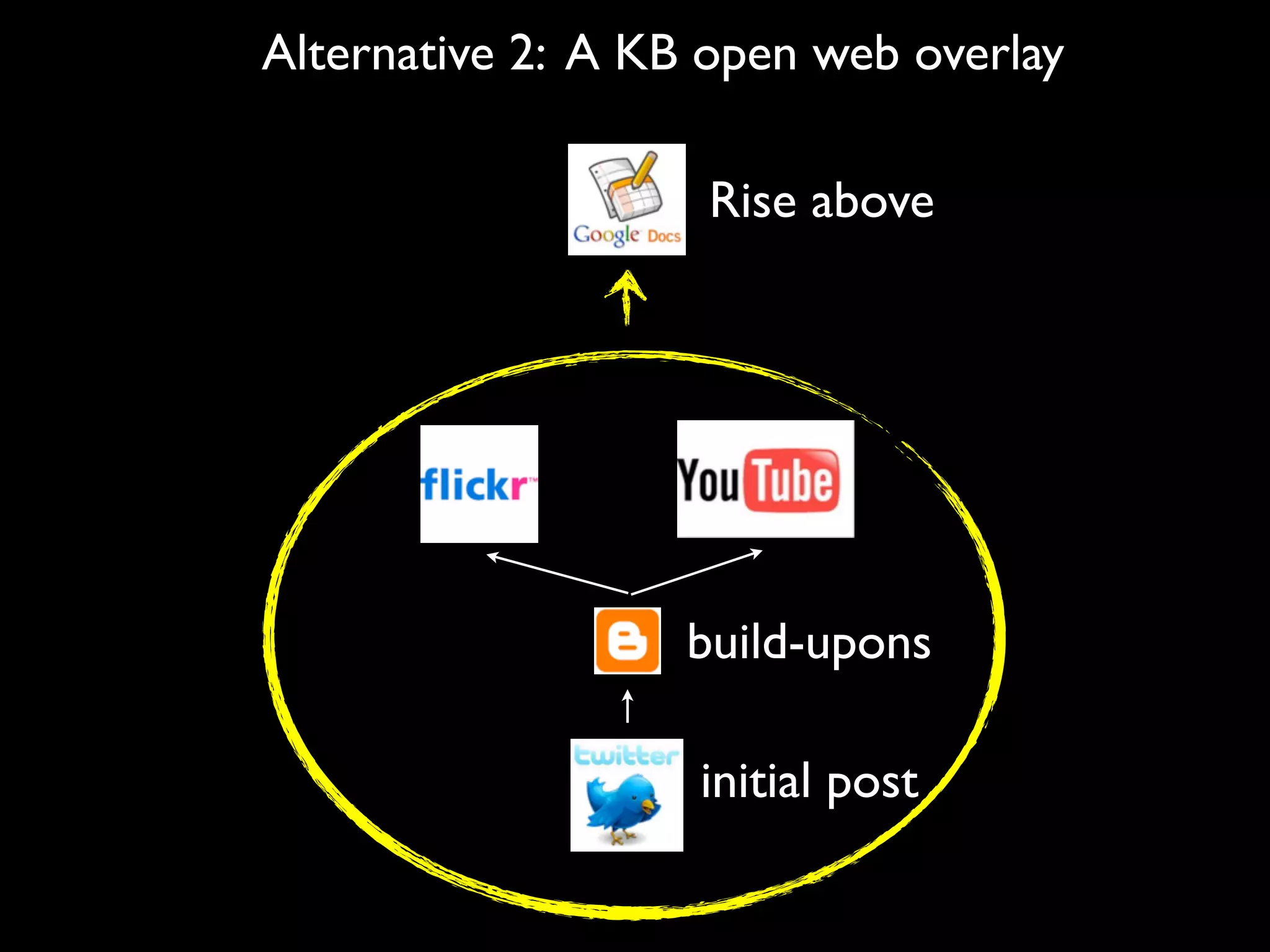
Alternative 2: A KB open web overlay

                    Rise above


                   build-upons

                   initial post
Macro-collaboration and
   micro-collaboration

Monologue to each other, or
 dialgoue with each other
Other research questions


Hybrid (open + for-credit) courses
Who are self-learners? What are their needs?
Recognition of learning/accreditation
Motivation systems
Communication between different levels of learning
(individual, small group, group, network)
Thank you!

                   shaklev@gmail.com
                   http://reganmian.net/blog
                              : houshuangxx
                   CC BY


Thesis about Chinese Open Courses can be
downloaded in a variety of formats from http://
reganmian.net/top-level-courses

Open Courses and Informal Learning in a Web 2.0 World: A Research Agenda

  • 1.
    Open Courses andInformal Learning in a Web 2.0 world: A research agenda Stian Håklev, OISE/University of Toronto International Conference of Educational Technology and Computer, Changchun, July 15, 2011 July 11, 2011 - Creative Commons BY
  • 2.
    An abundance ofresources
  • 3.
  • 4.
  • 5.
  • 8.
    Still many questionsabout production, formats, metadata, etc. But more importantly, how do self-learners use this to learn? And how can we support their learning?
  • 9.
  • 10.
  • 12.
    intro  open  ed  I “Wiley  wikis” Text 12
  • 13.
    connnectivism  cour Massive  Open  Online  Courses 13
  • 16.
  • 19.
    Time spent onmeta-issues, and role of instructors in an open course
  • 20.
    Dimensions of course“openness”
  • 21.
    Dimensions of course“openness” transparency (people can see what we write)
  • 22.
    Dimensions of course“openness” transparency (people can see what we write) no grades/coercion
  • 23.
    Dimensions of course“openness” transparency (people can see what we write) no grades/coercion no certification/assessment
  • 24.
    Dimensions of course“openness” transparency (people can see what we write) no grades/coercion no certification/assessment less credibility/authority of instructors
  • 25.
    Dimensions of course“openness” transparency (people can see what we write) no grades/coercion no certification/assessment less credibility/authority of instructors instructors have less training/knowledge of subject area
  • 39.
  • 40.
  • 41.
    Analyzing the course RSS feeds Including blog comments
  • 42.
    Analyzing the course RSS feeds Including blog comments Etherpad import script
  • 43.
    Analyzing the course RSS feeds Including blog comments Etherpad import script Post-hoc data analysis for research
  • 44.
    Analyzing the course RSS feeds Including blog comments Etherpad import script Post-hoc data analysis for research In-course visualization to course organizer or students
  • 45.
  • 46.
  • 47.
    Analyzing the course RSS feeds Including blog comments Etherpad import script Post-hoc data analysis for research In-course visualization to course organizer or students Automatic interventions based on data analysis
  • 48.
    Two models ofa course stimulus-response vs. divergence-convergence cycle improvable ideas
  • 50.
    Stimulus, response, stimulus, response, ..., end of the course
  • 59.
    Cycle of divergenceand convergence + final product - representation that can be shared with others
  • 60.
    Ideas are notfixed in one spot - affords emergent understanding of categories, connections
  • 61.
    Ideas are notfixed in one spot - affords emergent understanding of categories, connections Always have a shared up- to-date representation of the “state of the knowledge of the group” - enables knowledge talks
  • 62.
    Alternative 1: Amore web-savvy KF APIs
  • 63.
    Alternative 2: AKB open web overlay Rise above build-upons initial post
  • 65.
    Macro-collaboration and micro-collaboration Monologue to each other, or dialgoue with each other
  • 66.
    Other research questions Hybrid(open + for-credit) courses Who are self-learners? What are their needs? Recognition of learning/accreditation Motivation systems Communication between different levels of learning (individual, small group, group, network)
  • 67.
    Thank you! shaklev@gmail.com http://reganmian.net/blog : houshuangxx CC BY Thesis about Chinese Open Courses can be downloaded in a variety of formats from http:// reganmian.net/top-level-courses