

Open Learning Analytics Panel 
JOSH BARON 
ST IAN HÅKLEV 
NORMAN BIER 
HASH TAG #OPENLA
Panel Session Overview 
Session Goal: Stimulate discussion around the 
importance of open learning analytics to the future of 
the larger open education movement 
Longer-Term Objective: Form connections between 
the OpenEd and Open Learning Analytics networks 
Session Format: 
 Setting the Context – Open Learning Analytics 
 Examples from the Real World 
 Discussion/Q&A
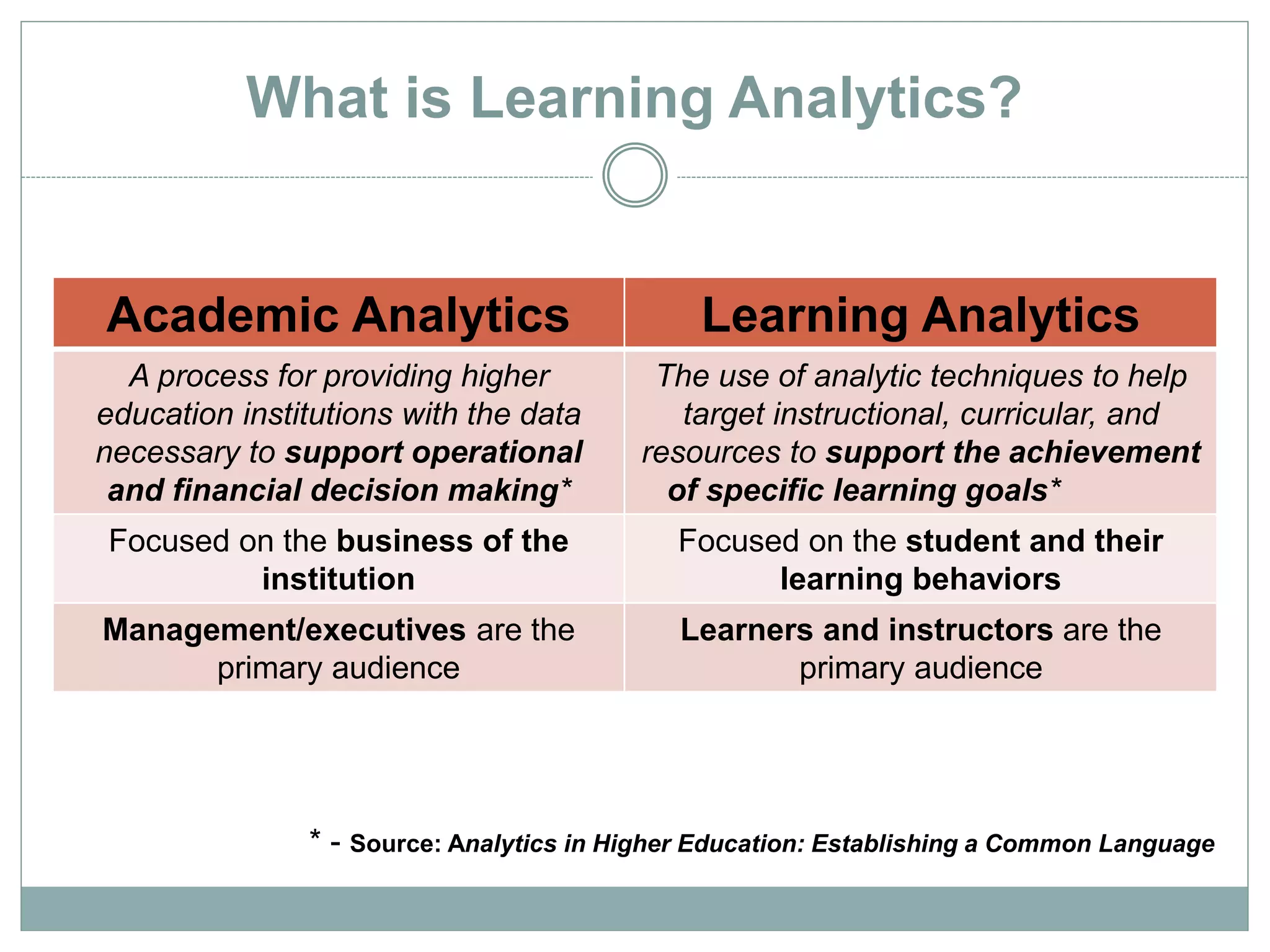
What is Learning Analytics? 
Academic Analytics Learning Analytics 
A process for providing higher 
education institutions with the data 
necessary to support operational 
and financial decision making* 
The use of analytic techniques to help 
target instructional, curricular, and 
resources to support the achievement 
of specific learning goals* 
Focused on the business of the 
institution 
Focused on the student and their 
learning behaviors 
Management/executives are the 
primary audience 
Learners and instructors are the 
primary audience 
* - Source: Analytics in Higher Education: Establishing a Common Language
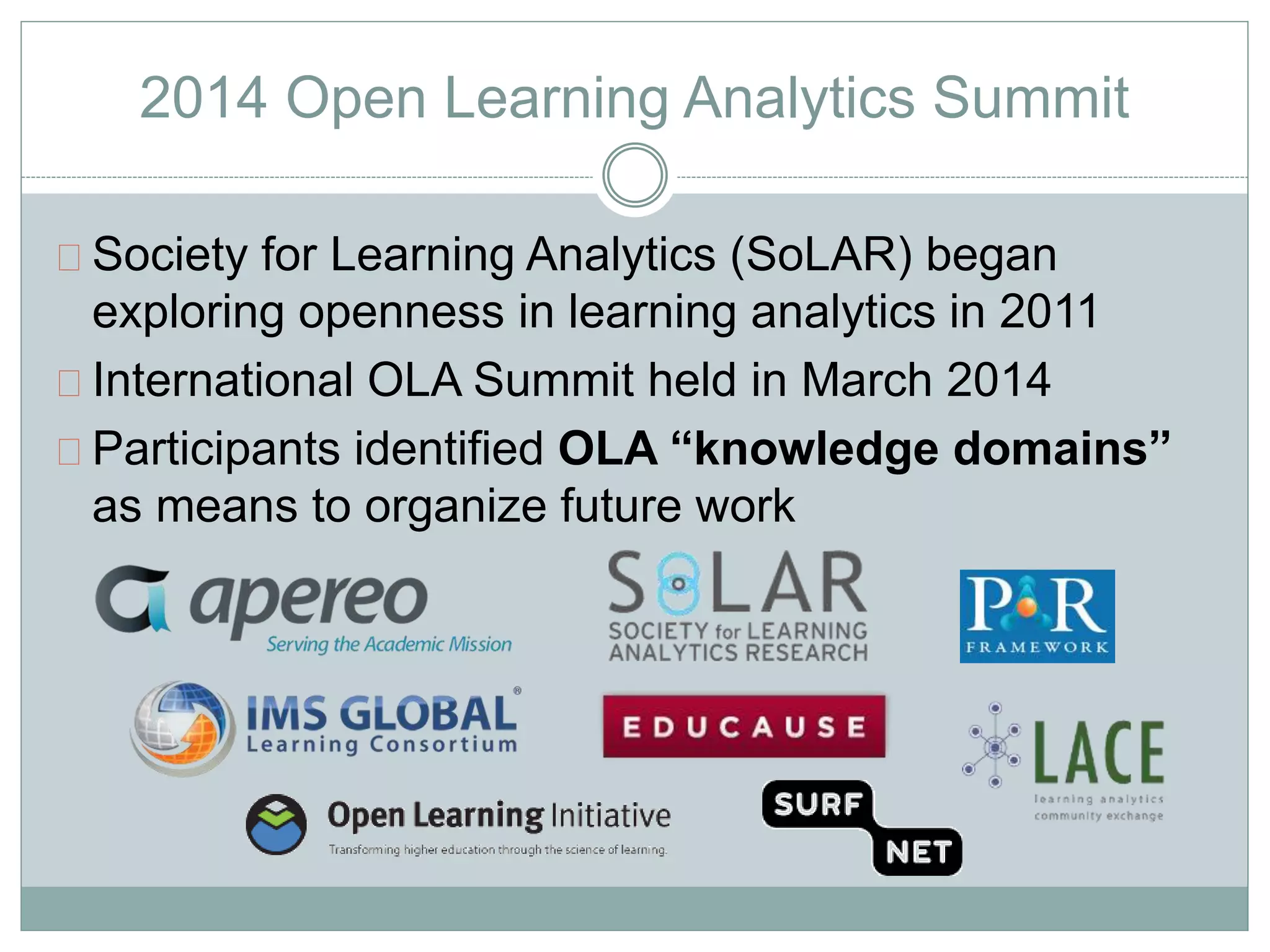
2014 Open Learning Analytics Summit 
Society for Learning Analytics (SoLAR) began 
exploring openness in learning analytics in 2011 
International OLA Summit held in March 2014 
Participants identified OLA “knowledge domains” 
as means to organize future work
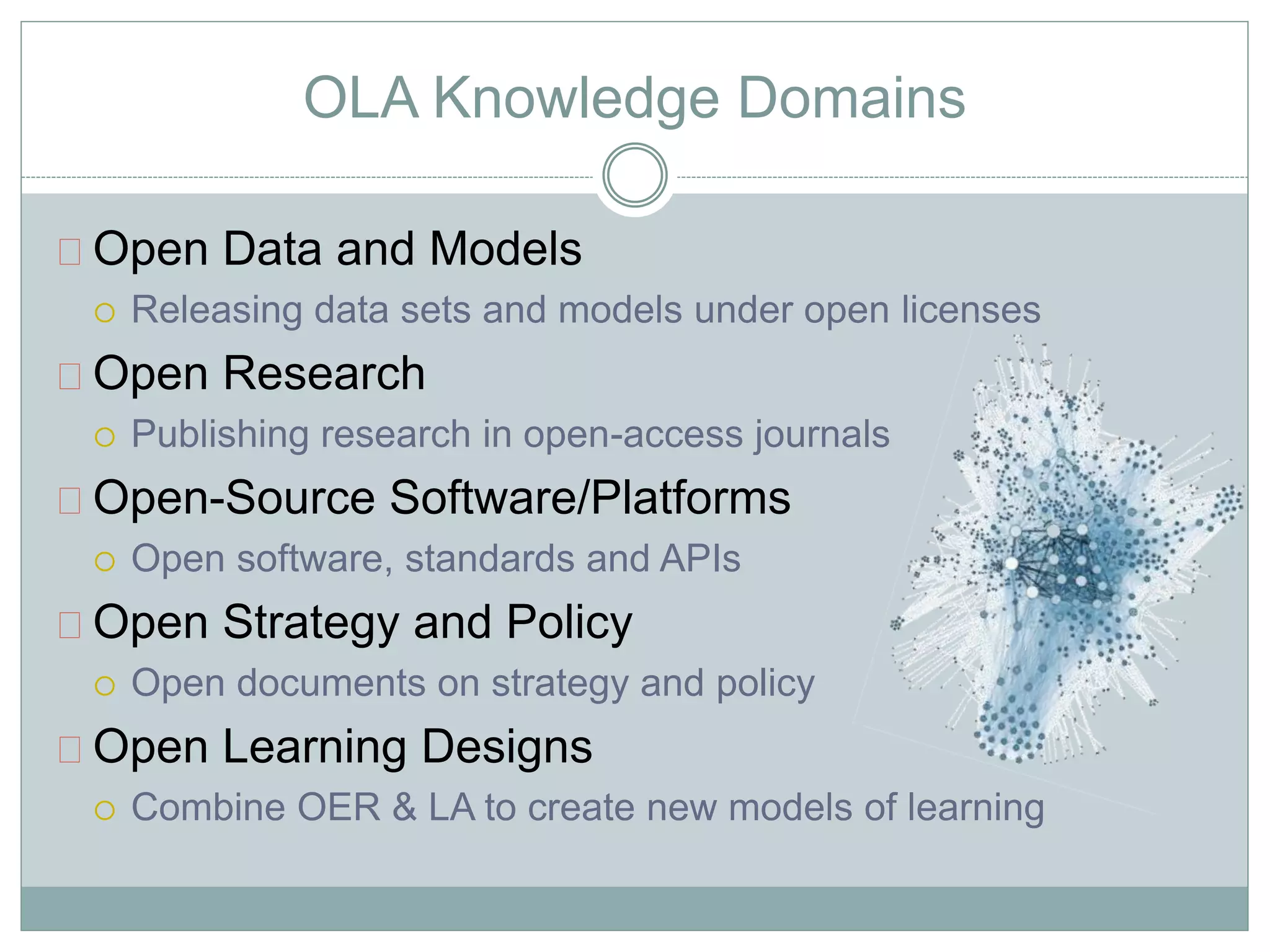
OLA Knowledge Domains 
Open Data and Models 
 Releasing data sets and models under open licenses 
Open Research 
 Publishing research in open-access journals 
Open-Source Software/Platforms 
 Open software, standards and APIs 
Open Strategy and Policy 
 Open documents on strategy and policy 
Open Learning Designs 
 Combine OER & LA to create new models of learning
Openness = Science 
NORMAN BIER 
DIRECTOR, OPEN LEARNING INI T IAT IVE 
CARNEGIE MEL LON UNIVERSI TY
The changing value of content 
Changing focus in OER community 
Commoditization of content (Wiley: ‘content is 
infrastructure’) 
Instrumenting content is difficult and expensive 
Well-instrumented content and the tools to analyze 
student interactions with that content will continue to 
increase in importance
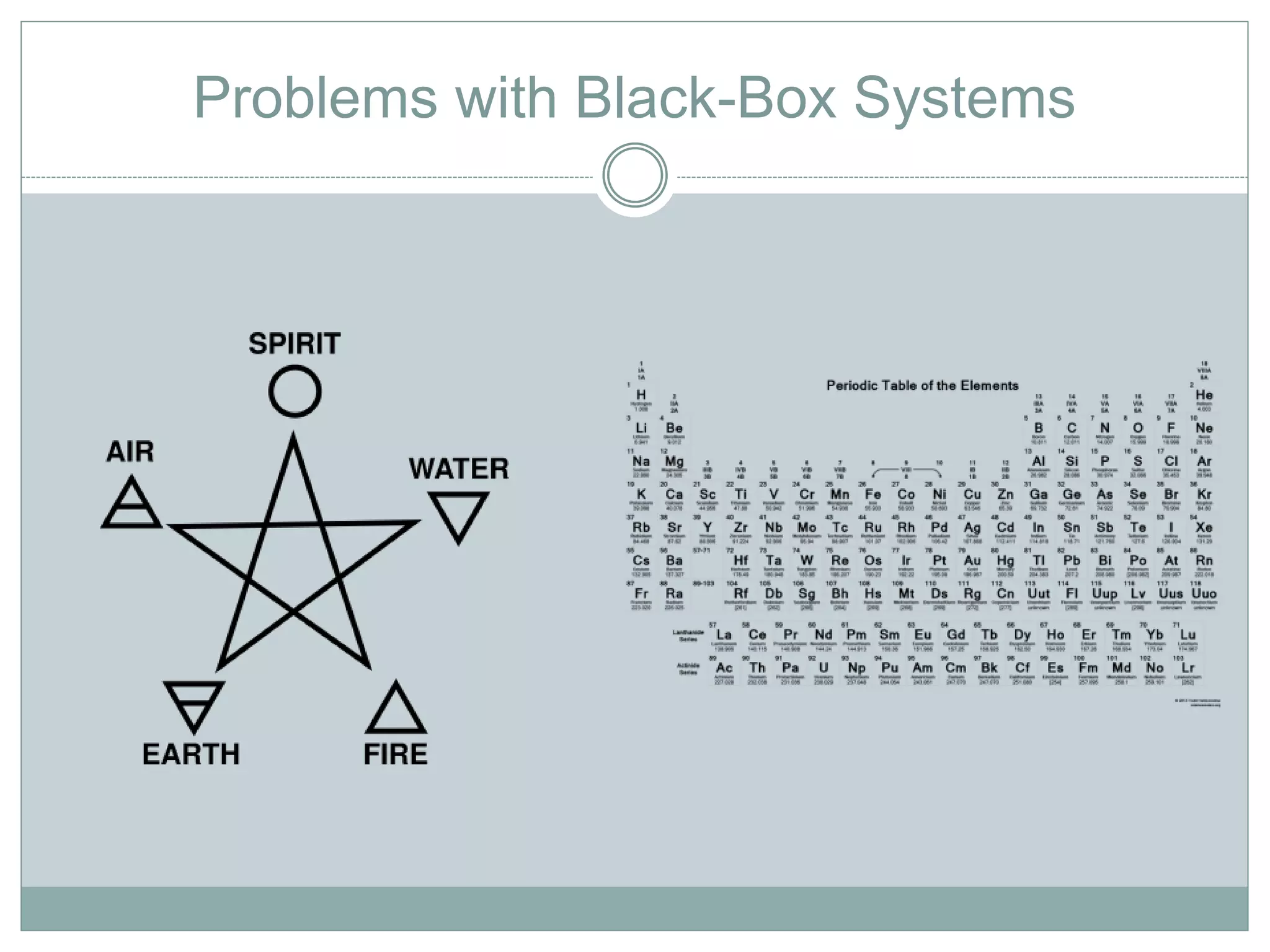
Problems with Black-Box Systems
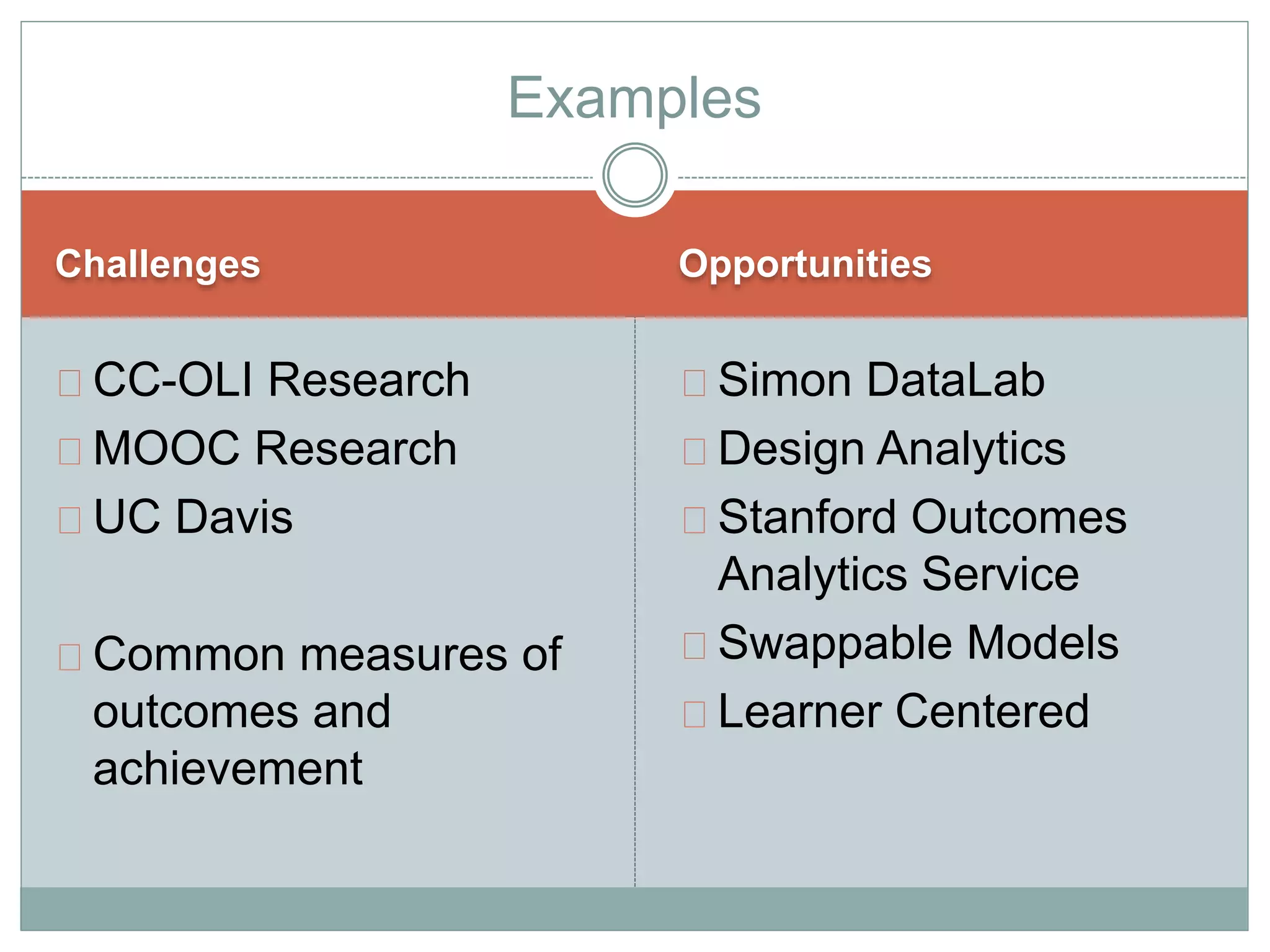
Examples 
Challenges Opportunities 
CC-OLI Research 
MOOC Research 
UC Davis 
Common measures of 
outcomes and 
achievement 
Simon DataLab 
Design Analytics 
Stanford Outcomes 
Analytics Service 
Swappable Models 
Learner Centered
MOOC RESEARCH AND 
REPRODUCIBLE SCIENCE 
ST IAN HÅKLEV 
INST I TUT IONAL RESEARCHER, OPEN UTORONTO 
UNIVERSI TY OF TORONTO
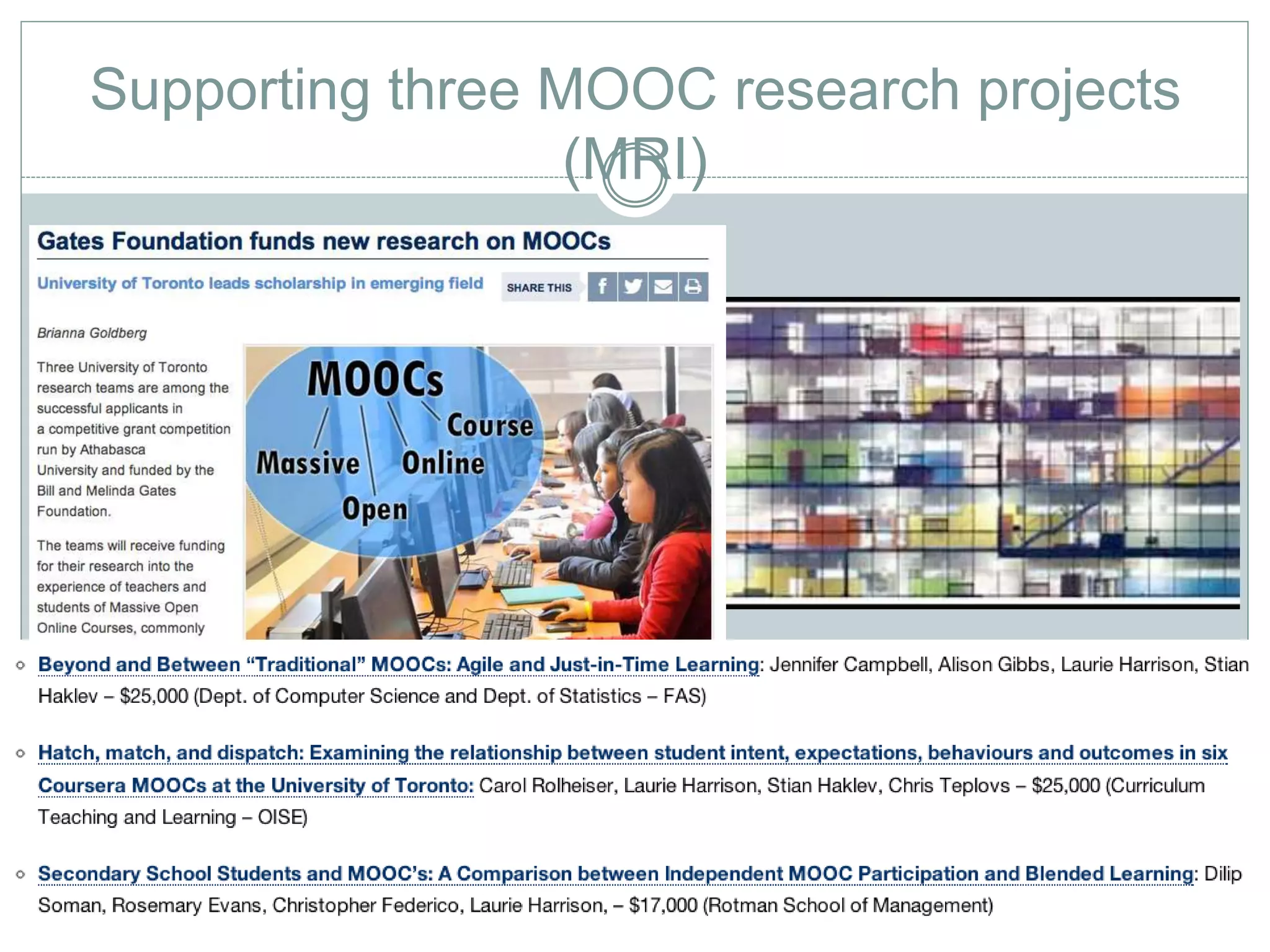
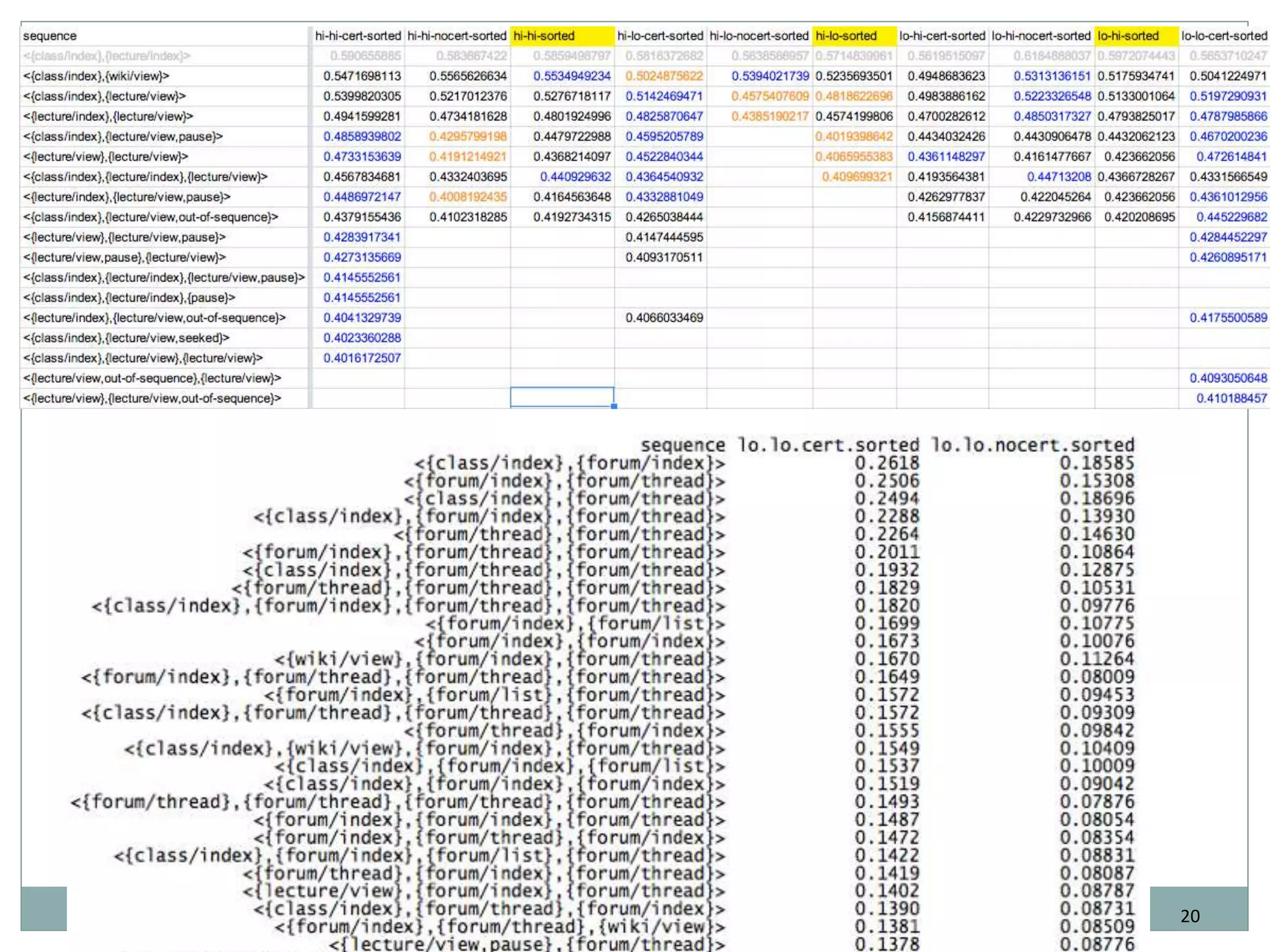
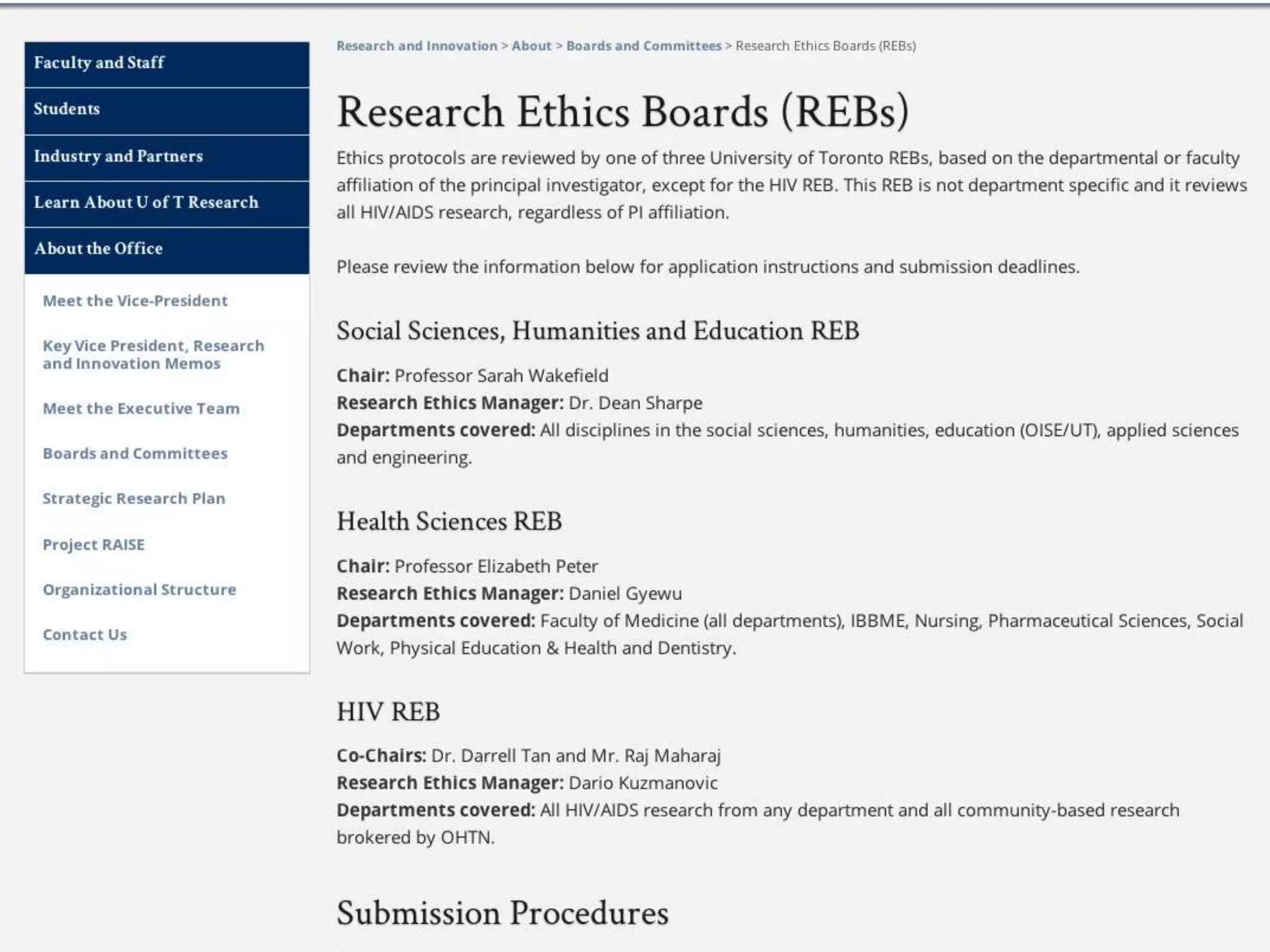
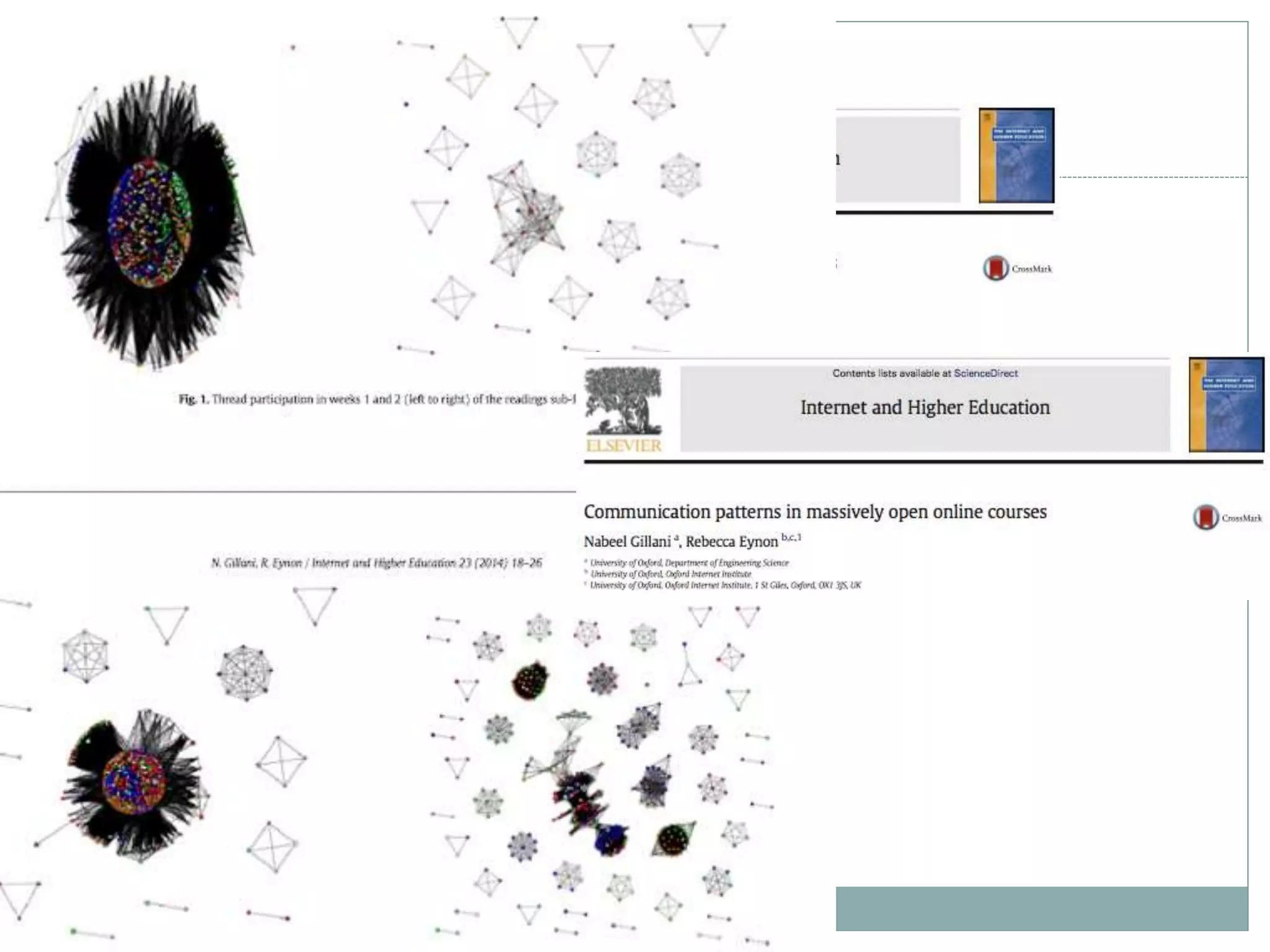
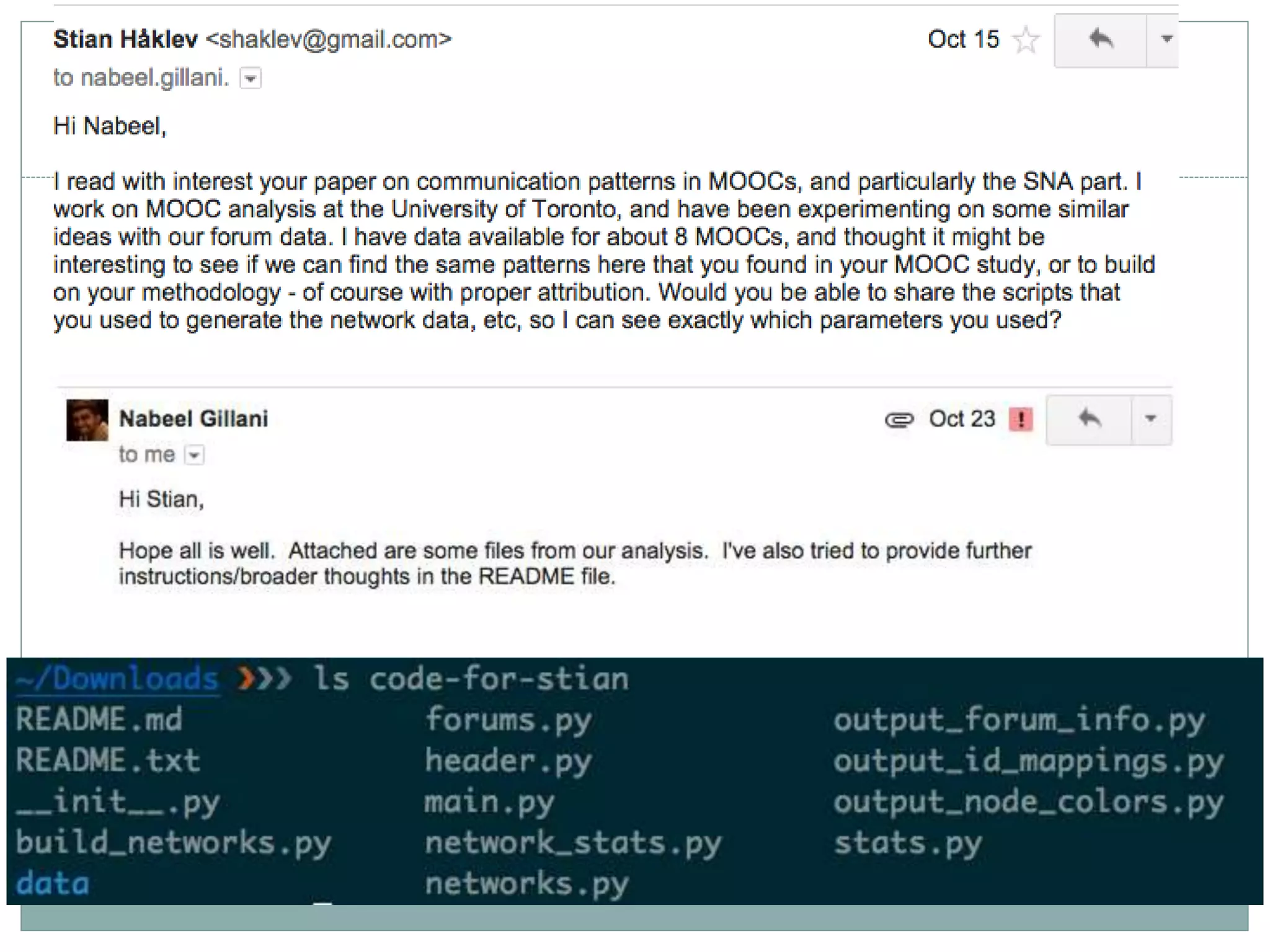
Supporting three MOOC research projects 
(MRI)
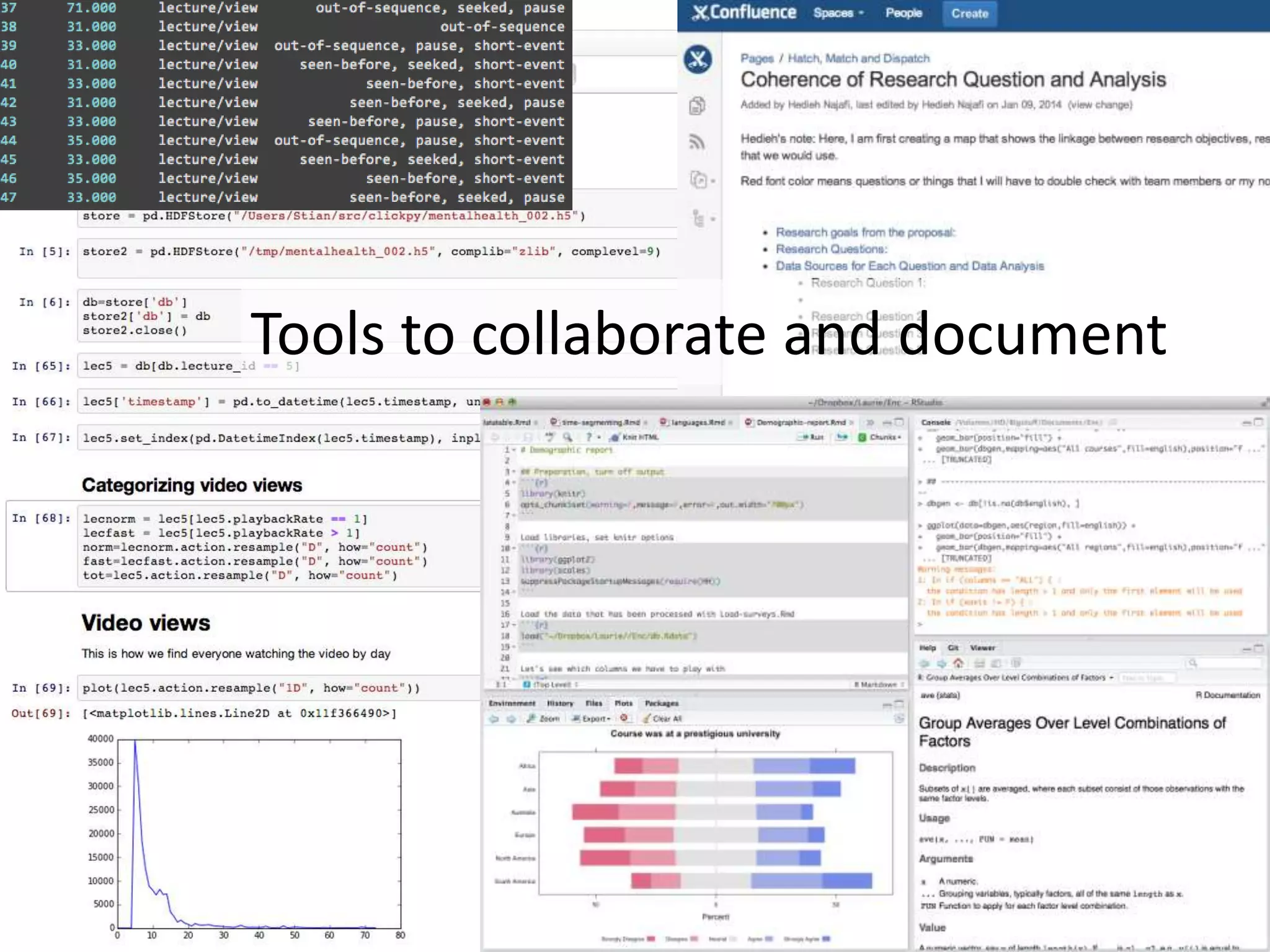
Tools to collaborate and document
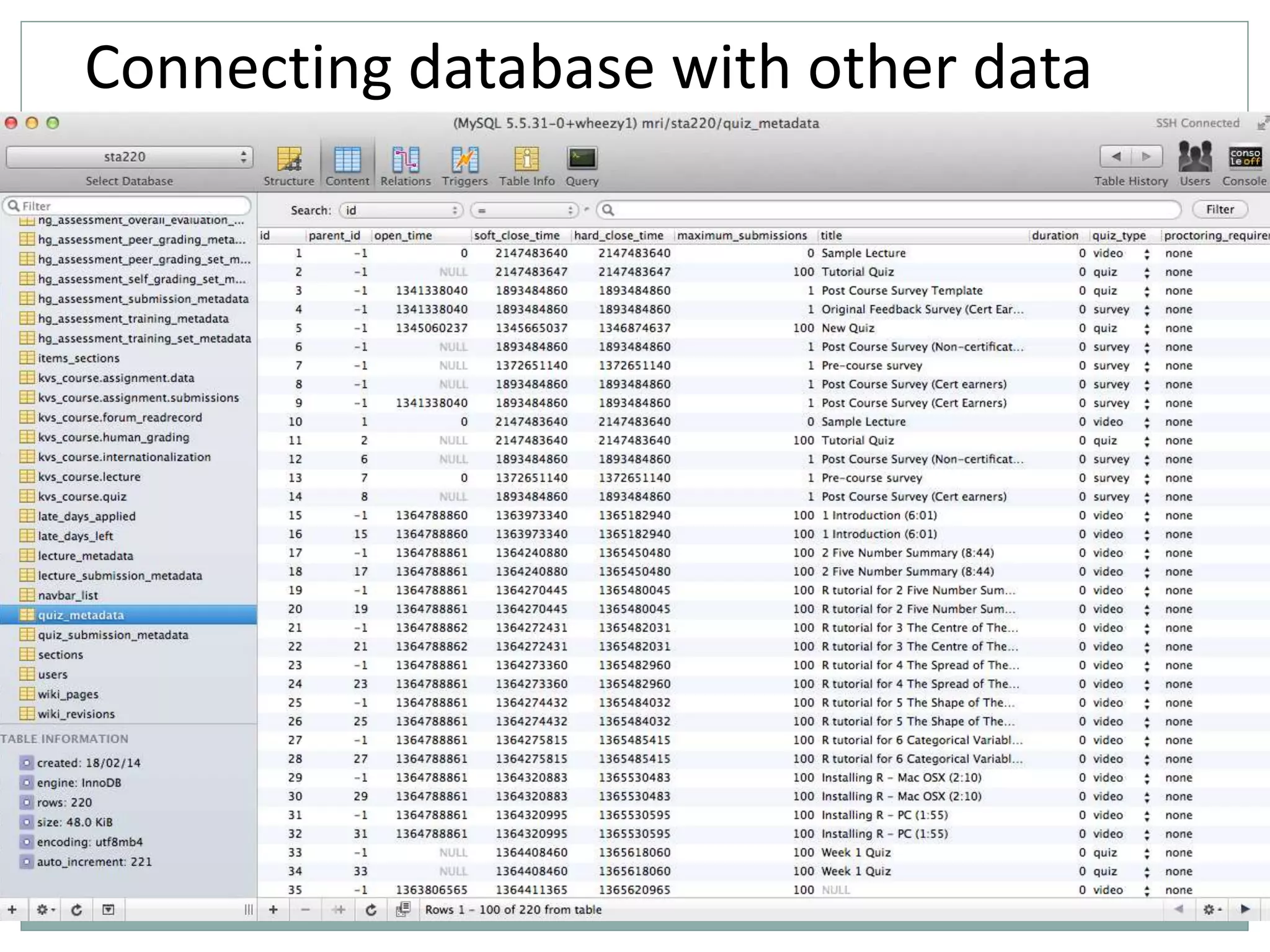
Connecting database with other data
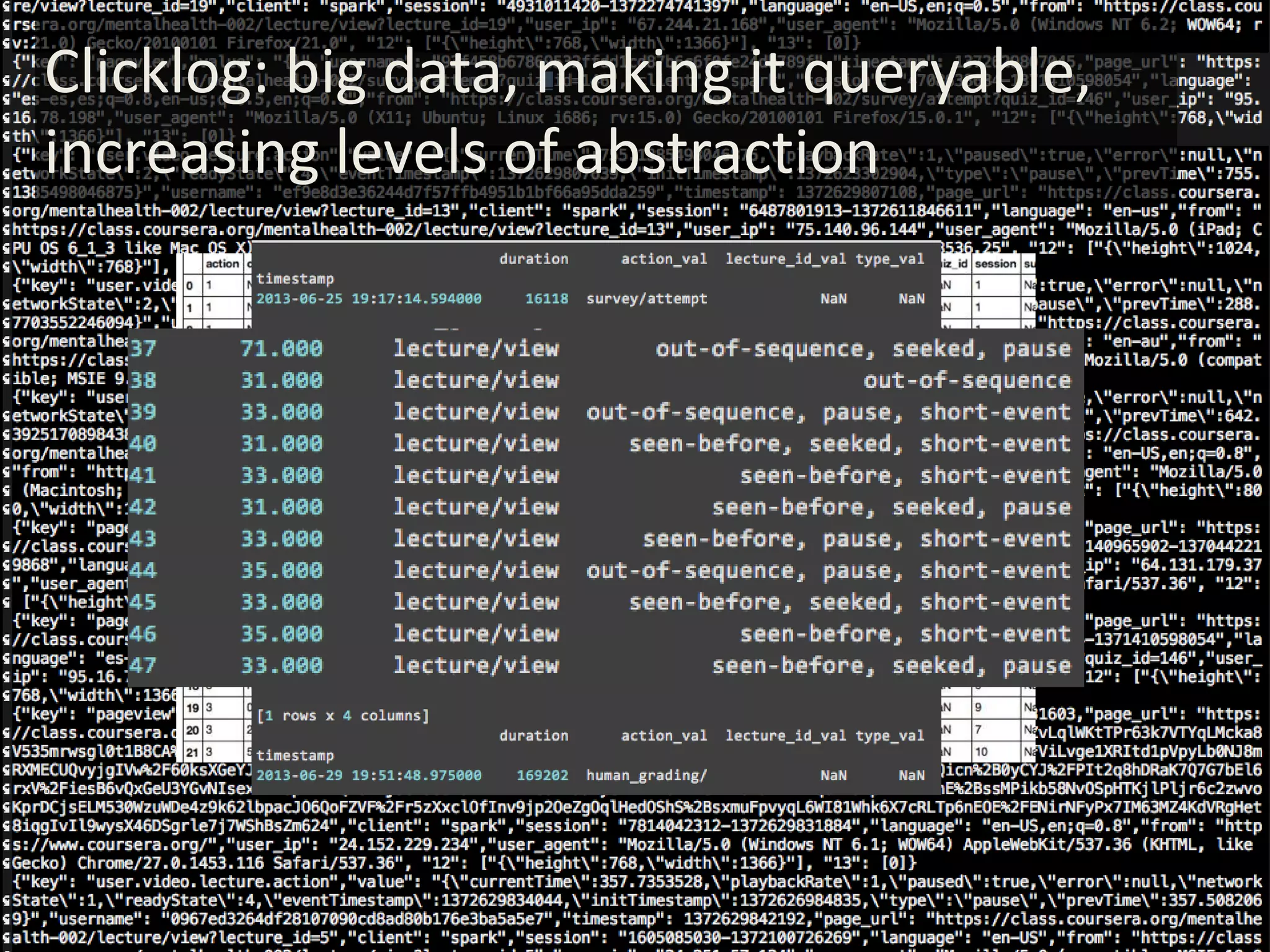
Clicklog: big data, making it queryable, 
increasing levels of abstraction
20
Open Data Models & OS 
Learning Analytics Platform 
JOSH BARON 
SENIOR ACADEMIC TECHNOLOGY OF F ICER 
MARIST COL LEGE
OAAI: Overview and Impact 
EDUCAUSE Next 
Generation Learning 
Challenges (NGLC) 
Funded by Bill and 
Melinda Gates Foundations 
$250,000 over a 15 month period 
Goal: Leverage Big Data concepts to create an 
open-source academic early alert system and 
research “scaling factors”
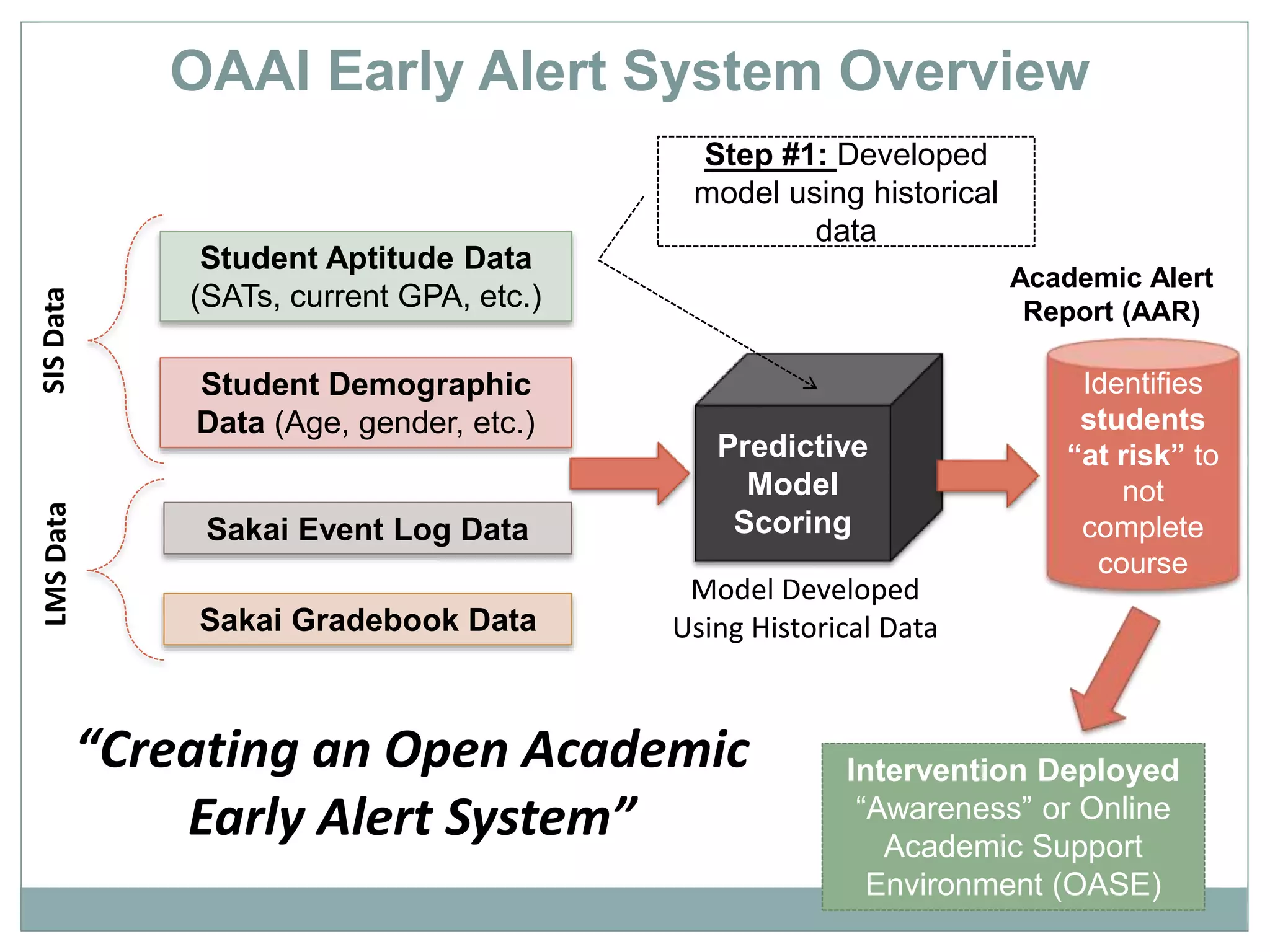
Student Aptitude Data 
(SATs, current GPA, etc.) 
Student Demographic 
Data (Age, gender, etc.) 
Sakai Event Log Data 
Sakai Gradebook Data 
Step #1: Developed 
model using historical 
data 
Predictive 
Model 
Scoring 
Identifies 
students 
“at risk” to 
not 
complete 
course 
LMS Data SIS Data 
OAAI Early Alert System Overview 
Intervention Deployed 
“Awareness” or Online 
Academic Support 
Environment (OASE) 
“Creating an Open Academic 
Early Alert System” 
Model Developed 
Using Historical Data 
Academic Alert 
Report (AAR)
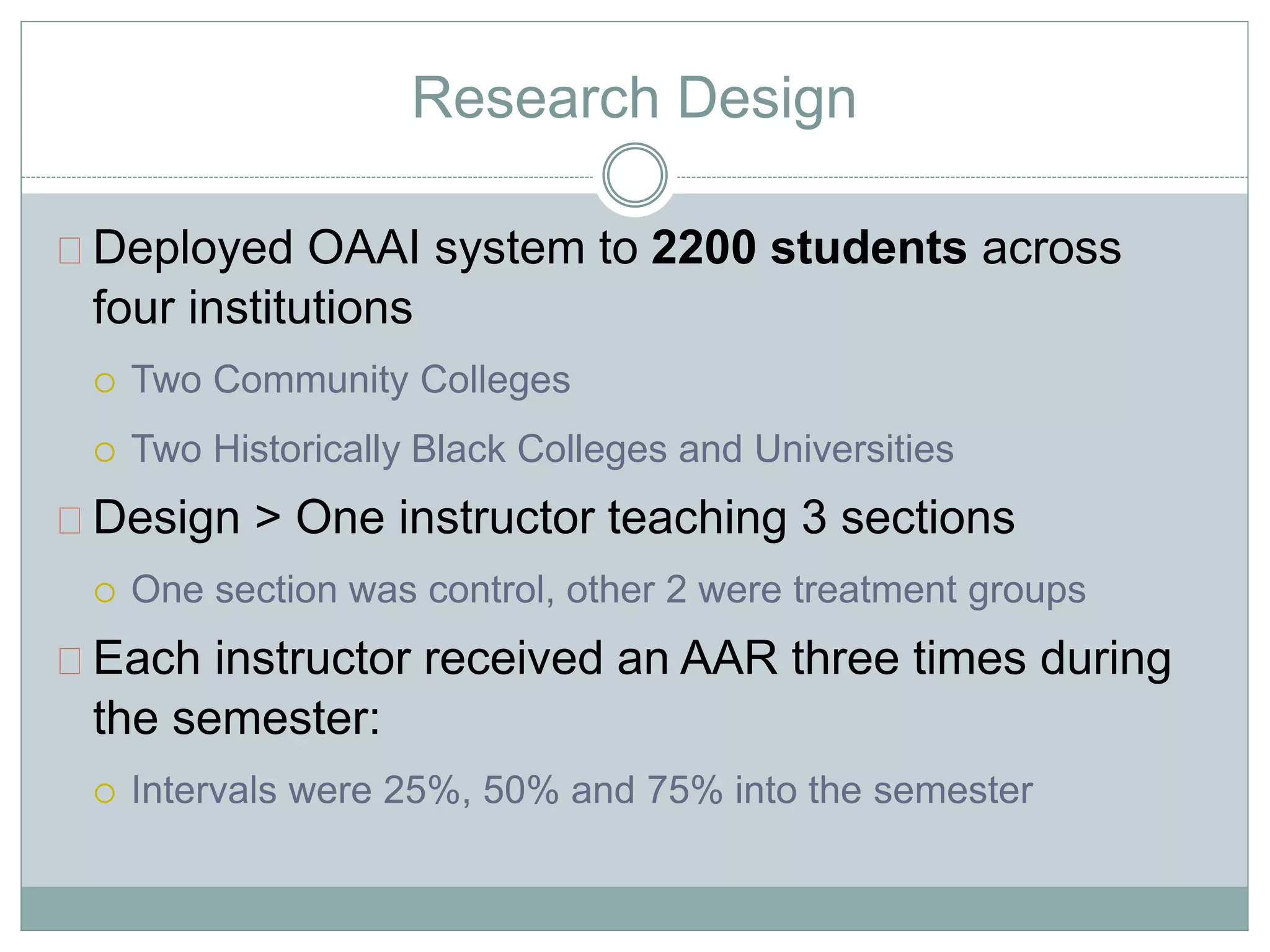
Research Design 
Deployed OAAI system to 2200 students across 
four institutions 
 Two Community Colleges 
 Two Historically Black Colleges and Universities 
Design > One instructor teaching 3 sections 
 One section was control, other 2 were treatment groups 
Each instructor received an AAR three times during 
the semester: 
 Intervals were 25%, 50% and 75% into the semester
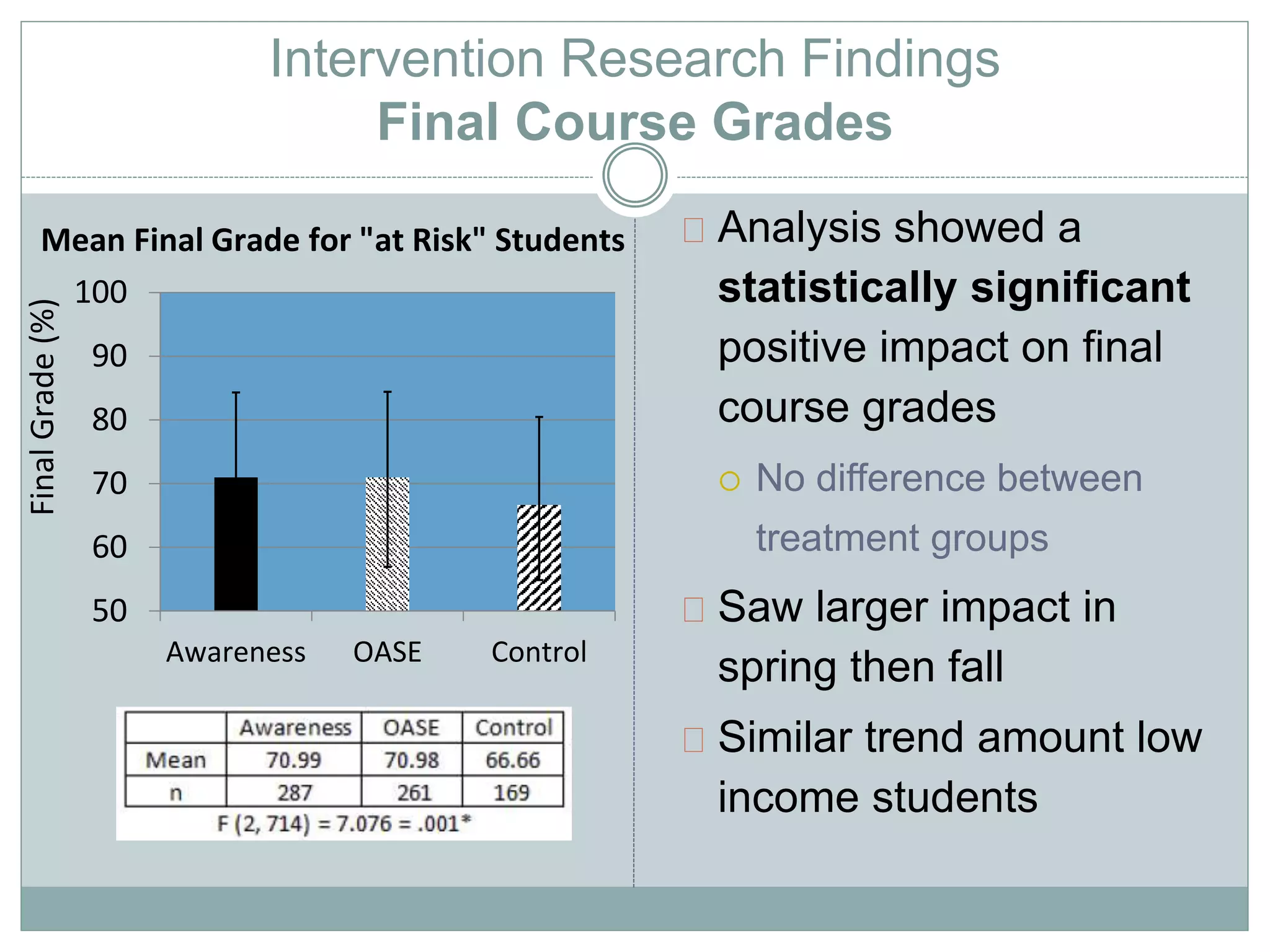
Intervention Research Findings 
Final Course Grades 
Analysis showed a 
statistically significant 
positive impact on final 
course grades 
 No difference between 
treatment groups 
Saw larger impact in 
spring then fall 
Similar trend amount low 
income students 
Mean Final Grade for "at Risk" Students 
100 
90 
80 
70 
60 
50 
Awareness OASE Control 
Final Grade (%)
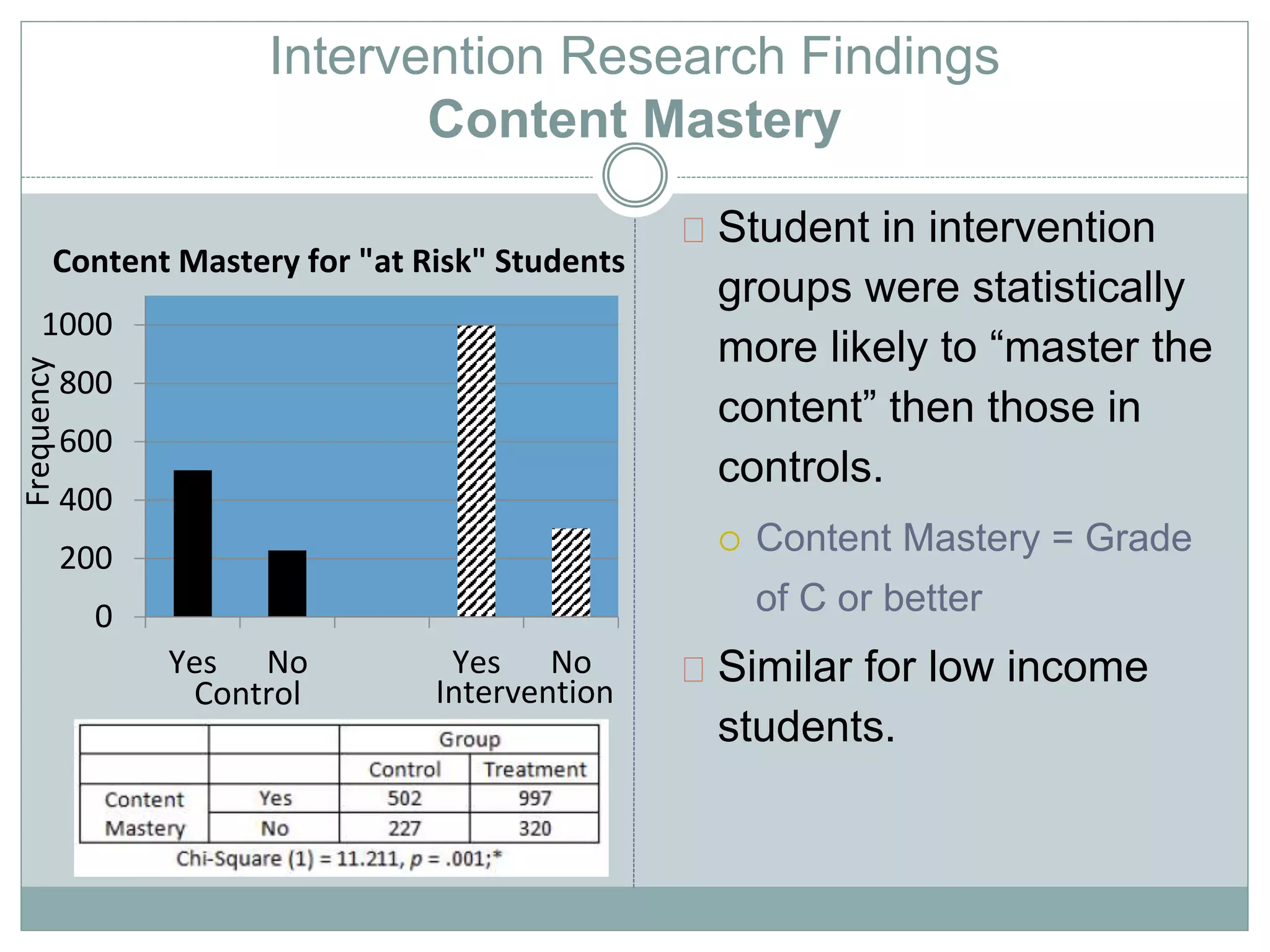
Intervention Research Findings 
Content Mastery 
Student in intervention 
groups were statistically 
more likely to “master the 
content” then those in 
controls. 
 Content Mastery = Grade 
of C or better 
Similar for low income 
students. 
Content Mastery for "at Risk" Students 
1000 
800 
600 
400 
200 
0 
Yes No Yes No 
Control Intervention 
Frequency
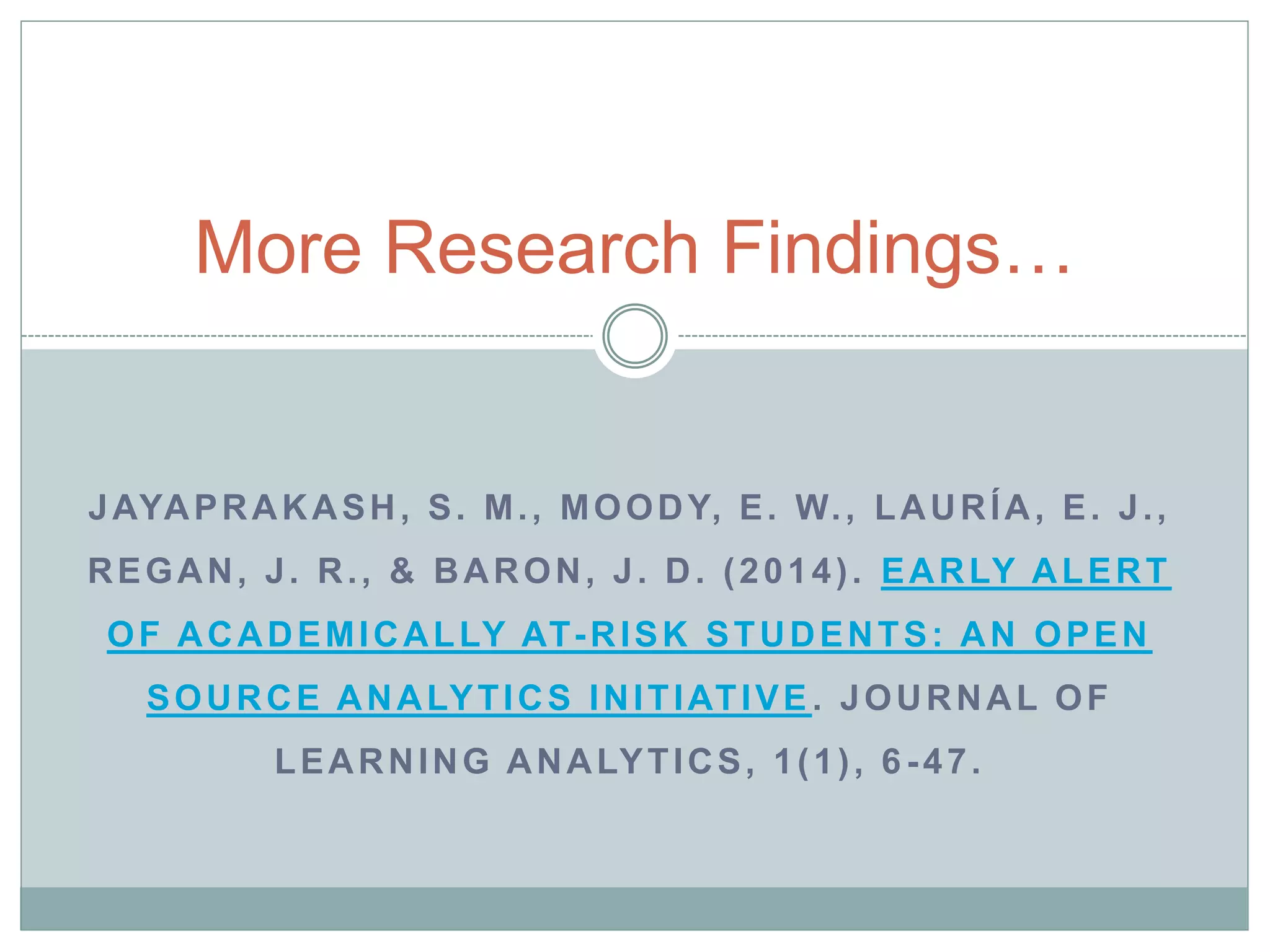
More Research Findings… 
JAYAPRAKASH, S. M. , MOODY, E. W. , LAURÍA, E. J. , 
REGAN, J. R. , & BARON, J. D. (2014) . EARLY ALERT 
OF ACADEMICALLY AT-RISK STUDENTS: AN OPEN 
SOURCE ANALYTICS INITIATIVE. JOURNAL OF 
LEARNING ANALYTICS, 1(1) , 6 -47.
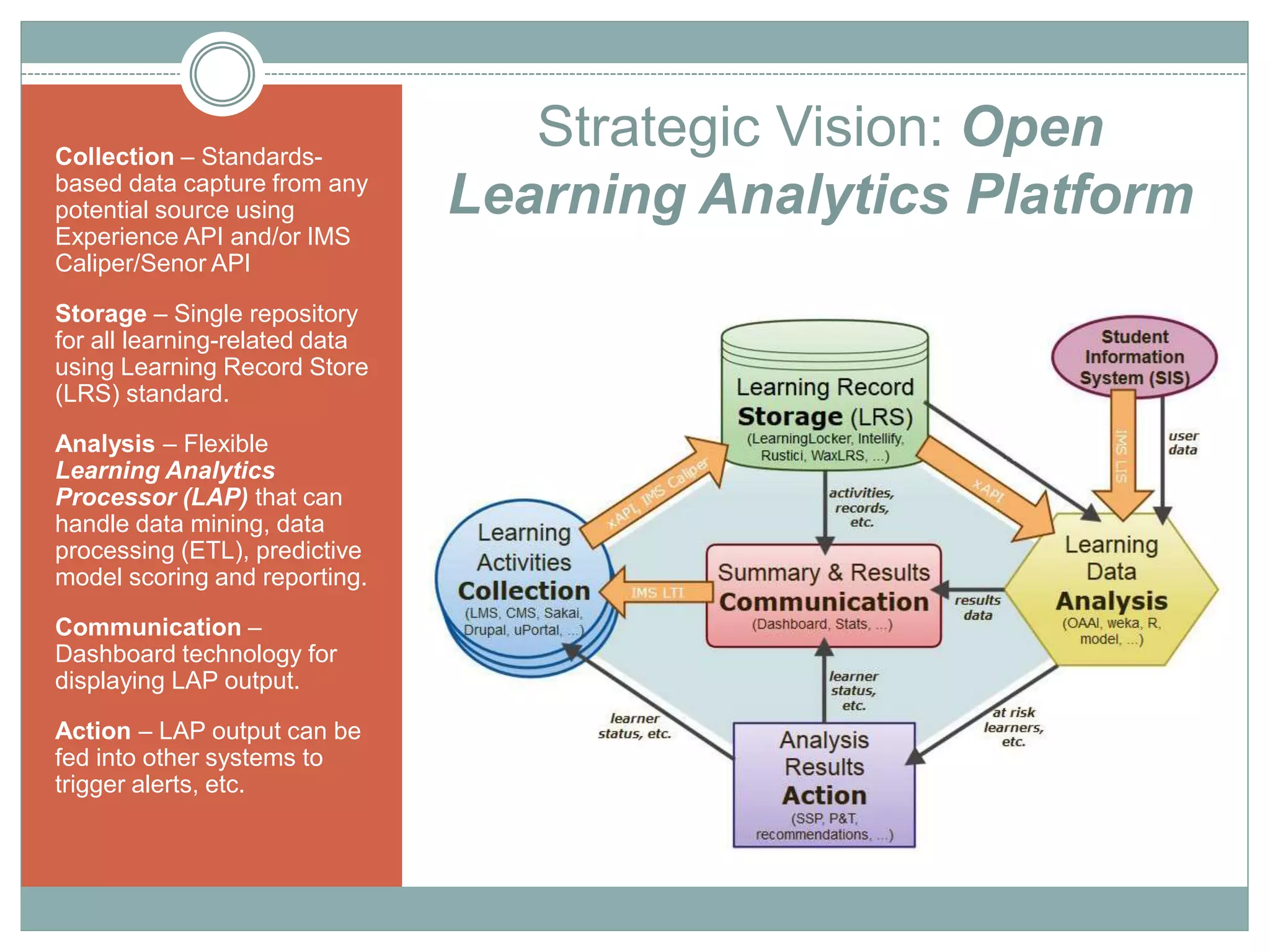
Strategic Vision: Open 
Learning Analytics Platform 
Collection – Standards-based 
data capture from any 
potential source using 
Experience API and/or IMS 
Caliper/Senor API 
Storage – Single repository 
for all learning-related data 
using Learning Record Store 
(LRS) standard. 
Analysis – Flexible 
Learning Analytics 
Processor (LAP) that can 
handle data mining, data 
processing (ETL), predictive 
model scoring and reporting. 
Communication – 
Dashboard technology for 
displaying LAP output. 
Action – LAP output can be 
fed into other systems to 
trigger alerts, etc.
Access to Predictive Model and 
related OS Software… 
OAAI PREDICT IVE MODEL DOWNLOAD 
HT TPS: / /CONF LUENCE.SAKAIPROJECT.ORG/X/ 8AWCB 
APEREO LEARNING ANALYT ICS PROCESSOR DOWNLOAD 
HT TPS: / /CONF LUENCE.SAKAIPROJECT.ORG/X/KWCVBQ
Discussion and Q&A
Discussion Questions 
Do you feel LA will be important to OER and Open 
Education in the future? How important? 
Where do you see connections between the OLA 
network and Open Education? 
How might we best facilitate making connections 
across different “networks”? 
[insert more questions]
Additional Resources 
European OLA Summit – December 1st (LACE) 
 http://www.laceproject.eu/ 
The Asilomar Convention for Learning Research in 
Higher Education 
 http://asilomar-highered.info 
Apereo Learning Analytics Initiative 
 https://confluence.sakaiproject.org/x/rIB_BQ 
Society for Learning Analytics and Research 
 http://solaresearch.org
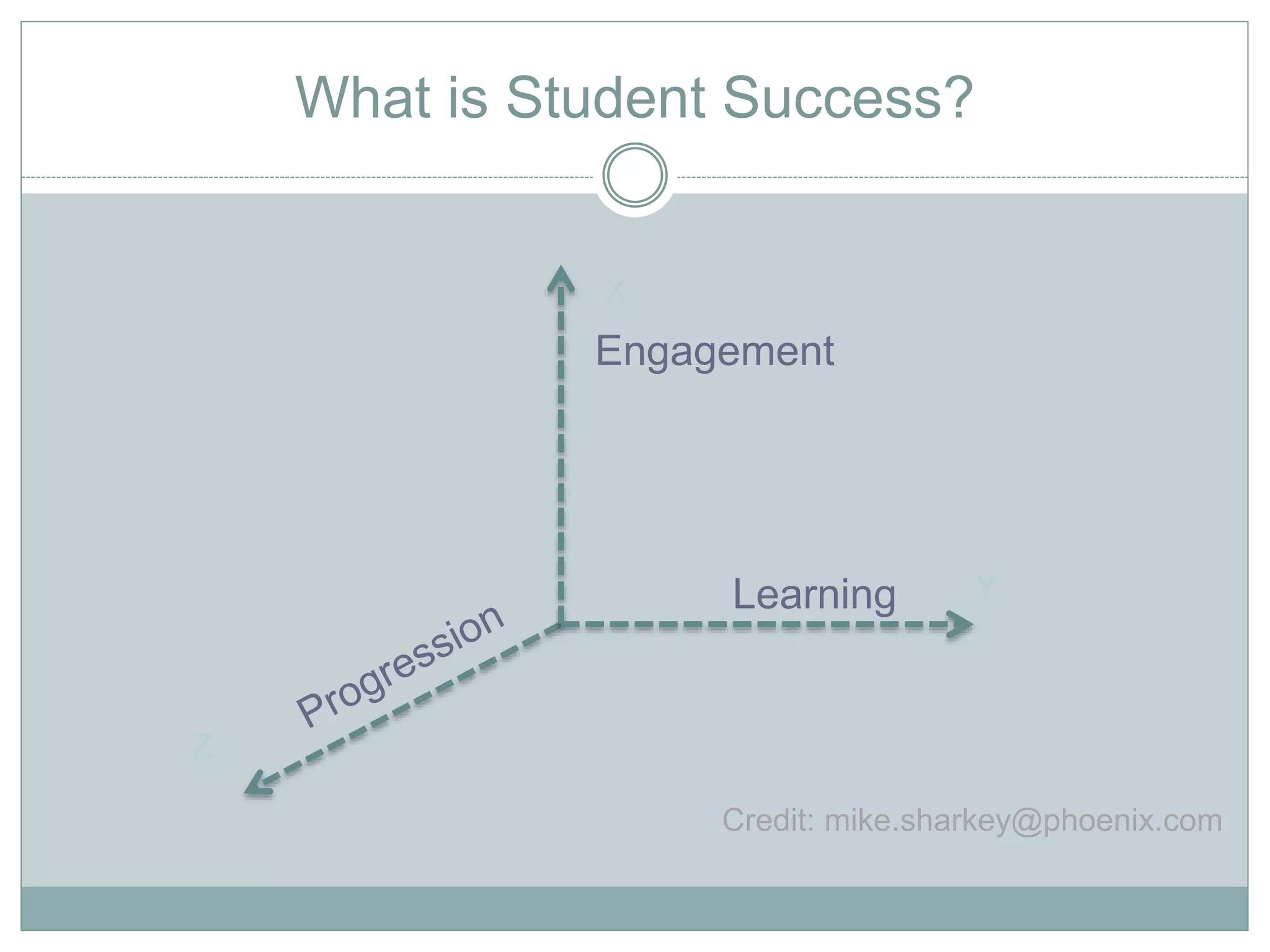
What is Student Success? 
X 
Z 
Engagement 
Learning Y 
Credit: mike.sharkey@phoenix.com
Open Learning Analytics panel at Open Education Conference 2014

Open Learning Analytics panel at Open Education Conference 2014

  • 1.
    Open Learning AnalyticsPanel JOSH BARON ST IAN HÅKLEV NORMAN BIER HASH TAG #OPENLA
  • 2.
    Panel Session Overview Session Goal: Stimulate discussion around the importance of open learning analytics to the future of the larger open education movement Longer-Term Objective: Form connections between the OpenEd and Open Learning Analytics networks Session Format:  Setting the Context – Open Learning Analytics  Examples from the Real World  Discussion/Q&A
  • 3.
    What is LearningAnalytics? Academic Analytics Learning Analytics A process for providing higher education institutions with the data necessary to support operational and financial decision making* The use of analytic techniques to help target instructional, curricular, and resources to support the achievement of specific learning goals* Focused on the business of the institution Focused on the student and their learning behaviors Management/executives are the primary audience Learners and instructors are the primary audience * - Source: Analytics in Higher Education: Establishing a Common Language
  • 4.
    2014 Open LearningAnalytics Summit Society for Learning Analytics (SoLAR) began exploring openness in learning analytics in 2011 International OLA Summit held in March 2014 Participants identified OLA “knowledge domains” as means to organize future work
  • 5.
    OLA Knowledge Domains Open Data and Models  Releasing data sets and models under open licenses Open Research  Publishing research in open-access journals Open-Source Software/Platforms  Open software, standards and APIs Open Strategy and Policy  Open documents on strategy and policy Open Learning Designs  Combine OER & LA to create new models of learning
  • 6.
    Openness = Science NORMAN BIER DIRECTOR, OPEN LEARNING INI T IAT IVE CARNEGIE MEL LON UNIVERSI TY
  • 7.
    The changing valueof content Changing focus in OER community Commoditization of content (Wiley: ‘content is infrastructure’) Instrumenting content is difficult and expensive Well-instrumented content and the tools to analyze student interactions with that content will continue to increase in importance
  • 8.
  • 9.
    Examples Challenges Opportunities CC-OLI Research MOOC Research UC Davis Common measures of outcomes and achievement Simon DataLab Design Analytics Stanford Outcomes Analytics Service Swappable Models Learner Centered
  • 10.
    MOOC RESEARCH AND REPRODUCIBLE SCIENCE ST IAN HÅKLEV INST I TUT IONAL RESEARCHER, OPEN UTORONTO UNIVERSI TY OF TORONTO
  • 11.
    Supporting three MOOCresearch projects (MRI)
  • 12.
  • 13.
  • 14.
    Clicklog: big data,making it queryable, increasing levels of abstraction
  • 15.
  • 24.
    Open Data Models& OS Learning Analytics Platform JOSH BARON SENIOR ACADEMIC TECHNOLOGY OF F ICER MARIST COL LEGE
  • 25.
    OAAI: Overview andImpact EDUCAUSE Next Generation Learning Challenges (NGLC) Funded by Bill and Melinda Gates Foundations $250,000 over a 15 month period Goal: Leverage Big Data concepts to create an open-source academic early alert system and research “scaling factors”
  • 26.
    Student Aptitude Data (SATs, current GPA, etc.) Student Demographic Data (Age, gender, etc.) Sakai Event Log Data Sakai Gradebook Data Step #1: Developed model using historical data Predictive Model Scoring Identifies students “at risk” to not complete course LMS Data SIS Data OAAI Early Alert System Overview Intervention Deployed “Awareness” or Online Academic Support Environment (OASE) “Creating an Open Academic Early Alert System” Model Developed Using Historical Data Academic Alert Report (AAR)
  • 27.
    Research Design DeployedOAAI system to 2200 students across four institutions  Two Community Colleges  Two Historically Black Colleges and Universities Design > One instructor teaching 3 sections  One section was control, other 2 were treatment groups Each instructor received an AAR three times during the semester:  Intervals were 25%, 50% and 75% into the semester
  • 28.
    Intervention Research Findings Final Course Grades Analysis showed a statistically significant positive impact on final course grades  No difference between treatment groups Saw larger impact in spring then fall Similar trend amount low income students Mean Final Grade for "at Risk" Students 100 90 80 70 60 50 Awareness OASE Control Final Grade (%)
  • 29.
    Intervention Research Findings Content Mastery Student in intervention groups were statistically more likely to “master the content” then those in controls.  Content Mastery = Grade of C or better Similar for low income students. Content Mastery for "at Risk" Students 1000 800 600 400 200 0 Yes No Yes No Control Intervention Frequency
  • 30.
    More Research Findings… JAYAPRAKASH, S. M. , MOODY, E. W. , LAURÍA, E. J. , REGAN, J. R. , & BARON, J. D. (2014) . EARLY ALERT OF ACADEMICALLY AT-RISK STUDENTS: AN OPEN SOURCE ANALYTICS INITIATIVE. JOURNAL OF LEARNING ANALYTICS, 1(1) , 6 -47.
  • 31.
    Strategic Vision: Open Learning Analytics Platform Collection – Standards-based data capture from any potential source using Experience API and/or IMS Caliper/Senor API Storage – Single repository for all learning-related data using Learning Record Store (LRS) standard. Analysis – Flexible Learning Analytics Processor (LAP) that can handle data mining, data processing (ETL), predictive model scoring and reporting. Communication – Dashboard technology for displaying LAP output. Action – LAP output can be fed into other systems to trigger alerts, etc.
  • 32.
    Access to PredictiveModel and related OS Software… OAAI PREDICT IVE MODEL DOWNLOAD HT TPS: / /CONF LUENCE.SAKAIPROJECT.ORG/X/ 8AWCB APEREO LEARNING ANALYT ICS PROCESSOR DOWNLOAD HT TPS: / /CONF LUENCE.SAKAIPROJECT.ORG/X/KWCVBQ
  • 34.
  • 35.
    Discussion Questions Doyou feel LA will be important to OER and Open Education in the future? How important? Where do you see connections between the OLA network and Open Education? How might we best facilitate making connections across different “networks”? [insert more questions]
  • 36.
    Additional Resources EuropeanOLA Summit – December 1st (LACE)  http://www.laceproject.eu/ The Asilomar Convention for Learning Research in Higher Education  http://asilomar-highered.info Apereo Learning Analytics Initiative  https://confluence.sakaiproject.org/x/rIB_BQ Society for Learning Analytics and Research  http://solaresearch.org
  • 37.
    What is StudentSuccess? X Z Engagement Learning Y Credit: mike.sharkey@phoenix.com

Editor's Notes

  • #2 We should each briefly introduce ourselves…
  • #3 Our goal/hope for this session is that we get folks here at OpenEd to start discussing the role that learning analytics, and specifically OPEN LA, will and should play in the future of the larger open education movement. I think many engaged in the emerging field of LA see its huge potential to impact on education in deep and significant ways yet much of the work to date in LA has been very “closed”. If this remains the case it could greatly limit the future impact of open education itself (at least that is what we might postulate). Longer term, it would be great to see connections forming between the Open Ed “network of practice” and the OLA “network”.
  • #4 Before we jump in, its important that we make sure we’re all on the same page with regards to what we mean by “learning analytics” as it remains a new term that can have many definitions….
  • #5 OK, so how did all of this get started? Most credit George Siemens and the Society for Learning Analytics Research, or SoLAR, with getting the conversation started around openness in learning analytics with a white paper that he and others at SoLAR drafted in 2011 which called for an “open framework and platform” for researching and deploying learning analytics at scale. More recently myself, George and Kim Arnold (who had been at Purdue working with John Campbell and is now at Wisconsin) worked to organize a two-day OLA Summit last March following the Learning Analytics and Knowledge (LAK) conference which brought together around 40 international LA leaders representing a range of institutions and organizations (only a few of which are listed here) from around the world. One of the major objectives and outcomes was the identification of key OLA “knowledge domains” around which we have started to identify current work and making connections across as means to grow and develop a large network of practice.
  • #6 After two days of being locked up in a windowless hotel conference room on the outskirts of the Indianapolis airport eating bad food, the summit participants come up with these five knowledge domains…[review each one quickly…maybe give example using “knowledge maps”]….I’m going to now turn it over to my colleagues who will briefly share examples of work and issues in some of these domains….
  • #7 Need for transparency into process Broader need Specific challenges Interesting projects
  • #8 First started thinking about this deeply from convo w/ Cable and David Micheal Feldstein
  • #9 Science vs. Alchemy Proprietary, secret models Cost of re-creation Reproducability
  • #26 OK, so what is the OAAI and how are we working to address this problem…with the goal of leveraging Big Data to create an open-source academic early alert system that allows us to predict which students are at risk to not complete the course (and do so early on in the semester) and then deploy an intervention to help that student succeed.
  • #27 I’ll talk about our intervention strategies in a little more detail a bit later on in the presentation…