The IR Model in Pastures New –
redeploying a successful model of
on-line learning.
Dr J Simon Rofe,
Global Diplomacy Programme Director
SOAS, University of London
Scope:
Context & background 3D‟s of the IR
Model






Design
Development
Delivery



New Challenges explored in 4 Roles



Outcomes
Outcomes


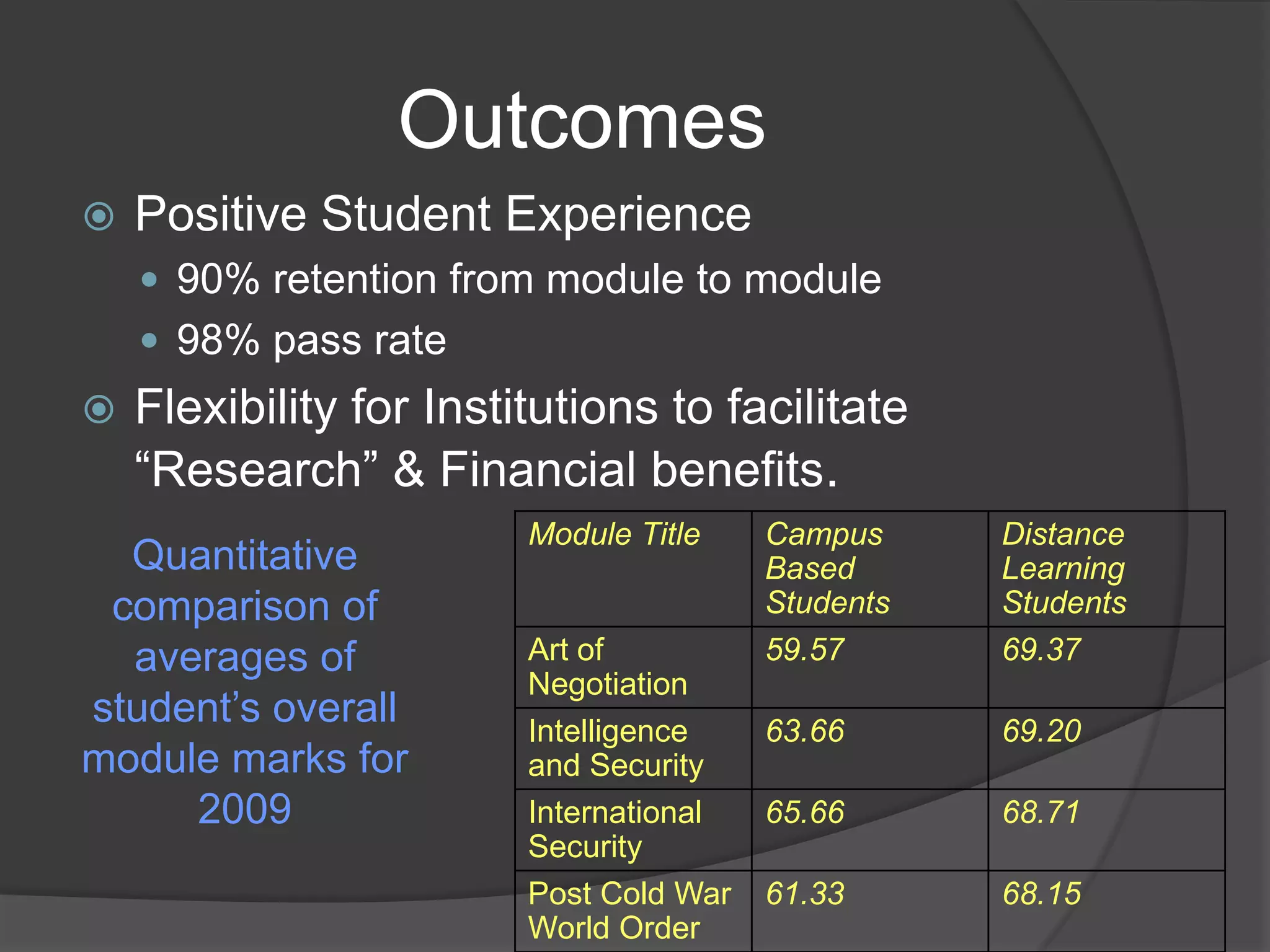
Positive Student Experience
 90% retention from module to module
 98% pass rate



Flexibility for Institutions to facilitate
“Research” & Financial benefits.

Quantitative
comparison of
averages of
student‟s overall
module marks for
2009

Module Title

Art of
Negotiation
Intelligence
and Security
International
Security
Post Cold War
World Order

Campus
Based
Students
59.57

Distance
Learning
Students
69.37

63.66

69.20

65.66

68.71

61.33

68.15
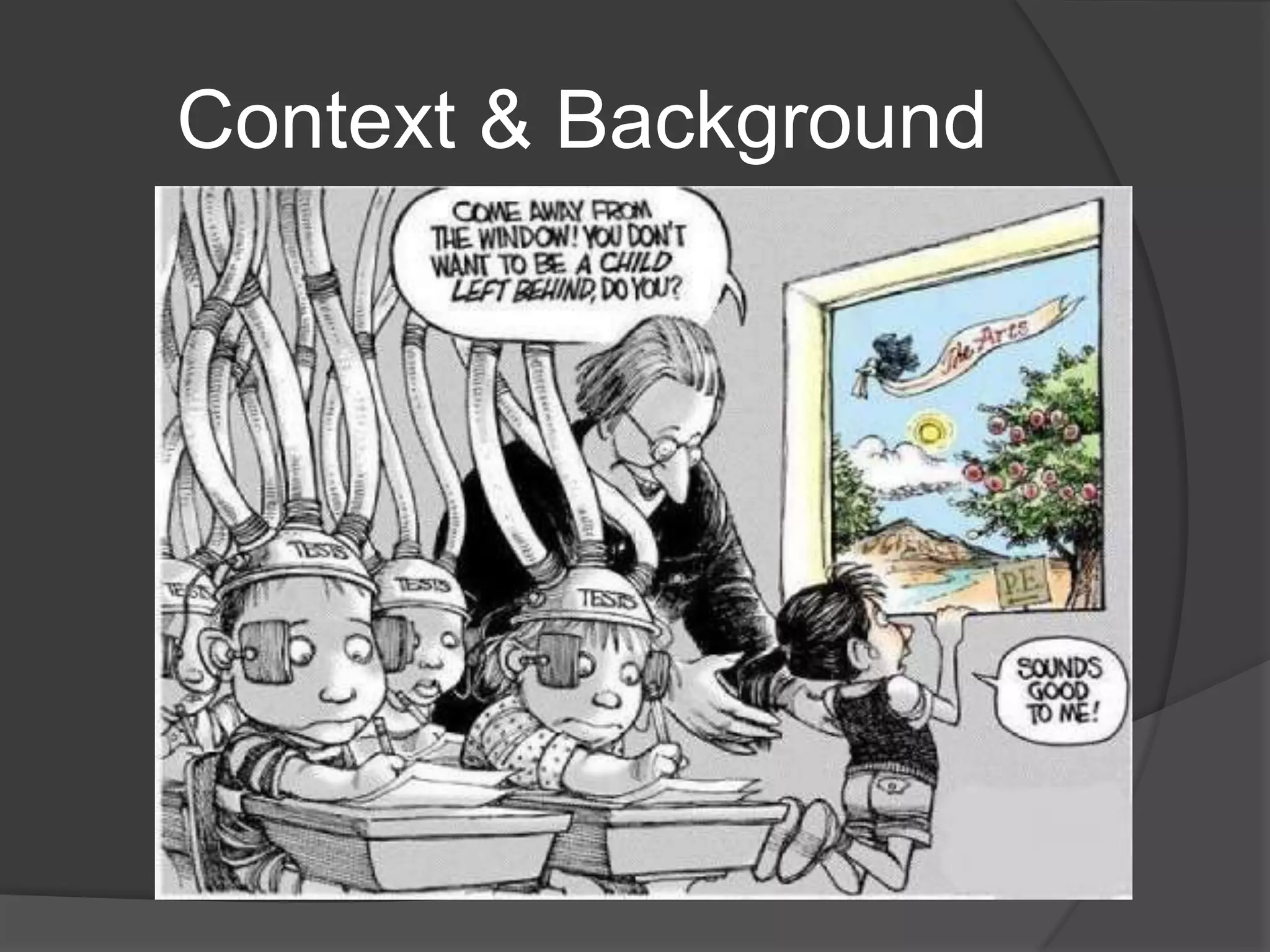
Context & Background
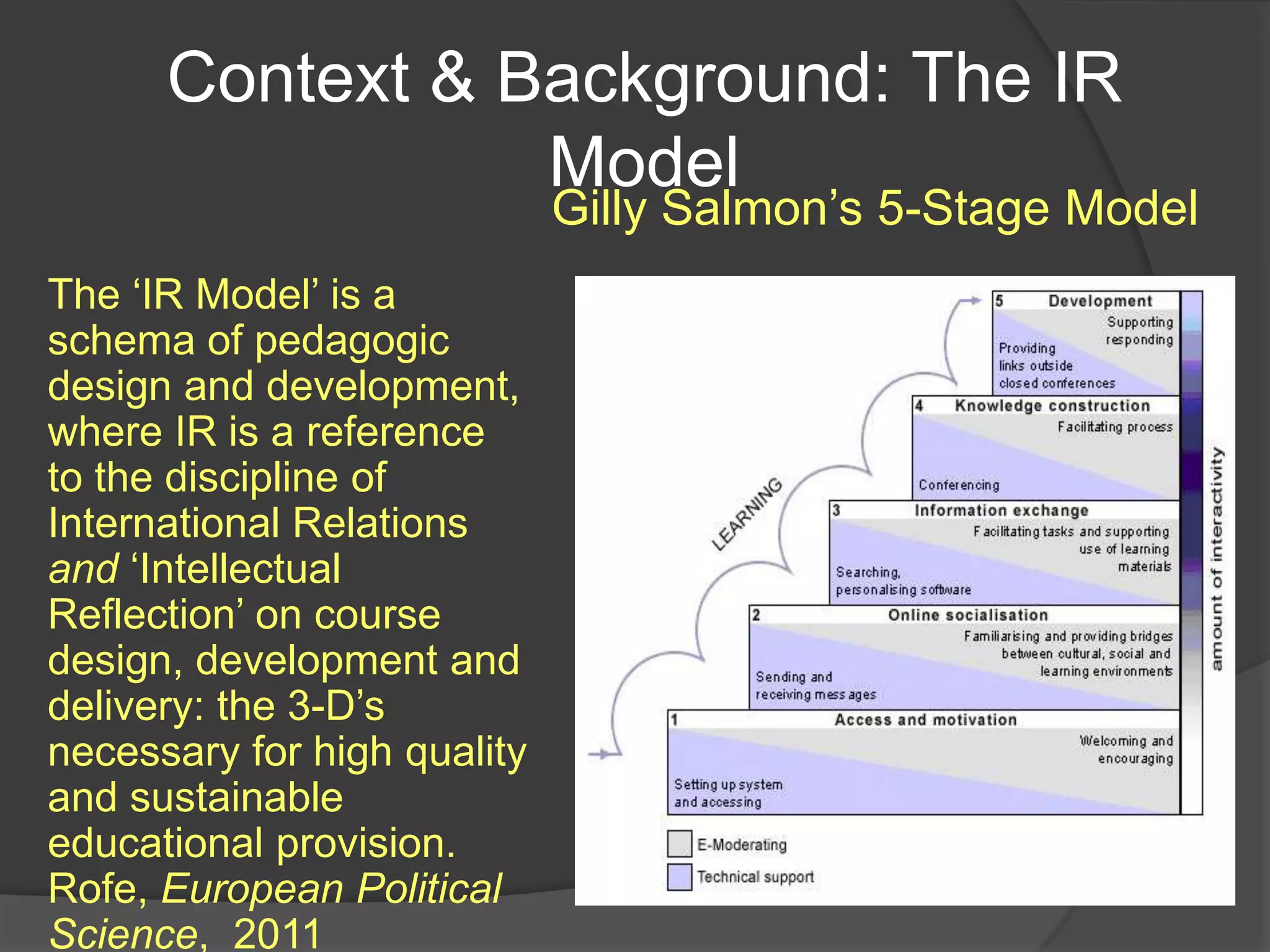
Context & Background: The IR
Model

Gilly Salmon‟s 5-Stage Model

The „IR Model‟ is a
schema of pedagogic
design and development,
where IR is a reference
to the discipline of
International Relations
and „Intellectual
Reflection‟ on course
design, development and
delivery: the 3-D‟s
necessary for high quality
and sustainable
educational provision.
Rofe, European Political
Science, 2011
E-tivity 3

E-tivity 3
Purpose:

To analyse this well-known article and identify its major
attributes:
Robert Kagan, 'Power and Weakness', Policy Review, 13/2,
June/July 2002 [Leicester E-link]

Task:

Please follow the link above and read the article. Then
provide a brief analysis of it (maximum 400 words) to the Etivity 3 forum by Monday of Week 4.

Respond:

In the E-tivity 3 forum please post comments on your peer‟s
assessments by way of sharing your own articulation on the
article, between Monday of Week 4 and Sunday of Week 4.

Outcome:

You will be able to analyse the content of a scholarly article
and share your thoughts on it.
E-tivity 5
E-tivity 5
Purpose:

To analyse a well-known article and identify its major
attributes.
Your source will be identified in the feedback to your
essay plan for E-tivity 4.

Task:

This e-tivity has two parts.
First, please read the suggested source, then post its
full bibliographic reference and a brief analysis of it
(maximum 400 words) in the E-tivity 5 forum as soon
as you are able.

Respond:

Second, please post comments on how you think your
reading of this article informs your essay. Of course
your wider reading will also be relevant here, especially
if the source that has been recommended represented
a different school of thought from your initial reading.

Outcome:

You will be able to analyse the content of a scholarly
article in relation to your own essay and share your
thoughts on it.
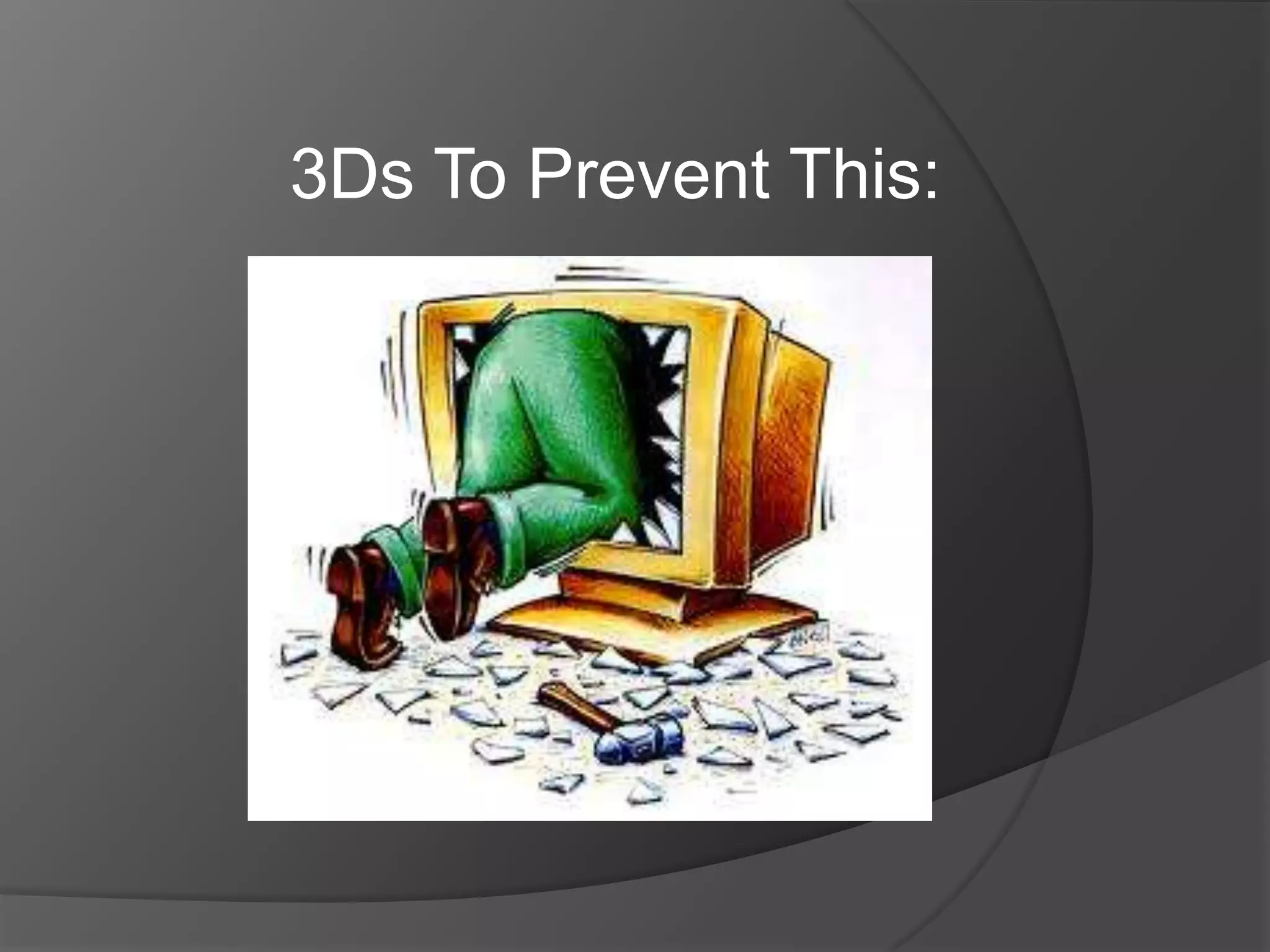
3Ds To Prevent This:
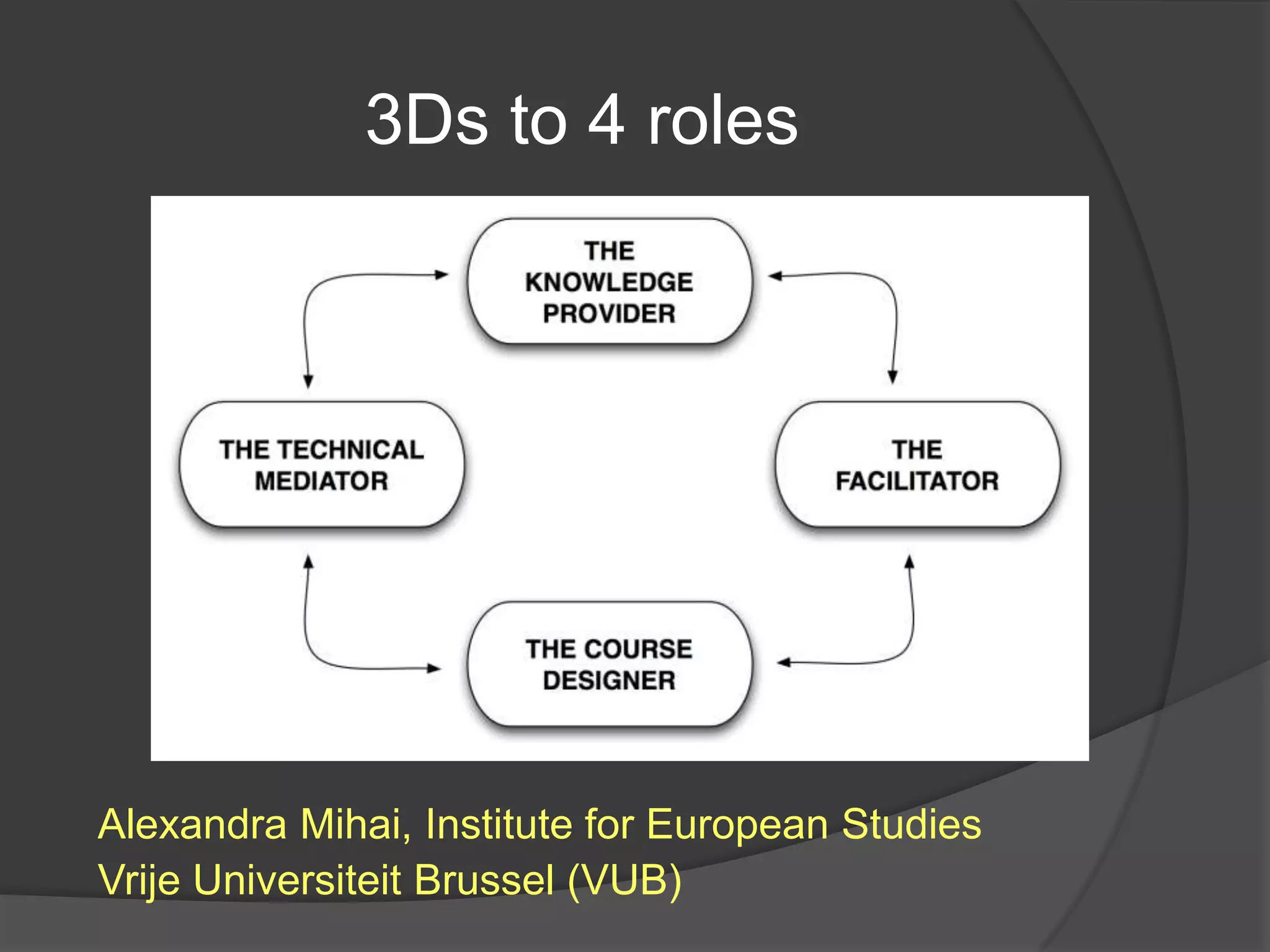
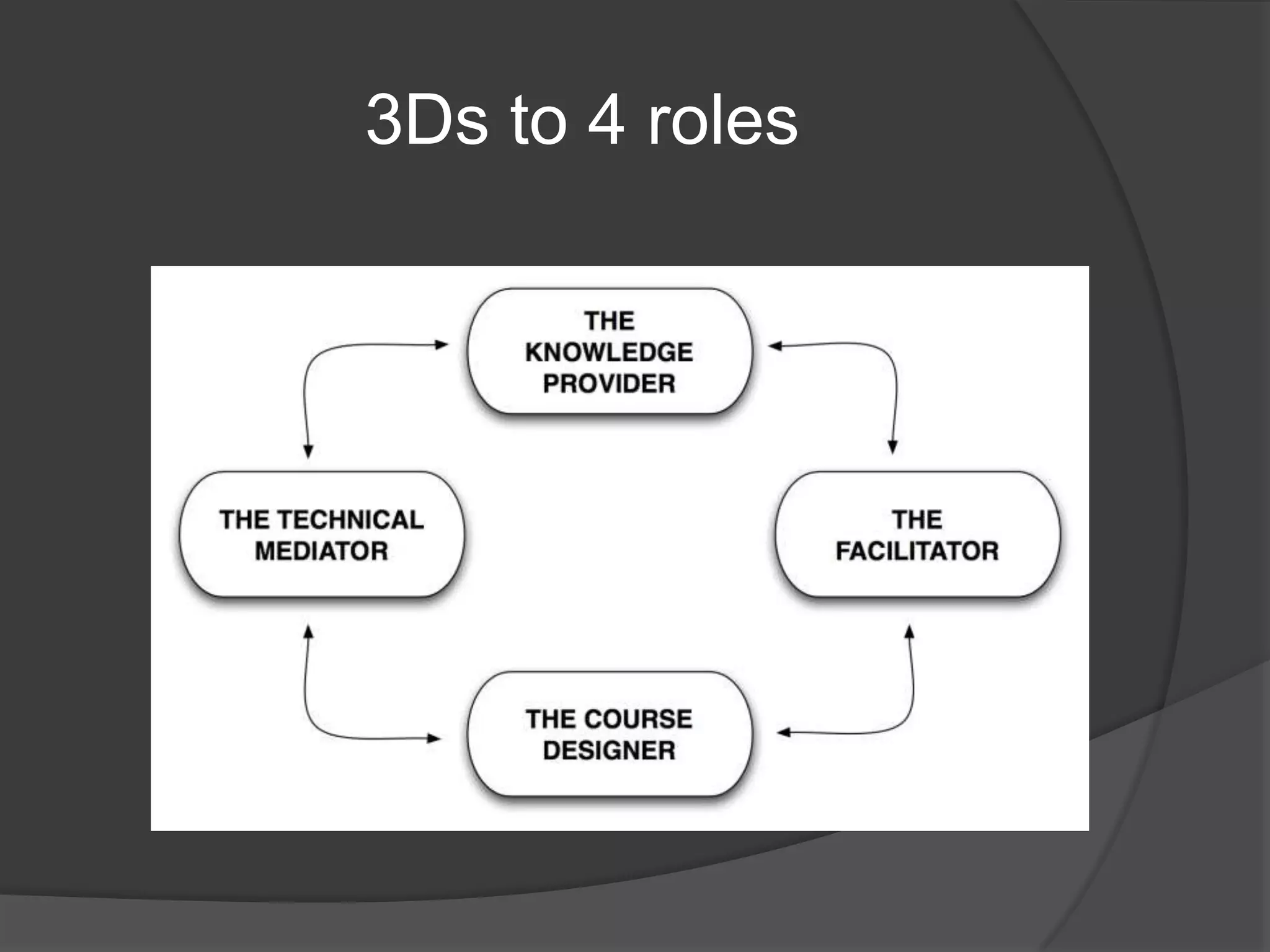
3Ds to 4 roles

Alexandra Mihai, Institute for European Studies
Vrije Universiteit Brussel (VUB)
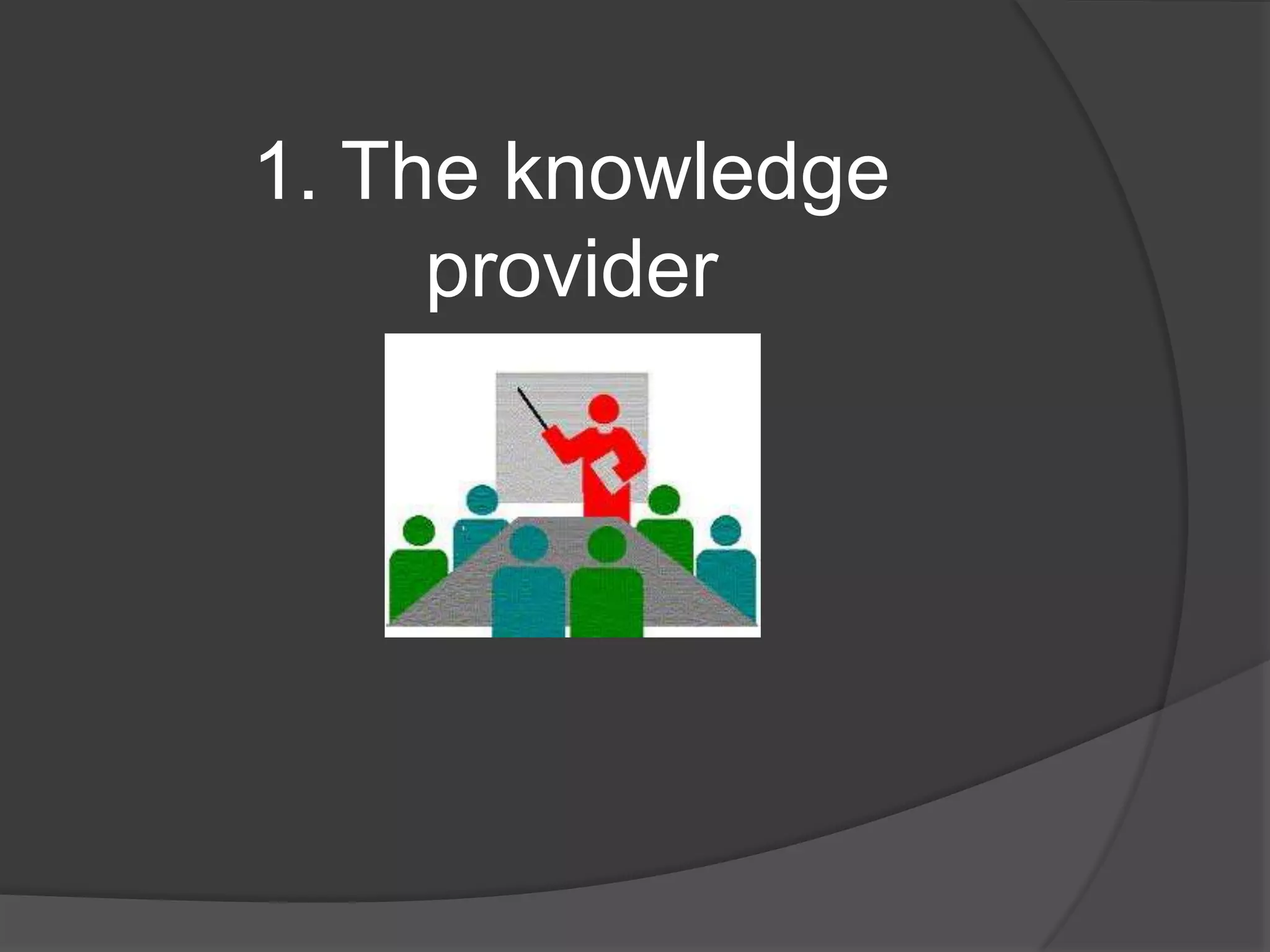
1. The knowledge
provider
The knowledge provider



Same concept as in traditional teaching
Educator as knowledge provider

BUT: a few notable differences for the 3Ds
 not a face-to-face setup; no body language
 Need to focus more on keeping students engaged
 Need for very clear pedagogical goals
 More emphasis on HOW we teach
 Information vs. knowledge (constructing meaning)
 Teacher as a curator



For theoretical/ conceptual content: use of visuals
 Digitalisation vs. virtualisation of content
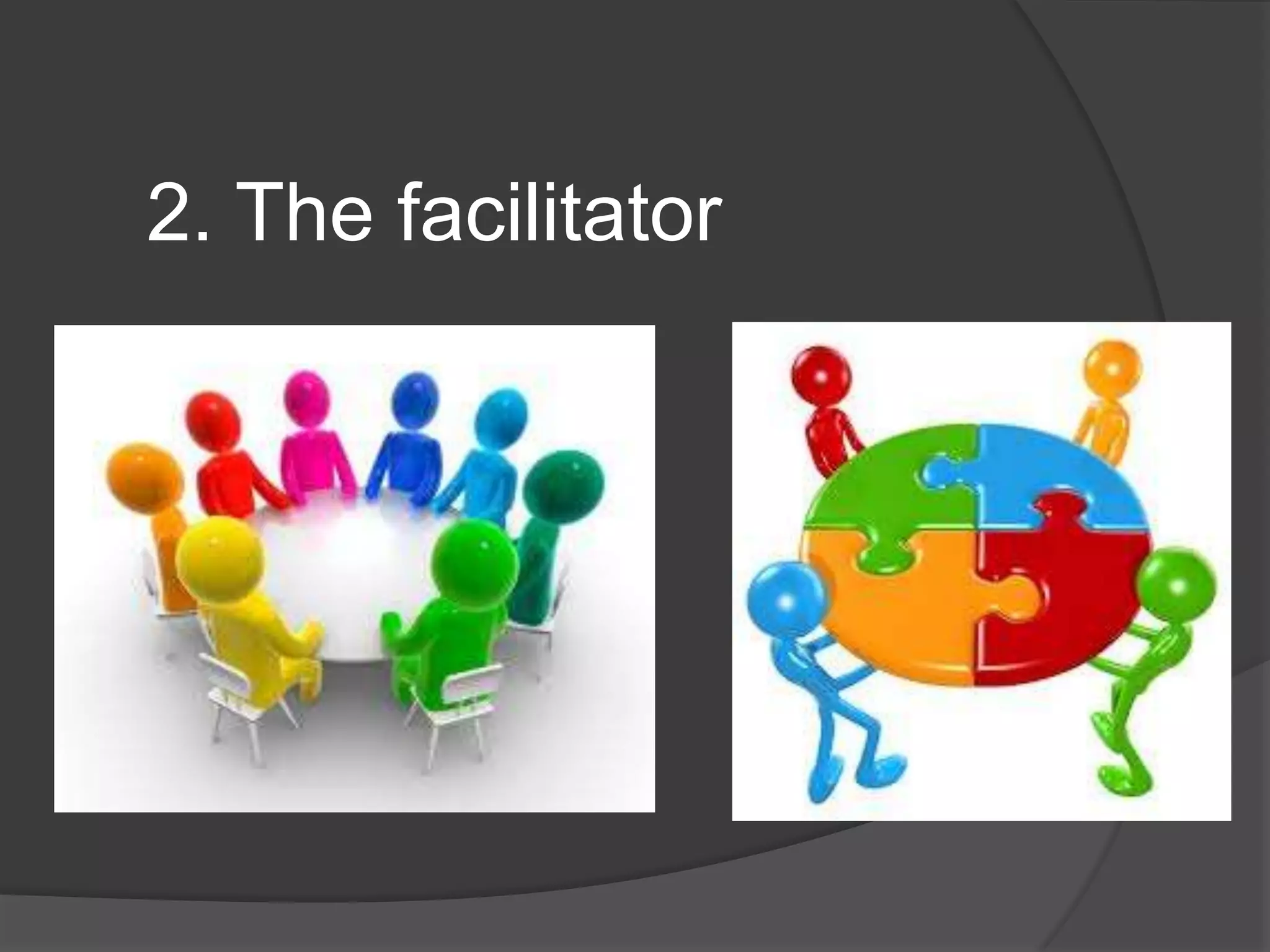
2. The facilitator
The facilitator






Similar role exists in traditional classroom
 Educator as facilitator of dialogue and exchange
BUT again with some 3D differences:
This role is more important in online education; teacher
needs to learn how to take a step back
Social role: creating a learning community
Need to create a safe space for debate and “trial & error”
 Virtual management techniques



Teacher as coach & co-learner
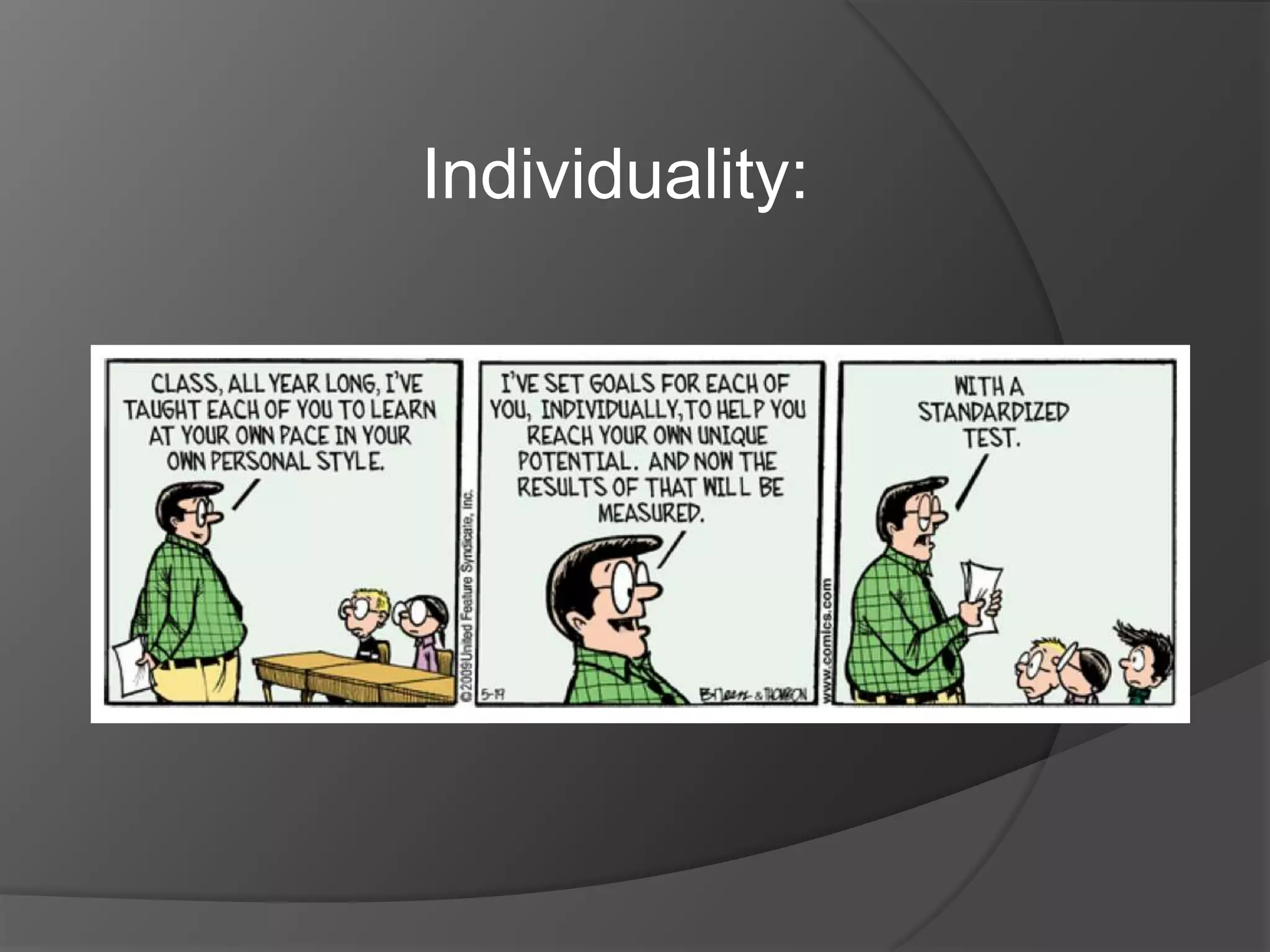
Individuality:
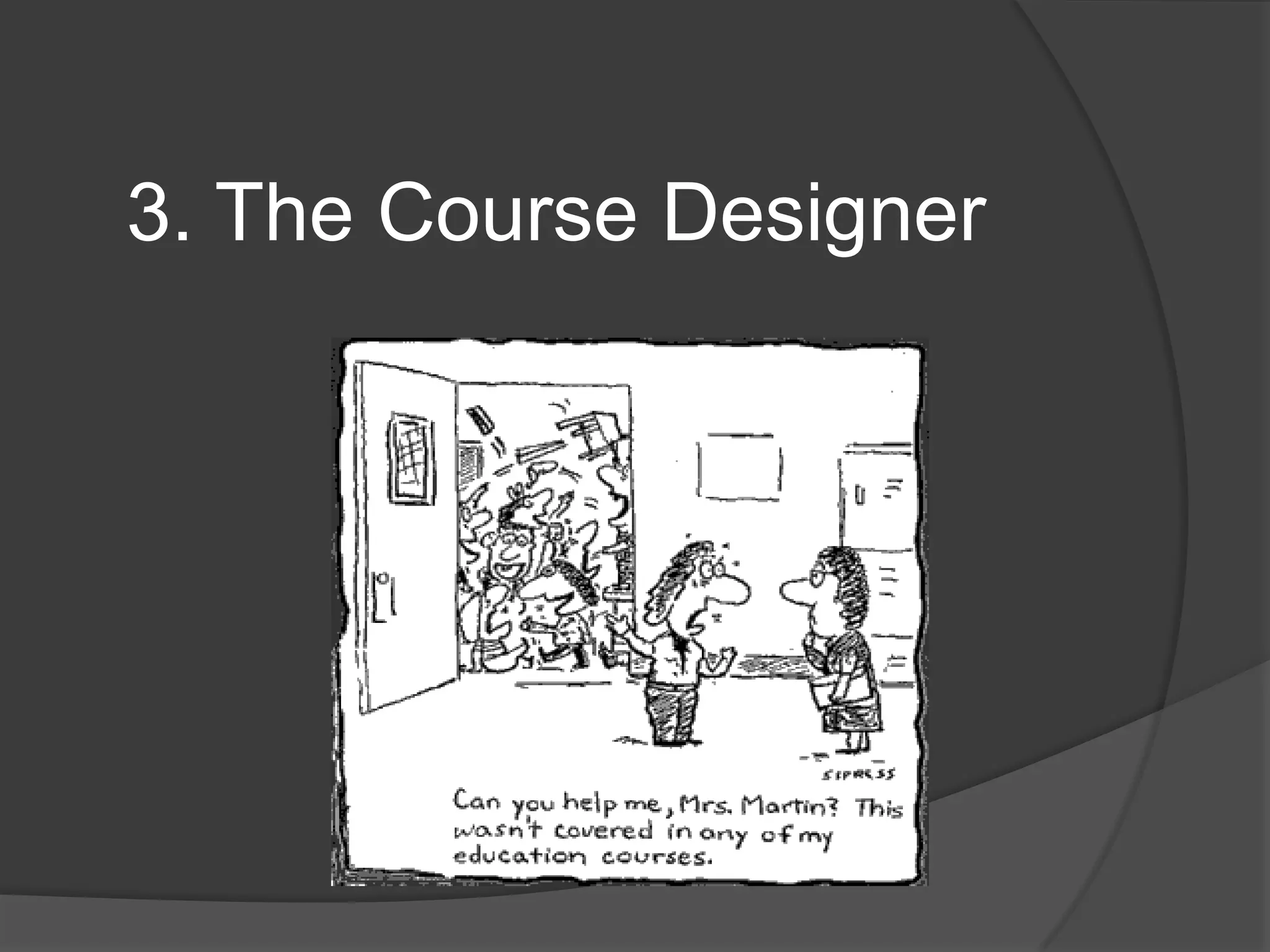
3. The Course Designer
The Course Designer
»Designing

the course, building the curriculum, organinsing &
managing content & students‟ activity
»Focus on:
» Communication strategy: managing expectations
» Communication style: clear & precise
» Assessment- needs to be reassessed
» Feedback: regular; requires self-discipline
4. The technical mediator
New Tech
The technical mediator








New role in online education
Educator as mediator between students, colleague
teachers and the technical staff
This is a very specific role
Teachers need to be aware of it + need training
Vital for the smooth working of the online courses
Linked to building students‟ and teachers‟ trust in the
online platform
3Ds to 4 roles
Conclusions:
What have I learnt…
 3Ds: “Bake in don‟t bolt on”
 Guide by the side; not sage on the
stage.




“Times the are a changing”.

RIDE2013 presentation: The IR Model in Pastures New – redeploying a successful model of on-line learning

  • 1.
    The IR Modelin Pastures New – redeploying a successful model of on-line learning. Dr J Simon Rofe, Global Diplomacy Programme Director SOAS, University of London
  • 2.
    Scope: Context & background3D‟s of the IR Model     Design Development Delivery  New Challenges explored in 4 Roles  Outcomes
  • 3.
    Outcomes  Positive Student Experience 90% retention from module to module  98% pass rate  Flexibility for Institutions to facilitate “Research” & Financial benefits. Quantitative comparison of averages of student‟s overall module marks for 2009 Module Title Art of Negotiation Intelligence and Security International Security Post Cold War World Order Campus Based Students 59.57 Distance Learning Students 69.37 63.66 69.20 65.66 68.71 61.33 68.15
  • 4.
  • 5.
    Context & Background:The IR Model Gilly Salmon‟s 5-Stage Model The „IR Model‟ is a schema of pedagogic design and development, where IR is a reference to the discipline of International Relations and „Intellectual Reflection‟ on course design, development and delivery: the 3-D‟s necessary for high quality and sustainable educational provision. Rofe, European Political Science, 2011
  • 6.
    E-tivity 3 E-tivity 3 Purpose: Toanalyse this well-known article and identify its major attributes: Robert Kagan, 'Power and Weakness', Policy Review, 13/2, June/July 2002 [Leicester E-link] Task: Please follow the link above and read the article. Then provide a brief analysis of it (maximum 400 words) to the Etivity 3 forum by Monday of Week 4. Respond: In the E-tivity 3 forum please post comments on your peer‟s assessments by way of sharing your own articulation on the article, between Monday of Week 4 and Sunday of Week 4. Outcome: You will be able to analyse the content of a scholarly article and share your thoughts on it.
  • 7.
    E-tivity 5 E-tivity 5 Purpose: Toanalyse a well-known article and identify its major attributes. Your source will be identified in the feedback to your essay plan for E-tivity 4. Task: This e-tivity has two parts. First, please read the suggested source, then post its full bibliographic reference and a brief analysis of it (maximum 400 words) in the E-tivity 5 forum as soon as you are able. Respond: Second, please post comments on how you think your reading of this article informs your essay. Of course your wider reading will also be relevant here, especially if the source that has been recommended represented a different school of thought from your initial reading. Outcome: You will be able to analyse the content of a scholarly article in relation to your own essay and share your thoughts on it.
  • 8.
  • 9.
    3Ds to 4roles Alexandra Mihai, Institute for European Studies Vrije Universiteit Brussel (VUB)
  • 10.
  • 11.
    The knowledge provider   Sameconcept as in traditional teaching Educator as knowledge provider BUT: a few notable differences for the 3Ds  not a face-to-face setup; no body language  Need to focus more on keeping students engaged  Need for very clear pedagogical goals  More emphasis on HOW we teach  Information vs. knowledge (constructing meaning)  Teacher as a curator  For theoretical/ conceptual content: use of visuals  Digitalisation vs. virtualisation of content
  • 12.
  • 13.
    The facilitator     Similar roleexists in traditional classroom  Educator as facilitator of dialogue and exchange BUT again with some 3D differences: This role is more important in online education; teacher needs to learn how to take a step back Social role: creating a learning community Need to create a safe space for debate and “trial & error”  Virtual management techniques  Teacher as coach & co-learner
  • 14.
  • 15.
    3. The CourseDesigner
  • 16.
    The Course Designer »Designing thecourse, building the curriculum, organinsing & managing content & students‟ activity »Focus on: » Communication strategy: managing expectations » Communication style: clear & precise » Assessment- needs to be reassessed » Feedback: regular; requires self-discipline
  • 17.
  • 18.
  • 19.
    The technical mediator       Newrole in online education Educator as mediator between students, colleague teachers and the technical staff This is a very specific role Teachers need to be aware of it + need training Vital for the smooth working of the online courses Linked to building students‟ and teachers‟ trust in the online platform
  • 20.
    3Ds to 4roles
  • 21.
    Conclusions: What have Ilearnt…  3Ds: “Bake in don‟t bolt on”  Guide by the side; not sage on the stage.   “Times the are a changing”.

Editor's Notes

  • #5 What works
  • #22 Alison King, “From Sage on the Stage to Guide on the Side”, College Teaching, Vol. 41 No.1 (Winter, 1993) pp.30-35. The presentation will outline the 3D’s: Design, Development and Delivery of a DL course and its initial deployment, before looking at elements of change and continuity which characterise its most recent incarnation. The presentation will conclude with the trials and tribulations of taking a proven approach to online learning to pastures new.  What have I learnt – a lot Cherish diversity – the opportunities are that much greater in DL/Online because you are not constrained by room size = No one size fits all - Innovation needs to be cherished, not quashed. Cottage industries are productive and can be profitable. Pick and mix – DL director’s choose what central services they need Who are your stakeholders as Director of DL?ATs matter – really, really matter. This forum matters – sharing the experience is beneficial – avoid parochialism