CRYPOGRAPHY
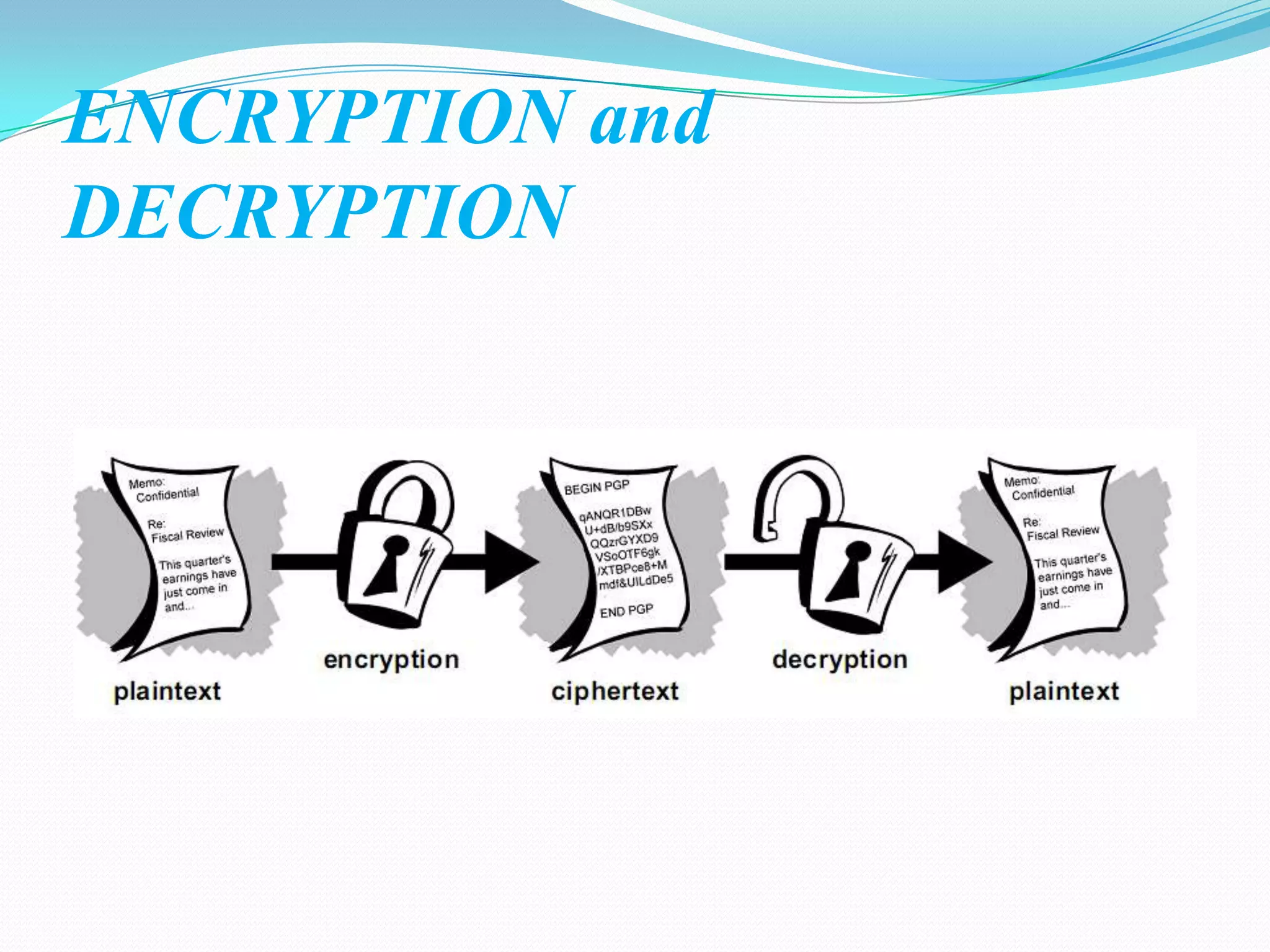
ENCRYPTION and
DECRYPTION
Some Basic Terms
 Plain Text/Clear Text :Data that can be read and
  understood without any special measure.
 Cipher Text :The unreadable plain text after
  encryption.
 Encryption :The method of disguising to hide its
  substance.
 Decryption :The method of reverting cipher text to
  its original plain text.
CRYPTANALYSIS vs. CRYPTOGRAPHY?
 Cryptography is a science of using mathematics to
  encrypt and decrypt data. It enable us to store and
  transmit sensitive data over unsecure network.
 Cryptanalysis is the science of analyzing and breaking
  secure communication.
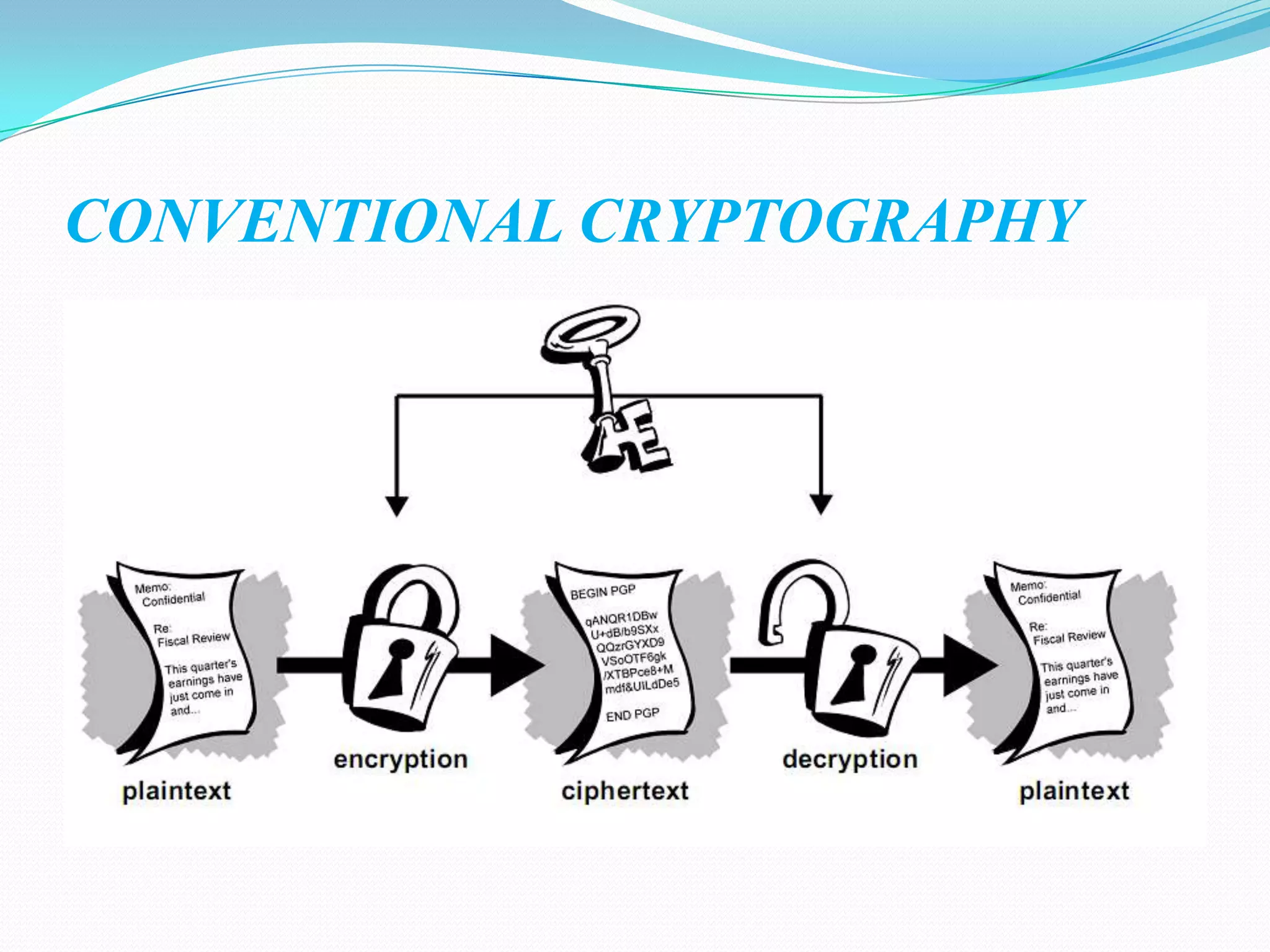
CONVENTIONAL CRYPTOGRAPHY
 In conventional cryptography(symmetric key
  encryption)one key is used both for encryption and
  decryption.
 i.e. Caesar’s cipher
 This cryptography is very fast but is quite expensive
  due to difficulty of secure key distribution.
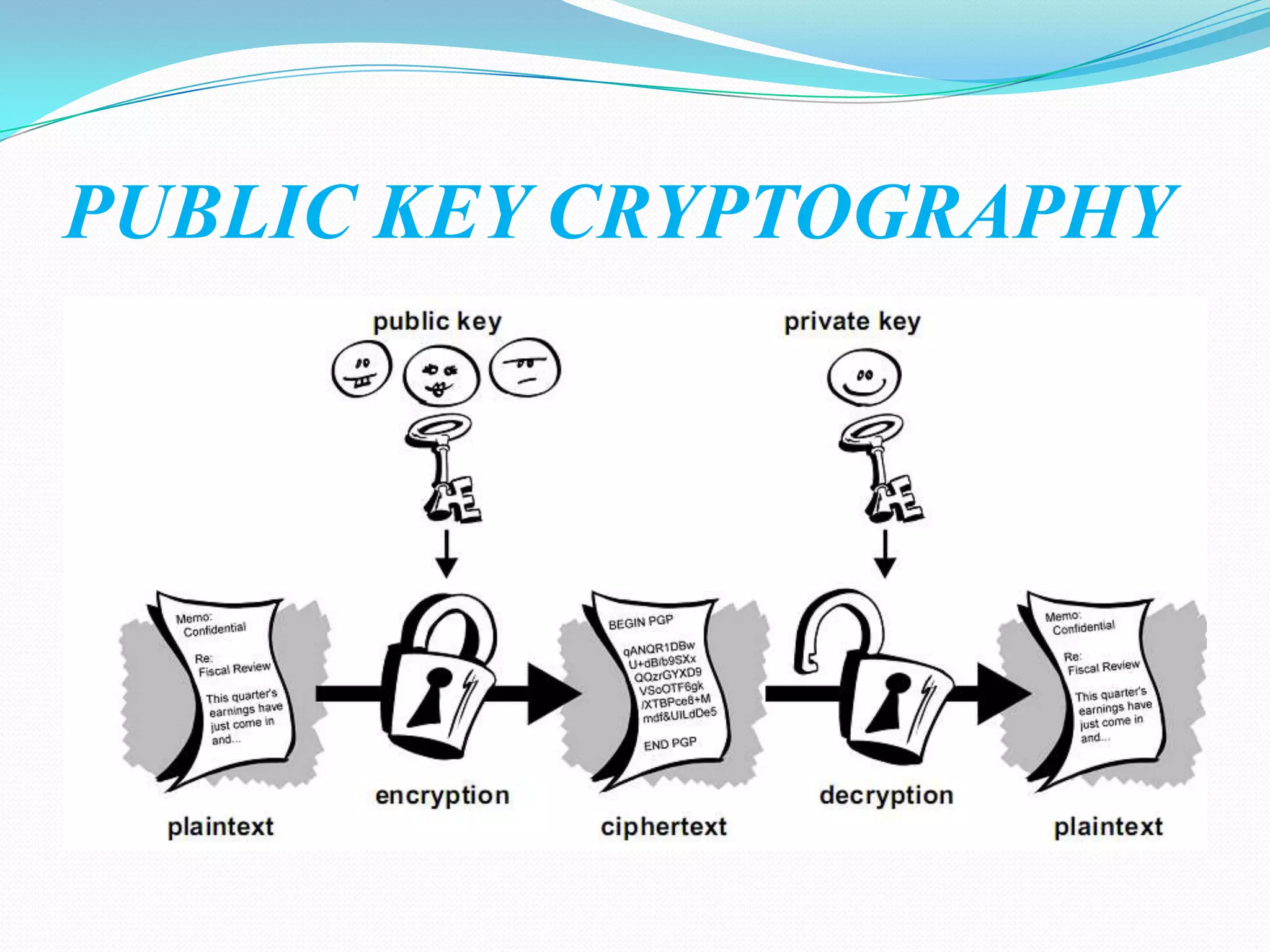
PUBLIC KEY CRYPTOGRAPHY
 It uses two key, one key for encryption(public key) and
  one for decryption(private key).
 We publish the data with the public key to the world
  while keeping the private key.
 The need for sender and receiver to share secret key
  via some secure channel is eliminated.
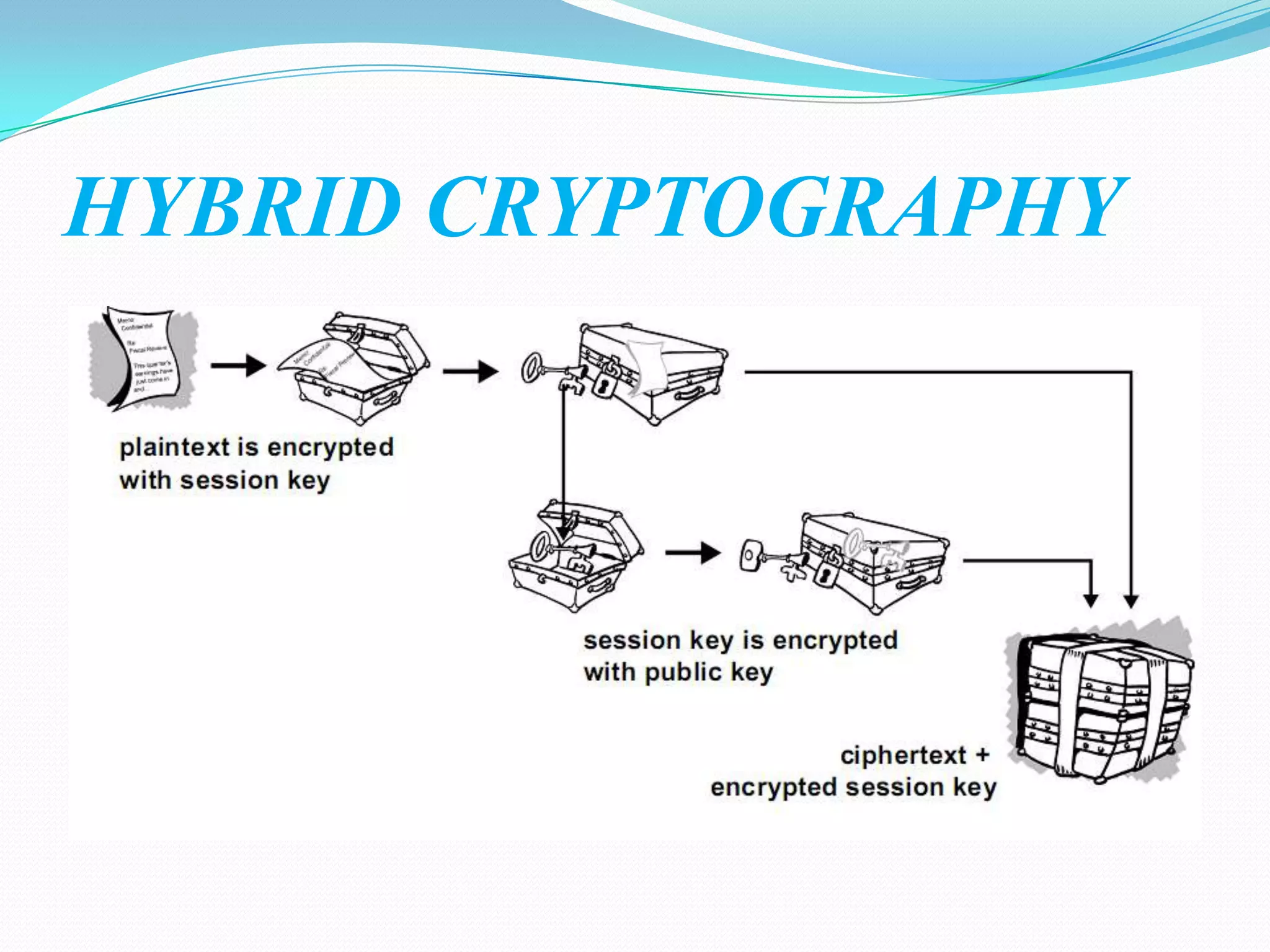
HYBRID CRYPTOGRAPHY
Combines strengths of both methods
Asymmetric distributes symmetric key.
 Also known as a session key(one time
 only secret key).
 Symmetric provides bulk encryption
i.e. PGP
KEYS
 Work with cryptographic algorithm to produce a
  specific cipher text.
 Larger keys are secure for longer period of time.
STEGANOGRAPHY
 Greek for “covered writing”


 “The art and science of writing hidden messages in
  such a way that no one apart from the intended
  recipient even knows that a message has been sent.”
 It makes use of seemingly innocent cover files such as
  text, audio, and image files
IMAGE BASED TECHNIQUE
 Least Significant Bit Insertion
 Replaces the LSB with the message to be encoded.
 Simple, but susceptible to lossy compression and
  image manipulation
 Masking and Filtering
 Masks secret data over the original data by changing
  the luminance of particular areas
 During masking, it embed the message within
  significant bits of the cover image
 Digital Watermarking – provides identification
 pertaining to the owner; i.e. license or copyright
 information
 - Invisible vs. Visible

 Fingerprinting – provides identification of the user;
 used to identify and track illegal use of content
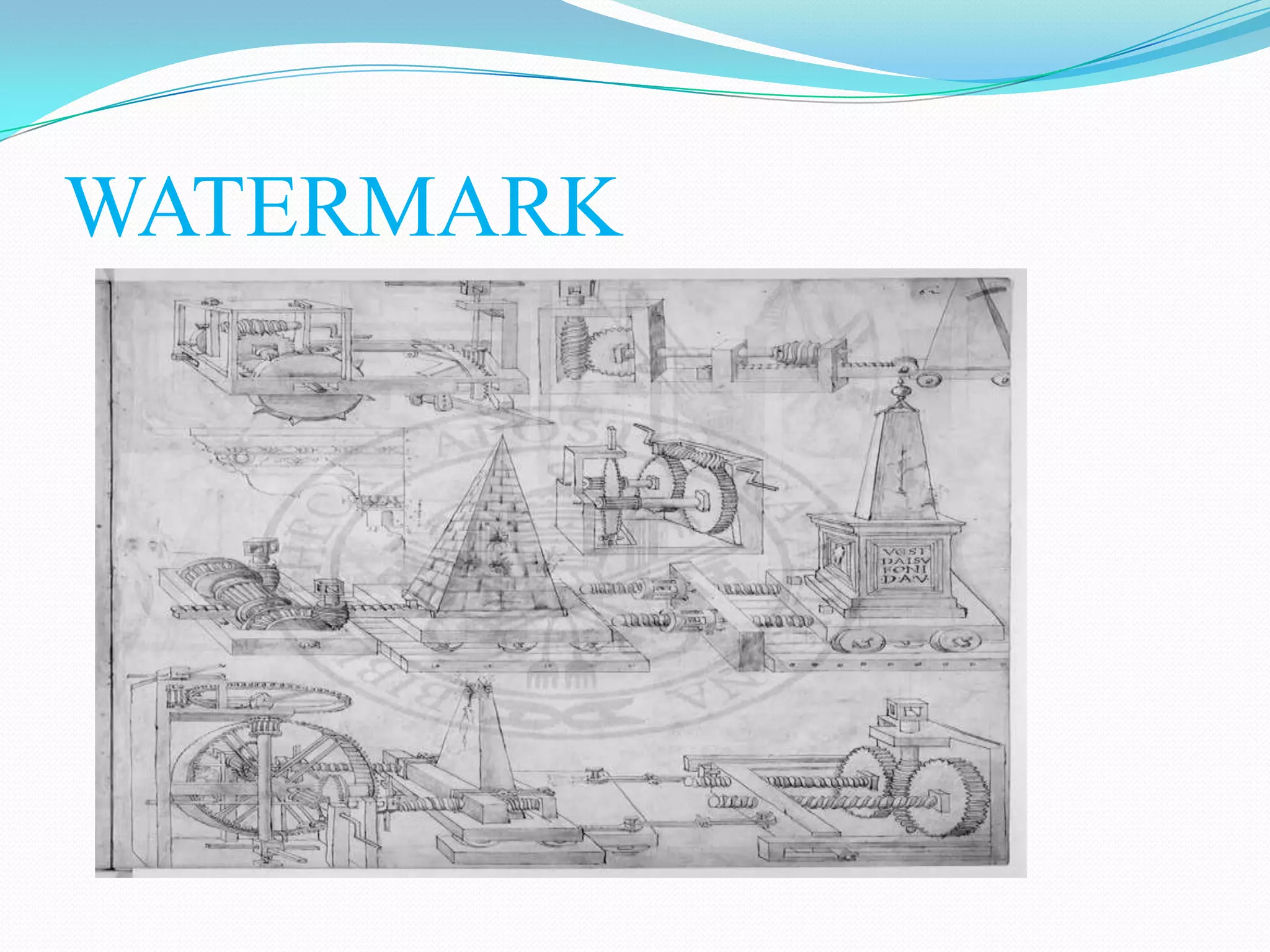
WATERMARK
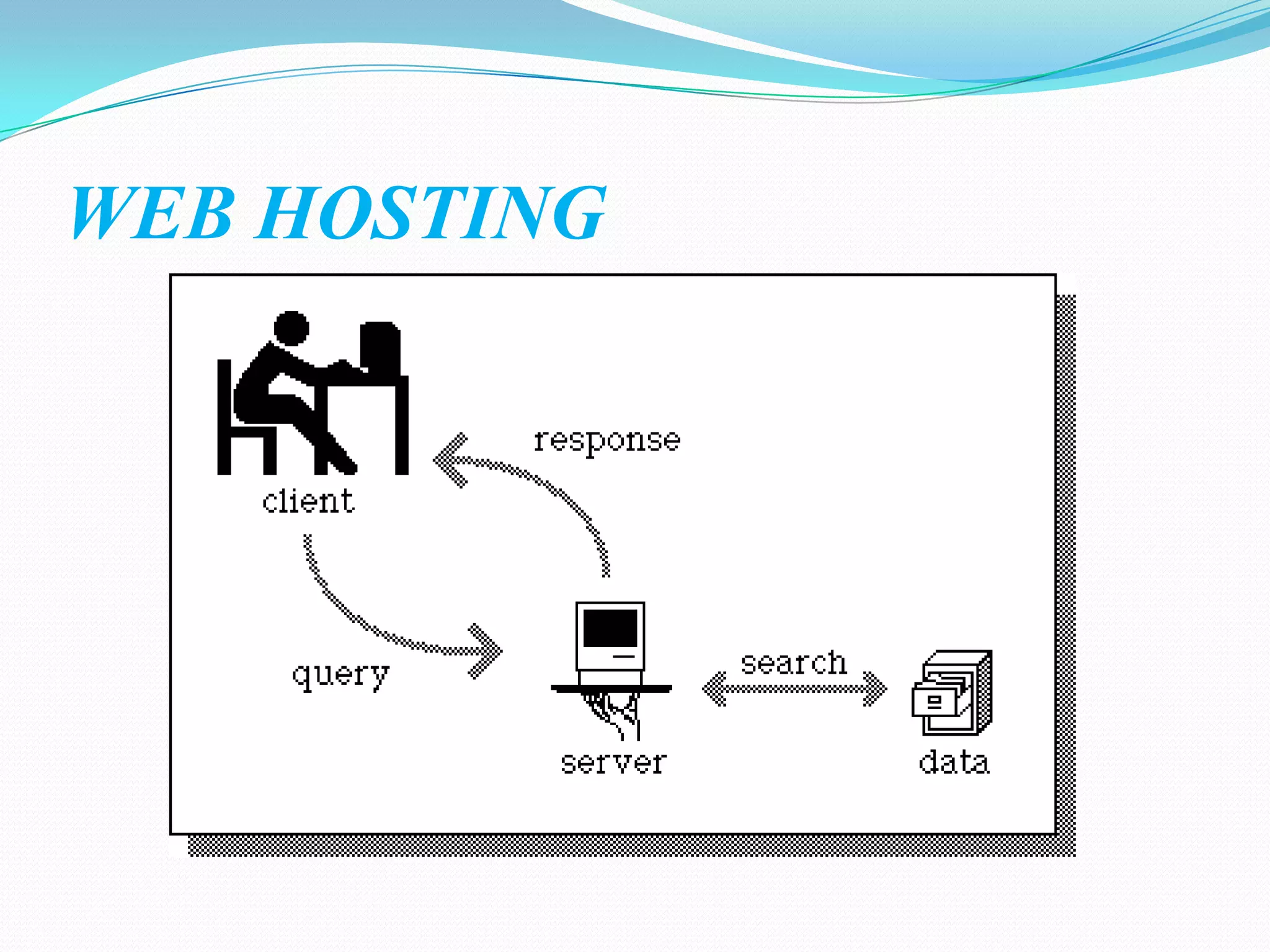
WEB HOSTING
 A web hosting is a type of Internet hosting that allows
 individuals and organizations to make their website
 accessible via the World Wide Web or locally in the
 network.

 The most basic is web page and small-scale file
 hosting, where files can be uploaded via File Transfer
 Protocol (FTP) on the server.
DNS
 A Domain Name Service translates queries for domain
 names (which are easier to understand and utilize
 when accessing the internet) into IP addresses for the
 purpose of locating computer services and devices
 worldwide.

 For example, the domain name
 www.ethicalpirates.com translates to the addresses
 172.16.32.254 (IPv4).
APACHE (Web Server)


 Web servers are computers that deliver (serves up)
 Web pages. Every Web server has an IP address and
 possibly a domain name.

 Any computer can be turned into a Web server by
 installing server software and connecting the machine
 to the internet
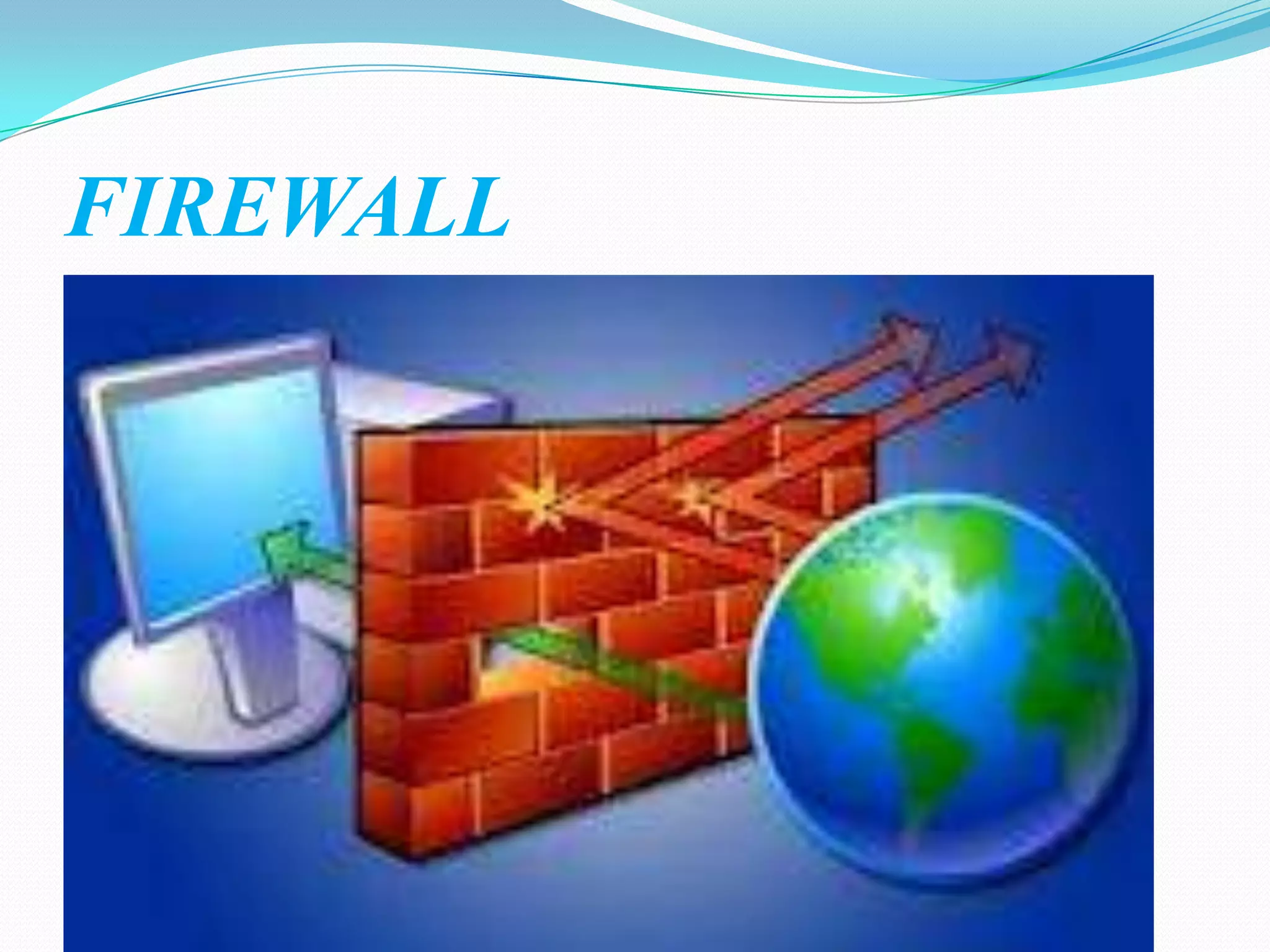
FIREWALL
 A firewall is a rule or set of rules create to permit or
  deny network transmissions based on a set of rules and
  is frequently used to protect networks from
  unauthorized access while permitting legitimate
  communications to pass.

 Firewalls are frequently used to prevent unauthorized
  Internet users from accessing private networks
  connected to the Internet, especially intranets.
 i.e. Packet Filter, Proxy Server etc.
REFERENCES
 www.jjtc.com/stegdoc/steg1995.html
 “Information Hiding: Techniques for Steganography
  and Digital Watermarking” – S. Katzenbeisser, F. Petit
  colas
 “RSA Security’s Official Guide to Cryptography” by S.
  Burnett and S. Paine, Osborne/McGraw-Hill, 2001
 The Code Breaker-David Khan

online game over cryptography

  • 1.
  • 2.
  • 3.
    Some Basic Terms Plain Text/Clear Text :Data that can be read and understood without any special measure.  Cipher Text :The unreadable plain text after encryption.  Encryption :The method of disguising to hide its substance.  Decryption :The method of reverting cipher text to its original plain text.
  • 4.
    CRYPTANALYSIS vs. CRYPTOGRAPHY? Cryptography is a science of using mathematics to encrypt and decrypt data. It enable us to store and transmit sensitive data over unsecure network.  Cryptanalysis is the science of analyzing and breaking secure communication.
  • 5.
  • 6.
     In conventionalcryptography(symmetric key encryption)one key is used both for encryption and decryption.  i.e. Caesar’s cipher  This cryptography is very fast but is quite expensive due to difficulty of secure key distribution.
  • 7.
  • 8.
     It usestwo key, one key for encryption(public key) and one for decryption(private key).  We publish the data with the public key to the world while keeping the private key.  The need for sender and receiver to share secret key via some secure channel is eliminated.
  • 9.
  • 10.
    Combines strengths ofboth methods Asymmetric distributes symmetric key.  Also known as a session key(one time only secret key).  Symmetric provides bulk encryption i.e. PGP
  • 11.
    KEYS  Work withcryptographic algorithm to produce a specific cipher text.  Larger keys are secure for longer period of time.
  • 12.
    STEGANOGRAPHY  Greek for“covered writing”  “The art and science of writing hidden messages in such a way that no one apart from the intended recipient even knows that a message has been sent.”  It makes use of seemingly innocent cover files such as text, audio, and image files
  • 13.
    IMAGE BASED TECHNIQUE Least Significant Bit Insertion  Replaces the LSB with the message to be encoded.  Simple, but susceptible to lossy compression and image manipulation  Masking and Filtering  Masks secret data over the original data by changing the luminance of particular areas  During masking, it embed the message within significant bits of the cover image
  • 14.
     Digital Watermarking– provides identification pertaining to the owner; i.e. license or copyright information - Invisible vs. Visible  Fingerprinting – provides identification of the user; used to identify and track illegal use of content
  • 15.
  • 16.
  • 17.
     A webhosting is a type of Internet hosting that allows individuals and organizations to make their website accessible via the World Wide Web or locally in the network.  The most basic is web page and small-scale file hosting, where files can be uploaded via File Transfer Protocol (FTP) on the server.
  • 18.
    DNS  A DomainName Service translates queries for domain names (which are easier to understand and utilize when accessing the internet) into IP addresses for the purpose of locating computer services and devices worldwide.  For example, the domain name www.ethicalpirates.com translates to the addresses 172.16.32.254 (IPv4).
  • 19.
    APACHE (Web Server) Web servers are computers that deliver (serves up) Web pages. Every Web server has an IP address and possibly a domain name.  Any computer can be turned into a Web server by installing server software and connecting the machine to the internet
  • 20.
  • 21.
     A firewallis a rule or set of rules create to permit or deny network transmissions based on a set of rules and is frequently used to protect networks from unauthorized access while permitting legitimate communications to pass.  Firewalls are frequently used to prevent unauthorized Internet users from accessing private networks connected to the Internet, especially intranets.  i.e. Packet Filter, Proxy Server etc.
  • 22.
    REFERENCES  www.jjtc.com/stegdoc/steg1995.html  “InformationHiding: Techniques for Steganography and Digital Watermarking” – S. Katzenbeisser, F. Petit colas  “RSA Security’s Official Guide to Cryptography” by S. Burnett and S. Paine, Osborne/McGraw-Hill, 2001  The Code Breaker-David Khan