Creating Faculty Evaluation 
and Mentoring Programs 
Using Brightspace 
UNIVERSITY OF CENTRAL OKLAHOMA 
Stacy Southerland, Ph.D. 
Professor of Spanish 
Tracy Fairless, M.A. 
Assistant Director of Instructional Design 
Bucky Dodd, Ph.D. 
Director of eLearning and Innovations
Online Hybrid 
eLearning@UCO 
Self-Paced 
Online Interactive 
Video
QUAL ITY 
Instructional 
Design 
Facilitation 
Learning 
Context 
eLearning 
Design Principles 
Academic 
Departments 
Support 
Services
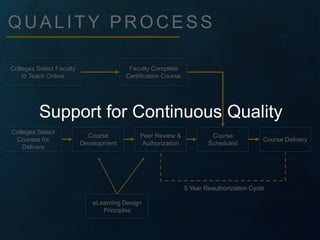
QUAL ITY PROCESS 
Colleges Select Faculty 
to Teach Online 
Faculty Complete 
Certification Course 
Support for Continuous Quality 
Colleges Select 
Courses for 
Delivery 
Course 
Development 
Peer Review & 
Authorization 
Course 
Scheduled 
Course Delivery 
eLearning Design 
Principles 
5 Year Reauthorization Cycle
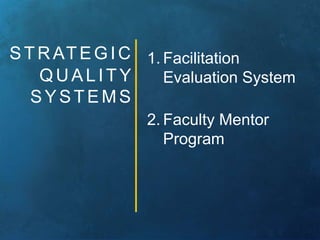
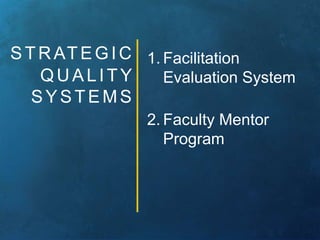
STRATEGIC 
QUAL ITY 
SYSTEMS 
1. Facilitation 
Evaluation System 
2. Faculty Mentor 
Program
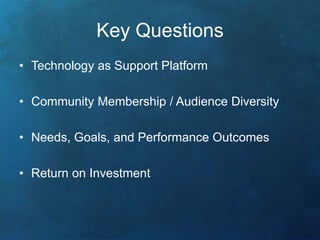
Key Questions 
• Technology as Support Platform 
• Community Membership / Audience Diversity 
• Needs, Goals, and Performance Outcomes 
• Return on Investment
FACILITATION 
EVALUATION 
SYSTEM
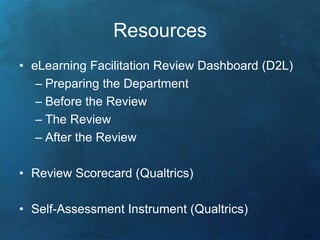
Resources 
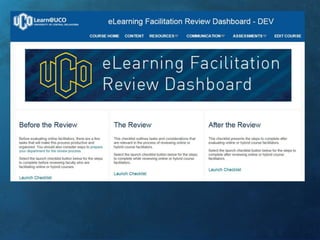
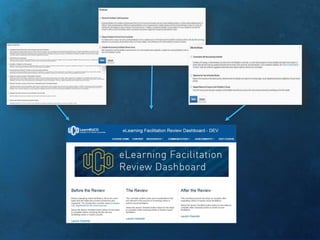
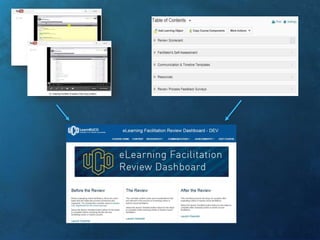
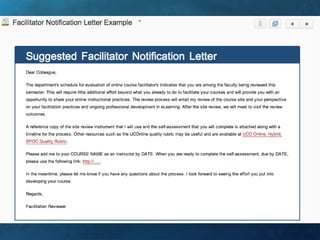
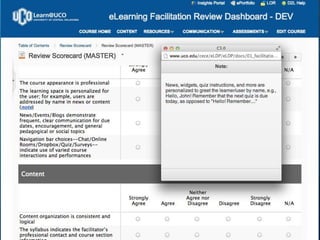
• eLearning Facilitation Review Dashboard (D2L) 
– Preparing the Department 
– Before the Review 
– The Review 
– After the Review 
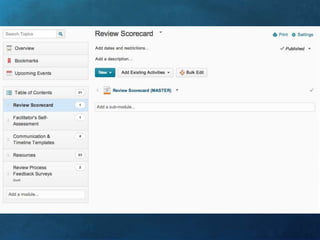
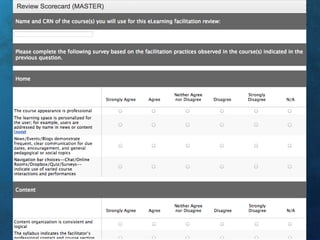
• Review Scorecard (Qualtrics) 
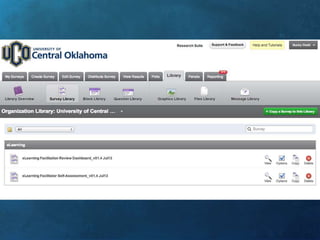
• Self-Assessment Instrument (Qualtrics)
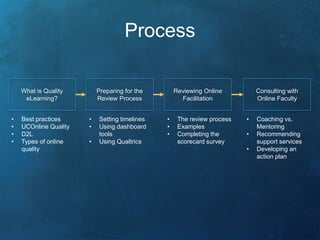
Process 
What is Quality 
eLearning? 
• Best practices 
• UCOnline Quality 
• D2L 
• Types of online 
quality 
Preparing for the 
Review Process 
• Setting timelines 
• Using dashboard 
tools 
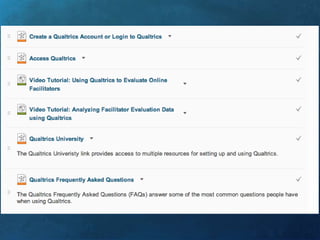
• Using Qualtrics 
Reviewing Online 
Facilitation 
• The review process 
• Examples 
• Completing the 
scorecard survey 
Consulting with 
Online Faculty 
• Coaching vs. 
Mentoring 
• Recommending 
support services 
• Developing an 
action plan
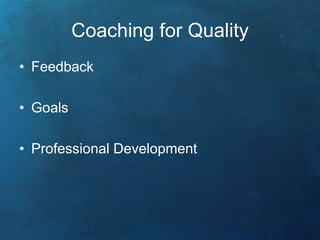
Coaching for Quality 
• Feedback 
• Goals 
• Professional Development
Lessons Learned 
• Work Load for Evaluation Process 
• Ownership of Evaluation Process 
• Focus on community “space” and dialogue
FACULTY 
MENTOR 
PROGRAM
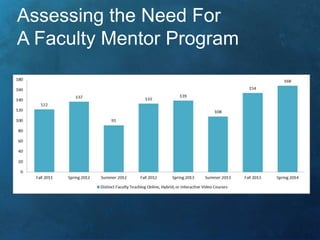
Assessing the Need For 
A Faculty Mentor Program
Customize and Implement 
a Faculty Mentor Program 
Develop a Program Model 
• Identify the value proposition 
• Identify the key stakeholders 
• Identify the project leaders 
• Identify a resource center
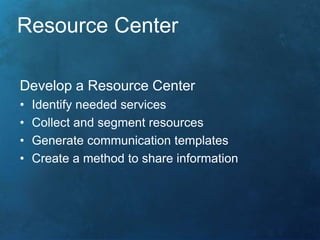
Resource Center 
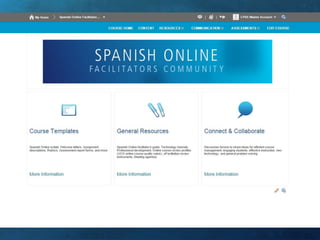
Develop a Resource Center 
• Identify needed services 
• Collect and segment resources 
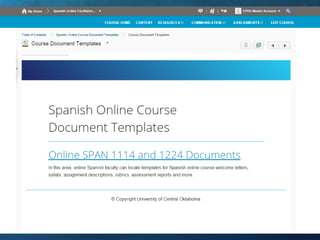
• Generate communication templates 
• Create a method to share information
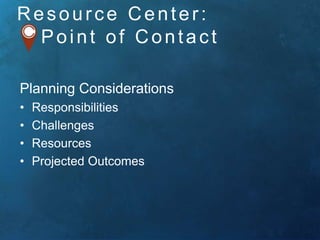
Resour ce Center : 
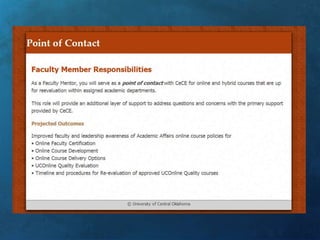
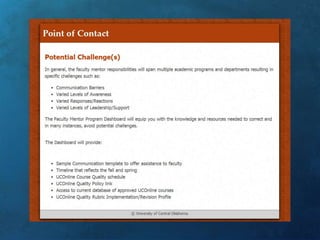
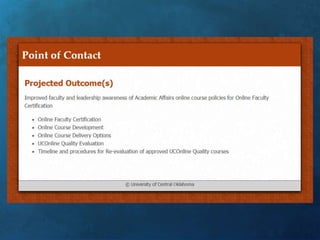
Po i nt of Contac t 
Planning Considerations 
• Responsibilities 
• Challenges 
• Resources 
• Projected Outcomes
Re s our ce Center : 
Co l l aborat i v e Wor k shops 
Planning Considerations 
• Responsibilities 
• Challenges 
• Resources 
• Projected Outcomes
Resour ce Center : 
Gu i d ed Suppor t 
Planning Considerations 
• Responsibilities 
• Challenges 
• Resources 
• Projected Outcomes
STRATEGIC 
QUAL ITY 
SYSTEMS 
1. Facilitation 
Evaluation System 
2. Faculty Mentor 
Program
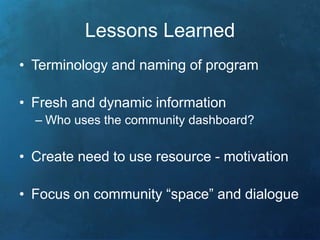
Lessons Learned 
• Terminology and naming of program 
• Fresh and dynamic information 
– Who uses the community dashboard? 
• Create need to use resource - motivation 
• Focus on community “space” and dialogue
Creating Faculty Evaluation 
and Mentoring Programs 
Using Brightspace 
UNIVERSITY OF CENTRAL OKLAHOMA 
Stacy Southerland, Ph.D. 
Professor of Spanish 
Tracy Fairless, M.A. 
Assistant Director of Instructional Design 
Bucky Dodd, Ph.D. 
Director of eLearning and Innovations

Oklahoma Brightspace Ignite Eval-Mentor

  • 1.
    Creating Faculty Evaluation and Mentoring Programs Using Brightspace UNIVERSITY OF CENTRAL OKLAHOMA Stacy Southerland, Ph.D. Professor of Spanish Tracy Fairless, M.A. Assistant Director of Instructional Design Bucky Dodd, Ph.D. Director of eLearning and Innovations
  • 2.
    Online Hybrid eLearning@UCO Self-Paced Online Interactive Video
  • 3.
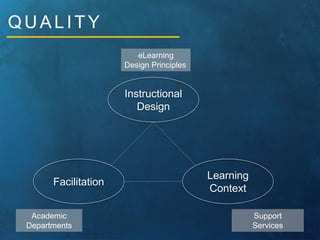
    QUAL ITY Instructional Design Facilitation Learning Context eLearning Design Principles Academic Departments Support Services
  • 5.
    QUAL ITY PROCESS Colleges Select Faculty to Teach Online Faculty Complete Certification Course Support for Continuous Quality Colleges Select Courses for Delivery Course Development Peer Review & Authorization Course Scheduled Course Delivery eLearning Design Principles 5 Year Reauthorization Cycle
  • 6.
    STRATEGIC QUAL ITY SYSTEMS 1. Facilitation Evaluation System 2. Faculty Mentor Program
  • 7.
    Key Questions •Technology as Support Platform • Community Membership / Audience Diversity • Needs, Goals, and Performance Outcomes • Return on Investment
  • 8.
  • 9.
    Resources • eLearningFacilitation Review Dashboard (D2L) – Preparing the Department – Before the Review – The Review – After the Review • Review Scorecard (Qualtrics) • Self-Assessment Instrument (Qualtrics)
  • 11.
    Process What isQuality eLearning? • Best practices • UCOnline Quality • D2L • Types of online quality Preparing for the Review Process • Setting timelines • Using dashboard tools • Using Qualtrics Reviewing Online Facilitation • The review process • Examples • Completing the scorecard survey Consulting with Online Faculty • Coaching vs. Mentoring • Recommending support services • Developing an action plan
  • 20.
    Coaching for Quality • Feedback • Goals • Professional Development
  • 21.
    Lessons Learned •Work Load for Evaluation Process • Ownership of Evaluation Process • Focus on community “space” and dialogue
  • 22.
  • 23.
    Assessing the NeedFor A Faculty Mentor Program
  • 24.
    Customize and Implement a Faculty Mentor Program Develop a Program Model • Identify the value proposition • Identify the key stakeholders • Identify the project leaders • Identify a resource center
  • 25.
    Resource Center Developa Resource Center • Identify needed services • Collect and segment resources • Generate communication templates • Create a method to share information
  • 26.
    Resour ce Center: Po i nt of Contac t Planning Considerations • Responsibilities • Challenges • Resources • Projected Outcomes
  • 32.
    Re s ource Center : Co l l aborat i v e Wor k shops Planning Considerations • Responsibilities • Challenges • Resources • Projected Outcomes
  • 33.
    Resour ce Center: Gu i d ed Suppor t Planning Considerations • Responsibilities • Challenges • Resources • Projected Outcomes
  • 40.
    STRATEGIC QUAL ITY SYSTEMS 1. Facilitation Evaluation System 2. Faculty Mentor Program
  • 41.
    Lessons Learned •Terminology and naming of program • Fresh and dynamic information – Who uses the community dashboard? • Create need to use resource - motivation • Focus on community “space” and dialogue
  • 42.
    Creating Faculty Evaluation and Mentoring Programs Using Brightspace UNIVERSITY OF CENTRAL OKLAHOMA Stacy Southerland, Ph.D. Professor of Spanish Tracy Fairless, M.A. Assistant Director of Instructional Design Bucky Dodd, Ph.D. Director of eLearning and Innovations

Editor's Notes

  • #2 Bucky
  • #3 Bucky
  • #4 Bucky
  • #5 Bucky
  • #6 Bucky
  • #7 Bucky
  • #8 Bucky
  • #9 Stacy
  • #10 Stacy
  • #11 Stacy
  • #12 Stacy
  • #13 Stacy
  • #14 Stacy
  • #15 Stacy
  • #16 Stacy
  • #17 Stacy
  • #18 Stacy
  • #19 Stacy
  • #20 Stacy
  • #21 Stacy
  • #22 Stacy
  • #23 Tracy
  • #24 Tracy
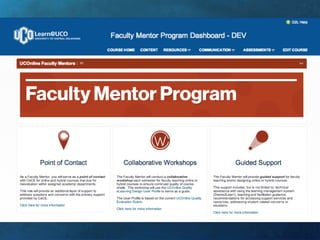
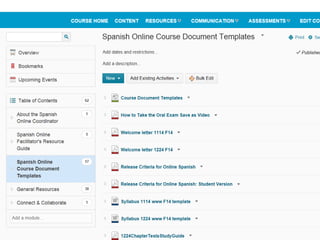
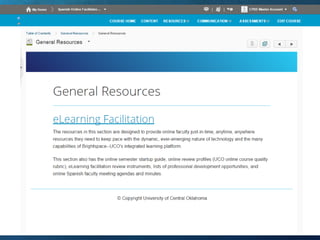
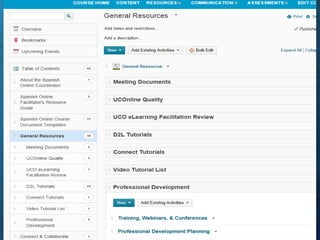
  • #25 Tracy Value Proposition – know the goals, the internal/external barriers and know the strengths/weakness Goal – to provide a consistent method of quality assurance and faculty support across all online courses. Barriers – range from a lack of awareness of the quality process, lack of time, misunderstandings, and issues of academic freedom. Strengths – each if not all, departments have several faculty that already provide tremendous peer leadership for online teaching; Weaknesses – repeating efforts, lack of authority, lack of time, & lack of compensation. Key stakeholder(s) will be able to help develop the value proposition. It will be what drives the project. Project leaders are those that stand out of the crowd. They teach online, develop online courses, have leadership skills, and have a passion to learn and make continued improvements. Resource Center – A mechanism to communicate information and resources is needed. This is the focus of my remaining time with you. We developed a resource center using Desire 2 Learn to serve as the hub for the Faculty Mentor Program.
  • #26 Tracy
  • #27 Tracy
  • #28 Tracy
  • #29 Tracy
  • #30 Tracy
  • #31 Tracy
  • #32 Tracy
  • #33 Tracy
  • #34 Tracy
  • #35 Tracy / Stacy
  • #36 Tracy / Stacy
  • #37 Tracy / Stacy
  • #38 Tracy / Stacy
  • #39 Tracy / Stacy
  • #40 Tracy / Stacy
  • #41 Bucky
  • #42 Bucky
  • #43 Bucky