Measuring Manufacturing
Performance
OEE & TEEP
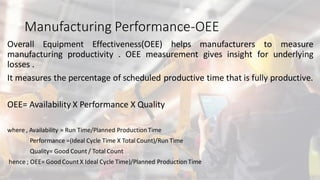
Manufacturing Performance-OEE
Overall Equipment Effectiveness(OEE) helps manufacturers to measure
manufacturing productivity . OEE measurement gives insight for underlying
losses .
It measures the percentage of scheduled productive time that is fully productive.
OEE= Availability X Performance X Quality
where , Availability = Run Time/Planned Production Time
Performance =(Ideal Cycle Time X Total Count)/Run Time
Quality= Good Count / Total Count
hence ; OEE= Good Count X Ideal Cycle Time)/Planned Production Time
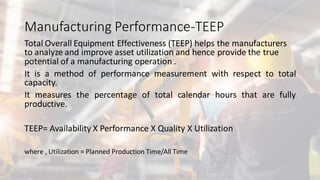
Manufacturing Performance-TEEP
Total Overall Equipment Effectiveness (TEEP) helps the manufacturers
to analyze and improve asset utilization and hence provide the true
potential of a manufacturing operation .
It is a method of performance measurement with respect to total
capacity.
It measures the percentage of total calendar hours that are fully
productive.
TEEP= Availability X Performance X Quality X Utilization
where , Utilization = Planned Production Time/All Time
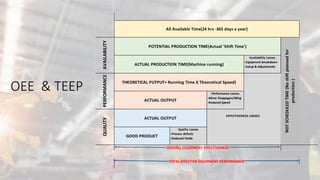
EFFECTIVENESS LOSSES
-Process defects
-Reduced Yields
NOT
SCHEDULED
TIME
(No
shift
planned
for
production
)
OVERALL EQUIPMENT EFFECTIVENESS
TOTAL EFFECTIVE EQUIPMENT PERFORMANCE
QUALITY
PERFORMANCE
AVAILABILITY
All Available Time(24 hrs -365 days a year)
Quality Losses
Performance Losses
-Minor Stoppages/Idling
-Reduced Speed
Availability Losses
-Equipment breakdown
-Setup & Adjustments
GOOD PRODUCT
ACTUAL OUTPUT
ACTUAL OUTPUT
THEORETICAL PUTPUT= Running Time X Theoretical Speed)
ACTUAL PRODUCTION TIME(Machine running)
POTENTIAL PRODUCTION TIME(Actual 'Shift Time')
OEE & TEEP
OEE & TEEP
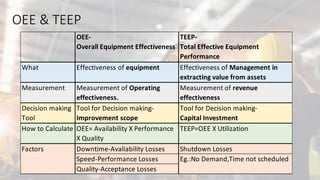
OEE-
Overall Equipment Effectiveness
TEEP-
Total Effective Equipment
Performance
What Effectiveness of equipment Effectiveness of Management in
extracting value from assets
Measurement Measurement of Operating
effectiveness.
Measurement of revenue
effectiveness
Decision making
Tool
Tool for Decision making-
Improvement scope
Tool for Decision making-
Capital Investment
How to Calculate OEE= Availability X Performance
X Quality
TEEP=OEE X Utilization
Downtime-Avaliability Losses Shutdown Losses
Speed-Performance Losses
Quality-Acceptance Losses
Factors
Eg.:No Demand,Time not scheduled
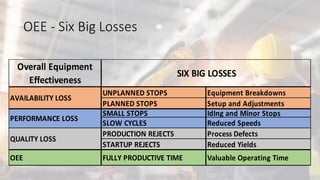
OEE - Six Big Losses
UNPLANNED STOPS Equipment Breakdowns
PLANNED STOPS Setup and Adjustments
SMALL STOPS IdIng and Minor Stops
SLOW CYCLES Reduced Speeds
PRODUCTION REJECTS Process Defects
STARTUP REJECTS Reduced Yields
OEE FULLY PRODUCTIVE TIME Valuable Operating Time
Overall Equipment
Effectiveness
SIX BIG LOSSES
AVAILABILITY LOSS
PERFORMANCE LOSS
QUALITY LOSS
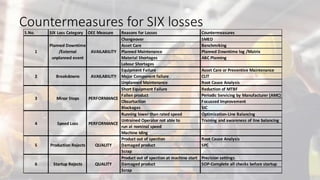
Countermeasures for SIX losses
S.No. SIX Loss Category OEE Measure Reasons for Losses Countermeasures
Changeover SMED
Asset Care Benchmrking
Planned Maintenance Planned Downtime log /Matrix
Material Shortages ABC Planning
Labour Shortages
Equipment Failure Asset Care or Preventive Maintenance
Major Component failure CLIT
Unplanned Maintenance Root Cause Analysis
Short Equipment Failure Reduction of MTBF
Fallen product Periodic Servicing by Manufacturer (AMC)
Obsurtuction Focussed Improvement
Blockages SIC
Running lower than rated speed Optimization-Line Balancing
Untrained Operator not able to Training and awareness of line balancing
run at nominal speed
Machine Iding
Product out of spection Root Cause Analysis
Damaged product SPC
Scrap
Product out of spection at machine start Precision settings
Damaged product SOP-Complete all checks before startup
Scrap
4 Speed Loss PERFORMANCE
QUALITY
Production Rejects
5
6 Startup Rejects QUALITY
Planned Downtime
/External
unplanned event
AVAILABILITY
1
AVAILABILITY
Breakdowns
2
PERFORMANCE
Minor Stops
3
REFERENCES
• https://academy.lineview.com.
• Jayaswal, Rajput :"A Total Productive Maintenance Approach to
Improve Overall Equipment Effectiveness." International Journal of
Modern Engineering Research, 2012: 4383-4386.

OEE vs TEEP.pdf

  • 1.
  • 2.
    Manufacturing Performance-OEE Overall EquipmentEffectiveness(OEE) helps manufacturers to measure manufacturing productivity . OEE measurement gives insight for underlying losses . It measures the percentage of scheduled productive time that is fully productive. OEE= Availability X Performance X Quality where , Availability = Run Time/Planned Production Time Performance =(Ideal Cycle Time X Total Count)/Run Time Quality= Good Count / Total Count hence ; OEE= Good Count X Ideal Cycle Time)/Planned Production Time
  • 3.
    Manufacturing Performance-TEEP Total OverallEquipment Effectiveness (TEEP) helps the manufacturers to analyze and improve asset utilization and hence provide the true potential of a manufacturing operation . It is a method of performance measurement with respect to total capacity. It measures the percentage of total calendar hours that are fully productive. TEEP= Availability X Performance X Quality X Utilization where , Utilization = Planned Production Time/All Time
  • 4.
    EFFECTIVENESS LOSSES -Process defects -ReducedYields NOT SCHEDULED TIME (No shift planned for production ) OVERALL EQUIPMENT EFFECTIVENESS TOTAL EFFECTIVE EQUIPMENT PERFORMANCE QUALITY PERFORMANCE AVAILABILITY All Available Time(24 hrs -365 days a year) Quality Losses Performance Losses -Minor Stoppages/Idling -Reduced Speed Availability Losses -Equipment breakdown -Setup & Adjustments GOOD PRODUCT ACTUAL OUTPUT ACTUAL OUTPUT THEORETICAL PUTPUT= Running Time X Theoretical Speed) ACTUAL PRODUCTION TIME(Machine running) POTENTIAL PRODUCTION TIME(Actual 'Shift Time') OEE & TEEP
  • 5.
    OEE & TEEP OEE- OverallEquipment Effectiveness TEEP- Total Effective Equipment Performance What Effectiveness of equipment Effectiveness of Management in extracting value from assets Measurement Measurement of Operating effectiveness. Measurement of revenue effectiveness Decision making Tool Tool for Decision making- Improvement scope Tool for Decision making- Capital Investment How to Calculate OEE= Availability X Performance X Quality TEEP=OEE X Utilization Downtime-Avaliability Losses Shutdown Losses Speed-Performance Losses Quality-Acceptance Losses Factors Eg.:No Demand,Time not scheduled
  • 6.
    OEE - SixBig Losses UNPLANNED STOPS Equipment Breakdowns PLANNED STOPS Setup and Adjustments SMALL STOPS IdIng and Minor Stops SLOW CYCLES Reduced Speeds PRODUCTION REJECTS Process Defects STARTUP REJECTS Reduced Yields OEE FULLY PRODUCTIVE TIME Valuable Operating Time Overall Equipment Effectiveness SIX BIG LOSSES AVAILABILITY LOSS PERFORMANCE LOSS QUALITY LOSS
  • 7.
    Countermeasures for SIXlosses S.No. SIX Loss Category OEE Measure Reasons for Losses Countermeasures Changeover SMED Asset Care Benchmrking Planned Maintenance Planned Downtime log /Matrix Material Shortages ABC Planning Labour Shortages Equipment Failure Asset Care or Preventive Maintenance Major Component failure CLIT Unplanned Maintenance Root Cause Analysis Short Equipment Failure Reduction of MTBF Fallen product Periodic Servicing by Manufacturer (AMC) Obsurtuction Focussed Improvement Blockages SIC Running lower than rated speed Optimization-Line Balancing Untrained Operator not able to Training and awareness of line balancing run at nominal speed Machine Iding Product out of spection Root Cause Analysis Damaged product SPC Scrap Product out of spection at machine start Precision settings Damaged product SOP-Complete all checks before startup Scrap 4 Speed Loss PERFORMANCE QUALITY Production Rejects 5 6 Startup Rejects QUALITY Planned Downtime /External unplanned event AVAILABILITY 1 AVAILABILITY Breakdowns 2 PERFORMANCE Minor Stops 3
  • 8.
    REFERENCES • https://academy.lineview.com. • Jayaswal,Rajput :"A Total Productive Maintenance Approach to Improve Overall Equipment Effectiveness." International Journal of Modern Engineering Research, 2012: 4383-4386.