Downloaded 17 times
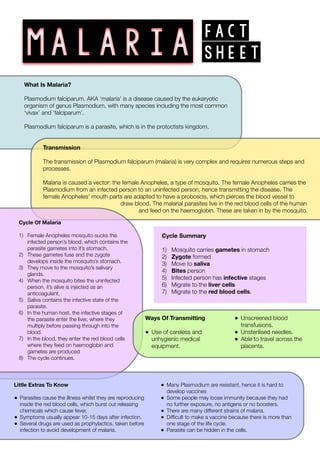
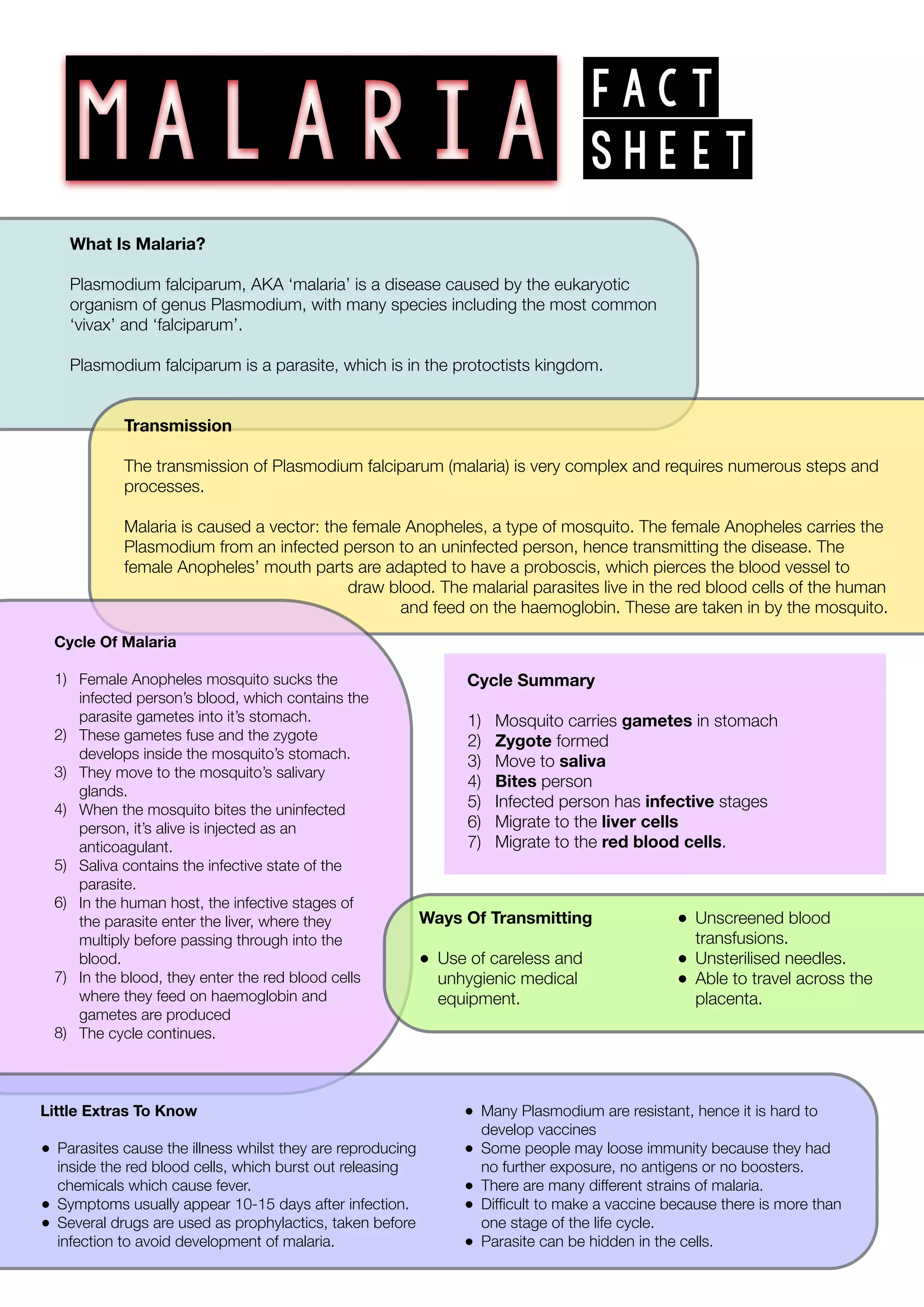


Malaria, caused by the parasitic organism Plasmodium falciparum, is transmitted through the bites of infected female Anopheles mosquitoes. The life cycle of malaria involves several stages, including the mosquito ingesting gametes from an infected person and then injecting the infective stages into a new host, where the parasites multiply and cause symptoms. Preventive measures against malaria include the use of prophylactic drugs, though the development of effective vaccines is challenging due to the parasite's resistance and complex life cycle.


![Trichocephaliasis[1]](https://cdn.slidesharecdn.com/ss_thumbnails/trichocephaliasis1-210321153837-thumbnail.jpg?width=640&height=640&fit=bounds)


