Presenter : Dr. M. Senthil Prakash
Dept Of Anaesthesiology
MAMC - Delhi
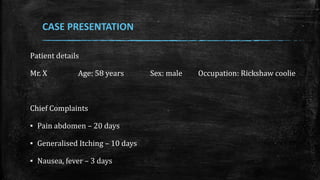
Patient details
Mr. X Age: 58 years Sex: male Occupation: Rickshaw coolie
Chief Complaints
▪ Pain abdomen – 20 days
▪ Generalised Itching – 10 days
▪ Nausea, fever – 3 days
CASE PRESENTATION
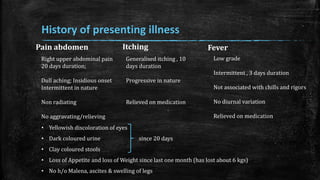
Pain abdomen
History of presenting illness
Right upper abdominal pain
20 days duration;
Dull aching; Insidious onset
Intermittent in nature
Non radiating
No aggravating/relieving
Generalised itching , 10
days duration
Progressive in nature
Relieved on medication
Low grade
Intermittent , 3 days duration
Not associated with chills and rigors
No diurnal variation
Relieved on medication
• Yellowish discoloration of eyes
• Dark coloured urine since 20 days
• Clay coloured stools
• Loss of Appetite and loss of Weight since last one month (has lost about 6 kgs)
• No h/o Malena, ascites & swelling of legs
Itching Fever
Past history
▪ No history of similar complaints in the past
▪ No history of previous surgery, Exposure to anaesthesia
▪ No Jaundice or contact with jaundiced patient
▪ No history of Diabetes Mellitus, Hypertension, Bronchial asthma or Epilepsy
▪ No history of drug intake
▪ No history of blood transfusions.
Family history
No history of similar complaints in the family was noted.
Personal history
Diet: Vegetarian
Sleep: disturbed (due to itching)
Habits: Smoker since 20 years ( 8 beedis/day). Not an alcoholic.
General Physical Examination
An elderly male patient moderately built and nourished.
Ht – 158cm, Wt – 42kg , BMI – 20.8
Pallor - +, Icterus - +, No cyanosis, oedema, clubbing, spidernavi, palmar erythema, Echymosis
Scratch marks - ++ over the abdomen and peripheries.
Airway Examination Pulse rate – 62/min;
MPC II, MO - Adequate Blood pressure – 110/70 mm of Hg
ROM Neck full Respiratory rate – 16/min
TMD > 6cms
Systemic Examination
▪ Inspection:
– Normal in shape.
– No dilated veins, scars and
sinuses.
– All quadrants move
correspondingly with respiration.
▪ Palpation:
– Soft. Tenderness in right hypochondrium
and epigastrium.
– Palpable hard mass of about 5 x 3 cms felt
in the epigastrium with an irregular border.
– Hepatomegaly +, 3 cms below the costal
margin
– No Splenomegaly/ free fluid
Per abdominal examination:
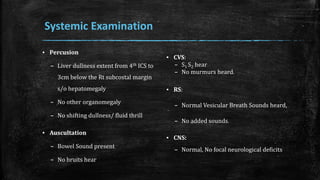
▪ Percusion
– Liver dullness extent from 4th ICS to
3cm below the Rt subcostal margin
s/o hepatomegaly
– No other organomegaly
– No shifting dullness/ fluid thrill
▪ Auscultation
– Bowel Sound present
– No bruits hear
▪ CVS:
– S1 S2 hear
– No murmurs heard.
▪ RS:
– Normal Vesicular Breath Sounds heard,
– No added sounds.
▪ CNS:
– Normal, No focal neurological deficits
Systemic Examination
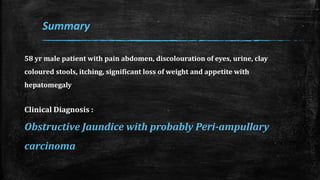
58 yr male patient with pain abdomen, discolouration of eyes, urine, clay
coloured stools, itching, significant loss of weight and appetite with
hepatomegaly
Clinical Diagnosis :
Obstructive Jaundice with probably Peri-ampullary
carcinoma
Summary
Investigations
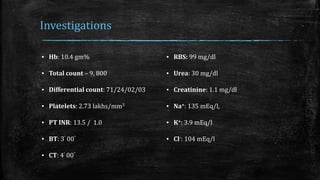
▪ Hb: 10.4 gm%
▪ Total count – 9, 800
▪ Differential count: 71/24/02/03
▪ Platelets: 2.73 lakhs/mm3
▪ PT INR: 13.5 / 1.0
▪ BT: 3’ 00”
▪ CT: 4’ 00”
▪ RBS: 99 mg/dl
▪ Urea: 30 mg/dl
▪ Creatinine: 1.1 mg/dl
▪ Na+: 135 mEq/l,
▪ K+: 3.9 mEq/l
▪ Cl-: 104 mEq/l
Investigations contd..
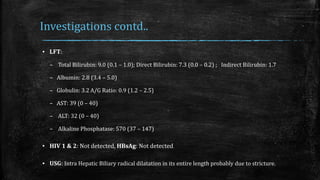
▪ LFT:
– Total Bilirubin: 9.0 (0.1 – 1.0); Direct Bilirubin: 7.3 (0.0 – 0.2) ; Indirect Bilirubin: 1.7
– Albumin: 2.8 (3.4 – 5.0)
– Globulin: 3.2 A/G Ratio: 0.9 (1.2 – 2.5)
– AST: 39 (0 – 40)
– ALT: 32 (0 – 40)
– Alkaline Phosphatase: 570 (37 – 147)
▪ HIV 1 & 2: Not detected, HBsAg: Not detected
▪ USG: Intra Hepatic Biliary radical dilatation in its entire length probably due to stricture.
Investigations contd..
• Upper G.I. Endoscopy: bulging growth in Periampullary region.
• C.T. Scan: Moderated dilatation of intrahepatic and common bile ducts.
• ECG: Sinus rhythm. Within normal limits. Heart rate: 60/min.
• Chest X – Ray: Hyperinflated lung fields (COPD changes)
• 2D ECHOCARDIOGRAPHY:
Normal Left Ventricular systolic function
No Regional Wall Motion abnormalities
Ejection fraction: 59 %
• Arterial Blood Gas Analysis: Mild hypoxia.
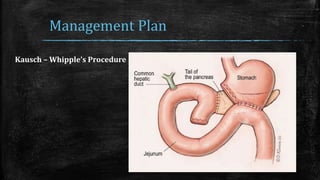
Management Plan
Kausch – Whipple’s Procedure
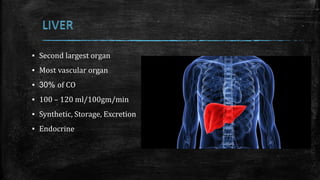
▪ Second largest organ
▪ Most vascular organ
▪ 30% of CO
▪ 100 – 120 ml/100gm/min
▪ Synthetic, Storage, Excretion
▪ Endocrine
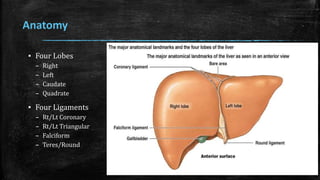
Anatomy
▪ Four Lobes
– Right
– Left
– Caudate
– Quadrate
▪ Four Ligaments
– Rt/Lt Coronary
– Rt/Lt Triangular
– Falciform
– Teres/Round
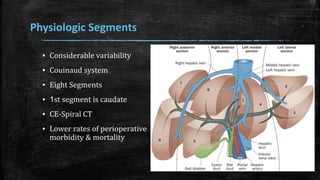
Physiologic Segments
▪ Considerable variability
▪ Couinaud system
▪ Eight Segments
▪ 1st segment is caudate
▪ CE-Spiral CT
▪ Lower rates of perioperative
morbidity & mortality
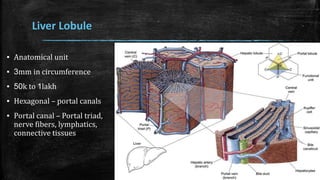
Liver Lobule
▪ Anatomical unit
▪ 3mm in circumference
▪ 50k to 1lakh
▪ Hexagonal – portal canals
▪ Portal canal – Portal triad,
nerve fibers, lymphatics,
connective tissues
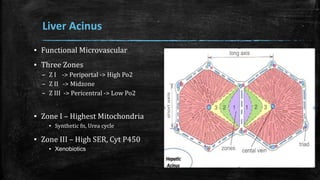
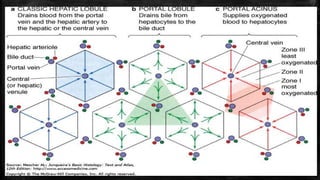
Liver Acinus
▪ Functional Microvascular
▪ Three Zones
– Z I -> Periportal -> High Po2
– Z II -> Midzone
– Z III -> Pericentral -> Low Po2
▪ Zone I – Highest Mitochondria
▪ Synthetic fn, Urea cycle
▪ Zone III – High SER, Cyt P450
▪ Xenobiotics
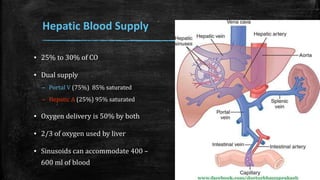
Hepatic Blood Supply
▪ 25% to 30% of CO
▪ Dual supply
– Portal V (75%) 85% saturated
– Hepatic A (25%) 95% saturated
▪ Oxygen delivery is 50% by both
▪ 2/3 of oxygen used by liver
▪ Sinusoids can accommodate 400 –
600 ml of blood
Control of Liver Blood Flow
INTRINSIC
▪ AUTOREGULATION
– Myogenic
– Resistance to vascular bed
– Hepatic artery - 80 mmHg
– Portal vein – low pressure flow from spleen, intestine
– Anaesthesia abolish
▪ Hepatic Arterial Buffer response (HABR)
– Max doubles the H.Art flow
– Adenosine
▪ Metabolic
– O2 tension, pH of PV -> HABF
Control of Liver Blood Flow
EXTRINSIC
Increase HBF
 Acute hepatitis
 Supine posture
 β-adren-stimulation
 Glucagon
Decrease HBF
 Hypoxia, Hypotension
 Hepatic cirrhosis
 Upright posture
 Hypercapnia
 Hypocapnia/IPPV/PEEP
 β-adrenoreceptor blockade/ α agonist
 Angiotensin II, Vasopressin
 Anaesthetic agent
▪ Portal vein – only α receptor
▪ Hep artery – α/β present
▪ Importance
– Dopamine [DOC]
– Dobutamine
– Noradrenaline
NERVE SUPPLY
▪ Symphathetic (Splanchnic)
– Celiac plexus T5 – T11
▪ Parasymphathetic
– Rt & Lt Vagus nerve
– Rt phrenic nerve
▪ Importance in spinal/epidural
anaesthesia
– Fall in MAP  SBF/ PVBF  THBF
– Impact of LA/Epinephrine – Unknown
– Treat by IVF ; avoid 𝛂-agonistic Vasopressors
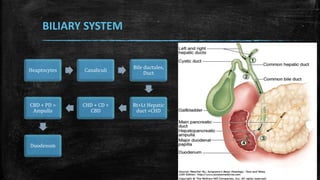
BILIARY SYSTEM
Heaptocytes Canaliculi
Bile ductules,
Duct
Rt+Lt Hepatic
duct =CHD
CHD + CD =
CBD
CBD + PD =
Ampulla
Duodenum
• Total bile flow- 600 ml/day(500-1000ml/day)
• Hepatocyte component is - 450ml/day
• Bile salt dependent due to biliary glutathione and ductular bicarbonate secretion
• Cholangiocyte component- 150ml/day
• It depends on secretin stimulation
• With conjugated bilirubin <15 %
PHYSIOLOGICAL FACTS BILE
BILE
▪ Heterogenous
– Bile acid, salts
– Conj. Bilirubin
– Cholesterol
– Phospholipids
– Electrolytes
▪ Bile Acid/salt
– 200mg – 500mg/day
– Primary / Secondary
– Entero-hepatic circulation
– Buffer system of the gut
 Functions
‒ Absorption of Lipids, LCFA, FS Vitamins
‒ Excretion of lipid soluble wastes
exogenous/endogenous
‒ Regulate plasma lipid levels
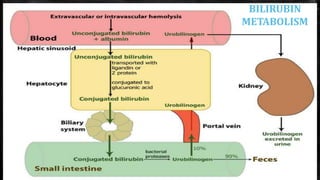
BILIRUBIN
METABOLISM
Physiological functions of Liver
▪ Blood Reservoir
▪ Glucose Homeostasis
▪ Fat Metabolism
▪ Protein Synthesis
▪ Drug & Hormone Metabolism
▪ Bilirubin formation &excretion
▪ Anti bacterial action
Blood Reservoir
▪ 10% of total blood volume
▪ Available for Auto transfusion into central circulation
▪ Prevents profound hypotension after minimal blood loss
▪ Neural and Humoral control
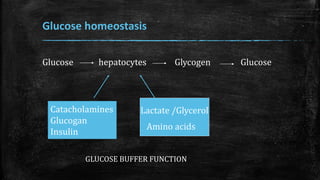
Glucose homeostasis
Glucose hepatocytes Glycogen Glucose
Lactate /Glycerol
Amino acids
Catacholamines
Glucogan
Insulin
GLUCOSE BUFFER FUNCTION
Glucose Homeostasis
▪ Glycogen stores 75gm 24—48hrs
▪ Anesthesia inhibits gluconeogenesis
▪ Provide ext. source of glucose in long duration surgeries
Lipid metabolism
▪ Synthesis & Storage of FA – TGL , VLDL
▪ Synthesis of lipo-proteins & cholesterol
▪ β-Oxidation of FA to Acetyl-CoA  TCA cycle / ketone bodies modulated by
Glucagon and Insulin
▪ Ketone bodies – Important extrahepatic energy source
Protein Metabolism
▪ Synthesis and Deamination of AA
▪ Formation of urea from ammonia
▪ All Plasma proteins – except γ-globulin & factor III, IV, VIII
▪ Albumin
– Daily prod. 12 - 15g/d (3.5-5.5gm%) Total pool – 500gm
– Negative acute phase reactant
– Liver disease  Alb  glob – Significance..?
▪ Function of Albumin
– Plasma O. P.
– Binding of drugs, FFA, UCB, Hormones
Other PP
▪ Coagulation Factors
▪ Transport / carrier proteins
– Transferrin
– Haptoglobin
– Ceruloplasmin
▪ Plasma esterase
– Hydrolysis of drugs
▪ Complements
▪ CRP
▪ Hormones
– IGF -1
– Thrombopoietin
– Hepcidin
▪ Protease Inhibitors
– α₁- antitrypsin
– α₂ - antiplasmin
– Antithrombin III
Drug binding
▪ Acidic Drugs reversibly combine with Albumin
▪ Albumin < 2.5gm%
▪  albumin  bound form  free drug
▪ Highly bound (>90%)
– Warfarin
– OHA - glimepiride, glipizide, glyburide,
– NSAID
– Cardiac: Loop diuretics, amiodarone, prazosin, nicardipine, digitoxin, ticlopidine, losartan
– Benzodiazepines: diazepam, midazolam
▪ Intermediate bound ( 60%)
– Anticonvulsant , Thiopental
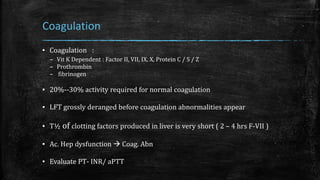
Coagulation
▪ Coagulation :
– Vit K Dependent : Factor II, VII, IX, X, Protein C / S / Z
– Prothrombin
– fibrinogen
▪ 20%--30% activity required for normal coagulation
▪ LFT grossly deranged before coagulation abnormalities appear
▪ T½ of clotting factors produced in liver is very short ( 2 – 4 hrs F-VII )
▪ Ac. Hep dysfunction  Coag. Abn
▪ Evaluate PT- INR/ aPTT
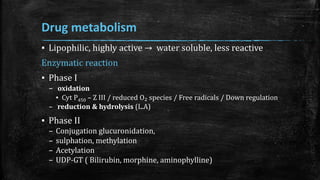
Drug metabolism
▪ Lipophilic, highly active → water soluble, less reactive
Enzymatic reaction
▪ Phase I
– oxidation
▪ Cyt P450 – Z III / reduced O₂ species / Free radicals / Down regulation
– reduction & hydrolysis (L.A)
▪ Phase II
– Conjugation glucuronidation,
– sulphation, methylation
– Acetylation
– UDP-GT ( Bilirubin, morphine, aminophylline)
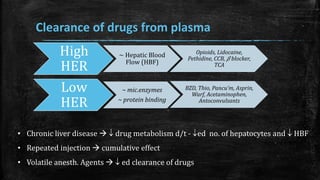
Clearance of drugs from plasma
Rowland's Equation
▪ Hepatic Clearance: Cl(h) = Q [(f x Clint)/(Q+ f x Clint)]
▪ Q = hepatic blood flow
▪ f = fraction of free drug (not bound)
▪ Clint = intrinsic capacity of the hepatocytes to metabolize a drug
▪ High DER ∝ Rapid clearance
– Consider ER is 1, Now Cl = Q [ DER – Drug Extraction Ratio ]
▪ Low DER ∝ Low clearance
– Capacity limited / extract less avidly
– By protein binding , Hepatic enzymes
Clearance of drugs from plasma
High
HER
~ Hepatic Blood
Flow (HBF)
Opioids, Lidocaine,
Pethidine, CCB, 𝛽 blocker,
TCA
Low
HER
~ mic.enzymes
~ protein binding
BZD, Thio, Pancu’m, Asprin,
Warf, Acetaminophen,
Antoconvulsants
• Chronic liver disease   drug metabolism d/t - ed no. of hepatocytes and  HBF
• Repeated injection  cumulative effect
• Volatile anesth. Agents   ed clearance of drugs
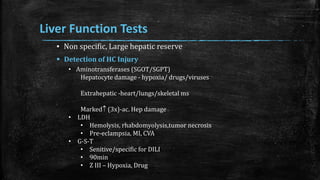
Liver Function Tests
▪ Non specific, Large hepatic reserve
 Detection of HC Injury
• Aminotransferases (SGOT/SGPT)
Hepatocyte damage - hypoxia/ drugs/viruses
Extrahepatic -heart/lungs/skeletal ms
Marked (3x)-ac. Hep damage
• LDH
• Hemolysis, rhabdomyolysis,tumor necrosis
• Pre-eclampsia, MI, CVA
• G-S-T
• Senitive/specific for DILI
• 90min
• Z III – Hypoxia, Drug
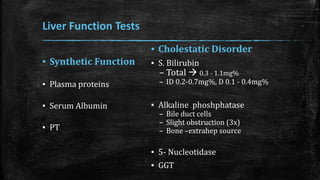
Liver Function Tests
▪ Synthetic Function
▪ Plasma proteins
▪ Serum Albumin
▪ PT
▪ Cholestatic Disorder
▪ S. Bilirubin
– Total  0.3 - 1.1mg%
– ID 0.2-0.7mg%, D 0.1 - 0.4mg%
▪ Alkaline phoshphatase
– Bile duct cells
– Slight obstruction (3x)
– Bone –extrahep source
▪ 5- Nucleotidase
▪ GGT
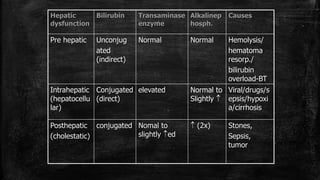
Hepatic
dysfunction
Bilirubin Transaminase
enzyme
Alkalinep
hosph.
Causes
Pre hepatic Unconjug
ated
(indirect)
Normal Normal Hemolysis/
hematoma
resorp./
bilirubin
overload-BT
Intrahepatic
(hepatocellu
lar)
Conjugated
(direct)
elevated Normal to
Slightly 
Viral/drugs/s
epsis/hypoxi
a/cirrhosis
Posthepatic
(cholestatic)
conjugated Nomal to
slightly ed
 (2x) Stones,
Sepsis,
tumor
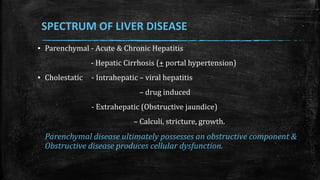
SPECTRUM OF LIVER DISEASE
▪ Parenchymal - Acute & Chronic Hepatitis
- Hepatic Cirrhosis (+ portal hypertension)
▪ Cholestatic - Intrahepatic – viral hepatitis
– drug induced
- Extrahepatic (Obstructive jaundice)
– Calculi, stricture, growth.
Parenchymal disease ultimately possesses an obstructive component &
Obstructive disease produces cellular dysfunction.
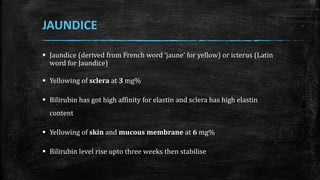
JAUNDICE
 Jaundice (derived from French word ‘jaune’ for yellow) or icterus (Latin
word for Jaundice)
 Yellowing of sclera at 3 mg%
 Bilirubin has got high affinity for elastin and sclera has high elastin
content
 Yellowing of skin and mucous membrane at 6 mg%
 Bilirubin level rise upto three weeks then stabilise
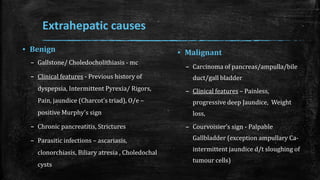
Extrahepatic causes
▪ Benign
– Gallstone/ Choledocholithiasis - mc
– Clinical features - Previous history of
dyspepsia, Intermittent Pyrexia/ Rigors,
Pain, jaundice (Charcot’s triad), O/e –
positive Murphy’s sign
– Chronic pancreatitis, Strictures
– Parasitic infections – ascariasis,
clonorchiasis, Biliary atresia , Choledochal
cysts
▪ Malignant
– Carcinoma of pancreas/ampulla/bile
duct/gall bladder
– Clinical features – Painless,
progressive deep Jaundice, Weight
loss,
– Courvoisier’s sign - Palpable
Gallbladder (exception ampullary Ca-
intermittent jaundice d/t sloughing of
tumour cells)
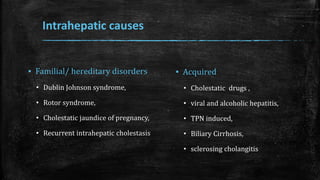
Intrahepatic causes
▪ Familial/ hereditary disorders
• Dublin Johnson syndrome,
• Rotor syndrome,
• Cholestatic jaundice of pregnancy,
• Recurrent intrahepatic cholestasis
▪ Acquired
• Cholestatic drugs ,
• viral and alcoholic hepatitis,
• TPN induced,
• Biliary Cirrhosis,
• sclerosing cholangitis
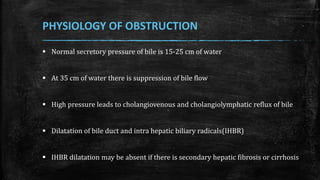
 Normal secretory pressure of bile is 15-25 cm of water
 At 35 cm of water there is suppression of bile flow
 High pressure leads to cholangiovenous and cholangiolymphatic reflux of bile
 Dilatation of bile duct and intra hepatic biliary radicals(IHBR)
 IHBR dilatation may be absent if there is secondary hepatic fibrosis or cirrhosis
PHYSIOLOGY OF OBSTRUCTION
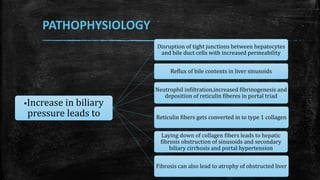
Increase in biliary
pressure leads to
Disruption of tight junctions between hepatocytes
and bile duct cells with increased permeability
Reflux of bile contents in liver sinusoids
Neutrophil infiltration,increased fibrinogenesis and
deposition of reticulin fiberes in portal triad
Reticulin fibers gets converted in to type 1 collagen
Laying down of collagen fibers leads to hepatic
fibrosis obstruction of sinusoids and secondary
biliary cirrhosis and portal hypertension
Fibrosis can also lead to atrophy of obstructed liver
PATHOPHYSIOLOGY
EFFECTS OF OBSTRUCTIVE JAUNDICE
ON VARIOUS SYSTEMS
• Acute obstruction
• increase in hepatic arterial blood flow
• No change in portal venous blood flow
• Chronic obstruction
• Decrease in total liver blood flow , dilatation of sinusoids and elevation of
portal pressure
CHANGES IN LIVER BLOOD FLOW
Circulating Bile salts leads to
 Bradycardia due to direct effect on SA node.
 Impaired cardiac contractability
 Impaired response to beta agonist drugs
 Decreased peripheral vascular resistance
 Net result
• Hypotensive patient prone for circulatory collapse
• Exaggerated hypotensive response to bleeding
• More prone to perioperative shock - therefore replace volume losses immediately
in peri-operative period.
CARDIOVASCULAR EFFECTS
 10 % incidence with 70 % mortality
 Factors responsible are
• Effect of bile salts, Endotoxins, inflammatory mediators on kidney
• Decresed cardic function - Hypotension
• Refractoriness of tubules to ADH
• Increased levels of ANP resulting in hypovolemia
 Resulting in
• Renal vasoconstriction, hypoperfusion
• Shunting of blood from cortex
• Activation of complement system leading to tubular and cortical necrosis
EFFECT ON RENAL SYSTEM
 Defects in cellular immunity
 Depressed function of RE system i.e Kuffer cells
 Impaired T cell proliferation
 Decreased neutophil chemotaxis
 Defective bacterial phagocytosis
 Can lead to Sepsis
 Associated cholangitis and bactibilia
 Absence of bile salts in intestine Escape of endotoxins from intestine into
portal blood
IMMUNE SYSTEM
Deranged coagulation
▪ ed synthesis of Clotting factors  Prolongation of Prothrombin time
▪ Vit. K deficiency d/t biliary obstruction  Defective γ-carboxylation
▪ Endotoxin, Hyperspleenism  Thrombocytopenia
▪ Endotoxin  ed Fibrinolysis, Low grade DIC
▪ Loss of calcium
▪ Decreased absroption of fat solube vitamins A,D,E,K
 Delayed wound healing
 High incidence of wound dehiscence
 Decresed activity of enzyme Propyl hydroxylase in the skin
 This helps in incorporation of proline in collagen
 Defective synthesis of collagen
WOUND HEALING
ENDOTOXEMIA
Bile salts are surfactants----disrupt endotoxins
▪ Absence of bile in intestine  intest.bact. Flora
▪ Breakdown of GI mucos. Barrier  bact. translocation
▪ Hepatic RES function   clearance of endotoxins
ANAESTHETIC PROBLEMS IN
OBSTRUCTIVE JAUNDICE
DYSFUNCTION OF LIVER
▪ Low serum proteins
▪ Coagulopathy
▪ Drug metabolism and disposition
▪ Metabolic derangement
– Hypoglycemia
– Electrolyte imbalance
▪ Haematological
– Anaemia / Thrombocytopenia / Leucopenia / DIC
▪ Deficiency of fat soluble vitamins (A, D, E, K)
▪ Increased serum cholesterol (atheromatous changes)
INVOLVEMENT OF SYSTEMS
▪ CVS - TBV , PVR , Circulatory collapse
▪ Renal - pre renal azotemia
- Hepatorenal failure
▪ GIT - Hm’ gastritis & stress ulcers
▪ RS - Arterial Hypoxemia
- vulnerability to pulmonary infection
- Hepatopulmonary syndrome
▪ CNS - Hepatic encephalopathy
RELATED TO SURGERY
▪ Whipple’s procedure  Ca. Head of pancreas, Periampullary
▪ Distal gastrectomy, H-J, P-J, G-J
▪ Major surgery  long duration
▪ Increased blood loss/fluid shifts
▪ Wide incision  Roof top—warrants good postoperative analgesia
▪ Extensive monitoring reqd for favourable outcome
RISK stratification
▪ Age > 60yrs
▪ Albumin < 3.0gm%
▪ Preop. renal dysfunction
▪ Long standing biliary obstruction  infection  sepsis
▪ Weight loss
Serum creatinine & Sepsis—prognostic factors
Periop CVS collapse & renal failure
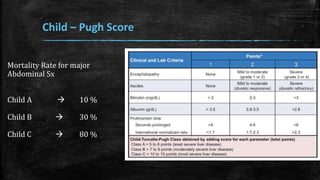
Child – Pugh Score
Mortality Rate for major
Abdominal Sx
Child A  10 %
Child B  30 %
Child C  80 %
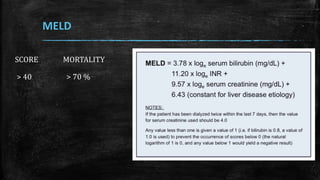
MELD
SCORE MORTALITY
> 40 > 70 %
Preoperative Assessment
OBJECTIVES
▪ Assess the type and degree of liver dysfunction.
▪ Assess effect on other system.
▪ To ensure – post operative facilities (High risk patient).
Preoperative Investigations
To know the pattern of disease :
▪ S. Bilirubin
▪ SGOT, SGPT
▪ Alk. phosphatase
▪ 90% predictive
Preoperative Investigations
To judge the synthetic ability of liver
▪ Serum albumin – < 2·5 gm% - severe damage
▪ Albumin/globulin ratio – reversed.
▪ Prothrombin time – > 1·5 sec. Over control
▪ INR – > 1.3
Parenteral Vit. K use..?
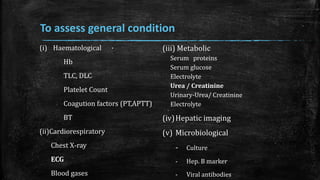
To assess general condition
(i) Haematological ·
Hb
TLC, DLC
Platelet Count
Coagution factors (PT,APTT)
BT
(ii)Cardiorespiratory
Chest X-ray
ECG
Blood gases
(iii) Metabolic
Serum proteins
Serum glucose
Electrolyte
Urea / Creatinine
Urinary-Urea/ Creatinine
Electrolyte
(iv)Hepatic imaging
(v) Microbiological
- Culture
- Hep. B marker
- Viral antibodies
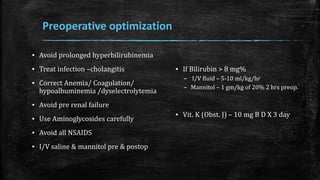
Preoperative optimization
▪ Avoid prolonged hyperbilirubinemia
▪ Treat infection –cholangitis
▪ Correct Anemia/ Coagulation/
hypoalbuminemia /dyselectrolytemia
▪ Avoid pre renal failure
▪ Use Aminoglycosides carefully
▪ Avoid all NSAIDS
▪ I/V saline & mannitol pre & postop
▪ If Bilirubin > 8 mg%
– I/V fluid – 5-10 ml/kg/hr
– Mannitol – 1 gm/kg of 20% 2 hrs preop.
▪ Vit. K (Obst. J) – 10 mg B D X 3 day
Preoperative management
No conclusive evidence for
▪ Preop percutaneous biliary drainage
▪ Gut sterlization
▪ Polymyxin B
▪ Oral bile salts
Premedication
▪ Anxiolytic
– avoid oral
– short acting i.v BDZ
▪ Oral H2 antagonist, Metaclopromide
▪ Order morning PT / S. Electrolyte
▪ Preop urinary catheter & CVP
Anaesthetic Management GOALS
▪ Minimize physiological insult to liver & kidney
▪ Maintain O2 supply – demand relationship in liver.
▪ Adequate pulmonary ventilation and cardiovascular fn.
▪ Maintain renal perfusion
▪ Avoid Hypotension, Symph stimulation & Hypoxia
▪ Meticulous fluid balance
▪ Choose appropriate anaesthetic agent - Metabolism of drugs + Effect on HBF.
Monitoring
▪ ECG, NIBP, SpO2
▪ EtCO2
▪ Urine output
▪ Core temp
▪ NMJ monitoring
▪ Blood loss
▪ Extensive surgeries
– IBP , CVP
• Biochemical
• B.Sugar, ABG
• S.Electrolytes
• Hematological
• Hb, PT, aPTT, TEG
Anesthetic technique
▪ General anesthesia
▪ Preoxygenation
▪ IV Anaesthetics
▪ Volatile Anaesthetics
▪ Opiods
▪ Muscle relaxants
▪ Perioperative analgesia - TEA
IV Anaesthetics
▪ Ketamine
– Little or no effect on HBF
▪ Thiopentone
– Protein bound
– Titrated doses
▪ General rules
– Titrated dosage
– Maintain adequate MAP, CO
– IV Fluid volume
▪ Propofol
–  THBF, splanchnic vasodilation
– Oxygen delivery
– Anti-oxidant
Opioids
▪ Well tolerated
▪ Smaller doses
▪ Morphine—ph-II reac.
▪ Fentanyl / Sufentanyl – continuous infusion
▪ Remifentanyl {DOC} – ester hydrolysis
Spasm of sphincter of Oddi
▪ Interpretation of operative cholangiography & biliary pressures
▪ All patients do not show this response
▪ Incidence of spasm is very low
▪ Intraop manipulation of BD system  spasm
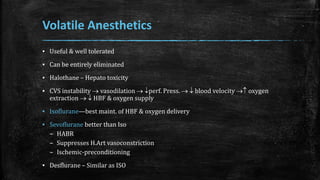
Volatile Anesthetics
▪ Useful & well tolerated
▪ Can be entirely eliminated
▪ Halothane – Hepato toxicity
▪ CVS instability  vasodilation  perf. Press.   blood velocity  oxygen
extraction   HBF & oxygen supply
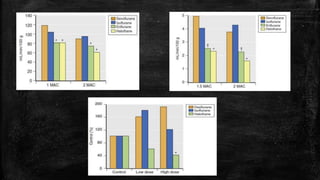
▪ Isoflurane—best maint. of HBF & oxygen delivery
▪ Sevoflurane better than Iso
– HABR
– Suppresses H.Art vasoconstriction
– Ischemic-preconditioning
▪ Desflurane – Similar as ISO
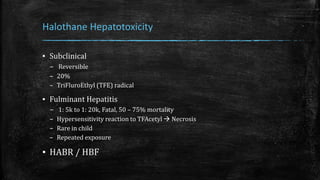
Halothane Hepatotoxicity
▪ Subclinical
– Reversible
– 20%
– TriFluroEthyl (TFE) radical
▪ Fulminant Hepatitis
– 1: 5k to 1: 20k, Fatal, 50 – 75% mortality
– Hypersensitivity reaction to TFAcetyl  Necrosis
– Rare in child
– Repeated exposure
▪ HABR / HBF
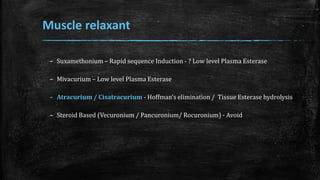
Muscle relaxant
– Suxamethonium – Rapid sequence Induction - ? Low level Plasma Esterase
– Mivacurium – Low level Plasma Esterase
– Atracurium / Cisatracurium - Hoffman’s elimination / Tissue Esterase hydrolysis
– Steroid Based (Vecuronium / Pancuronium/ Rocuronium) - Avoid
Ventilation
- Maintain eucapnia
- Liver low pressure tissue bed
- Avoid large VT & high airway pressures
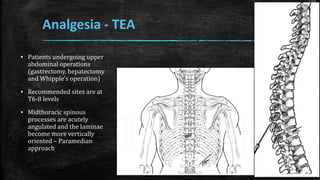
Analgesia - TEA
▪ Patients undergoing upper
abdominal operations
(gastrectomy, hepatectomy
and Whipple’s operation)
▪ Recommended sites are at
T6-8 levels
▪ Midthoracic spinous
processes are acutely
angulated and the laminae
become more vertically
oriented – Paramedian
approach
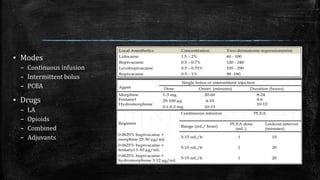
▪ Modes
– Continuous infusion
– Intermittent bolus
– PCEA
▪ Drugs
– LA
– Opioids
– Combined
– Adjuvants
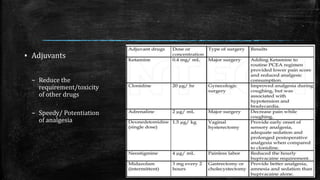
▪ Adjuvants
– Reduce the
requirement/toxicity
of other drugs
– Speedy/ Potentiation
of analgesia
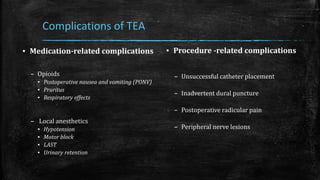
Complications of TEA
▪ Medication-related complications
– Opioids
▪ Postoperative nausea and vomiting (PONV)
▪ Pruritus
▪ Respiratory effects
– Local anesthetics
▪ Hypotension
▪ Motor block
▪ LAST
▪ Urinary retention
▪ Procedure -related complications
– Unsuccessful catheter placement
– Inadvertent dural puncture
– Postoperative radicular pain
– Peripheral nerve lesions
Conclusion TEA
▪ Epidural analgesia provides favorable outcomes after upper
abdominal surgery
▪ The success and safety of the procedure rely on
– Expertise in the procedure
– Pharmacologic selection.
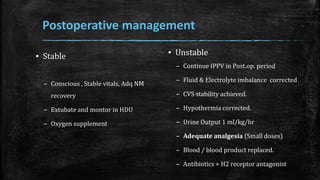
Postoperative management
▪ Unstable
– Continue IPPV in Post.op. period
– Fluid & Electrolyte imbalance corrected
– CVS stability achieved.
– Hypothermia corrected.
– Urine Output 1 ml/kg/hr
– Adequate analgesia (Small doses)
– Blood / blood product replaced.
– Antibiotics + H2 receptor antagonist
▪ Stable
– Conscious , Stable vitals, Adq NM
recovery
– Extubate and montor in HDU
– Oxygen supplement
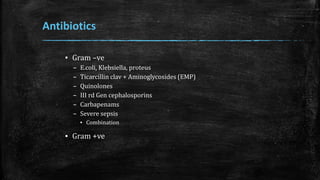
Antibiotics
▪ Gram –ve
– E.coli, Klebsiella, proteus
– Ticarcillin clav + Aminoglycosides (EMP)
– Quinolones
– III rd Gen cephalosporins
– Carbapenams
– Severe sepsis
▪ Combination
▪ Gram +ve
References
▪ Miller - 8th edition
▪ Stoelting’s - 2nd edition (Asian)
▪ Morgan & Mikhail’s – 5th edition
▪ Yao - 7th editon
▪ Obstructive jaundice and perioperative management
http://dx.doi.org/10.1016/j.aat.2014.03.002
Anaesthetic management in Obstructive jaundice

Anaesthetic management in Obstructive jaundice

  • 1.
    Presenter : Dr.M. Senthil Prakash Dept Of Anaesthesiology MAMC - Delhi
  • 2.
    Patient details Mr. XAge: 58 years Sex: male Occupation: Rickshaw coolie Chief Complaints ▪ Pain abdomen – 20 days ▪ Generalised Itching – 10 days ▪ Nausea, fever – 3 days CASE PRESENTATION
  • 3.
    Pain abdomen History ofpresenting illness Right upper abdominal pain 20 days duration; Dull aching; Insidious onset Intermittent in nature Non radiating No aggravating/relieving Generalised itching , 10 days duration Progressive in nature Relieved on medication Low grade Intermittent , 3 days duration Not associated with chills and rigors No diurnal variation Relieved on medication • Yellowish discoloration of eyes • Dark coloured urine since 20 days • Clay coloured stools • Loss of Appetite and loss of Weight since last one month (has lost about 6 kgs) • No h/o Malena, ascites & swelling of legs Itching Fever
  • 4.
    Past history ▪ Nohistory of similar complaints in the past ▪ No history of previous surgery, Exposure to anaesthesia ▪ No Jaundice or contact with jaundiced patient ▪ No history of Diabetes Mellitus, Hypertension, Bronchial asthma or Epilepsy ▪ No history of drug intake ▪ No history of blood transfusions.
  • 5.
    Family history No historyof similar complaints in the family was noted. Personal history Diet: Vegetarian Sleep: disturbed (due to itching) Habits: Smoker since 20 years ( 8 beedis/day). Not an alcoholic.
  • 6.
    General Physical Examination Anelderly male patient moderately built and nourished. Ht – 158cm, Wt – 42kg , BMI – 20.8 Pallor - +, Icterus - +, No cyanosis, oedema, clubbing, spidernavi, palmar erythema, Echymosis Scratch marks - ++ over the abdomen and peripheries. Airway Examination Pulse rate – 62/min; MPC II, MO - Adequate Blood pressure – 110/70 mm of Hg ROM Neck full Respiratory rate – 16/min TMD > 6cms
  • 7.
    Systemic Examination ▪ Inspection: –Normal in shape. – No dilated veins, scars and sinuses. – All quadrants move correspondingly with respiration. ▪ Palpation: – Soft. Tenderness in right hypochondrium and epigastrium. – Palpable hard mass of about 5 x 3 cms felt in the epigastrium with an irregular border. – Hepatomegaly +, 3 cms below the costal margin – No Splenomegaly/ free fluid Per abdominal examination:
  • 8.
    ▪ Percusion – Liverdullness extent from 4th ICS to 3cm below the Rt subcostal margin s/o hepatomegaly – No other organomegaly – No shifting dullness/ fluid thrill ▪ Auscultation – Bowel Sound present – No bruits hear ▪ CVS: – S1 S2 hear – No murmurs heard. ▪ RS: – Normal Vesicular Breath Sounds heard, – No added sounds. ▪ CNS: – Normal, No focal neurological deficits Systemic Examination
  • 9.
    58 yr malepatient with pain abdomen, discolouration of eyes, urine, clay coloured stools, itching, significant loss of weight and appetite with hepatomegaly Clinical Diagnosis : Obstructive Jaundice with probably Peri-ampullary carcinoma Summary
  • 10.
    Investigations ▪ Hb: 10.4gm% ▪ Total count – 9, 800 ▪ Differential count: 71/24/02/03 ▪ Platelets: 2.73 lakhs/mm3 ▪ PT INR: 13.5 / 1.0 ▪ BT: 3’ 00” ▪ CT: 4’ 00” ▪ RBS: 99 mg/dl ▪ Urea: 30 mg/dl ▪ Creatinine: 1.1 mg/dl ▪ Na+: 135 mEq/l, ▪ K+: 3.9 mEq/l ▪ Cl-: 104 mEq/l
  • 11.
    Investigations contd.. ▪ LFT: –Total Bilirubin: 9.0 (0.1 – 1.0); Direct Bilirubin: 7.3 (0.0 – 0.2) ; Indirect Bilirubin: 1.7 – Albumin: 2.8 (3.4 – 5.0) – Globulin: 3.2 A/G Ratio: 0.9 (1.2 – 2.5) – AST: 39 (0 – 40) – ALT: 32 (0 – 40) – Alkaline Phosphatase: 570 (37 – 147) ▪ HIV 1 & 2: Not detected, HBsAg: Not detected ▪ USG: Intra Hepatic Biliary radical dilatation in its entire length probably due to stricture.
  • 12.
    Investigations contd.. • UpperG.I. Endoscopy: bulging growth in Periampullary region. • C.T. Scan: Moderated dilatation of intrahepatic and common bile ducts. • ECG: Sinus rhythm. Within normal limits. Heart rate: 60/min. • Chest X – Ray: Hyperinflated lung fields (COPD changes) • 2D ECHOCARDIOGRAPHY: Normal Left Ventricular systolic function No Regional Wall Motion abnormalities Ejection fraction: 59 % • Arterial Blood Gas Analysis: Mild hypoxia.
  • 13.
    Management Plan Kausch –Whipple’s Procedure
  • 14.
    ▪ Second largestorgan ▪ Most vascular organ ▪ 30% of CO ▪ 100 – 120 ml/100gm/min ▪ Synthetic, Storage, Excretion ▪ Endocrine
  • 15.
    Anatomy ▪ Four Lobes –Right – Left – Caudate – Quadrate ▪ Four Ligaments – Rt/Lt Coronary – Rt/Lt Triangular – Falciform – Teres/Round
  • 16.
    Physiologic Segments ▪ Considerablevariability ▪ Couinaud system ▪ Eight Segments ▪ 1st segment is caudate ▪ CE-Spiral CT ▪ Lower rates of perioperative morbidity & mortality
  • 17.
    Liver Lobule ▪ Anatomicalunit ▪ 3mm in circumference ▪ 50k to 1lakh ▪ Hexagonal – portal canals ▪ Portal canal – Portal triad, nerve fibers, lymphatics, connective tissues
  • 18.
    Liver Acinus ▪ FunctionalMicrovascular ▪ Three Zones – Z I -> Periportal -> High Po2 – Z II -> Midzone – Z III -> Pericentral -> Low Po2 ▪ Zone I – Highest Mitochondria ▪ Synthetic fn, Urea cycle ▪ Zone III – High SER, Cyt P450 ▪ Xenobiotics
  • 20.
    Hepatic Blood Supply ▪25% to 30% of CO ▪ Dual supply – Portal V (75%) 85% saturated – Hepatic A (25%) 95% saturated ▪ Oxygen delivery is 50% by both ▪ 2/3 of oxygen used by liver ▪ Sinusoids can accommodate 400 – 600 ml of blood
  • 21.
    Control of LiverBlood Flow INTRINSIC ▪ AUTOREGULATION – Myogenic – Resistance to vascular bed – Hepatic artery - 80 mmHg – Portal vein – low pressure flow from spleen, intestine – Anaesthesia abolish ▪ Hepatic Arterial Buffer response (HABR) – Max doubles the H.Art flow – Adenosine ▪ Metabolic – O2 tension, pH of PV -> HABF
  • 22.
    Control of LiverBlood Flow EXTRINSIC Increase HBF  Acute hepatitis  Supine posture  β-adren-stimulation  Glucagon Decrease HBF  Hypoxia, Hypotension  Hepatic cirrhosis  Upright posture  Hypercapnia  Hypocapnia/IPPV/PEEP  β-adrenoreceptor blockade/ α agonist  Angiotensin II, Vasopressin  Anaesthetic agent
  • 23.
    ▪ Portal vein– only α receptor ▪ Hep artery – α/β present ▪ Importance – Dopamine [DOC] – Dobutamine – Noradrenaline
  • 24.
    NERVE SUPPLY ▪ Symphathetic(Splanchnic) – Celiac plexus T5 – T11 ▪ Parasymphathetic – Rt & Lt Vagus nerve – Rt phrenic nerve ▪ Importance in spinal/epidural anaesthesia – Fall in MAP  SBF/ PVBF  THBF – Impact of LA/Epinephrine – Unknown – Treat by IVF ; avoid 𝛂-agonistic Vasopressors
  • 25.
    BILIARY SYSTEM Heaptocytes Canaliculi Bileductules, Duct Rt+Lt Hepatic duct =CHD CHD + CD = CBD CBD + PD = Ampulla Duodenum
  • 26.
    • Total bileflow- 600 ml/day(500-1000ml/day) • Hepatocyte component is - 450ml/day • Bile salt dependent due to biliary glutathione and ductular bicarbonate secretion • Cholangiocyte component- 150ml/day • It depends on secretin stimulation • With conjugated bilirubin <15 % PHYSIOLOGICAL FACTS BILE
  • 27.
    BILE ▪ Heterogenous – Bileacid, salts – Conj. Bilirubin – Cholesterol – Phospholipids – Electrolytes ▪ Bile Acid/salt – 200mg – 500mg/day – Primary / Secondary – Entero-hepatic circulation – Buffer system of the gut  Functions ‒ Absorption of Lipids, LCFA, FS Vitamins ‒ Excretion of lipid soluble wastes exogenous/endogenous ‒ Regulate plasma lipid levels
  • 28.
  • 29.
    Physiological functions ofLiver ▪ Blood Reservoir ▪ Glucose Homeostasis ▪ Fat Metabolism ▪ Protein Synthesis ▪ Drug & Hormone Metabolism ▪ Bilirubin formation &excretion ▪ Anti bacterial action
  • 30.
    Blood Reservoir ▪ 10%of total blood volume ▪ Available for Auto transfusion into central circulation ▪ Prevents profound hypotension after minimal blood loss ▪ Neural and Humoral control
  • 31.
    Glucose homeostasis Glucose hepatocytesGlycogen Glucose Lactate /Glycerol Amino acids Catacholamines Glucogan Insulin GLUCOSE BUFFER FUNCTION
  • 32.
    Glucose Homeostasis ▪ Glycogenstores 75gm 24—48hrs ▪ Anesthesia inhibits gluconeogenesis ▪ Provide ext. source of glucose in long duration surgeries
  • 33.
    Lipid metabolism ▪ Synthesis& Storage of FA – TGL , VLDL ▪ Synthesis of lipo-proteins & cholesterol ▪ β-Oxidation of FA to Acetyl-CoA  TCA cycle / ketone bodies modulated by Glucagon and Insulin ▪ Ketone bodies – Important extrahepatic energy source
  • 34.
    Protein Metabolism ▪ Synthesisand Deamination of AA ▪ Formation of urea from ammonia ▪ All Plasma proteins – except γ-globulin & factor III, IV, VIII ▪ Albumin – Daily prod. 12 - 15g/d (3.5-5.5gm%) Total pool – 500gm – Negative acute phase reactant – Liver disease  Alb  glob – Significance..? ▪ Function of Albumin – Plasma O. P. – Binding of drugs, FFA, UCB, Hormones
  • 35.
    Other PP ▪ CoagulationFactors ▪ Transport / carrier proteins – Transferrin – Haptoglobin – Ceruloplasmin ▪ Plasma esterase – Hydrolysis of drugs ▪ Complements ▪ CRP ▪ Hormones – IGF -1 – Thrombopoietin – Hepcidin ▪ Protease Inhibitors – α₁- antitrypsin – α₂ - antiplasmin – Antithrombin III
  • 36.
    Drug binding ▪ AcidicDrugs reversibly combine with Albumin ▪ Albumin < 2.5gm% ▪  albumin  bound form  free drug ▪ Highly bound (>90%) – Warfarin – OHA - glimepiride, glipizide, glyburide, – NSAID – Cardiac: Loop diuretics, amiodarone, prazosin, nicardipine, digitoxin, ticlopidine, losartan – Benzodiazepines: diazepam, midazolam ▪ Intermediate bound ( 60%) – Anticonvulsant , Thiopental
  • 37.
    Coagulation ▪ Coagulation : –Vit K Dependent : Factor II, VII, IX, X, Protein C / S / Z – Prothrombin – fibrinogen ▪ 20%--30% activity required for normal coagulation ▪ LFT grossly deranged before coagulation abnormalities appear ▪ T½ of clotting factors produced in liver is very short ( 2 – 4 hrs F-VII ) ▪ Ac. Hep dysfunction  Coag. Abn ▪ Evaluate PT- INR/ aPTT
  • 38.
    Drug metabolism ▪ Lipophilic,highly active → water soluble, less reactive Enzymatic reaction ▪ Phase I – oxidation ▪ Cyt P450 – Z III / reduced O₂ species / Free radicals / Down regulation – reduction & hydrolysis (L.A) ▪ Phase II – Conjugation glucuronidation, – sulphation, methylation – Acetylation – UDP-GT ( Bilirubin, morphine, aminophylline)
  • 39.
    Clearance of drugsfrom plasma Rowland's Equation ▪ Hepatic Clearance: Cl(h) = Q [(f x Clint)/(Q+ f x Clint)] ▪ Q = hepatic blood flow ▪ f = fraction of free drug (not bound) ▪ Clint = intrinsic capacity of the hepatocytes to metabolize a drug ▪ High DER ∝ Rapid clearance – Consider ER is 1, Now Cl = Q [ DER – Drug Extraction Ratio ] ▪ Low DER ∝ Low clearance – Capacity limited / extract less avidly – By protein binding , Hepatic enzymes
  • 40.
    Clearance of drugsfrom plasma High HER ~ Hepatic Blood Flow (HBF) Opioids, Lidocaine, Pethidine, CCB, 𝛽 blocker, TCA Low HER ~ mic.enzymes ~ protein binding BZD, Thio, Pancu’m, Asprin, Warf, Acetaminophen, Antoconvulsants • Chronic liver disease   drug metabolism d/t - ed no. of hepatocytes and  HBF • Repeated injection  cumulative effect • Volatile anesth. Agents   ed clearance of drugs
  • 41.
    Liver Function Tests ▪Non specific, Large hepatic reserve  Detection of HC Injury • Aminotransferases (SGOT/SGPT) Hepatocyte damage - hypoxia/ drugs/viruses Extrahepatic -heart/lungs/skeletal ms Marked (3x)-ac. Hep damage • LDH • Hemolysis, rhabdomyolysis,tumor necrosis • Pre-eclampsia, MI, CVA • G-S-T • Senitive/specific for DILI • 90min • Z III – Hypoxia, Drug
  • 42.
    Liver Function Tests ▪Synthetic Function ▪ Plasma proteins ▪ Serum Albumin ▪ PT ▪ Cholestatic Disorder ▪ S. Bilirubin – Total  0.3 - 1.1mg% – ID 0.2-0.7mg%, D 0.1 - 0.4mg% ▪ Alkaline phoshphatase – Bile duct cells – Slight obstruction (3x) – Bone –extrahep source ▪ 5- Nucleotidase ▪ GGT
  • 43.
    Hepatic dysfunction Bilirubin Transaminase enzyme Alkalinep hosph. Causes Pre hepaticUnconjug ated (indirect) Normal Normal Hemolysis/ hematoma resorp./ bilirubin overload-BT Intrahepatic (hepatocellu lar) Conjugated (direct) elevated Normal to Slightly  Viral/drugs/s epsis/hypoxi a/cirrhosis Posthepatic (cholestatic) conjugated Nomal to slightly ed  (2x) Stones, Sepsis, tumor
  • 44.
    SPECTRUM OF LIVERDISEASE ▪ Parenchymal - Acute & Chronic Hepatitis - Hepatic Cirrhosis (+ portal hypertension) ▪ Cholestatic - Intrahepatic – viral hepatitis – drug induced - Extrahepatic (Obstructive jaundice) – Calculi, stricture, growth. Parenchymal disease ultimately possesses an obstructive component & Obstructive disease produces cellular dysfunction.
  • 45.
    JAUNDICE  Jaundice (derivedfrom French word ‘jaune’ for yellow) or icterus (Latin word for Jaundice)  Yellowing of sclera at 3 mg%  Bilirubin has got high affinity for elastin and sclera has high elastin content  Yellowing of skin and mucous membrane at 6 mg%  Bilirubin level rise upto three weeks then stabilise
  • 47.
    Extrahepatic causes ▪ Benign –Gallstone/ Choledocholithiasis - mc – Clinical features - Previous history of dyspepsia, Intermittent Pyrexia/ Rigors, Pain, jaundice (Charcot’s triad), O/e – positive Murphy’s sign – Chronic pancreatitis, Strictures – Parasitic infections – ascariasis, clonorchiasis, Biliary atresia , Choledochal cysts ▪ Malignant – Carcinoma of pancreas/ampulla/bile duct/gall bladder – Clinical features – Painless, progressive deep Jaundice, Weight loss, – Courvoisier’s sign - Palpable Gallbladder (exception ampullary Ca- intermittent jaundice d/t sloughing of tumour cells)
  • 48.
    Intrahepatic causes ▪ Familial/hereditary disorders • Dublin Johnson syndrome, • Rotor syndrome, • Cholestatic jaundice of pregnancy, • Recurrent intrahepatic cholestasis ▪ Acquired • Cholestatic drugs , • viral and alcoholic hepatitis, • TPN induced, • Biliary Cirrhosis, • sclerosing cholangitis
  • 49.
     Normal secretorypressure of bile is 15-25 cm of water  At 35 cm of water there is suppression of bile flow  High pressure leads to cholangiovenous and cholangiolymphatic reflux of bile  Dilatation of bile duct and intra hepatic biliary radicals(IHBR)  IHBR dilatation may be absent if there is secondary hepatic fibrosis or cirrhosis PHYSIOLOGY OF OBSTRUCTION
  • 50.
    Increase in biliary pressureleads to Disruption of tight junctions between hepatocytes and bile duct cells with increased permeability Reflux of bile contents in liver sinusoids Neutrophil infiltration,increased fibrinogenesis and deposition of reticulin fiberes in portal triad Reticulin fibers gets converted in to type 1 collagen Laying down of collagen fibers leads to hepatic fibrosis obstruction of sinusoids and secondary biliary cirrhosis and portal hypertension Fibrosis can also lead to atrophy of obstructed liver PATHOPHYSIOLOGY
  • 51.
    EFFECTS OF OBSTRUCTIVEJAUNDICE ON VARIOUS SYSTEMS
  • 52.
    • Acute obstruction •increase in hepatic arterial blood flow • No change in portal venous blood flow • Chronic obstruction • Decrease in total liver blood flow , dilatation of sinusoids and elevation of portal pressure CHANGES IN LIVER BLOOD FLOW
  • 53.
    Circulating Bile saltsleads to  Bradycardia due to direct effect on SA node.  Impaired cardiac contractability  Impaired response to beta agonist drugs  Decreased peripheral vascular resistance  Net result • Hypotensive patient prone for circulatory collapse • Exaggerated hypotensive response to bleeding • More prone to perioperative shock - therefore replace volume losses immediately in peri-operative period. CARDIOVASCULAR EFFECTS
  • 54.
     10 %incidence with 70 % mortality  Factors responsible are • Effect of bile salts, Endotoxins, inflammatory mediators on kidney • Decresed cardic function - Hypotension • Refractoriness of tubules to ADH • Increased levels of ANP resulting in hypovolemia  Resulting in • Renal vasoconstriction, hypoperfusion • Shunting of blood from cortex • Activation of complement system leading to tubular and cortical necrosis EFFECT ON RENAL SYSTEM
  • 55.
     Defects incellular immunity  Depressed function of RE system i.e Kuffer cells  Impaired T cell proliferation  Decreased neutophil chemotaxis  Defective bacterial phagocytosis  Can lead to Sepsis  Associated cholangitis and bactibilia  Absence of bile salts in intestine Escape of endotoxins from intestine into portal blood IMMUNE SYSTEM
  • 56.
    Deranged coagulation ▪ edsynthesis of Clotting factors  Prolongation of Prothrombin time ▪ Vit. K deficiency d/t biliary obstruction  Defective γ-carboxylation ▪ Endotoxin, Hyperspleenism  Thrombocytopenia ▪ Endotoxin  ed Fibrinolysis, Low grade DIC ▪ Loss of calcium ▪ Decreased absroption of fat solube vitamins A,D,E,K
  • 57.
     Delayed woundhealing  High incidence of wound dehiscence  Decresed activity of enzyme Propyl hydroxylase in the skin  This helps in incorporation of proline in collagen  Defective synthesis of collagen WOUND HEALING
  • 58.
    ENDOTOXEMIA Bile salts aresurfactants----disrupt endotoxins ▪ Absence of bile in intestine  intest.bact. Flora ▪ Breakdown of GI mucos. Barrier  bact. translocation ▪ Hepatic RES function   clearance of endotoxins
  • 59.
  • 60.
    DYSFUNCTION OF LIVER ▪Low serum proteins ▪ Coagulopathy ▪ Drug metabolism and disposition ▪ Metabolic derangement – Hypoglycemia – Electrolyte imbalance ▪ Haematological – Anaemia / Thrombocytopenia / Leucopenia / DIC ▪ Deficiency of fat soluble vitamins (A, D, E, K) ▪ Increased serum cholesterol (atheromatous changes)
  • 61.
    INVOLVEMENT OF SYSTEMS ▪CVS - TBV , PVR , Circulatory collapse ▪ Renal - pre renal azotemia - Hepatorenal failure ▪ GIT - Hm’ gastritis & stress ulcers ▪ RS - Arterial Hypoxemia - vulnerability to pulmonary infection - Hepatopulmonary syndrome ▪ CNS - Hepatic encephalopathy
  • 62.
    RELATED TO SURGERY ▪Whipple’s procedure  Ca. Head of pancreas, Periampullary ▪ Distal gastrectomy, H-J, P-J, G-J ▪ Major surgery  long duration ▪ Increased blood loss/fluid shifts ▪ Wide incision  Roof top—warrants good postoperative analgesia ▪ Extensive monitoring reqd for favourable outcome
  • 63.
    RISK stratification ▪ Age> 60yrs ▪ Albumin < 3.0gm% ▪ Preop. renal dysfunction ▪ Long standing biliary obstruction  infection  sepsis ▪ Weight loss Serum creatinine & Sepsis—prognostic factors Periop CVS collapse & renal failure
  • 64.
    Child – PughScore Mortality Rate for major Abdominal Sx Child A  10 % Child B  30 % Child C  80 %
  • 65.
  • 66.
    Preoperative Assessment OBJECTIVES ▪ Assessthe type and degree of liver dysfunction. ▪ Assess effect on other system. ▪ To ensure – post operative facilities (High risk patient).
  • 67.
    Preoperative Investigations To knowthe pattern of disease : ▪ S. Bilirubin ▪ SGOT, SGPT ▪ Alk. phosphatase ▪ 90% predictive
  • 68.
    Preoperative Investigations To judgethe synthetic ability of liver ▪ Serum albumin – < 2·5 gm% - severe damage ▪ Albumin/globulin ratio – reversed. ▪ Prothrombin time – > 1·5 sec. Over control ▪ INR – > 1.3 Parenteral Vit. K use..?
  • 69.
    To assess generalcondition (i) Haematological · Hb TLC, DLC Platelet Count Coagution factors (PT,APTT) BT (ii)Cardiorespiratory Chest X-ray ECG Blood gases (iii) Metabolic Serum proteins Serum glucose Electrolyte Urea / Creatinine Urinary-Urea/ Creatinine Electrolyte (iv)Hepatic imaging (v) Microbiological - Culture - Hep. B marker - Viral antibodies
  • 70.
    Preoperative optimization ▪ Avoidprolonged hyperbilirubinemia ▪ Treat infection –cholangitis ▪ Correct Anemia/ Coagulation/ hypoalbuminemia /dyselectrolytemia ▪ Avoid pre renal failure ▪ Use Aminoglycosides carefully ▪ Avoid all NSAIDS ▪ I/V saline & mannitol pre & postop ▪ If Bilirubin > 8 mg% – I/V fluid – 5-10 ml/kg/hr – Mannitol – 1 gm/kg of 20% 2 hrs preop. ▪ Vit. K (Obst. J) – 10 mg B D X 3 day
  • 71.
    Preoperative management No conclusiveevidence for ▪ Preop percutaneous biliary drainage ▪ Gut sterlization ▪ Polymyxin B ▪ Oral bile salts
  • 72.
    Premedication ▪ Anxiolytic – avoidoral – short acting i.v BDZ ▪ Oral H2 antagonist, Metaclopromide ▪ Order morning PT / S. Electrolyte ▪ Preop urinary catheter & CVP
  • 73.
    Anaesthetic Management GOALS ▪Minimize physiological insult to liver & kidney ▪ Maintain O2 supply – demand relationship in liver. ▪ Adequate pulmonary ventilation and cardiovascular fn. ▪ Maintain renal perfusion ▪ Avoid Hypotension, Symph stimulation & Hypoxia ▪ Meticulous fluid balance ▪ Choose appropriate anaesthetic agent - Metabolism of drugs + Effect on HBF.
  • 74.
    Monitoring ▪ ECG, NIBP,SpO2 ▪ EtCO2 ▪ Urine output ▪ Core temp ▪ NMJ monitoring ▪ Blood loss ▪ Extensive surgeries – IBP , CVP • Biochemical • B.Sugar, ABG • S.Electrolytes • Hematological • Hb, PT, aPTT, TEG
  • 75.
    Anesthetic technique ▪ Generalanesthesia ▪ Preoxygenation ▪ IV Anaesthetics ▪ Volatile Anaesthetics ▪ Opiods ▪ Muscle relaxants ▪ Perioperative analgesia - TEA
  • 76.
    IV Anaesthetics ▪ Ketamine –Little or no effect on HBF ▪ Thiopentone – Protein bound – Titrated doses ▪ General rules – Titrated dosage – Maintain adequate MAP, CO – IV Fluid volume ▪ Propofol –  THBF, splanchnic vasodilation – Oxygen delivery – Anti-oxidant
  • 77.
    Opioids ▪ Well tolerated ▪Smaller doses ▪ Morphine—ph-II reac. ▪ Fentanyl / Sufentanyl – continuous infusion ▪ Remifentanyl {DOC} – ester hydrolysis Spasm of sphincter of Oddi
  • 78.
    Spasm of sphincterof Oddi ▪ Interpretation of operative cholangiography & biliary pressures ▪ All patients do not show this response ▪ Incidence of spasm is very low ▪ Intraop manipulation of BD system  spasm
  • 79.
    Volatile Anesthetics ▪ Useful& well tolerated ▪ Can be entirely eliminated ▪ Halothane – Hepato toxicity ▪ CVS instability  vasodilation  perf. Press.   blood velocity  oxygen extraction   HBF & oxygen supply ▪ Isoflurane—best maint. of HBF & oxygen delivery ▪ Sevoflurane better than Iso – HABR – Suppresses H.Art vasoconstriction – Ischemic-preconditioning ▪ Desflurane – Similar as ISO
  • 81.
    Halothane Hepatotoxicity ▪ Subclinical –Reversible – 20% – TriFluroEthyl (TFE) radical ▪ Fulminant Hepatitis – 1: 5k to 1: 20k, Fatal, 50 – 75% mortality – Hypersensitivity reaction to TFAcetyl  Necrosis – Rare in child – Repeated exposure ▪ HABR / HBF
  • 82.
    Muscle relaxant – Suxamethonium– Rapid sequence Induction - ? Low level Plasma Esterase – Mivacurium – Low level Plasma Esterase – Atracurium / Cisatracurium - Hoffman’s elimination / Tissue Esterase hydrolysis – Steroid Based (Vecuronium / Pancuronium/ Rocuronium) - Avoid
  • 83.
    Ventilation - Maintain eucapnia -Liver low pressure tissue bed - Avoid large VT & high airway pressures
  • 84.
    Analgesia - TEA ▪Patients undergoing upper abdominal operations (gastrectomy, hepatectomy and Whipple’s operation) ▪ Recommended sites are at T6-8 levels ▪ Midthoracic spinous processes are acutely angulated and the laminae become more vertically oriented – Paramedian approach
  • 85.
    ▪ Modes – Continuousinfusion – Intermittent bolus – PCEA ▪ Drugs – LA – Opioids – Combined – Adjuvants
  • 86.
    ▪ Adjuvants – Reducethe requirement/toxicity of other drugs – Speedy/ Potentiation of analgesia
  • 87.
    Complications of TEA ▪Medication-related complications – Opioids ▪ Postoperative nausea and vomiting (PONV) ▪ Pruritus ▪ Respiratory effects – Local anesthetics ▪ Hypotension ▪ Motor block ▪ LAST ▪ Urinary retention ▪ Procedure -related complications – Unsuccessful catheter placement – Inadvertent dural puncture – Postoperative radicular pain – Peripheral nerve lesions
  • 88.
    Conclusion TEA ▪ Epiduralanalgesia provides favorable outcomes after upper abdominal surgery ▪ The success and safety of the procedure rely on – Expertise in the procedure – Pharmacologic selection.
  • 89.
    Postoperative management ▪ Unstable –Continue IPPV in Post.op. period – Fluid & Electrolyte imbalance corrected – CVS stability achieved. – Hypothermia corrected. – Urine Output 1 ml/kg/hr – Adequate analgesia (Small doses) – Blood / blood product replaced. – Antibiotics + H2 receptor antagonist ▪ Stable – Conscious , Stable vitals, Adq NM recovery – Extubate and montor in HDU – Oxygen supplement
  • 90.
    Antibiotics ▪ Gram –ve –E.coli, Klebsiella, proteus – Ticarcillin clav + Aminoglycosides (EMP) – Quinolones – III rd Gen cephalosporins – Carbapenams – Severe sepsis ▪ Combination ▪ Gram +ve
  • 91.
    References ▪ Miller -8th edition ▪ Stoelting’s - 2nd edition (Asian) ▪ Morgan & Mikhail’s – 5th edition ▪ Yao - 7th editon ▪ Obstructive jaundice and perioperative management http://dx.doi.org/10.1016/j.aat.2014.03.002