RENAL IMPAIRMENT IN ANAESTHESIA
ERROL WILLIAMSON SEPTEMBER 20, 2016
THE RENAL SYSTEM
 The kidneys play a central role in implementing and controlling a variety of homeostatic functions of the
body. This includes:
 EXCRETORY FUNCTION
 Waste excretion
 Drug excretion
 Toxin
 Metabolites
 HOMEOSTATIC FUNCTION
 Regulation of the body’s fluid balance
 Regulation of the body’s Acid-Base
 Regulation of electrolyte balance
 ENDOCRINE FUNCTION
 `Renin secretion ----RAAS which in turn regulates blood pressure
 Erythropoietin---- stimulates the production of RBC in the bone marrow
 Prostaglandins---- various systemic effects
 Renal impairment can be categorized as either acute or chronic.
RENAL IMPAIRMENT- ACUTE KIDNEY INJURY
 Acute renal failure is characterized by the sudden and often reversible deterioration of renal functions
over a period of hours to few days or weeks, resulting in failure of the kidneys to excrete nitrogenous
waste products and to maintain fluid, electrolytes and acid-base homeostasis.
 KDIGO defines AKI as any of the following:
 Increase in serum creatinine by 0.3mg/dL or more within 48 hours or
 Increase in serum creatinine to 1.5 times baseline or more within the last 7 days or
 Urine output less than 0.5 mL/kg/h for 6 hours
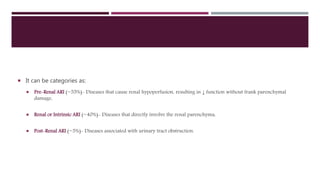
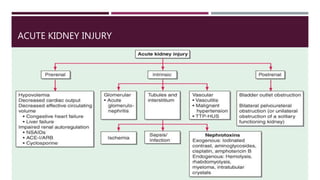
 It can be categories as:
 Pre-Renal ARI (~55%)- Diseases that cause renal hypoperfusion, resulting in ↓ function without frank parenchymal
damage,
 Renal or Intrinsic ARI (~40%)- Diseases that directly involve the renal parenchyma,
 Post-Renal ARI (~5%)- Diseases associated with urinary tract obstruction.
ACUTE KIDNEY INJURY
 Patients with AKI can be oliguric or non-oliguric on the basis of their urine production. (Oliguria
<400ml/day, Non-oliguria >400ml/day)
 AKI can also be categorised into varying stages:
 RIFLE
 AKIN
 The prognosis of patients with AKI is related to the cause, the presence or absence of pre-existing renal
disease as well as the duration of renal dysfunction prior to therapeutic intervention. The condition was
thought to be completely reversible, however some patients may progress to chronic renal failure.
RENAL IMPAIRMENT- CHRONIC RENAL FAILURE
 Chronic Kidney Disease (CKD) refers to an irreversible and progressive deterioration in renal function
which develops over months to years.
 It causes a multi-systemic dysfunction which can be caused by the primary disease process, effects of
uremia or both.
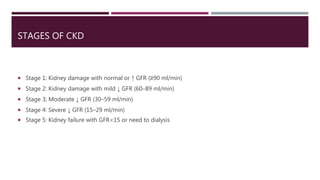
STAGES OF CKD
 Stage 1: Kidney damage with normal or ↑ GFR (≥90 ml/min)
 Stage 2: Kidney damage with mild ↓ GFR (60–89 ml/min)
 Stage 3; Moderate ↓ GFR (30–59 ml/min)
 Stage 4: Severe ↓ GFR (15–29 ml/min)
 Stage 5: Kidney failure with GFR<15 or need to dialysis
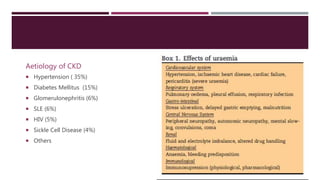
Aetiology of CKD
 Hypertension ( 35%)
 Diabetes Mellitus (15%)
 Glomerulonephritis (6%)
 SLE (6%)
 HIV (5%)
 Sickle Cell Disease (4%)
 Others
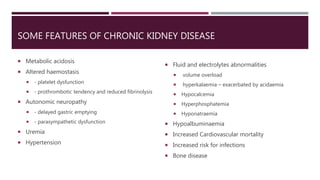
SOME FEATURES OF CHRONIC KIDNEY DISEASE
 Metabolic acidosis
 Altered haemostasis
 - platelet dysfunction
 - prothrombotic tendency and reduced fibrinolysis
 Autonomic neuropathy
 - delayed gastric emptying
 - parasympathetic dysfunction
 Uremia
 Hypertension
 Fluid and electrolytes abnormalities
 volume overload
 hyperkalaemia – exacerbated by acidaemia
 Hypocalcemia
 Hyperphosphatemia
 Hyponatraemia
 Hypoalbuminaemia
 Increased Cardiovascular mortality
 Increased risk for infections
 Bone disease
PRE-OPERATIVE MANAGEMENT
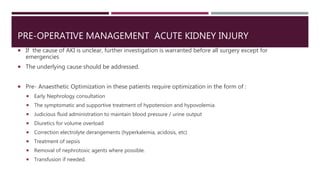
PRE-OPERATIVE MANAGEMENT ACUTE KIDNEY INJURY
 If the cause of AKI is unclear, further investigation is warranted before all surgery except for
emergencies
 The underlying cause should be addressed.
 Pre- Anaesthetic Optimization in these patients require optimization in the form of :
 Early Nephrology consultation
 The symptomatic and supportive treatment of hypotension and hypovolemia.
 Judicious fluid administration to maintain blood pressure / urine output
 Diuretics for volume overload
 Correction electrolyte derangements (hyperkalemia, acidosis, etc)
 Treatment of sepsis
 Removal of nephrotoxic agents where possible.
 Transfusion if needed.
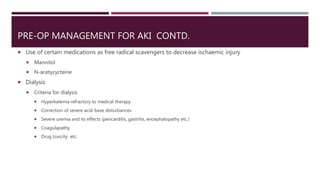
PRE-OP MANAGEMENT FOR AKI CONTD.
 Use of certain medications as free radical scavengers to decrease ischaemic injury
 Mannitol
 N-acetycycteine
 Dialysis
 Criteria for dialysis
 Hyperkalemia refractory to medical therapy
 Correction of severe acid-base disturbances
 Severe uremia and its effects (pericarditis, gastritis, encephalopathy etc.)
 Coagulapathy
 Drug toxicity etc.
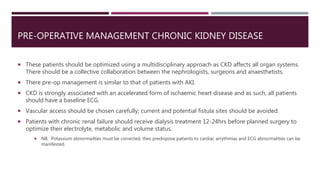
PRE-OPERATIVE MANAGEMENT CHRONIC KIDNEY DISEASE
 These patients should be optimized using a multidisciplinary approach as CKD affects all organ systems.
There should be a collective collaboration between the nephrologists, surgeons and anaesthetists.
 There pre-op management is similar to that of patients with AKI.
 CKD is strongly associated with an accelerated form of ischaemic heart disease and as such, all patients
should have a baseline ECG.
 Vascular access should be chosen carefully; current and potential fistula sites should be avoided.
 Patients with chronic renal failure should receive dialysis treatment 12-24hrs before planned surgery to
optimize their electrolyte, metabolic and volume status.
 NB. Potassium abnormailties must be corrected; thes predispose patients to cardiac arrythmias and ECG abnormalities can be
manifested.
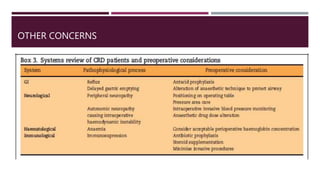
OTHER CONCERNS
 Anaemia is frequent in patients with chronic renal failure along with this, they are at increased risk for
bleeding as a result of altered platelet function and decreased levels of some clotting factors.
 Generally, these patients should be optimized with the use of Erythropoiesis-stimulating agents(ESA)
and other agents, pending an investigation of their anaemia,
 Transfusions are best avoided but if their clinical situation warrants one , pre-operatively, fresh units are
recommended.
 Generally if the Hb > 7g/dl transfusion is recommended, usually ~ 2units then the patient’s clinical status
should be reassessed.
 High risk patients ( age>65 and/or cardiovascular or respiratory disease) may tolerate anaemia poorly
and may be transfused when Hb concentration is < 8g/dl
OTHER RENAL IMPAIRMENT PRE-OPERATIVE CONCERNS
 Drugs that are excreted solely via the kidney should be switched
 Medications may need to be stopped or used with caution during the peri-operative period ,especially
with regards to certain analgesics and antibiotics used cautiously and with appropriate dose adjustment.
OPERATIVE MANAGEMENT
PRE MEDICATION
 Reduced doses of an opioid or BZD,
 H2 blocker - Aspiration prophylaxis,
 Metoclopramide -10 mg for accelerating gastric emptying, prevent vomiting, ↓risk of aspiration,
 Antihypertensive agents should be continued until the time of surgery.
MONITORING
• All routine monitoring – ECG, NIBP, SpO₂, EtCO₂, NM monitoring
• Monitoring urinary output and intravascular volume (desirable urinary output: 0.5 ml/kg/hr)
• Intra-arterial, central venous, pulmonary artery monitoring are often indicated
• Intra-arterial blood pressure monitoring in poorly controlled hypertensive patients
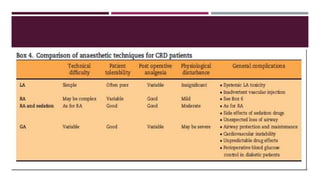
LOCAL ANAESTHESIA
 LA infiltration of the surgical field by the surgeon is the most physiologically stable of the anaesthetic
techniques, and is therefore used in patients with severe co-morbidity.
 Its main disadvantage is that it is the least welltolerated by patients of all the anaesthetic options.
REGIONAL ANAESTHESIA
 This offers many advantages over other techniques, including intraoperative haemodynamic stability and
good postoperative analgesia.
 Adequacy of coagulation should be considered and the presence of uremic neuropathies excluded
before regional anesthesia is performed in these patients.
 Co-existing metabolic acidosis may decrease the seizure threshold for local anesthetics.
REGIONAL + SEDATION
 An alternative is a combined approach using RA and sedation. This improves patient tolerability of RA
whilst maintaining its advantages over LA infiltration and GA (minimal physiological disturbance,
improvement in regional vascular flow and good postoperative analgesia
 Patients with CRD have multiple GA risk factors, as described previously in this article. However there is
no evidence that GA presents a higher risk than other techniques. In general, there is a lack of research
comparing
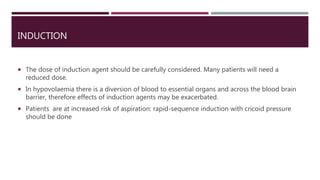
INDUCTION
 The dose of induction agent should be carefully considered. Many patients will need a
reduced dose.
 In hypovolaemia there is a diversion of blood to essential organs and across the blood brain
barrier, therefore effects of induction agents may be exacerbated.
 Patients are at increased risk of aspiration: rapid-sequence induction with cricoid pressure
should be done
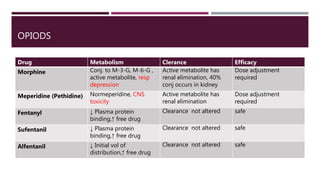
OPIODS
Drug Metabolism Clerance Efficacy
Morphine Conj. to M-3-G, M-6-G ,
active metabolite, resp
depression
Active metabolite has
renal elimination, 40%
conj occurs in kidney
Dose adjustment
required
Meperidine (Pethidine) Normeperidine, CNS
toxicity
Active metabolite has
renal elimination
Dose adjustment
required
Fentanyl ↓ Plasma protein
binding,↑ free drug
Clearance not altered safe
Sufentanil ↓ Plasma protein
binding,↑ free drug
Clearance not altered safe
Alfentanil ↓ Initial vol of
distribution,↑ free drug
Clearance not altered safe
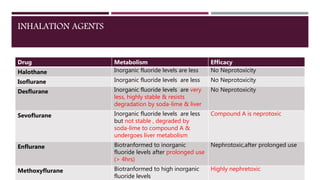
INHALATION AGENTS
Drug Metabolism Efficacy
Halothane Inorganic fluoride levels are less No Neprotoxicity
Isoflurane Inorganic fluoride levels are less No Neprotoxicity
Desflurane Inorganic fluoride levels are very
less, highly stable & resists
degradation by soda-lime & liver
No Neprotoxicity
Sevoflurane Inorganic fluoride levels are less
but not stable , degraded by
soda-lime to compound A &
undergoes liver metabolism
Compound A is neprotoxic
Enflurane Biotranformed to inorganic
fluoride levels after prolonged use
(> 4hrs)
Nephrotoxic,after prolonged use
Methoxyflurane Biotranformed to high inorganic
fluoride levels
Highly nephretoxic
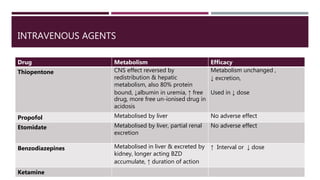
INTRAVENOUS AGENTS
Drug Metabolism Efficacy
Thiopentone CNS effect reversed by
redistribution & hepatic
metabolism, also 80% protein
bound, ↓albumin in uremia, ↑ free
drug, more free un-ionised drug in
acidosis
Metabolism unchanged ,
↓ excretion,
Used in ↓ dose
Propofol Metabolised by liver No adverse effect
Etomidate Metabolised by liver, partial renal
excretion
No adverse effect
Benzodiazepines Metabolised in liver & excreted by
kidney, longer acting BZD
accumulate, ↑ duration of action
↑ Interval or ↓ dose
Ketamine
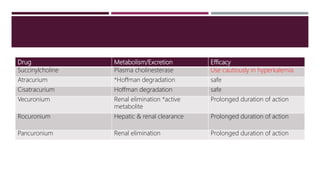
Drug Metabolism/Excretion Efficacy
Succinylcholine Plasma cholinesterase Use cautiously in hyperkalemia
Atracurium *Hoffman degradation safe
Cisatracurium Hoffman degradation safe
Vecuronium Renal elimination *active
metabolite
Prolonged duration of action
Rocuronium Hepatic & renal clearance Prolonged duration of action
Pancuronium Renal elimination Prolonged duration of action
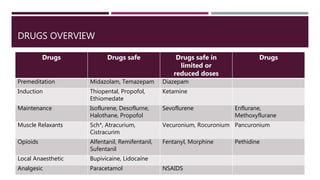
DRUGS OVERVIEW
Drugs Drugs safe Drugs safe in
limited or
reduced doses
Drugs
Premeditation Midazolam, Temazepam Diazepam
Induction Thiopental, Propofol,
Ethiomedate
Ketamine
Maintenance Isoflurene, Desoflurne,
Halothane, Propofol
Sevoflurene Enflurane,
Methoxyflurane
Muscle Relaxants Sch*, Atracurium,
Cistracurim
Vecuronium, Rocuronium Pancuronium
Opioids Alfentanil, Remifentanil,
Sufentanil
Fentanyl, Morphine Pethidine
Local Anaesthetic Bupivicaine, Lidocaine
Analgesic Paracetamol NSAIDS
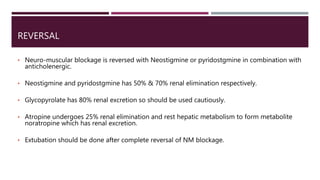
REVERSAL
• Neuro-muscular blockage is reversed with Neostigmine or pyridostgmine in combination with
anticholenergic.
• Neostigmine and pyridostgmine has 50% & 70% renal elimination respectively.
• Glycopyrolate has 80% renal excretion so should be used cautiously.
• Atropine undergoes 25% renal elimination and rest hepatic metabolism to form metabolite
noratropine which has renal excretion.
• Extubation should be done after complete reversal of NM blockage.
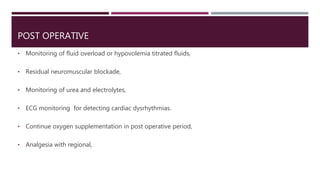
POST OPERATIVE
• Monitoring of fluid overload or hypovolemia titrated fluids,
• Residual neuromuscular blockade,
• Monitoring of urea and electrolytes,
• ECG monitoring for detecting cardiac dysrhythmias.
• Continue oxygen supplementation in post operative period,
• Analgesia with regional,
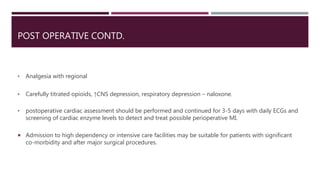
POST OPERATIVE CONTD.
• Analgesia with regional
• Carefully titrated opioids, ↑CNS depression, respiratory depression – naloxone.
• postoperative cardiac assessment should be performed and continued for 3-5 days with daily ECGs and
screening of cardiac enzyme levels to detect and treat possible perioperative MI.
 Admission to high dependency or intensive care facilities may be suitable for patients with significant
co-morbidity and after major surgical procedures.
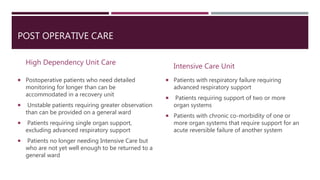
POST OPERATIVE CARE
High Dependency Unit Care
 Postoperative patients who need detailed
monitoring for longer than can be
accommodated in a recovery unit
 Unstable patients requiring greater observation
than can be provided on a general ward
 Patients requiring single organ support,
excluding advanced respiratory support
 Patients no longer needing Intensive Care but
who are not yet well enough to be returned to a
general ward
Intensive Care Unit
 Patients with respiratory failure requiring
advanced respiratory support
 Patients requiring support of two or more
organ systems
 Patients with chronic co-morbidity of one or
more organ systems that require support for an
acute reversible failure of another system
SUMMARY
 Patients presenting for surgery with renal insufficiency or failure present a
significant challenge for the anesthesiologist.
 The perioperative care of these patients should be arranged and carried out
by senior staff from surgery, anaesthesia and renal medicine
 Failure to care for these patients well will impact their perioperative morbidity
and mortality.
REFRENCES
 Clinical Journal of the International Society of Nephrology
 Acute Kidney Injury Work Group. Kidney Disease: Improving Global Outcomes (KDIGO) - Clinical Practice
Guideline for Acute Kidney Injury. Kidney Inter. 2012. 2:1-138
 Mahesh Krishnan, M.D., MPH. Virginia Nephrology Group, Arlington, Virginia. (2002, October).
Preoperative Care of Patients with Kidney Disease. http://www.aafp.org/2002/1015/p1471.html
 Craig, R.G, et al, Recent developments in the perioperative management of adult patients with chronic
kidney disease, British Medical Journal of Anaesthesia
 Rang, Simon et al,. Anaesthesia for Chronic Renal Disease and Renal transplantation.
www.europeanurology.com
 MEDSCAPE

Renal impairment and anaesthesia

  • 1.
    RENAL IMPAIRMENT INANAESTHESIA ERROL WILLIAMSON SEPTEMBER 20, 2016
  • 2.
    THE RENAL SYSTEM The kidneys play a central role in implementing and controlling a variety of homeostatic functions of the body. This includes:  EXCRETORY FUNCTION  Waste excretion  Drug excretion  Toxin  Metabolites  HOMEOSTATIC FUNCTION  Regulation of the body’s fluid balance  Regulation of the body’s Acid-Base  Regulation of electrolyte balance
  • 3.
     ENDOCRINE FUNCTION `Renin secretion ----RAAS which in turn regulates blood pressure  Erythropoietin---- stimulates the production of RBC in the bone marrow  Prostaglandins---- various systemic effects  Renal impairment can be categorized as either acute or chronic.
  • 4.
    RENAL IMPAIRMENT- ACUTEKIDNEY INJURY  Acute renal failure is characterized by the sudden and often reversible deterioration of renal functions over a period of hours to few days or weeks, resulting in failure of the kidneys to excrete nitrogenous waste products and to maintain fluid, electrolytes and acid-base homeostasis.  KDIGO defines AKI as any of the following:  Increase in serum creatinine by 0.3mg/dL or more within 48 hours or  Increase in serum creatinine to 1.5 times baseline or more within the last 7 days or  Urine output less than 0.5 mL/kg/h for 6 hours
  • 5.
     It canbe categories as:  Pre-Renal ARI (~55%)- Diseases that cause renal hypoperfusion, resulting in ↓ function without frank parenchymal damage,  Renal or Intrinsic ARI (~40%)- Diseases that directly involve the renal parenchyma,  Post-Renal ARI (~5%)- Diseases associated with urinary tract obstruction.
  • 6.
  • 7.
     Patients withAKI can be oliguric or non-oliguric on the basis of their urine production. (Oliguria <400ml/day, Non-oliguria >400ml/day)  AKI can also be categorised into varying stages:  RIFLE  AKIN  The prognosis of patients with AKI is related to the cause, the presence or absence of pre-existing renal disease as well as the duration of renal dysfunction prior to therapeutic intervention. The condition was thought to be completely reversible, however some patients may progress to chronic renal failure.
  • 8.
    RENAL IMPAIRMENT- CHRONICRENAL FAILURE  Chronic Kidney Disease (CKD) refers to an irreversible and progressive deterioration in renal function which develops over months to years.  It causes a multi-systemic dysfunction which can be caused by the primary disease process, effects of uremia or both.
  • 9.
    STAGES OF CKD Stage 1: Kidney damage with normal or ↑ GFR (≥90 ml/min)  Stage 2: Kidney damage with mild ↓ GFR (60–89 ml/min)  Stage 3; Moderate ↓ GFR (30–59 ml/min)  Stage 4: Severe ↓ GFR (15–29 ml/min)  Stage 5: Kidney failure with GFR<15 or need to dialysis
  • 10.
    Aetiology of CKD Hypertension ( 35%)  Diabetes Mellitus (15%)  Glomerulonephritis (6%)  SLE (6%)  HIV (5%)  Sickle Cell Disease (4%)  Others
  • 11.
    SOME FEATURES OFCHRONIC KIDNEY DISEASE  Metabolic acidosis  Altered haemostasis  - platelet dysfunction  - prothrombotic tendency and reduced fibrinolysis  Autonomic neuropathy  - delayed gastric emptying  - parasympathetic dysfunction  Uremia  Hypertension  Fluid and electrolytes abnormalities  volume overload  hyperkalaemia – exacerbated by acidaemia  Hypocalcemia  Hyperphosphatemia  Hyponatraemia  Hypoalbuminaemia  Increased Cardiovascular mortality  Increased risk for infections  Bone disease
  • 12.
  • 13.
    PRE-OPERATIVE MANAGEMENT ACUTEKIDNEY INJURY  If the cause of AKI is unclear, further investigation is warranted before all surgery except for emergencies  The underlying cause should be addressed.  Pre- Anaesthetic Optimization in these patients require optimization in the form of :  Early Nephrology consultation  The symptomatic and supportive treatment of hypotension and hypovolemia.  Judicious fluid administration to maintain blood pressure / urine output  Diuretics for volume overload  Correction electrolyte derangements (hyperkalemia, acidosis, etc)  Treatment of sepsis  Removal of nephrotoxic agents where possible.  Transfusion if needed.
  • 14.
    PRE-OP MANAGEMENT FORAKI CONTD.  Use of certain medications as free radical scavengers to decrease ischaemic injury  Mannitol  N-acetycycteine  Dialysis  Criteria for dialysis  Hyperkalemia refractory to medical therapy  Correction of severe acid-base disturbances  Severe uremia and its effects (pericarditis, gastritis, encephalopathy etc.)  Coagulapathy  Drug toxicity etc.
  • 15.
    PRE-OPERATIVE MANAGEMENT CHRONICKIDNEY DISEASE  These patients should be optimized using a multidisciplinary approach as CKD affects all organ systems. There should be a collective collaboration between the nephrologists, surgeons and anaesthetists.  There pre-op management is similar to that of patients with AKI.  CKD is strongly associated with an accelerated form of ischaemic heart disease and as such, all patients should have a baseline ECG.  Vascular access should be chosen carefully; current and potential fistula sites should be avoided.  Patients with chronic renal failure should receive dialysis treatment 12-24hrs before planned surgery to optimize their electrolyte, metabolic and volume status.  NB. Potassium abnormailties must be corrected; thes predispose patients to cardiac arrythmias and ECG abnormalities can be manifested.
  • 16.
  • 17.
     Anaemia isfrequent in patients with chronic renal failure along with this, they are at increased risk for bleeding as a result of altered platelet function and decreased levels of some clotting factors.  Generally, these patients should be optimized with the use of Erythropoiesis-stimulating agents(ESA) and other agents, pending an investigation of their anaemia,  Transfusions are best avoided but if their clinical situation warrants one , pre-operatively, fresh units are recommended.  Generally if the Hb > 7g/dl transfusion is recommended, usually ~ 2units then the patient’s clinical status should be reassessed.  High risk patients ( age>65 and/or cardiovascular or respiratory disease) may tolerate anaemia poorly and may be transfused when Hb concentration is < 8g/dl
  • 18.
    OTHER RENAL IMPAIRMENTPRE-OPERATIVE CONCERNS  Drugs that are excreted solely via the kidney should be switched  Medications may need to be stopped or used with caution during the peri-operative period ,especially with regards to certain analgesics and antibiotics used cautiously and with appropriate dose adjustment.
  • 19.
  • 20.
    PRE MEDICATION  Reduceddoses of an opioid or BZD,  H2 blocker - Aspiration prophylaxis,  Metoclopramide -10 mg for accelerating gastric emptying, prevent vomiting, ↓risk of aspiration,  Antihypertensive agents should be continued until the time of surgery.
  • 21.
    MONITORING • All routinemonitoring – ECG, NIBP, SpO₂, EtCO₂, NM monitoring • Monitoring urinary output and intravascular volume (desirable urinary output: 0.5 ml/kg/hr) • Intra-arterial, central venous, pulmonary artery monitoring are often indicated • Intra-arterial blood pressure monitoring in poorly controlled hypertensive patients
  • 22.
    LOCAL ANAESTHESIA  LAinfiltration of the surgical field by the surgeon is the most physiologically stable of the anaesthetic techniques, and is therefore used in patients with severe co-morbidity.  Its main disadvantage is that it is the least welltolerated by patients of all the anaesthetic options.
  • 23.
    REGIONAL ANAESTHESIA  Thisoffers many advantages over other techniques, including intraoperative haemodynamic stability and good postoperative analgesia.  Adequacy of coagulation should be considered and the presence of uremic neuropathies excluded before regional anesthesia is performed in these patients.  Co-existing metabolic acidosis may decrease the seizure threshold for local anesthetics.
  • 24.
    REGIONAL + SEDATION An alternative is a combined approach using RA and sedation. This improves patient tolerability of RA whilst maintaining its advantages over LA infiltration and GA (minimal physiological disturbance, improvement in regional vascular flow and good postoperative analgesia
  • 25.
     Patients withCRD have multiple GA risk factors, as described previously in this article. However there is no evidence that GA presents a higher risk than other techniques. In general, there is a lack of research comparing
  • 27.
    INDUCTION  The doseof induction agent should be carefully considered. Many patients will need a reduced dose.  In hypovolaemia there is a diversion of blood to essential organs and across the blood brain barrier, therefore effects of induction agents may be exacerbated.  Patients are at increased risk of aspiration: rapid-sequence induction with cricoid pressure should be done
  • 28.
    OPIODS Drug Metabolism CleranceEfficacy Morphine Conj. to M-3-G, M-6-G , active metabolite, resp depression Active metabolite has renal elimination, 40% conj occurs in kidney Dose adjustment required Meperidine (Pethidine) Normeperidine, CNS toxicity Active metabolite has renal elimination Dose adjustment required Fentanyl ↓ Plasma protein binding,↑ free drug Clearance not altered safe Sufentanil ↓ Plasma protein binding,↑ free drug Clearance not altered safe Alfentanil ↓ Initial vol of distribution,↑ free drug Clearance not altered safe
  • 29.
    INHALATION AGENTS Drug MetabolismEfficacy Halothane Inorganic fluoride levels are less No Neprotoxicity Isoflurane Inorganic fluoride levels are less No Neprotoxicity Desflurane Inorganic fluoride levels are very less, highly stable & resists degradation by soda-lime & liver No Neprotoxicity Sevoflurane Inorganic fluoride levels are less but not stable , degraded by soda-lime to compound A & undergoes liver metabolism Compound A is neprotoxic Enflurane Biotranformed to inorganic fluoride levels after prolonged use (> 4hrs) Nephrotoxic,after prolonged use Methoxyflurane Biotranformed to high inorganic fluoride levels Highly nephretoxic
  • 30.
    INTRAVENOUS AGENTS Drug MetabolismEfficacy Thiopentone CNS effect reversed by redistribution & hepatic metabolism, also 80% protein bound, ↓albumin in uremia, ↑ free drug, more free un-ionised drug in acidosis Metabolism unchanged , ↓ excretion, Used in ↓ dose Propofol Metabolised by liver No adverse effect Etomidate Metabolised by liver, partial renal excretion No adverse effect Benzodiazepines Metabolised in liver & excreted by kidney, longer acting BZD accumulate, ↑ duration of action ↑ Interval or ↓ dose Ketamine
  • 31.
    Drug Metabolism/Excretion Efficacy SuccinylcholinePlasma cholinesterase Use cautiously in hyperkalemia Atracurium *Hoffman degradation safe Cisatracurium Hoffman degradation safe Vecuronium Renal elimination *active metabolite Prolonged duration of action Rocuronium Hepatic & renal clearance Prolonged duration of action Pancuronium Renal elimination Prolonged duration of action
  • 32.
    DRUGS OVERVIEW Drugs Drugssafe Drugs safe in limited or reduced doses Drugs Premeditation Midazolam, Temazepam Diazepam Induction Thiopental, Propofol, Ethiomedate Ketamine Maintenance Isoflurene, Desoflurne, Halothane, Propofol Sevoflurene Enflurane, Methoxyflurane Muscle Relaxants Sch*, Atracurium, Cistracurim Vecuronium, Rocuronium Pancuronium Opioids Alfentanil, Remifentanil, Sufentanil Fentanyl, Morphine Pethidine Local Anaesthetic Bupivicaine, Lidocaine Analgesic Paracetamol NSAIDS
  • 33.
    REVERSAL • Neuro-muscular blockageis reversed with Neostigmine or pyridostgmine in combination with anticholenergic. • Neostigmine and pyridostgmine has 50% & 70% renal elimination respectively. • Glycopyrolate has 80% renal excretion so should be used cautiously. • Atropine undergoes 25% renal elimination and rest hepatic metabolism to form metabolite noratropine which has renal excretion. • Extubation should be done after complete reversal of NM blockage.
  • 34.
    POST OPERATIVE • Monitoringof fluid overload or hypovolemia titrated fluids, • Residual neuromuscular blockade, • Monitoring of urea and electrolytes, • ECG monitoring for detecting cardiac dysrhythmias. • Continue oxygen supplementation in post operative period, • Analgesia with regional,
  • 35.
    POST OPERATIVE CONTD. •Analgesia with regional • Carefully titrated opioids, ↑CNS depression, respiratory depression – naloxone. • postoperative cardiac assessment should be performed and continued for 3-5 days with daily ECGs and screening of cardiac enzyme levels to detect and treat possible perioperative MI.  Admission to high dependency or intensive care facilities may be suitable for patients with significant co-morbidity and after major surgical procedures.
  • 36.
    POST OPERATIVE CARE HighDependency Unit Care  Postoperative patients who need detailed monitoring for longer than can be accommodated in a recovery unit  Unstable patients requiring greater observation than can be provided on a general ward  Patients requiring single organ support, excluding advanced respiratory support  Patients no longer needing Intensive Care but who are not yet well enough to be returned to a general ward Intensive Care Unit  Patients with respiratory failure requiring advanced respiratory support  Patients requiring support of two or more organ systems  Patients with chronic co-morbidity of one or more organ systems that require support for an acute reversible failure of another system
  • 37.
    SUMMARY  Patients presentingfor surgery with renal insufficiency or failure present a significant challenge for the anesthesiologist.  The perioperative care of these patients should be arranged and carried out by senior staff from surgery, anaesthesia and renal medicine  Failure to care for these patients well will impact their perioperative morbidity and mortality.
  • 39.
    REFRENCES  Clinical Journalof the International Society of Nephrology  Acute Kidney Injury Work Group. Kidney Disease: Improving Global Outcomes (KDIGO) - Clinical Practice Guideline for Acute Kidney Injury. Kidney Inter. 2012. 2:1-138  Mahesh Krishnan, M.D., MPH. Virginia Nephrology Group, Arlington, Virginia. (2002, October). Preoperative Care of Patients with Kidney Disease. http://www.aafp.org/2002/1015/p1471.html  Craig, R.G, et al, Recent developments in the perioperative management of adult patients with chronic kidney disease, British Medical Journal of Anaesthesia  Rang, Simon et al,. Anaesthesia for Chronic Renal Disease and Renal transplantation. www.europeanurology.com  MEDSCAPE
Editor's Notes
  • #4 Prostaglandins- regulate inflammation, regulate hormones, control cell growth
  • #5 KDIGO (Kidney Disease Improving Global Outcome)
  • #7 PRE-RENAL- BUN > Creatinine in Pre-renal cases (i.e the rise in BUN from the upper limit of normal is higher than that of Creatinine) INTRINSIC – BUN & Creatinine rises together closer

  • #14 Various methods could include the use of dopamine. Dopamine in small doses causes selective dilatation of the renal vasculature, enhancing perfusion. It reduces sodium re-absorption ; thus enhancing urine flow. *there is a study that states it actually worsens renal function* Fluid administration should be cautious to prevent volume overload which my manifest itself as pulmonary oedema There might be electrolyte abnormalities; Hypo/ Hyper natraemia Hypernatraemia Probable Decreased Bicarbonate
  • #15 Mannitol ?? Mannitol is an osmotic diuretic that has been used in the perioperative period to increase circulating volume, RBF, and urine output; decrease endothelial swelling; and scavenge free radicals. - pre ischemic insult, ↑PG-renal vasodilatation, free radical scavenging, osmotic diuresis
  • #16 These patients are fluid restricted. There usual daily urine output may be be zero. One should make note of their baseline and pre and post dialysis urea, creatinine and electrolyte concentrations. HYPERKALEMIA: Bradycardia PR prolongation QRS widening Peaked T waves AV block HYPOKALEMIA Variable changes may include: Flattened or inverted T waves Prominent U waves QT prolongation ST depression
  • #18 Acute clinical situation Acute severe haemorrhage Unstable coronary artery disease When rapid preoperative correction is required Chronic situations ESAs are ineffective Haemoglobinopathies Bone marrow failure Risk associated with transfusions: Vol overload Hyperkalemia Citrate toxicity ( metabolic alkalosis) Hypothermia Coagulopathy Transfusion reactions Iron overload Hla sensitization Anaemia screen CBC including red cell indices MCV MCH MCHC Retic count Serum ferritin TIBC Folate B12
  • #19 NSAIDS ACE I ARBS Antibiotic
  • #21 Cautious with the use of ACE inhibitors, ARBS which worsed renal blood flow
  • #28 Intravenous fluids should be minimized in patients with chronic renal failure however generous amounts can be given in acute renal failure, however overzealous administration may lead to pulmonary oedema Patients with significant metabolic acidosis may require hyperventilation. This in the mechanically ventilated patient helps to normalised
  • #29 Morphine undergoes hepatic metabolism to morphine-3-glucuronide and morphine-6-glucuronide. These metabolites can accumulate in renal failure and result in narcosis and respiratory depression Merperidine is metabolised to normeperidine which might accumulate in renal failure patients and result in CNS toxicity (seizures).
  • #32 Non depolarising muscle relaxants have an altered duration of action, especially in acidosis; Hoffman degradation -is not dependent upon renal or hepatic function for its elimination, as it undergoes spontaneous breakdown at body temperature and pH, Clearance of atracurium, and cisatracurium from plasma is independent of renal function. It seems prudent to decrease the initial dose of the drug and administer subsequent doses based on the responses observed using a peripheral nerve stimulator.
  • #34 This may result in a parasympathomimetic response, including bradycardia and AV block, especially when used in combination with atropine rather than the longer-acting glycopyrronium