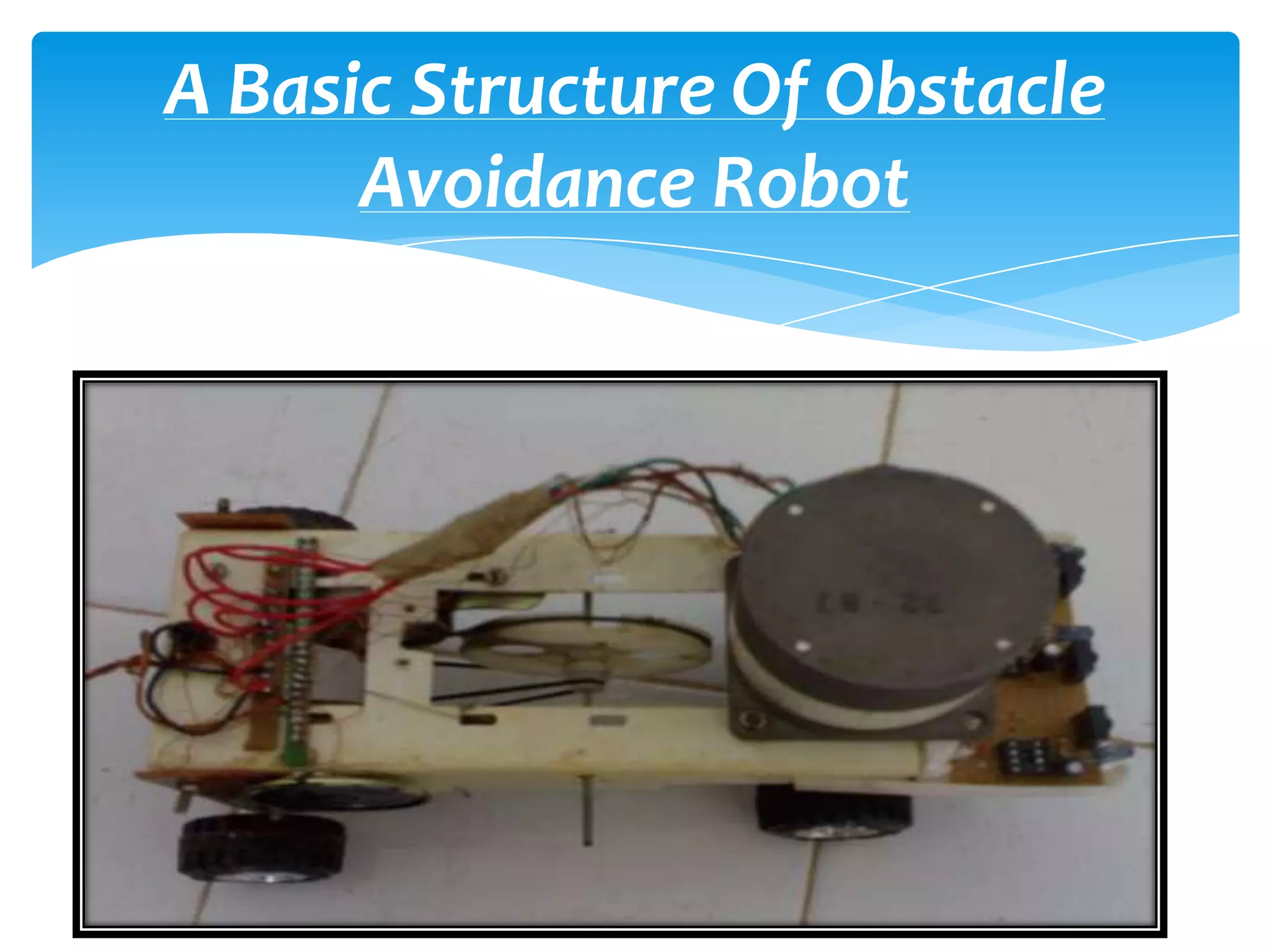
Obstacle
Avoidance Robot
What Is “Robotics” ?

   The word robotics is used to collectively
    define a field in engineering that covers the
    mimicking of various human characteristics.

   It must be able to perform certain tasks we
    set for it.

   The desired task must be achieved within
    some given limitations.

   It may be human controlled or automatic.
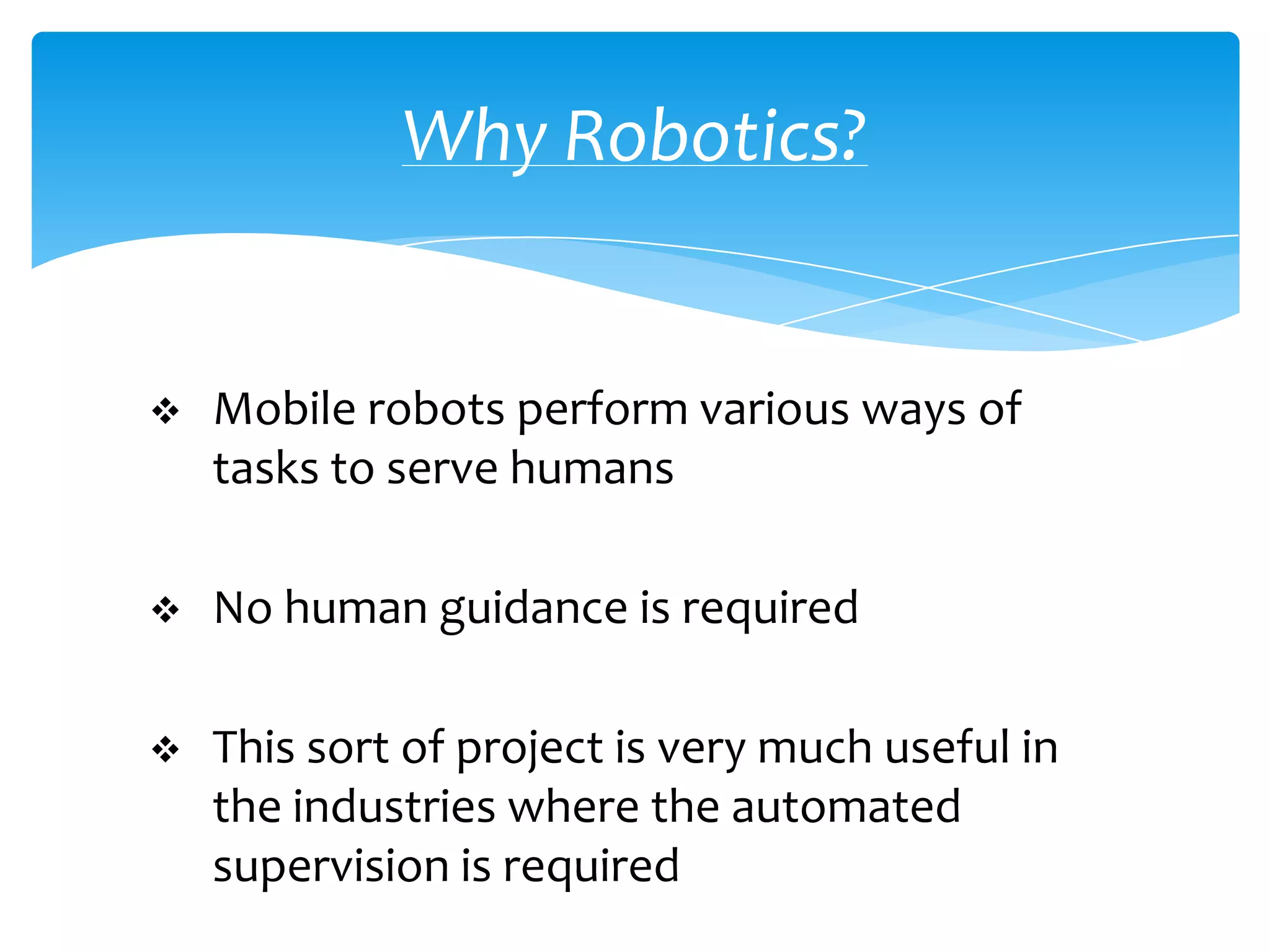
A Basic Structure Of Obstacle
      Avoidance Robot
Why Robotics?


   Mobile robots perform various ways of
    tasks to serve humans

   No human guidance is required

   This sort of project is very much useful in
    the industries where the automated
    supervision is required
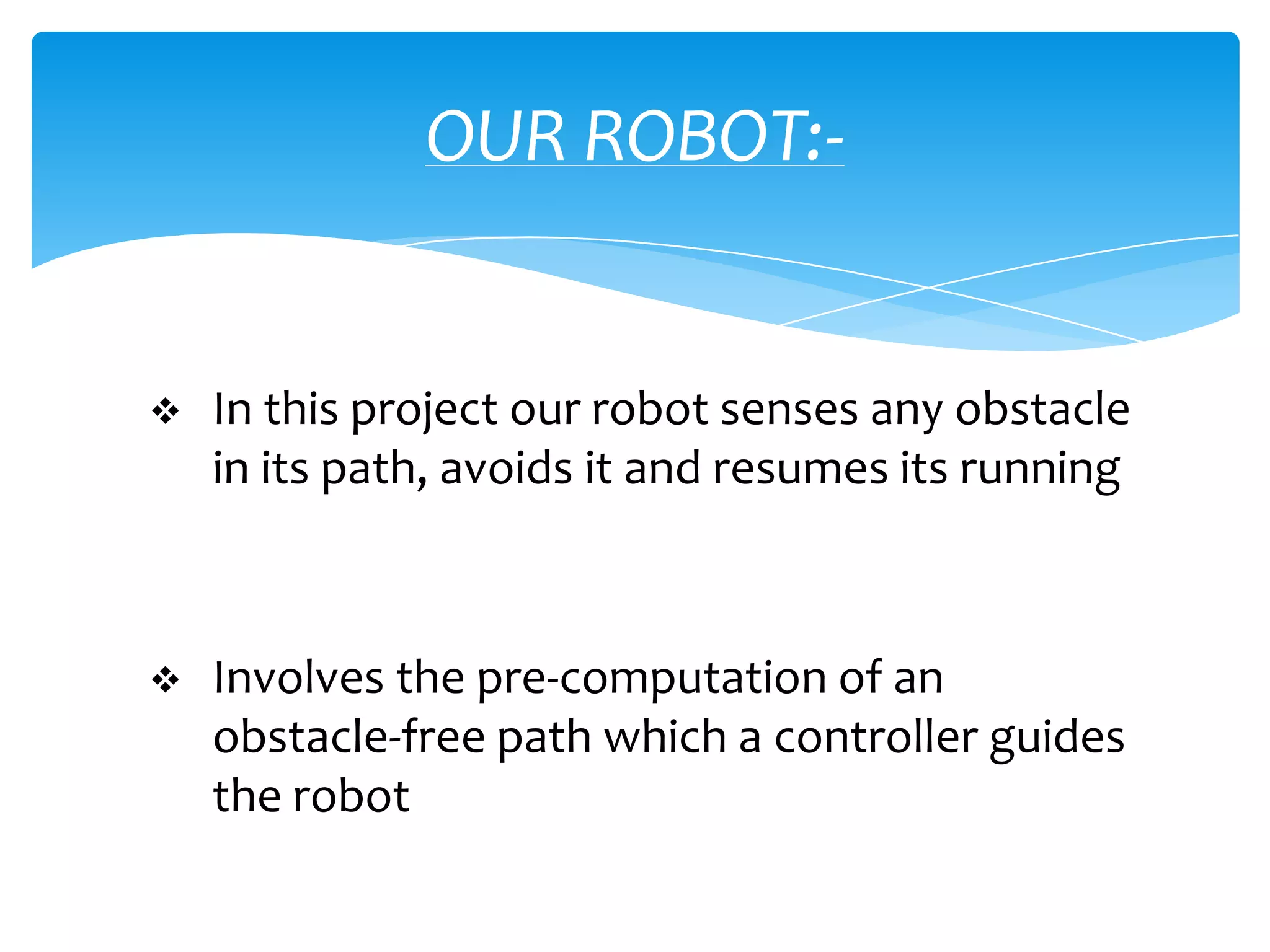
What is ‘Obstacle avoidance’?


A Path Describing The Purpose Of This Type Robot
OUR ROBOT:-


   In this project our robot senses any obstacle
    in its path, avoids it and resumes its running


   Involves the pre-computation of an
    obstacle-free path which a controller guides
    the robot
COMPONENTS:-


   IR Sensor(Transmitter and receiver)

   Microcontroller

   Driver IC

   Motor
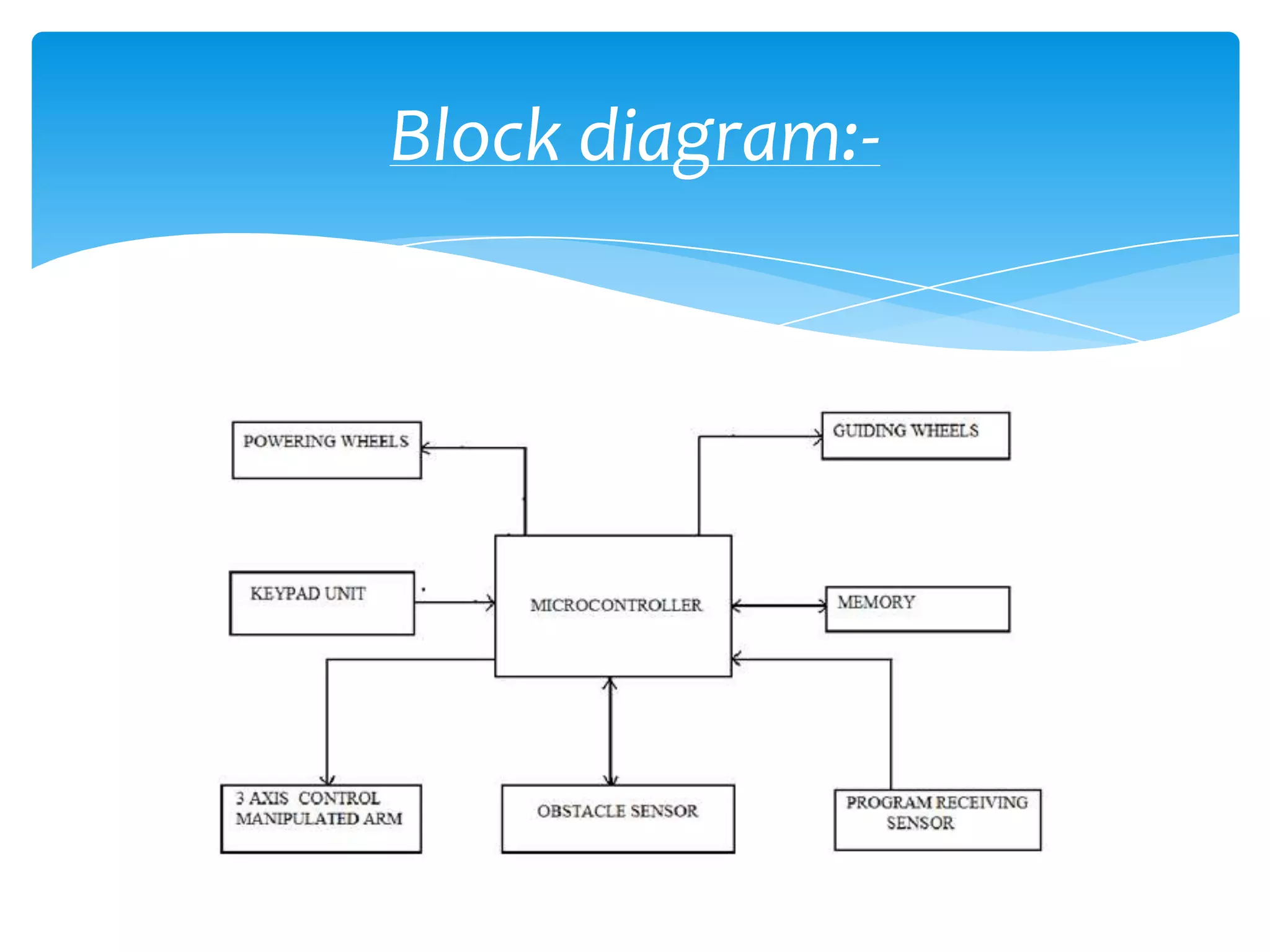
Block diagram:-
Circuit Diagram:-
IR Sensor:-

                  About
   (IR) sensors based on reflected amplitude of
    the surrounding objects

   Non-linear and depends on the reflectance
    characteristics of the object surface

   IR sensors able to accurately measure
    distances with reduced response times
IR Sensor:-

                 Types:
   ACTIVE INFRARED SENSORS


   Break Beam Sensors


   Reflectance Sensors
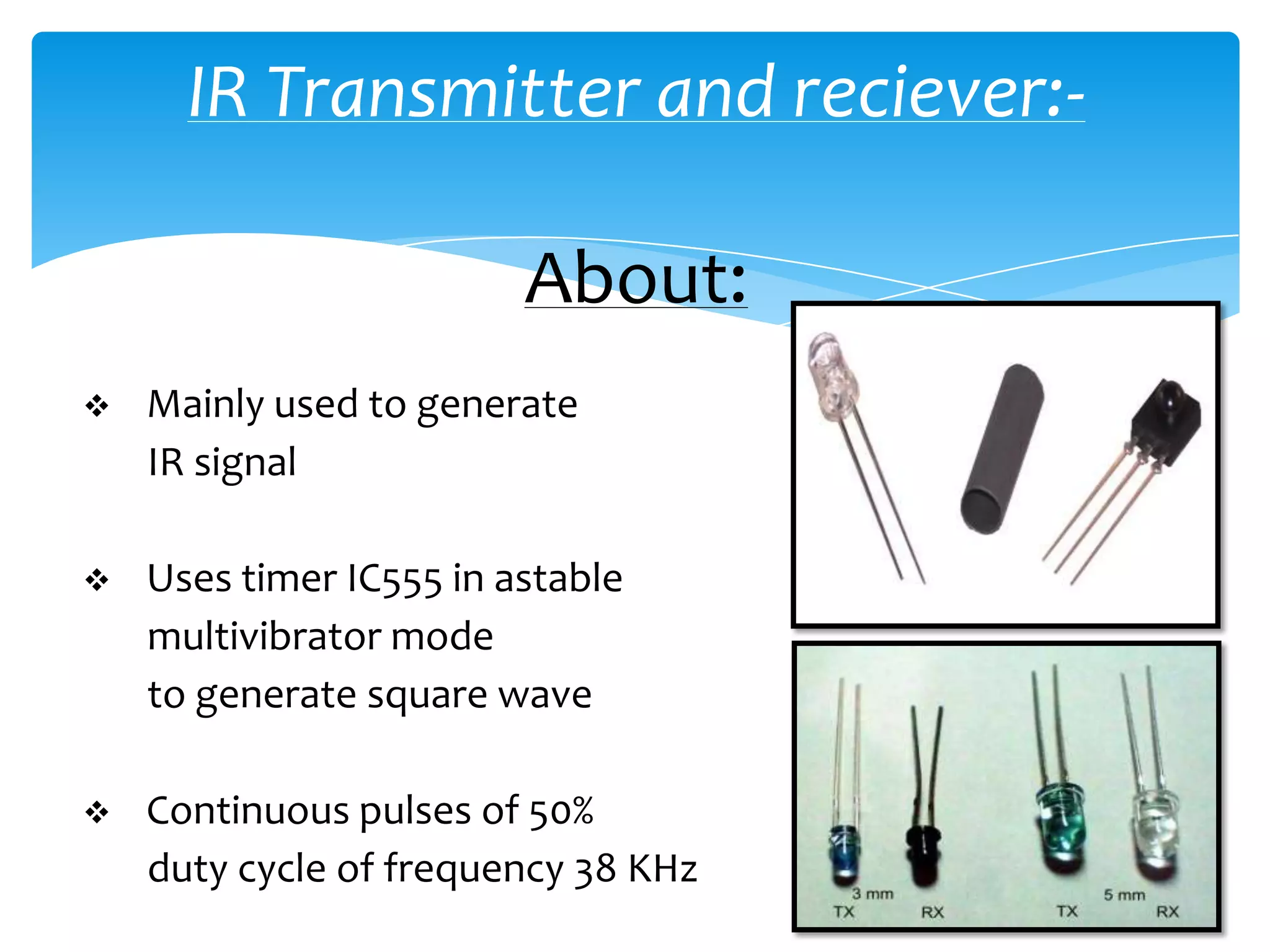
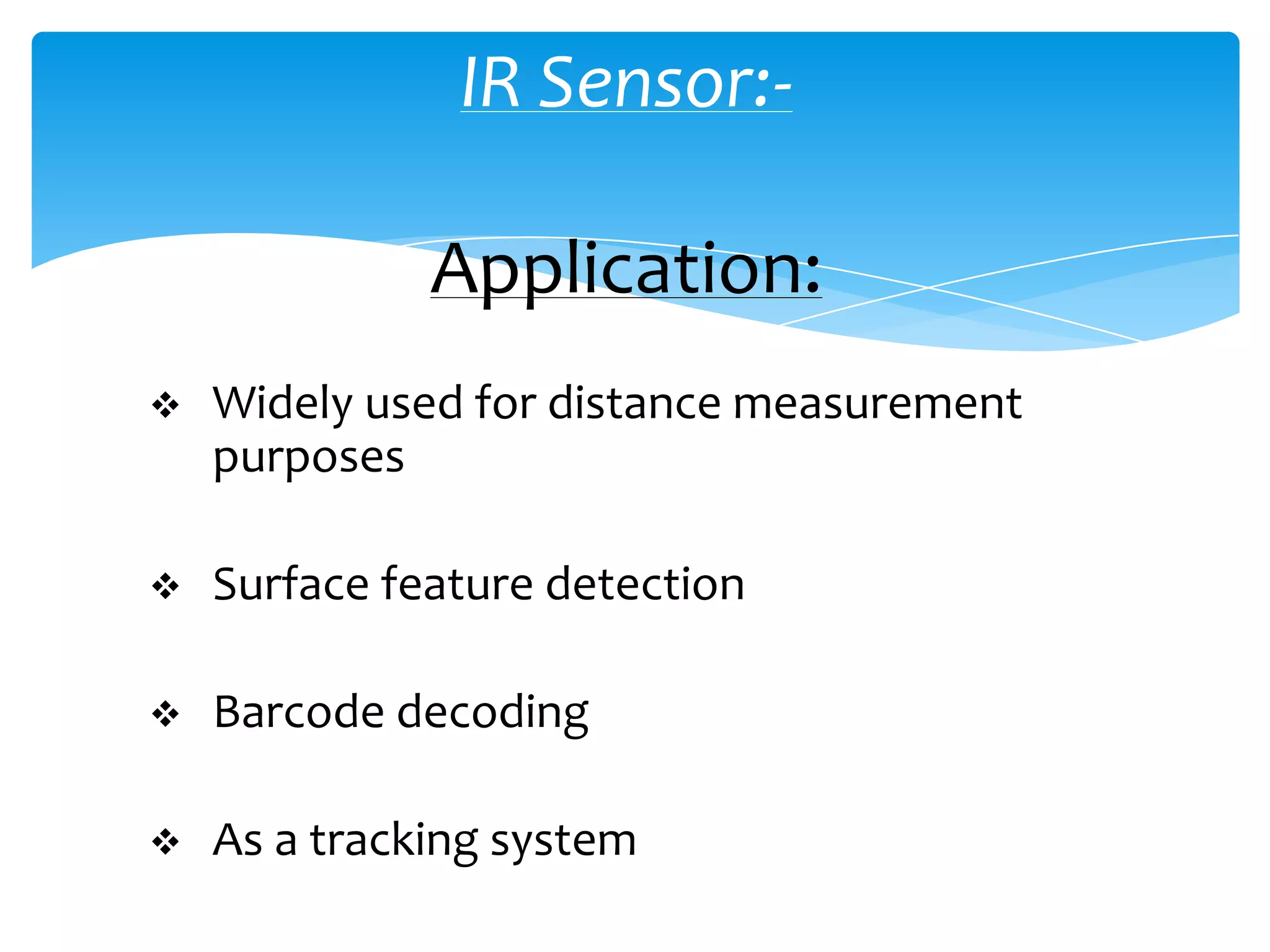
IR Transmitter and reciever:-

                         About:
   Mainly used to generate
    IR signal

   Uses timer IC555 in astable
    multivibrator mode
    to generate square wave

   Continuous pulses of 50%
    duty cycle of frequency 38 KHz
IR Sensor:-

              Application:
   Widely used for distance measurement
    purposes

   Surface feature detection

   Barcode decoding

   As a tracking system
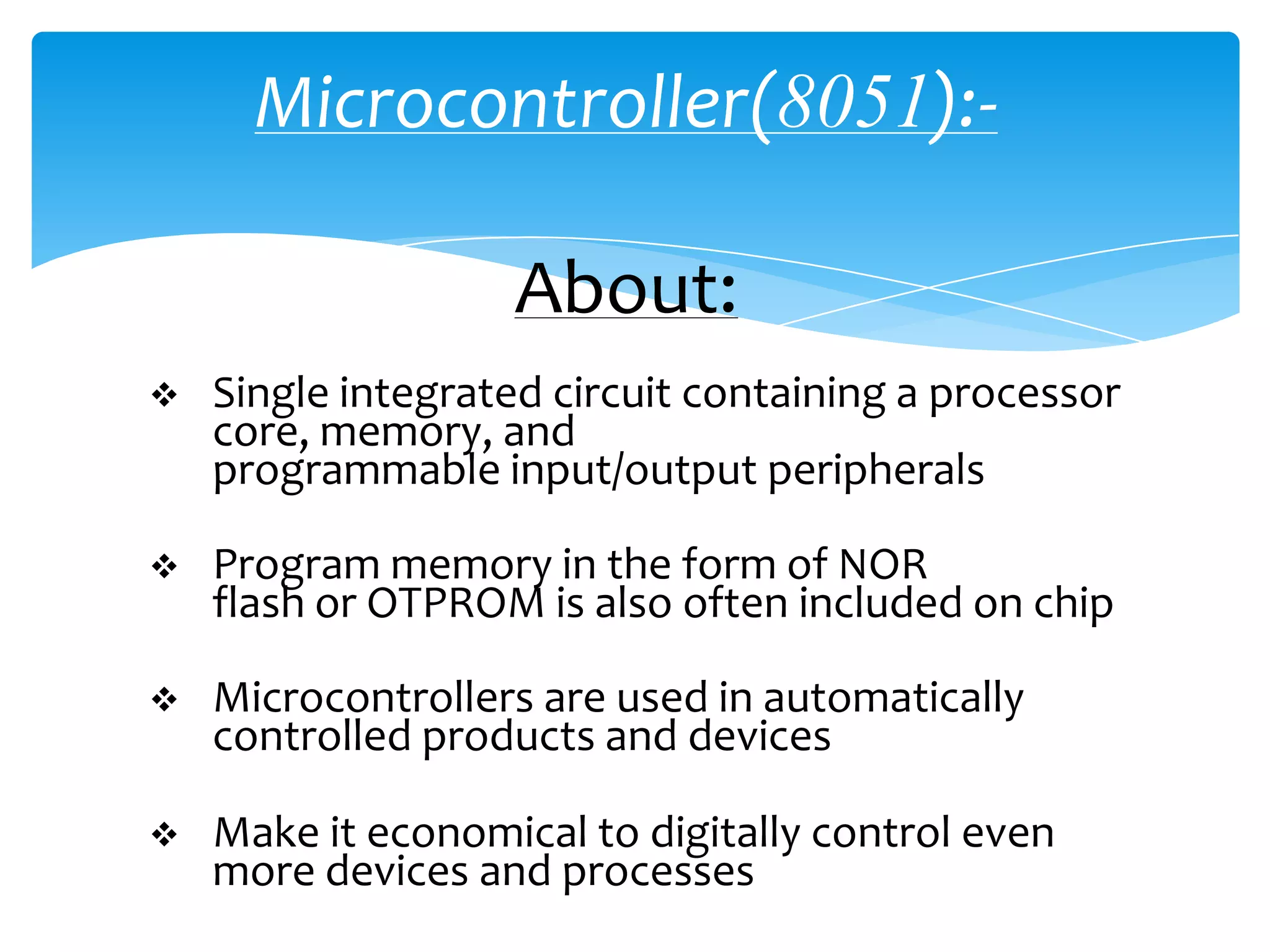
Microcontroller(8051)
Microcontroller(8051):-

                   About:
   Single integrated circuit containing a processor
    core, memory, and
    programmable input/output peripherals

   Program memory in the form of NOR
    flash or OTPROM is also often included on chip

   Microcontrollers are used in automatically
    controlled products and devices

   Make it economical to digitally control even
    more devices and processes
Driver(L293D):-

                 About:
   The L293D is a quadruple half H-bridge
    bidirectional motor driver IC

   Can drive current of up to 600mA with
    voltage range of 4.5 to 36 volts

   Drive small DC-Geared motors, bipolar
    stepper motor
D.C Motor:-


   Stepper Motor

   D.C Geared Motor
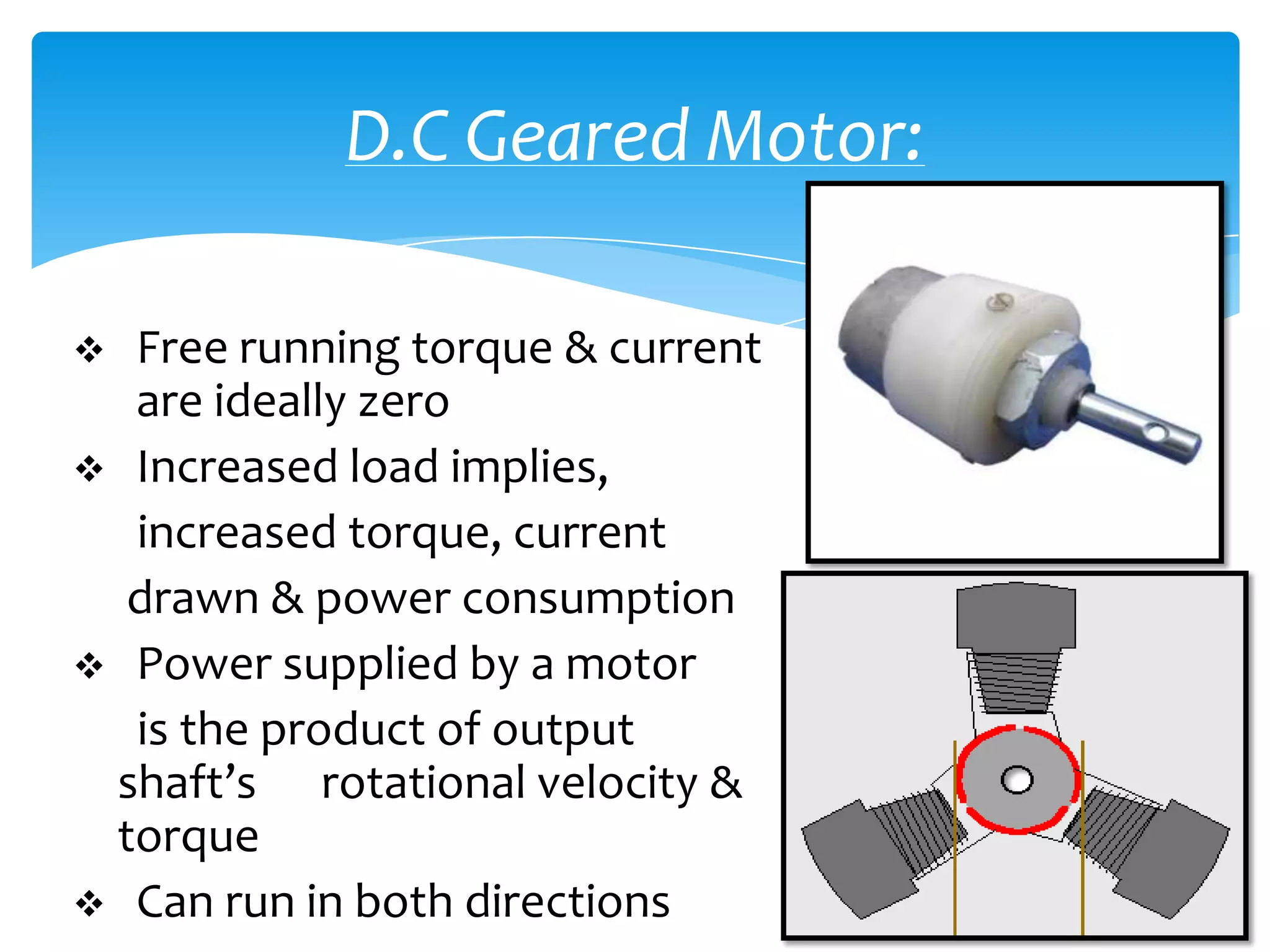
D.C Geared Motor:

 Free running torque & current
  are ideally zero
 Increased load implies,
  increased torque, current
  drawn & power consumption
 Power supplied by a motor
  is the product of output
 shaft’s rotational velocity &
 torque
 Can run in both directions
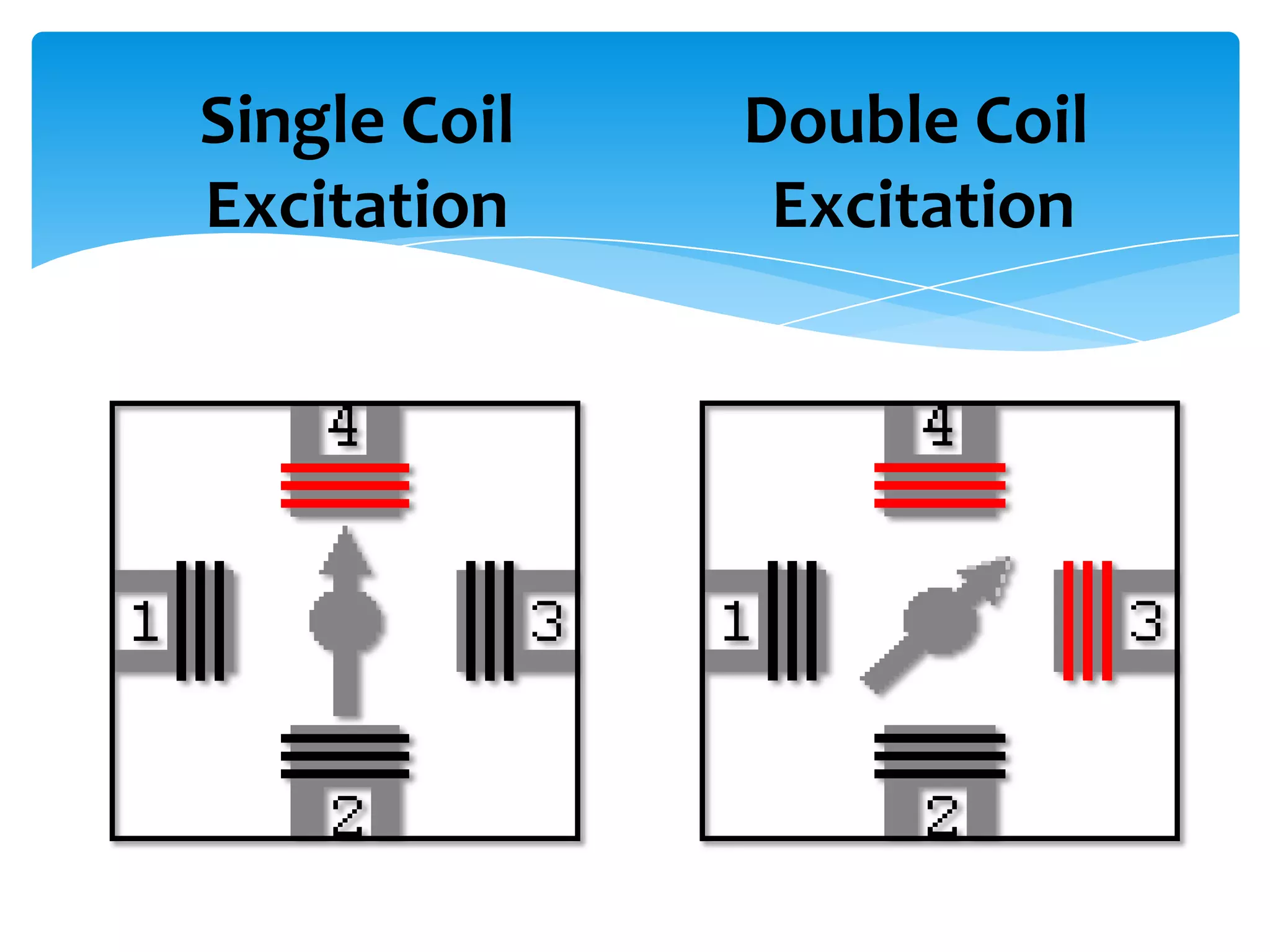
Stepper motor:

   Used for measured rotation

   Can be held at a particular
    position of the shaft

    Ideal for many
     autonomous robots
    requiring
     higher precision
Single Coil   Double Coil
Excitation     Excitation
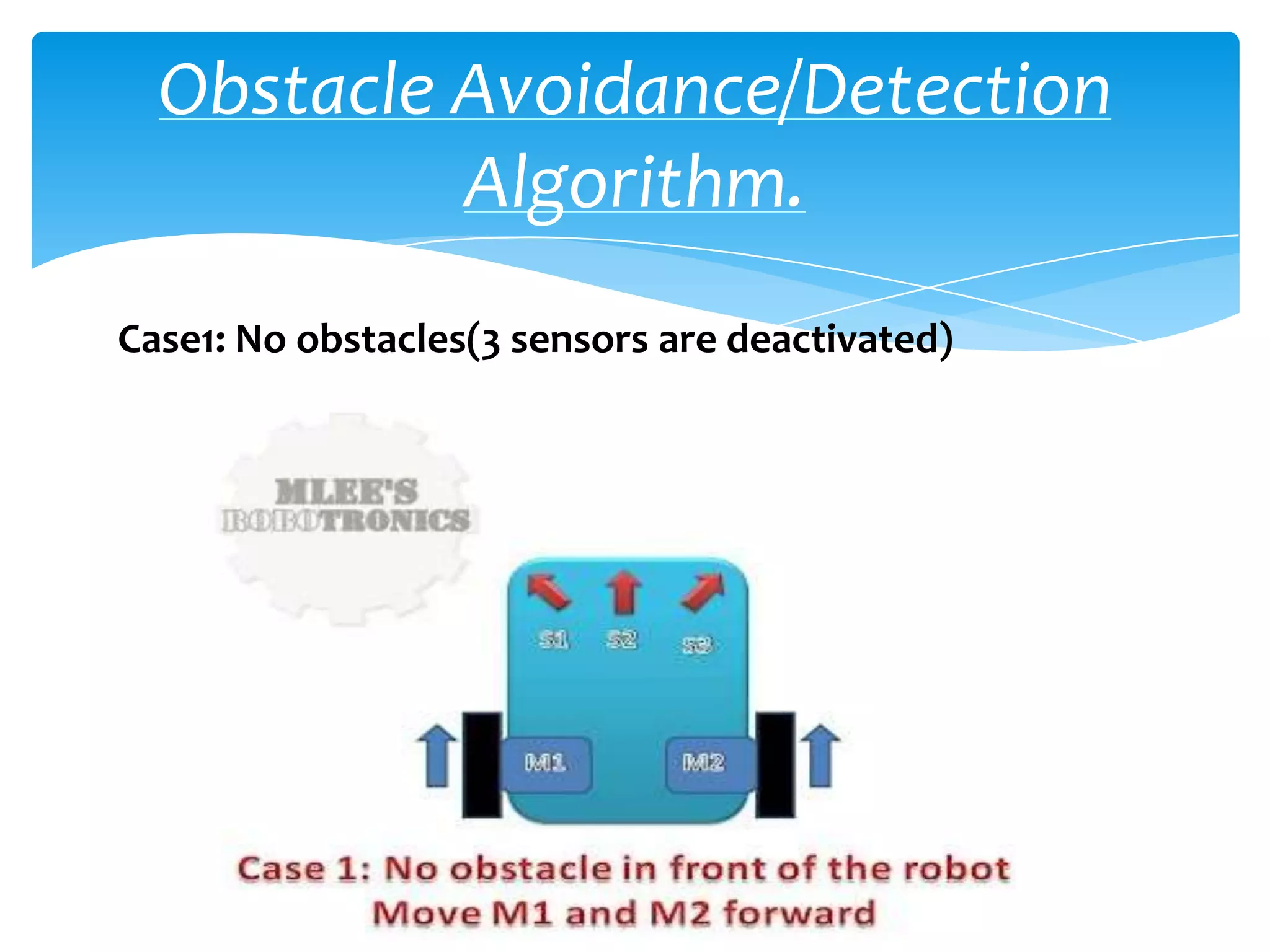
Obstacle Avoidance/Detection
           Algorithm.
Case1: No obstacles(3 sensors are deactivated)
Case 2 :Obstacle detected on right side:
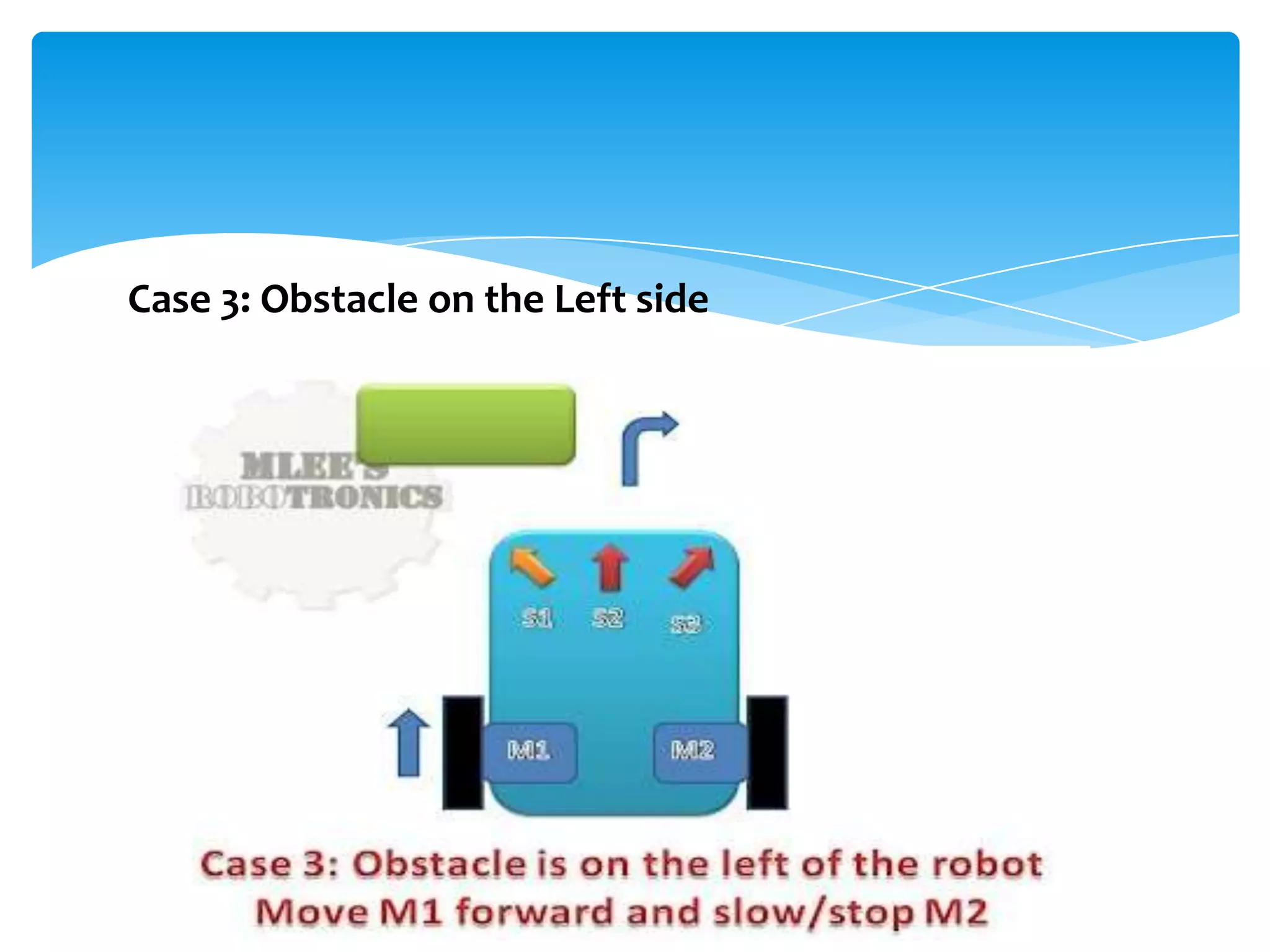
Case 3: Obstacle on the Left side
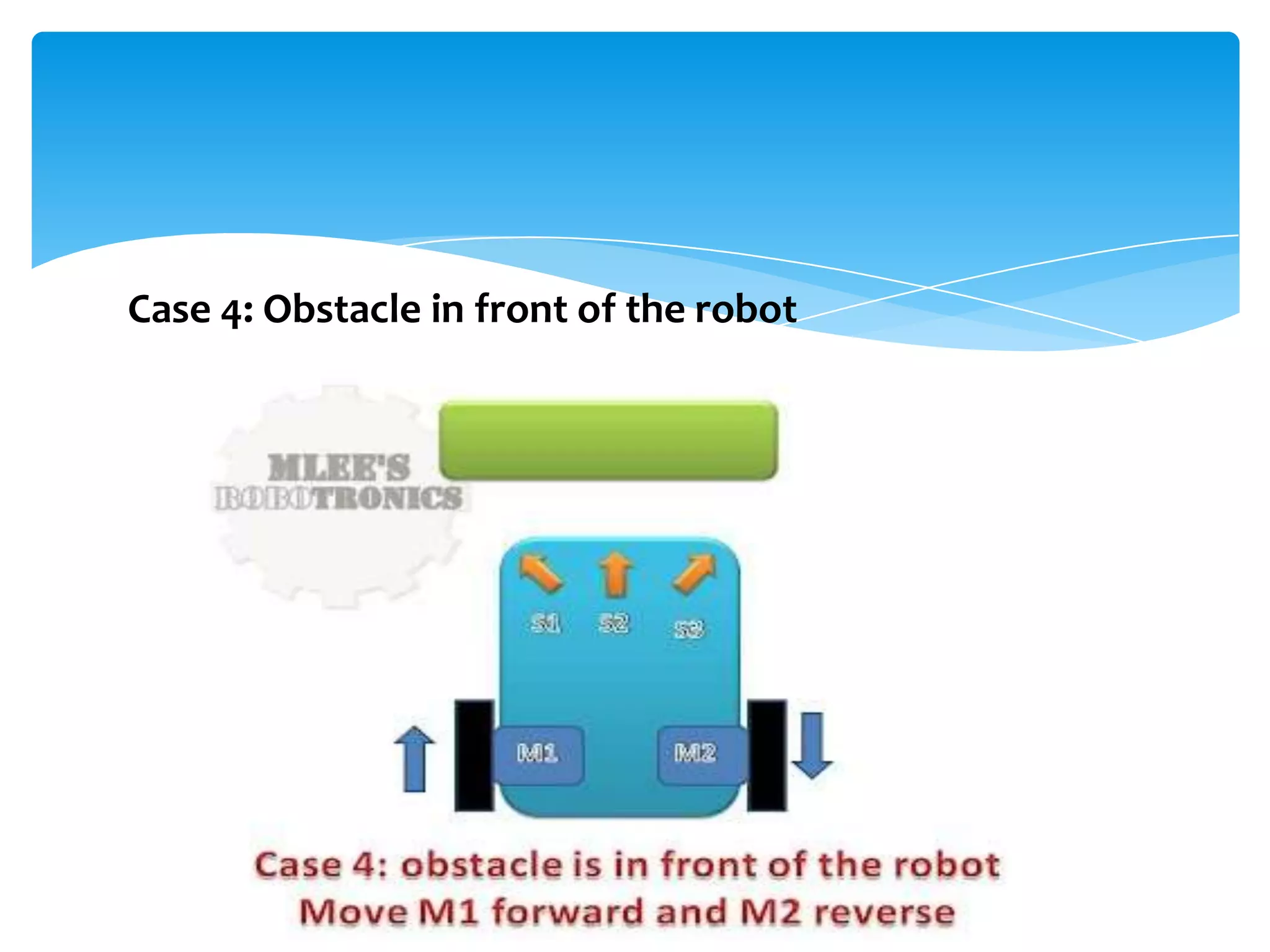
Case 4: Obstacle in front of the robot
ELECTRICAL DESIGN:-


   Wiring

   Layout

   Implementation transmitter circuit

   Power supply
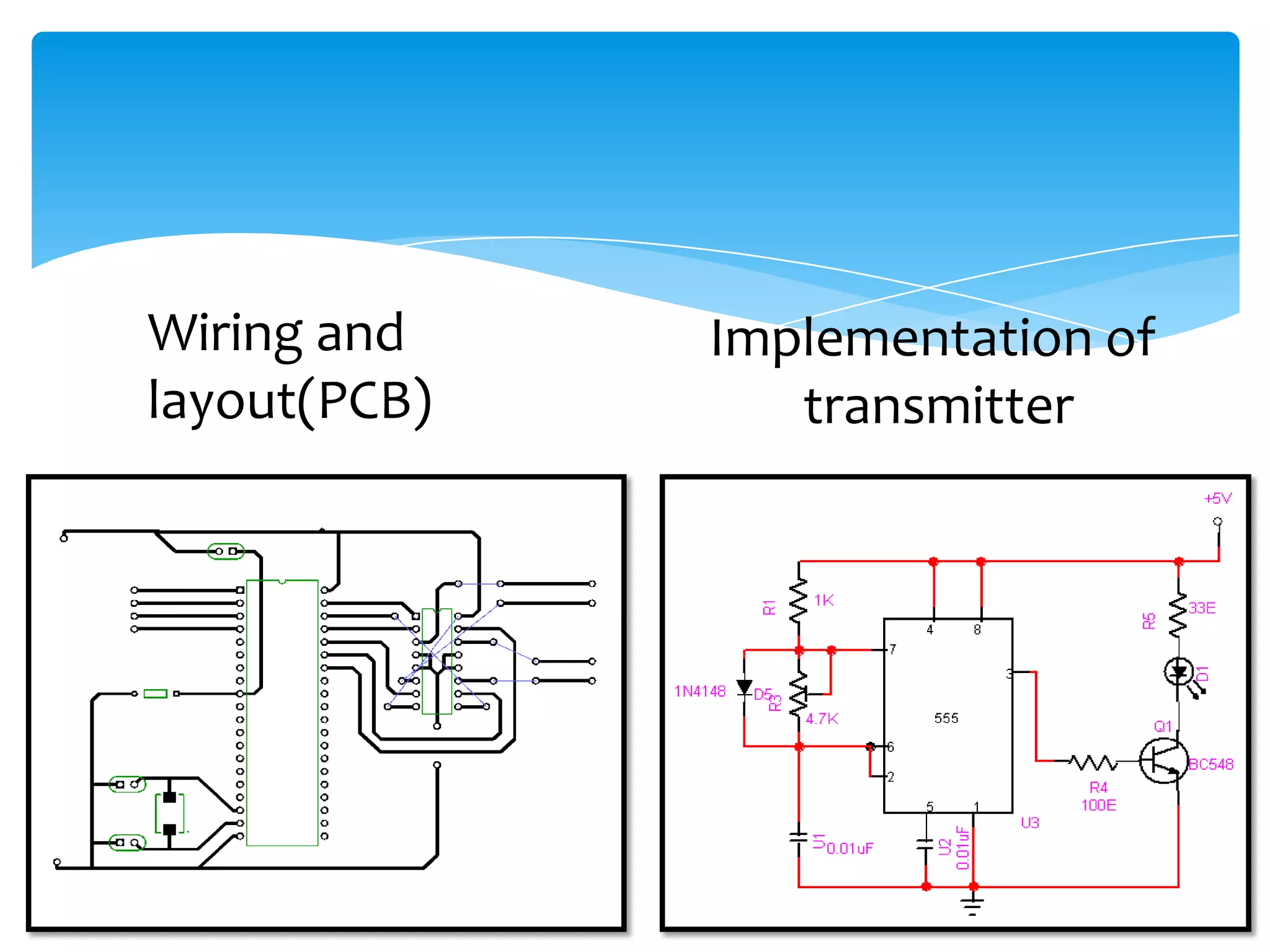
Wiring and    Implementation of
layout(PCB)      transmitter
Power Supply System:

 Suitable power source is needed to run   the
    robots

   Mobile robots are most suitably powered by
    batteries

    The weight and energy capacity of the
    batteries may become the determinative
    factor of its performance
MECHANICAL DESIGN:


   Design of chassis/body

   Alignment of circular wheels

   Fixing motors

   Screwing of PCB
Applications:-


 The modification of this logic has been
 specially designed for vacuum cleaner.

 Just by making small changes in software this
 system can be used for avoiding concealed
 paths.

 With proper programming we can use it as a
 weight lifter, auto parking assistance.

FURTHER IMPROVEMENTS & FUTURE
           SCOPE :-


    Adding a Camera


    Use as a fire fighting
     robot
References:-


www.google.co.in
www.wikipedia.com
www.fadooengineers.com
www.slideshare.com
www.mycollegeproject.com
Thank You

           Presented by

      Rahul Dey (09187016017)
Subham Bhattacharjee (09187016021)
   Kaustabh Mallik (09187016025)
Subhankar Chatterjee (09187016022)
 Anirban Chakraborty (09187016039)
 Sourajit Chakraborty (09187016027)
  Md. Mehran Abul (09187016029)
  Chandrima Dutta (09187016037)
 Souvik Brahmachari (09187016018)

Obstacle avoidance robot

  • 1.
  • 2.
    What Is “Robotics”?  The word robotics is used to collectively define a field in engineering that covers the mimicking of various human characteristics.  It must be able to perform certain tasks we set for it.  The desired task must be achieved within some given limitations.  It may be human controlled or automatic.
  • 3.
    A Basic StructureOf Obstacle Avoidance Robot
  • 4.
    Why Robotics?  Mobile robots perform various ways of tasks to serve humans  No human guidance is required  This sort of project is very much useful in the industries where the automated supervision is required
  • 5.
    What is ‘Obstacleavoidance’? A Path Describing The Purpose Of This Type Robot
  • 6.
    OUR ROBOT:-  In this project our robot senses any obstacle in its path, avoids it and resumes its running  Involves the pre-computation of an obstacle-free path which a controller guides the robot
  • 7.
    COMPONENTS:-  IR Sensor(Transmitter and receiver)  Microcontroller  Driver IC  Motor
  • 8.
  • 9.
  • 10.
    IR Sensor:- About  (IR) sensors based on reflected amplitude of the surrounding objects  Non-linear and depends on the reflectance characteristics of the object surface  IR sensors able to accurately measure distances with reduced response times
  • 11.
    IR Sensor:- Types:  ACTIVE INFRARED SENSORS  Break Beam Sensors  Reflectance Sensors
  • 12.
    IR Transmitter andreciever:- About:  Mainly used to generate IR signal  Uses timer IC555 in astable multivibrator mode to generate square wave  Continuous pulses of 50% duty cycle of frequency 38 KHz
  • 13.
    IR Sensor:- Application:  Widely used for distance measurement purposes  Surface feature detection  Barcode decoding  As a tracking system
  • 14.
  • 15.
    Microcontroller(8051):- About:  Single integrated circuit containing a processor core, memory, and programmable input/output peripherals  Program memory in the form of NOR flash or OTPROM is also often included on chip  Microcontrollers are used in automatically controlled products and devices  Make it economical to digitally control even more devices and processes
  • 16.
    Driver(L293D):- About:  The L293D is a quadruple half H-bridge bidirectional motor driver IC  Can drive current of up to 600mA with voltage range of 4.5 to 36 volts  Drive small DC-Geared motors, bipolar stepper motor
  • 17.
    D.C Motor:-  Stepper Motor  D.C Geared Motor
  • 18.
    D.C Geared Motor: Free running torque & current are ideally zero  Increased load implies, increased torque, current drawn & power consumption  Power supplied by a motor is the product of output shaft’s rotational velocity & torque  Can run in both directions
  • 19.
    Stepper motor:  Used for measured rotation  Can be held at a particular position of the shaft  Ideal for many autonomous robots requiring higher precision
  • 20.
    Single Coil Double Coil Excitation Excitation
  • 21.
    Obstacle Avoidance/Detection Algorithm. Case1: No obstacles(3 sensors are deactivated)
  • 22.
    Case 2 :Obstacledetected on right side:
  • 23.
    Case 3: Obstacleon the Left side
  • 24.
    Case 4: Obstaclein front of the robot
  • 25.
    ELECTRICAL DESIGN:-  Wiring  Layout  Implementation transmitter circuit  Power supply
  • 26.
    Wiring and Implementation of layout(PCB) transmitter
  • 27.
    Power Supply System: Suitable power source is needed to run the robots  Mobile robots are most suitably powered by batteries  The weight and energy capacity of the batteries may become the determinative factor of its performance
  • 28.
    MECHANICAL DESIGN:  Design of chassis/body  Alignment of circular wheels  Fixing motors  Screwing of PCB
  • 29.
    Applications:-  The modificationof this logic has been specially designed for vacuum cleaner.  Just by making small changes in software this system can be used for avoiding concealed paths.  With proper programming we can use it as a weight lifter, auto parking assistance.
  • 30.
    FURTHER IMPROVEMENTS &FUTURE SCOPE :-  Adding a Camera  Use as a fire fighting robot
  • 31.
  • 32.
    Thank You Presented by Rahul Dey (09187016017) Subham Bhattacharjee (09187016021) Kaustabh Mallik (09187016025) Subhankar Chatterjee (09187016022) Anirban Chakraborty (09187016039) Sourajit Chakraborty (09187016027) Md. Mehran Abul (09187016029) Chandrima Dutta (09187016037) Souvik Brahmachari (09187016018)