1
2
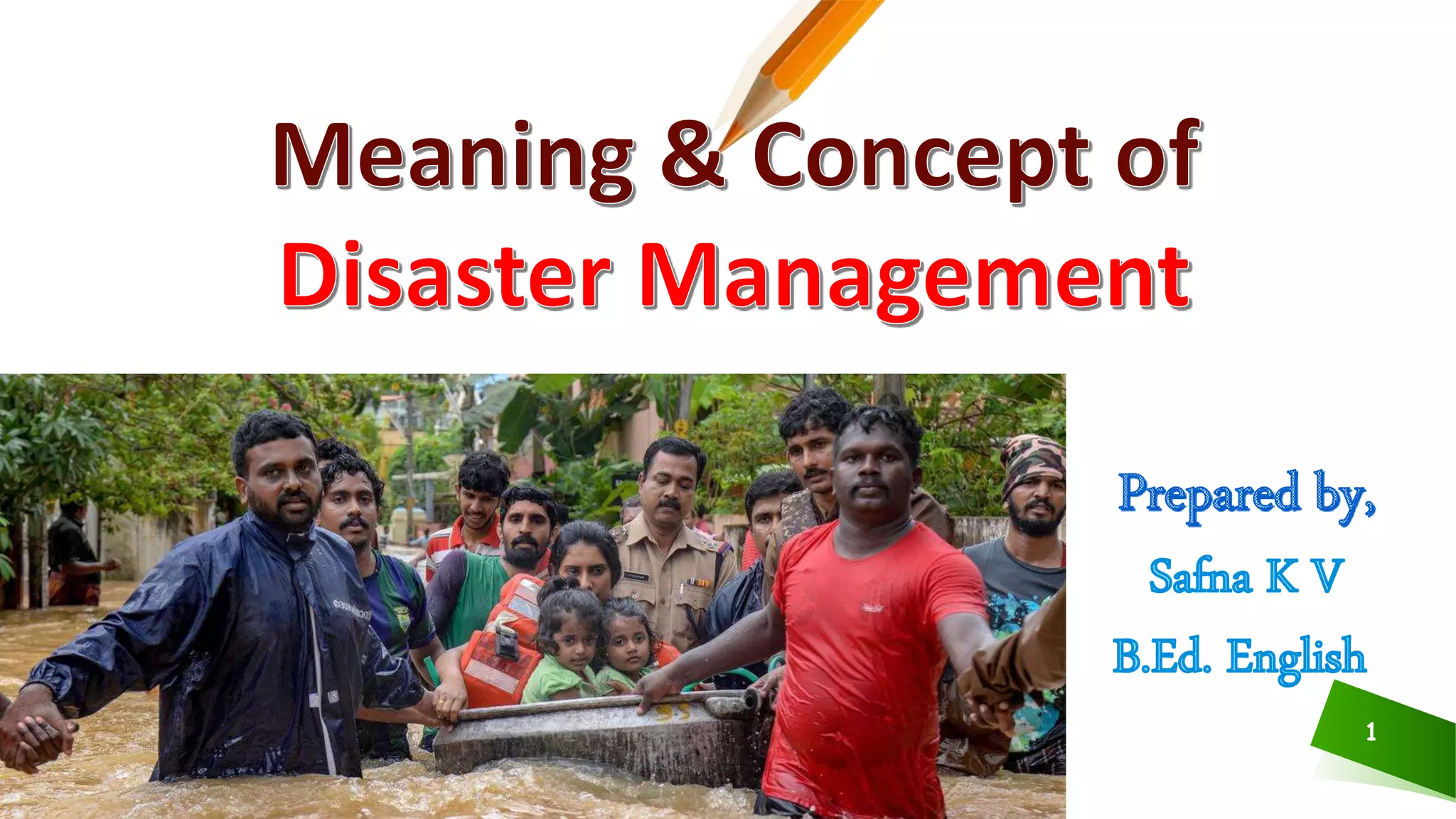
Disaster Management can be defined as the
organization and management of resources
and responsibilities for dealing with all
humanitarian aspects of emergencies, in
particular preparedness, response and
recovery in order to lessen the impact of
disasters.
3
Types of Disasters
4
Natural Disasters: Includes floods, tsunami,
cyclone, earthquake, volcanic eruptions,
landslides, asteroids, global warming, ozone
depletion
5
Man-Made Disasters: Technological, Industrial,
Warfare includes transport failure, fire, chemical
spills, radioactive spills, war, terrorism etc.
6
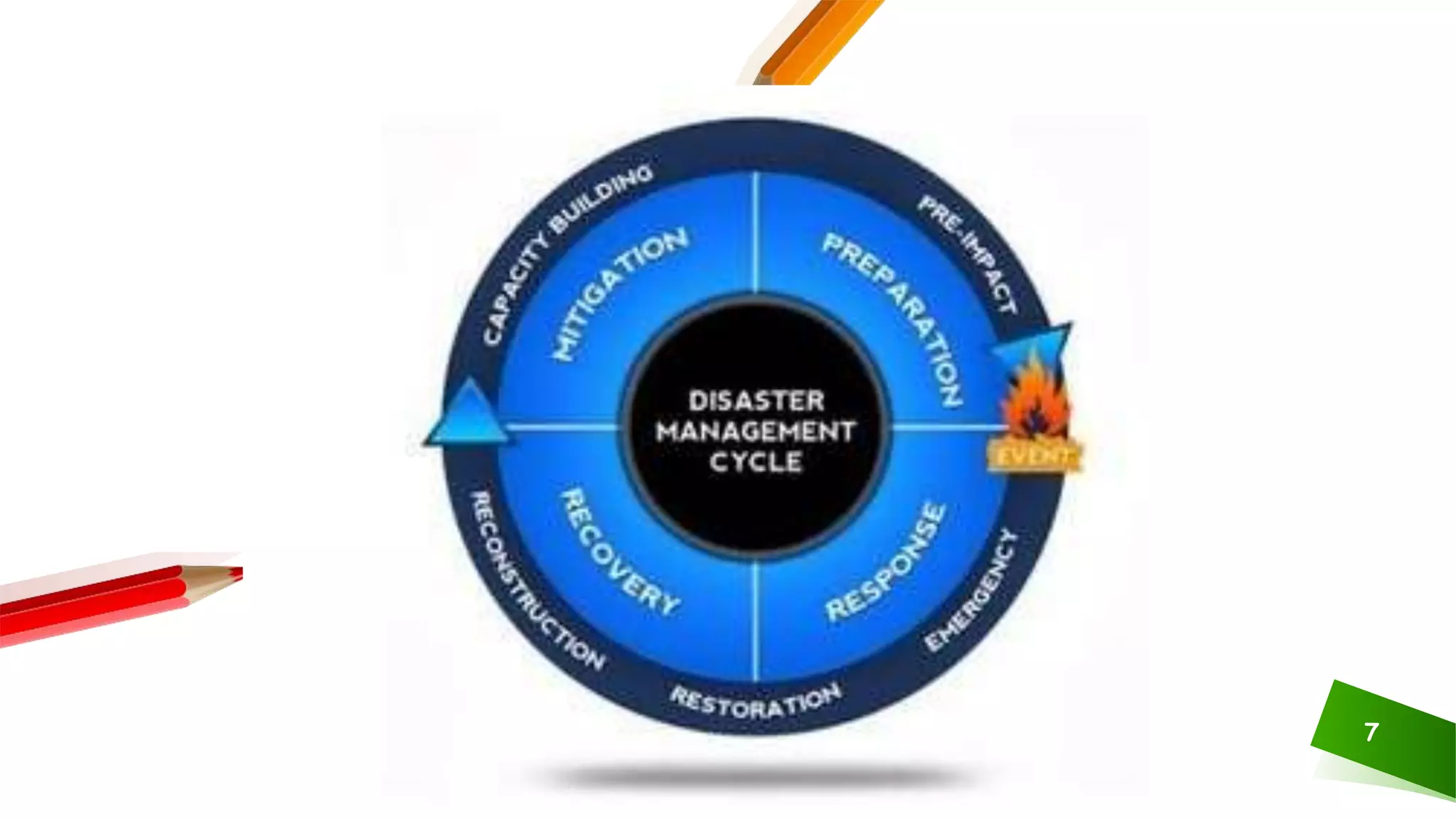
Disaster Management Phases:
1. Mitigation phase
2. Preparedness phase
3. Response Phase
4. Recovery Phase
7
8
1. Mitigation phase:
 Public Education
 Awareness
 Hazard and vulnerability assessment
 Improved infrastructure
9
This phase includes any activities that prevent an
emergency, reduce the likelihood of occurrence, or
reduce the damaging effects of unavoidable hazards.
Mitigation activities should be considered long before
an emergency.
10
2. Preparedness phase:
 National emergency
 Telecommunications
 response plans
 training and exercises
 early warning
 standard operating and procedures
11
This phase includes developing plans for what to do,
where to go, or who to call for help before an event
occurs; actions that will improve your chances of
successfully dealing with an emergency.
12
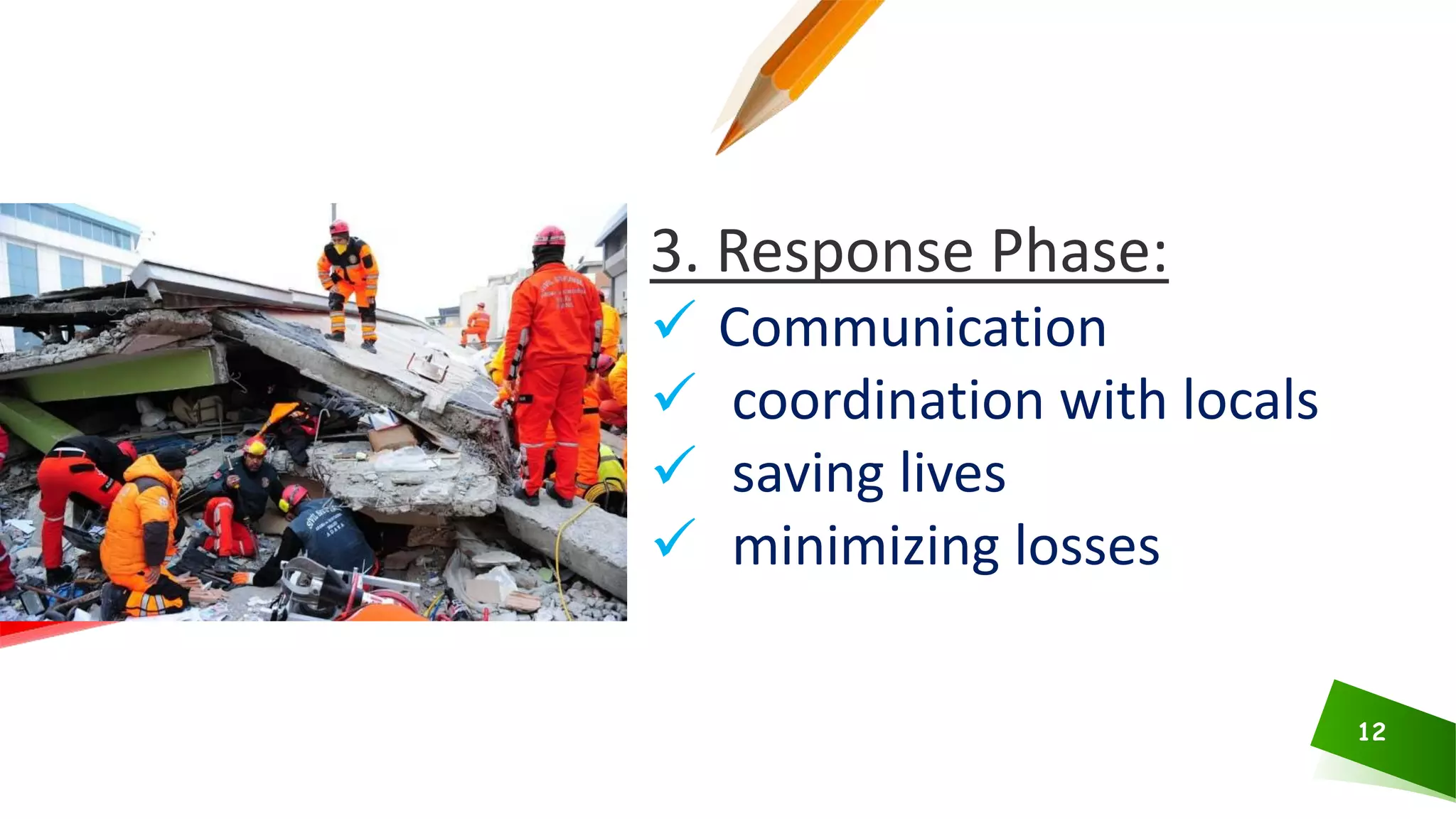
3. Response Phase:
 Communication
 coordination with locals
 saving lives
 minimizing losses
13
Your safety and well-being in an emergency depend on
how prepared you are and on how you respond to a
crisis.
By being able to act responsibly and safely, you will be
able to protect yourself, your family, others around you
and your animals
14
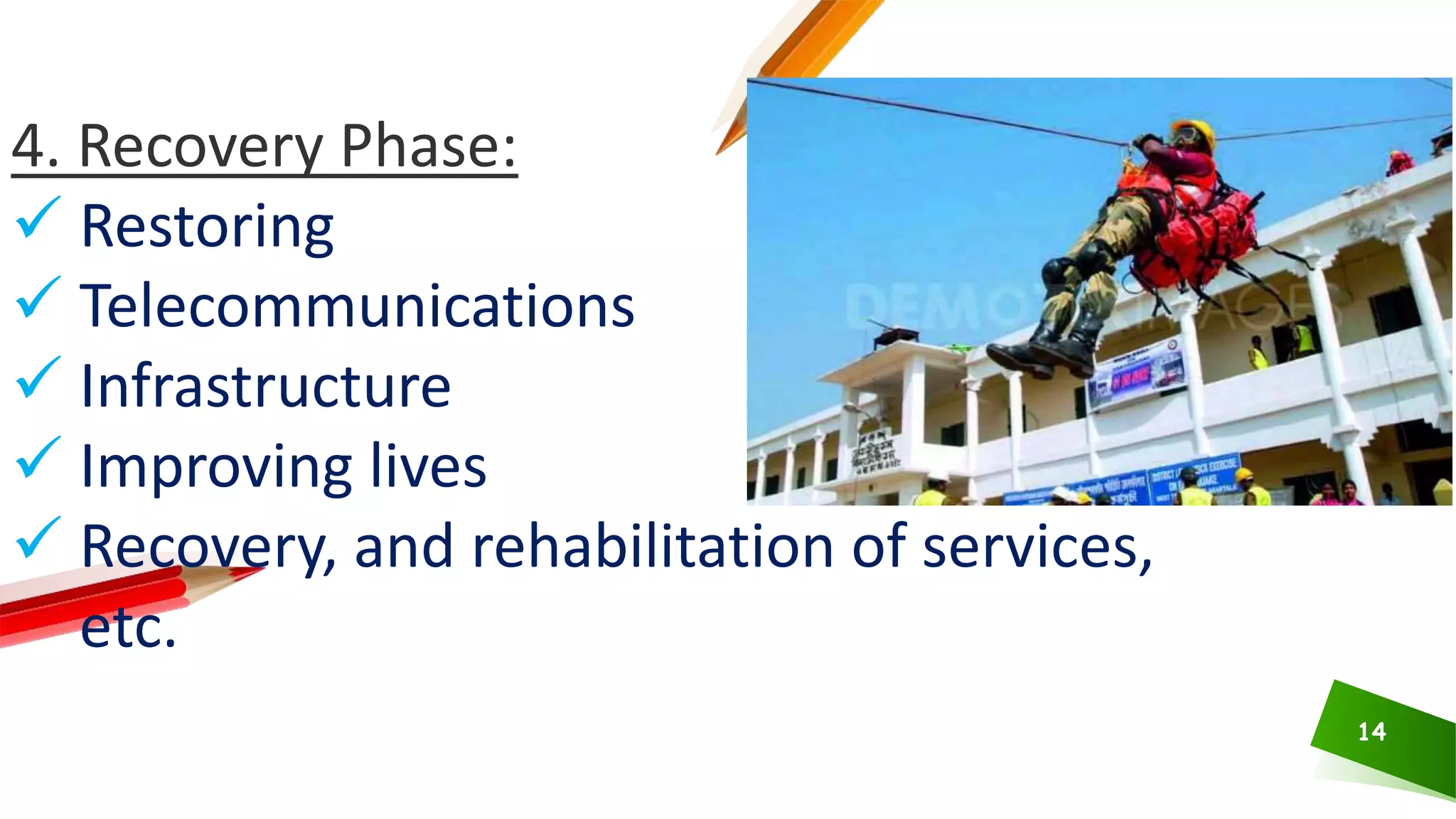
4. Recovery Phase:
 Restoring
 Telecommunications
 Infrastructure
 Improving lives
 Recovery, and rehabilitation of services,
etc.
15
During the recovery period, you must take care of
yourself and your animals to prevent stress-related
illnesses and excessive financial burdens.
16
Role of Government & NGO’s in Disaster Management
 The government sets up authorities that could predict
any impending disaster.
 Their role starts with proper assessment & rolling out
information to the public with proper preventive
measures.
 During the time of disasters, they provide a central,
coordinated plan of action to address the damage
caused by such an event.
17
Aims to provide relief materials, organize health camp,
get involved in rescue operations, arrange temporary
shelters and much more so people are able to survive
and recover from disasters.
Recent example: Oxfam stands with Kerala during and
after floods
18
To deal with these situations, NGO’s provide special
training to their volunteers; officers that help them
extend aid during difficult times.
19

Disaster management PowerPoint presentation safna

  • 1.
  • 2.
    2 Disaster Management canbe defined as the organization and management of resources and responsibilities for dealing with all humanitarian aspects of emergencies, in particular preparedness, response and recovery in order to lessen the impact of disasters.
  • 3.
  • 4.
    4 Natural Disasters: Includesfloods, tsunami, cyclone, earthquake, volcanic eruptions, landslides, asteroids, global warming, ozone depletion
  • 5.
    5 Man-Made Disasters: Technological,Industrial, Warfare includes transport failure, fire, chemical spills, radioactive spills, war, terrorism etc.
  • 6.
    6 Disaster Management Phases: 1.Mitigation phase 2. Preparedness phase 3. Response Phase 4. Recovery Phase
  • 7.
  • 8.
    8 1. Mitigation phase: Public Education  Awareness  Hazard and vulnerability assessment  Improved infrastructure
  • 9.
    9 This phase includesany activities that prevent an emergency, reduce the likelihood of occurrence, or reduce the damaging effects of unavoidable hazards. Mitigation activities should be considered long before an emergency.
  • 10.
    10 2. Preparedness phase: National emergency  Telecommunications  response plans  training and exercises  early warning  standard operating and procedures
  • 11.
    11 This phase includesdeveloping plans for what to do, where to go, or who to call for help before an event occurs; actions that will improve your chances of successfully dealing with an emergency.
  • 12.
    12 3. Response Phase: Communication  coordination with locals  saving lives  minimizing losses
  • 13.
    13 Your safety andwell-being in an emergency depend on how prepared you are and on how you respond to a crisis. By being able to act responsibly and safely, you will be able to protect yourself, your family, others around you and your animals
  • 14.
    14 4. Recovery Phase: Restoring  Telecommunications  Infrastructure  Improving lives  Recovery, and rehabilitation of services, etc.
  • 15.
    15 During the recoveryperiod, you must take care of yourself and your animals to prevent stress-related illnesses and excessive financial burdens.
  • 16.
    16 Role of Government& NGO’s in Disaster Management  The government sets up authorities that could predict any impending disaster.  Their role starts with proper assessment & rolling out information to the public with proper preventive measures.  During the time of disasters, they provide a central, coordinated plan of action to address the damage caused by such an event.
  • 17.
    17 Aims to providerelief materials, organize health camp, get involved in rescue operations, arrange temporary shelters and much more so people are able to survive and recover from disasters. Recent example: Oxfam stands with Kerala during and after floods
  • 18.
    18 To deal withthese situations, NGO’s provide special training to their volunteers; officers that help them extend aid during difficult times.
  • 19.