DIABETES MELLITUS Nelia S. Bañaga – Perez RN, MSN, MAEd Northeastern College Nursing Department Santiago City, Philippines
DIABETES MELLITUS An endocrine disorder in which there is insufficient amount or lack of insulin secretion to metabolize carbohydrates. It is characterized by hyperglycemia,  glycosuria and ketonuria.
 
 
Diabetes Mellitus Pathophysiology The beta cells of the Islets of Langerhan of the Pancreas gland are responsible for secreting the hormone insulin for the carbohydrate metabolism. Remember the concept - sugar into the cells.
Diabetes  Mellitus Types Type 1 - IDDM little to no insulin produced 20-30% hereditary Ketoacidosis Gestational overweight; risk for Type 2 Type 2 - NIDDM some insulin produced 90% hereditary Other types include  Secondary Diabetes  : Genetic defect beta cell or insulin Disease of exocrine pancreas Drug or chemical induced Infections- pancreatitits Others- steroids,
INSULIN Insulin is a protein made of 2 chains- alpha and beta Preproinsulin is produced initially Precursor molecule that is inactive Must be made smaller before becoming active Proinsulin  Precursor that includes alpha and beta chains Also has a C-peptide chain C-peptide levels are used to measure rate that beta cells secrete insulin
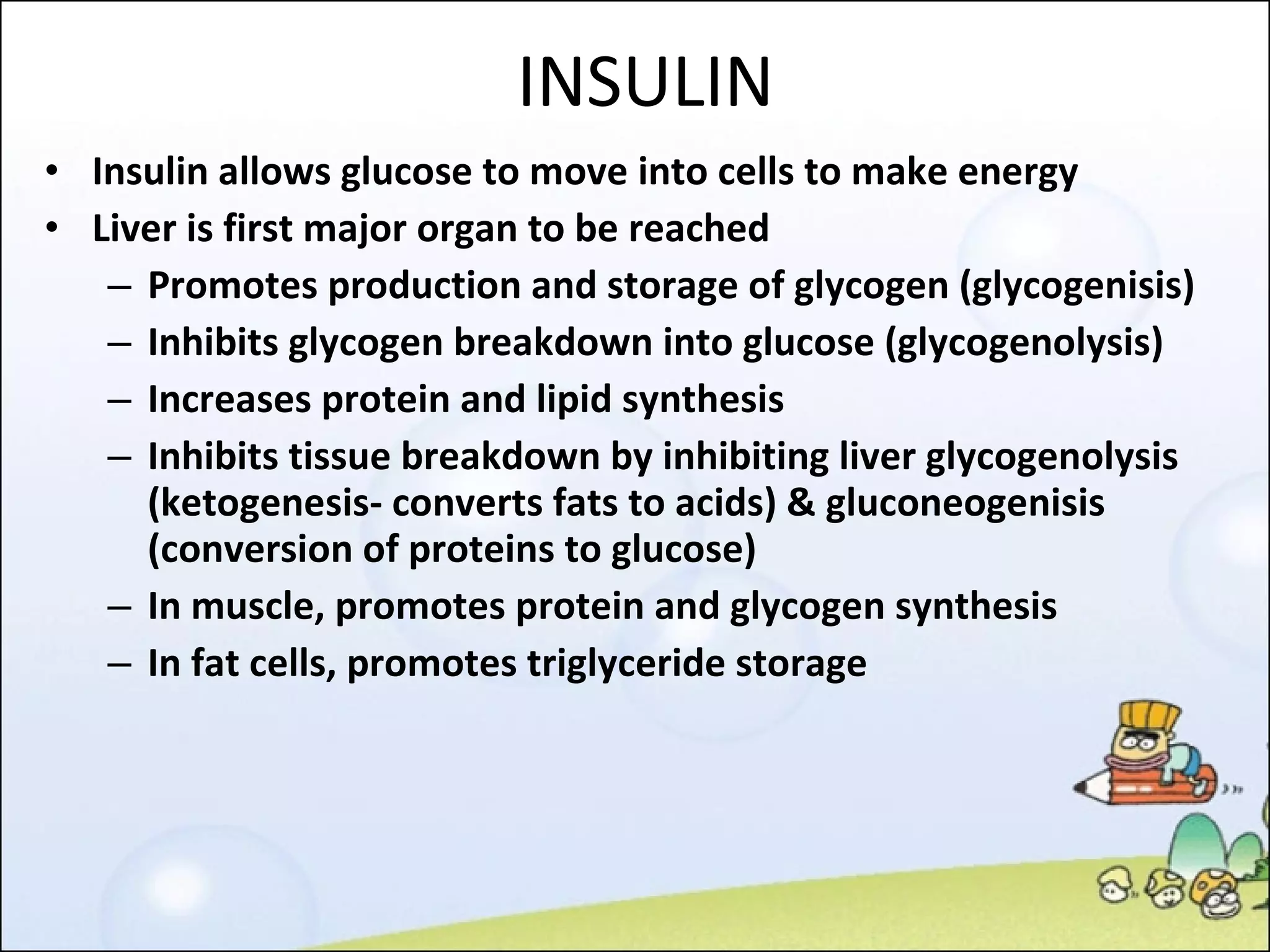
INSULIN Insulin allows glucose to move into cells to make energy Liver is first major organ to be reached Promotes production and storage of glycogen (glycogenisis) Inhibits glycogen breakdown into glucose (glycogenolysis) Increases protein and lipid synthesis Inhibits tissue breakdown by inhibiting liver glycogenolysis (ketogenesis- converts fats to acids) & gluconeogenisis (conversion of proteins to glucose) In muscle, promotes protein and glycogen synthesis In fat cells, promotes triglyceride storage
INSULIN Pancreas secretes 40-50 units of insulin daily in two steps: Secreted at low levels during fasting ( basal insulin secretion Increased levels after eating (prandial) An early burst of insulin occurs within 10 minutes of eating Then proceeds with increasing release as long as hyperglycemia is present
GLUCOSE HOMEOSTASIS Glucose is main fuel for CNS Brain cannot make or store, therefore needs continuous supply Fatty acids can be used when glucose is not available ( triglycerides) Need 68-105 mg/dL to support brain Decreased levels of glucose, insulin release is stopped with glucagon released
GLUCOSE Glucagon causes release of glucose from liver Liver glucose is made thru glycogenolysis (glucogen to glucose) & Gluconeogenesis When liver glucose is not available, lypolysis occures ( breakdown of fat) OR Proteinlysis (breakdown of amino acids)
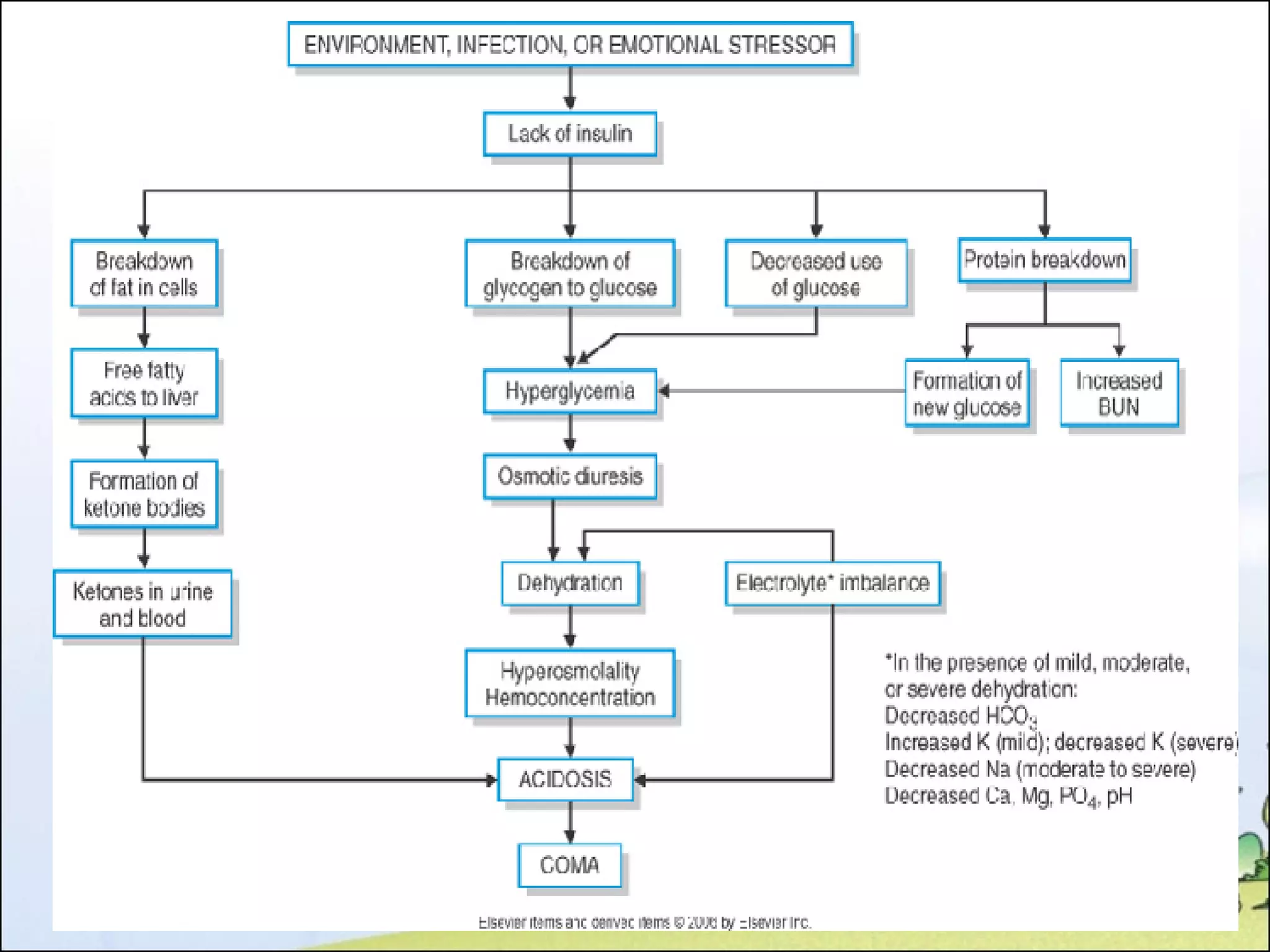
ABSENCE OF INSULIN Insulin needed to move glucose into cells Without insulin, body enters a state of breaking down fats and proteins Glucose levels increase (hyperglycemia)
Absence of Insulin  Hyperglycemia Polyuria Polydipsia Polyphagia Hemoconcentration, hypervolemia, hyperviscosity, hypoperfusion, and hypoxia Acidosis, Kussmaul respiration Hypokalemia, hyperkalemia, or normal serum potassium levels
Assessment  History Blood tests Fasting blood glucose test: two tests > 126 mg/dL Oral glucose tolerance test: blood glucose > 200 mg/dL at 120 minutes Glycosylated hemoglobin ( Glycohemoglobin test)  assays Glucosylated serum proteins and albumin FSBS – (finger stick) monitoring blood sugar
Urine Tests  Urine testing for ketones Urine testing for renal function Urine testing for glucose
Diabetes Mellitus Clinical Manifestation Hyperglycemia Three P’s -  Polyuria Polyphagia Polydispsia Gradual Onset Hypoglycemia Weak, diaphoretic, sweat, pallor, tremors, nervous, hungry, diplopia, confusion, aphasia, vertigo, convulsions Treatment - OJ with sugar, or IV glucose Sudden onset


Hyperglycemia -  Clinical Manifestations Three P’s – polyuria, polydypsia, polyphagia Glycosuria Dehydration Hypotension Mental Changes Fever Hypokalemia Hyponatremia Seizure Coma Life Threatening!!!


Risk for Injury Related to Hyperglycemia Interventions include: Dietary interventions, blood glucose monitoring, medications Oral Drugs Therapy (Continued)
Risk for Injury Related to Hyperglycemia   (Continued) Oral therapy Sulfonylurea agents Meglitinide analogues Biguanides Alpha-glucosidase inhibitors Thiazolinedione antidiabetic agents
Oral Hypoglcemias Key  Points Monitor serum glucose levels Teach patient signs and symptoms of hyper/hypoglycemia Altered liver, renal function will affect medication action Avoid OTC meds without MD approval Assess for GI distress and sensitivity Know appropriate time to administer med
 
Diet Therapy  Goals of diet therapy Principles of nutrition in diabetes Protein, fats and carbohydrates, fiber, sweeteners, fat replacers Alcohol Food labeling Exchange system, carbohydrate counting Special considerations for type 1 and type 2 diabetes
Diabetes Mellitus Diet American Diabetic Association Food groups/ exchanges Carbohydrates - 60% Fats - 30% Protein - 12-20%
Diabetes - Monitoring Glucose Levels Urine - Ketones FSBS Wear ID Bracelet
Diabetes - Treatment Exercise Purpose - controls blood glucose and lowers blood glucose Purpose - reduce the amount of insulin needed
Exercise Therapy Benefits of exercise Risks related to exercise Screening before starting exercise program Guidelines for exercise Exercise promotion
 
Drug Therapy  Drug administration Drug selection Insulin therapy: Insulin analogue Short-acting insulin Concentrated insulin Intermediate  (Continued)
Drug Therapy   (Continued) Fixed-combination Long-acting Buffered insulins
 
Insulin Regimens  Single daily injection protocol Two-dose protocol Three-dose protocol Four-dose protocol Combination therapy Intensified therapy regimens
 
Pharmacokinetics of Insulin Injection site Absorption rate Injection depth Time of injection Mixing insulins
 
Complications of Insulin Therapy   Hypoglycemia Lipoatrophy Dawn phenomenon Somagyi's phenomenon
 
Alternative Methods of Insulin Administration Continuous subcutaneous infusion of insulin  Implanted insulin pumps Injection devices New technology includes: Inhaled insulin Transdermal patch (being tested)
Client Education  Storage and dose preparation Syringes Blood glucose monitoring Interpretation of results Frequency of testing Blood glucose therapy goals
 
 
Diabetic Education -  Preventive Medicine Proper skin and foot care Proper Eye Exam Proper diet and fluids Diabetic Neuropathy Diabetic Retinopathy Diabetic Nephropathy Diabetic gastroparesis
 
Diabetes Mellitus Complications Hyperglycemia Hypoglycemia Diabetic Ketoacidosis Hyperosmolar Hyperglycemic Nonketotic Syndrome
Acute Complications of Diabetes Diabetic ketoacidosis  Hyperglycemic-hyperosmolar-nonketotic syndrome Hypoglycemia from too much insulin or too little glucose
Diabetic Ketoacidosis
Potential for Diabetic Ketoacidosis Interventions include: Monitoring for manifestations Assessment of airway, level of consciousness, hydration status, blood glucose level Management of fluid and electrolytes (Continued)
Potential for Diabetic Ketoacidosis   (Continued) Drug therapy goal: to lower serum glucose by 75 to 150 mg/dL/hr Management of acidosis Client education and prevention
Complication – Ketoacidosis Treatment Patent airway Suctioning Cardiac monitoring Vital Signs Central venous pressure Blood work – ABG, BS, chemistry panel Administration of Na Bicarb Foley – monitor urinary output I & O Frequent Repositioning
 
Complication – HHNC Hyperosmolar Hyperglycemic  Non-Ketotic Coma Fluid moves from inside to outside cell vausing diuresis and loss of Na+ and K+ Treatment - Give insulin and correct fluid and electrolytes imbalance Signs and Symptoms Hypotension Mental changes Dehydration Hypokalemia Hyponatremia Life Threatening!!!
Chronic Complications of Diabetes   Cardiovascular disease Cerebrovascular disease Retinopathy (vision) problems Diabetic neuropathy Diabetic nephropathy Male erectile dysfunction


Diabetes Mellitus Nursing Process Assessment – Medicines, Allergies, Symptoms, Family Hx Nursing Diagnosis- Anxiety and Fear, Altered Nutrition, Pain, Fluid Volume Deficit Planning – Address the nursing diagnosis Implementation – Prevent complications, monitor blood sugars, administer meds and diet, teach diet and meds, Asess , Assess, Assess Evaluation- Goals, EOC’s
Whole-Pancreas Transplantation Operative procedure Rejection management Long-term effects Complications Islet cell transplantation hindered by limited supply of beta cells and problems caused by antirejection drugs
Risk for Delayed Surgical Recovery Interventions include: Preoperative care Intraoperative care Postoperative care and monitoring includes care of: Cardiovascular Renal Nutritional
Risk for Injury Related to Sensory Alterations Interventions and foot care practices: Cleanse and inspect the feet daily. Wear properly fitting shoes. Avoid walking barefoot. Trim toenails properly. Report nonhealing breaks in the skin.
Wound Care Wound environment Debridement Elimination of pressure on infected area Growth factors applied to wounds
Chronic Pain  Interventions include: Maintenance of normal blood glucose levels Anticonvulsants Antidepressants Capsaicin cream
Risk for Injury Related to Disturbed Sensory Perception: Visual Interventions include: Blood glucose control Environmental management Incandescent lamp Coding objects Syringes with magnifiers Use of adaptive devices
Ineffective Tissue Perfusion: Renal Interventions include: Control of blood glucose levels Yearly evaluation of kidney function Control of blood pressure levels Prompt treatment of UTIs Avoidance of nephrotoxic drugs Diet therapy Fluid and electrolyte management
Potential for Hypoglycemia Blood glucose level < 70 mg/dL Diet therapy: carbohydrate replacement Drug therapy: glucagon, 50% dextrose, diazoxide, octreotide Prevention strategies for: Insulin excess Deficient food intake Exercise Alcohol
Potential for Hyperglycemic-Hyperosmolar  Nonketotic Syndrome and Coma Interventions include: Monitoring Fluid therapy: to rehydrate the client and restore normal blood glucose levels within 36 to 72 hr Continuing therapy with IV regular insulin at 10 units/hr often needed to reduce blood glucose levels
Health Teaching Assessing learning needs Assessing physical, cognitive, and emotional limitations Explaining survival skills Counseling Psychosocial preparation Home care management Health care resources
 
Diabetes Mellitus Summary Treatable, but not curable. Preventable in obesity, adult client. Diagnostic Tests Signs and symptoms of hypoglycemia and hyperglycemia. Treatment of hypoglycemia and hyperglycemia – diet and oral hypoglycemics. Nursing implications – monitoring, teaching and assessing for complications.
DIABETES SELF CARE STAR MEALS  MONITORING * PLASMA *FEET MEDICATIONS *INSULIN *ORAL AGENTS MANAGEMENT *SICK DAY *HYPOGLYCEMIA * HYPERGYCEMIA MOTION
Any Questions???

Nursing Management for Diabetes Mellitus

  • 1.
    DIABETES MELLITUS NeliaS. Bañaga – Perez RN, MSN, MAEd Northeastern College Nursing Department Santiago City, Philippines
  • 2.
    DIABETES MELLITUS Anendocrine disorder in which there is insufficient amount or lack of insulin secretion to metabolize carbohydrates. It is characterized by hyperglycemia, glycosuria and ketonuria.
  • 3.
  • 4.
  • 5.
    Diabetes Mellitus PathophysiologyThe beta cells of the Islets of Langerhan of the Pancreas gland are responsible for secreting the hormone insulin for the carbohydrate metabolism. Remember the concept - sugar into the cells.
  • 6.
    Diabetes MellitusTypes Type 1 - IDDM little to no insulin produced 20-30% hereditary Ketoacidosis Gestational overweight; risk for Type 2 Type 2 - NIDDM some insulin produced 90% hereditary Other types include Secondary Diabetes : Genetic defect beta cell or insulin Disease of exocrine pancreas Drug or chemical induced Infections- pancreatitits Others- steroids,
  • 7.
    INSULIN Insulin isa protein made of 2 chains- alpha and beta Preproinsulin is produced initially Precursor molecule that is inactive Must be made smaller before becoming active Proinsulin Precursor that includes alpha and beta chains Also has a C-peptide chain C-peptide levels are used to measure rate that beta cells secrete insulin
  • 8.
    INSULIN Insulin allowsglucose to move into cells to make energy Liver is first major organ to be reached Promotes production and storage of glycogen (glycogenisis) Inhibits glycogen breakdown into glucose (glycogenolysis) Increases protein and lipid synthesis Inhibits tissue breakdown by inhibiting liver glycogenolysis (ketogenesis- converts fats to acids) & gluconeogenisis (conversion of proteins to glucose) In muscle, promotes protein and glycogen synthesis In fat cells, promotes triglyceride storage
  • 9.
    INSULIN Pancreas secretes40-50 units of insulin daily in two steps: Secreted at low levels during fasting ( basal insulin secretion Increased levels after eating (prandial) An early burst of insulin occurs within 10 minutes of eating Then proceeds with increasing release as long as hyperglycemia is present
  • 10.
    GLUCOSE HOMEOSTASIS Glucoseis main fuel for CNS Brain cannot make or store, therefore needs continuous supply Fatty acids can be used when glucose is not available ( triglycerides) Need 68-105 mg/dL to support brain Decreased levels of glucose, insulin release is stopped with glucagon released
  • 11.
    GLUCOSE Glucagon causesrelease of glucose from liver Liver glucose is made thru glycogenolysis (glucogen to glucose) & Gluconeogenesis When liver glucose is not available, lypolysis occures ( breakdown of fat) OR Proteinlysis (breakdown of amino acids)
  • 12.
    ABSENCE OF INSULINInsulin needed to move glucose into cells Without insulin, body enters a state of breaking down fats and proteins Glucose levels increase (hyperglycemia)
  • 13.
    Absence of Insulin Hyperglycemia Polyuria Polydipsia Polyphagia Hemoconcentration, hypervolemia, hyperviscosity, hypoperfusion, and hypoxia Acidosis, Kussmaul respiration Hypokalemia, hyperkalemia, or normal serum potassium levels
  • 14.
    Assessment HistoryBlood tests Fasting blood glucose test: two tests > 126 mg/dL Oral glucose tolerance test: blood glucose > 200 mg/dL at 120 minutes Glycosylated hemoglobin ( Glycohemoglobin test) assays Glucosylated serum proteins and albumin FSBS – (finger stick) monitoring blood sugar
  • 15.
    Urine Tests Urine testing for ketones Urine testing for renal function Urine testing for glucose
  • 16.
    Diabetes Mellitus ClinicalManifestation Hyperglycemia Three P’s - Polyuria Polyphagia Polydispsia Gradual Onset Hypoglycemia Weak, diaphoretic, sweat, pallor, tremors, nervous, hungry, diplopia, confusion, aphasia, vertigo, convulsions Treatment - OJ with sugar, or IV glucose Sudden onset
  • 17.
  • 18.
  • 19.
  • 20.
  • 21.
  • 22.
  • 23.
    Hyperglycemia - Clinical Manifestations Three P’s – polyuria, polydypsia, polyphagia Glycosuria Dehydration Hypotension Mental Changes Fever Hypokalemia Hyponatremia Seizure Coma Life Threatening!!!
  • 24.
  • 25.
  • 26.
  • 27.
    Risk for InjuryRelated to Hyperglycemia Interventions include: Dietary interventions, blood glucose monitoring, medications Oral Drugs Therapy (Continued)
  • 28.
    Risk for InjuryRelated to Hyperglycemia (Continued) Oral therapy Sulfonylurea agents Meglitinide analogues Biguanides Alpha-glucosidase inhibitors Thiazolinedione antidiabetic agents
  • 29.
    Oral Hypoglcemias Key Points Monitor serum glucose levels Teach patient signs and symptoms of hyper/hypoglycemia Altered liver, renal function will affect medication action Avoid OTC meds without MD approval Assess for GI distress and sensitivity Know appropriate time to administer med
  • 30.
  • 31.
    Diet Therapy Goals of diet therapy Principles of nutrition in diabetes Protein, fats and carbohydrates, fiber, sweeteners, fat replacers Alcohol Food labeling Exchange system, carbohydrate counting Special considerations for type 1 and type 2 diabetes
  • 32.
    Diabetes Mellitus DietAmerican Diabetic Association Food groups/ exchanges Carbohydrates - 60% Fats - 30% Protein - 12-20%
  • 33.
    Diabetes - MonitoringGlucose Levels Urine - Ketones FSBS Wear ID Bracelet
  • 34.
    Diabetes - TreatmentExercise Purpose - controls blood glucose and lowers blood glucose Purpose - reduce the amount of insulin needed
  • 35.
    Exercise Therapy Benefitsof exercise Risks related to exercise Screening before starting exercise program Guidelines for exercise Exercise promotion
  • 36.
  • 37.
    Drug Therapy Drug administration Drug selection Insulin therapy: Insulin analogue Short-acting insulin Concentrated insulin Intermediate (Continued)
  • 38.
    Drug Therapy (Continued) Fixed-combination Long-acting Buffered insulins
  • 39.
  • 40.
    Insulin Regimens Single daily injection protocol Two-dose protocol Three-dose protocol Four-dose protocol Combination therapy Intensified therapy regimens
  • 41.
  • 42.
    Pharmacokinetics of InsulinInjection site Absorption rate Injection depth Time of injection Mixing insulins
  • 43.
  • 44.
    Complications of InsulinTherapy Hypoglycemia Lipoatrophy Dawn phenomenon Somagyi's phenomenon
  • 45.
  • 46.
    Alternative Methods ofInsulin Administration Continuous subcutaneous infusion of insulin Implanted insulin pumps Injection devices New technology includes: Inhaled insulin Transdermal patch (being tested)
  • 47.
    Client Education Storage and dose preparation Syringes Blood glucose monitoring Interpretation of results Frequency of testing Blood glucose therapy goals
  • 48.
  • 49.
  • 50.
    Diabetic Education - Preventive Medicine Proper skin and foot care Proper Eye Exam Proper diet and fluids Diabetic Neuropathy Diabetic Retinopathy Diabetic Nephropathy Diabetic gastroparesis
  • 51.
  • 52.
    Diabetes Mellitus ComplicationsHyperglycemia Hypoglycemia Diabetic Ketoacidosis Hyperosmolar Hyperglycemic Nonketotic Syndrome
  • 53.
    Acute Complications ofDiabetes Diabetic ketoacidosis Hyperglycemic-hyperosmolar-nonketotic syndrome Hypoglycemia from too much insulin or too little glucose
  • 54.
  • 55.
    Potential for DiabeticKetoacidosis Interventions include: Monitoring for manifestations Assessment of airway, level of consciousness, hydration status, blood glucose level Management of fluid and electrolytes (Continued)
  • 56.
    Potential for DiabeticKetoacidosis (Continued) Drug therapy goal: to lower serum glucose by 75 to 150 mg/dL/hr Management of acidosis Client education and prevention
  • 57.
    Complication – KetoacidosisTreatment Patent airway Suctioning Cardiac monitoring Vital Signs Central venous pressure Blood work – ABG, BS, chemistry panel Administration of Na Bicarb Foley – monitor urinary output I & O Frequent Repositioning
  • 58.
  • 59.
    Complication – HHNCHyperosmolar Hyperglycemic Non-Ketotic Coma Fluid moves from inside to outside cell vausing diuresis and loss of Na+ and K+ Treatment - Give insulin and correct fluid and electrolytes imbalance Signs and Symptoms Hypotension Mental changes Dehydration Hypokalemia Hyponatremia Life Threatening!!!
  • 60.
    Chronic Complications ofDiabetes Cardiovascular disease Cerebrovascular disease Retinopathy (vision) problems Diabetic neuropathy Diabetic nephropathy Male erectile dysfunction
  • 61.
  • 62.
  • 63.
  • 64.
    Diabetes Mellitus NursingProcess Assessment – Medicines, Allergies, Symptoms, Family Hx Nursing Diagnosis- Anxiety and Fear, Altered Nutrition, Pain, Fluid Volume Deficit Planning – Address the nursing diagnosis Implementation – Prevent complications, monitor blood sugars, administer meds and diet, teach diet and meds, Asess , Assess, Assess Evaluation- Goals, EOC’s
  • 65.
    Whole-Pancreas Transplantation Operativeprocedure Rejection management Long-term effects Complications Islet cell transplantation hindered by limited supply of beta cells and problems caused by antirejection drugs
  • 66.
    Risk for DelayedSurgical Recovery Interventions include: Preoperative care Intraoperative care Postoperative care and monitoring includes care of: Cardiovascular Renal Nutritional
  • 67.
    Risk for InjuryRelated to Sensory Alterations Interventions and foot care practices: Cleanse and inspect the feet daily. Wear properly fitting shoes. Avoid walking barefoot. Trim toenails properly. Report nonhealing breaks in the skin.
  • 68.
    Wound Care Woundenvironment Debridement Elimination of pressure on infected area Growth factors applied to wounds
  • 69.
    Chronic Pain Interventions include: Maintenance of normal blood glucose levels Anticonvulsants Antidepressants Capsaicin cream
  • 70.
    Risk for InjuryRelated to Disturbed Sensory Perception: Visual Interventions include: Blood glucose control Environmental management Incandescent lamp Coding objects Syringes with magnifiers Use of adaptive devices
  • 71.
    Ineffective Tissue Perfusion:Renal Interventions include: Control of blood glucose levels Yearly evaluation of kidney function Control of blood pressure levels Prompt treatment of UTIs Avoidance of nephrotoxic drugs Diet therapy Fluid and electrolyte management
  • 72.
    Potential for HypoglycemiaBlood glucose level < 70 mg/dL Diet therapy: carbohydrate replacement Drug therapy: glucagon, 50% dextrose, diazoxide, octreotide Prevention strategies for: Insulin excess Deficient food intake Exercise Alcohol
  • 73.
    Potential for Hyperglycemic-Hyperosmolar Nonketotic Syndrome and Coma Interventions include: Monitoring Fluid therapy: to rehydrate the client and restore normal blood glucose levels within 36 to 72 hr Continuing therapy with IV regular insulin at 10 units/hr often needed to reduce blood glucose levels
  • 74.
    Health Teaching Assessinglearning needs Assessing physical, cognitive, and emotional limitations Explaining survival skills Counseling Psychosocial preparation Home care management Health care resources
  • 75.
  • 76.
    Diabetes Mellitus SummaryTreatable, but not curable. Preventable in obesity, adult client. Diagnostic Tests Signs and symptoms of hypoglycemia and hyperglycemia. Treatment of hypoglycemia and hyperglycemia – diet and oral hypoglycemics. Nursing implications – monitoring, teaching and assessing for complications.
  • 77.
    DIABETES SELF CARESTAR MEALS MONITORING * PLASMA *FEET MEDICATIONS *INSULIN *ORAL AGENTS MANAGEMENT *SICK DAY *HYPOGLYCEMIA * HYPERGYCEMIA MOTION
  • 78.