Done by
Saquib ahmed
 Nitrogen cycle is a natural cyclic process in
which it becomes a part of the living
organisms, before it is sent back to the
atmosphere.
 The nitrogen cycle represents one of the
most important nutrient cycles found in
terrestrial ecosystems. Nitrogen is used by
living organisms to produce a number of
complex organic molecules like amino
acids, proteins, and nucleic acids.
 Ammonification or Mineralization is
performed by bacteria to convert the
ammonia to ammonium. Nitrification can
then occur to convert the ammonium to
nitrite and nitrate
 This process liberates a lot of energy
which can be used by the saprotrophic
microbes
 Nitrification is the process by which ammonia is
converted to nitrites and then nitrates. This
process naturally occurs in the environment,
where it is carried out by specialized bacteria.
 This energy is the only source of energy for
these prokaryotes
 They are chemoautotrophs
 Chemoautotroph is an organism, typically a
bacterium, which derives energy from the
oxidation of inorganic compounds.
 Prokaryote is a microscopic single-celled
organism which has neither a distinct nucleus
with a membrane nor other specialized organs.
Out
gassing
Atmospheric
fixation
Root uptake
Nitrate NO3
-
Plant
protein
Soil organic
nitrogen
Atmospheric Nitrogen
Biological
fixation
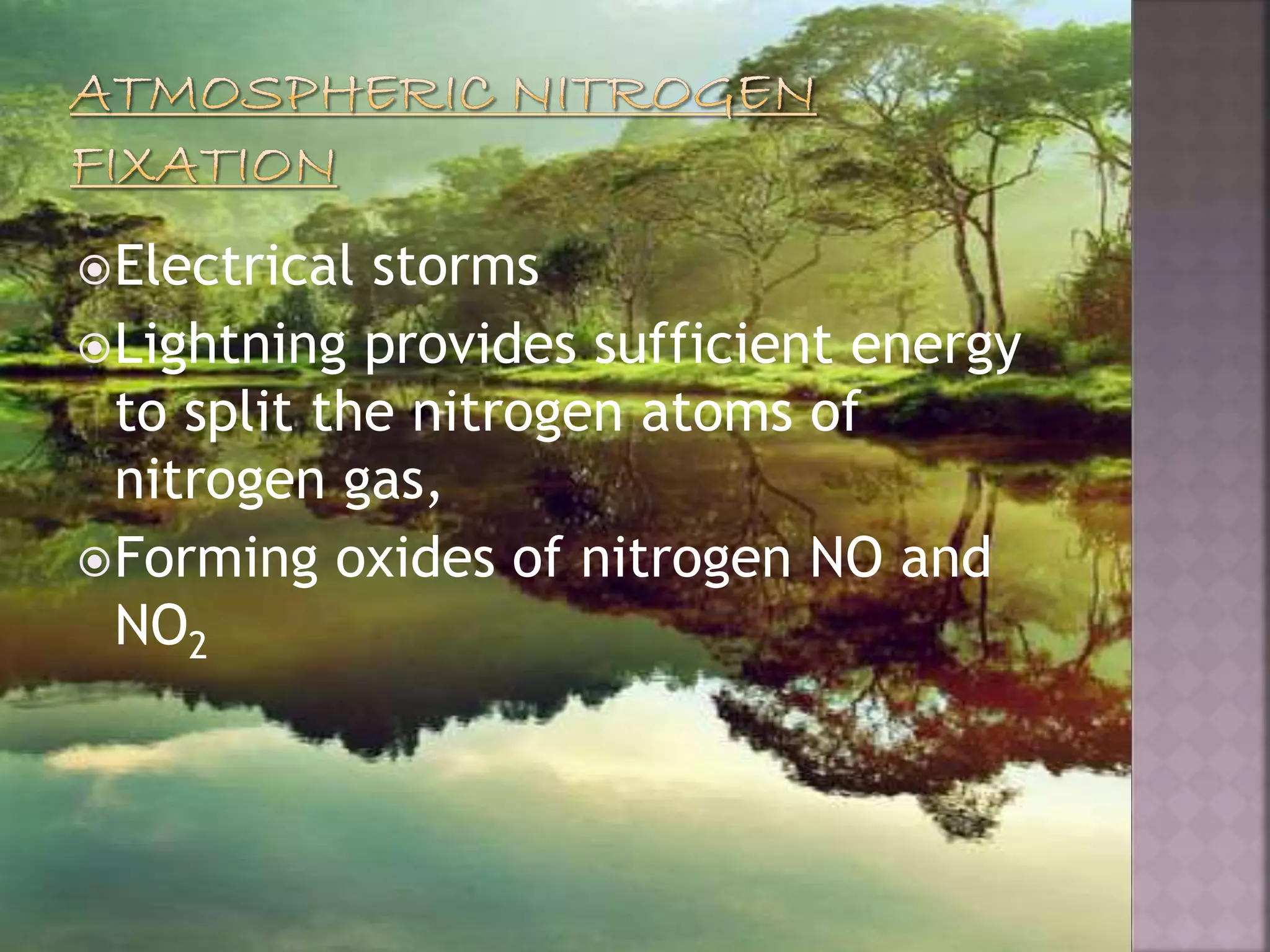
Electrical storms
Lightning provides sufficient energy
to split the nitrogen atoms of
nitrogen gas,
Forming oxides of nitrogen NO and
NO2
 This also happens inside the internal
combustion engines of cars
 The exhaust emissions of cars contribute a
lot to atmospheric pollution in the form of
NOx
 These compounds form photochemical smog
 They are green house gases
 They dissolve in rain to contribute to acid
rain in the form of nitric acid
 The rain falling on soil and running into rivers
 They contribute to the eutrophication of
water bodies
 Nox are oxides of nitrogen, especially as
atmospheric pollutants
 Adding nitrate fertiliser clearly helps the growth
of plants
 The presence of microbes permits the peas to
grow much better.
 The peas grow better in the presence of the
microbes than they do with nitrate fertiliser
added
 The difference is due to the present of
mutualistic nitrogen fixing bacteria which live in
the pea roots.
 Mutualism is the way two organisms of different
species exist in a relationship in which each
individual benefits. Similar interactions within a
species are known as co-operation.
 Cyan bacteria are nitrogen fixers that also
fix carbon (these are photosynthetic).
 Rhizobium bacteria are mutualistic with
certain plant species e.g. Legumes.
 They grow in root nodules.
 Azotobacter are bacteria associated with
the rooting zone (the rhizosphere) of plants
in grasslands.
Alafalfa (Medicago sativa)
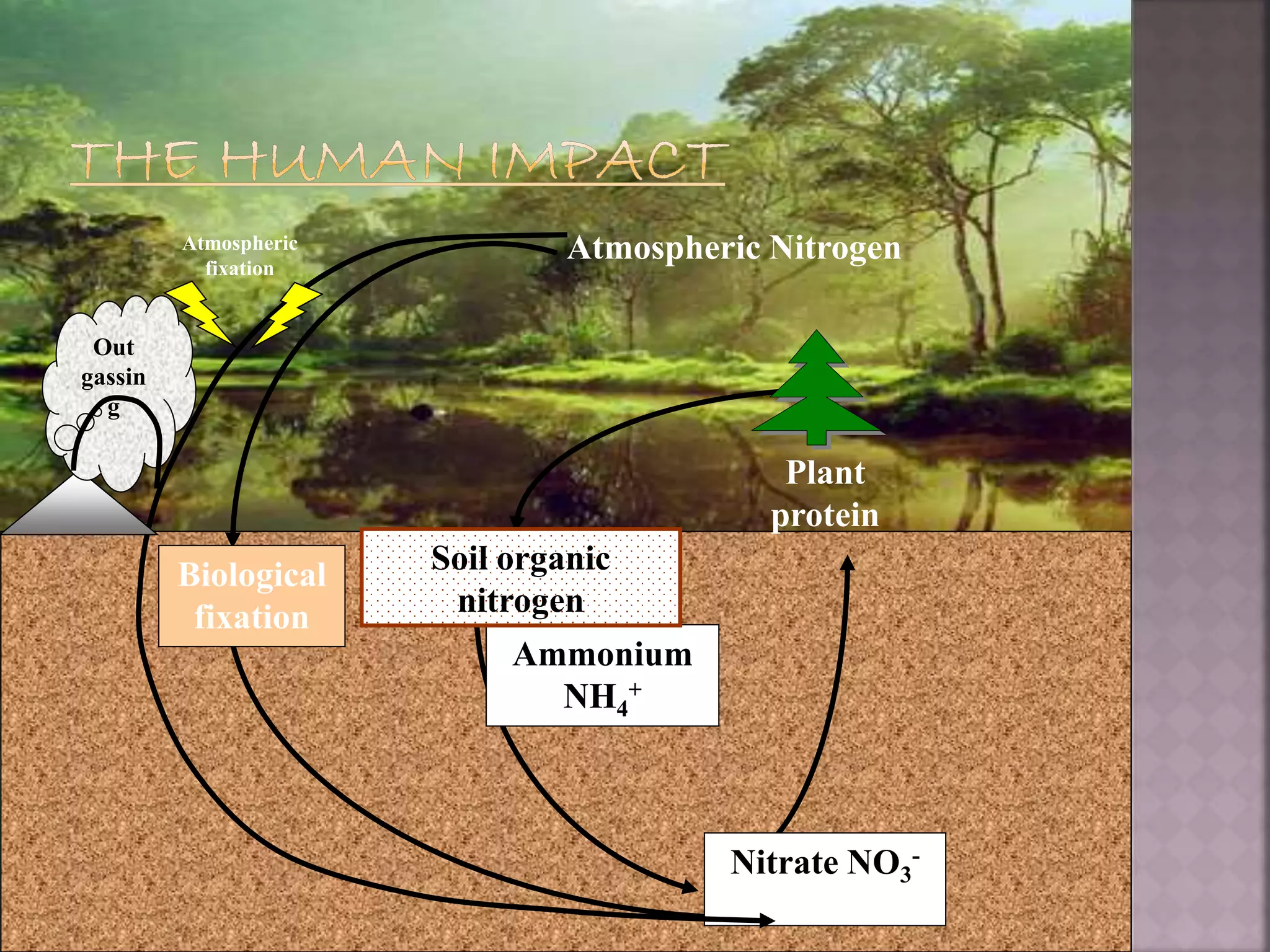
Nitrate NO3
-
Atmospheric
fixation
Out
gassin
g
Plant
protein
Atmospheric Nitrogen
Ammonium
NH4
+
Soil organic
nitrogen
Biological
fixation
 The need for synthetic fertilisers can be
reduced by cultural practices
 Avoiding the use of soluble fertilisers in soil
prevents leaching
 Rotating crops permits the soil to recover
from nitrogen hungry crops (e.g. wheat)
 Adding a nitrogen fixing crop into the
rotation cycle
 Ploughing aerates the soil and reduces
denitrification
 Draining water logged soil also helps reduce
denitrification
PRIY@NSHU
SRINIV@S@N
M@NIDEEP
N.SM@MY
S@QUIB
HUSTLE.LOYALTY.RESPECT

Nitrogen Cycle & Nitrogen Fixation

  • 1.
  • 2.
     Nitrogen cycleis a natural cyclic process in which it becomes a part of the living organisms, before it is sent back to the atmosphere.  The nitrogen cycle represents one of the most important nutrient cycles found in terrestrial ecosystems. Nitrogen is used by living organisms to produce a number of complex organic molecules like amino acids, proteins, and nucleic acids.
  • 4.
     Ammonification orMineralization is performed by bacteria to convert the ammonia to ammonium. Nitrification can then occur to convert the ammonium to nitrite and nitrate  This process liberates a lot of energy which can be used by the saprotrophic microbes
  • 5.
     Nitrification isthe process by which ammonia is converted to nitrites and then nitrates. This process naturally occurs in the environment, where it is carried out by specialized bacteria.  This energy is the only source of energy for these prokaryotes  They are chemoautotrophs  Chemoautotroph is an organism, typically a bacterium, which derives energy from the oxidation of inorganic compounds.  Prokaryote is a microscopic single-celled organism which has neither a distinct nucleus with a membrane nor other specialized organs.
  • 6.
    Out gassing Atmospheric fixation Root uptake Nitrate NO3 - Plant protein Soilorganic nitrogen Atmospheric Nitrogen Biological fixation
  • 7.
    Electrical storms Lightning providessufficient energy to split the nitrogen atoms of nitrogen gas, Forming oxides of nitrogen NO and NO2
  • 8.
     This alsohappens inside the internal combustion engines of cars  The exhaust emissions of cars contribute a lot to atmospheric pollution in the form of NOx  These compounds form photochemical smog  They are green house gases  They dissolve in rain to contribute to acid rain in the form of nitric acid  The rain falling on soil and running into rivers  They contribute to the eutrophication of water bodies  Nox are oxides of nitrogen, especially as atmospheric pollutants
  • 9.
     Adding nitratefertiliser clearly helps the growth of plants  The presence of microbes permits the peas to grow much better.  The peas grow better in the presence of the microbes than they do with nitrate fertiliser added  The difference is due to the present of mutualistic nitrogen fixing bacteria which live in the pea roots.  Mutualism is the way two organisms of different species exist in a relationship in which each individual benefits. Similar interactions within a species are known as co-operation.
  • 10.
     Cyan bacteriaare nitrogen fixers that also fix carbon (these are photosynthetic).  Rhizobium bacteria are mutualistic with certain plant species e.g. Legumes.  They grow in root nodules.  Azotobacter are bacteria associated with the rooting zone (the rhizosphere) of plants in grasslands.
  • 11.
  • 12.
  • 13.
     The needfor synthetic fertilisers can be reduced by cultural practices  Avoiding the use of soluble fertilisers in soil prevents leaching  Rotating crops permits the soil to recover from nitrogen hungry crops (e.g. wheat)  Adding a nitrogen fixing crop into the rotation cycle  Ploughing aerates the soil and reduces denitrification  Draining water logged soil also helps reduce denitrification
  • 14.