Nitrogen
 Nitrogen is the most abundant element in the
Earth’s atmosphere.
 Nitrogen makes up 78% of the troposphere.
 Nitrogen cannot be absorbed directly by the
plants and animals until it is converted into
compounds they can use. This process is
called the Nitrogen Cycle.
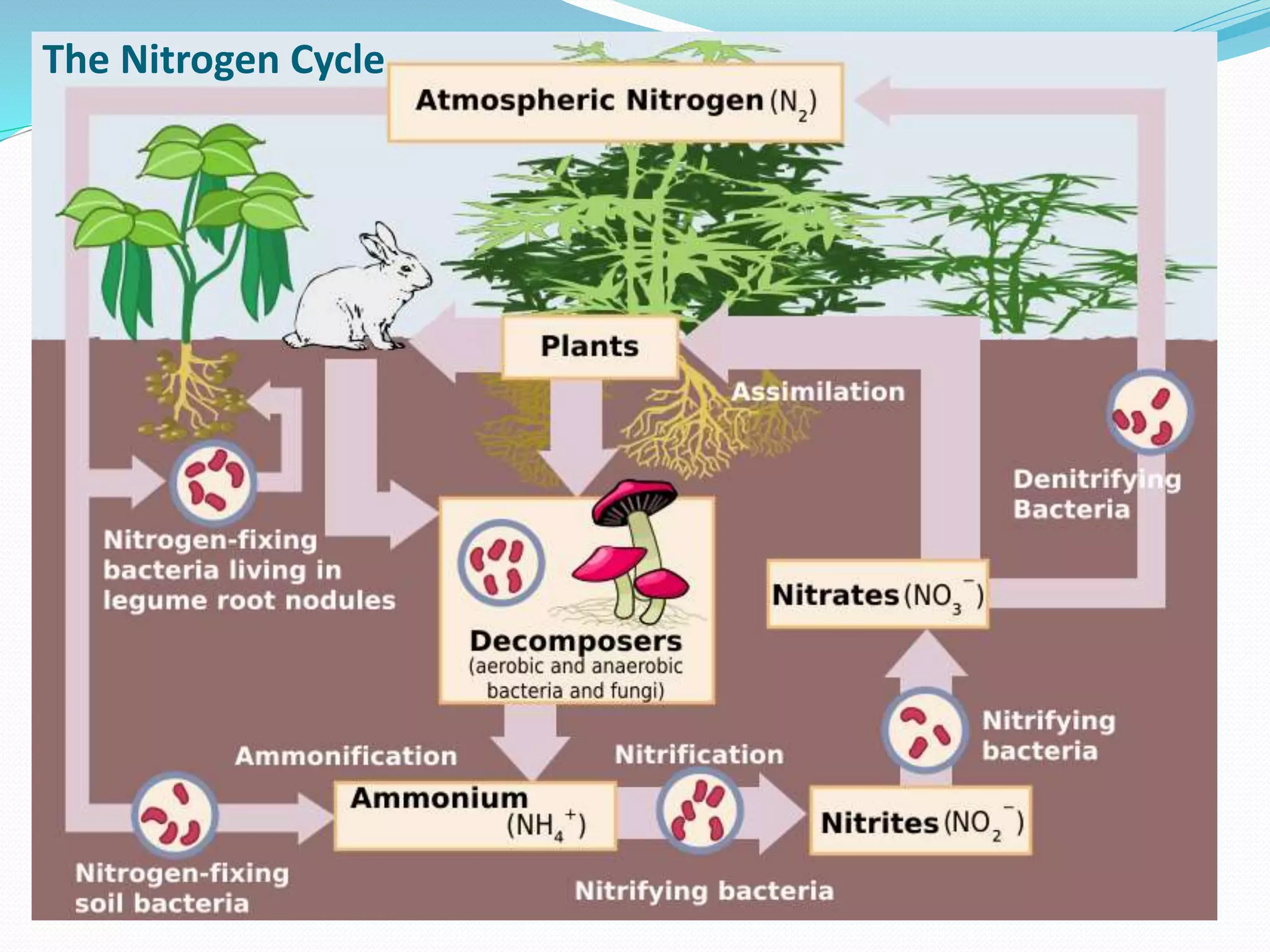
The Nitrogen Cycle
NITROGEN FIXATION
Nitrogen Fixation is the conversion of atmospheric
nitrogen (N2) into reactive compounds such as ammonia
(NH3) and nitrate (NO3). The breaking of the bonds
between the nitrogen atoms requires a great deal of energy
and occurs naturally in two primary ways:
Abiotic Fixation: Nitrate is the result of high energy fixation in
the atmosphere from lightning and cosmic radiation. In this
process, N2 is combined with oxygen to form nitrogen oxides such
as NO and NO2, which are carried to the earth’s surface in rainfall
as nitric acid (HNO3). This high energy fixation accounts for
approximately 10% of the nitrate entering the nitrogen cycle.
Biological fixation: Biological fixation is accomplished by a
series of soil micro-organisms such as aerobic and anaerobic
bacteria. Often, symbiotic bacteria such as Rhizobium are found in
the roots of legumes and provide a direct source of ammonia to the
plants. In root nodules of these legumes, the bacteria split
molecular nitrogen into two free nitrogen atoms, which combine
with hydrogen to form ammonia (NH3). Some free-living aerobic
bacteria, such as Azotobacter, and anaerobic bacteria, like
Clostridium, freely fix nitrogen in the soil and in aquatic
environments. Some members of the photosynthetic
Cyanobacteria phylum fix nitrogen in aquatic environments as
well.
NITRIFICATION
Nitrification is the process by which ammonia is
oxidized to nitrite ions (NO2) and then to nitrate
ions (NO3), which is the form most usable by
plants. The two groups of micro-organisms
involved in the process are Nitrosomas and
Nitrobacter. Nitrosomas oxidize ammonia to
nitrite and Nitrobacter oxidize nitrite to nitrate.
ASSIMILATION
Nitrates are the form of nitrogen most commonly
assimilated by plants through root hairs. Since
heterotrophic organisms cannot readily absorb
nitrogen as plants do, they rely on acquiring
nitrogen-based compounds through the food they
eat.
AMMONIFICATION
In ammonification, a host of decomposing
microorganisms, such as bacteria and fungi, break
down nitrogenous wastes and organic matter
found in animal waste and dead plants and
animals and convert it to inorganic ammonia
(NH3) for absorption by plants as ammonium
ions.
DENITRIFICATION
Denitrification is the process by which nitrates
are reduced to gaseous nitrogen (N2) and lost to
the atmosphere. This process occurs by facultative
anaerobes in anaerobic environments. Farmers
with waterlogged fields and soils that have high
clay content are especially vulnerable to nitrogen
losses due to denitrification.
How does human intervention
affect the nitrogen cycle?
 Nitric Oxide (NO) is released into the atmosphere when
any type of fuel is burned. This includes byproducts of
internal combustion engines.
 Nitrous Oxide (N2O) is released into the atmosphere
through bacteria in livestock waste and commercial
fertilizers applied to the soil.
 Removing nitrogen from the Earth’s crust and soil when
we mine nitrogen-rich mineral deposits.
 Discharge of municipal sewage adds nitrogen
compounds to aquatic ecosystems which disrupts the
ecosystem and kills fish.
Effects on the Ecosystem
We are greatly increasing the amount of
nitrogen cycling between the living world and
the soil, water and atmosphere.
These additions can pollute ecosystems and alter
ecological functioning and the living
communities that they support.

Nitrogen Cycle

  • 2.
    Nitrogen  Nitrogen isthe most abundant element in the Earth’s atmosphere.  Nitrogen makes up 78% of the troposphere.  Nitrogen cannot be absorbed directly by the plants and animals until it is converted into compounds they can use. This process is called the Nitrogen Cycle.
  • 3.
  • 4.
    NITROGEN FIXATION Nitrogen Fixationis the conversion of atmospheric nitrogen (N2) into reactive compounds such as ammonia (NH3) and nitrate (NO3). The breaking of the bonds between the nitrogen atoms requires a great deal of energy and occurs naturally in two primary ways: Abiotic Fixation: Nitrate is the result of high energy fixation in the atmosphere from lightning and cosmic radiation. In this process, N2 is combined with oxygen to form nitrogen oxides such as NO and NO2, which are carried to the earth’s surface in rainfall as nitric acid (HNO3). This high energy fixation accounts for approximately 10% of the nitrate entering the nitrogen cycle.
  • 5.
    Biological fixation: Biologicalfixation is accomplished by a series of soil micro-organisms such as aerobic and anaerobic bacteria. Often, symbiotic bacteria such as Rhizobium are found in the roots of legumes and provide a direct source of ammonia to the plants. In root nodules of these legumes, the bacteria split molecular nitrogen into two free nitrogen atoms, which combine with hydrogen to form ammonia (NH3). Some free-living aerobic bacteria, such as Azotobacter, and anaerobic bacteria, like Clostridium, freely fix nitrogen in the soil and in aquatic environments. Some members of the photosynthetic Cyanobacteria phylum fix nitrogen in aquatic environments as well.
  • 6.
    NITRIFICATION Nitrification is theprocess by which ammonia is oxidized to nitrite ions (NO2) and then to nitrate ions (NO3), which is the form most usable by plants. The two groups of micro-organisms involved in the process are Nitrosomas and Nitrobacter. Nitrosomas oxidize ammonia to nitrite and Nitrobacter oxidize nitrite to nitrate.
  • 7.
    ASSIMILATION Nitrates are theform of nitrogen most commonly assimilated by plants through root hairs. Since heterotrophic organisms cannot readily absorb nitrogen as plants do, they rely on acquiring nitrogen-based compounds through the food they eat.
  • 8.
    AMMONIFICATION In ammonification, ahost of decomposing microorganisms, such as bacteria and fungi, break down nitrogenous wastes and organic matter found in animal waste and dead plants and animals and convert it to inorganic ammonia (NH3) for absorption by plants as ammonium ions.
  • 9.
    DENITRIFICATION Denitrification is theprocess by which nitrates are reduced to gaseous nitrogen (N2) and lost to the atmosphere. This process occurs by facultative anaerobes in anaerobic environments. Farmers with waterlogged fields and soils that have high clay content are especially vulnerable to nitrogen losses due to denitrification.
  • 10.
    How does humanintervention affect the nitrogen cycle?  Nitric Oxide (NO) is released into the atmosphere when any type of fuel is burned. This includes byproducts of internal combustion engines.  Nitrous Oxide (N2O) is released into the atmosphere through bacteria in livestock waste and commercial fertilizers applied to the soil.  Removing nitrogen from the Earth’s crust and soil when we mine nitrogen-rich mineral deposits.  Discharge of municipal sewage adds nitrogen compounds to aquatic ecosystems which disrupts the ecosystem and kills fish.
  • 11.
    Effects on theEcosystem We are greatly increasing the amount of nitrogen cycling between the living world and the soil, water and atmosphere. These additions can pollute ecosystems and alter ecological functioning and the living communities that they support.