Equilibrium shape of a dielectric droplet in an electric field Nicholas Goble - Illinois Wesleyan University Dr. Philip Taylor - Case Western Reserve University
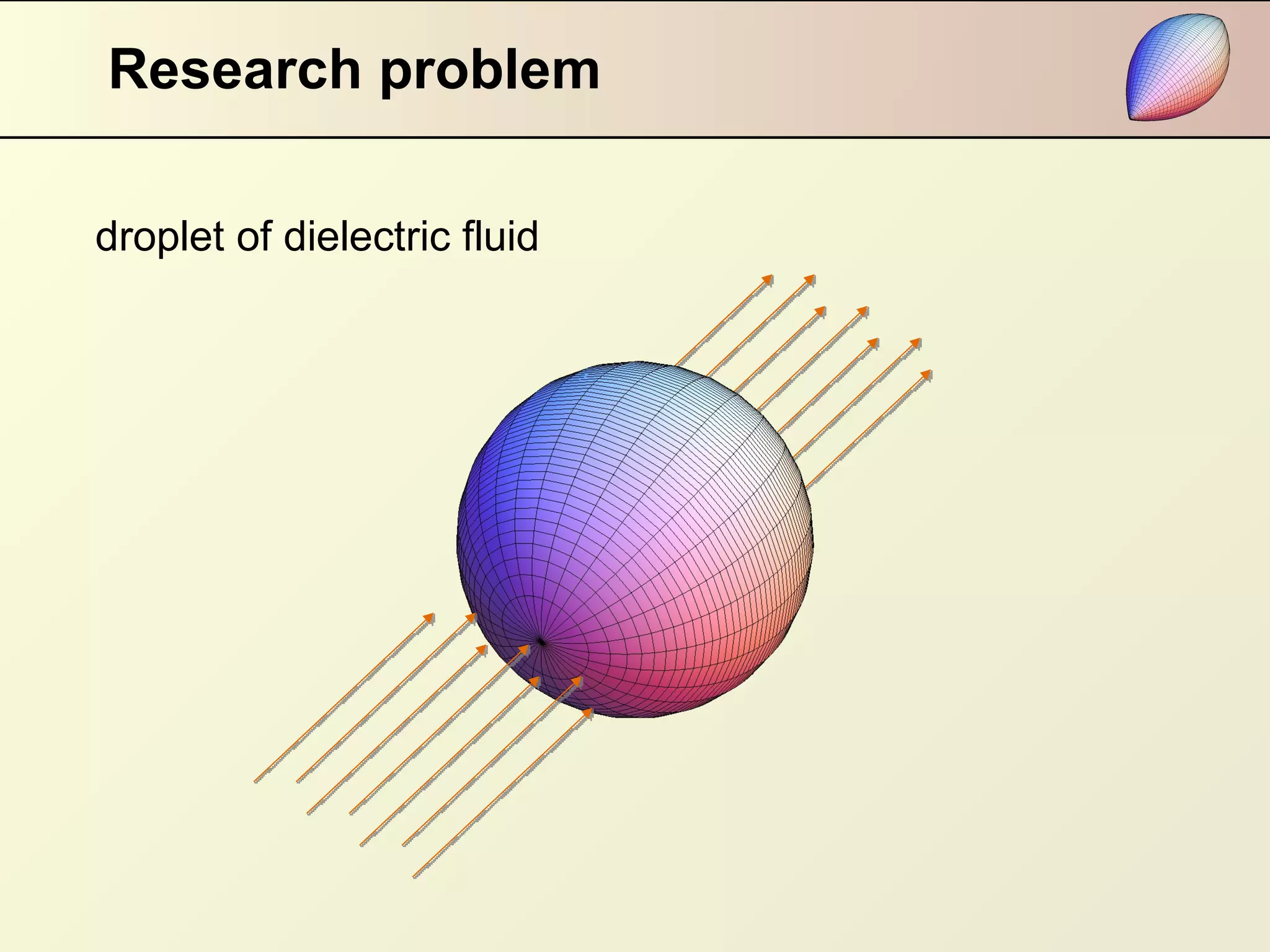
Research problem droplet of dielectric fluid
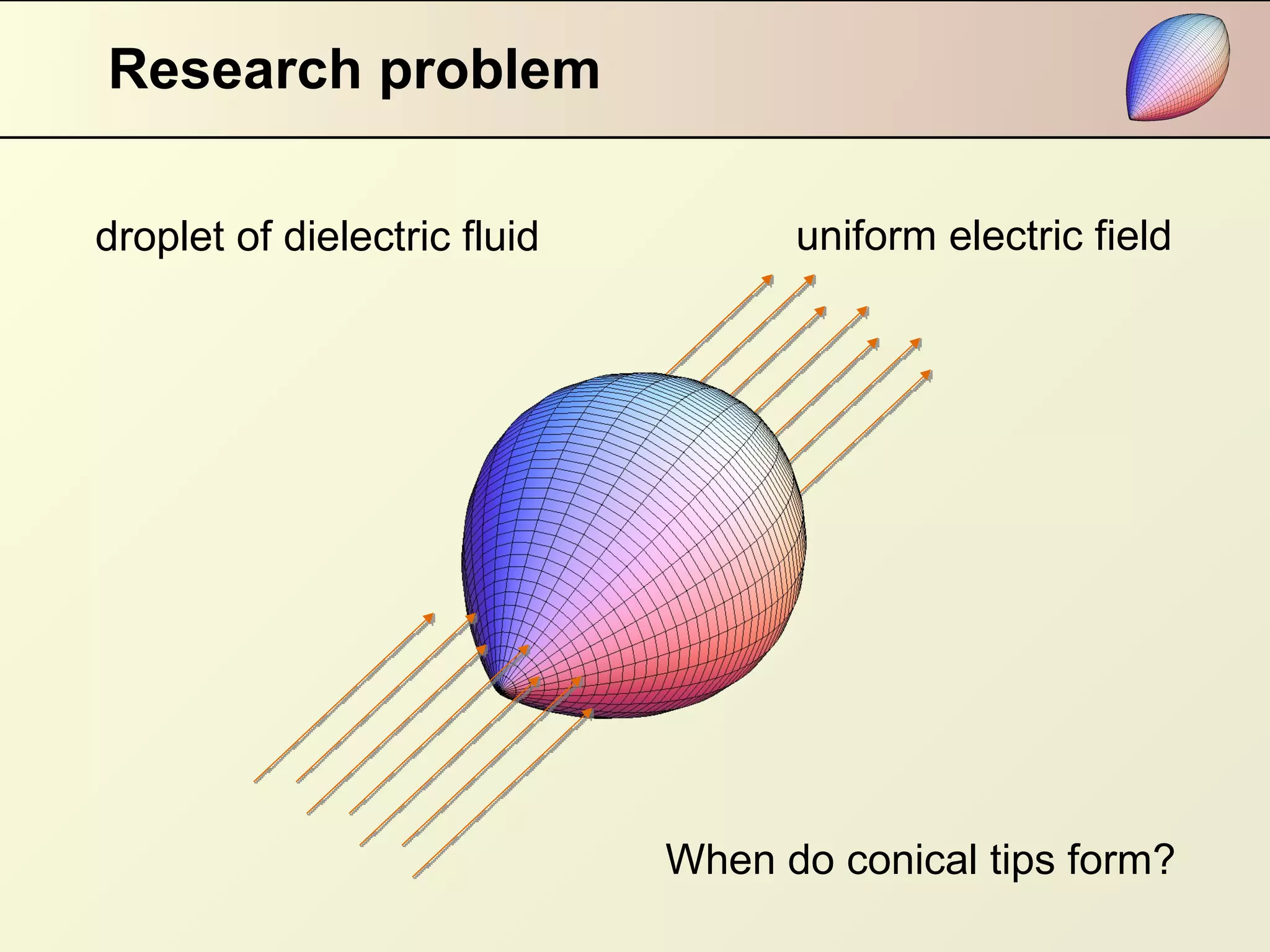
Research problem droplet of dielectric fluid uniform electric field When do conical tips form?
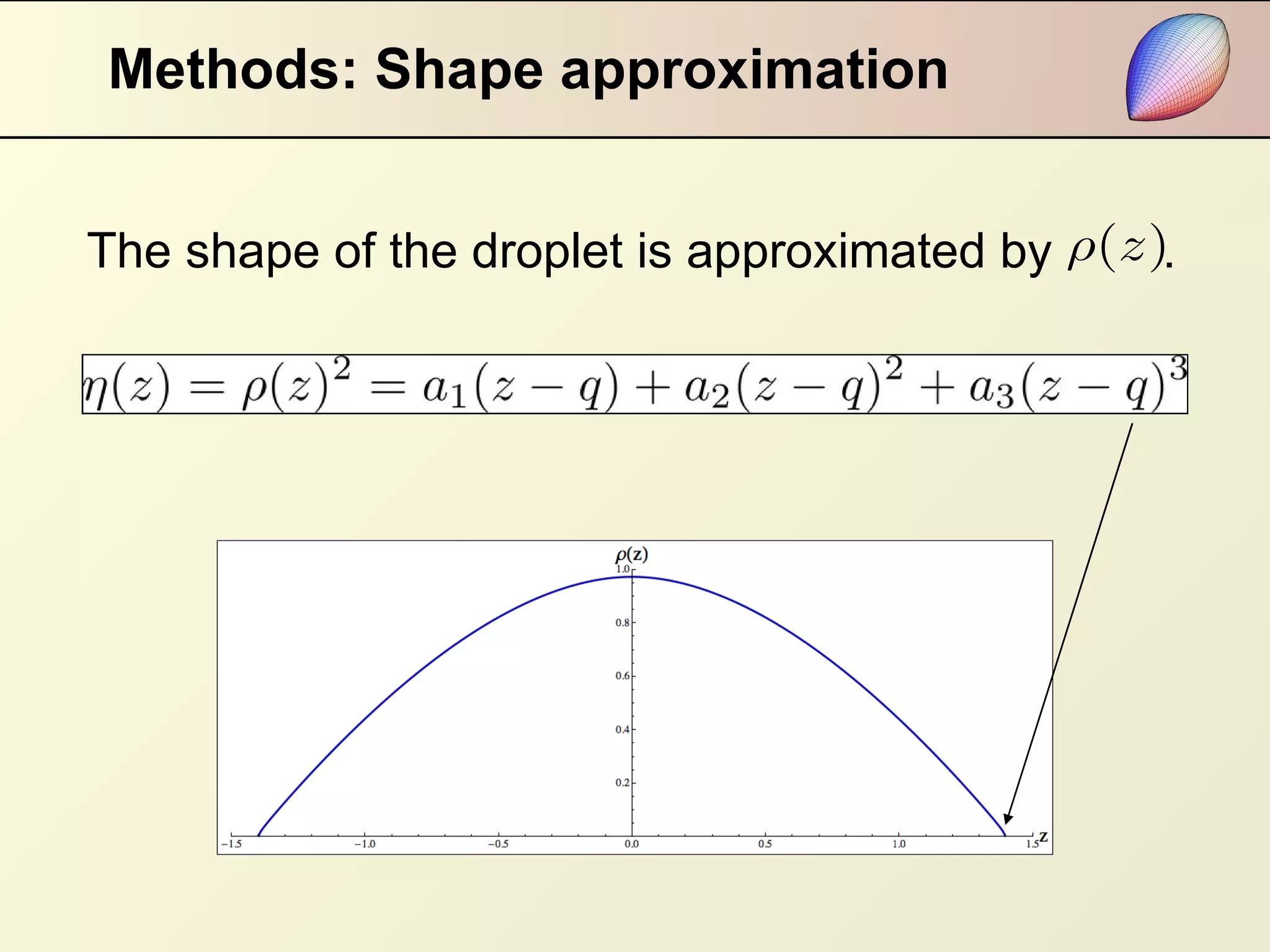
Methods: Shape approximation The shape of the droplet is approximated by  .
Methods: Energy calculation Total Energy = Surface Energy Electrostatic Energy +
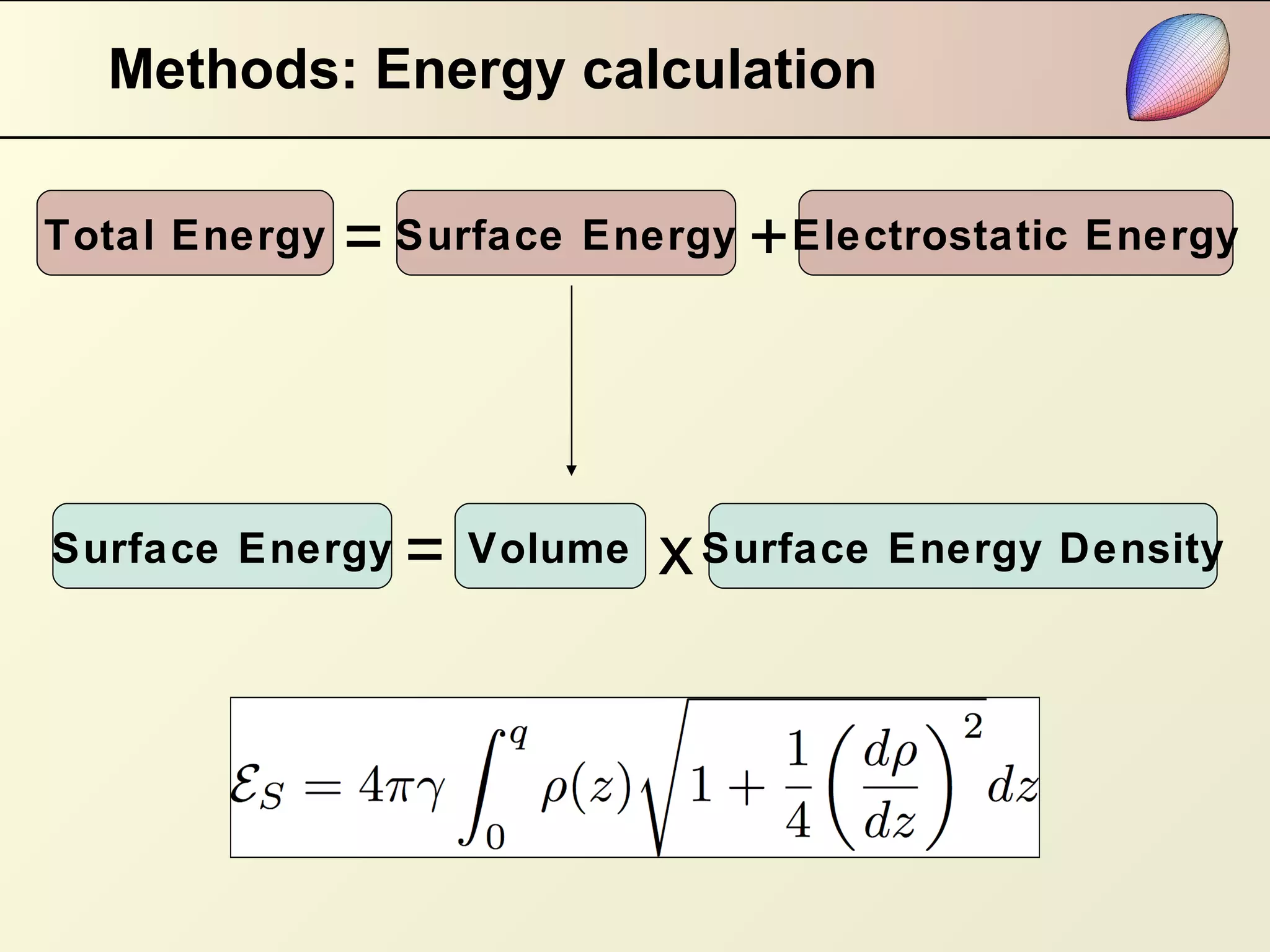
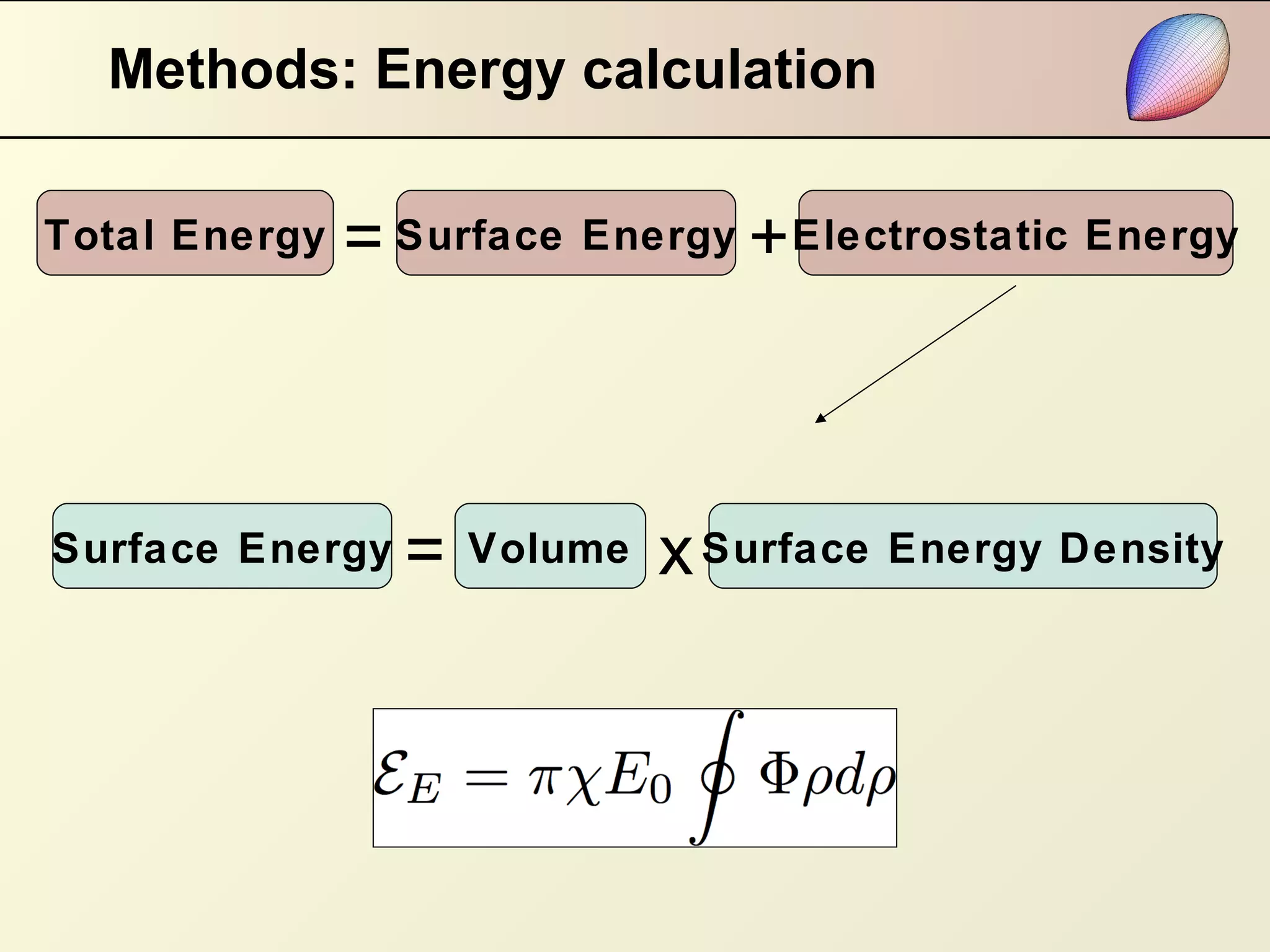
Methods: Energy calculation Total Energy = Surface Energy Electrostatic Energy + Surface Energy Volume Surface Energy Density = x
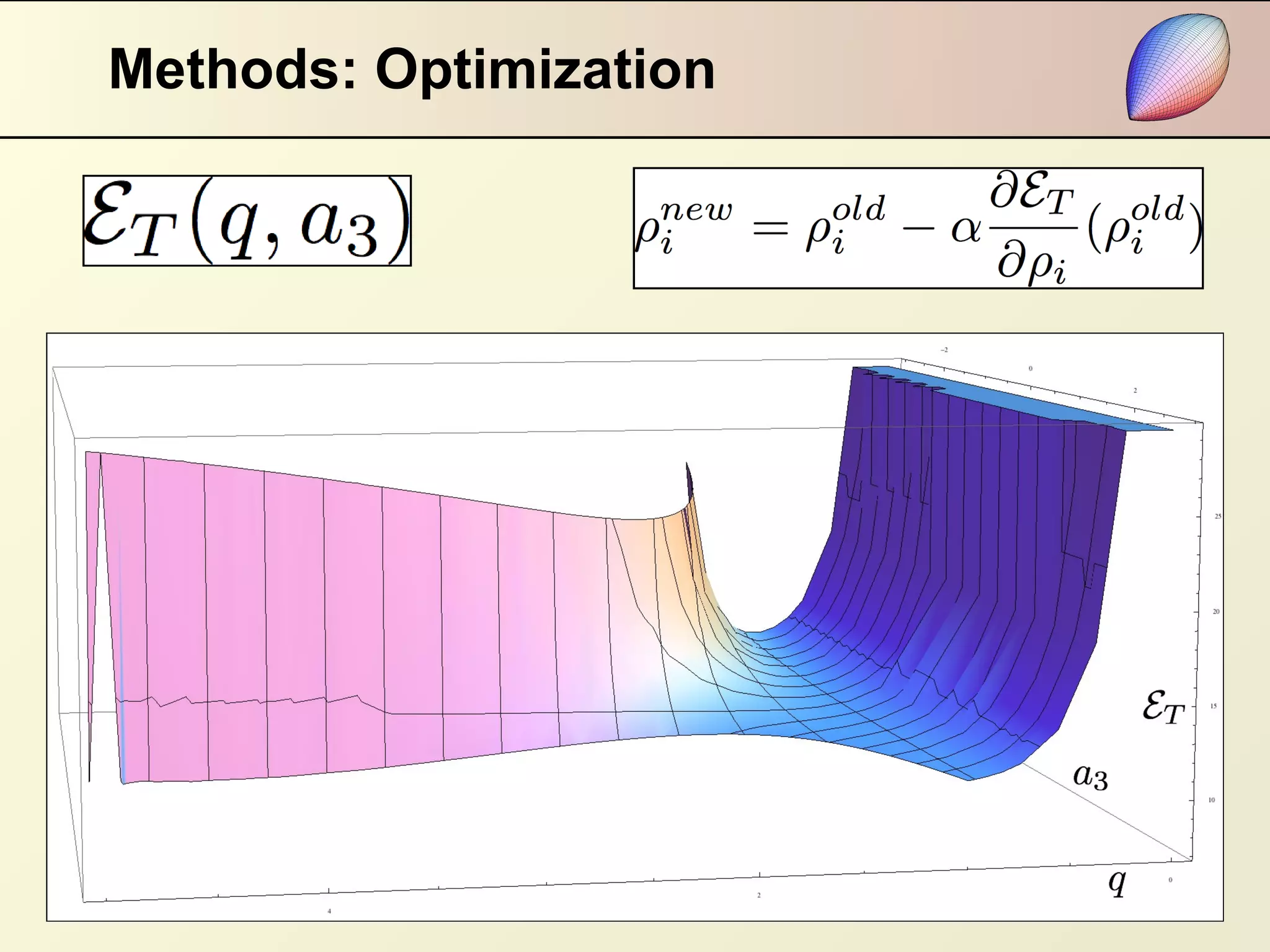
Methods: Optimization
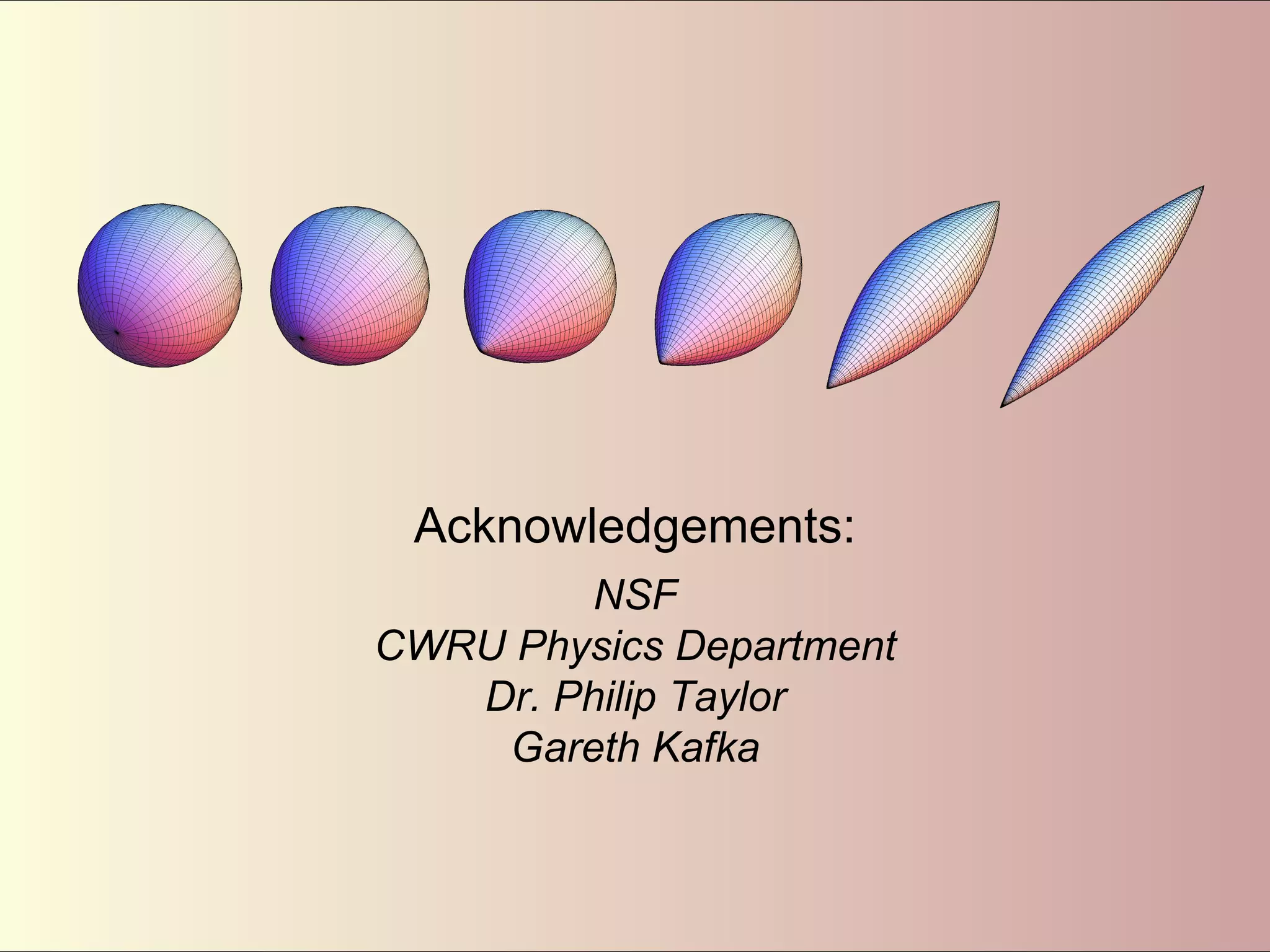
Results: Shape of Droplet For a given dielectric constant and electric field, we are able to find the shape of the droplet.
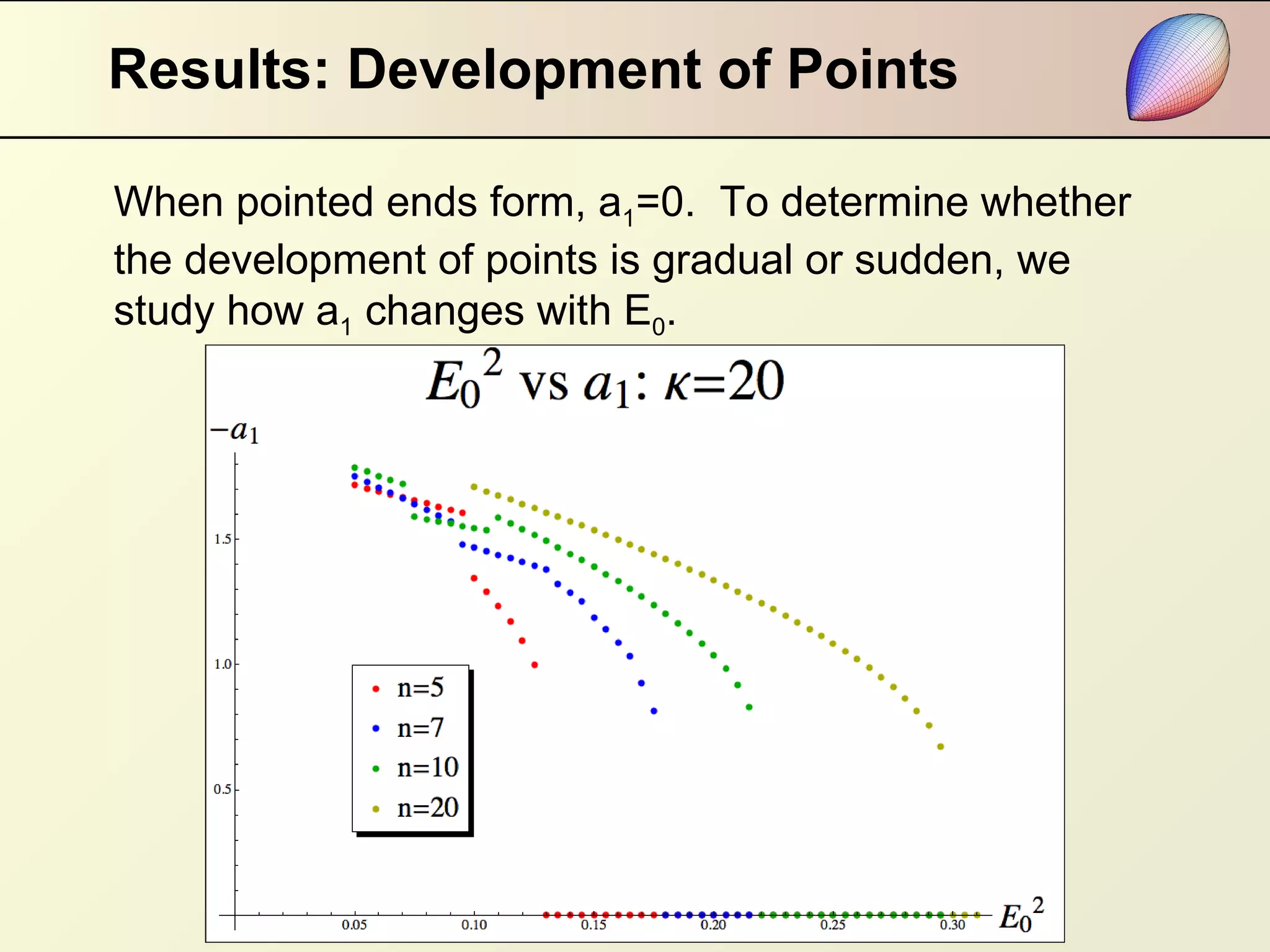
Results: Development of Points When pointed ends form, a 1 =0.  To determine whether the development of points is gradual or sudden, we study how a 1  changes with E 0 .
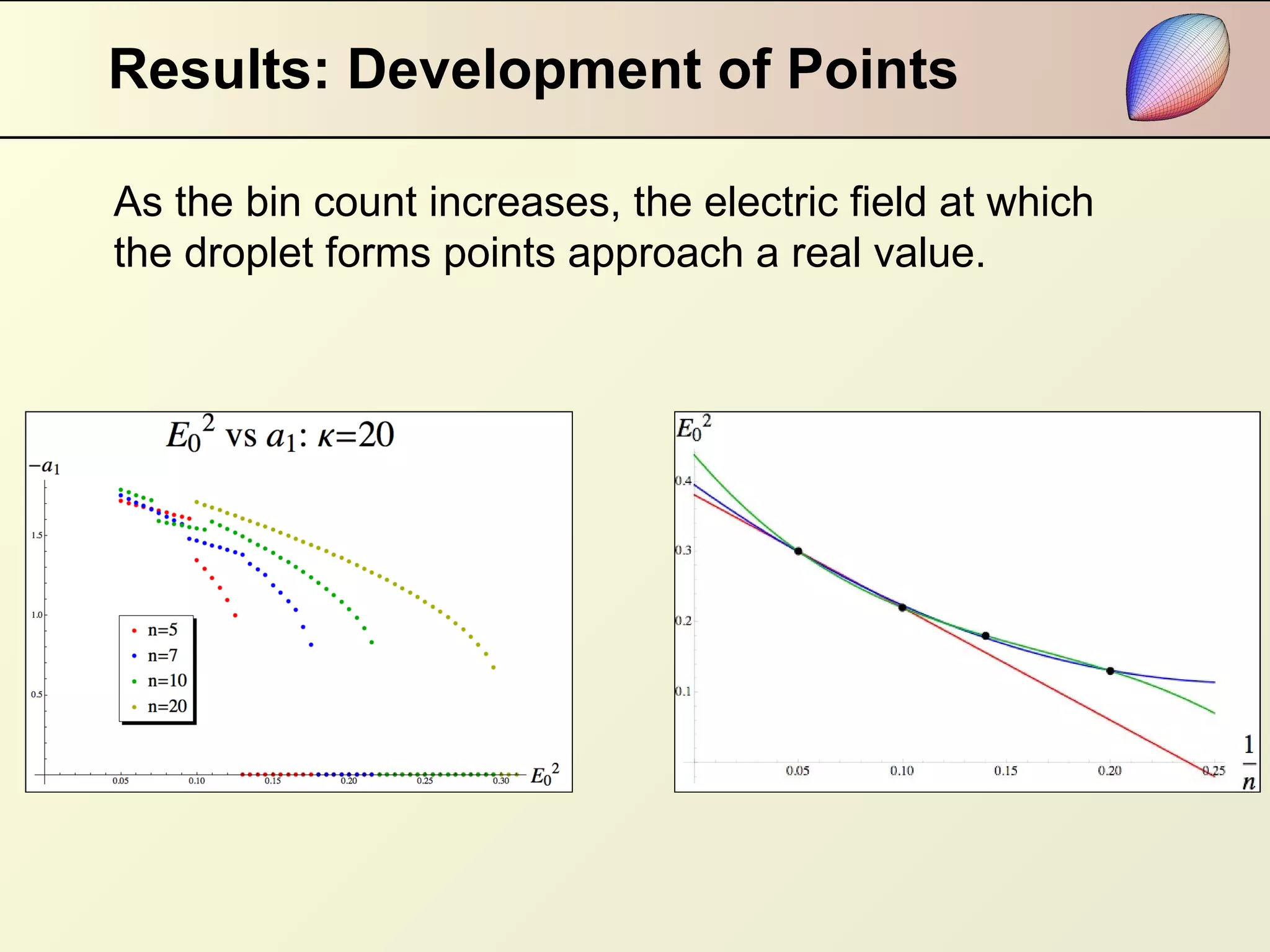
Results: Development of Points As the bin count increases, the electric field at which the droplet forms points approach a real value.
Results: Development of Points
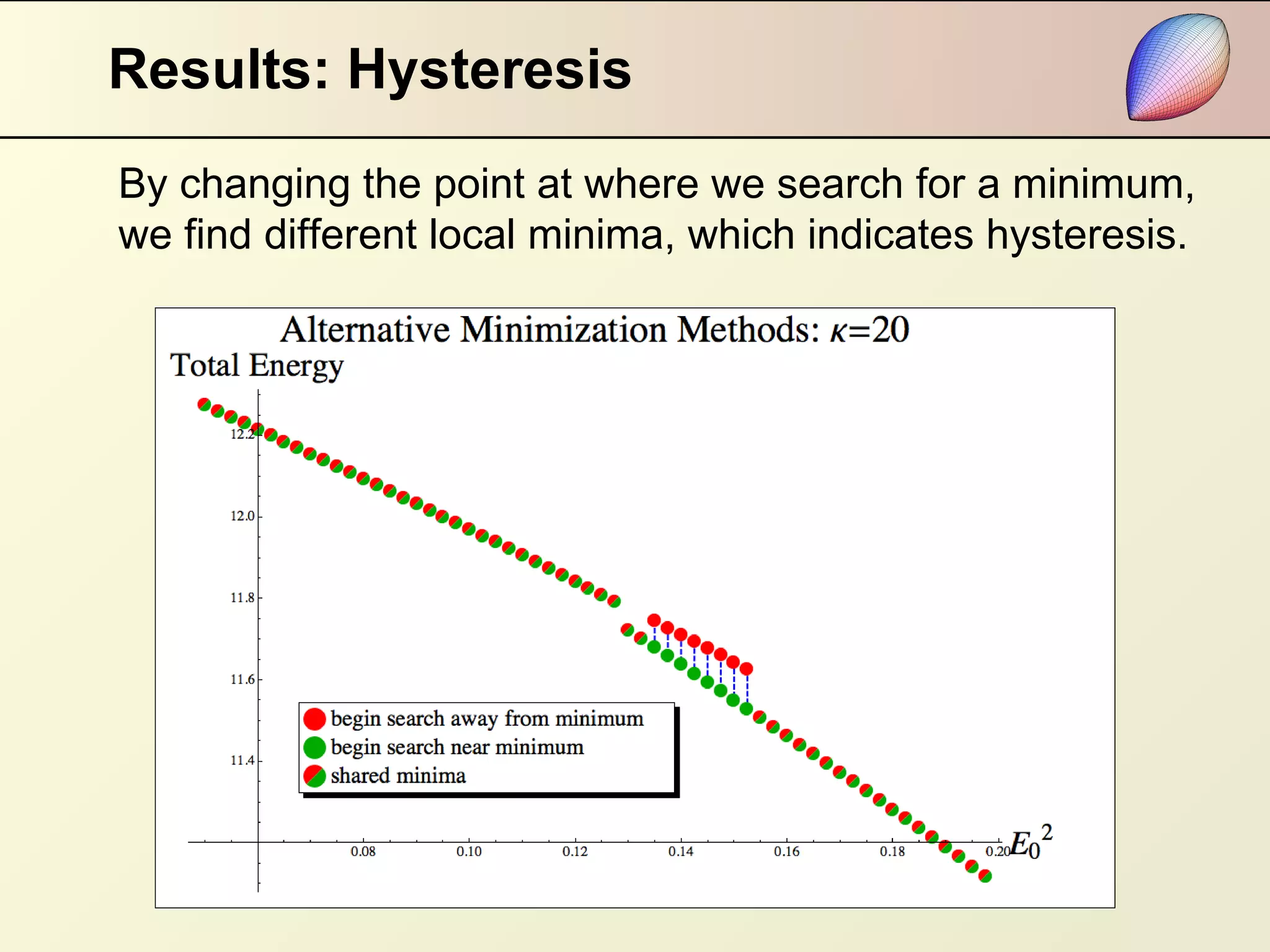
Results: Hysteresis By changing the point at where we search for a minimum, we find different local minima, which indicates hysteresis.
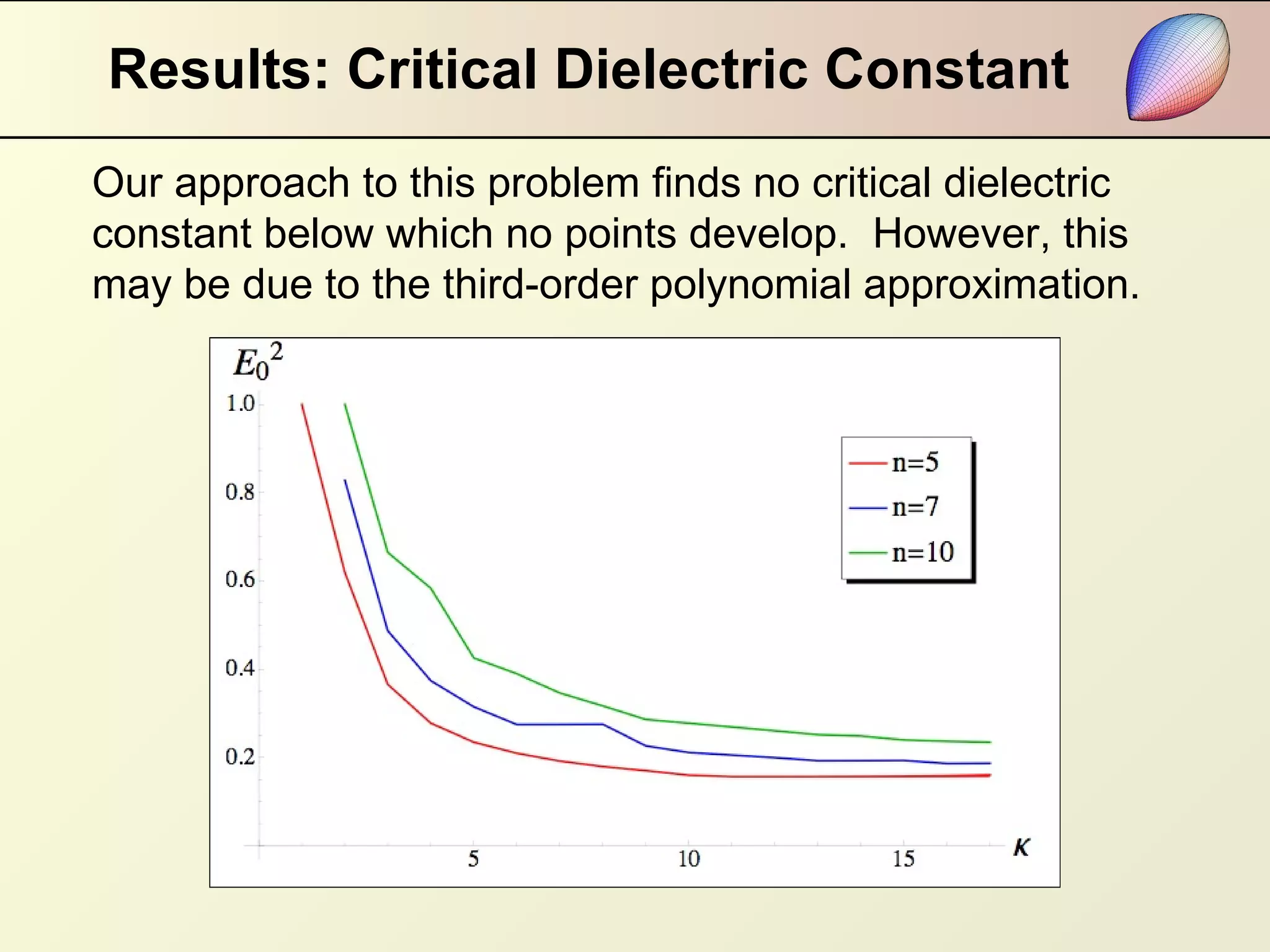
Results: Critical Dielectric Constant Our approach to this problem finds no critical dielectric constant below which no points develop.  However, this may be due to the third-order polynomial approximation.
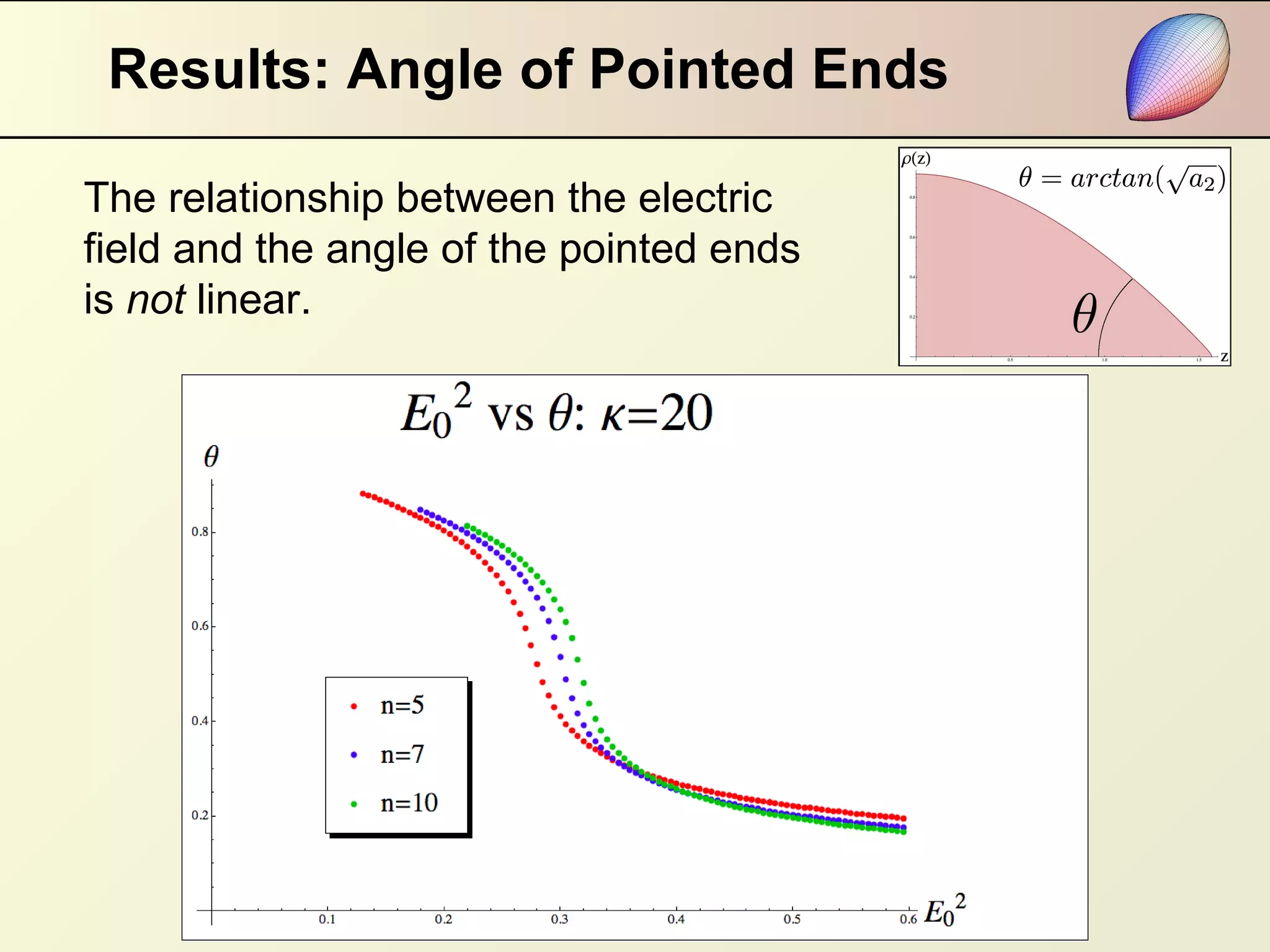
Results: Angle of Pointed Ends The relationship between the electric field and the angle of the pointed ends  is  not  linear.
Conclusion Our methods have given us an expression for a dielectric droplet in an electric field. Future goals include using a fourth-order polynomial in hopes of finding a critical dielectric constant. We are also able to explore the angle of the points, hysteresis, and the formation of conical tips.
NSF CWRU Physics Department Dr. Philip Taylor Gareth Kafka Acknowledgements:

Nicholas Goble

  • 1.
    Equilibrium shape ofa dielectric droplet in an electric field Nicholas Goble - Illinois Wesleyan University Dr. Philip Taylor - Case Western Reserve University
  • 2.
    Research problem dropletof dielectric fluid
  • 3.
    Research problem dropletof dielectric fluid uniform electric field When do conical tips form?
  • 4.
    Methods: Shape approximationThe shape of the droplet is approximated by .
  • 5.
    Methods: Energy calculationTotal Energy = Surface Energy Electrostatic Energy +
  • 6.
    Methods: Energy calculationTotal Energy = Surface Energy Electrostatic Energy + Surface Energy Volume Surface Energy Density = x
  • 7.
    Methods: Energy calculationTotal Energy = Surface Energy Electrostatic Energy + Surface Energy Volume Surface Energy Density = x
  • 8.
  • 9.
    Results: Shape ofDroplet For a given dielectric constant and electric field, we are able to find the shape of the droplet.
  • 10.
    Results: Development ofPoints When pointed ends form, a 1 =0. To determine whether the development of points is gradual or sudden, we study how a 1 changes with E 0 .
  • 11.
    Results: Development ofPoints As the bin count increases, the electric field at which the droplet forms points approach a real value.
  • 12.
  • 13.
    Results: Hysteresis Bychanging the point at where we search for a minimum, we find different local minima, which indicates hysteresis.
  • 14.
    Results: Critical DielectricConstant Our approach to this problem finds no critical dielectric constant below which no points develop. However, this may be due to the third-order polynomial approximation.
  • 15.
    Results: Angle ofPointed Ends The relationship between the electric field and the angle of the pointed ends is not linear.
  • 16.
    Conclusion Our methodshave given us an expression for a dielectric droplet in an electric field. Future goals include using a fourth-order polynomial in hopes of finding a critical dielectric constant. We are also able to explore the angle of the points, hysteresis, and the formation of conical tips.
  • 17.
    NSF CWRU PhysicsDepartment Dr. Philip Taylor Gareth Kafka Acknowledgements: