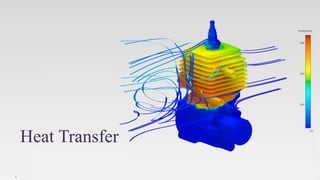
Heat Transfer
Heat Energy ?
What is Energy
 Energy is the capacity to do work.
Ex - Mechanical energy, chemical energy, electrical energy,
Nuclear energy and so on
What is Heat Energy
 It is a form of energy in transit, the driving force for which is the
temp difference
TD vs. HT
One real example.
 Suppose you want to heat 5 kg of water from 30 to 100 C. By thermodynamics,
you can know the amount of heat required.
Lets say Q = 1463 kJ is required.
 Now, can you wait for a day Or can you wait for 5 hours to heat that quantity of
water to 100 C. Or If you don’t have any work , you can do that
 But if you are a busy person and you want to heat within few minutes, so you have
to take help of heat transfer here in order to fix time.
 Rate is fixed by knowledge of heat transfer.
 Only amount is fixed by knowledge of thermodynamics.
 If you want to heat within 15 mins, if you have to supply heat to the water at a rate of
1.63 kW.
 If you want to heat within 30 mins , you can supply heat at a rate of 0.81 kW. This is
where Heat transfer makes a difference to thermodynamics
Heat Transfer
 We are concerned, as to How and What rate heat transfer takes
place.
 HT is based on the Law of Thermodynamics,
which states that heat flows from a body at higher temp to a
body at lower temp. Conversely, heat can not flow from a body
at lower temp to a body at higher temp, unless & until some
external device, like heat pump, is employed
 It means, whenever there is temp difference between the two
bodies, heat energy will flow.
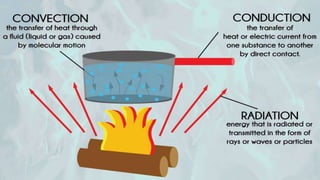
Modes of Heat Transfer
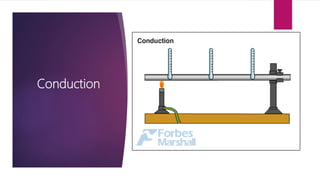
Conduction
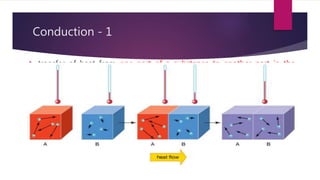
Conduction - 1
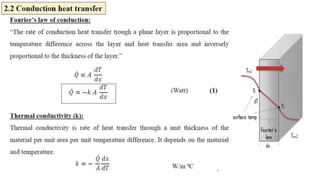
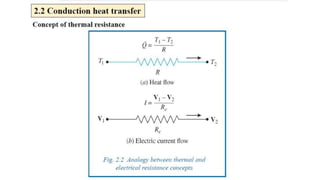
 transfer of heat from one part of a substance to another part in the
same substance or one substance to another substance by direct contact
 Different solids conduct different amounts of heat in a specific time.
(copper vs. glass)
 Those materials that conduct heat well, are called thermal conductors
while those that conduct heat poorly, are known as thermal insulators
 Most metals are excellent thermal conductors, while wood, glass, and
most plastics are common thermal insulators.
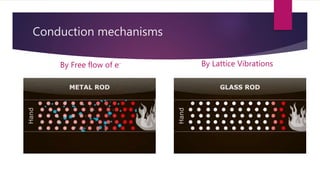
Conduction mechanisms
By Free flow of e- By Lattice Vibrations
Ty
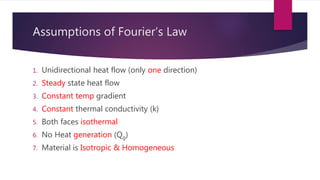
Assumptions of Fourier’s Law
1. Unidirectional heat flow (only one direction)
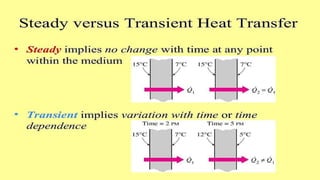
2. Steady state heat flow
3. Constant temp gradient
4. Constant thermal conductivity (k)
5. Both faces isothermal
6. No Heat generation (Qg)
7. Material is Isotropic & Homogeneous
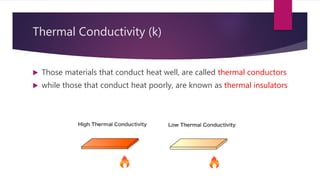
Thermal Conductivity (k)
 Those materials that conduct heat well, are called thermal conductors
 while those that conduct heat poorly, are known as thermal insulators
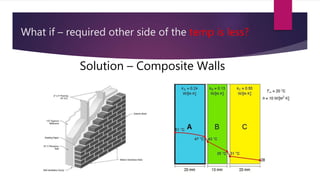
What if – required other side of the temp is less?
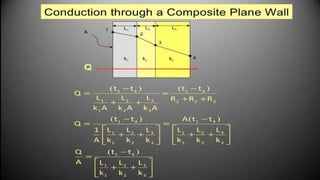
Solution – Composite Walls
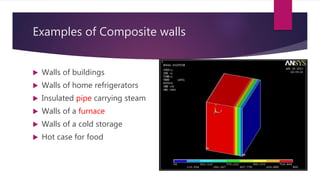
Examples of Composite walls
 Walls of buildings
 Walls of home refrigerators
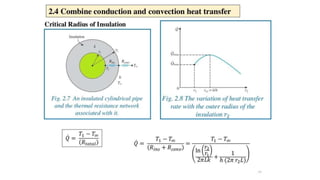
 Insulated pipe carrying steam
 Walls of a furnace
 Walls of a cold storage
 Hot case for food
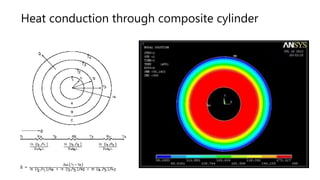
Heat conduction through composite cylinder
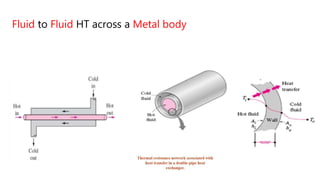
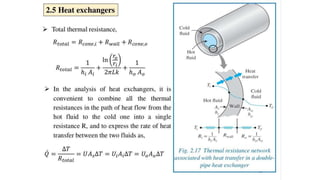
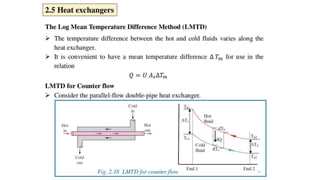
Fluid to Fluid HT across a Metal body
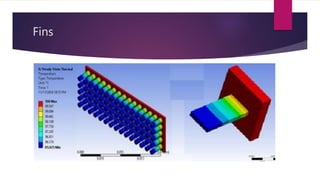
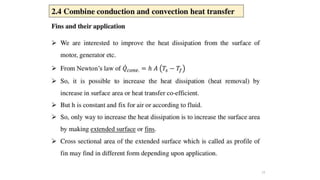
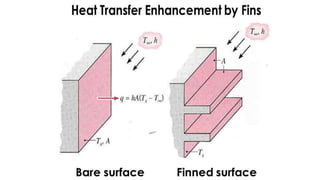
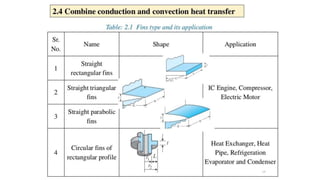
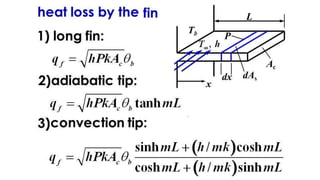
Fins
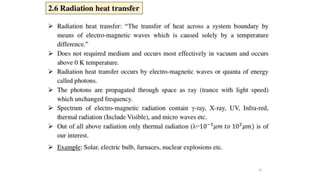
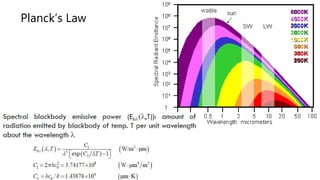
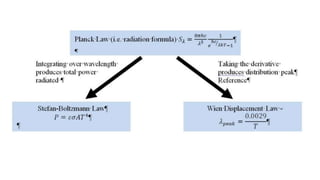
Planck’s Law
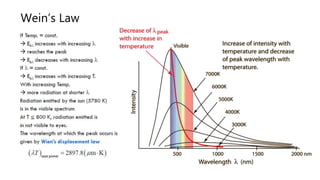
Wein’s Law
Heat transfer
Heat transfer

Heat transfer

  • 1.
  • 5.
    Heat Energy ? Whatis Energy  Energy is the capacity to do work. Ex - Mechanical energy, chemical energy, electrical energy, Nuclear energy and so on What is Heat Energy  It is a form of energy in transit, the driving force for which is the temp difference
  • 6.
    TD vs. HT Onereal example.  Suppose you want to heat 5 kg of water from 30 to 100 C. By thermodynamics, you can know the amount of heat required. Lets say Q = 1463 kJ is required.  Now, can you wait for a day Or can you wait for 5 hours to heat that quantity of water to 100 C. Or If you don’t have any work , you can do that  But if you are a busy person and you want to heat within few minutes, so you have to take help of heat transfer here in order to fix time.  Rate is fixed by knowledge of heat transfer.  Only amount is fixed by knowledge of thermodynamics.  If you want to heat within 15 mins, if you have to supply heat to the water at a rate of 1.63 kW.  If you want to heat within 30 mins , you can supply heat at a rate of 0.81 kW. This is where Heat transfer makes a difference to thermodynamics
  • 7.
    Heat Transfer  Weare concerned, as to How and What rate heat transfer takes place.  HT is based on the Law of Thermodynamics, which states that heat flows from a body at higher temp to a body at lower temp. Conversely, heat can not flow from a body at lower temp to a body at higher temp, unless & until some external device, like heat pump, is employed  It means, whenever there is temp difference between the two bodies, heat energy will flow.
  • 8.
    Modes of HeatTransfer
  • 10.
  • 11.
    Conduction - 1 transfer of heat from one part of a substance to another part in the same substance or one substance to another substance by direct contact  Different solids conduct different amounts of heat in a specific time. (copper vs. glass)  Those materials that conduct heat well, are called thermal conductors while those that conduct heat poorly, are known as thermal insulators  Most metals are excellent thermal conductors, while wood, glass, and most plastics are common thermal insulators.
  • 12.
    Conduction mechanisms By Freeflow of e- By Lattice Vibrations
  • 13.
  • 15.
    Assumptions of Fourier’sLaw 1. Unidirectional heat flow (only one direction) 2. Steady state heat flow 3. Constant temp gradient 4. Constant thermal conductivity (k) 5. Both faces isothermal 6. No Heat generation (Qg) 7. Material is Isotropic & Homogeneous
  • 16.
    Thermal Conductivity (k) Those materials that conduct heat well, are called thermal conductors  while those that conduct heat poorly, are known as thermal insulators
  • 17.
    What if –required other side of the temp is less? Solution – Composite Walls
  • 20.
    Examples of Compositewalls  Walls of buildings  Walls of home refrigerators  Insulated pipe carrying steam  Walls of a furnace  Walls of a cold storage  Hot case for food
  • 22.
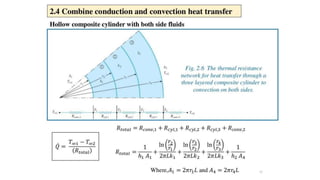
    Heat conduction throughcomposite cylinder
  • 23.
    Fluid to FluidHT across a Metal body
  • 32.
  • 57.
  • 59.