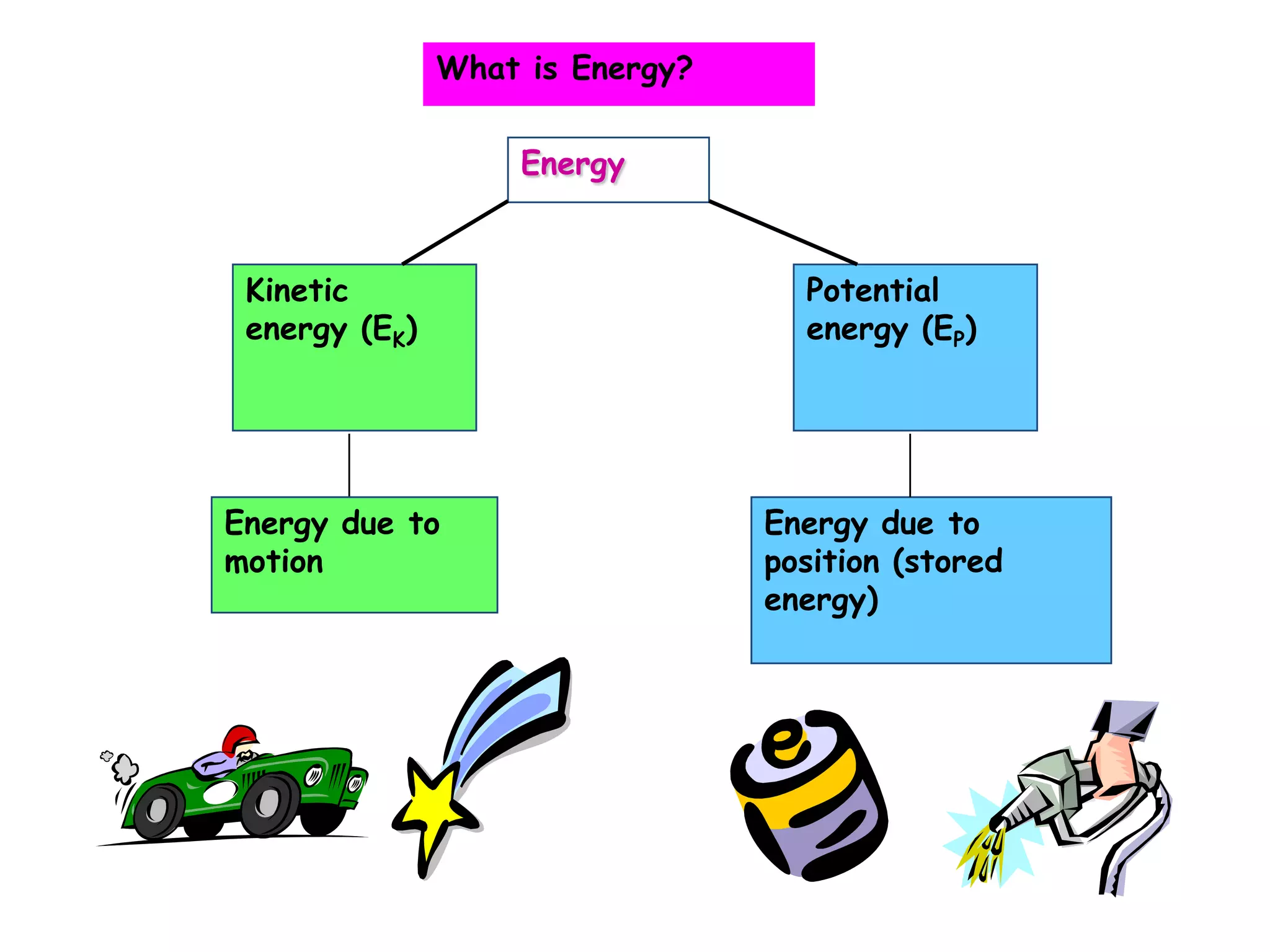
EnergyKinetic energy (EK)Potential energy (EP)Energy due to motionEnergy due to position (stored energy)What is Energy?
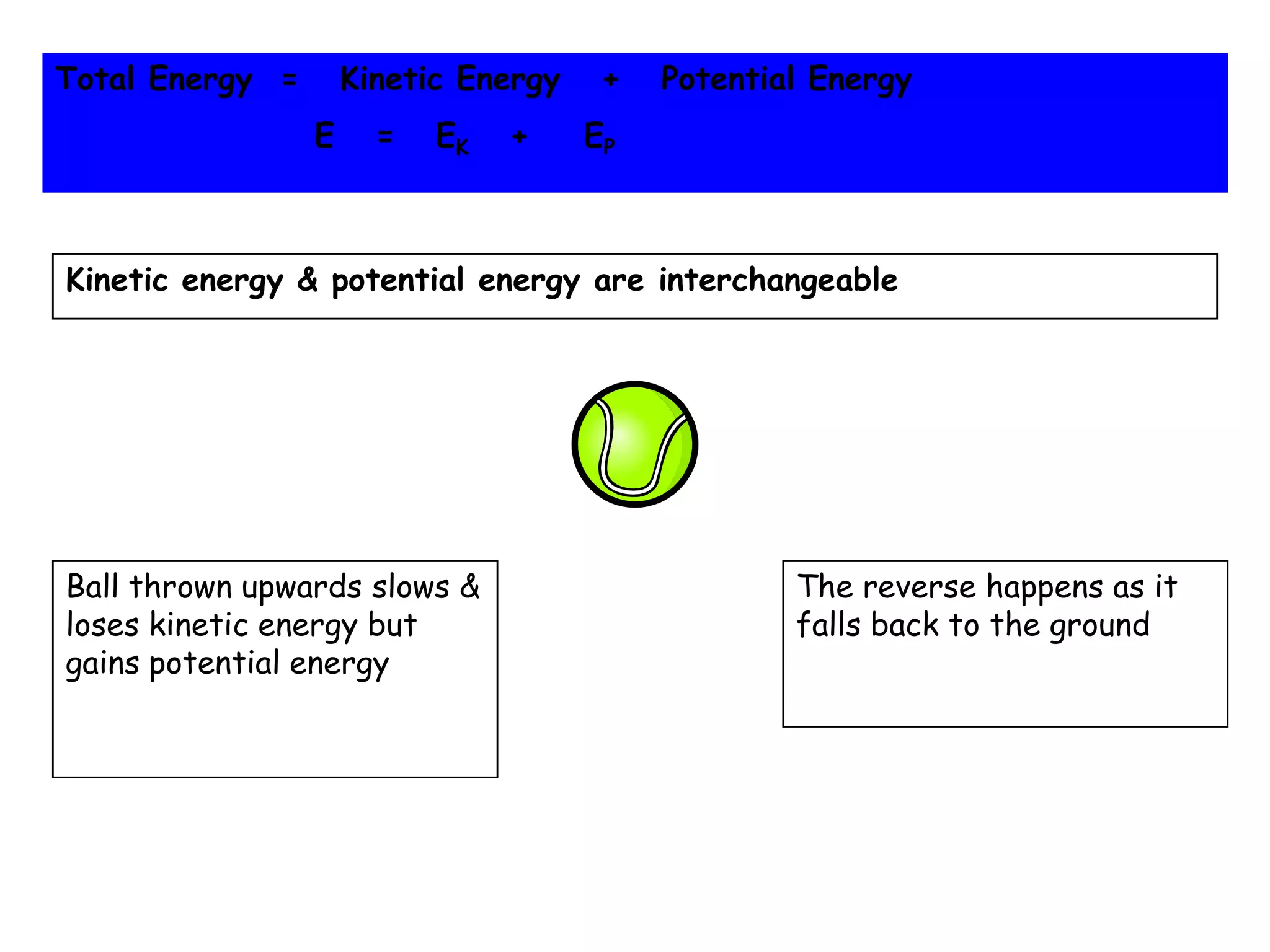
Total Energy  =   Kinetic Energy   +   Potential Energy                   E   =   EK   +    EPKinetic energy & potential energy are interchangeableBall thrown upwards slows & loses kinetic energy but gains potential energyThe reverse happens as it falls back to the ground
Law of Conservation of Energy:  the total energy of the universe is constant and can neither be created nor destroyed; it can only be transformed.The internal energy, U, of a sample is the sum of all the kinetic and potential energies of all the atoms and molecules in a samplei.e. it is the total energy of all the atoms and molecules in a sample
State FunctionsA property of a system that changes independently of its pathwayEnergy changes this way
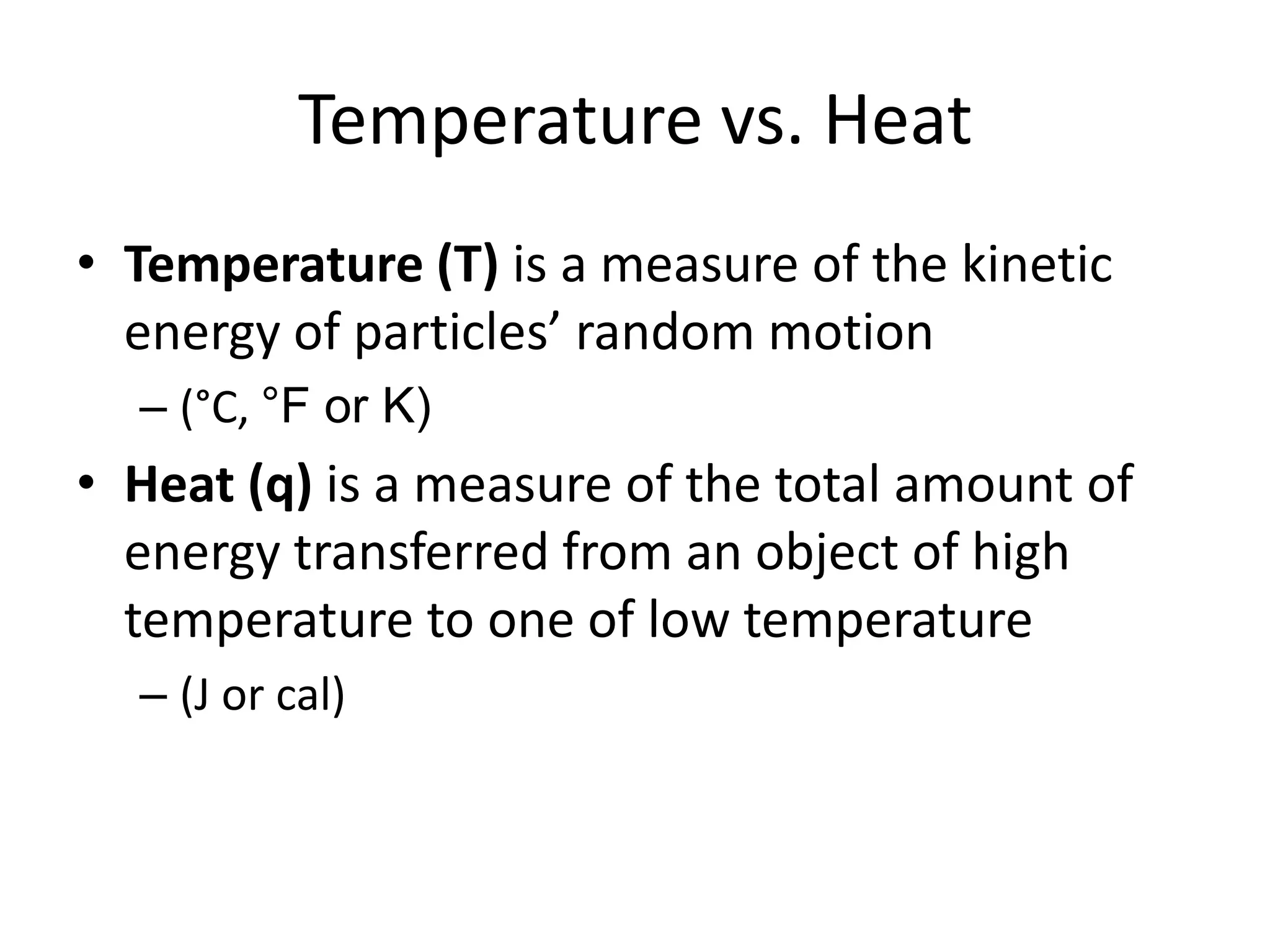
Temperature vs. HeatTemperature (T) is a measure of the kinetic energy of particles’ random motion (°C, °F or K)Heat (q) is a measure of the total amount of energy transferred from an object of high temperature to one of low temperature(J or cal)
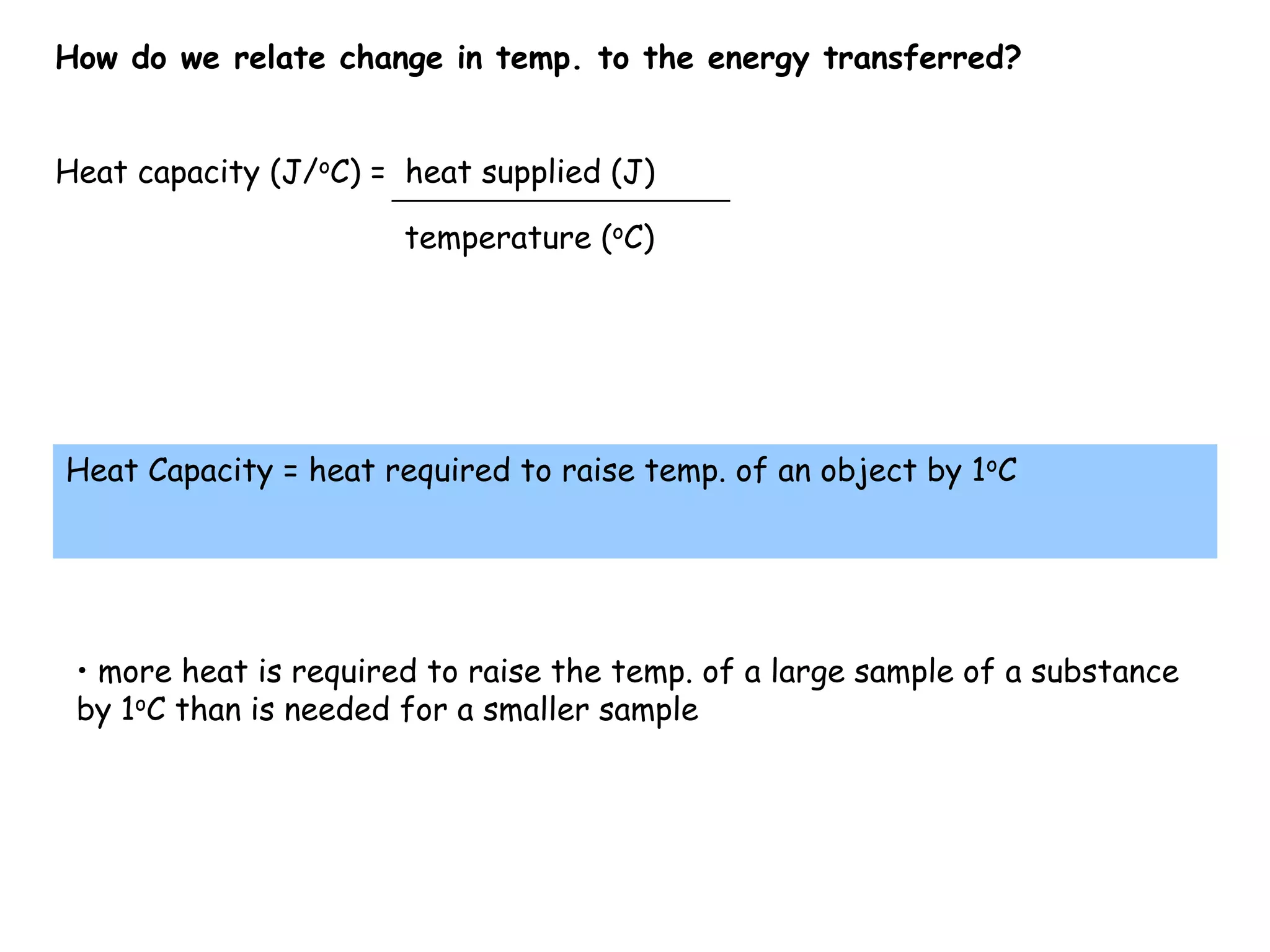
How do we relate change in temp. to the energy transferred?Heat capacity (J/oC) =  heat supplied (J)temperature (oC)Heat Capacity = heat required to raise temp. of an object by 1oC more heat is required to raise the temp. of a large sample of a substance by 1oC than is needed for a smaller sampleSpecific HeatIn order to relate heat and temperature we use the specific heat capacity.Cp- it is a physical propertyunits are J/g°CWater’s Cp = 4.18 J/g °C
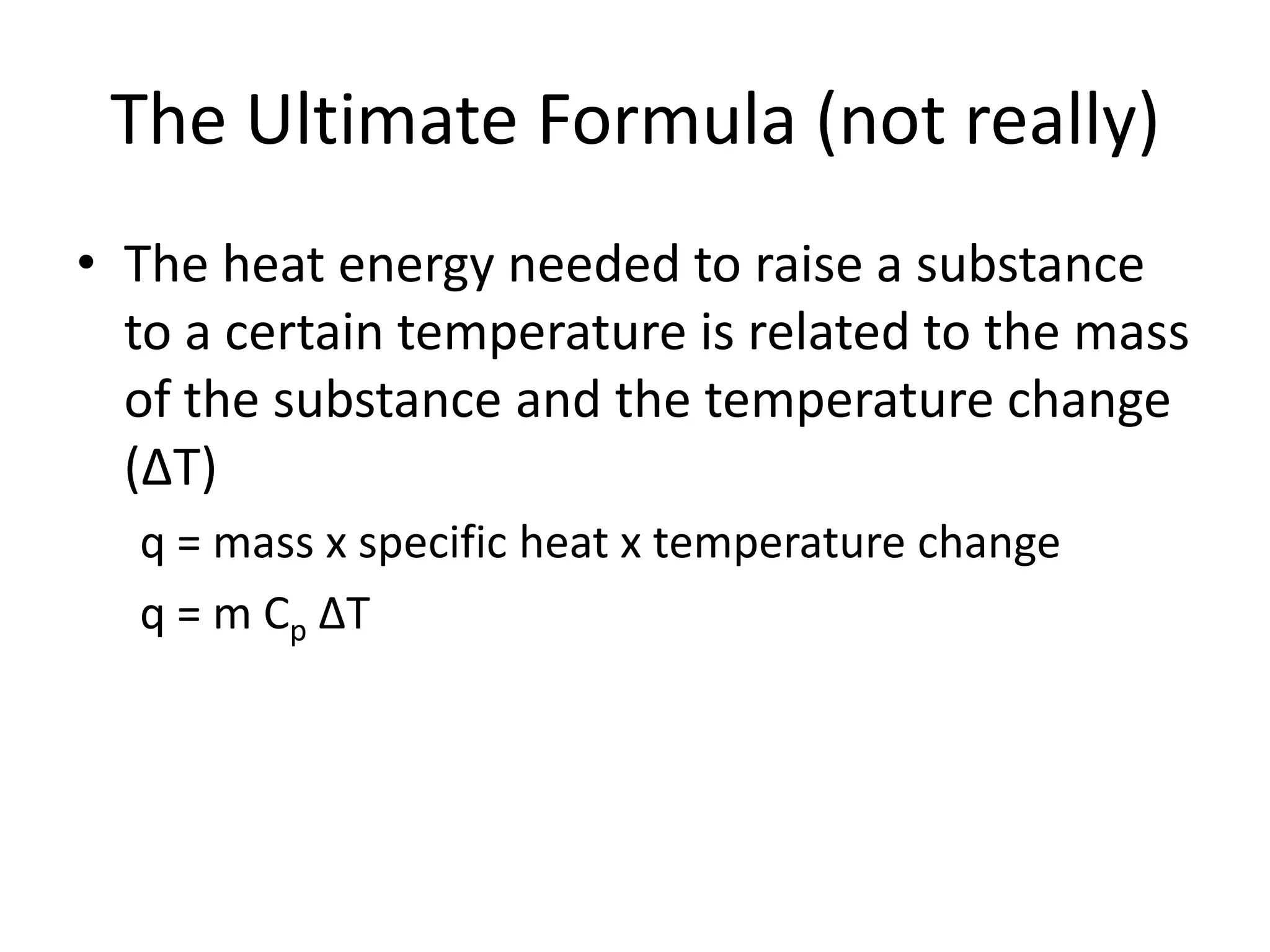
The Ultimate Formula (not really)The heat energy needed to raise a substance to a certain temperature is related to the mass of the substance and the temperature change (ΔT)q = mass x specific heat x temperature changeq = m CpΔT
Thermo#1

Thermo#1

  • 1.
    EnergyKinetic energy (EK)Potentialenergy (EP)Energy due to motionEnergy due to position (stored energy)What is Energy?
  • 2.
    Total Energy = Kinetic Energy + Potential Energy E = EK + EPKinetic energy & potential energy are interchangeableBall thrown upwards slows & loses kinetic energy but gains potential energyThe reverse happens as it falls back to the ground
  • 3.
    Law of Conservationof Energy: the total energy of the universe is constant and can neither be created nor destroyed; it can only be transformed.The internal energy, U, of a sample is the sum of all the kinetic and potential energies of all the atoms and molecules in a samplei.e. it is the total energy of all the atoms and molecules in a sample
  • 4.
    State FunctionsA propertyof a system that changes independently of its pathwayEnergy changes this way
  • 5.
    Temperature vs. HeatTemperature(T) is a measure of the kinetic energy of particles’ random motion (°C, °F or K)Heat (q) is a measure of the total amount of energy transferred from an object of high temperature to one of low temperature(J or cal)
  • 6.
    How do werelate change in temp. to the energy transferred?Heat capacity (J/oC) = heat supplied (J)temperature (oC)Heat Capacity = heat required to raise temp. of an object by 1oC more heat is required to raise the temp. of a large sample of a substance by 1oC than is needed for a smaller sampleSpecific HeatIn order to relate heat and temperature we use the specific heat capacity.Cp- it is a physical propertyunits are J/g°CWater’s Cp = 4.18 J/g °C
  • 7.
    The Ultimate Formula(not really)The heat energy needed to raise a substance to a certain temperature is related to the mass of the substance and the temperature change (ΔT)q = mass x specific heat x temperature changeq = m CpΔT