Dr.RENJU.S.RAVI MD
NEWER ANTI-
PLATELETS
• Thrombosis is defined as
“Hemostasis in the wrong place”
• Thrombosis is the formation of an unwanted clot
within a blood vessel - the most common abnormality
of hemostasis
• It is a major cause of morbidity and mortality
morbidity and mortality in a wide range of arterial
and venous diseases and patient population
Hemostasis and thrombosis primarily involve the
interplay among three factors
• Vessel wall
• Coagulation proteins
• Platelets
PRIMARY
HEMOSTASIS
SECONDARY
HEMOSTASIS
PLATELET PATHOPHYSIOLOGY
• 1011
platelets produced per day
• Anucleate cells
• Source of chemokines, cytokines that are
preformed and stored as granules
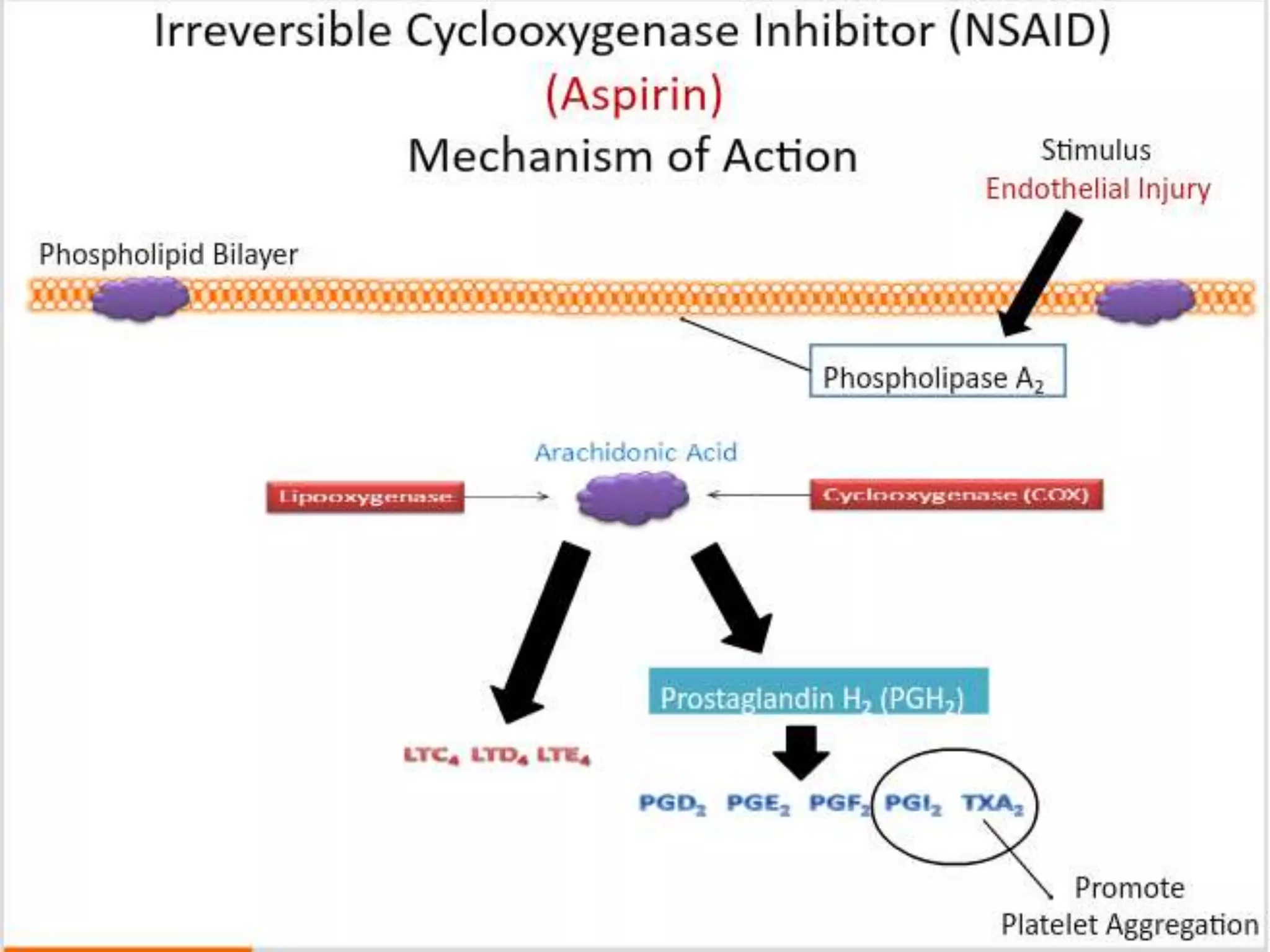
• Activated platelets synthesize TXA2
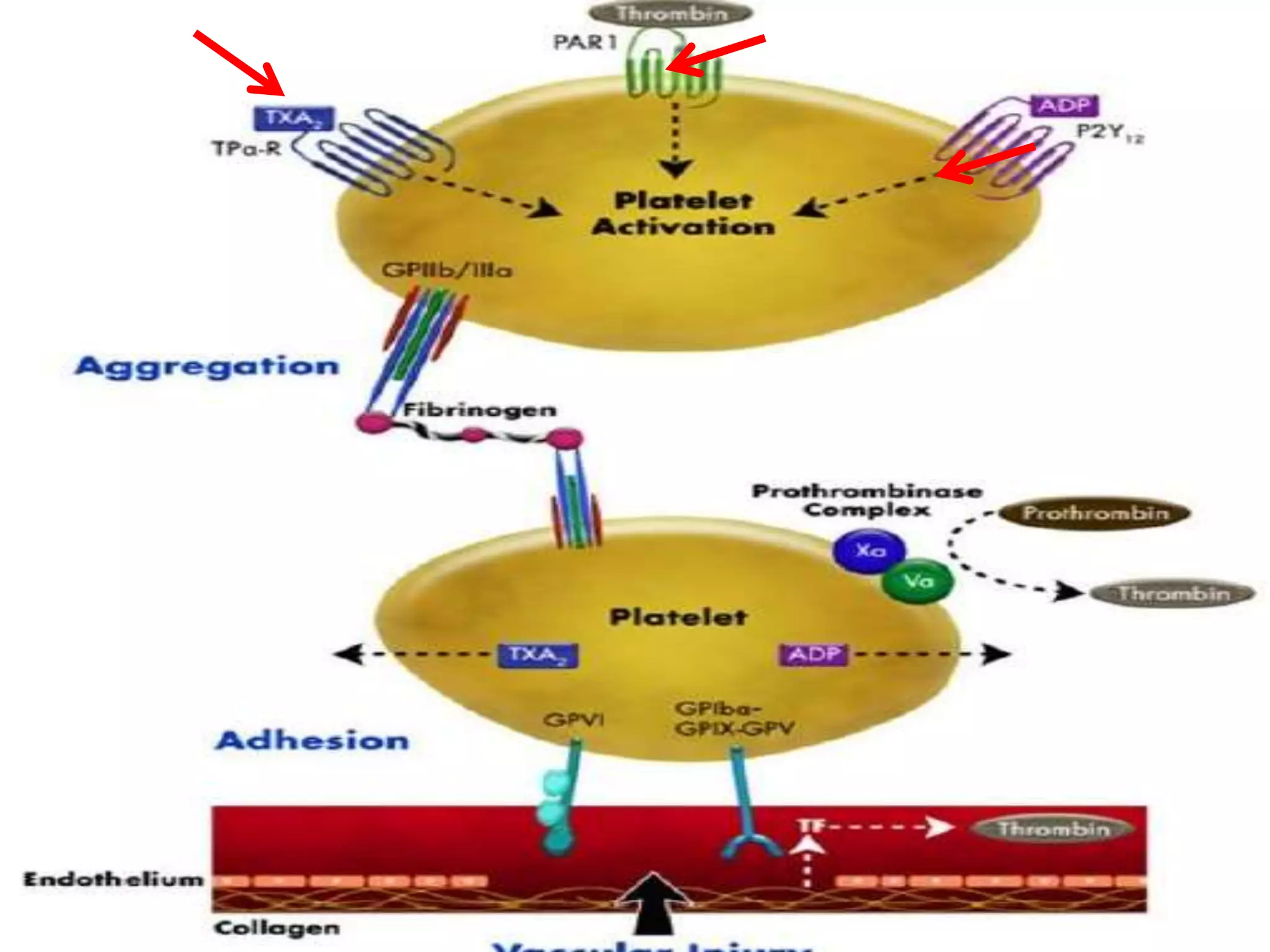
Pathophysiology of the Thrombus
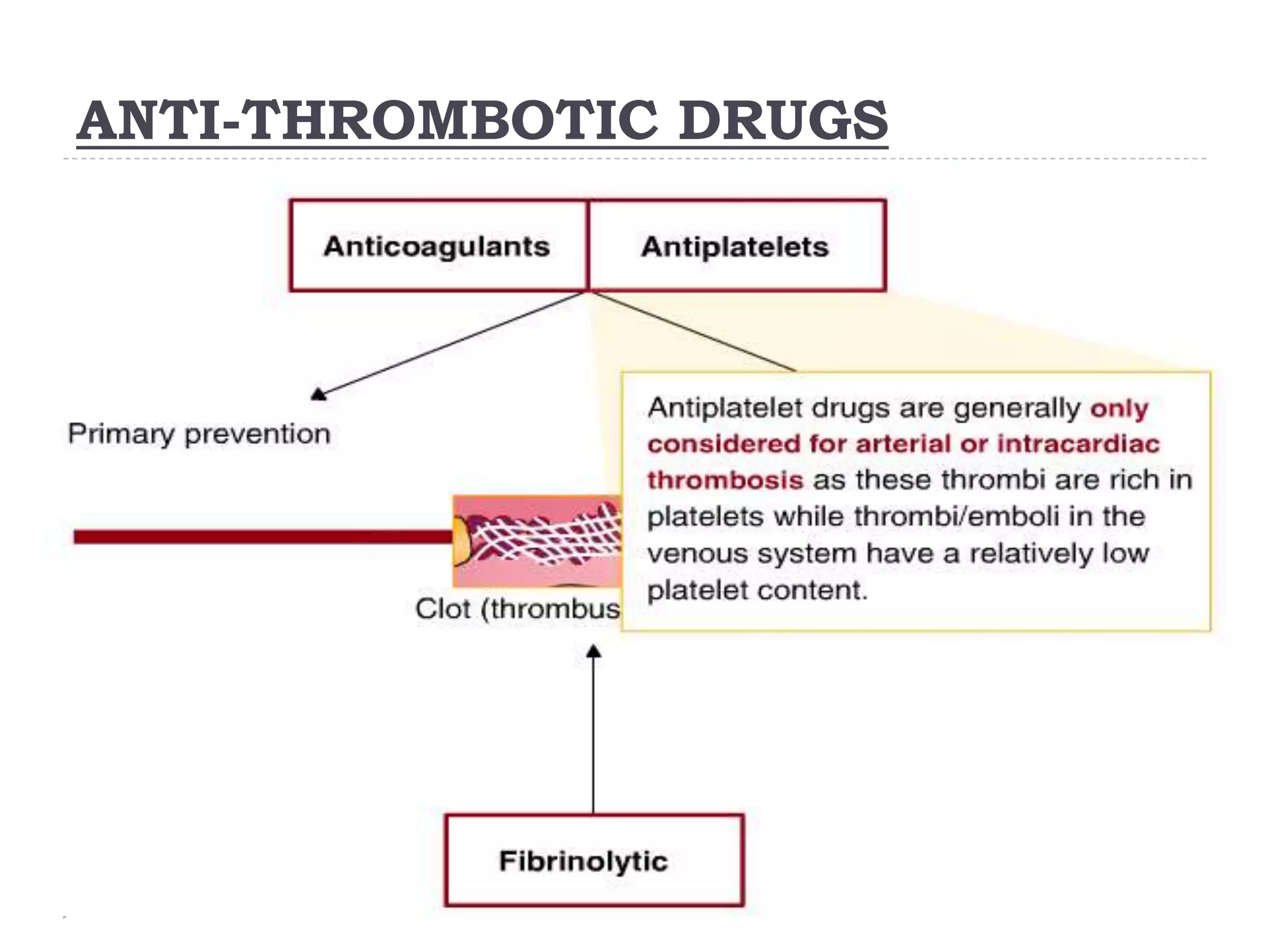
ANTI-THROMBOTIC DRUGS
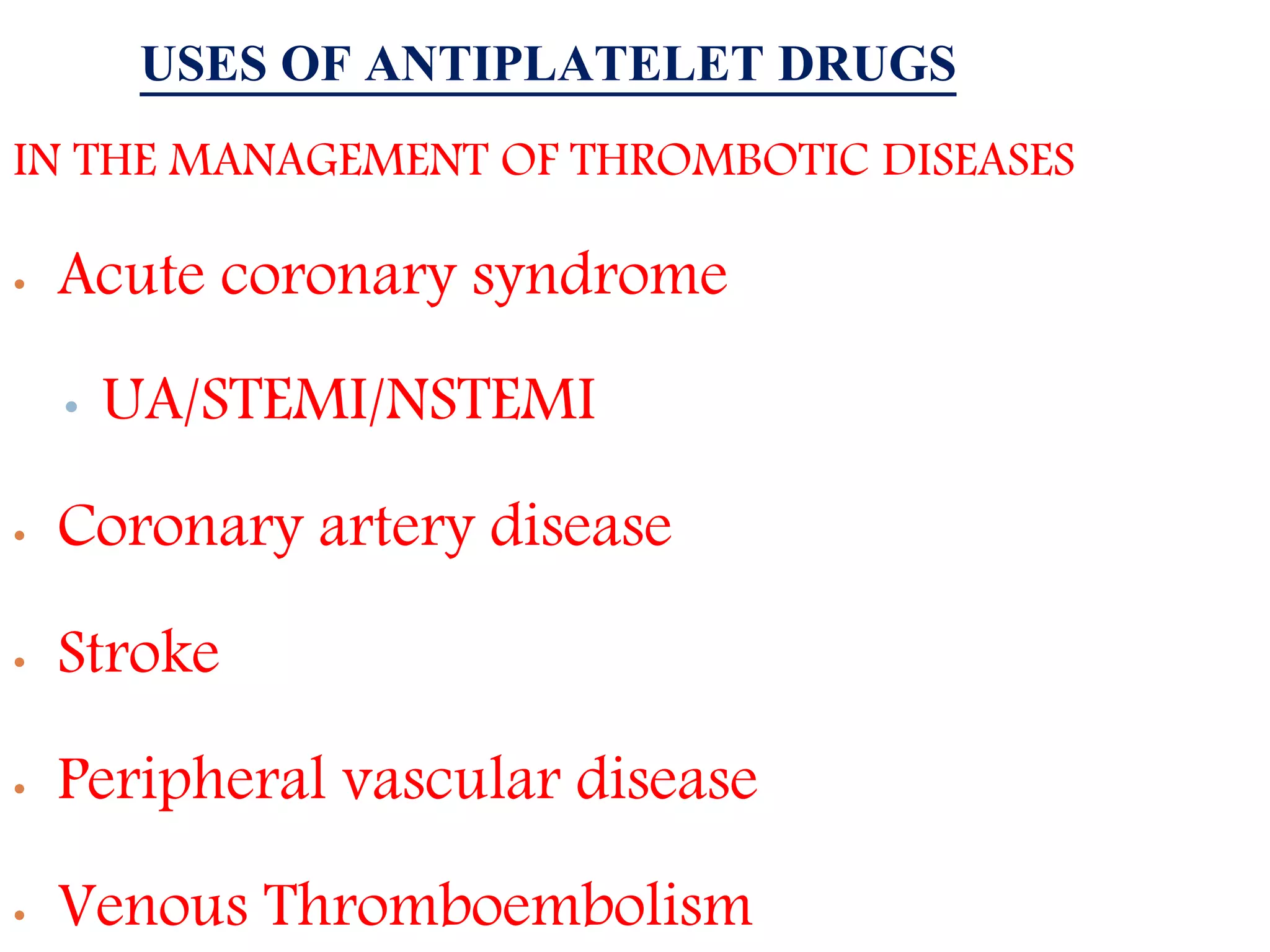
USES OF ANTIPLATELET DRUGS
IN THE MANAGEMENT OF THROMBOTIC DISEASES
• Acute coronary syndrome
• UA/STEMI/NSTEMI
• Coronary artery disease
• Stroke
• Peripheral vascular disease
• Venous Thromboembolism
ANTI-PLATELET DRUGS
• Aspirin
COX-1 inhibitor :
• Ticlopidine , Clopidogrel , Prasugrel
P2Y12 inhibitors :
• Abciximab , Tirofiban , Eptifibatide
GPIIB/IIIA inhibitors :
• Dipyridamole
Phosphodiesterase inhibitors :
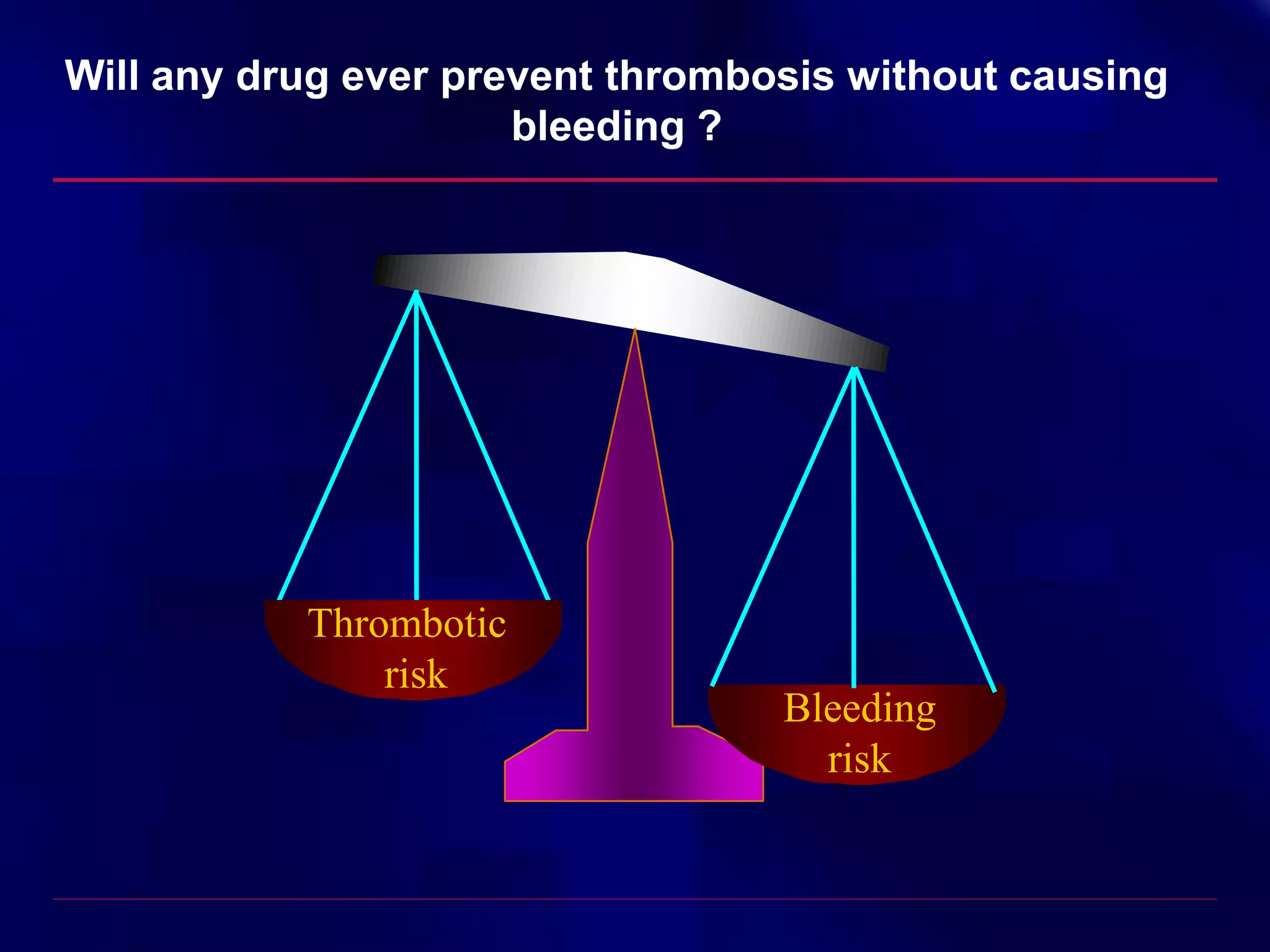
Bleeding
risk
Thrombotic
risk
Will any drug ever prevent thrombosis without causing
bleeding ?
NEWER ANTI-PLATELET AGENTS
• Ticagrelor, Elinogrel, Cangrelor, BX
667
P2Y12
inhibitors:
• Revacept
GPVI receptor
antagonists:
• Terutroban, Picotamide, Ridogrel,
EV-077, Z-335, BM-573
TXA2 receptor
antagonists:
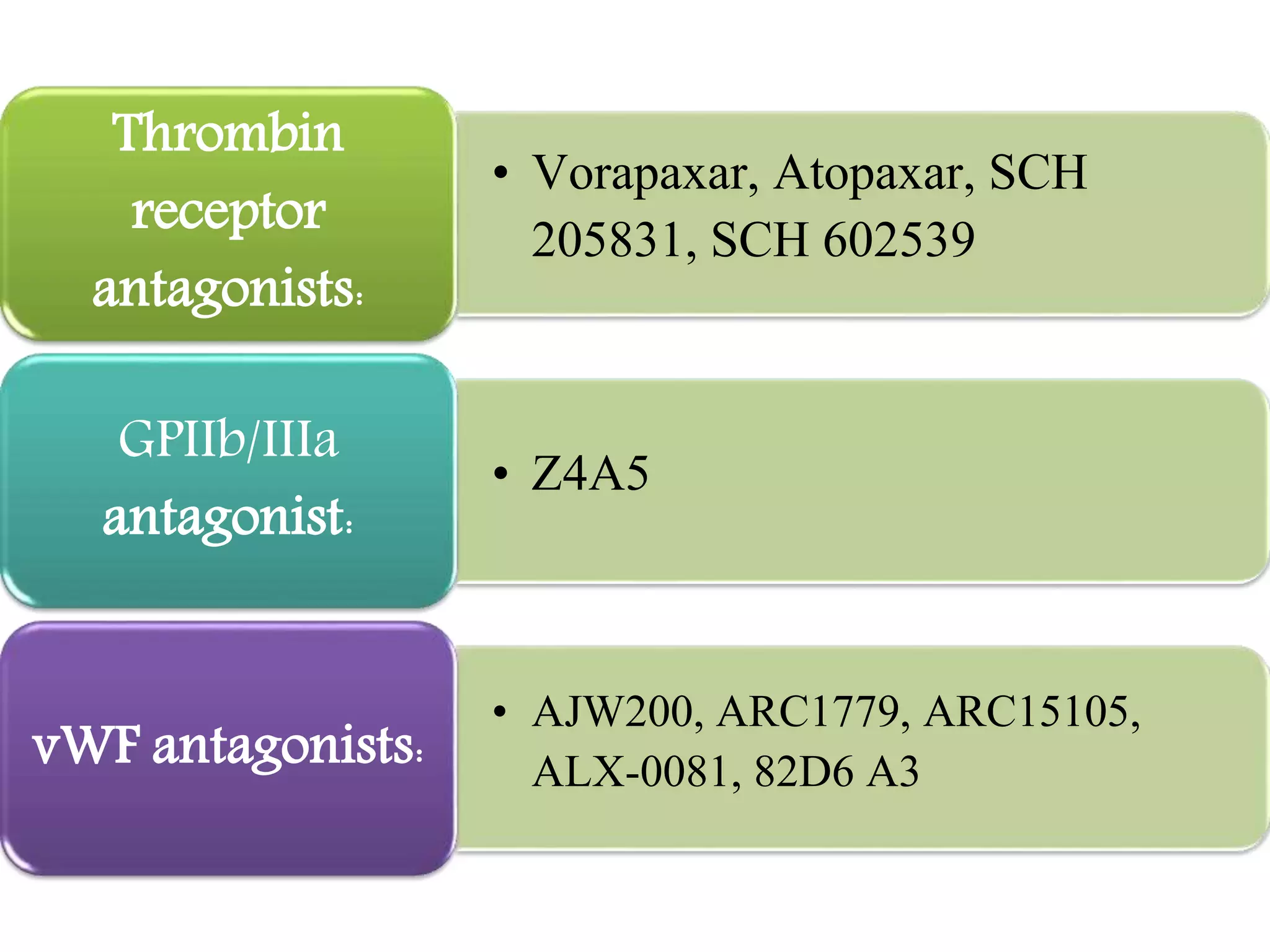
• Vorapaxar, Atopaxar, SCH
205831, SCH 602539
Thrombin
receptor
antagonists:
• Z4A5GPIIb/IIIa
antagonist:
• AJW200, ARC1779, ARC15105,
ALX-0081, 82D6 A3vWF antagonists:
GPIb receptor antagonists: h6B4-Fab, GPG-290, SZ2
Serotonin receptor inhibitor: APD791
Prostaglandin E3 receptor antagonist: DG-041
Nitric oxide donors: LA846, LA419
Phosphatidylinositol 3 kinase inhibitor: TGX-221
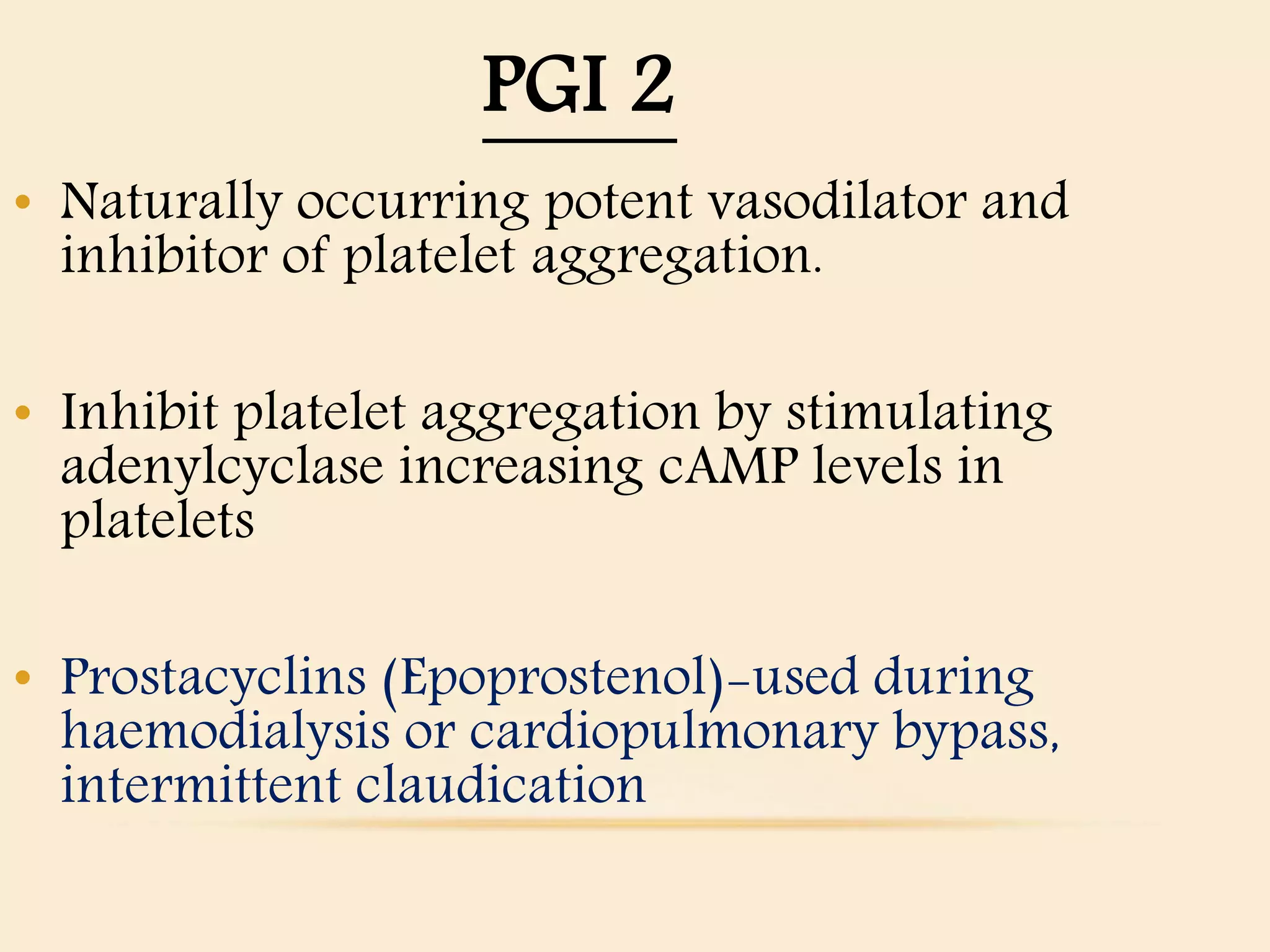
PGI 2
• Naturally occurring potent vasodilator and
inhibitor of platelet aggregation.
• Inhibit platelet aggregation by stimulating
adenylcyclase increasing cAMP levels in
platelets
• Prostacyclins (Epoprostenol)-used during
haemodialysis or cardiopulmonary bypass,
intermittent claudication
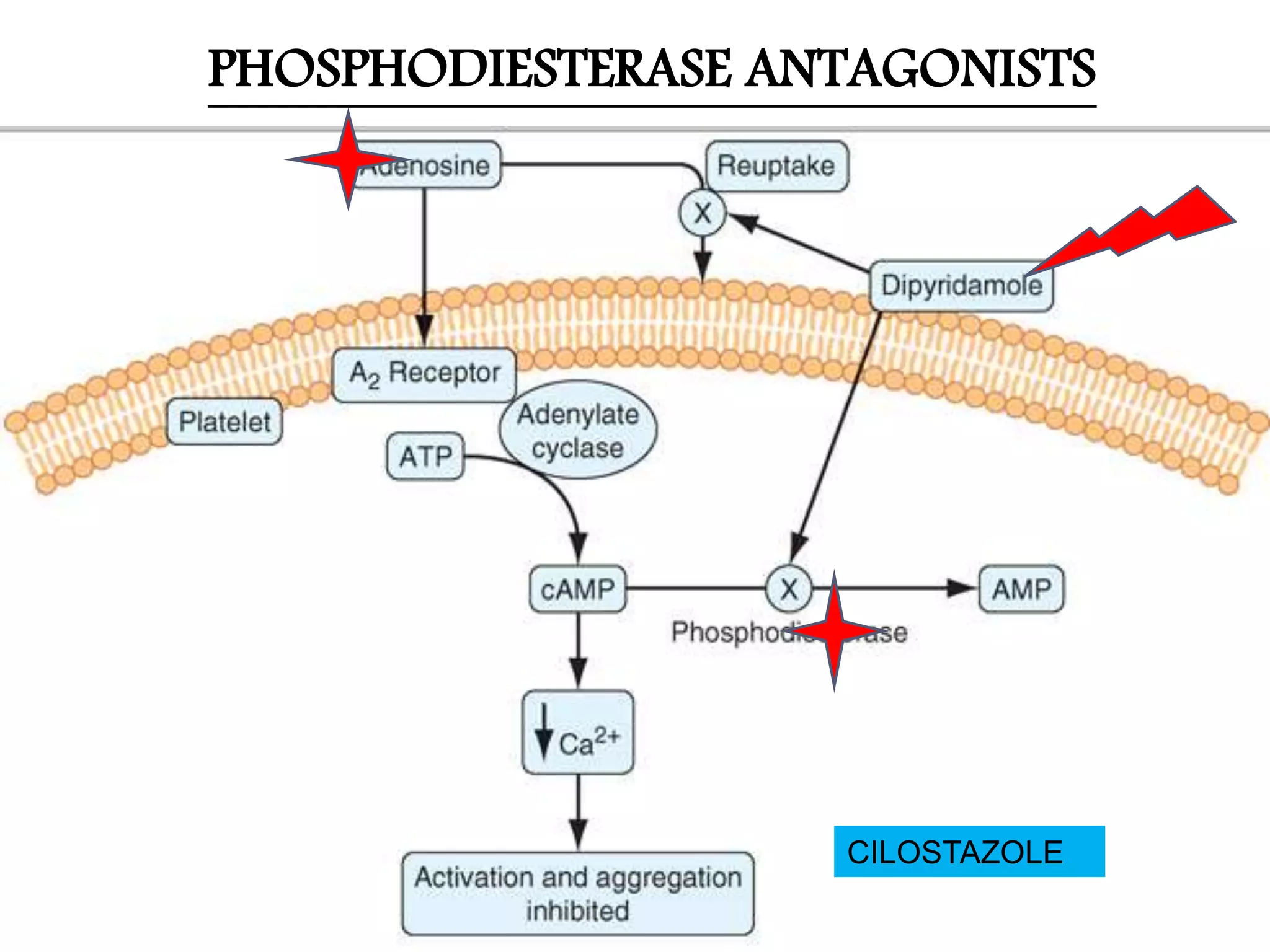
PHOSPHODIESTERASE ANTAGONISTS
CILOSTAZOLE
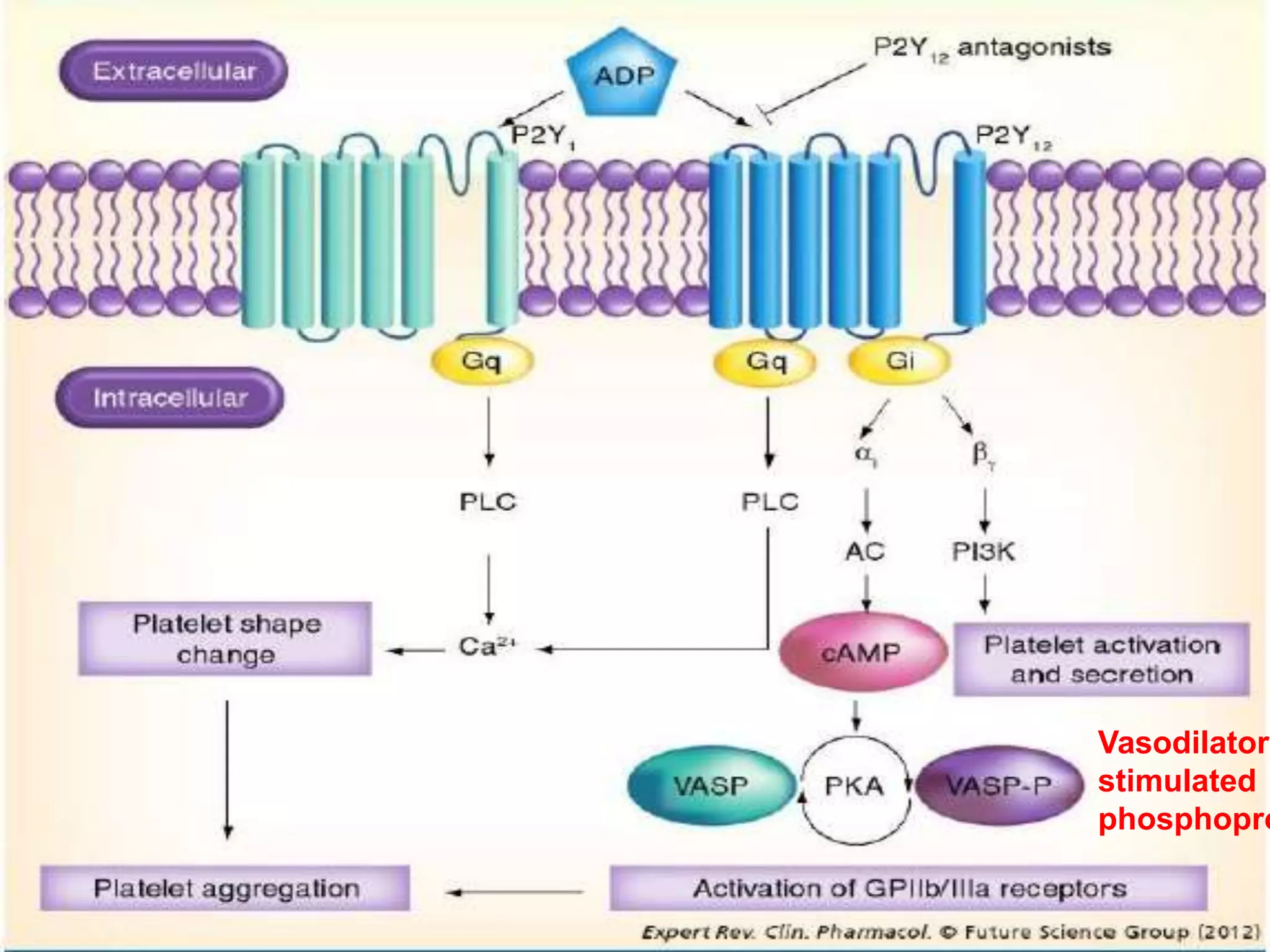
P2Y12 INHIBITORS
• ADP receptors
• P2Y1 and P2Y12 subtypes
• GPCR
• Both needed for aggregation – P2Y12 pathway
plays a principal role
ADP
RECEPTOR
ANTAGONIST
Vasodilator
stimulated
phosphopro
TICAGRELOR
• Oral drug
• Non-thienopyridine - reversible inhibitor
• Binding site different from ADP -allosteric antagonist
• Does not require metabolic activation
• Maximum levels of both the drug and platelet
inhibition occur about two hours after
• Loading dose -180 mg - Maintenance dose of 90 mg
twice a day
• Advantage of not requiring metabolism by the CYP450 - minimizes the potential for
drug- drug interactions
• (e.g., proton pump inhibitors and clopidogrel)
• ELINOGREL
• Reversible antagonist
• Oral or parenteral
• This unique dual formulation provides the potential benefit for smooth transition from short term
intravenous to long term oral antiplatelet therapy
• More effective at inhibiting platelet activation by lower, rather than higher, concentrations of ADP
• Maximum platelet inhibition occurs at 20 minutes
• Under PHASE III trial
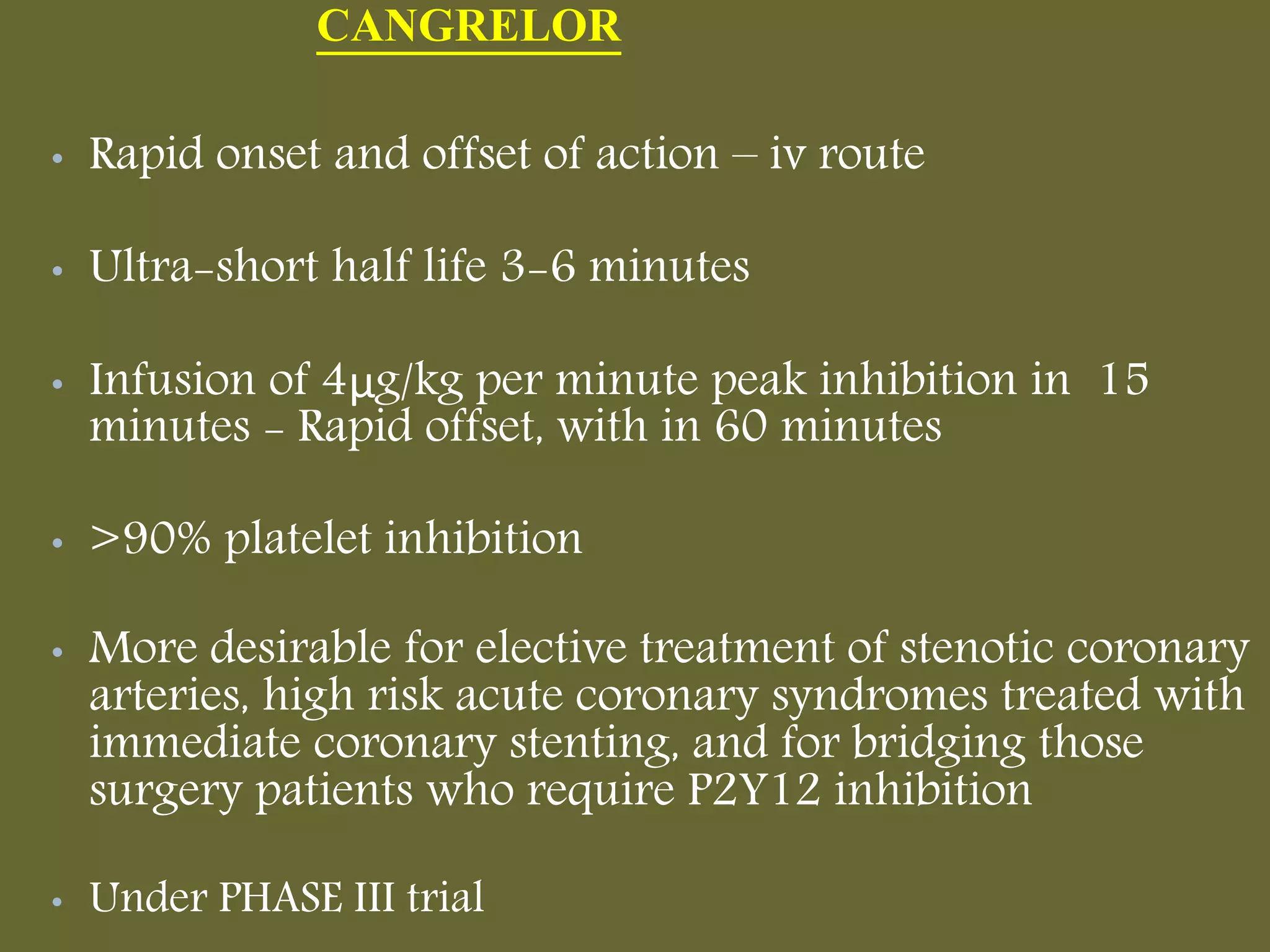
CANGRELOR
• Rapid onset and offset of action – iv route
• Ultra-short half life 3-6 minutes
• Infusion of 4μg/kg per minute peak inhibition in 15
minutes - Rapid offset, with in 60 minutes
• >90% platelet inhibition
• More desirable for elective treatment of stenotic coronary
arteries, high risk acute coronary syndromes treated with
immediate coronary stenting, and for bridging those
surgery patients who require P2Y12 inhibition
• Under PHASE III trial
• Limitations of current therapies include
• Weak inhibition of platelet function (Eg. aspirin),
• Blockade of only one pathway of ADP-mediated
signaling (Eg. clopidogrel),
• Slow onset of action
• Interpatient response variability with poor inhibition of
platelet function in some patients
GPIIa/IIIb INHIBITORS
• It’s a platelet surface integrin
• Designated as αIIbβ3
• Main use:
• Percutaneous Intervention (PCI)
• Limited efficacy after Myocardial Infarction
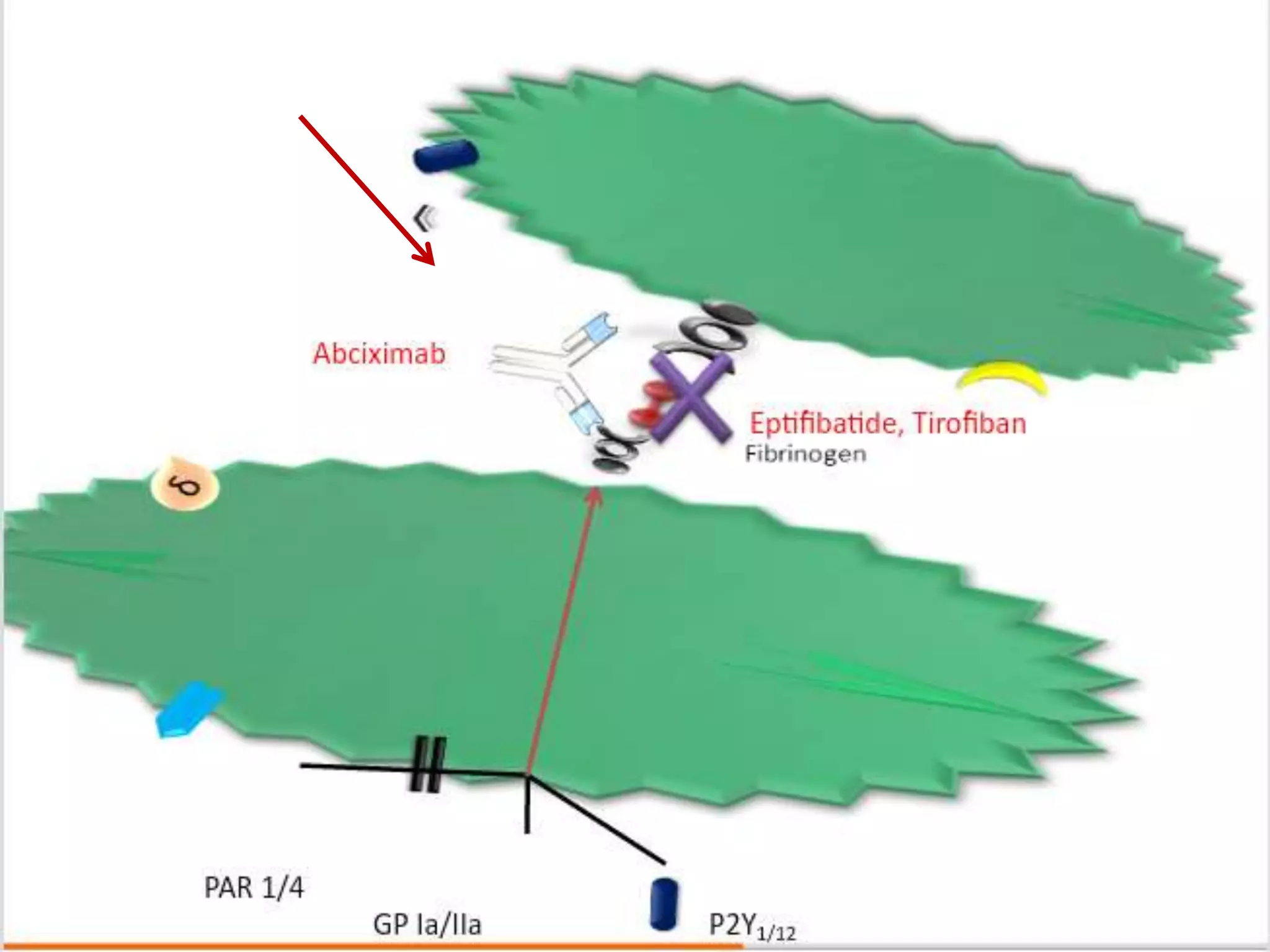
ABCIXIMAB
EPTIFIBATIDE
TIROFIBAN
Molecule Fab fragment -
chimeric
Cyclic peptide Non peptide
For GPIIa/IIIb Non specific Specific Specific
Half-life Short -10 – 30mts 2.5 hrs 2 hrs
Adverse effects Hge
Thrombocytopenia
Expensive
Hge
Thrombocytopenia
Hge
Thrombocytopenia
• ABCIXIMAB
• It also binds to the vitronectin receptor on
platelets, vascular endothelial cells, and smooth
muscle cells.
(Vitronectin is a GP present in serum and in
matrix. It promotes Adhesion)
ORAL GPIIa/IIIb INHIBITORS
XEMILOFIBAN
Prodrug
Non-peptide
Phase III study tested the hypothesis that
chronic (up to 6 month) oral blockade of the
GP IIb/IIIa receptor would provide both acute
and ongoing protection from death, myocardial
infarction, and the need for urgent
revascularization
• OTHER ORAL GPIIa/IIIb INHIBITORS
• Orbofiban – PHASE III
• Lotrafiban – PHASE III
• Sibrafiban
TRIPLE ANTI-PLATELET THERAPY
• Based on IV GPIIb/IIIa inhibitors is more effective than
aspirin-based dual therapy in reducing vascular events, MI and
death in patients with acute coronary syndromes (STEMI and
NSTEMI).
• A significant increase in minor bleeding complications
was observed among STEMI and elective PCI patients.
• In patients undergoing elective PCI, triple therapy had no
beneficial effect - associated with an 80% increase in
transfusions and an eightfold increase in
thrombocytopenia.
THROMBOXANE A2 RECEPTOR ANTAGONISTS
• Thromboxane receptorα (TPα)
• GPCR that is coupled to Gq and G12/13
• Blocks TP activation through other ligands such as
Endoperoxides
• Some have additional TXA2 synthase inhibition
• GPCRs – IP3/DAG – Ca++
• TERUTROBAN
• Oral reversible inhibitor of TP receptor
• Dose dependently prolonged occlusive thrombus formation in animal models
• Dose dependent inhibition of platelet aggregation in patients with peripheral artery disease
• RIDOGREL
• The drug is a combined
• TXA2 synthase inhibitor
• TXA2 receptor blocker
• Prostaglandin endoperoxide receptor antagonist
• While aspirin inhibits COX, ridogrel inhibitsTXA2 synthesis directly
FAILED TO MEET
PRIMARY
ENDPOINT
PICOTAMIDE
• Combined inhibitor
• At variance with aspirin, does not interfere
with endothelial PGI2 production
• Moreover long-term picotamide treatment in
diabetes promotes the reduction of
microalbuminuria and the inhibition of
growth of carotid plaques
RAMATROBAN
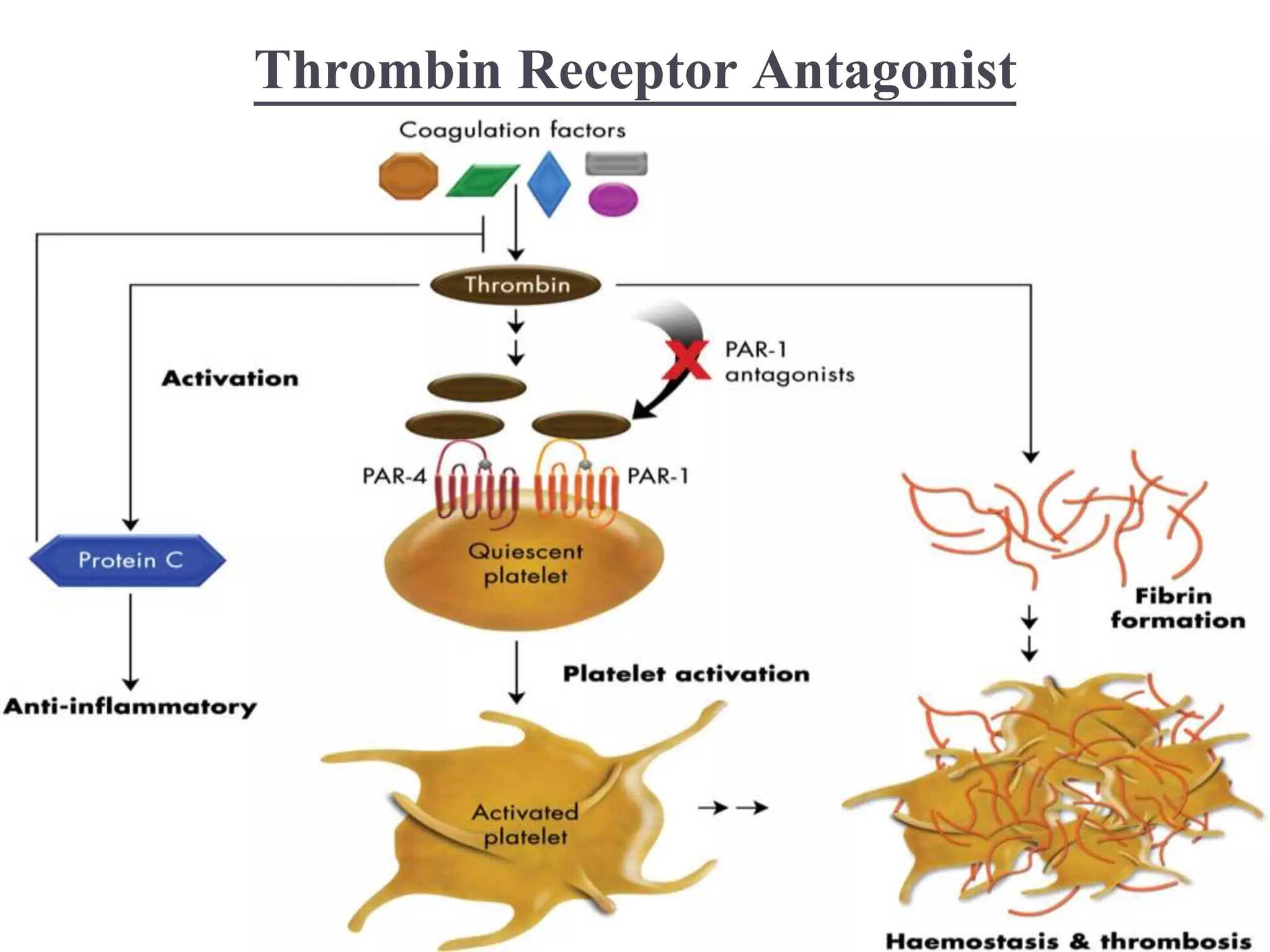
Thrombin Receptor Antagonist
VORAPAXOR – approved on May 8, 2014
• Oral Reversible antagonist PAR-1 – first agent
• High affinity and low molecular weight
• PAR-1 is a GPCR found in platelets and vascular endothelium – 40mg loading – 2.5mg maintenance
• Blocks the cellular activation of thrombin without inhibiting thrombin mediated cleavage of
fibrinogen
• Does not influence hemostasis as well as bleeding time
 In theory this agent should result in less bleeding
ATOPAXAR
• QT prolongation
AJW200
• An IgG4 humanized monoclonal antibody to vWF
which has been shown to specifically inhibit high-
shear-stress-induced platelet aggregation.
ARC1779
• Continuous infusion increased platelet counts in
critically ill TTP - preventing platelet aggregation
and loss of platelets.
GPVI RECEPTOR ANTAGONISTS
REVACEPT
• Dimeric Glycoprotein VI-Fc fusion protein
• Specifically and efficiently inhibited
collagen-induced platelet aggregation
• Under PHASE II trial
GPIb RECEPTOR ANTAGONISTS
h6B4-Fab
• Is a murine monoclonal antibody,
• Targeting GPIbα and neutralizes the binding
site of the vWF A1 domain
 Aggregating the evidence on antiplatelet
drugs:
A review of recent clinical trials
 Author: Niteesh K. Choudhry, M.D., Ph.D., Nihar R.
Desai, M.D., M.P.H.
 Consultants: Jerry Avorn, M.D., Michael Fischer, M.D.,
M.S.
THANK YOU

Newer anti-platelets final.

  • 1.
  • 2.
    • Thrombosis isdefined as “Hemostasis in the wrong place” • Thrombosis is the formation of an unwanted clot within a blood vessel - the most common abnormality of hemostasis • It is a major cause of morbidity and mortality morbidity and mortality in a wide range of arterial and venous diseases and patient population
  • 3.
    Hemostasis and thrombosisprimarily involve the interplay among three factors • Vessel wall • Coagulation proteins • Platelets
  • 4.
  • 5.
    PLATELET PATHOPHYSIOLOGY • 1011 plateletsproduced per day • Anucleate cells • Source of chemokines, cytokines that are preformed and stored as granules • Activated platelets synthesize TXA2
  • 6.
  • 10.
  • 11.
    USES OF ANTIPLATELETDRUGS IN THE MANAGEMENT OF THROMBOTIC DISEASES • Acute coronary syndrome • UA/STEMI/NSTEMI • Coronary artery disease • Stroke • Peripheral vascular disease • Venous Thromboembolism
  • 12.
    ANTI-PLATELET DRUGS • Aspirin COX-1inhibitor : • Ticlopidine , Clopidogrel , Prasugrel P2Y12 inhibitors : • Abciximab , Tirofiban , Eptifibatide GPIIB/IIIA inhibitors : • Dipyridamole Phosphodiesterase inhibitors :
  • 14.
    Bleeding risk Thrombotic risk Will any drugever prevent thrombosis without causing bleeding ?
  • 15.
    NEWER ANTI-PLATELET AGENTS •Ticagrelor, Elinogrel, Cangrelor, BX 667 P2Y12 inhibitors: • Revacept GPVI receptor antagonists: • Terutroban, Picotamide, Ridogrel, EV-077, Z-335, BM-573 TXA2 receptor antagonists:
  • 16.
    • Vorapaxar, Atopaxar,SCH 205831, SCH 602539 Thrombin receptor antagonists: • Z4A5GPIIb/IIIa antagonist: • AJW200, ARC1779, ARC15105, ALX-0081, 82D6 A3vWF antagonists:
  • 17.
    GPIb receptor antagonists:h6B4-Fab, GPG-290, SZ2 Serotonin receptor inhibitor: APD791 Prostaglandin E3 receptor antagonist: DG-041 Nitric oxide donors: LA846, LA419 Phosphatidylinositol 3 kinase inhibitor: TGX-221
  • 19.
    PGI 2 • Naturallyoccurring potent vasodilator and inhibitor of platelet aggregation. • Inhibit platelet aggregation by stimulating adenylcyclase increasing cAMP levels in platelets • Prostacyclins (Epoprostenol)-used during haemodialysis or cardiopulmonary bypass, intermittent claudication
  • 20.
  • 21.
    P2Y12 INHIBITORS • ADPreceptors • P2Y1 and P2Y12 subtypes • GPCR • Both needed for aggregation – P2Y12 pathway plays a principal role ADP RECEPTOR ANTAGONIST
  • 23.
  • 27.
    TICAGRELOR • Oral drug •Non-thienopyridine - reversible inhibitor • Binding site different from ADP -allosteric antagonist • Does not require metabolic activation • Maximum levels of both the drug and platelet inhibition occur about two hours after • Loading dose -180 mg - Maintenance dose of 90 mg twice a day
  • 28.
    • Advantage ofnot requiring metabolism by the CYP450 - minimizes the potential for drug- drug interactions • (e.g., proton pump inhibitors and clopidogrel) • ELINOGREL • Reversible antagonist • Oral or parenteral • This unique dual formulation provides the potential benefit for smooth transition from short term intravenous to long term oral antiplatelet therapy • More effective at inhibiting platelet activation by lower, rather than higher, concentrations of ADP • Maximum platelet inhibition occurs at 20 minutes • Under PHASE III trial
  • 29.
    CANGRELOR • Rapid onsetand offset of action – iv route • Ultra-short half life 3-6 minutes • Infusion of 4μg/kg per minute peak inhibition in 15 minutes - Rapid offset, with in 60 minutes • >90% platelet inhibition • More desirable for elective treatment of stenotic coronary arteries, high risk acute coronary syndromes treated with immediate coronary stenting, and for bridging those surgery patients who require P2Y12 inhibition • Under PHASE III trial
  • 30.
    • Limitations ofcurrent therapies include • Weak inhibition of platelet function (Eg. aspirin), • Blockade of only one pathway of ADP-mediated signaling (Eg. clopidogrel), • Slow onset of action • Interpatient response variability with poor inhibition of platelet function in some patients
  • 31.
    GPIIa/IIIb INHIBITORS • It’sa platelet surface integrin • Designated as αIIbβ3 • Main use: • Percutaneous Intervention (PCI) • Limited efficacy after Myocardial Infarction
  • 33.
    ABCIXIMAB EPTIFIBATIDE TIROFIBAN Molecule Fab fragment- chimeric Cyclic peptide Non peptide For GPIIa/IIIb Non specific Specific Specific Half-life Short -10 – 30mts 2.5 hrs 2 hrs Adverse effects Hge Thrombocytopenia Expensive Hge Thrombocytopenia Hge Thrombocytopenia
  • 34.
    • ABCIXIMAB • Italso binds to the vitronectin receptor on platelets, vascular endothelial cells, and smooth muscle cells. (Vitronectin is a GP present in serum and in matrix. It promotes Adhesion)
  • 35.
    ORAL GPIIa/IIIb INHIBITORS XEMILOFIBAN Prodrug Non-peptide PhaseIII study tested the hypothesis that chronic (up to 6 month) oral blockade of the GP IIb/IIIa receptor would provide both acute and ongoing protection from death, myocardial infarction, and the need for urgent revascularization
  • 36.
    • OTHER ORALGPIIa/IIIb INHIBITORS • Orbofiban – PHASE III • Lotrafiban – PHASE III • Sibrafiban
  • 37.
    TRIPLE ANTI-PLATELET THERAPY •Based on IV GPIIb/IIIa inhibitors is more effective than aspirin-based dual therapy in reducing vascular events, MI and death in patients with acute coronary syndromes (STEMI and NSTEMI).
  • 38.
    • A significantincrease in minor bleeding complications was observed among STEMI and elective PCI patients. • In patients undergoing elective PCI, triple therapy had no beneficial effect - associated with an 80% increase in transfusions and an eightfold increase in thrombocytopenia.
  • 39.
    THROMBOXANE A2 RECEPTORANTAGONISTS • Thromboxane receptorα (TPα) • GPCR that is coupled to Gq and G12/13 • Blocks TP activation through other ligands such as Endoperoxides • Some have additional TXA2 synthase inhibition • GPCRs – IP3/DAG – Ca++
  • 40.
    • TERUTROBAN • Oralreversible inhibitor of TP receptor • Dose dependently prolonged occlusive thrombus formation in animal models • Dose dependent inhibition of platelet aggregation in patients with peripheral artery disease • RIDOGREL • The drug is a combined • TXA2 synthase inhibitor • TXA2 receptor blocker • Prostaglandin endoperoxide receptor antagonist • While aspirin inhibits COX, ridogrel inhibitsTXA2 synthesis directly FAILED TO MEET PRIMARY ENDPOINT
  • 41.
    PICOTAMIDE • Combined inhibitor •At variance with aspirin, does not interfere with endothelial PGI2 production • Moreover long-term picotamide treatment in diabetes promotes the reduction of microalbuminuria and the inhibition of growth of carotid plaques RAMATROBAN
  • 42.
  • 43.
    VORAPAXOR – approvedon May 8, 2014 • Oral Reversible antagonist PAR-1 – first agent • High affinity and low molecular weight • PAR-1 is a GPCR found in platelets and vascular endothelium – 40mg loading – 2.5mg maintenance • Blocks the cellular activation of thrombin without inhibiting thrombin mediated cleavage of fibrinogen • Does not influence hemostasis as well as bleeding time  In theory this agent should result in less bleeding ATOPAXAR • QT prolongation
  • 44.
    AJW200 • An IgG4humanized monoclonal antibody to vWF which has been shown to specifically inhibit high- shear-stress-induced platelet aggregation. ARC1779 • Continuous infusion increased platelet counts in critically ill TTP - preventing platelet aggregation and loss of platelets.
  • 45.
    GPVI RECEPTOR ANTAGONISTS REVACEPT •Dimeric Glycoprotein VI-Fc fusion protein • Specifically and efficiently inhibited collagen-induced platelet aggregation • Under PHASE II trial
  • 46.
    GPIb RECEPTOR ANTAGONISTS h6B4-Fab •Is a murine monoclonal antibody, • Targeting GPIbα and neutralizes the binding site of the vWF A1 domain
  • 47.
     Aggregating theevidence on antiplatelet drugs: A review of recent clinical trials  Author: Niteesh K. Choudhry, M.D., Ph.D., Nihar R. Desai, M.D., M.P.H.  Consultants: Jerry Avorn, M.D., Michael Fischer, M.D., M.S.
  • 49.

Editor's Notes

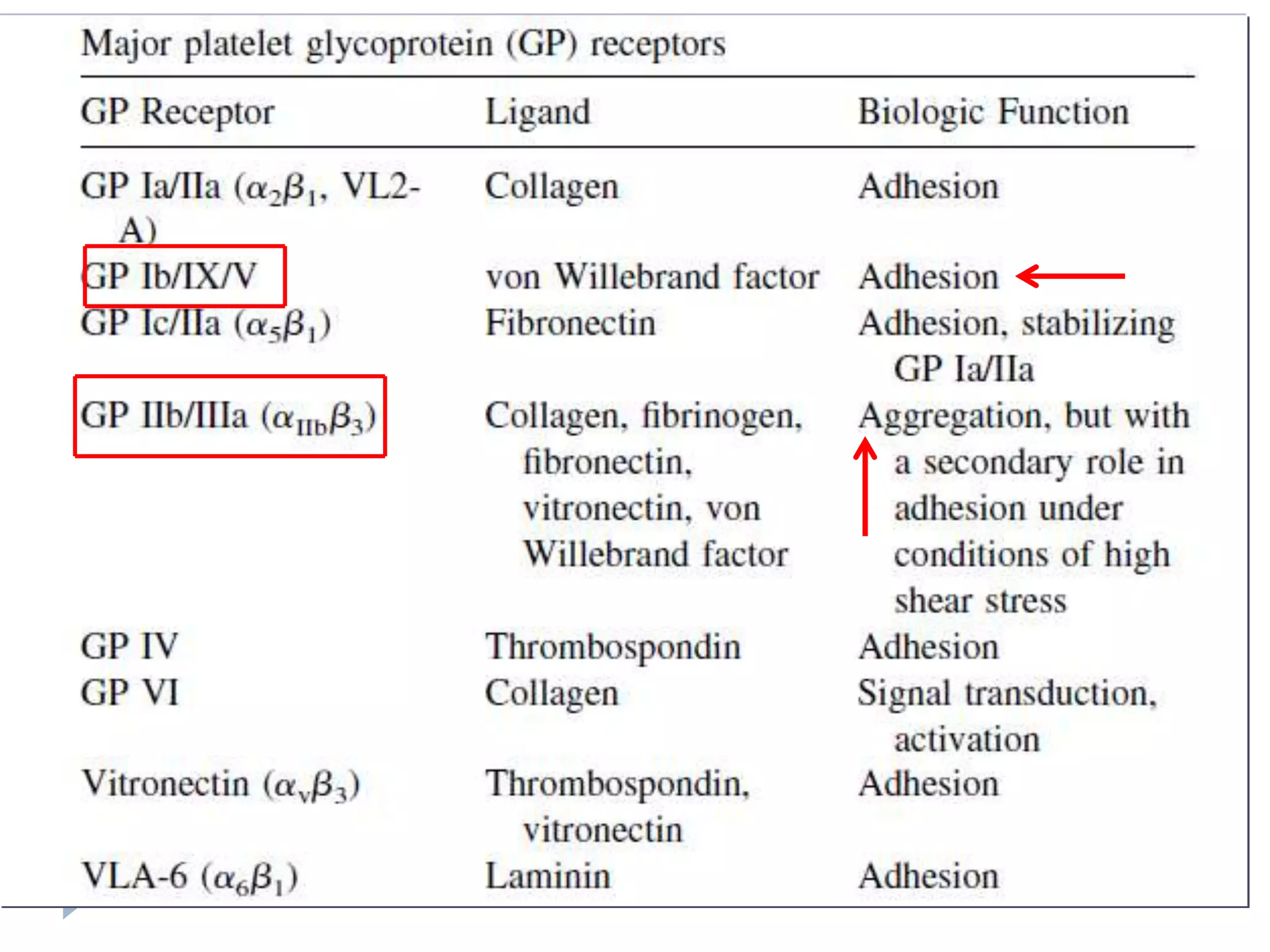
  • #8 Platelets play a central role in the development of thrombi and subsequent ischemic events. The process of platelet-mediated thrombus formation involves adhesion, activation, and aggregation. Within seconds of injury, platelets adhere to collagen fibrils through glycoprotein (GP) Ia/IIa receptors. An adhesive glycoprotein, von Willebrand factor (vWF) allows platelets to stay attached to the subendothelial vessel wall (via GP Ib) despite high shear forces. Following adhesion, platelets are activated to secrete a variety of agonists including thrombin, serotonin, adenosine diphosphate (ADP), and thromboxane A2 (TXA2). These agonists, which further augment the platelet activation process, bind to specific receptor sites on the platelets to activate the GP IIb/IIIa receptor complex, the final common pathway to platelet aggregation. Once activated, the GP IIb/IIIa receptor undergoes a conformational change that enables it to bind with fibrinogen.[1,2] Handin RI. Bleeding and thrombosis. In: Fauci AS, Braunwald E, Isselbacher KJ, et al, eds. Harrison’s Principles of Internal Medicine. Vol 1. 14th ed. New York, NY: McGraw-Hill; 1998:339-345. Schafer AI. Antiplatelet therapy. Am J Med. 1996;101:199-209.