



APREPITANT 
Dr.RENJU.S.RAVI
OVERVIEW 
 INTRODUCTION 
 PATHOGENESIS OF EMESIS 
 SUBSTANCE-P 
 APREPITANT – MOA 
- PK/PD 
- USES 
- ADR 
- C/I 
- INTERACTIONS 
 Other NK1 Receptor antagonists
INTRODUCTION 
 Aprepitant is a neurokinin 1(NK1) receptor antagonist 
approved by FDA in 2003 for the prevention of acute and 
delayed chemotherapy-induced nausea and vomiting (CINV).
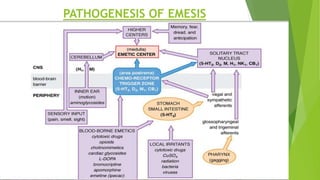
PATHOGENESIS OF EMESIS
Cause 
 Emesis is a defense mechanism controlled by the area 
postrema of the medulla oblongata. There are various sources 
of input to the vomiting center. 
 Receptors on the floor of the fourth ventricle of the brain 
represent the chemoreceptor trigger zone. 
 The chemoreceptor trigger zone contains dopamine D2 
receptors, 5-HT3 receptors, opioid receptors, acetylcholine 
receptors, and receptors for substance P. 
 Stimulation of different receptors are involved in different 
pathways leading to emesis. In the final common pathway, 
substance P, which activates the NK-1 receptor, appears to be 
involved.
 Additionally, the vagal and enteric nervous system inputs 
transmit information regarding the state of the 
gastrointestinal system. Irritation of the GI mucosa by 
chemotherapy, radiation, distention, or acute infectious 
gastroenteritis activates the 5-HT3 receptors of these inputs. 
 Cytotoxic agents cause a detectable increase in blood levels 
of serotonin and its major metabolite, 5- 
Hydroxyindoleacetic acid (5-HIAA). 
 The presence of these chemicals in the blood activate 
5-HT3 receptors in the chemoreceptor trigger zone, in turn 
releasing substance P, which activates NK1 receptors to 
cause an emetic response.
SUBSTANCE P 
 Substance P belongs to the tachykinin family of peptides. 
 Substance P is present in the central nervous system, 
where it is a neurotransmitter and in the GIT, where it 
may play a role as a transmitter in the enteric nervous 
system and as a local hormone. 
 Substance P - behavior, anxiety, depression, nausea, and 
emesis. 
 It is a potent arteriolar vasodilator, mediated by release 
of nitric oxide from the endothelium. 
 Also known to stimulate cell growth in culture.
 The actions are mediated by three G protein-coupled 
tachykinin receptors designated NK1, NK2, and NK3 
 Substance P is the preferred ligand for the NK1 receptor, 
the predominant tachykinin receptor in the human brain. 
 NK1 is a G protein-coupled receptor located in the 
central and peripheral nervous system. 
 It is found in high concentrations in the vomiting 
center of the brain 
 also plays a key part in the transmission of pain impulses 
from the peripheral receptors to CNS
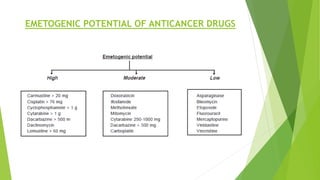
EMETOGENIC POTENTIAL OF ANTICANCER DRUGS
APREPITANT 
 Aprepitant is a highly selective NK1 antagonist approved by US-FDA 
in march 2003 for the treatment of chemotherapy induced 
nausea and vomiting. 
 ACTIONS 
 inhibit both the acute and delayed emesis induced by cytotoxic 
drugs by blocking Substance P in the brain's neurons. 
 selectively antagonize NK1 receptors, while having very low 
affinity to other common receptors such as serotonin, dopamine, 
and corticosteroids. 
 It has also been shown to increase the efficacy of the 5HT3 
receptor antagonists and corticosteroids.
Pharmacokinetics 
 Orally active 
 Bioavailability of 60 - 65% ; unaffected by food 
 Half life 9-13hrs 
 95% bound to plasma proteins 
 Metabolism in Liver (CYP3A4) 
 Excreted in urine(50%) and in faeces(50%)
USES 
- Chemotherapy induced nausea and vomiting (CINV) 
- Post operative nausea and vomiting (PONV) 
- Cyclic vomiting syndrome 
DOSE 
 CINV - 125 mg on day1 (before chemotherapy) and then 80mg on 
days 2 and 3 (after chemotherapy) 
 PONV – 40mg within 3hrs prior to induction 
 Should be given with a 5HT3 antagonist and Dexamethasone 
 Dose of dexamethasone should be reduced by 50%
Adverse Effects 
 Fatigue 
 Hiccups 
 Heartburn 
 Diarrhoea 
 Dizziness 
 Elevation of Liver Enzymes 
 Cases of angioedema, urticaria, SJS 
 C/I – Patients on cisapride/pimozide- QT prolongation
INTERACTIONS 
 Aprepitant is metabolized primarily by CYP3A4 with minor 
metabolism by CYP1A2 and CYP2C19. 
 As a moderate inhibitor of CYP3A4, aprepitant may inhibit the 
metabolism of other drugs metabolized by the CYP3A4 pathway. 
 Drugs that inhibit CYP3A4 metabolism increase aprepitant 
plasma levels. 
 Aprepitant decreases INR in patients taking warfarin. 
 Specific interaction has been demonstrated with oxycodone, 
where aprepitant both increased the efficacy and worsened the 
side effects of oxycodone.
Other NK1 Receptor Antagonists… 
 Fosaprepitant – prodrug ; I/V infusion 
 Casopitant – Phase 3 trial for CINV 
 Vestipitant – antiemetic /anxiolytic under trial for tinnitus 
and insomnia 
 Maropitant – under trial for motion sickness and vomiting
SUMMARY 
 Aprepitant – a clear cut therapeutic advance 
 Good Safety profile 
 Effective in Breast cancer patients 
(cyclophosphamide/anthracycline based chemotherapy) 
 Potential for drug interactions 
 High cost of the drug
Aprepitant Dr.Renju.S.Ravi

Aprepitant Dr.Renju.S.Ravi

  • 1.
  • 2.
    OVERVIEW  INTRODUCTION  PATHOGENESIS OF EMESIS  SUBSTANCE-P  APREPITANT – MOA - PK/PD - USES - ADR - C/I - INTERACTIONS  Other NK1 Receptor antagonists
  • 3.
    INTRODUCTION  Aprepitantis a neurokinin 1(NK1) receptor antagonist approved by FDA in 2003 for the prevention of acute and delayed chemotherapy-induced nausea and vomiting (CINV).
  • 4.
  • 5.
    Cause  Emesisis a defense mechanism controlled by the area postrema of the medulla oblongata. There are various sources of input to the vomiting center.  Receptors on the floor of the fourth ventricle of the brain represent the chemoreceptor trigger zone.  The chemoreceptor trigger zone contains dopamine D2 receptors, 5-HT3 receptors, opioid receptors, acetylcholine receptors, and receptors for substance P.  Stimulation of different receptors are involved in different pathways leading to emesis. In the final common pathway, substance P, which activates the NK-1 receptor, appears to be involved.
  • 6.
     Additionally, thevagal and enteric nervous system inputs transmit information regarding the state of the gastrointestinal system. Irritation of the GI mucosa by chemotherapy, radiation, distention, or acute infectious gastroenteritis activates the 5-HT3 receptors of these inputs.  Cytotoxic agents cause a detectable increase in blood levels of serotonin and its major metabolite, 5- Hydroxyindoleacetic acid (5-HIAA).  The presence of these chemicals in the blood activate 5-HT3 receptors in the chemoreceptor trigger zone, in turn releasing substance P, which activates NK1 receptors to cause an emetic response.
  • 7.
    SUBSTANCE P Substance P belongs to the tachykinin family of peptides.  Substance P is present in the central nervous system, where it is a neurotransmitter and in the GIT, where it may play a role as a transmitter in the enteric nervous system and as a local hormone.  Substance P - behavior, anxiety, depression, nausea, and emesis.  It is a potent arteriolar vasodilator, mediated by release of nitric oxide from the endothelium.  Also known to stimulate cell growth in culture.
  • 8.
     The actionsare mediated by three G protein-coupled tachykinin receptors designated NK1, NK2, and NK3  Substance P is the preferred ligand for the NK1 receptor, the predominant tachykinin receptor in the human brain.  NK1 is a G protein-coupled receptor located in the central and peripheral nervous system.  It is found in high concentrations in the vomiting center of the brain  also plays a key part in the transmission of pain impulses from the peripheral receptors to CNS
  • 9.
    EMETOGENIC POTENTIAL OFANTICANCER DRUGS
  • 10.
    APREPITANT  Aprepitantis a highly selective NK1 antagonist approved by US-FDA in march 2003 for the treatment of chemotherapy induced nausea and vomiting.  ACTIONS  inhibit both the acute and delayed emesis induced by cytotoxic drugs by blocking Substance P in the brain's neurons.  selectively antagonize NK1 receptors, while having very low affinity to other common receptors such as serotonin, dopamine, and corticosteroids.  It has also been shown to increase the efficacy of the 5HT3 receptor antagonists and corticosteroids.
  • 11.
    Pharmacokinetics  Orallyactive  Bioavailability of 60 - 65% ; unaffected by food  Half life 9-13hrs  95% bound to plasma proteins  Metabolism in Liver (CYP3A4)  Excreted in urine(50%) and in faeces(50%)
  • 12.
    USES - Chemotherapyinduced nausea and vomiting (CINV) - Post operative nausea and vomiting (PONV) - Cyclic vomiting syndrome DOSE  CINV - 125 mg on day1 (before chemotherapy) and then 80mg on days 2 and 3 (after chemotherapy)  PONV – 40mg within 3hrs prior to induction  Should be given with a 5HT3 antagonist and Dexamethasone  Dose of dexamethasone should be reduced by 50%
  • 13.
    Adverse Effects Fatigue  Hiccups  Heartburn  Diarrhoea  Dizziness  Elevation of Liver Enzymes  Cases of angioedema, urticaria, SJS  C/I – Patients on cisapride/pimozide- QT prolongation
  • 14.
    INTERACTIONS  Aprepitantis metabolized primarily by CYP3A4 with minor metabolism by CYP1A2 and CYP2C19.  As a moderate inhibitor of CYP3A4, aprepitant may inhibit the metabolism of other drugs metabolized by the CYP3A4 pathway.  Drugs that inhibit CYP3A4 metabolism increase aprepitant plasma levels.  Aprepitant decreases INR in patients taking warfarin.  Specific interaction has been demonstrated with oxycodone, where aprepitant both increased the efficacy and worsened the side effects of oxycodone.
  • 15.
    Other NK1 ReceptorAntagonists…  Fosaprepitant – prodrug ; I/V infusion  Casopitant – Phase 3 trial for CINV  Vestipitant – antiemetic /anxiolytic under trial for tinnitus and insomnia  Maropitant – under trial for motion sickness and vomiting
  • 16.
    SUMMARY  Aprepitant– a clear cut therapeutic advance  Good Safety profile  Effective in Breast cancer patients (cyclophosphamide/anthracycline based chemotherapy)  Potential for drug interactions  High cost of the drug