Support For Mobility
World wide web
●

●

Problems encounters the web applications
used in a mobile and wireless environment.
Basic intro about HTTP
–

It is a stateless , lightweight , application level
protocol for data transfer between servers and
clients.

–

HTTP transaction consists of HTTP request
issued by the client and and HTTP response from
a server
HTTP
●

●

●

●

It supported only simple caching mechanisms to
avoid unnecessary retransmission.
Caches may be located anywhere between
server and client.
Each client maintains a cache locally to
minimize delay when jumping back and forth on
web page.
Application must not cache page beyond
expiration.
HTTP problems
●

Bandwidth and delay
–

It is designed with high bandwidth/low delay
connections in mind.

–

HTTP header is quite large and redundant.

–

Server transfer content uncompressed.

–

TCP connection is used for each item on web page,
huge overhead with each item.(three way handshack
and four way disconnection)

–

Requires an additional request for DNS.
HTTP problems
●

Caching
–

It is usefull in many cases, often disabled by content
provider (number of clicks on a page).

–

Present-day pages contain dynamic objects that
cannot be cached.

–

Page often created dynamically depending on the
type of browser,client harware,client location etc.

–

Can't merge static content with dynamic remainder
page.
HTML
●

●

●

●

It is designed for standard desktop computers
connected witht a fixed wire.
Having high-resolution, mouse,sound system and
large hard disk.
Wireless devices having low-resolution, limited
user interference, low performance CPUs
Pages are degined for nice presentation of
content, not for efficient transfer of this content.
HTTP and HTML solutions
●

Image scaling
–

●

Scale down to fewer colors, lower resolution or just
title of picture. User decide to zoom or download.

Content transformtion
–

–
●

Many application documents availabe is certain format
(pdf, post script etc.)
Convert and transfer.

Content extraction/semantic compression –

Headline or keyword extracted from a document
HTTP and HTML solutions
●

Special language and protocols
–
–

●

Replace HTML
Like introduction of Handheld Device Transport
Protocol (HDTP) and the Handheld Device Markup
Language (HDML)

Push technologies
–

Instead of pulling content from server , the server
could push content to a client.

–

Avoid overhead of connection on each object
System Architecture
●

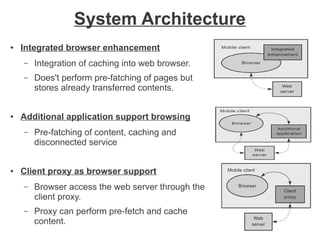
Integrated browser enhancement
–
–

●

Integration of caching into web browser.
Does't perform pre-fatching of pages but
stores already transferred contents.

Additional application support browsing
–

●

Pre-fatching of content, caching and
disconnected service

Client proxy as browser support
–

Browser access the web server through the
client proxy.

–

Proxy can perform pre-fetch and cache
content.
System Architecture
●

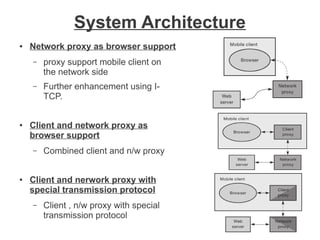
Network proxy as browser support
–

–

●

proxy support mobile client on
the network side
Further enhancement using ITCP.

Client and network proxy as
browser support
–

●

Combined client and n/w proxy

Client and nerwork proxy with
special transmission protocol
–

Client , n/w proxy with special
transmission protocol
Wireless Application
Protocol(version 1.x)
●

●

●

WAP Forum was founded in June 1997 by
Ericsson, Motorola, Nokia and Unwired Planet
In 2002, the WAP forum together with open
mobile architecture forum formed open mobile
alliance.
Objective – To bring diverse internet content
and other data services to digital cellular
phones and other wireless, mobile terminals
Design Consideration
●

●

●

Interoperable – alowing terminals and s/w from
different vendors to communicate with n/w from
different providers.
Scaleable – should scale with customers needs
and number of customers
Efficient – provision of QoS suited to the wirless
and mobile n/w

●

Reliable

●

Secure
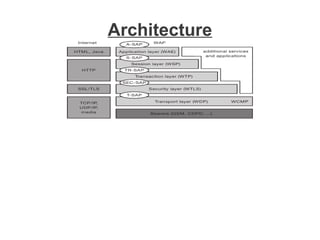
Architecture

Support formobility

  • 1.
  • 2.
    World wide web ● ● Problemsencounters the web applications used in a mobile and wireless environment. Basic intro about HTTP – It is a stateless , lightweight , application level protocol for data transfer between servers and clients. – HTTP transaction consists of HTTP request issued by the client and and HTTP response from a server
  • 3.
    HTTP ● ● ● ● It supported onlysimple caching mechanisms to avoid unnecessary retransmission. Caches may be located anywhere between server and client. Each client maintains a cache locally to minimize delay when jumping back and forth on web page. Application must not cache page beyond expiration.
  • 4.
    HTTP problems ● Bandwidth anddelay – It is designed with high bandwidth/low delay connections in mind. – HTTP header is quite large and redundant. – Server transfer content uncompressed. – TCP connection is used for each item on web page, huge overhead with each item.(three way handshack and four way disconnection) – Requires an additional request for DNS.
  • 5.
    HTTP problems ● Caching – It isusefull in many cases, often disabled by content provider (number of clicks on a page). – Present-day pages contain dynamic objects that cannot be cached. – Page often created dynamically depending on the type of browser,client harware,client location etc. – Can't merge static content with dynamic remainder page.
  • 6.
    HTML ● ● ● ● It is designedfor standard desktop computers connected witht a fixed wire. Having high-resolution, mouse,sound system and large hard disk. Wireless devices having low-resolution, limited user interference, low performance CPUs Pages are degined for nice presentation of content, not for efficient transfer of this content.
  • 7.
    HTTP and HTMLsolutions ● Image scaling – ● Scale down to fewer colors, lower resolution or just title of picture. User decide to zoom or download. Content transformtion – – ● Many application documents availabe is certain format (pdf, post script etc.) Convert and transfer. Content extraction/semantic compression – Headline or keyword extracted from a document
  • 8.
    HTTP and HTMLsolutions ● Special language and protocols – – ● Replace HTML Like introduction of Handheld Device Transport Protocol (HDTP) and the Handheld Device Markup Language (HDML) Push technologies – Instead of pulling content from server , the server could push content to a client. – Avoid overhead of connection on each object
  • 9.
    System Architecture ● Integrated browserenhancement – – ● Integration of caching into web browser. Does't perform pre-fatching of pages but stores already transferred contents. Additional application support browsing – ● Pre-fatching of content, caching and disconnected service Client proxy as browser support – Browser access the web server through the client proxy. – Proxy can perform pre-fetch and cache content.
  • 10.
    System Architecture ● Network proxyas browser support – – ● proxy support mobile client on the network side Further enhancement using ITCP. Client and network proxy as browser support – ● Combined client and n/w proxy Client and nerwork proxy with special transmission protocol – Client , n/w proxy with special transmission protocol
  • 11.
    Wireless Application Protocol(version 1.x) ● ● ● WAPForum was founded in June 1997 by Ericsson, Motorola, Nokia and Unwired Planet In 2002, the WAP forum together with open mobile architecture forum formed open mobile alliance. Objective – To bring diverse internet content and other data services to digital cellular phones and other wireless, mobile terminals
  • 12.
    Design Consideration ● ● ● Interoperable –alowing terminals and s/w from different vendors to communicate with n/w from different providers. Scaleable – should scale with customers needs and number of customers Efficient – provision of QoS suited to the wirless and mobile n/w ● Reliable ● Secure
  • 13.