Quick Write 2-10-10 Your quick write will be on the poems on the back of your notes today.  After we have read them as a class you need to answer the 5 questions that follow the poem on your paper.
Revolutions in Russia Chapter 8 Stalin is in Charge Now
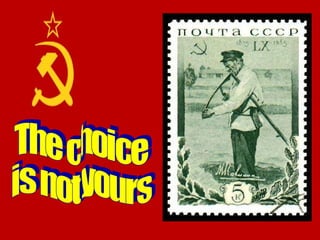
The choice  is not yours
Soviet Mentality The people accepted difficulties and sacrificing-  Czars and communists had controlled people through force, fear Promises of prosperity and something great coming soon were believed
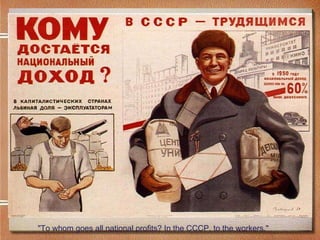
"To whom goes all national profits? In the CCCP, to the workers."
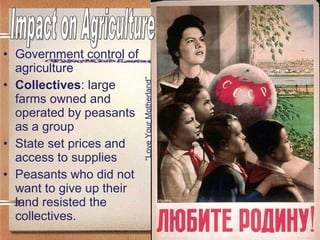
Government control of agriculture Collectives : large farms owned and operated by peasants as a group State set prices and access to supplies Peasants who did not want to give up their land resisted the collectives. “ Love Your Motherland” Impact on Agriculture
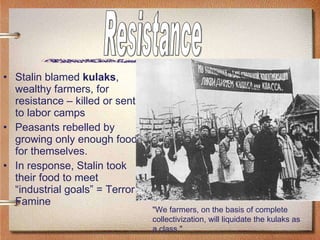
Stalin blamed  kulaks , wealthy farmers, for resistance – killed or sent to labor camps Peasants rebelled by growing only enough food for themselves.  In response, Stalin took their food to meet “industrial goals” = Terror Famine "We farmers, on the basis of complete collectivization, will liquidate the kulaks as a class."  Resistance
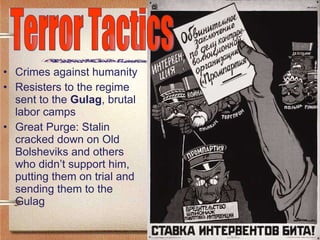
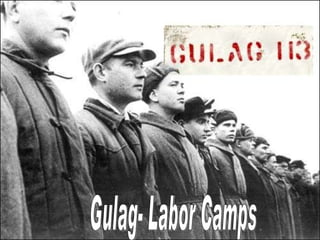
Crimes against humanity Resisters to the regime sent to the  Gulag , brutal labor camps Great Purge: Stalin cracked down on Old Bolsheviks and others who didn’t support him, putting them on trial and sending them to the Gulag Terror Tactics
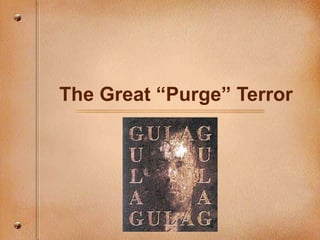
The Great “Purge” Terror
The Great (Purge) Terror Arrests- about 7 Million Executed- about 1 Million Died in camps- about 2 Million In prison, late 1938- about 1 Million In camps, late 1938- about 8 Million Only 10% in camps survived
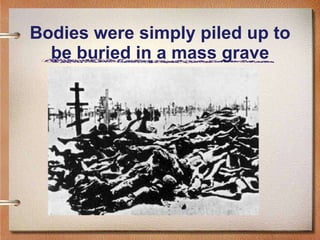
Bodies were simply piled up to be buried in a mass grave
The Great (Purge) Terror Those arrested include: Original Bolsheviks  Military Officers Party Members Stalin’s signature appears on death warrants of over 600,000
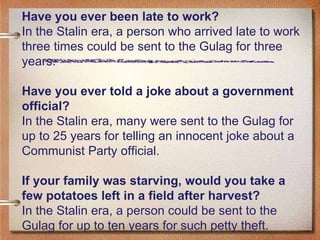
Have you ever been late to work? In the Stalin era, a person who arrived late to work three times could be sent to the Gulag for three years. Have you ever told a joke about a government official? In the Stalin era, many were sent to the Gulag for up to 25 years for telling an innocent joke about a Communist Party official. If your family was starving, would you take a few potatoes left in a field after harvest? In the Stalin era, a person could be sent to the Gulag for up to ten years for such petty theft.
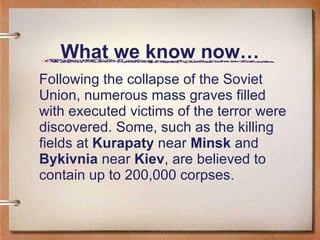
What we know now… Following the collapse of the Soviet Union, numerous mass graves filled with executed victims of the terror were discovered. Some, such as the killing fields at  Kurapaty  near  Minsk  and  Bykivnia  near  Kiev , are believed to contain up to 200,000 corpses.
Gulag- Labor Camps
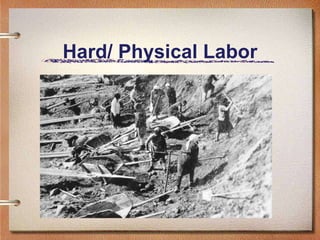
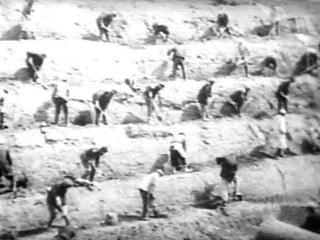
Hard/ Physical Labor
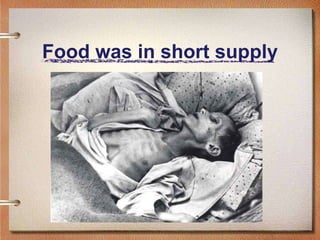
Food was in short supply
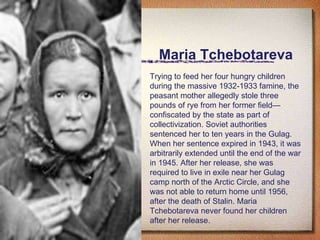
Maria Tchebotareva Trying to feed her four hungry children during the massive 1932-1933 famine, the peasant mother allegedly stole three pounds of rye from her former field—confiscated by the state as part of collectivization. Soviet authorities sentenced her to ten years in the Gulag. When her sentence expired in 1943, it was arbitrarily extended until the end of the war in 1945. After her release, she was required to live in exile near her Gulag camp north of the Arctic Circle, and she was not able to return home until 1956, after the death of Stalin. Maria Tchebotareva never found her children after her release.
 
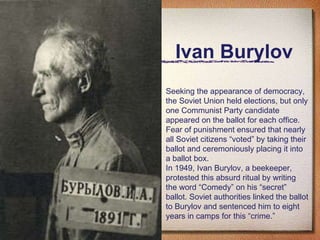
Ivan Burylov Seeking the appearance of democracy, the Soviet Union held elections, but only one Communist Party candidate appeared on the ballot for each office. Fear of punishment ensured that nearly all Soviet citizens “voted” by taking their ballot and ceremoniously placing it into a ballot box. In 1949, Ivan Burylov, a beekeeper, protested this absurd ritual by writing the word “Comedy” on his “secret” ballot. Soviet authorities linked the ballot to Burylov and sentenced him to eight years in camps for this “crime.”
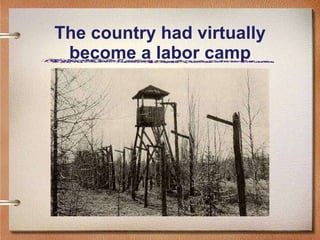
The country had virtually become a labor camp
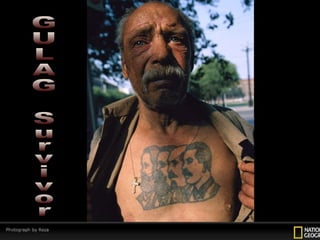
GULAG Survivor
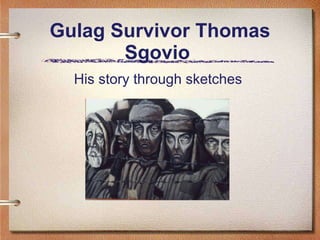
Gulag Survivor Thomas Sgovio  His story through sketches
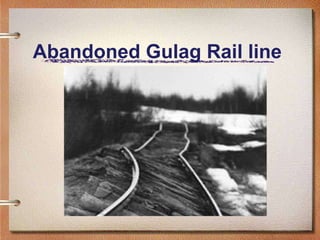
Abandoned Gulag Rail line
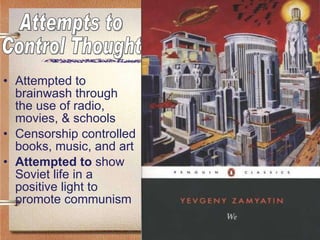
Attempted to brainwash through the use of radio, movies, & schools Censorship controlled books, music, and art Attempted to  show Soviet life in a positive light to promote communism Attempts to  Control Thought
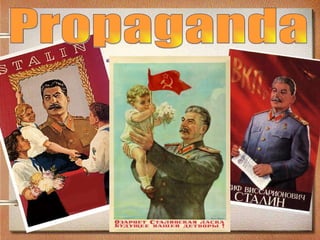
Propaganda
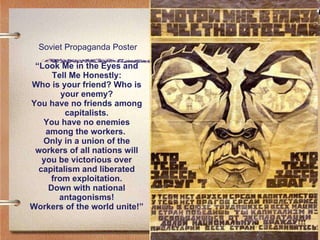
Soviet Propaganda Poster “Look Me in the Eyes and Tell Me Honestly: Who is your friend? Who is your enemy? You have no friends among capitalists. You have no enemies among the workers.  Only in a union of the workers of all nations will you be victorious over capitalism and liberated from exploitation. Down with national antagonisms! Workers of the world unite!”
 
 
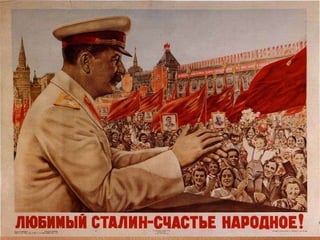
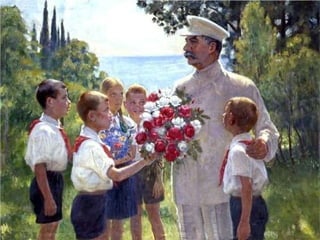
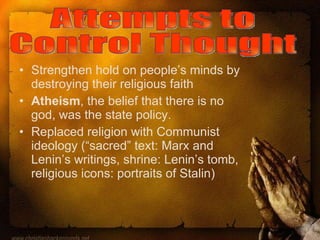
Strengthen hold on people’s minds by destroying their religious faith Atheism , the belief that there is no god, was the state policy. Replaced religion with Communist ideology (“sacred” text: Marx and Lenin’s writings, shrine: Lenin’s tomb, religious icons: portraits of Stalin) Attempts to  Control Thought
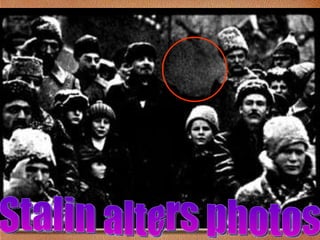
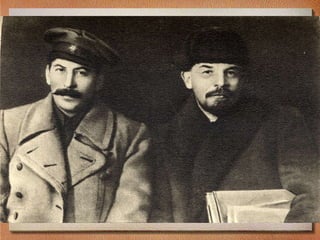
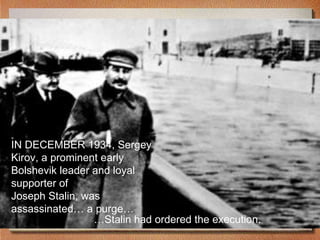
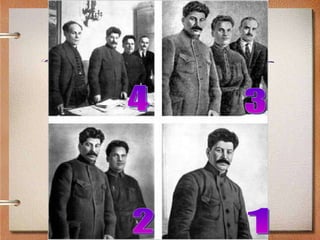
Stalin alters photos
 
IN DECEMBER 1934, Sergey Kirov, a prominent early  Bolshevik leader and loyal supporter of  Joseph Stalin, was assassinated… a purge…  … Stalin had ordered the execution.
4 3 2 1
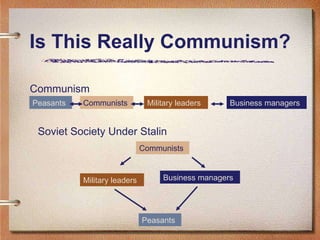
Is This Really Communism? Communism Peasants Communists Military leaders Business managers Soviet Society Under Stalin Communists Military leaders Business managers Peasants
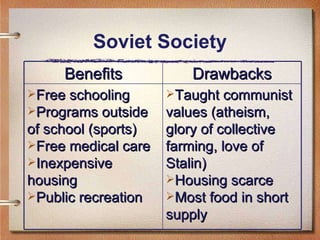
Soviet Society Benefits Drawbacks Free schooling Programs outside of school (sports) Free medical care Inexpensive housing Public recreation Taught communist values (atheism, glory of collective farming, love of Stalin) Housing scarce Most food in short supply

Russian Revolution Part 3

  • 1.
    Quick Write 2-10-10Your quick write will be on the poems on the back of your notes today. After we have read them as a class you need to answer the 5 questions that follow the poem on your paper.
  • 2.
    Revolutions in RussiaChapter 8 Stalin is in Charge Now
  • 3.
    The choice is not yours
  • 4.
    Soviet Mentality Thepeople accepted difficulties and sacrificing- Czars and communists had controlled people through force, fear Promises of prosperity and something great coming soon were believed
  • 5.
    "To whom goesall national profits? In the CCCP, to the workers."
  • 6.
    Government control ofagriculture Collectives : large farms owned and operated by peasants as a group State set prices and access to supplies Peasants who did not want to give up their land resisted the collectives. “ Love Your Motherland” Impact on Agriculture
  • 7.
    Stalin blamed kulaks , wealthy farmers, for resistance – killed or sent to labor camps Peasants rebelled by growing only enough food for themselves. In response, Stalin took their food to meet “industrial goals” = Terror Famine "We farmers, on the basis of complete collectivization, will liquidate the kulaks as a class." Resistance
  • 8.
    Crimes against humanityResisters to the regime sent to the Gulag , brutal labor camps Great Purge: Stalin cracked down on Old Bolsheviks and others who didn’t support him, putting them on trial and sending them to the Gulag Terror Tactics
  • 9.
  • 10.
    The Great (Purge)Terror Arrests- about 7 Million Executed- about 1 Million Died in camps- about 2 Million In prison, late 1938- about 1 Million In camps, late 1938- about 8 Million Only 10% in camps survived
  • 11.
    Bodies were simplypiled up to be buried in a mass grave
  • 12.
    The Great (Purge)Terror Those arrested include: Original Bolsheviks Military Officers Party Members Stalin’s signature appears on death warrants of over 600,000
  • 13.
    Have you everbeen late to work? In the Stalin era, a person who arrived late to work three times could be sent to the Gulag for three years. Have you ever told a joke about a government official? In the Stalin era, many were sent to the Gulag for up to 25 years for telling an innocent joke about a Communist Party official. If your family was starving, would you take a few potatoes left in a field after harvest? In the Stalin era, a person could be sent to the Gulag for up to ten years for such petty theft.
  • 14.
    What we knownow… Following the collapse of the Soviet Union, numerous mass graves filled with executed victims of the terror were discovered. Some, such as the killing fields at Kurapaty near Minsk and Bykivnia near Kiev , are believed to contain up to 200,000 corpses.
  • 15.
  • 16.
  • 17.
    Food was inshort supply
  • 18.
    Maria Tchebotareva Tryingto feed her four hungry children during the massive 1932-1933 famine, the peasant mother allegedly stole three pounds of rye from her former field—confiscated by the state as part of collectivization. Soviet authorities sentenced her to ten years in the Gulag. When her sentence expired in 1943, it was arbitrarily extended until the end of the war in 1945. After her release, she was required to live in exile near her Gulag camp north of the Arctic Circle, and she was not able to return home until 1956, after the death of Stalin. Maria Tchebotareva never found her children after her release.
  • 19.
  • 20.
    Ivan Burylov Seekingthe appearance of democracy, the Soviet Union held elections, but only one Communist Party candidate appeared on the ballot for each office. Fear of punishment ensured that nearly all Soviet citizens “voted” by taking their ballot and ceremoniously placing it into a ballot box. In 1949, Ivan Burylov, a beekeeper, protested this absurd ritual by writing the word “Comedy” on his “secret” ballot. Soviet authorities linked the ballot to Burylov and sentenced him to eight years in camps for this “crime.”
  • 21.
    The country hadvirtually become a labor camp
  • 22.
  • 23.
    Gulag Survivor ThomasSgovio His story through sketches
  • 24.
  • 25.
    Attempted to brainwashthrough the use of radio, movies, & schools Censorship controlled books, music, and art Attempted to show Soviet life in a positive light to promote communism Attempts to Control Thought
  • 26.
  • 27.
    Soviet Propaganda Poster“Look Me in the Eyes and Tell Me Honestly: Who is your friend? Who is your enemy? You have no friends among capitalists. You have no enemies among the workers. Only in a union of the workers of all nations will you be victorious over capitalism and liberated from exploitation. Down with national antagonisms! Workers of the world unite!”
  • 28.
  • 29.
  • 30.
    Strengthen hold onpeople’s minds by destroying their religious faith Atheism , the belief that there is no god, was the state policy. Replaced religion with Communist ideology (“sacred” text: Marx and Lenin’s writings, shrine: Lenin’s tomb, religious icons: portraits of Stalin) Attempts to Control Thought
  • 31.
  • 32.
  • 33.
    IN DECEMBER 1934,Sergey Kirov, a prominent early Bolshevik leader and loyal supporter of Joseph Stalin, was assassinated… a purge… … Stalin had ordered the execution.
  • 34.
  • 35.
    Is This ReallyCommunism? Communism Peasants Communists Military leaders Business managers Soviet Society Under Stalin Communists Military leaders Business managers Peasants
  • 36.
    Soviet Society BenefitsDrawbacks Free schooling Programs outside of school (sports) Free medical care Inexpensive housing Public recreation Taught communist values (atheism, glory of collective farming, love of Stalin) Housing scarce Most food in short supply