NEUROPLASTICITY AND
  NEURODEGENERATION
Adapted from Steven Stahl, MD, PHD
Synaptic development and synaptic
            neurotransmission.
•   Neurodevelopment
•   Neuronal selection
•   Neuronal migration
•   Synaptogenesis
•   Competitive elimination
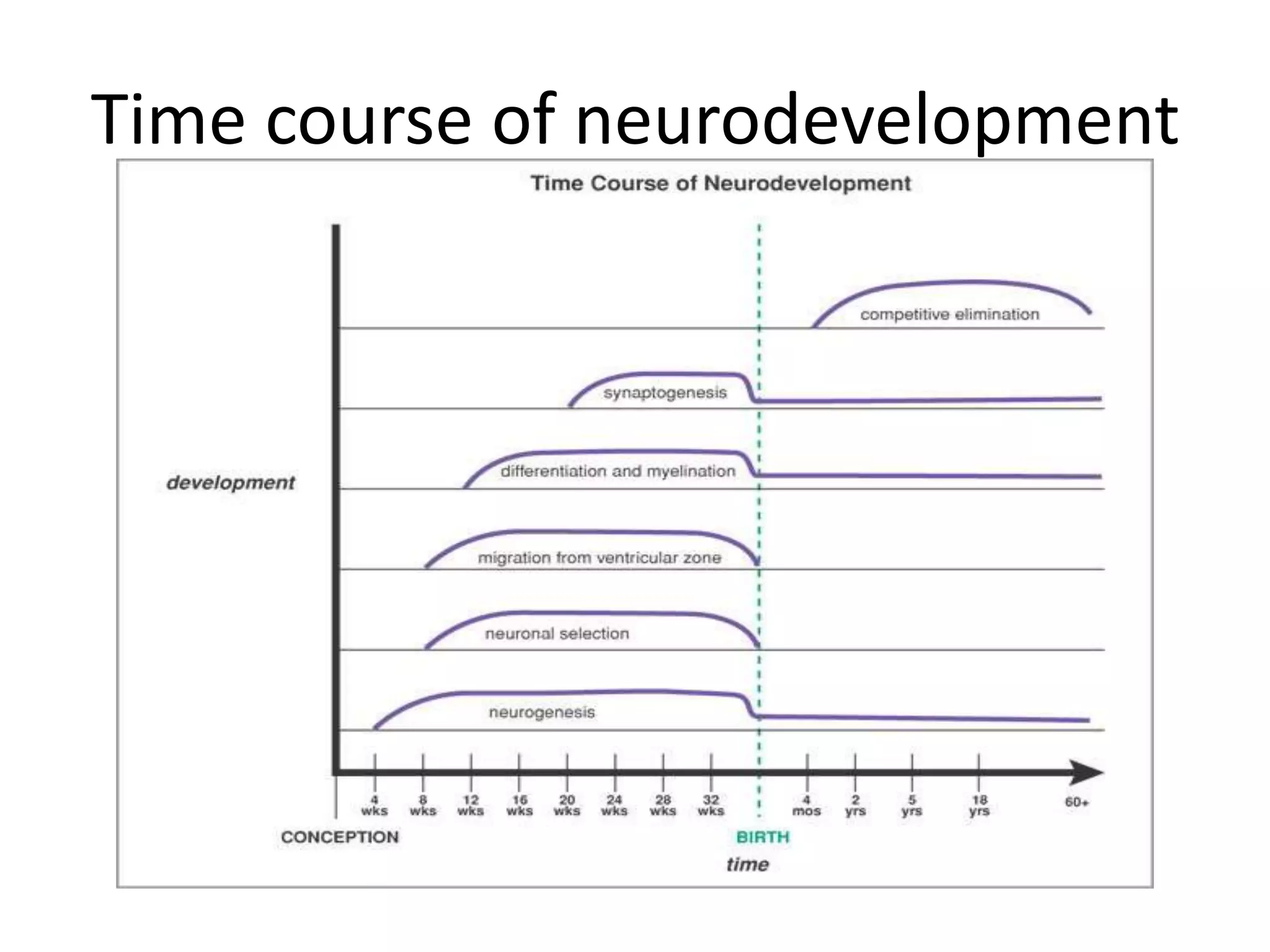
Time course of neurodevelopment
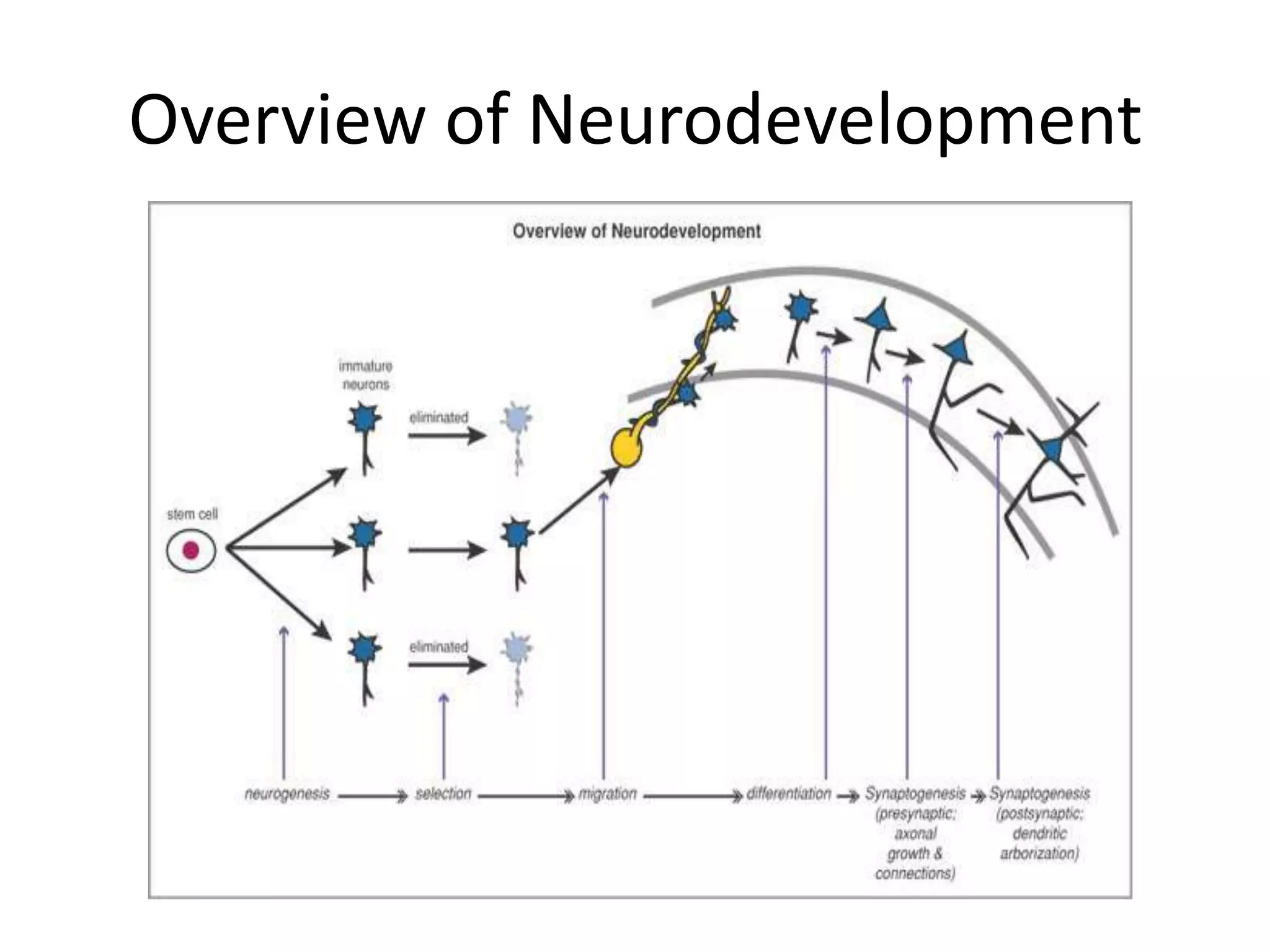
Overview of Neurodevelopment
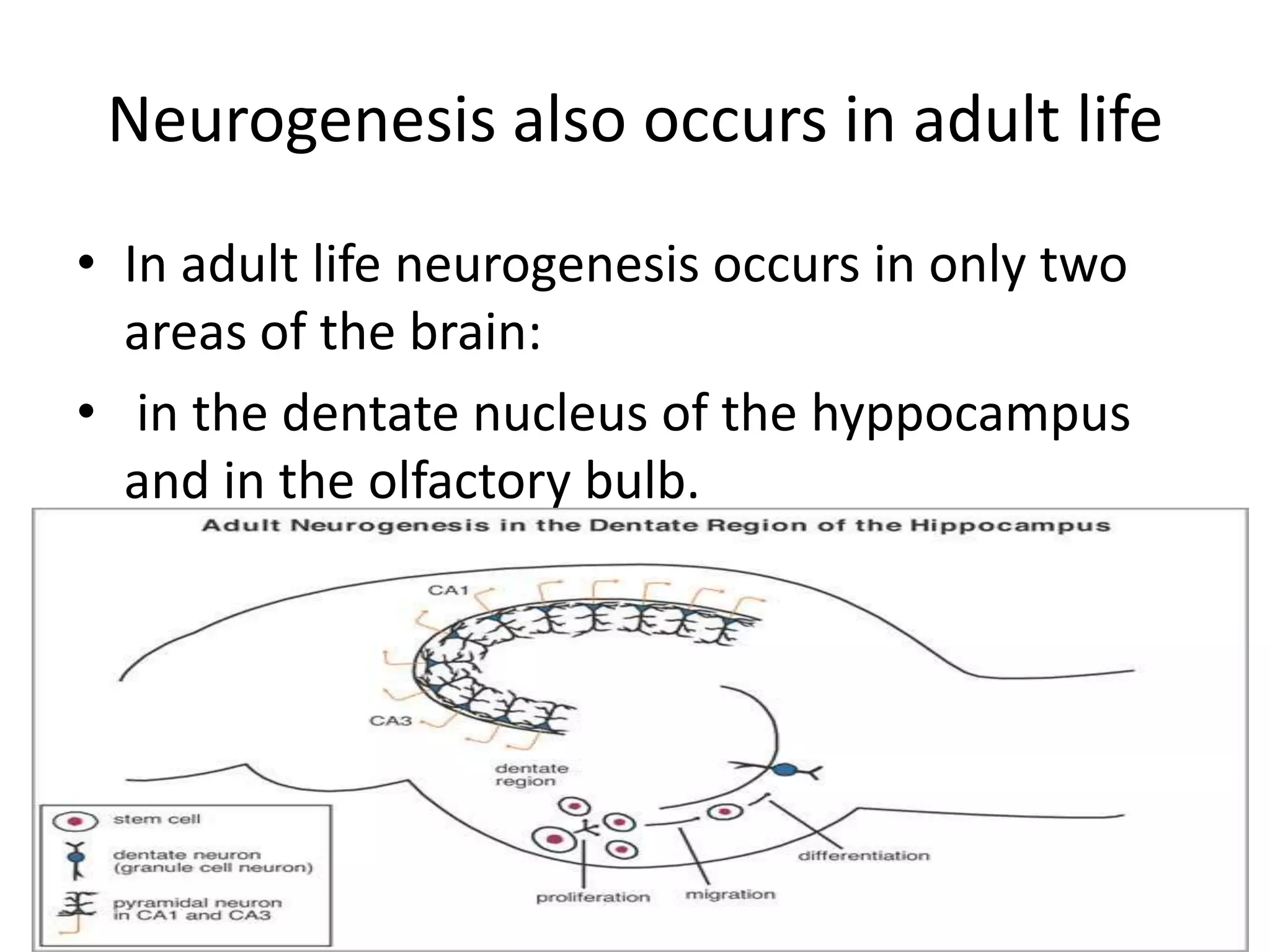
Neurogenesis also occurs in adult life
• In adult life neurogenesis occurs in only two
  areas of the brain:
• in the dentate nucleus of the hyppocampus
  and in the olfactory bulb.
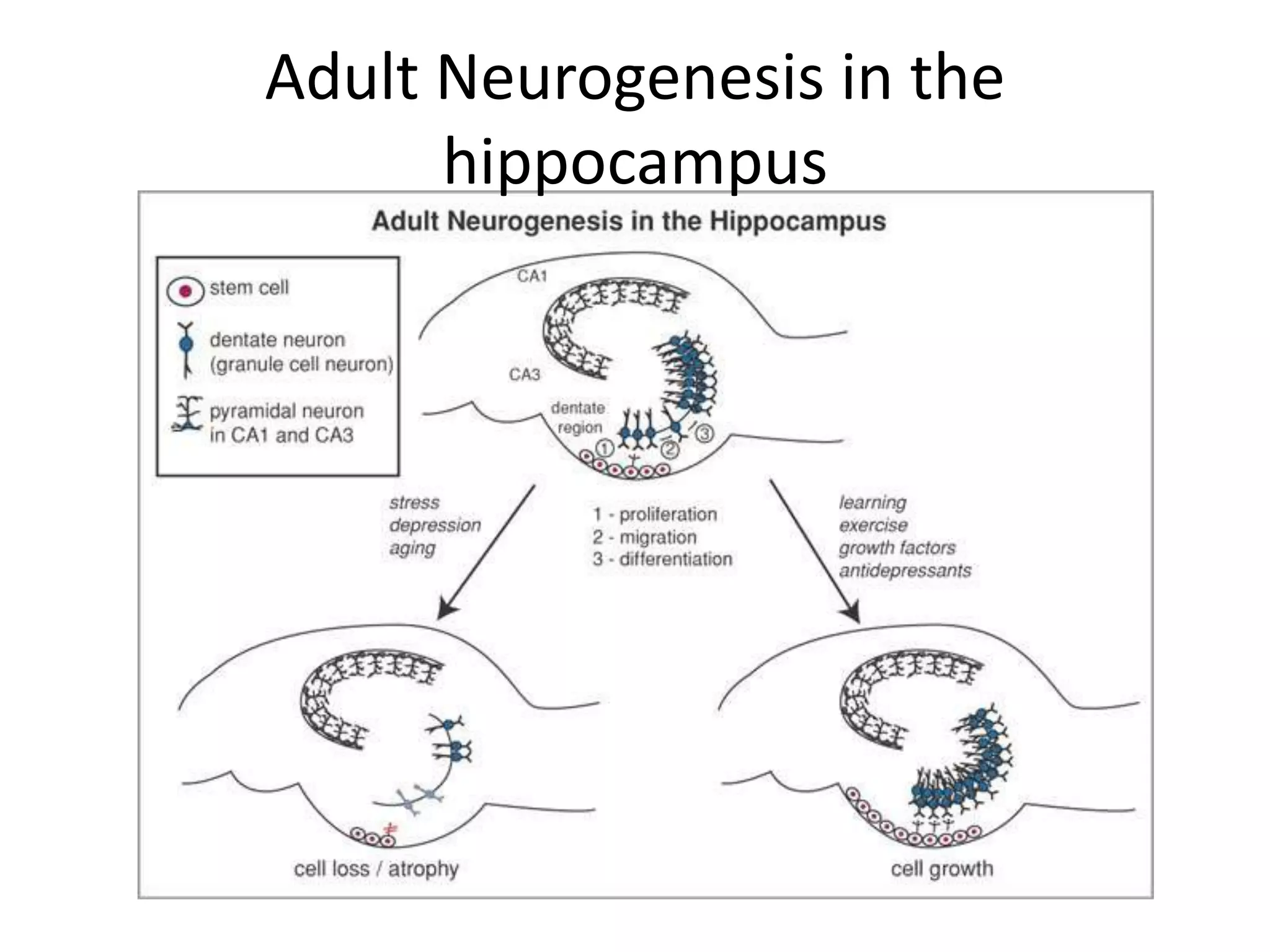
Adult Neurogenesis in the
      hippocampus
Synapse loss and restoration
• Stress, aging and neurodegeneration can
  cause loss of the synapse with or without
  neuronal loss.
• Learning, exercise, growth factors,
  antidepressants and psychotherapy cause
  restoration of the synapse and of neurons.
• Transplantation of stem cells is another way to
  restore the neurons or the synapses.
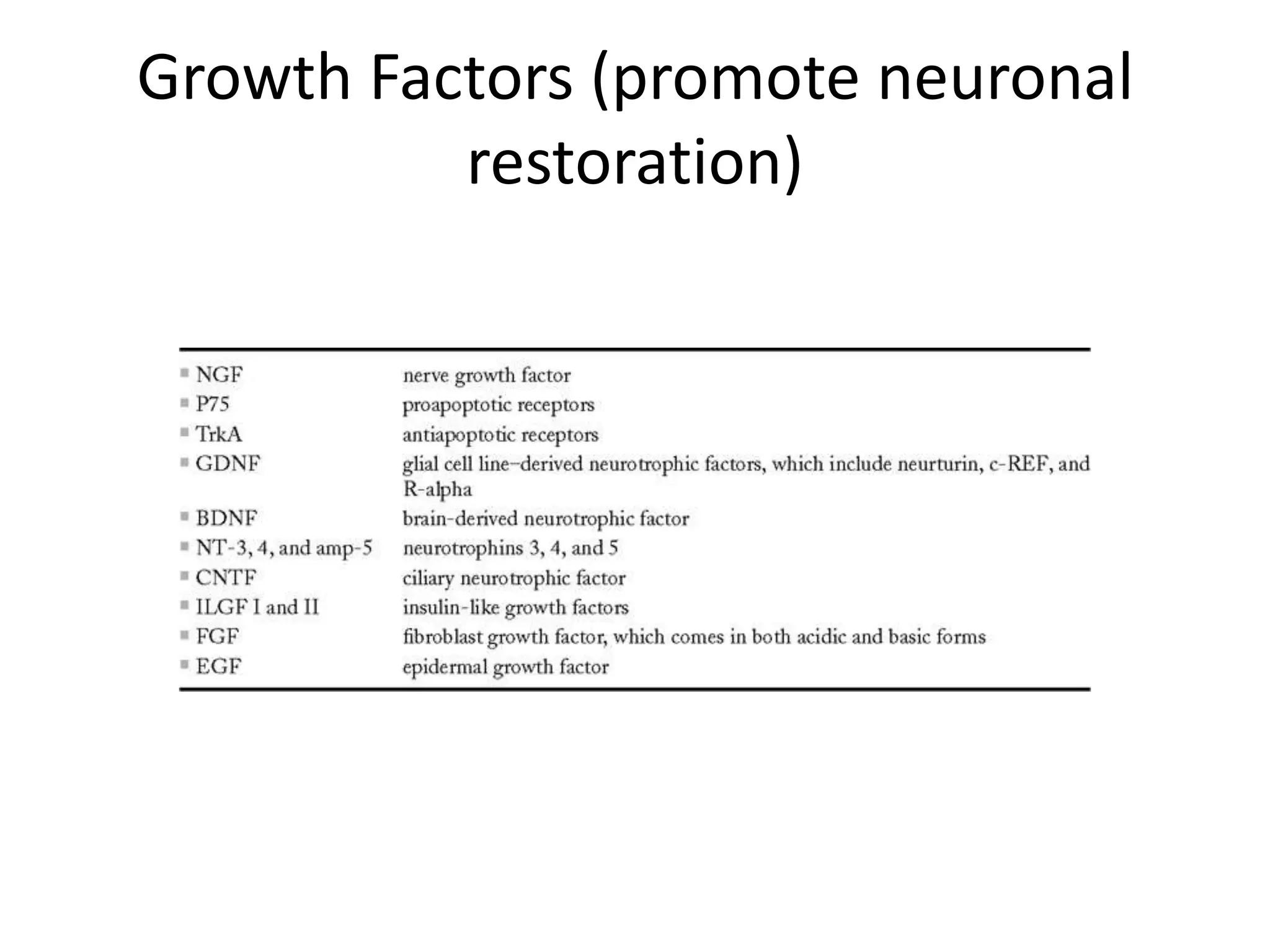
Growth Factors (promote neuronal
          restoration)
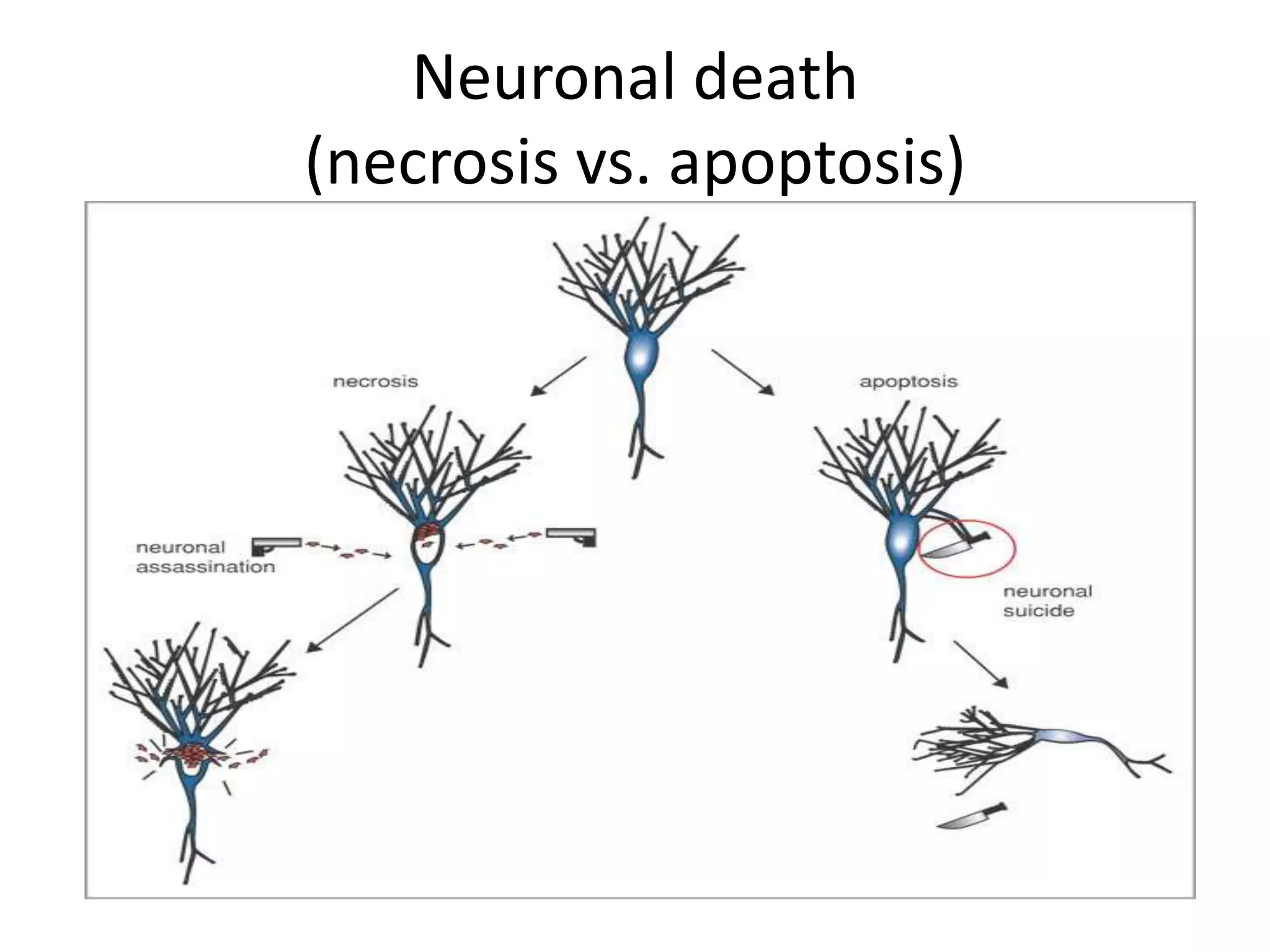
Necrosis vs. Apoptosis
• In necrosis neurons are being destroyed by
  suffocation or toxins/poisons(neuronal
  assassination).
• In apoptosis neurons are being destroyed by
  the activation of a gene inside the cell’s
  DNA(neuronal suicide).
Neuronal death
(necrosis vs. apoptosis)
Neurodevelopment
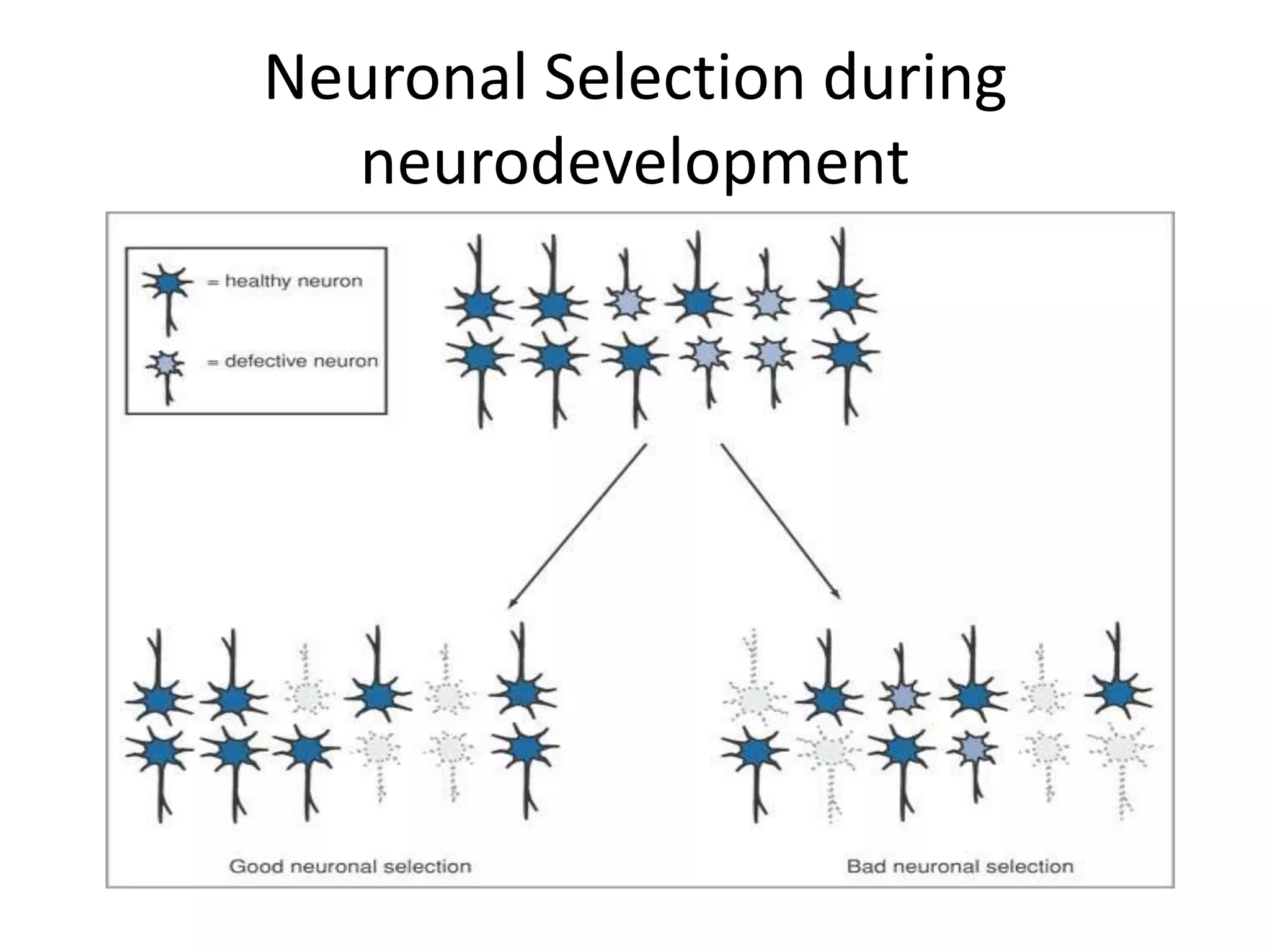
• During neurodevelopment, neurons are
  formed in excess (some are normal and some
  are defective) then they are selected for
  performing their duties.
• The defective neurons are eliminated.
• In developmental disorders the defective
  neurons may be selected leading to a
  neurologic or psychiatric condition.
Neuronal Selection during
  neurodevelopment
Neuronal Migration
• After neurons are selected, they must migrate to
  the right parts of the brain.
• In order to migrate, neurons trace either glial
  cells or the neurons that already migrated.
• Migration is helped by adhesion molecules on the
  neuronal surfaces and complementary molecules
  on the glia.
• If migration is successful, the neurons are
  properly aligned to grow, develop and form
  synapses.
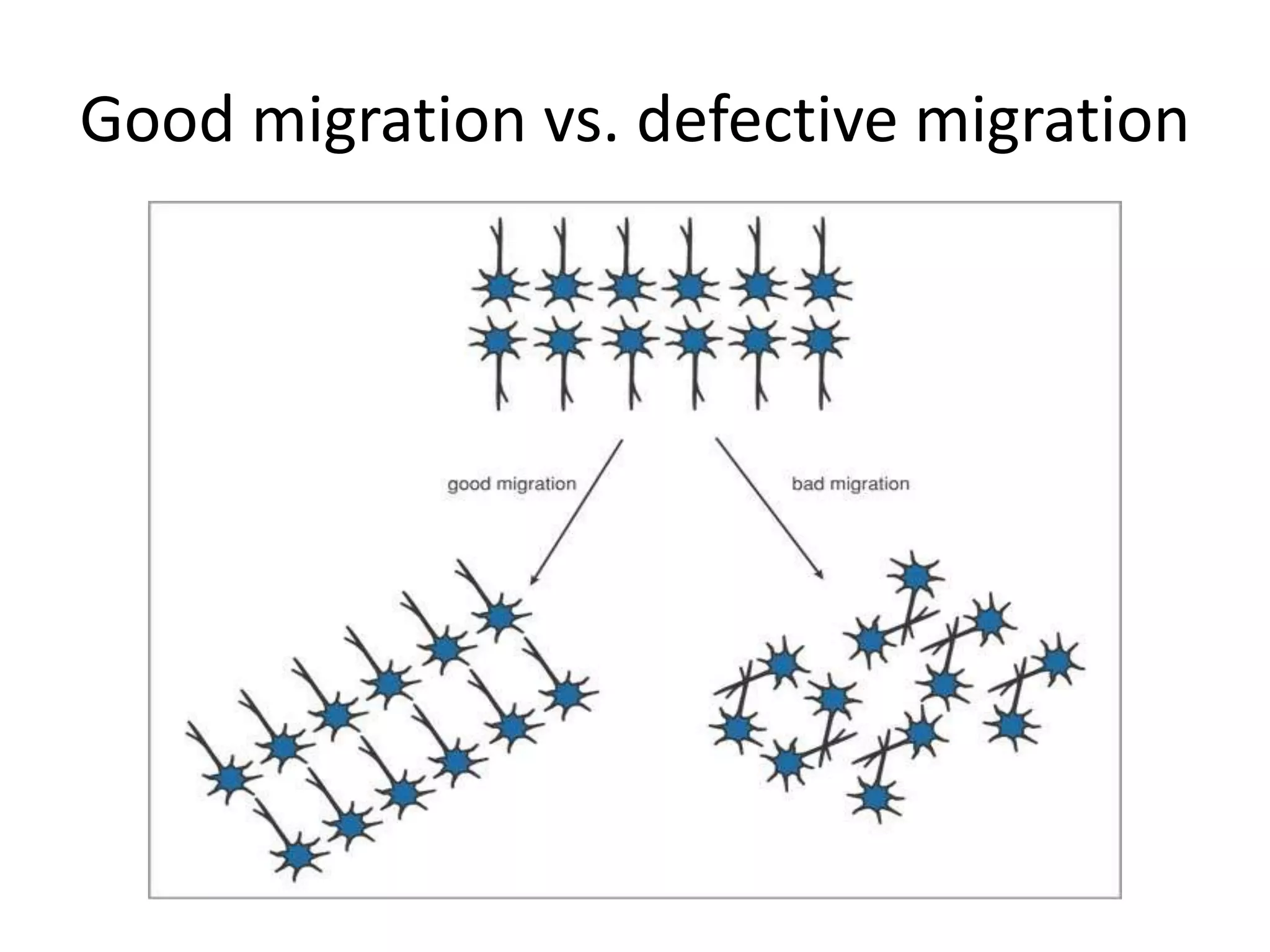
Good migration vs. defective migration
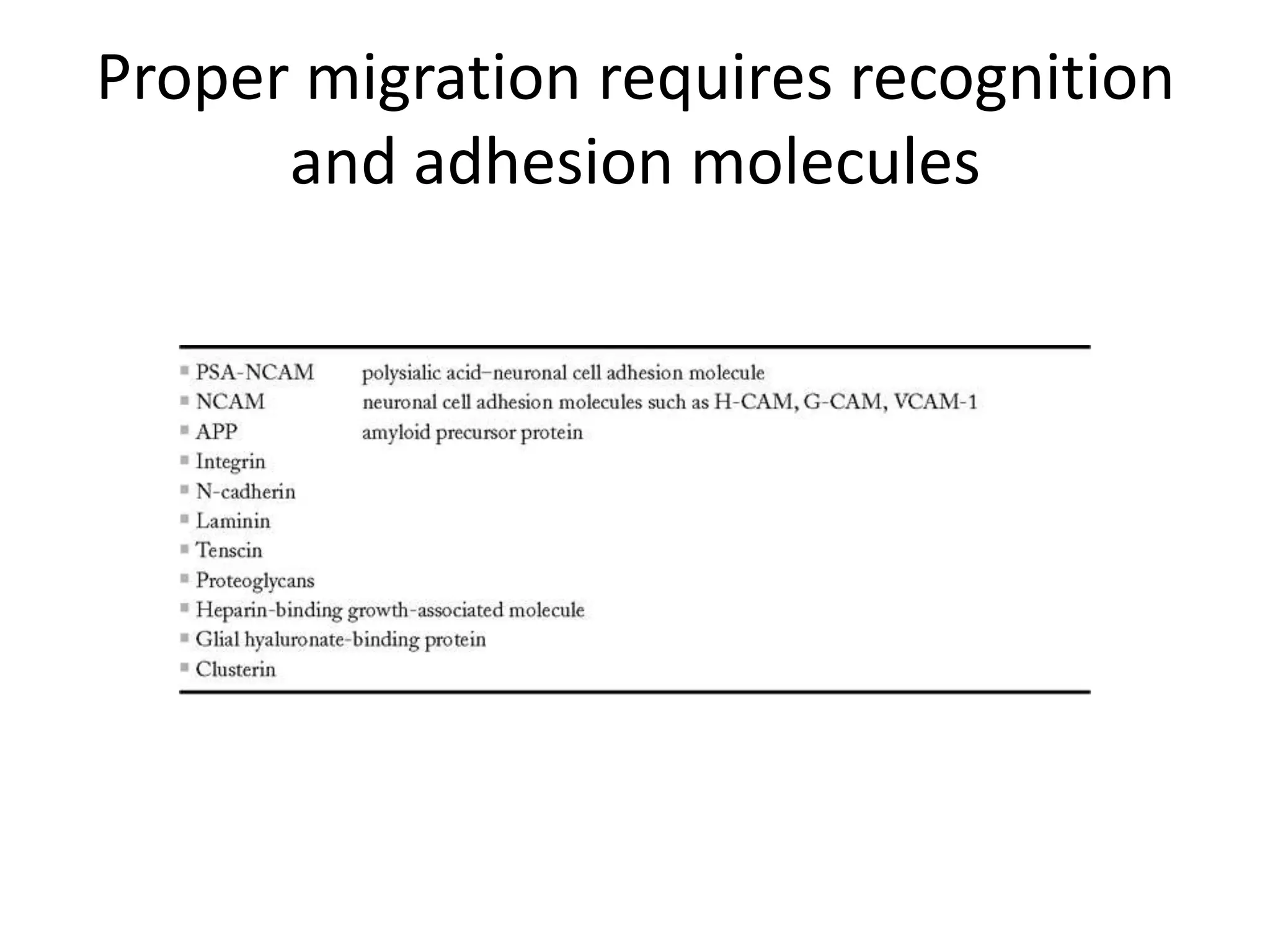
Proper migration requires recognition
      and adhesion molecules
Synaptogenesis
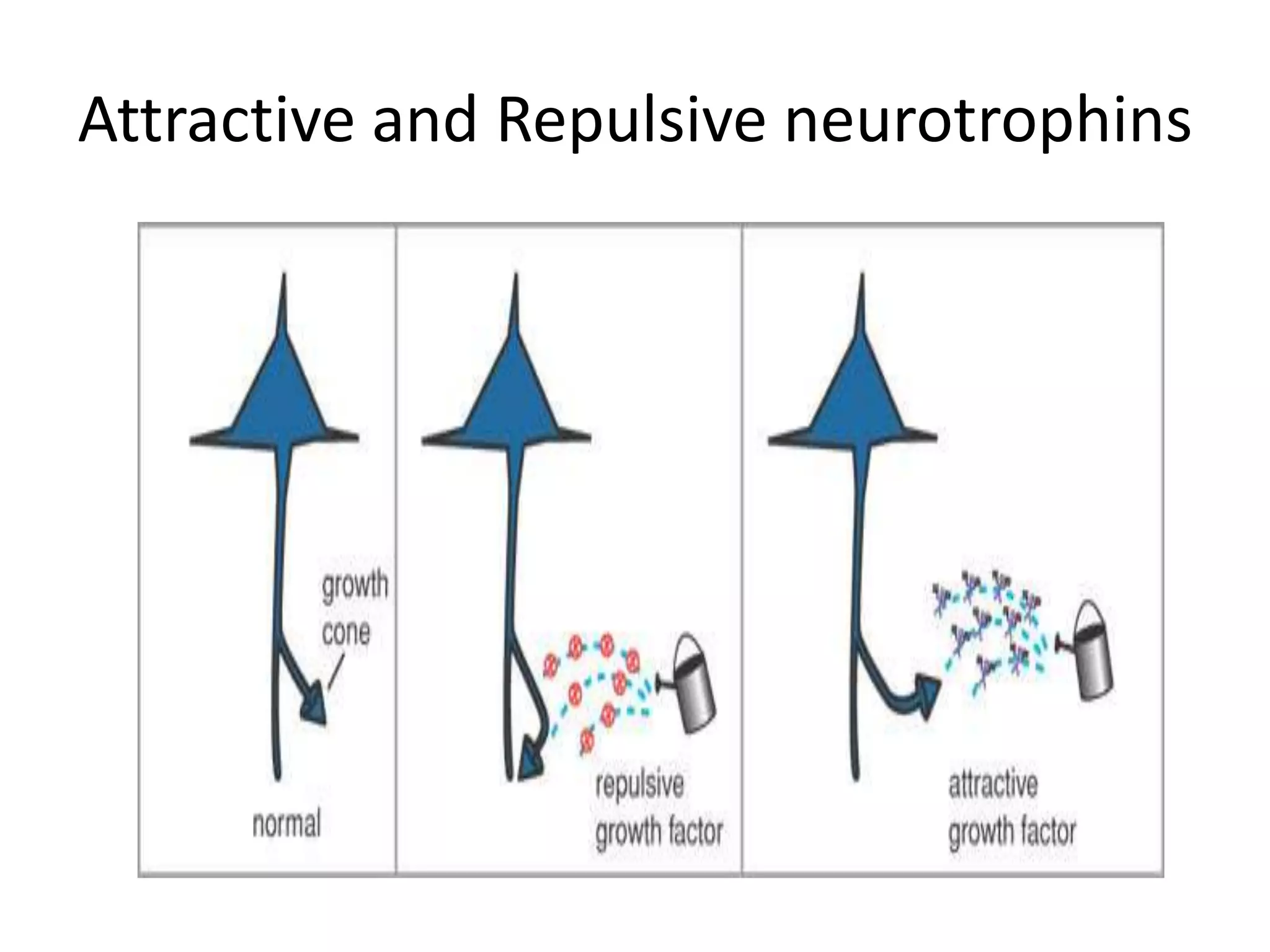
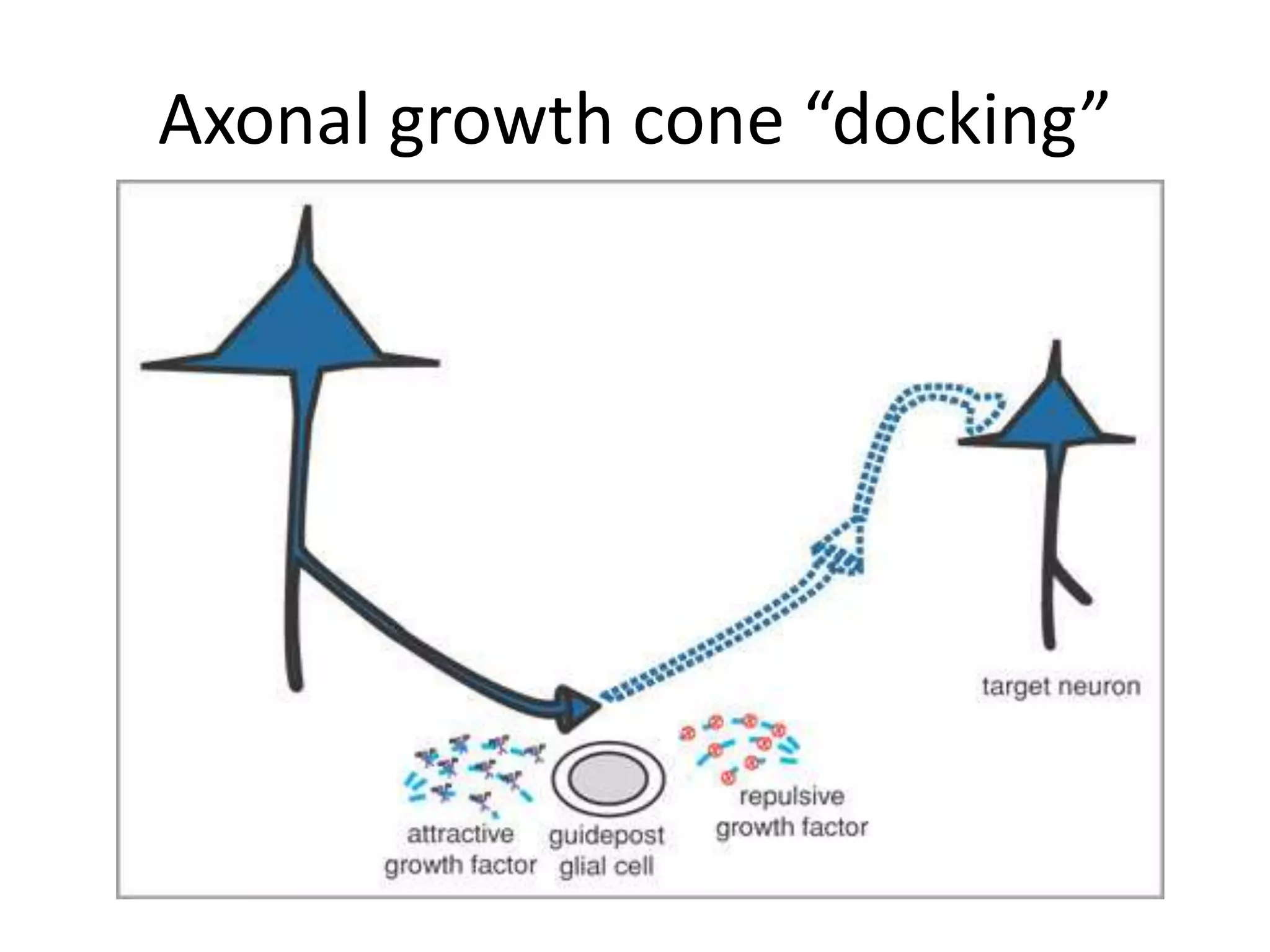
• Synaptogenesis is directed by neurotrophins.
• Neurotrophins are molecules that cause neurons
  to sprout an axonal growth cone.
• Once the growth cone is formed the neurons and
  glia in the area make recognition molecules that
  can be ATTRACTIVE or REPULSIVE.
• Repulsive neurotrophins cause the neurons to
  grow away from them, while attractive
  neurotrophins cause the neurons to grow
  towards them.
Attractive and Repulsive neurotrophins
Axonal growth cone “docking”
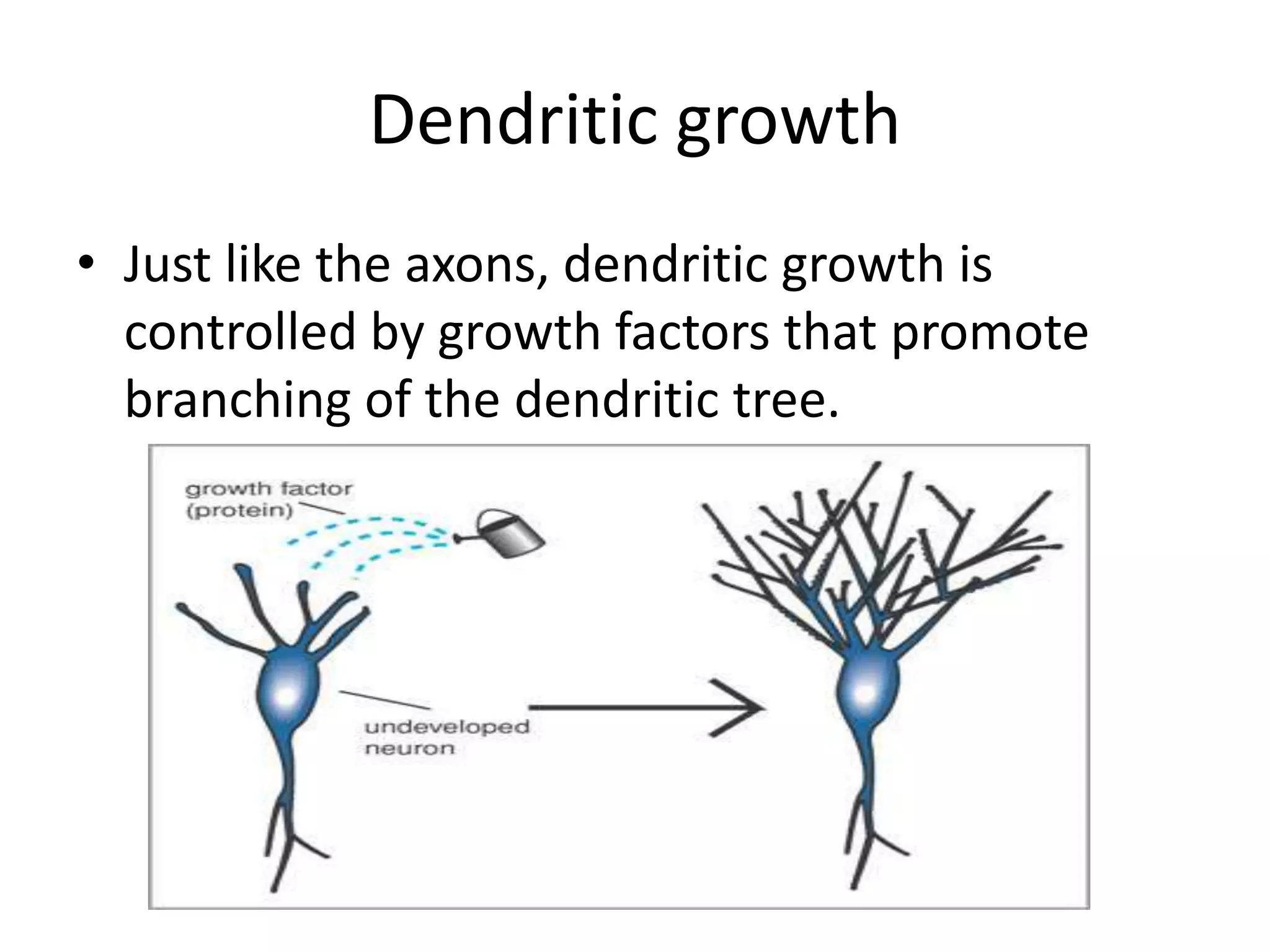
Dendritic growth
• Just like the axons, dendritic growth is
  controlled by growth factors that promote
  branching of the dendritic tree.
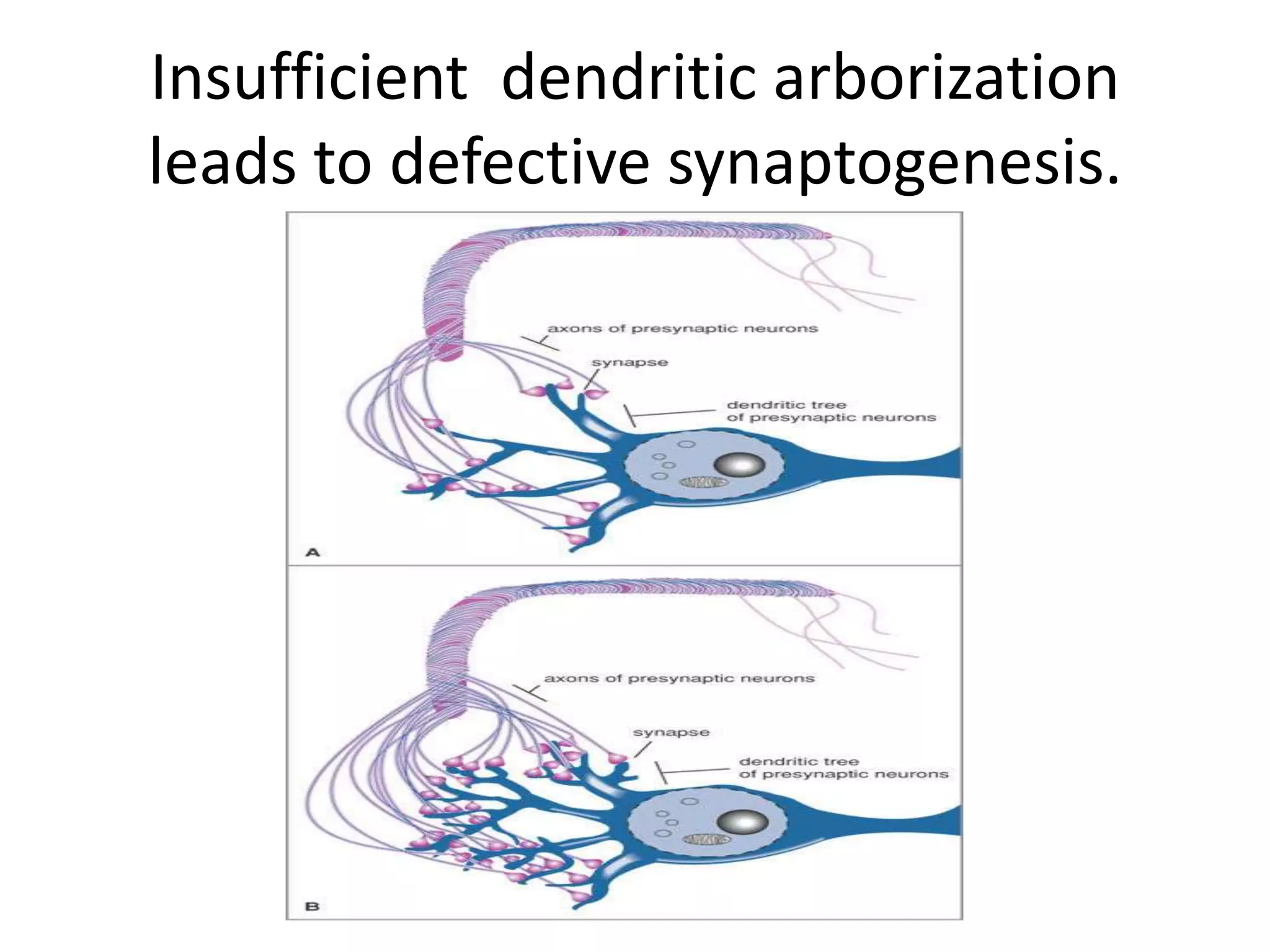
Insufficient dendritic arborization
leads to defective synaptogenesis.
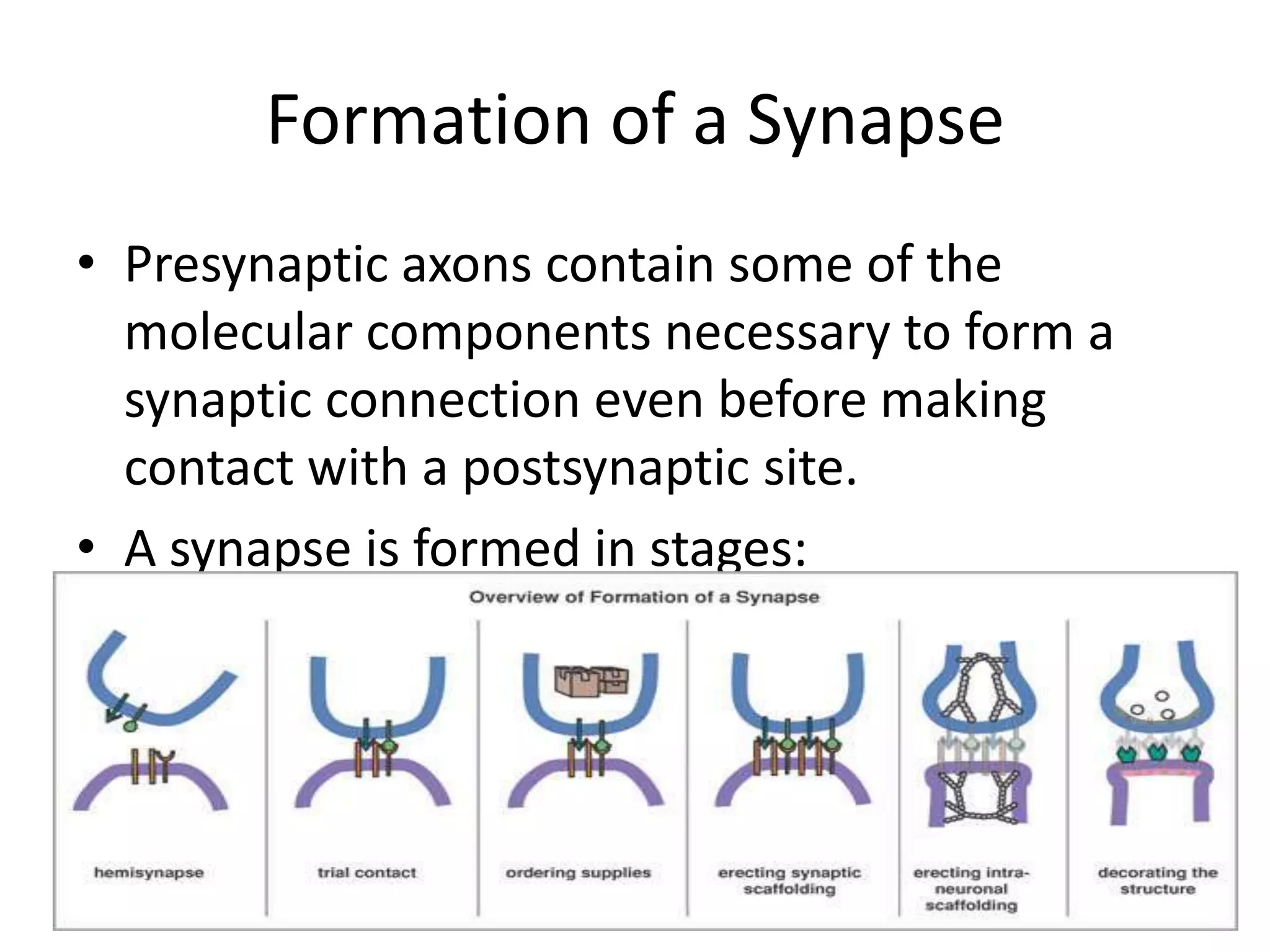
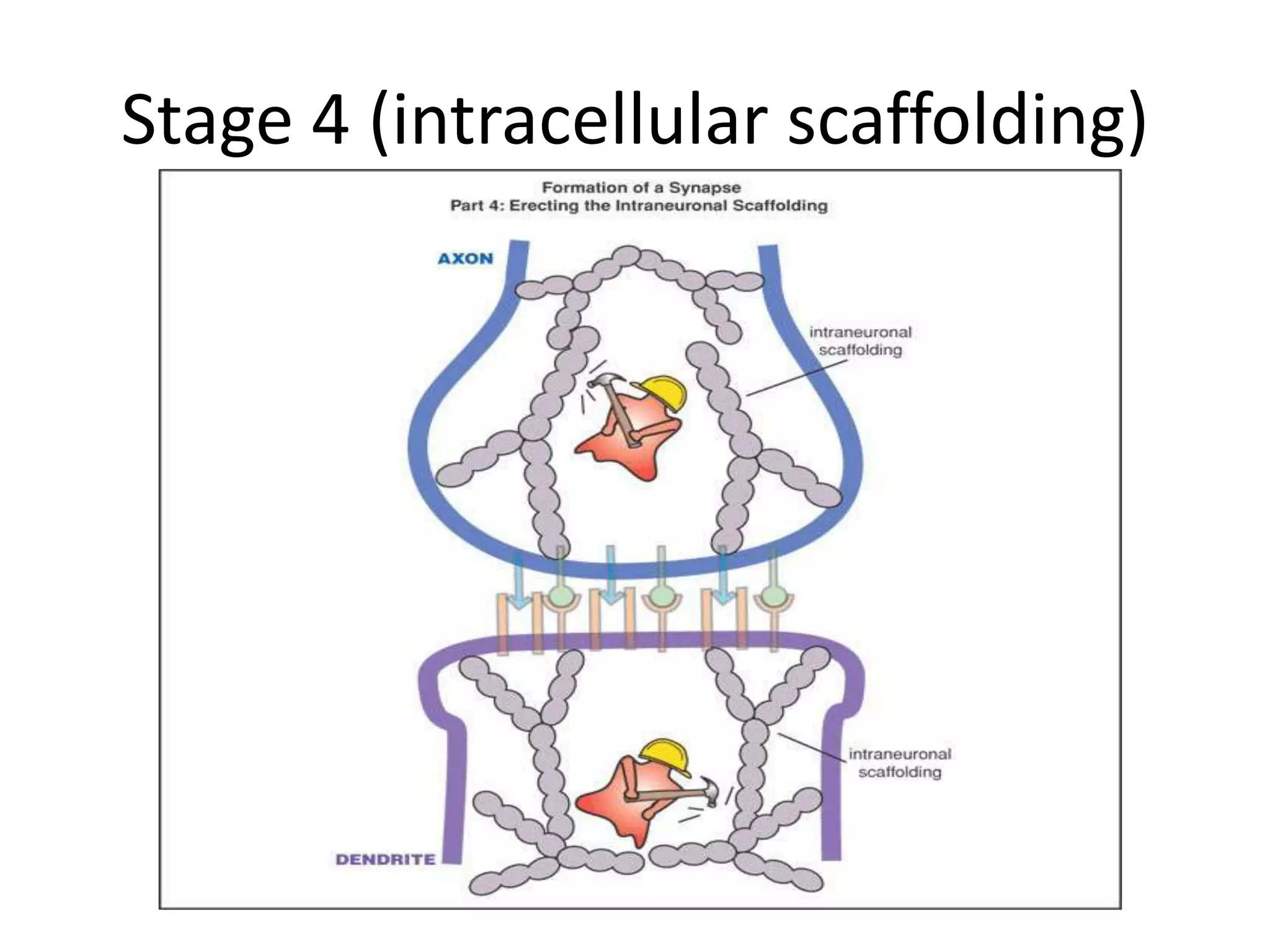
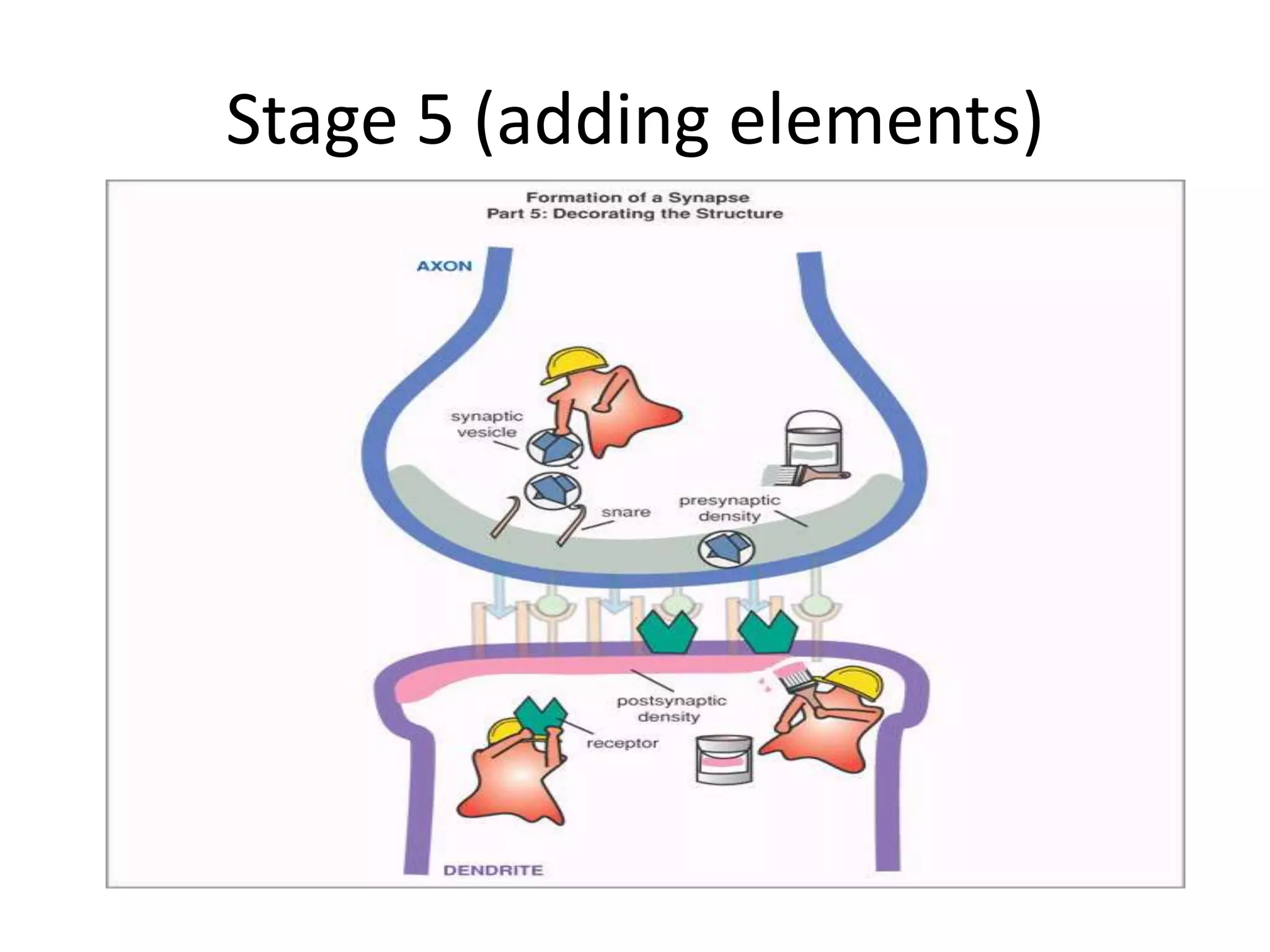
Formation of a Synapse
• Presynaptic axons contain some of the
  molecular components necessary to form a
  synaptic connection even before making
  contact with a postsynaptic site.
• A synapse is formed in stages:
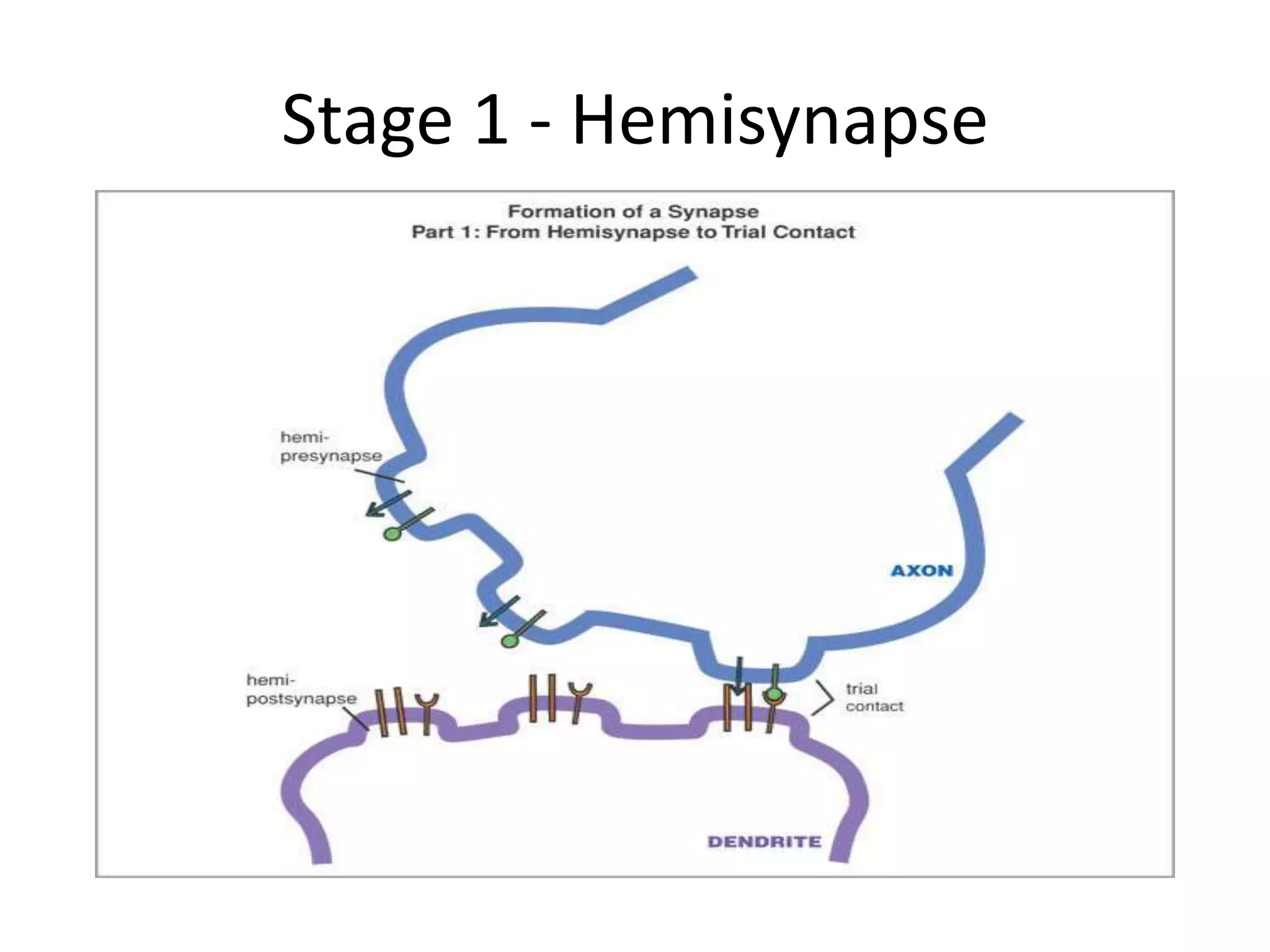
Stage 1 - Hemisynapse
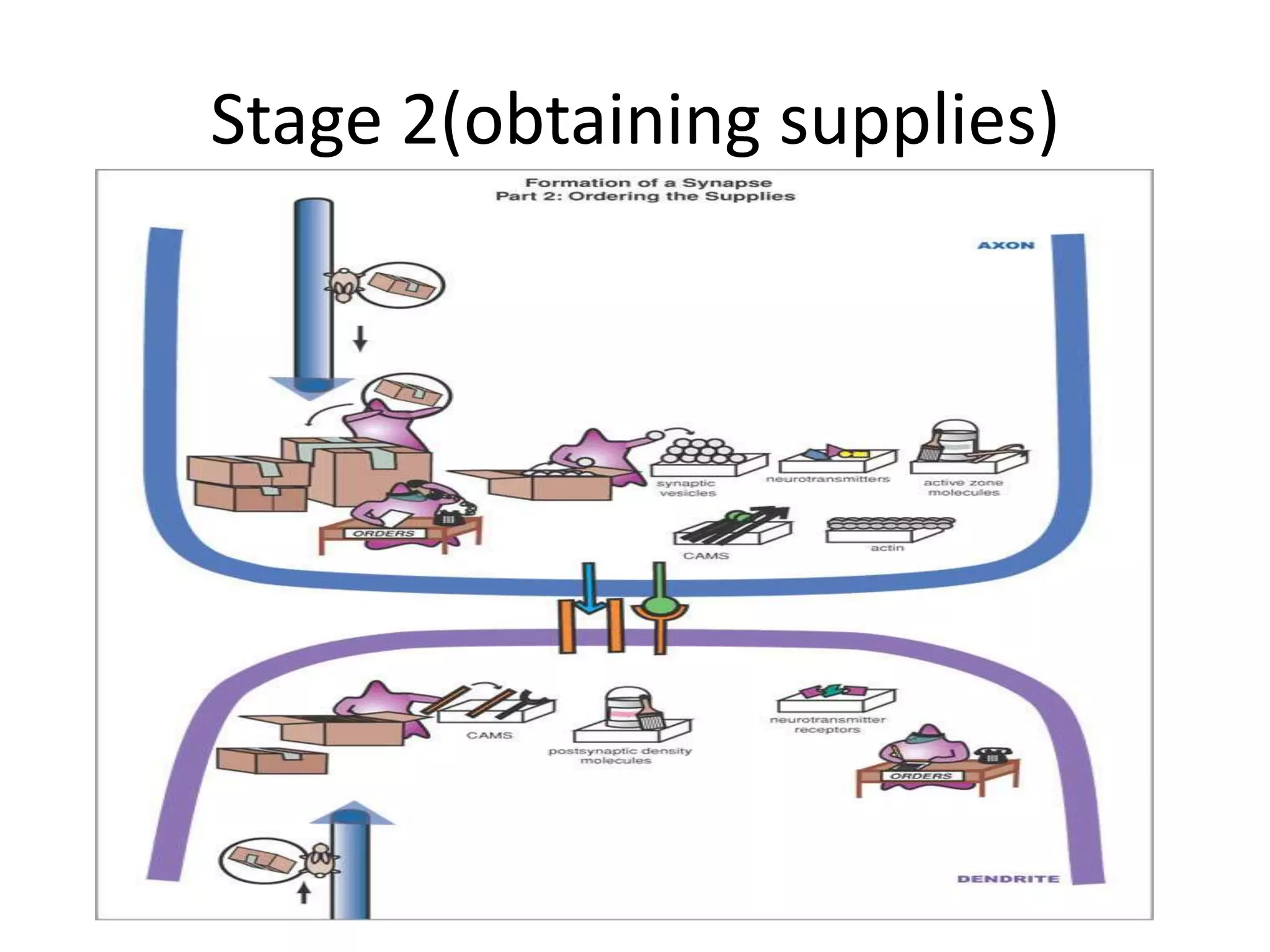
Stage 2(obtaining supplies)
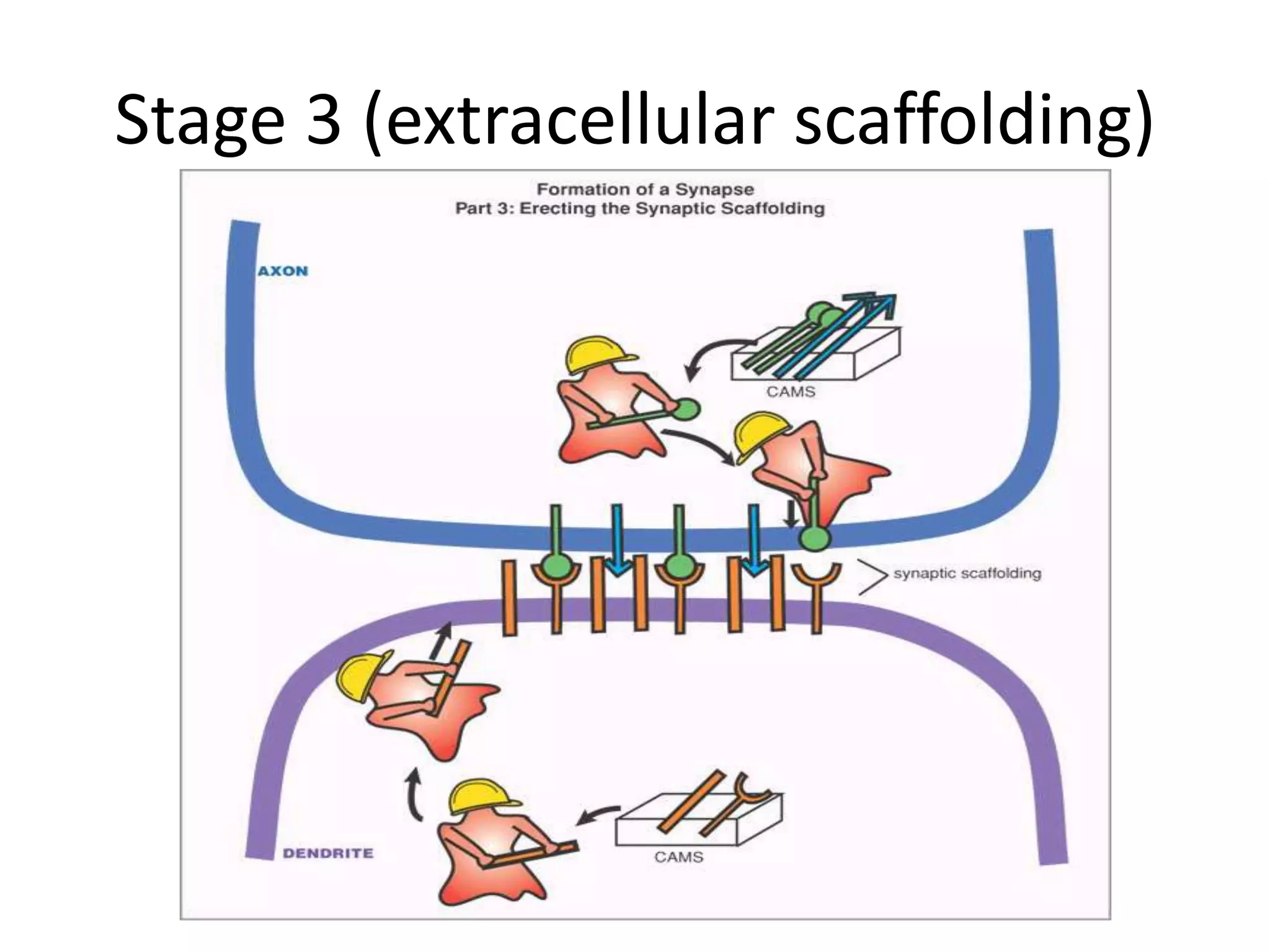
Stage 3 (extracellular scaffolding)
Stage 4 (intracellular scaffolding)
Stage 5 (adding elements)
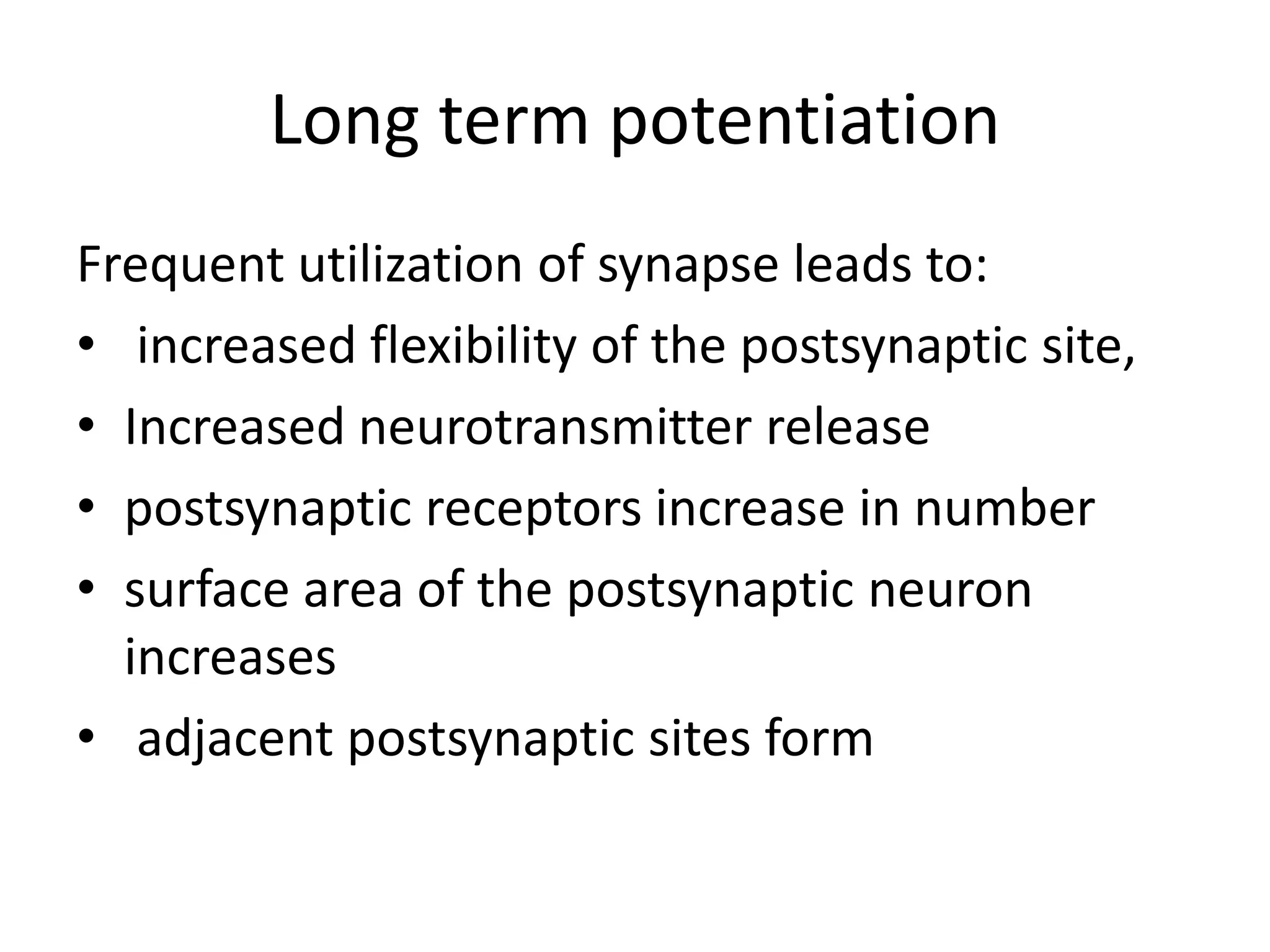
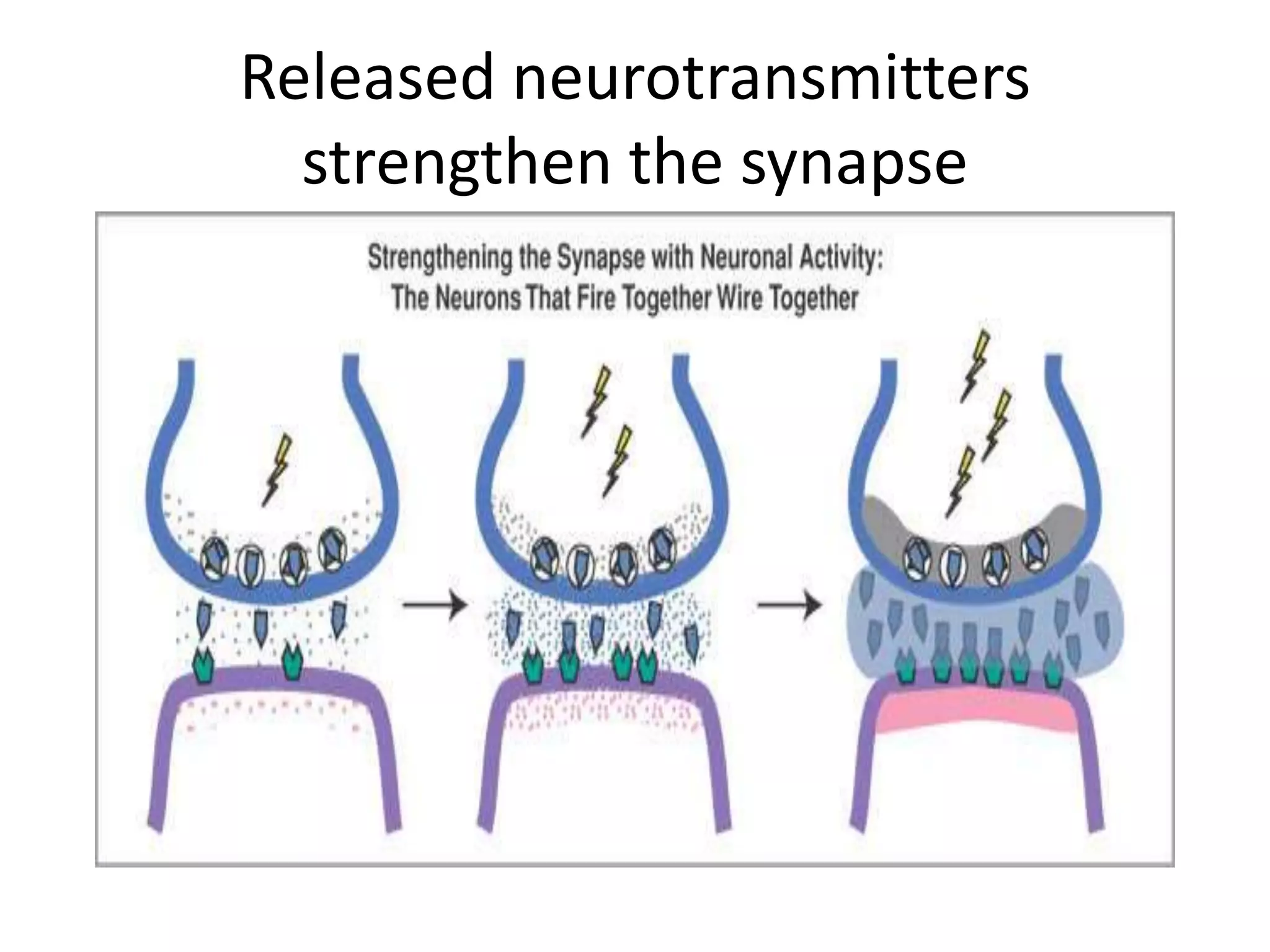
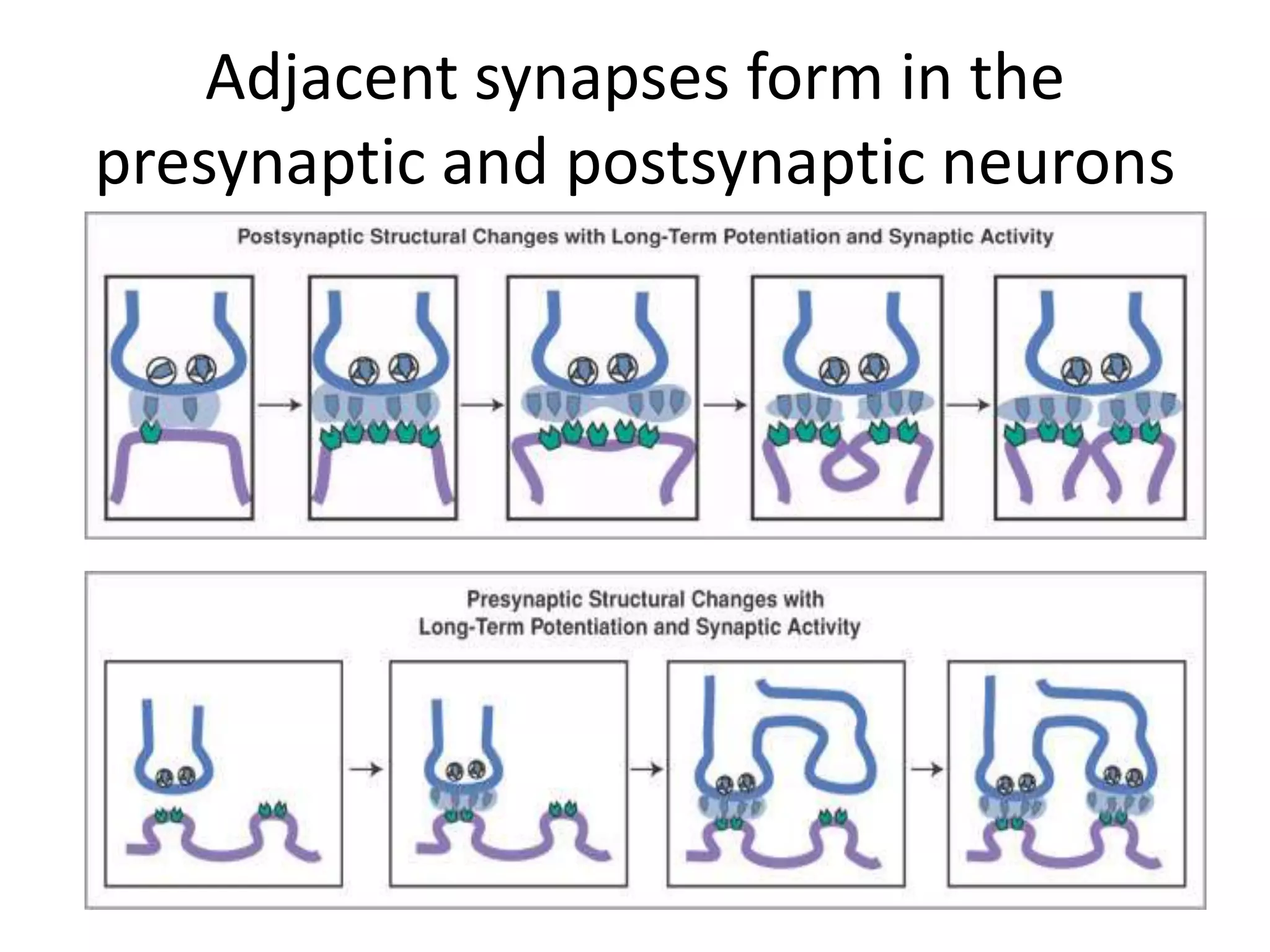
Long term potentiation
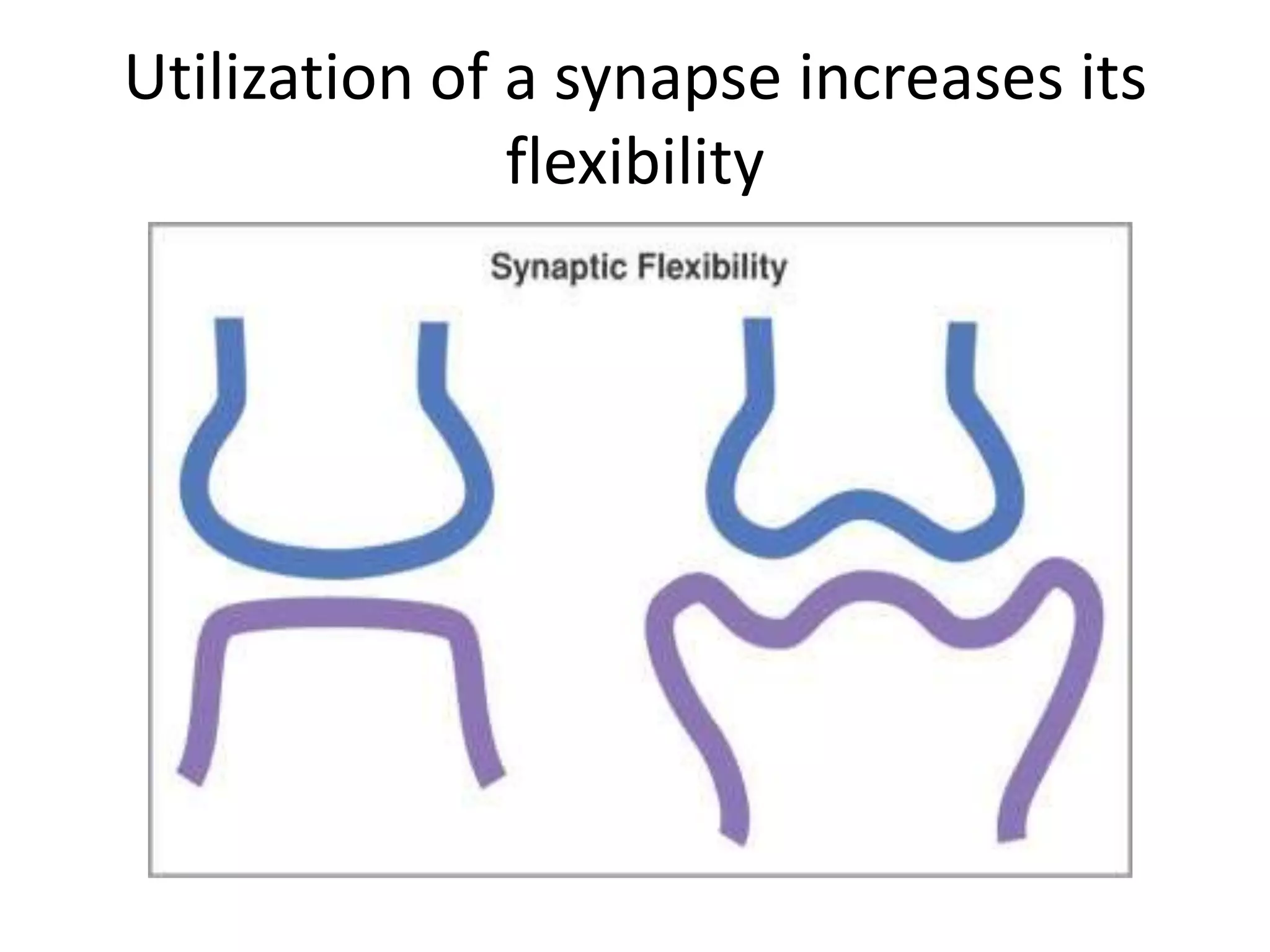
Frequent utilization of synapse leads to:
• increased flexibility of the postsynaptic site,
• Increased neurotransmitter release
• postsynaptic receptors increase in number
• surface area of the postsynaptic neuron
  increases
• adjacent postsynaptic sites form
Utilization of a synapse increases its
               flexibility
Released neurotransmitters
  strengthen the synapse
Adjacent synapses form in the
presynaptic and postsynaptic neurons
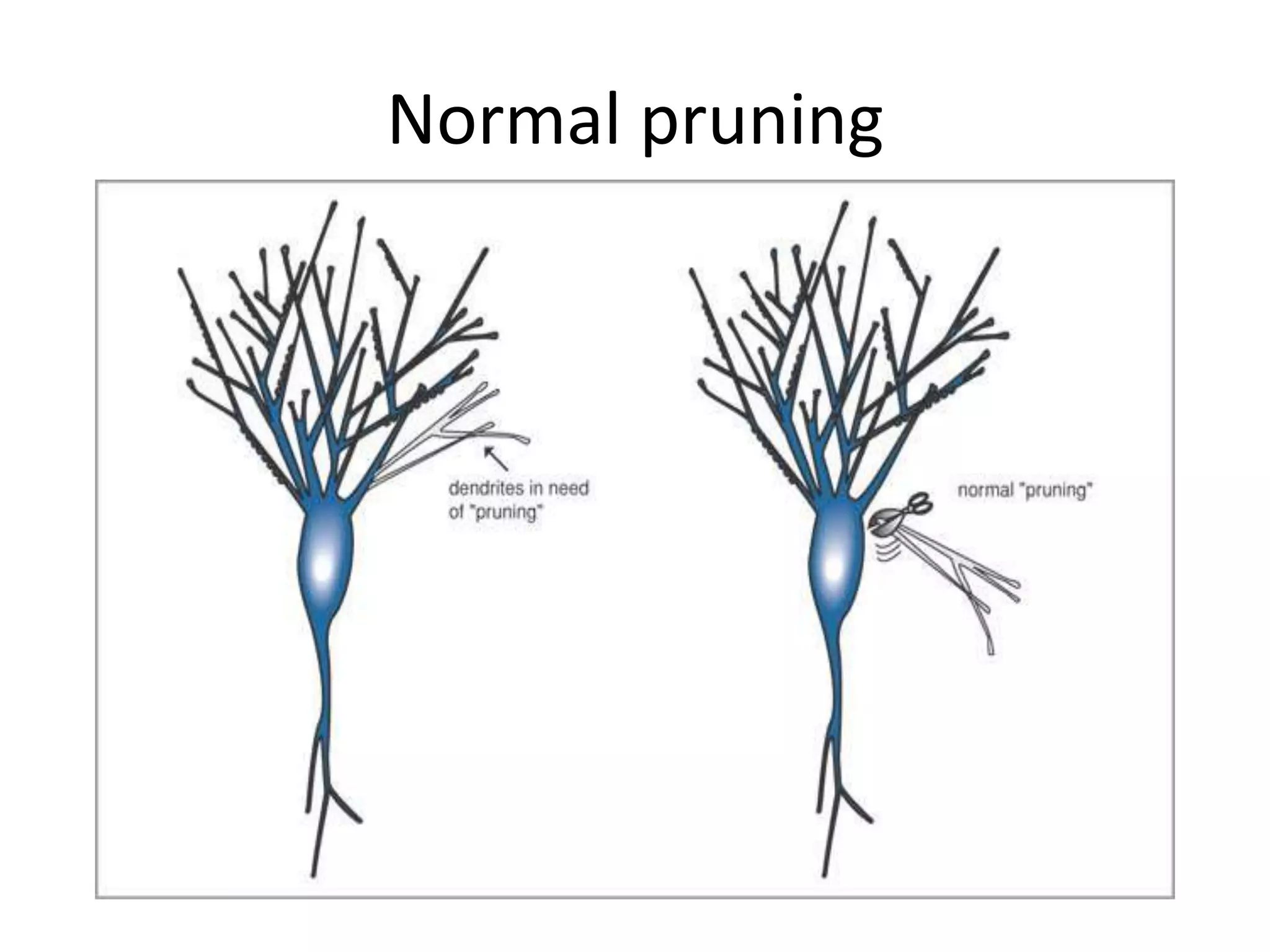
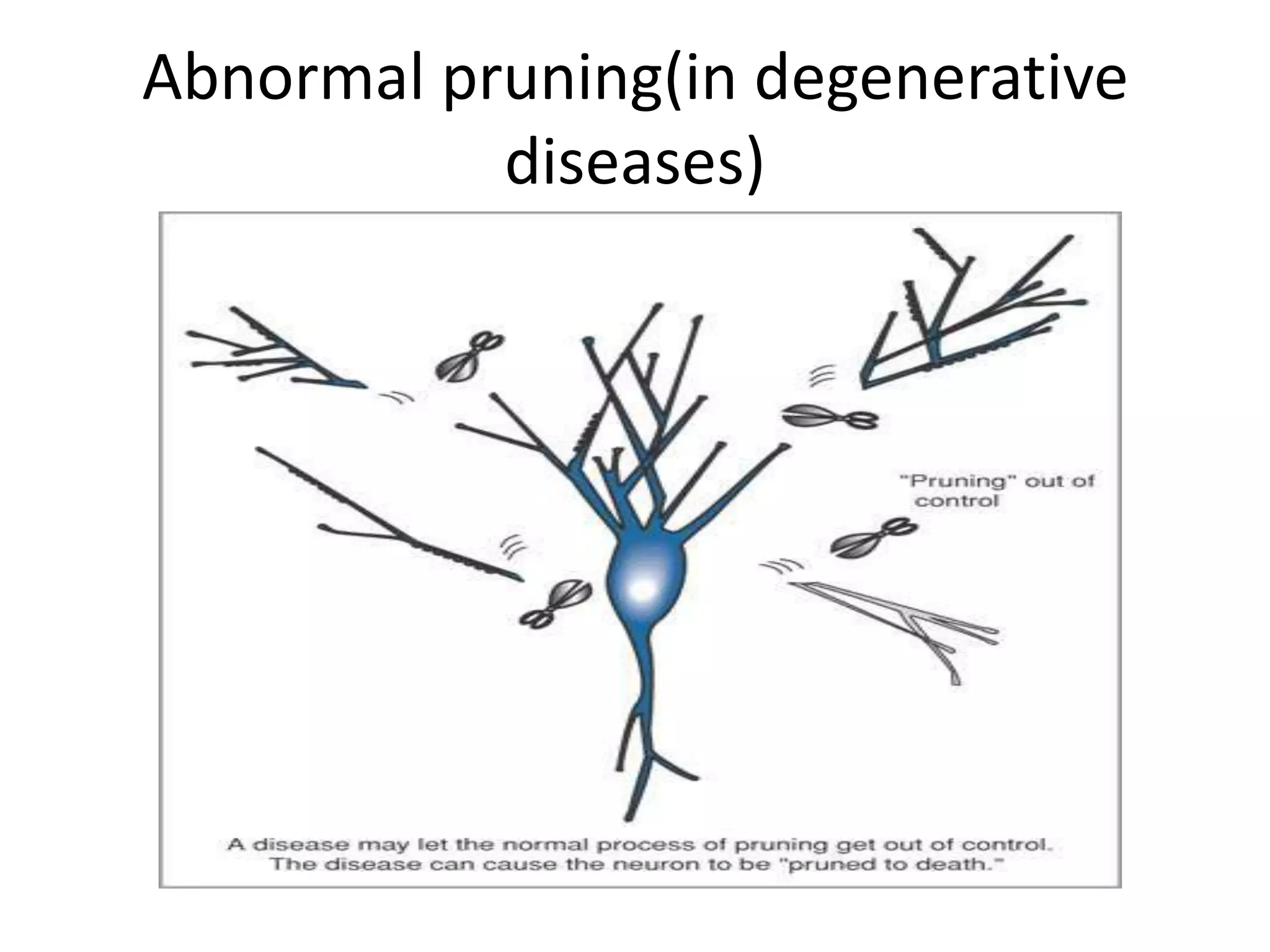
Dendritic pruning
The dendritic tree is constantly changing
  throughout life, it can:
• sprout new branches, grow and establish
  synaptic connections when necessary
• trims, alter or destroy synaptic connections
  when necessary (pruning)
Normal pruning
Abnormal pruning(in degenerative
           diseases)
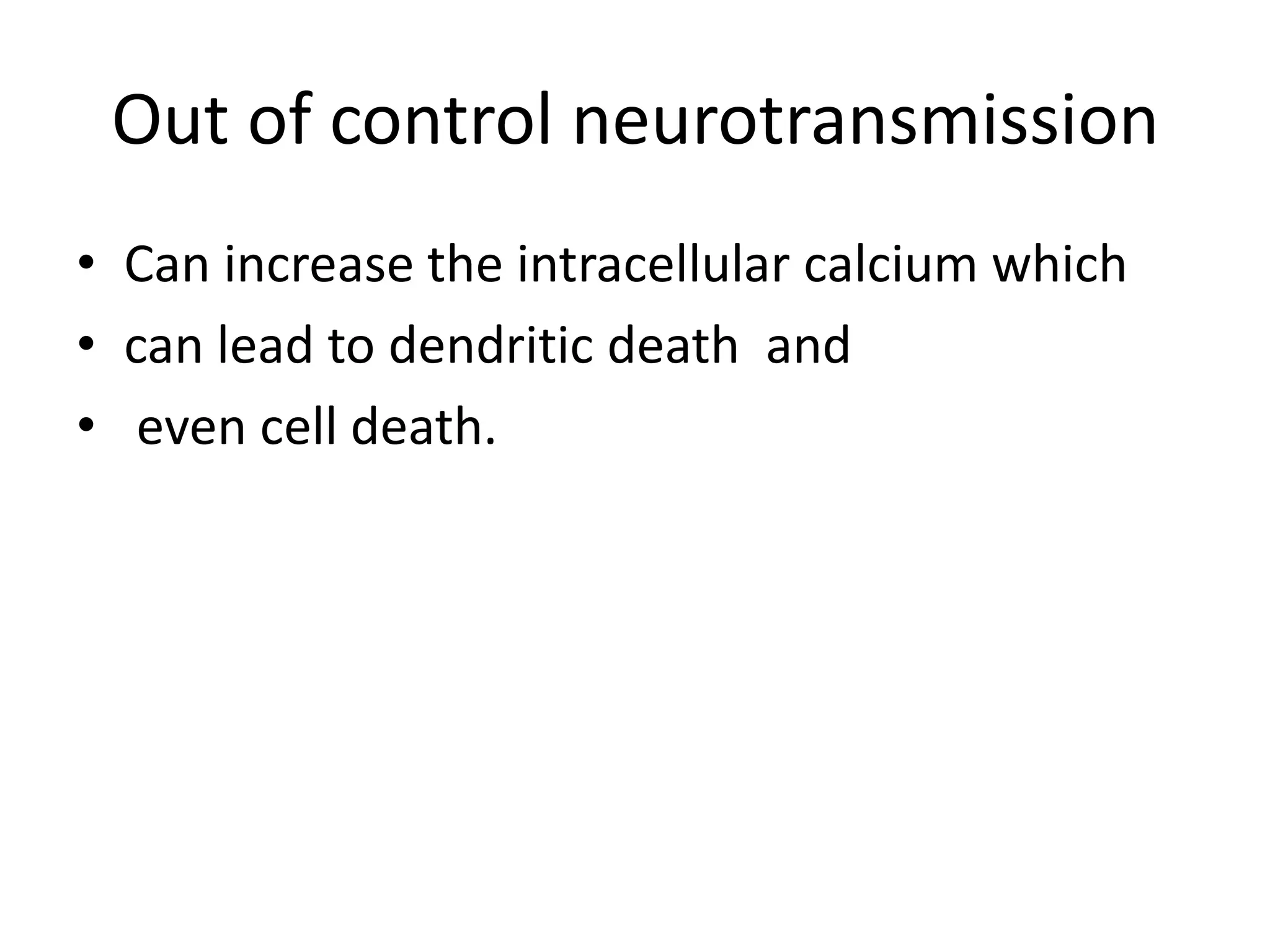
Out of control neurotransmission
• Can increase the intracellular calcium which
• can lead to dendritic death and
• even cell death.
Abnormal dendritic pruning due to
  increased neurotransmission
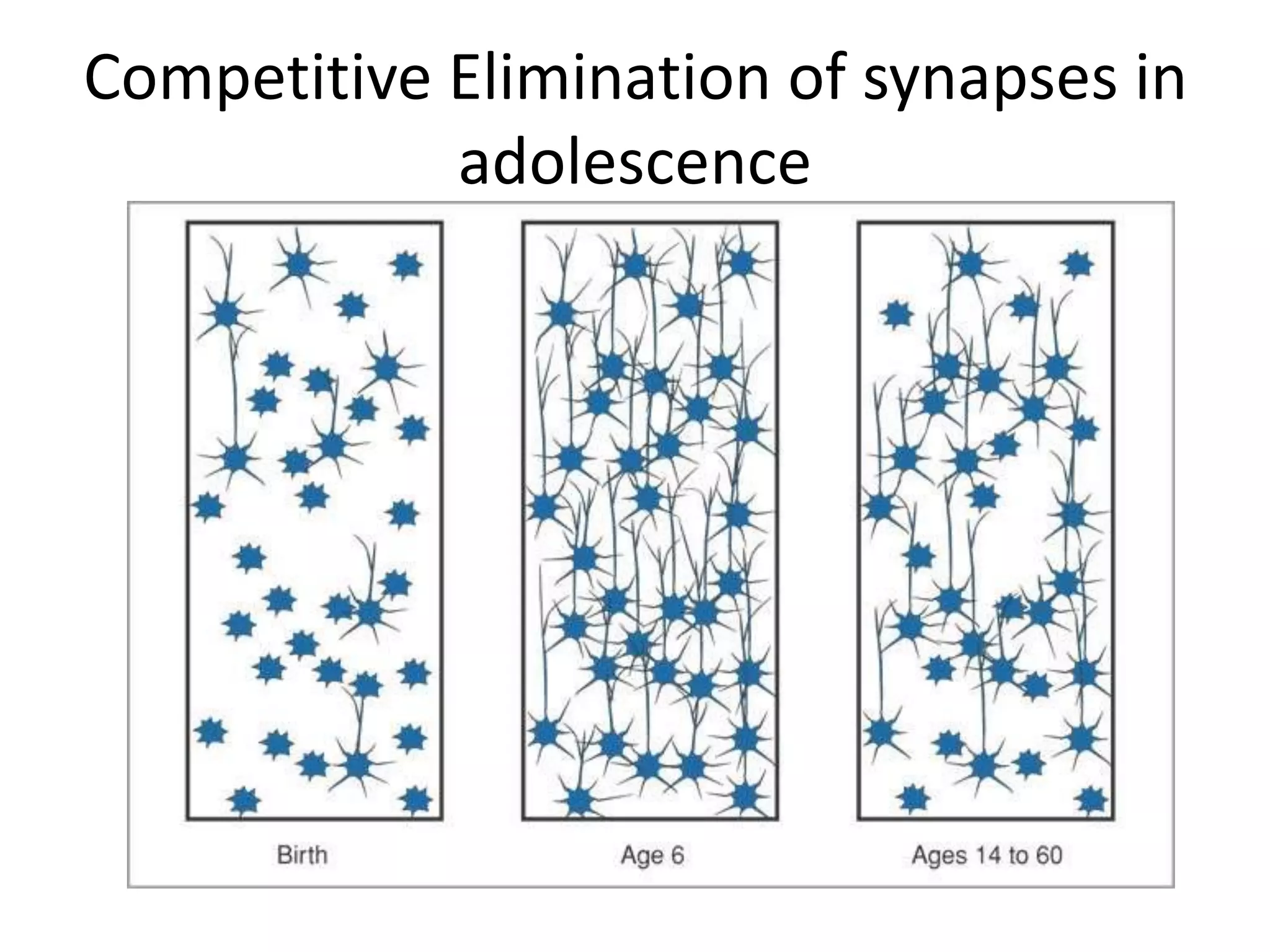
Competitive Elimination
• Between birth and age 6 synapses are formed
  at an accelerated rate
• During adolescence competitive elimination
  (pruning) occurs destroying about 50% of the
  synapses.
Competitive Elimination of synapses in
            adolescence

Neuroplasticity and neurodegeneration