Neuroplasticity
Neuroplasticity:
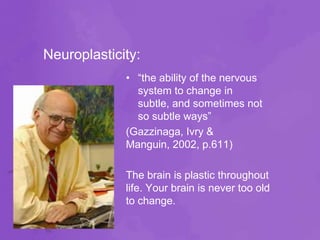
             • “the ability of the nervous
               system to change in
               subtle, and sometimes not
               so subtle ways”
             (Gazzinaga, Ivry &
             Manguin, 2002, p.611)

             The brain is plastic throughout
             life. Your brain is never too old
             to change.
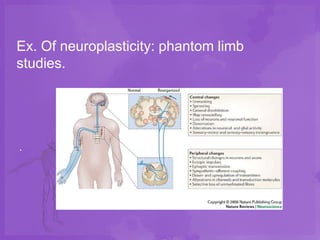
Ex. Of neuroplasticity: phantom limb
studies.


.
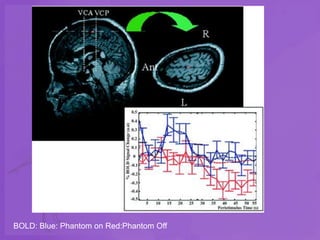
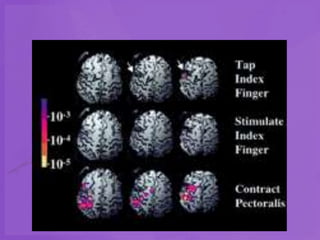
BOLD: Blue: Phantom on Red:Phantom Off
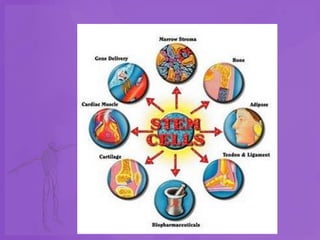
• Neuroplasticity is the reason for stem cell research and
  stem cell transplants.
• This is a controversial topic.
   • Why is it controversial?
   • What makes stem cells so important that some
     doctors and scientists are willing to engage in this
     controversial work?

   Remember: There is no clear right or wrong in
   controversial topics. Since they are important issues on
   which you will vote, it is important to discuss all sides.
Stem Cells
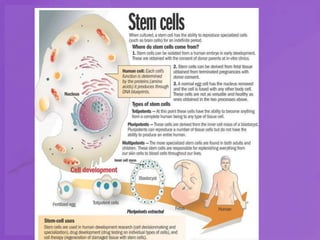
• Are neurons that are yet to differentiate to specific, task-
  oriented behaviors.
• Stem cells exist in adults, teens and children.
• The largest number of stem cells however, are found in
  infants because the brain is at an early stage of
  development.
• If you transplant a stem cell it
  can learn the task that was
  previously performed by a
  damaged/destroyed neuron.

• Ex. Of Use: Parkinson’s
  patients’ brain differentiate
  stem cells to make dopamine.
  The inability to make
  dopamine is the cause of this
  terminal illness.
Ex. Neuroplasticity & Perception
• Have you ever heard that blind people hear better than
  sighted people?
• Or that hearing impaired persons see better than those
  with average hearing?
• Are these common beliefs fact or fiction?
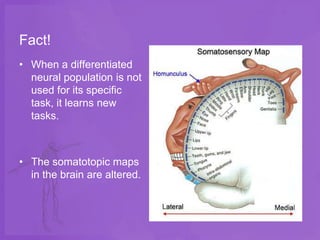
Fact!
• When a differentiated
  neural population is not
  used for its specific
  task, it learns new
  tasks.


• The somatotopic maps
  in the brain are altered.
“Rules” of Neuroplasticity
• 1. Highest rates of plasticity are during sensitive periods.
   Most of these are during childhood.
• 2. Sensory neurons learn new tasks based on their
   somatotopic maps. Neurons are likely to learn the skills
   of neighboring neuron populations and not to learn skills
   from distant brain regions.
     3. Structural plasticity is when neurons create new
connections/pathways.
     4. Functional plasticity is when neurons do NOT
change their physical connections/presentation but activate
for different reasons.
References
• Gazzaniga, M., Richard, I., & Mangun, G. (2002).
     Cognitive neuroscience: The biology of the mind. (2
     ed.). New York, NY: W.W.Norton & Company.

Neuroplasticity lesson pwpt

  • 1.
  • 2.
    Neuroplasticity: • “the ability of the nervous system to change in subtle, and sometimes not so subtle ways” (Gazzinaga, Ivry & Manguin, 2002, p.611) The brain is plastic throughout life. Your brain is never too old to change.
  • 3.
    Ex. Of neuroplasticity:phantom limb studies. .
  • 4.
    BOLD: Blue: Phantomon Red:Phantom Off
  • 5.
    • Neuroplasticity isthe reason for stem cell research and stem cell transplants. • This is a controversial topic. • Why is it controversial? • What makes stem cells so important that some doctors and scientists are willing to engage in this controversial work? Remember: There is no clear right or wrong in controversial topics. Since they are important issues on which you will vote, it is important to discuss all sides.
  • 7.
    Stem Cells • Areneurons that are yet to differentiate to specific, task- oriented behaviors. • Stem cells exist in adults, teens and children. • The largest number of stem cells however, are found in infants because the brain is at an early stage of development.
  • 9.
    • If youtransplant a stem cell it can learn the task that was previously performed by a damaged/destroyed neuron. • Ex. Of Use: Parkinson’s patients’ brain differentiate stem cells to make dopamine. The inability to make dopamine is the cause of this terminal illness.
  • 10.
    Ex. Neuroplasticity &Perception • Have you ever heard that blind people hear better than sighted people? • Or that hearing impaired persons see better than those with average hearing? • Are these common beliefs fact or fiction?
  • 11.
    Fact! • When adifferentiated neural population is not used for its specific task, it learns new tasks. • The somatotopic maps in the brain are altered.
  • 13.
    “Rules” of Neuroplasticity •1. Highest rates of plasticity are during sensitive periods. Most of these are during childhood. • 2. Sensory neurons learn new tasks based on their somatotopic maps. Neurons are likely to learn the skills of neighboring neuron populations and not to learn skills from distant brain regions. 3. Structural plasticity is when neurons create new connections/pathways. 4. Functional plasticity is when neurons do NOT change their physical connections/presentation but activate for different reasons.
  • 14.
    References • Gazzaniga, M.,Richard, I., & Mangun, G. (2002). Cognitive neuroscience: The biology of the mind. (2 ed.). New York, NY: W.W.Norton & Company.