NOVEL NEUROTRANSMITTERS
Guided by-
Dr. Nimisha Mishra (M.D.)
Dr. Sunil k. Ahuja (M.D.)
Dr. Ambrish Mishra (M.D.)
Dr. Dheerendra Mishra (M.D.,DNB)
Dr. Amrendra Singh (M.D.) SR
Presented By:
Dr. Jag Mohan Prajapati
JR 1
POINTS TO BE DISCUSSED
Introduction to novel neurotransmitters
Nitric Oxide
Carbon Monoxide
Hydrogen Sulphide
Endocannabinoids
Eicosanoids
Neurosteroids
Neurotransmitters are chemicals that:
Amplify or inhibit the depolarization signal from one neuron to that of an adjacent neuron.
A neurotransmitter is typically released from a presynaptic neuron and travels across a small space,
the synaptic cleft or synapse, to act upon the postsynaptic neuron.
Neurotransmitters may be excitatory (e.g., Glutamate) in that they promote depolarization of the
target cell, or
Inhibitory by promoting hyperpolarization (e.g., Most GABA).
Neurotransmitter receptors that are themselves ion channels may elicit depolarization via the
neurons they conduct, typically depolarization via sodium or calcium, and hyperpolarization via
chloride.
NOVEL NEUROTRANSMITTERS: BEYOND THE CLASSICAL DEFINITION OF
NEUROTRANSMITTER
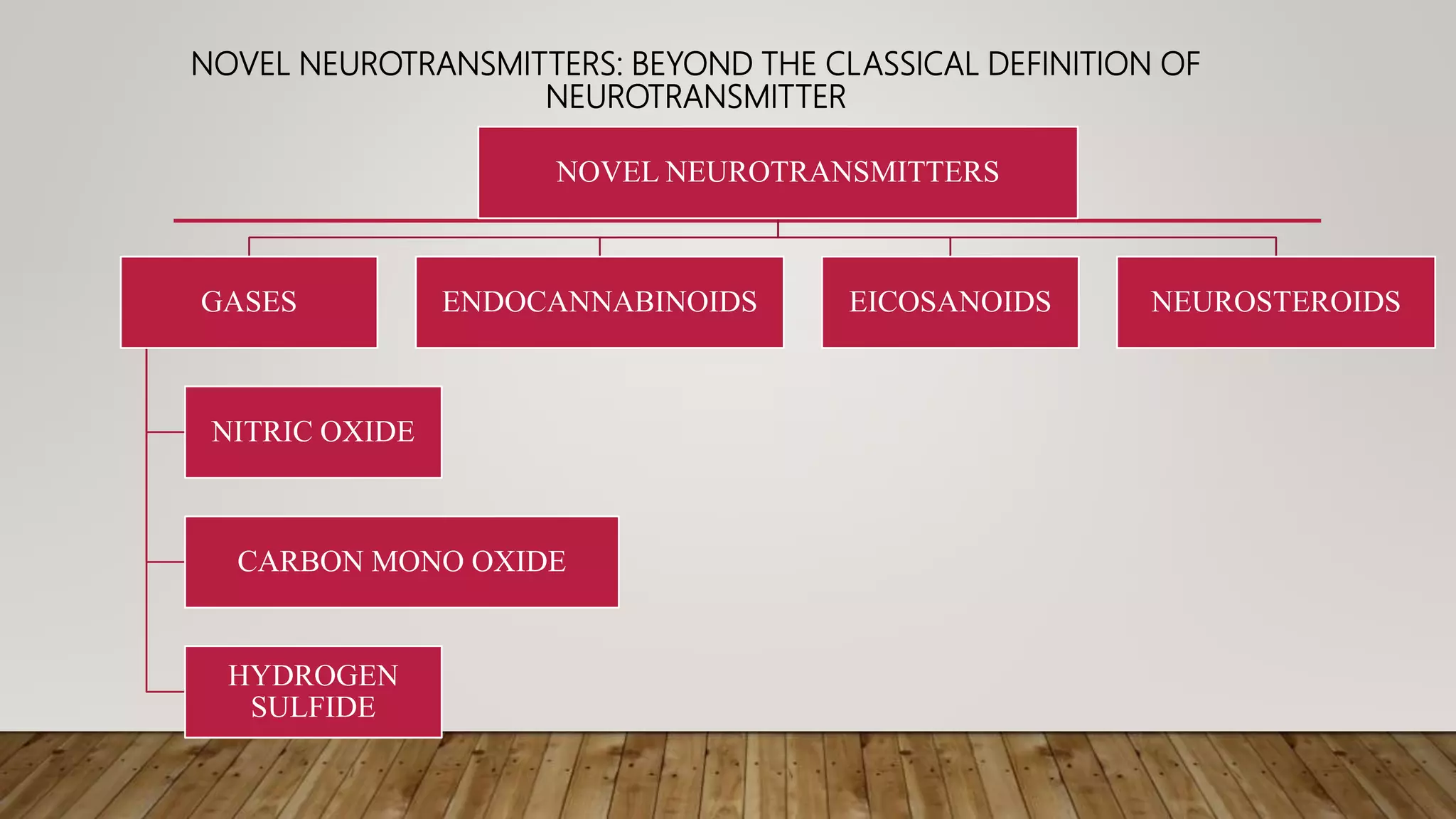
NOVEL NEUROTRANSMITTERS
GASES
NITRIC OXIDE
CARBON MONO OXIDE
HYDROGEN
SULFIDE
ENDOCANNABINOIDS EICOSANOIDS NEUROSTEROIDS
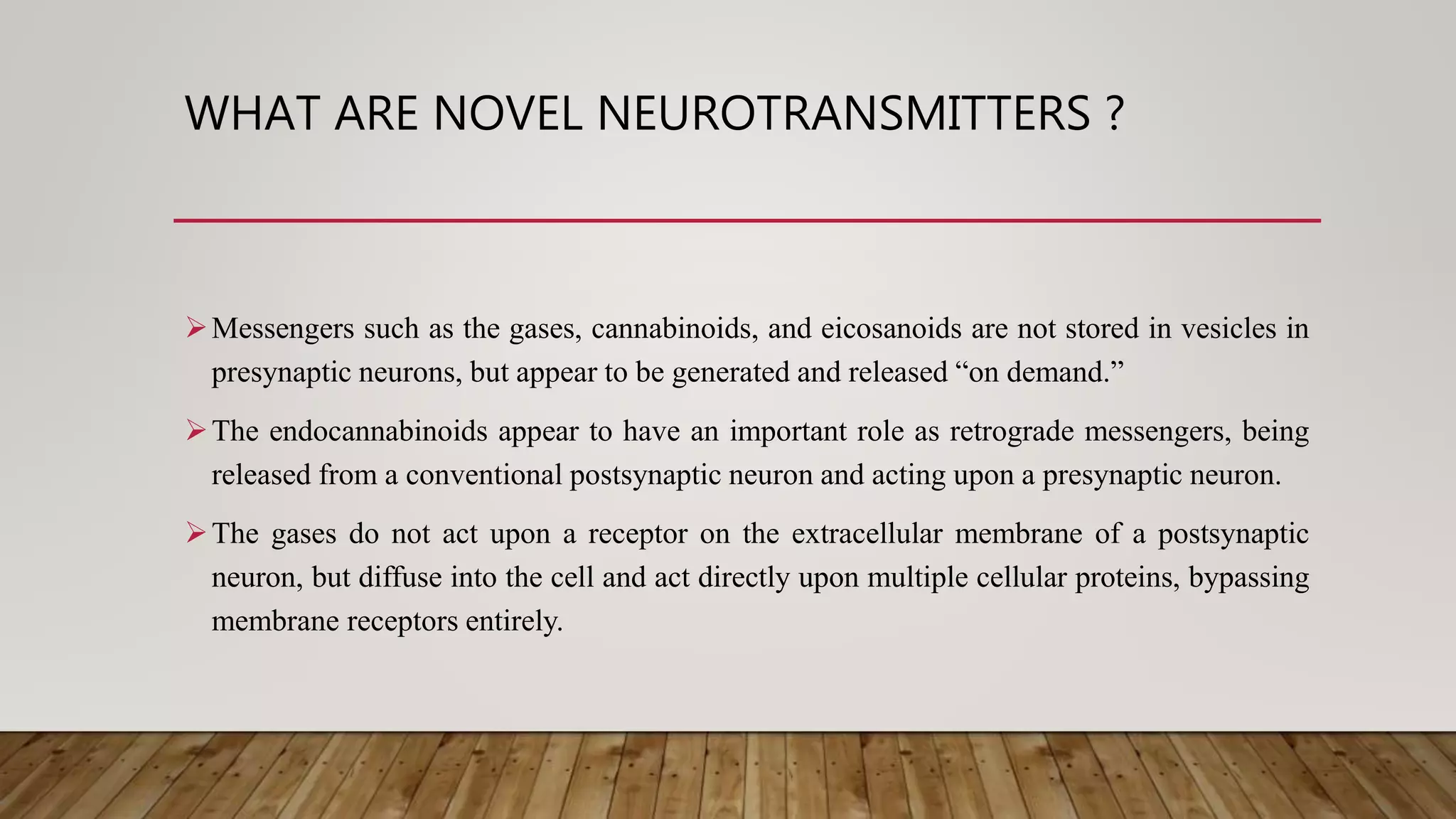
WHAT ARE NOVEL NEUROTRANSMITTERS ?
Messengers such as the gases, cannabinoids, and eicosanoids are not stored in vesicles in
presynaptic neurons, but appear to be generated and released “on demand.”
The endocannabinoids appear to have an important role as retrograde messengers, being
released from a conventional postsynaptic neuron and acting upon a presynaptic neuron.
The gases do not act upon a receptor on the extracellular membrane of a postsynaptic
neuron, but diffuse into the cell and act directly upon multiple cellular proteins, bypassing
membrane receptors entirely.
GASES AS
NEUROTRANSMITTERS
NITRIC OXIDE
• Also known as EDRF- endothelial derived relaxing factors
• In the early 1990s, nitric oxide was the first gas to be ascribed a
neurotransmitter function
• It is atypical neurotransmitters because:
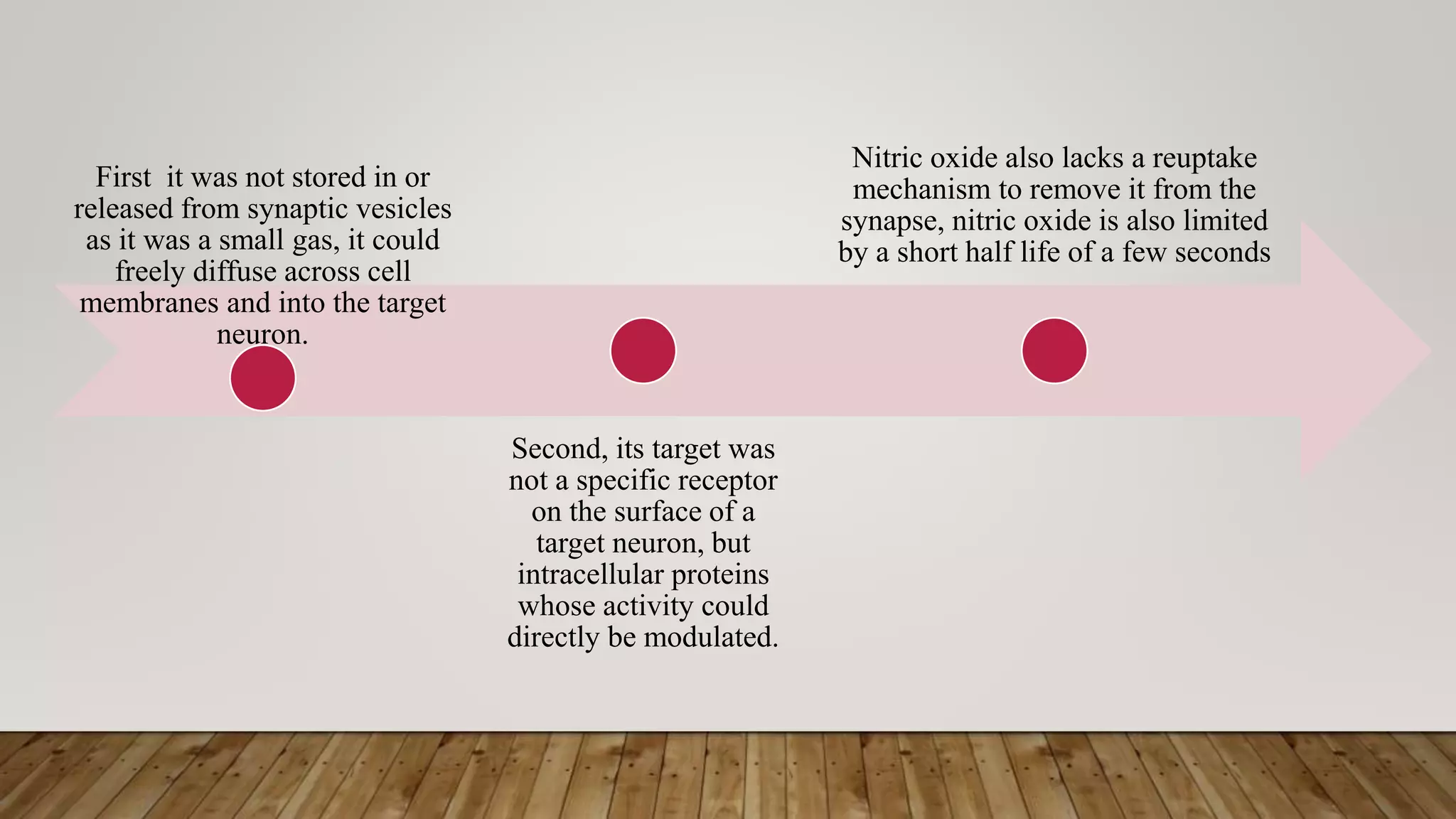
First it was not stored in or
released from synaptic vesicles
as it was a small gas, it could
freely diffuse across cell
membranes and into the target
neuron.
Second, its target was
not a specific receptor
on the surface of a
target neuron, but
intracellular proteins
whose activity could
directly be modulated.
Nitric oxide also lacks a reuptake
mechanism to remove it from the
synapse, nitric oxide is also limited
by a short half life of a few seconds
SYNTHESIS OF NITRIC OXIDE:
A specific enzyme exists to generate nitric oxide within
cells, nitric oxide synthase.
This enzyme generates nitric oxide by
abstracting nitrogen from the amino acid
arginine and reacting it with an oxygen atom.
The enzyme utilizes nicotinamide adenine dinucleotide
phosphate (NADPH) and generates citrulline as a by product.
Three distinct enzymatic forms of NOS exist, each with differing
locations and activation patterns within the body.
• Was the first form discovered, by Bredt and Snyder,
• Predominant form in the brain.
• Neuronal NOS is expressed only in neurons, especially those of the cortex, dentate gyrus
of the hippocampus, corpus striatum, and cerebellum.
• Although nNOS-containing neurons are only 1 percent of cortical neurons, their neuronal
processes are so extensively distributed that almost all neurons make contact with an
nNOS-containing nerve terminus.
Neuronal nitric oxide synthase (nNOS)
Endothelial NOS (eNOS) is predominantly
found in blood vessels, plays a crucial role
in allowing for the relaxation and dilation
of blood vessels.
• Nitro-glycerine and sodium nitroprusside
exert their vasodilatory effects via
conversion to nitric oxide.
• eNOS activity is augmented by
phosphorylation and increases in
intracellular calcium.
Inducible NOS (iNOS), exists in many
tissues in miniscule amounts.
• However, its levels are strongly increased
by a great variety of cell stressors,
especially inflammation.
• In the brain, it is largely induced in glial
cells, but also neurons.
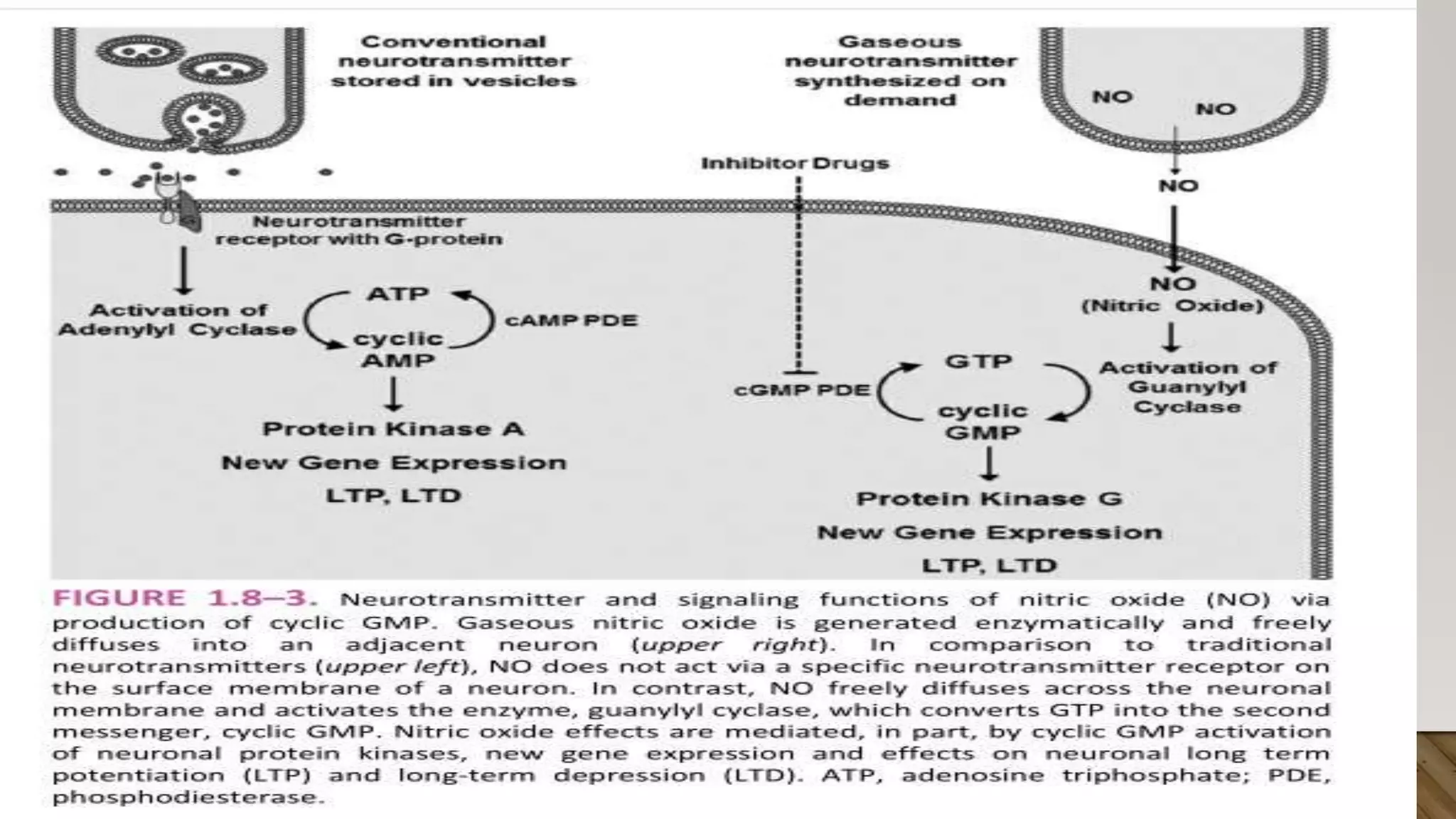
Mechanism of Action of Nitric Oxide: Cyclic GMP Pathway
MECHANISM OF ACTION OF NITRIC OXIDE: S-NITROSYLATION
PATHWAY
USES OF NO
• NEUROTRANSMITTER in LTP
• VASODILATOR
• SMOOTH MUSCLE RELAXATION
• BACTERICIDAL
• INHIBITS PLATELET AGGREGATION
NITRIC OXIDE AND NEUROTRANSMISSION:
LTP is the process by
which:
• Repetitive stimulation of a presynaptic neuron,
• Leads to stronger firing of a postsynaptic neuron,
• A process that underlies changes in learning and behaviour.
• Induction of LTP depends on activation of postsynaptic NMDA
receptors,
• While LTP maintenance relies on presynaptic mechanisms.
• Neurotransmission through the NMDA receptor facilitates LTP
,
in part, through the activity of nitric oxide.
• Activation of the NMDA receptor leads to a cellular calcium
increase, promoting nitric oxide synthesis and cGMP formation
in the postsynaptic cell.
NITRIC OXIDE- BEHAVIOUR & VASODILATION:
In the periphery, nNOS localizes to neurons that innervate blood vessels of the penis, including the corpus
cavernosa.
Stimulation of these nerves releases
nitric oxide, leading to cGMP
formation, blood vessel wall
relaxation and vasodilatation, penile
engorgement, and initial erection.
The sustained phase of erection also
depends on nitric oxide; turbulent
blood flow leads to phosphorylation
of eNOS and sustained nitric oxide
production.
Drugs used in treatment of erectile
dysfunction, sildenafil(Viagra),
tadalafil (Cialis), and vardenafil
(Levitra), act to inhibit type 5
phosphodiesterase, an enzyme that
degrades cGMP in the penis
As manic bipolar patients may show both hypersexuality and aggression, the nitric oxide pathway may
participate in the psychopathology of affective states.
nNOS-deficient male mice display exaggerated aggressive tendencies and increased sexual activity.
EFFECTS OF CARBON
MONO OXIDE
regulation of olfactory
neurotransmission,
blood vessel
relaxation,
smooth muscle cell
proliferation,
and platelet
aggregation.
CARBON MONOXIDE:
CARBON MONOXIDE AND NEUROTRANSMISSION:
Carbon monoxide appears to participate in the neurotransmission of odorant perception.
Odorants lead to carbon monoxide production and subsequent cGMP synthesis that
promotes long-term adaptation to odour stimuli.
At least two different enzymes can generate hydrogen sulfide:
cystathionine
beta-synthase
(CBS) and
cystathionine
gamma-lyase
(CSE).
HYDROGEN SULFIDE : THE NEWEST GASEOUS MESSENGER MOLECULE
Each catalyzes the same reaction, converting cysteine and water to
hydrogen sulfide, pyruvate, and ammonia.
In the brain, hydrogen sulfide exists at concentrations as high as 160
micromolar, consistent with a role in regulating brain function.
ENDOCANNABINOIDS:
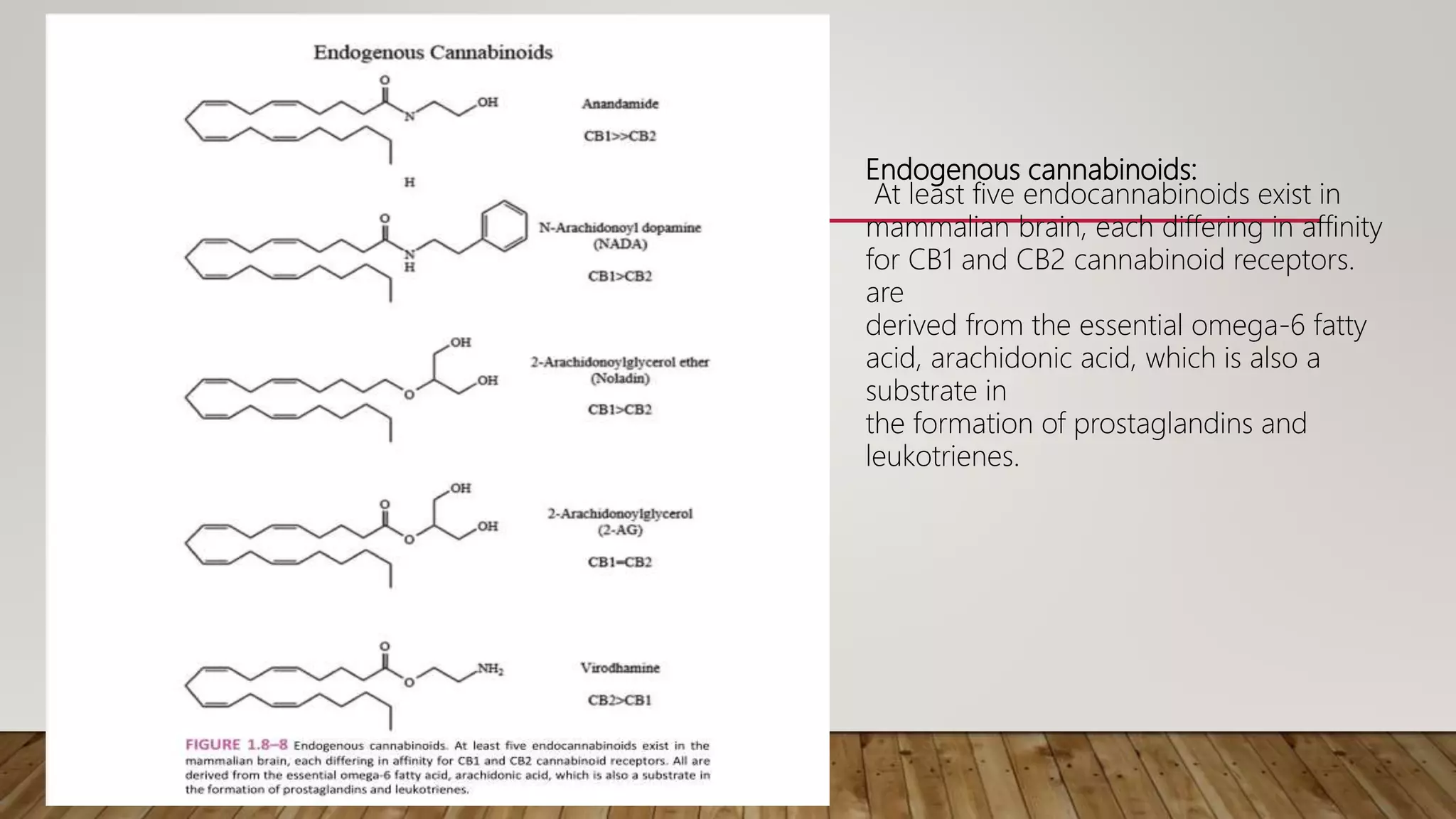
Endogenous cannabinoids:
At least five endocannabinoids exist in
mammalian brain, each differing in affinity
for CB1 and CB2 cannabinoid receptors.
are
derived from the essential omega-6 fatty
acid, arachidonic acid, which is also a
substrate in
the formation of prostaglandins and
leukotrienes.
CB1 CB2
CB1 receptors are
possibly the most
abundant GPCRs in the
brain.
CANNABINOID RECEPTORS:
ACC basal ganglia
cerebral cortex,
particularly the
frontal cortex.,
cerebellum hypothalamus hippocampus
CB1 RECEPTORS OCCUR AT HIGHEST DENSITY IN THE;
CB1 receptors are
predominantly found on
axons and nerve termini
, with little present on
neuronal dendrites and
the cell body.
CB1 receptors tend to be
localized to the
presynaptic rather than
postsynaptic side of the
neuronal cleft, suggesting
a role in regulation of
neurotransmission.
A second cannabinoid
receptor, CB2, is
predominantly expressed
on the surface of white
blood cells of the immune
system, but small amounts
appear to be present in the
brainstem.
Retrograde Transmission Regulated by Endocannabinoids:
PSYCHIATRY ASPECT OF ENDOCANNABINOIDS:
Tranquilizing effect
Anxiety & mood-
PTSD and phobias correlated
Psychosis
Heavy intake induce psychosis
Worsens psychosis in schizophrenics( increase in dopamine)
Brain injury & pain-
• Neuro protective
• Reduce edema , infarct size, cell death
• Improves functional outcomes
• Rapid improvement in head trauma
• Improvement in motor symptoms in Parkinson's
• Pain relief( esp. CB1)
FEEDING
Increased appetite( ‘munchies’)- due to CB1 receptor in hypothalamus
CB1 receptor antagonist Rimonabant facilitates weight loss.
Peripheral effects:
Vascular smooth
muscle relaxation by
local CB1 receptor.
‘bloodshot’
in conjunctiva.
Reduces IOP( by
relaxing ocular
Renal blood flow
improvement( CB1
activation in kidney)
Less ectopic
in mice
Eicosanoids
Introduction:
Essential fatty acids are a group of polyunsaturated fats that contain a carbon–carbon double bond in the
third position from the methyl end group in the fatty acid chain.
They are essential because unlike monosaturated and saturated fatty acids, polyunsaturated fatty acids
cannot be synthesized de novo and can only be acquired through diet from natural fats and oils.
 Linoleic acid (LA) is the parent compound of omega-6 fatty acids, and
 α-linolenic acid (ALA) is the parent compound of omega-3 fatty acids.
Both omega-3 and omega-6 groups use the same enzymes for desaturation and chain elongation.
 Omega-3 fatty acids are synthesized by algae and plankton.
Fish such as herring, salmon, mackerel, and anchovy feed on these aquatic species and become a rich, dietary
source of omega-3.
EPA and DHA are highly unsaturated omega-3 fatty acids that contain 5 and 6 double bonds on their long
structural chain, respectively. They are positioned in the cell membrane by phospholipids and play a crucial
role in cell membrane signalling.
Important constituent of:-
• Neurons
• Immune cells
• Glial cells
• Phospholipid membrane
Function:-
• Increase cerebral blood flow
• Decrease platelet aggregation
• Delay atherosclerosis
• Reduces inflammation & neuronal apoptosis
• Decrease phosphatidyl inositol 2nd messenger activity
Omega 6 arachidonic acid :-
Enhance glutamate neurotransmission
Stimulates release of stress hormone
Trigger glial cell activation
Omega 3 & DHA :-
Protects neuron from inflammatory & oxidative toxicities
Increase serotonin, dopamine
Regulation of CRF
Psychiatric aspect:
• Fatty acid consumption ( e.g. fish) has shown reduction in:-
• Major depression
• Bipolar disorder
• Post partum depression
• Seasonal affective disorder
Others :-
• Pregnant mothers on DHA had infants with improved problem solving skills
• Prisoners showed decreased assault rate
• Negative & psychotic symptoms improvement.
• Fewer EPS on patients with antipsychotics.
• Decreased dementia incidence & cognitive impairment
NEUROSTEROIDS
Synthesized from cholesterol in brain independent of peripheral formation in adrenals & gonads.
Cyt P 450 & non CYP enzymes responsible for production .
Types-
Allopregnanolone
Pregnanolone( PREG )
Tetrahydroxy corticosterone (THDOC)
Dehydroepiandrosterone sulphate ( DHEA- S)
Dehydroepiandrosterone ( DHEA)
Psychiatric aspect:
• Neurosteroids stimulate axonal growth & promote synaptic transmission.
DHEA
Regulate brain serotonin & dopamine level
Suppress cortisol
Increase hippocampal primed burst potentiation & cholinergic function.
Decrease amyloid beta protein.
Inhibit production of inflammatory cytokines & prevent free radical scavenging
Progesterone
• - Repairs damaged neural myelination.
Depression
Allopregnanolone is present in less conc.in CSF of depressed patients.
Antidepressants esp. fluoxetine increase levels of neurosteroids.
Anxiety disorders
GABA stimulates GABAergic activity.
Positive GABAa regulation-anxiolytic
Negative GABAa regulation- anxiogenic
Psychotic disorder
DHEA & DHEA-S main neurosteroids in psychotic disorders.
Decrease anxiety in schizophrenics
Childhood mental illness
Symptoms of ADHD inversely correlated with DHEA & pregnenolon level.
Substance abuse
Neurosteroids are associated with drug abuse.
Alcohol increase neurosteroids levels.
DHEA- S check morphine tolerance
Eating disorders
Low level DHEA & DHEA-s seen in anorexia nervosa patients.
DHEA supplementation increase bone density & improves emotional problem in above patients.
Reduces caloric load.
Post partum & gynaecological disorders
Low post partum DHEA associated with mood instability
High allopregnanolone level seen in premenstrual dysphoric disorder.
Memory disorders, aging
DHEA decreased in Alzheimer's disease, Parkinson's disease
DHEA supplementation can prevent/ slow cognitive decline in association with aging .
THANK YOU

Novel neurotransmitters by Dr.JagMohan Prajapati

  • 1.
    NOVEL NEUROTRANSMITTERS Guided by- Dr.Nimisha Mishra (M.D.) Dr. Sunil k. Ahuja (M.D.) Dr. Ambrish Mishra (M.D.) Dr. Dheerendra Mishra (M.D.,DNB) Dr. Amrendra Singh (M.D.) SR Presented By: Dr. Jag Mohan Prajapati JR 1
  • 2.
    POINTS TO BEDISCUSSED Introduction to novel neurotransmitters Nitric Oxide Carbon Monoxide Hydrogen Sulphide Endocannabinoids Eicosanoids Neurosteroids
  • 3.
    Neurotransmitters are chemicalsthat: Amplify or inhibit the depolarization signal from one neuron to that of an adjacent neuron. A neurotransmitter is typically released from a presynaptic neuron and travels across a small space, the synaptic cleft or synapse, to act upon the postsynaptic neuron. Neurotransmitters may be excitatory (e.g., Glutamate) in that they promote depolarization of the target cell, or Inhibitory by promoting hyperpolarization (e.g., Most GABA). Neurotransmitter receptors that are themselves ion channels may elicit depolarization via the neurons they conduct, typically depolarization via sodium or calcium, and hyperpolarization via chloride.
  • 5.
    NOVEL NEUROTRANSMITTERS: BEYONDTHE CLASSICAL DEFINITION OF NEUROTRANSMITTER NOVEL NEUROTRANSMITTERS GASES NITRIC OXIDE CARBON MONO OXIDE HYDROGEN SULFIDE ENDOCANNABINOIDS EICOSANOIDS NEUROSTEROIDS
  • 6.
    WHAT ARE NOVELNEUROTRANSMITTERS ? Messengers such as the gases, cannabinoids, and eicosanoids are not stored in vesicles in presynaptic neurons, but appear to be generated and released “on demand.” The endocannabinoids appear to have an important role as retrograde messengers, being released from a conventional postsynaptic neuron and acting upon a presynaptic neuron. The gases do not act upon a receptor on the extracellular membrane of a postsynaptic neuron, but diffuse into the cell and act directly upon multiple cellular proteins, bypassing membrane receptors entirely.
  • 7.
  • 8.
    NITRIC OXIDE • Alsoknown as EDRF- endothelial derived relaxing factors • In the early 1990s, nitric oxide was the first gas to be ascribed a neurotransmitter function • It is atypical neurotransmitters because:
  • 9.
    First it wasnot stored in or released from synaptic vesicles as it was a small gas, it could freely diffuse across cell membranes and into the target neuron. Second, its target was not a specific receptor on the surface of a target neuron, but intracellular proteins whose activity could directly be modulated. Nitric oxide also lacks a reuptake mechanism to remove it from the synapse, nitric oxide is also limited by a short half life of a few seconds
  • 10.
    SYNTHESIS OF NITRICOXIDE: A specific enzyme exists to generate nitric oxide within cells, nitric oxide synthase. This enzyme generates nitric oxide by abstracting nitrogen from the amino acid arginine and reacting it with an oxygen atom. The enzyme utilizes nicotinamide adenine dinucleotide phosphate (NADPH) and generates citrulline as a by product.
  • 11.
    Three distinct enzymaticforms of NOS exist, each with differing locations and activation patterns within the body. • Was the first form discovered, by Bredt and Snyder, • Predominant form in the brain. • Neuronal NOS is expressed only in neurons, especially those of the cortex, dentate gyrus of the hippocampus, corpus striatum, and cerebellum. • Although nNOS-containing neurons are only 1 percent of cortical neurons, their neuronal processes are so extensively distributed that almost all neurons make contact with an nNOS-containing nerve terminus. Neuronal nitric oxide synthase (nNOS)
  • 12.
    Endothelial NOS (eNOS)is predominantly found in blood vessels, plays a crucial role in allowing for the relaxation and dilation of blood vessels. • Nitro-glycerine and sodium nitroprusside exert their vasodilatory effects via conversion to nitric oxide. • eNOS activity is augmented by phosphorylation and increases in intracellular calcium. Inducible NOS (iNOS), exists in many tissues in miniscule amounts. • However, its levels are strongly increased by a great variety of cell stressors, especially inflammation. • In the brain, it is largely induced in glial cells, but also neurons.
  • 13.
    Mechanism of Actionof Nitric Oxide: Cyclic GMP Pathway
  • 15.
    MECHANISM OF ACTIONOF NITRIC OXIDE: S-NITROSYLATION PATHWAY
  • 16.
    USES OF NO •NEUROTRANSMITTER in LTP • VASODILATOR • SMOOTH MUSCLE RELAXATION • BACTERICIDAL • INHIBITS PLATELET AGGREGATION
  • 17.
    NITRIC OXIDE ANDNEUROTRANSMISSION: LTP is the process by which: • Repetitive stimulation of a presynaptic neuron, • Leads to stronger firing of a postsynaptic neuron, • A process that underlies changes in learning and behaviour. • Induction of LTP depends on activation of postsynaptic NMDA receptors, • While LTP maintenance relies on presynaptic mechanisms. • Neurotransmission through the NMDA receptor facilitates LTP , in part, through the activity of nitric oxide. • Activation of the NMDA receptor leads to a cellular calcium increase, promoting nitric oxide synthesis and cGMP formation in the postsynaptic cell.
  • 19.
    NITRIC OXIDE- BEHAVIOUR& VASODILATION: In the periphery, nNOS localizes to neurons that innervate blood vessels of the penis, including the corpus cavernosa. Stimulation of these nerves releases nitric oxide, leading to cGMP formation, blood vessel wall relaxation and vasodilatation, penile engorgement, and initial erection. The sustained phase of erection also depends on nitric oxide; turbulent blood flow leads to phosphorylation of eNOS and sustained nitric oxide production. Drugs used in treatment of erectile dysfunction, sildenafil(Viagra), tadalafil (Cialis), and vardenafil (Levitra), act to inhibit type 5 phosphodiesterase, an enzyme that degrades cGMP in the penis As manic bipolar patients may show both hypersexuality and aggression, the nitric oxide pathway may participate in the psychopathology of affective states. nNOS-deficient male mice display exaggerated aggressive tendencies and increased sexual activity.
  • 20.
    EFFECTS OF CARBON MONOOXIDE regulation of olfactory neurotransmission, blood vessel relaxation, smooth muscle cell proliferation, and platelet aggregation. CARBON MONOXIDE:
  • 22.
    CARBON MONOXIDE ANDNEUROTRANSMISSION: Carbon monoxide appears to participate in the neurotransmission of odorant perception. Odorants lead to carbon monoxide production and subsequent cGMP synthesis that promotes long-term adaptation to odour stimuli.
  • 23.
    At least twodifferent enzymes can generate hydrogen sulfide: cystathionine beta-synthase (CBS) and cystathionine gamma-lyase (CSE). HYDROGEN SULFIDE : THE NEWEST GASEOUS MESSENGER MOLECULE Each catalyzes the same reaction, converting cysteine and water to hydrogen sulfide, pyruvate, and ammonia. In the brain, hydrogen sulfide exists at concentrations as high as 160 micromolar, consistent with a role in regulating brain function.
  • 24.
  • 26.
    Endogenous cannabinoids: At leastfive endocannabinoids exist in mammalian brain, each differing in affinity for CB1 and CB2 cannabinoid receptors. are derived from the essential omega-6 fatty acid, arachidonic acid, which is also a substrate in the formation of prostaglandins and leukotrienes.
  • 27.
    CB1 CB2 CB1 receptorsare possibly the most abundant GPCRs in the brain. CANNABINOID RECEPTORS:
  • 28.
    ACC basal ganglia cerebralcortex, particularly the frontal cortex., cerebellum hypothalamus hippocampus CB1 RECEPTORS OCCUR AT HIGHEST DENSITY IN THE;
  • 29.
    CB1 receptors are predominantlyfound on axons and nerve termini , with little present on neuronal dendrites and the cell body. CB1 receptors tend to be localized to the presynaptic rather than postsynaptic side of the neuronal cleft, suggesting a role in regulation of neurotransmission. A second cannabinoid receptor, CB2, is predominantly expressed on the surface of white blood cells of the immune system, but small amounts appear to be present in the brainstem.
  • 30.
  • 32.
    PSYCHIATRY ASPECT OFENDOCANNABINOIDS: Tranquilizing effect Anxiety & mood- PTSD and phobias correlated Psychosis Heavy intake induce psychosis Worsens psychosis in schizophrenics( increase in dopamine)
  • 33.
    Brain injury &pain- • Neuro protective • Reduce edema , infarct size, cell death • Improves functional outcomes • Rapid improvement in head trauma • Improvement in motor symptoms in Parkinson's • Pain relief( esp. CB1)
  • 34.
    FEEDING Increased appetite( ‘munchies’)-due to CB1 receptor in hypothalamus CB1 receptor antagonist Rimonabant facilitates weight loss.
  • 35.
    Peripheral effects: Vascular smooth musclerelaxation by local CB1 receptor. ‘bloodshot’ in conjunctiva. Reduces IOP( by relaxing ocular Renal blood flow improvement( CB1 activation in kidney) Less ectopic in mice
  • 36.
  • 37.
    Introduction: Essential fatty acidsare a group of polyunsaturated fats that contain a carbon–carbon double bond in the third position from the methyl end group in the fatty acid chain. They are essential because unlike monosaturated and saturated fatty acids, polyunsaturated fatty acids cannot be synthesized de novo and can only be acquired through diet from natural fats and oils.  Linoleic acid (LA) is the parent compound of omega-6 fatty acids, and  α-linolenic acid (ALA) is the parent compound of omega-3 fatty acids.
  • 38.
    Both omega-3 andomega-6 groups use the same enzymes for desaturation and chain elongation.  Omega-3 fatty acids are synthesized by algae and plankton. Fish such as herring, salmon, mackerel, and anchovy feed on these aquatic species and become a rich, dietary source of omega-3. EPA and DHA are highly unsaturated omega-3 fatty acids that contain 5 and 6 double bonds on their long structural chain, respectively. They are positioned in the cell membrane by phospholipids and play a crucial role in cell membrane signalling.
  • 39.
    Important constituent of:- •Neurons • Immune cells • Glial cells • Phospholipid membrane Function:- • Increase cerebral blood flow • Decrease platelet aggregation • Delay atherosclerosis • Reduces inflammation & neuronal apoptosis • Decrease phosphatidyl inositol 2nd messenger activity
  • 40.
    Omega 6 arachidonicacid :- Enhance glutamate neurotransmission Stimulates release of stress hormone Trigger glial cell activation Omega 3 & DHA :- Protects neuron from inflammatory & oxidative toxicities Increase serotonin, dopamine Regulation of CRF
  • 41.
    Psychiatric aspect: • Fattyacid consumption ( e.g. fish) has shown reduction in:- • Major depression • Bipolar disorder • Post partum depression • Seasonal affective disorder Others :- • Pregnant mothers on DHA had infants with improved problem solving skills • Prisoners showed decreased assault rate • Negative & psychotic symptoms improvement. • Fewer EPS on patients with antipsychotics. • Decreased dementia incidence & cognitive impairment
  • 42.
  • 43.
    Synthesized from cholesterolin brain independent of peripheral formation in adrenals & gonads. Cyt P 450 & non CYP enzymes responsible for production . Types- Allopregnanolone Pregnanolone( PREG ) Tetrahydroxy corticosterone (THDOC) Dehydroepiandrosterone sulphate ( DHEA- S) Dehydroepiandrosterone ( DHEA)
  • 44.
    Psychiatric aspect: • Neurosteroidsstimulate axonal growth & promote synaptic transmission. DHEA Regulate brain serotonin & dopamine level Suppress cortisol Increase hippocampal primed burst potentiation & cholinergic function. Decrease amyloid beta protein. Inhibit production of inflammatory cytokines & prevent free radical scavenging Progesterone • - Repairs damaged neural myelination.
  • 45.
    Depression Allopregnanolone is presentin less conc.in CSF of depressed patients. Antidepressants esp. fluoxetine increase levels of neurosteroids. Anxiety disorders GABA stimulates GABAergic activity. Positive GABAa regulation-anxiolytic Negative GABAa regulation- anxiogenic
  • 46.
    Psychotic disorder DHEA &DHEA-S main neurosteroids in psychotic disorders. Decrease anxiety in schizophrenics Childhood mental illness Symptoms of ADHD inversely correlated with DHEA & pregnenolon level. Substance abuse Neurosteroids are associated with drug abuse. Alcohol increase neurosteroids levels. DHEA- S check morphine tolerance
  • 47.
    Eating disorders Low levelDHEA & DHEA-s seen in anorexia nervosa patients. DHEA supplementation increase bone density & improves emotional problem in above patients. Reduces caloric load.
  • 48.
    Post partum &gynaecological disorders Low post partum DHEA associated with mood instability High allopregnanolone level seen in premenstrual dysphoric disorder. Memory disorders, aging DHEA decreased in Alzheimer's disease, Parkinson's disease DHEA supplementation can prevent/ slow cognitive decline in association with aging .
  • 49.