‘…We must learn to understand the ‘out-of-awareness’ 
aspects of communication. We must 
never assume that we are fully aware of what we 
communicate to someone else. There exists in 
the world today tremendous distortions in 
meaning as men try to communicate with one 
another.
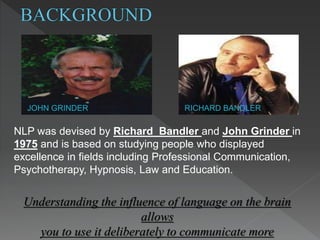
JOHN GRINDER RICHARD BANDLER 
NLP was devised by Richard Bandler and John Grinder in 
1975 and is based on studying people who displayed 
excellence in fields including Professional Communication, 
Psychotherapy, Hypnosis, Law and Education. 
Understanding the influence of language on the brain 
allows 
you to use it deliberately to communicate more
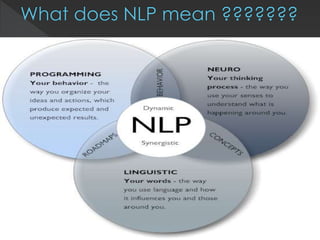
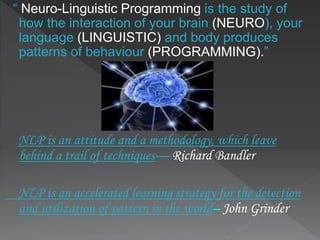
“ Neuro-Linguistic Programming is the study of 
how the interaction of your brain (NEURO), your 
language (LINGUISTIC) and body produces 
patterns of behaviour (PROGRAMMING).” 
NLP is an attitude and a methodology, which leave 
behind a trail of techniques— Richard Bandler 
NLP is an accelerated learning strategy for the detection 
and utilization of pattern in the world– John Grinder
THERE ARE 6 BASIC PRINCIPLES TO 
NLP: 
 You are the most important part of the system. 
 The presuppositions are the guiding principles 
of NLP. 
 Rapport is the essence of communication. 
 Outcome - where you are, where do you want 
to be and how are you going to get there 
 Feedback tune into your senses to become 
more effective 
 Flexibility the desire to learn and make 
changes
 Everyone has a unique model of the world. 
 Respect other peoples model of the world. 
 The map is not the territory. 
 People are not their behaviour. 
 All behaviour has a positive intention. 
 There is no failure, only feedback 
 There are no un-resourceful people, only un-resourceful 
states. 
 The meaning of communication is the 
response you get. 
 Everyone can be taught to do anything
Create effective ways to sway others 
Develop courage to cope tough situations 
Improved memory and concentration 
Unique Communication skills
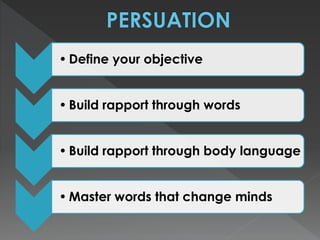
• Define your objective 
• Build rapport through words 
• Build rapport through body language 
• Master words that change minds
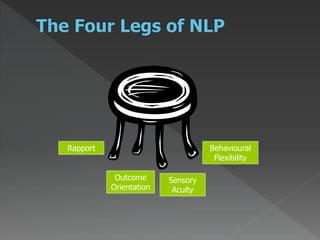
Sensory 
Acuity 
Behavioural 
Flexibility 
Rapport 
Outcome 
Orientation
 When two or more people feel that they 
are in a sync or on same wavelength 
because they feel similar or relate with 
each other. 
 The word rapport derives from French 
verb “rapporter” which means to carry 
something back and in the sense how 
people relate to each other
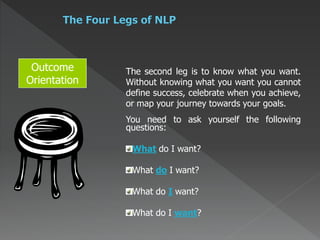
The second leg is to know what you want. 
Without knowing what you want you cannot 
define success, celebrate when you achieve, 
or map your journey towards your goals. 
You need to ask yourself the following 
questions: 
What do I want? 
What do I want? 
What do I want? 
What do I want? 
Outcome 
Orientation
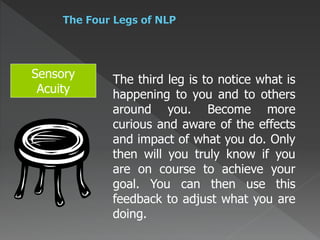
The third leg is to notice what is 
happening to you and to others 
around you. Become more 
curious and aware of the effects 
and impact of what you do. Only 
then will you truly know if you 
are on course to achieve your 
goal. You can then use this 
feedback to adjust what you are 
doing. 
Sensory 
Acuity
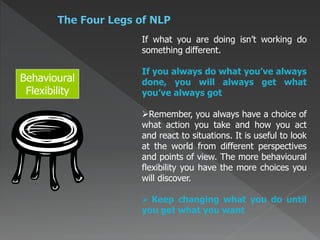
If what you are doing isn’t working do 
something different. 
If you always do what you’ve always 
done, you will always get what 
you’ve always got 
Remember, you always have a choice of 
what action you take and how you act 
and react to situations. It is useful to look 
at the world from different perspectives 
and points of view. The more behavioural 
flexibility you have the more choices you 
will discover. 
 Keep changing what you do until 
you get what you want 
Behavioural 
Flexibility
BUILDING RAPPORT 
THROUGH 
MIRRORING
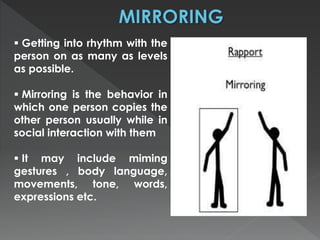
 Getting into rhythm with the 
person on as many as levels 
as possible. 
 Mirroring is the behavior in 
which one person copies the 
other person usually while in 
social interaction with them 
 It may include miming 
gestures , body language, 
movements, tone, words, 
expressions etc.
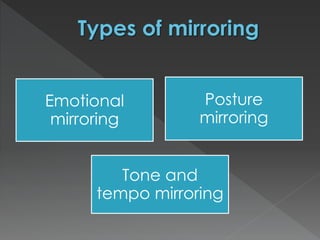
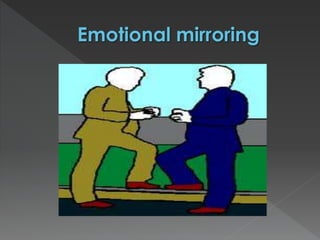
Emotional 
mirroring 
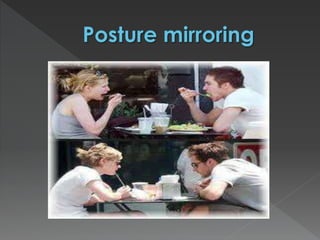
Posture 
mirroring 
Tone and 
tempo mirroring
 If you want to unlock your potential 
you need to get curious about what 
is inside!!
THANK 
YOU

Neuro linguistic programming (anish)

  • 2.
    ‘…We must learnto understand the ‘out-of-awareness’ aspects of communication. We must never assume that we are fully aware of what we communicate to someone else. There exists in the world today tremendous distortions in meaning as men try to communicate with one another.
  • 3.
    JOHN GRINDER RICHARDBANDLER NLP was devised by Richard Bandler and John Grinder in 1975 and is based on studying people who displayed excellence in fields including Professional Communication, Psychotherapy, Hypnosis, Law and Education. Understanding the influence of language on the brain allows you to use it deliberately to communicate more
  • 5.
    “ Neuro-Linguistic Programmingis the study of how the interaction of your brain (NEURO), your language (LINGUISTIC) and body produces patterns of behaviour (PROGRAMMING).” NLP is an attitude and a methodology, which leave behind a trail of techniques— Richard Bandler NLP is an accelerated learning strategy for the detection and utilization of pattern in the world– John Grinder
  • 6.
    THERE ARE 6BASIC PRINCIPLES TO NLP:  You are the most important part of the system.  The presuppositions are the guiding principles of NLP.  Rapport is the essence of communication.  Outcome - where you are, where do you want to be and how are you going to get there  Feedback tune into your senses to become more effective  Flexibility the desire to learn and make changes
  • 7.
     Everyone hasa unique model of the world.  Respect other peoples model of the world.  The map is not the territory.  People are not their behaviour.  All behaviour has a positive intention.  There is no failure, only feedback  There are no un-resourceful people, only un-resourceful states.  The meaning of communication is the response you get.  Everyone can be taught to do anything
  • 8.
    Create effective waysto sway others Develop courage to cope tough situations Improved memory and concentration Unique Communication skills
  • 9.
    • Define yourobjective • Build rapport through words • Build rapport through body language • Master words that change minds
  • 10.
    Sensory Acuity Behavioural Flexibility Rapport Outcome Orientation
  • 11.
     When twoor more people feel that they are in a sync or on same wavelength because they feel similar or relate with each other.  The word rapport derives from French verb “rapporter” which means to carry something back and in the sense how people relate to each other
  • 12.
    The second legis to know what you want. Without knowing what you want you cannot define success, celebrate when you achieve, or map your journey towards your goals. You need to ask yourself the following questions: What do I want? What do I want? What do I want? What do I want? Outcome Orientation
  • 13.
    The third legis to notice what is happening to you and to others around you. Become more curious and aware of the effects and impact of what you do. Only then will you truly know if you are on course to achieve your goal. You can then use this feedback to adjust what you are doing. Sensory Acuity
  • 14.
    If what youare doing isn’t working do something different. If you always do what you’ve always done, you will always get what you’ve always got Remember, you always have a choice of what action you take and how you act and react to situations. It is useful to look at the world from different perspectives and points of view. The more behavioural flexibility you have the more choices you will discover.  Keep changing what you do until you get what you want Behavioural Flexibility
  • 15.
  • 16.
     Getting intorhythm with the person on as many as levels as possible.  Mirroring is the behavior in which one person copies the other person usually while in social interaction with them  It may include miming gestures , body language, movements, tone, words, expressions etc.
  • 17.
    Emotional mirroring Posture mirroring Tone and tempo mirroring
  • 21.
     If youwant to unlock your potential you need to get curious about what is inside!!
  • 22.