TLT Is an Excellent form of Brief Therapy,
Offer a fast and effective means of changing the
chain of events leading to certain set of unwanted
Behavior or internal state.
To eliminate Negative Emotion or Limiting Decisions.
Empower positive emotions.
Empowering decisions in the history.
STEP ONE:
TAKE A DETAILED PERSONAL HISTORY
 Pacing and Leading.
Personal History.
 Family History / Medical History.
 Home Atmosphere.
 Major complaints.
 Childhood History.
 Neurotic Symptom present during childhood.
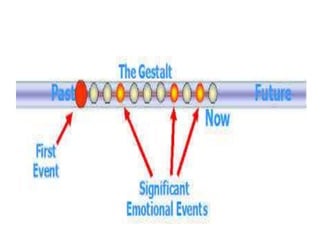
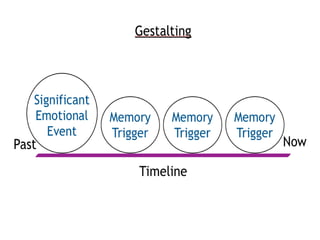
 Find out the significant Emotional Event (SEE ).
STEP TWO:
SET UP THE INTERVENTION
 Discuss the prime Directives.
 The purpose of negative emotions.
 Prepare the client for the progress
STEP THREE:
DISCOVER HOW YOUR CLIENT ORGANISES TIME
 No conscious effort required.
 Sit comfortable, Feel the chair, feel the foot on the
floor, Feel the hands on the thigh.
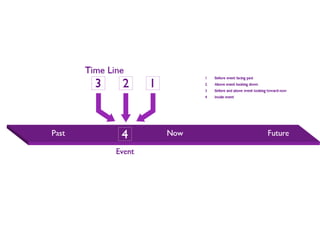
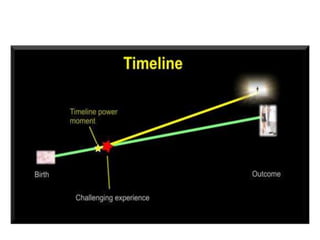
 Note the direction of the Timeline.
 Find out three past event and its direction.
 Spot it on the floor and find the direction.
 Find out three future event and its direction.
 However the client organizes the time is “Perfect “
for him or her.
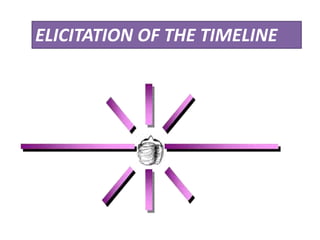
ELICITATION OF THE TIMELINE
STEP FOUR:
HAVE THE CLIENT FLOT ABOVE THE TIMELINE
 Do a test Drive of the TIMELINE
 Go through the past.
 Go through the future.
 Then watch from VERY HIGH ( Birds view)
 No investment in anything other than floating.
STEP FIVE:
NOTE THE SUB-MODALITIES OF THE TIMELINE (optional)
 Color, Black.
 Dark or missing area : Unresolved problem
or some sort of TRAUMA.
 Can change dark or missing area with sub- modalities
of the timeline so bright and approximate color to
vanish the issue
STEP SIX:
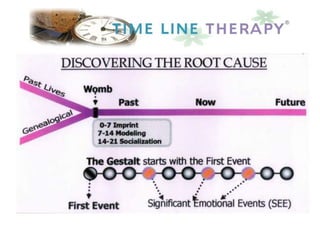
BEFORE FLOTING ABOVE THE TIMELINE, ELICIT THE ROOT CAUSE
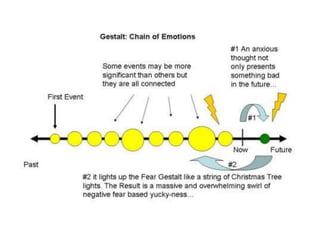
 Find out the first EVENT for each Emotion
and Limiting Decision before getting on the TL.
 This enhances conscious/ Unconscious Trust
and Integration.
STEP SEVEN:
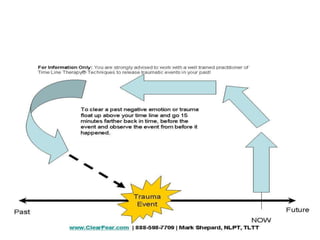
RELEASE THE NEGATIVE EMOTIONS OR LIMITING DECISION
 After finding the first EVENT, release the
Emotions or Decision by going into the past
before the first EVENT.
STEP EIGHT:
WHEN RELEASING A NE OR LD ALWAYS PRESERVE THE LEARNINGS
 “ you learn many things from the
experience, and I want you to preserve those
positive learning in that special place you
preserve for all such learning”.
STEP NINE:
BRELEASE THE EMOTION OR ELIMINATE LIMITING DECISIONS
 Release or Delete a LD from the first event.
 Run the event by Phobia Model.
 Fill the hole with a pleasant or positive memory.
 If necessary, it is possible at this point to
remove a memory. To remove a memory, use the
phobia model and ask them run the pattern until
the memory is destroyed. Say “ I want you to run
it until you can’t get the memory”. If and only if
you remove a memory, replace the eliminated
place with a neutral or positive memory- fill the
hole” created by the removed memory.
STEP TEN
HAVE THE CLIENT REPEAT THE PROCESS ALL THE WAY BACK TO NOW
 Release all the NE or LD until the unwanted
state or Behavior is not accessible.
 The client is asked to repeat the process with
all the memories of a similar nature.
 Make sure all the chain of memories are
vanished.
STEP ELEVAN
HAVE THE CLIENT RETURN TO NOW
 Come all the way back to now.
 Float down in to the now and come back into
the room.
 Make sure TL is organized in the way that is
most comfortable.
STEP TWELVE
TEST
 Check the learned new behaviors are
agreeable to all parts.
STEP THIRTEEN
FUTURE PACE

 Run the learned behavior for a period of time
Nlp timeline therapy

Nlp timeline therapy

  • 4.
    TLT Is anExcellent form of Brief Therapy, Offer a fast and effective means of changing the chain of events leading to certain set of unwanted Behavior or internal state. To eliminate Negative Emotion or Limiting Decisions. Empower positive emotions. Empowering decisions in the history.
  • 5.
    STEP ONE: TAKE ADETAILED PERSONAL HISTORY  Pacing and Leading. Personal History.  Family History / Medical History.  Home Atmosphere.  Major complaints.  Childhood History.  Neurotic Symptom present during childhood.  Find out the significant Emotional Event (SEE ).
  • 6.
    STEP TWO: SET UPTHE INTERVENTION  Discuss the prime Directives.  The purpose of negative emotions.  Prepare the client for the progress
  • 7.
    STEP THREE: DISCOVER HOWYOUR CLIENT ORGANISES TIME  No conscious effort required.  Sit comfortable, Feel the chair, feel the foot on the floor, Feel the hands on the thigh.  Note the direction of the Timeline.  Find out three past event and its direction.  Spot it on the floor and find the direction.  Find out three future event and its direction.  However the client organizes the time is “Perfect “ for him or her.
  • 8.
  • 9.
    STEP FOUR: HAVE THECLIENT FLOT ABOVE THE TIMELINE  Do a test Drive of the TIMELINE  Go through the past.  Go through the future.  Then watch from VERY HIGH ( Birds view)  No investment in anything other than floating.
  • 12.
    STEP FIVE: NOTE THESUB-MODALITIES OF THE TIMELINE (optional)  Color, Black.  Dark or missing area : Unresolved problem or some sort of TRAUMA.  Can change dark or missing area with sub- modalities of the timeline so bright and approximate color to vanish the issue
  • 13.
    STEP SIX: BEFORE FLOTINGABOVE THE TIMELINE, ELICIT THE ROOT CAUSE  Find out the first EVENT for each Emotion and Limiting Decision before getting on the TL.  This enhances conscious/ Unconscious Trust and Integration.
  • 18.
    STEP SEVEN: RELEASE THENEGATIVE EMOTIONS OR LIMITING DECISION  After finding the first EVENT, release the Emotions or Decision by going into the past before the first EVENT.
  • 19.
    STEP EIGHT: WHEN RELEASINGA NE OR LD ALWAYS PRESERVE THE LEARNINGS  “ you learn many things from the experience, and I want you to preserve those positive learning in that special place you preserve for all such learning”.
  • 20.
    STEP NINE: BRELEASE THEEMOTION OR ELIMINATE LIMITING DECISIONS  Release or Delete a LD from the first event.  Run the event by Phobia Model.  Fill the hole with a pleasant or positive memory.
  • 21.
     If necessary,it is possible at this point to remove a memory. To remove a memory, use the phobia model and ask them run the pattern until the memory is destroyed. Say “ I want you to run it until you can’t get the memory”. If and only if you remove a memory, replace the eliminated place with a neutral or positive memory- fill the hole” created by the removed memory.
  • 22.
    STEP TEN HAVE THECLIENT REPEAT THE PROCESS ALL THE WAY BACK TO NOW  Release all the NE or LD until the unwanted state or Behavior is not accessible.  The client is asked to repeat the process with all the memories of a similar nature.  Make sure all the chain of memories are vanished.
  • 23.
    STEP ELEVAN HAVE THECLIENT RETURN TO NOW  Come all the way back to now.  Float down in to the now and come back into the room.  Make sure TL is organized in the way that is most comfortable.
  • 25.
    STEP TWELVE TEST  Checkthe learned new behaviors are agreeable to all parts.
  • 26.
    STEP THIRTEEN FUTURE PACE  Run the learned behavior for a period of time