
NETWORK SECURITY 
Ms. Mousmi Pawar
OVERVIEW 
1. Need for Security 
2. Goals of Security 
3. Famous Malwares and Phishing 
4. Cryptography
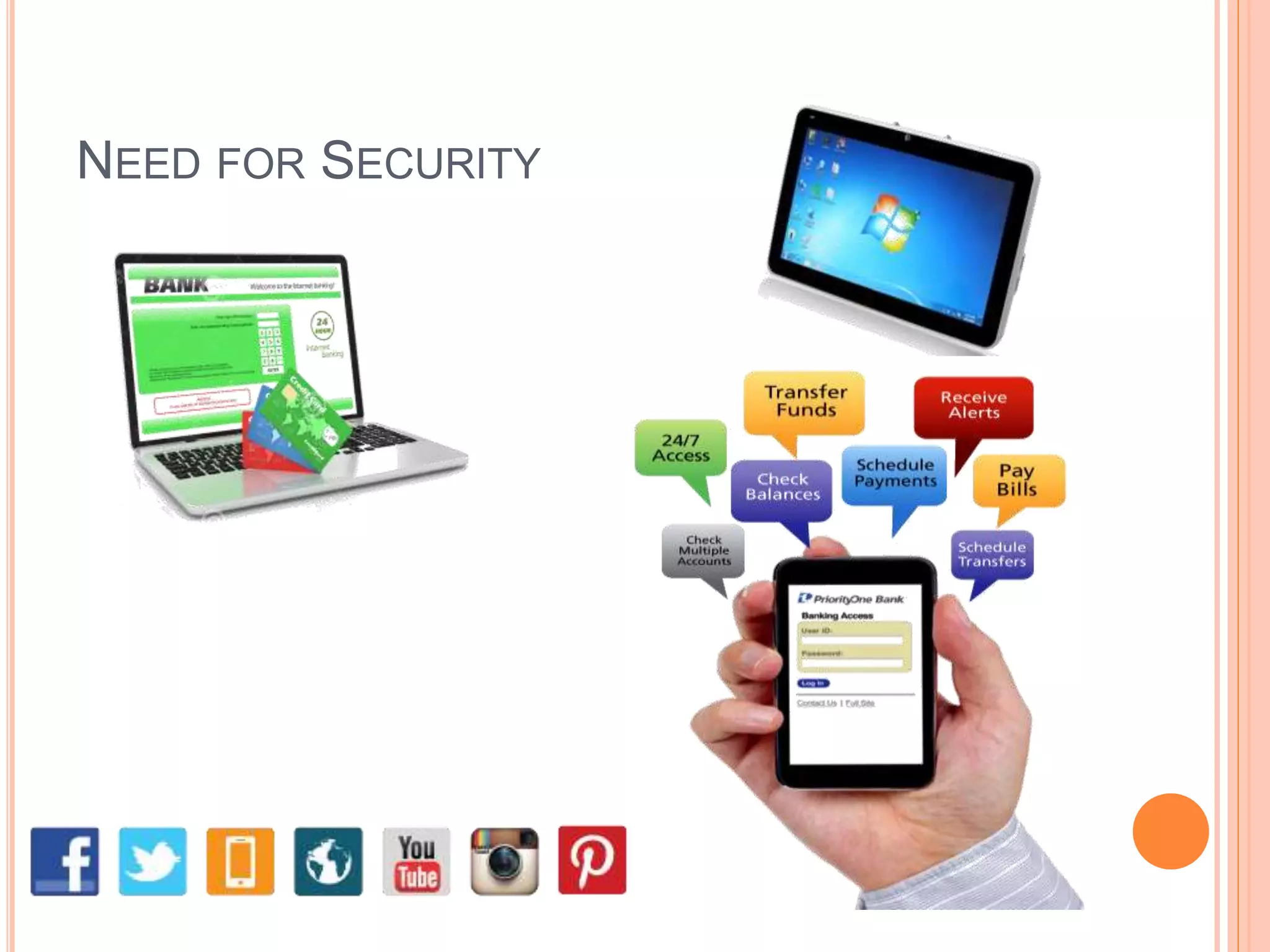
NEED FOR SECURITY
GOALS OF SECURITY 
 Integrity 
 Confendtiality 
 Authentication 
 Non-Repudiation 
 Availability 
 Access Control
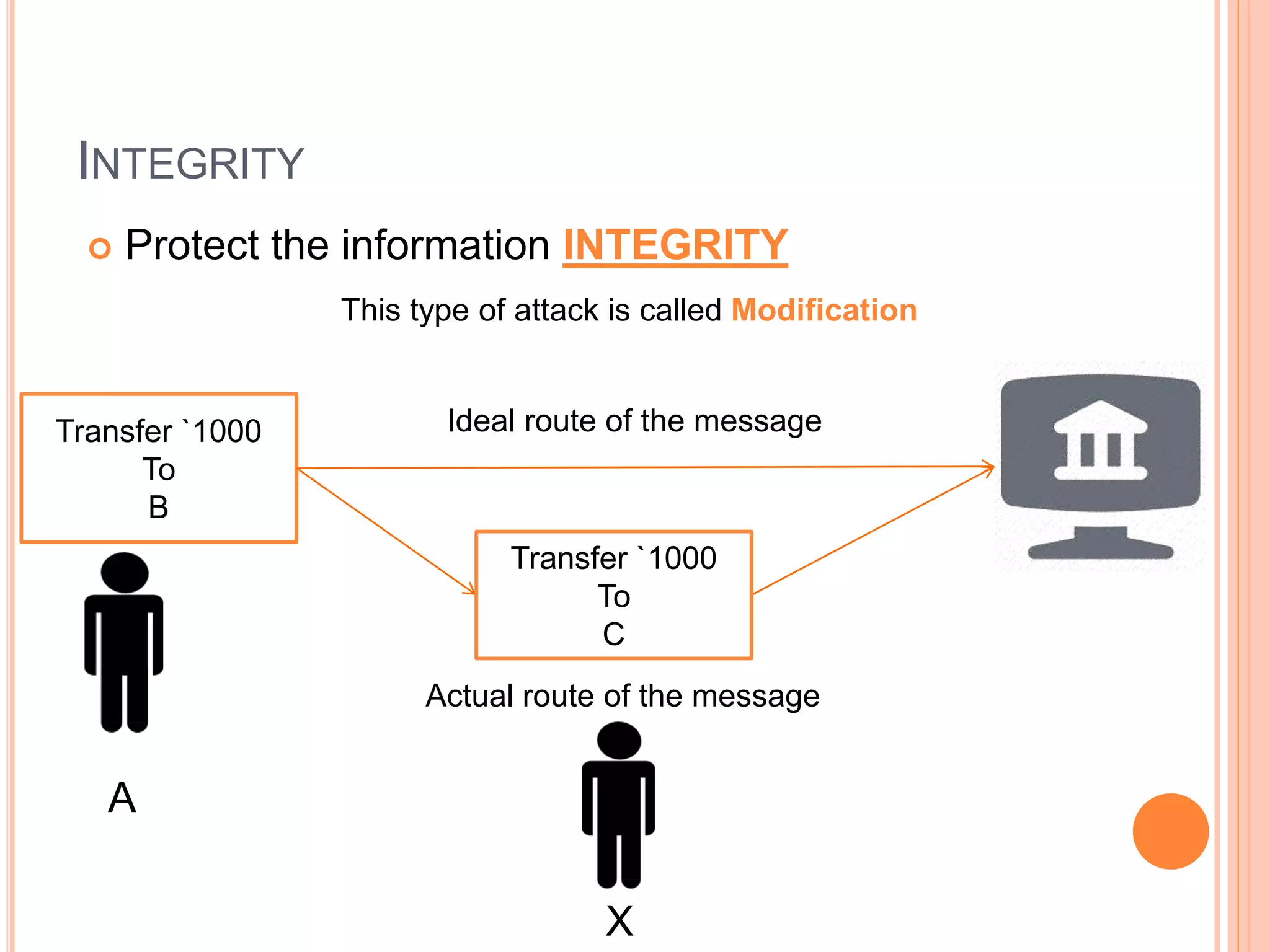
INTEGRITY 
 Protect the information INTEGRITY 
This type of attack is called Modification 
Transfer `1000 
To 
B 
Ideal route of the message 
Transfer `1000 
To 
C 
Actual route of the message 
A 
X
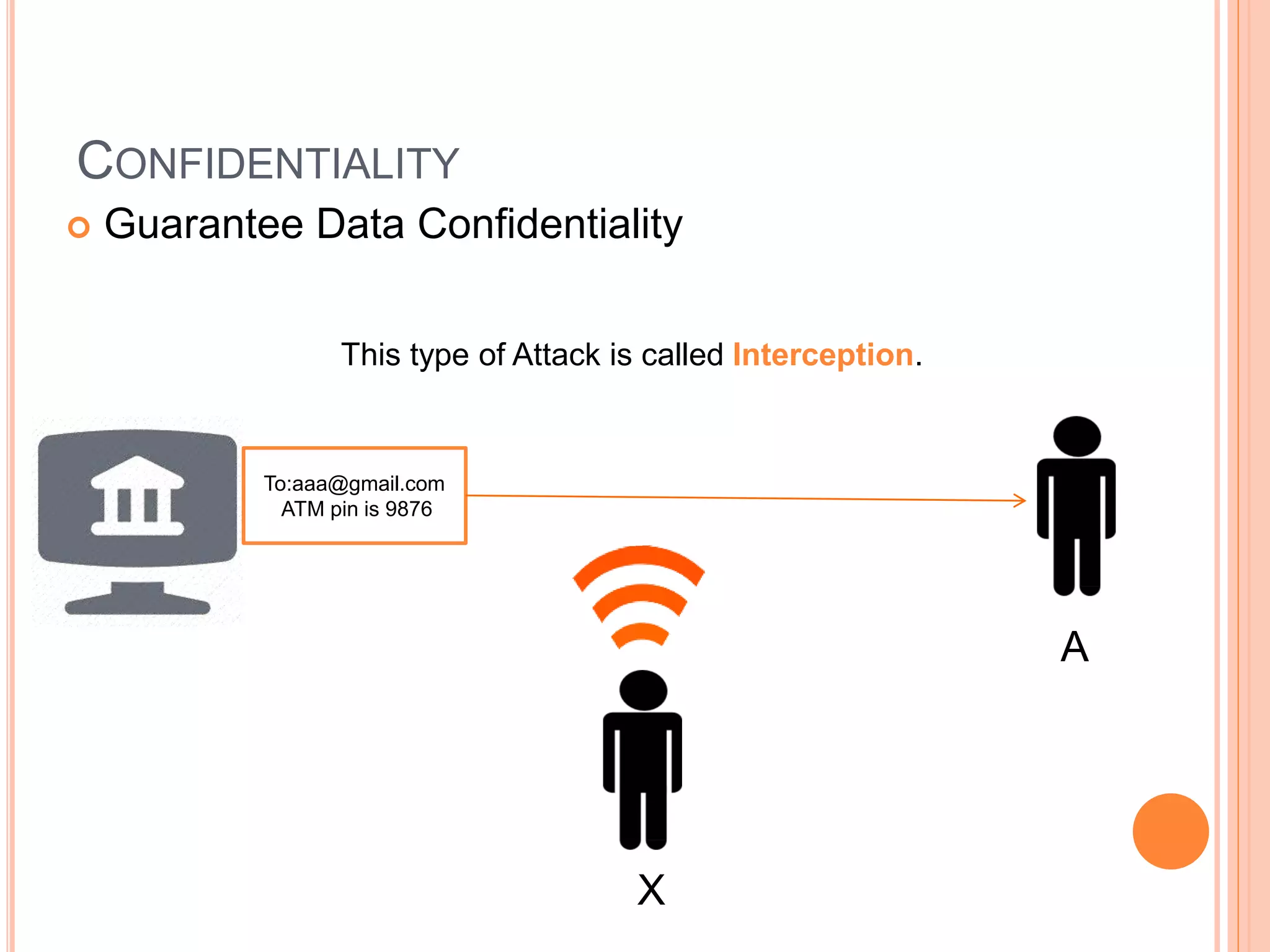
CONFIDENTIALITY 
 Guarantee Data Confidentiality 
This type of Attack is called Interception. 
To:aaa@gmail.com 
ATM pin is 9876 
X 
A
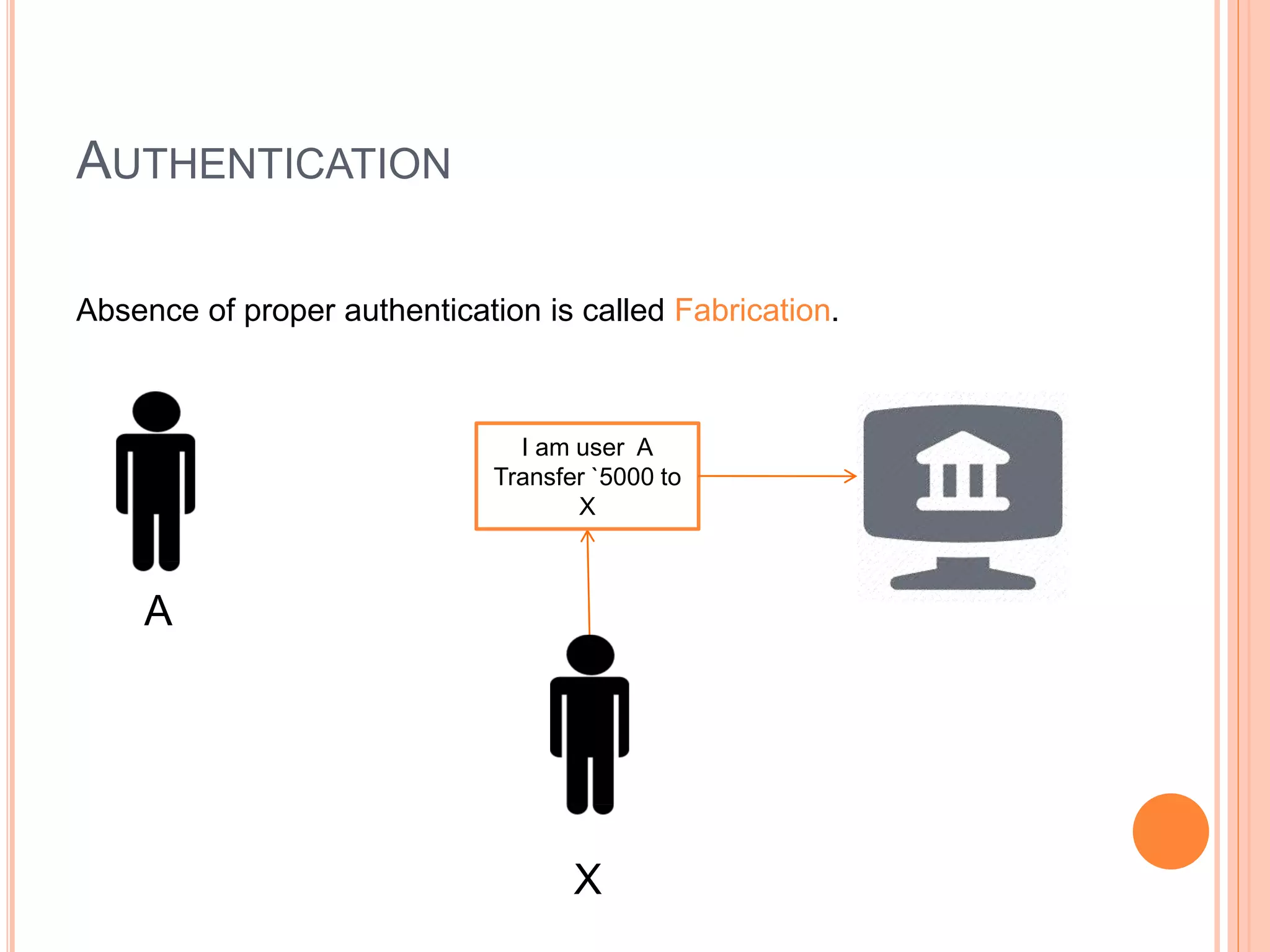
AUTHENTICATION 
Absence of proper authentication is called Fabrication. 
A 
I am user A 
Transfer `5000 to 
X 
X
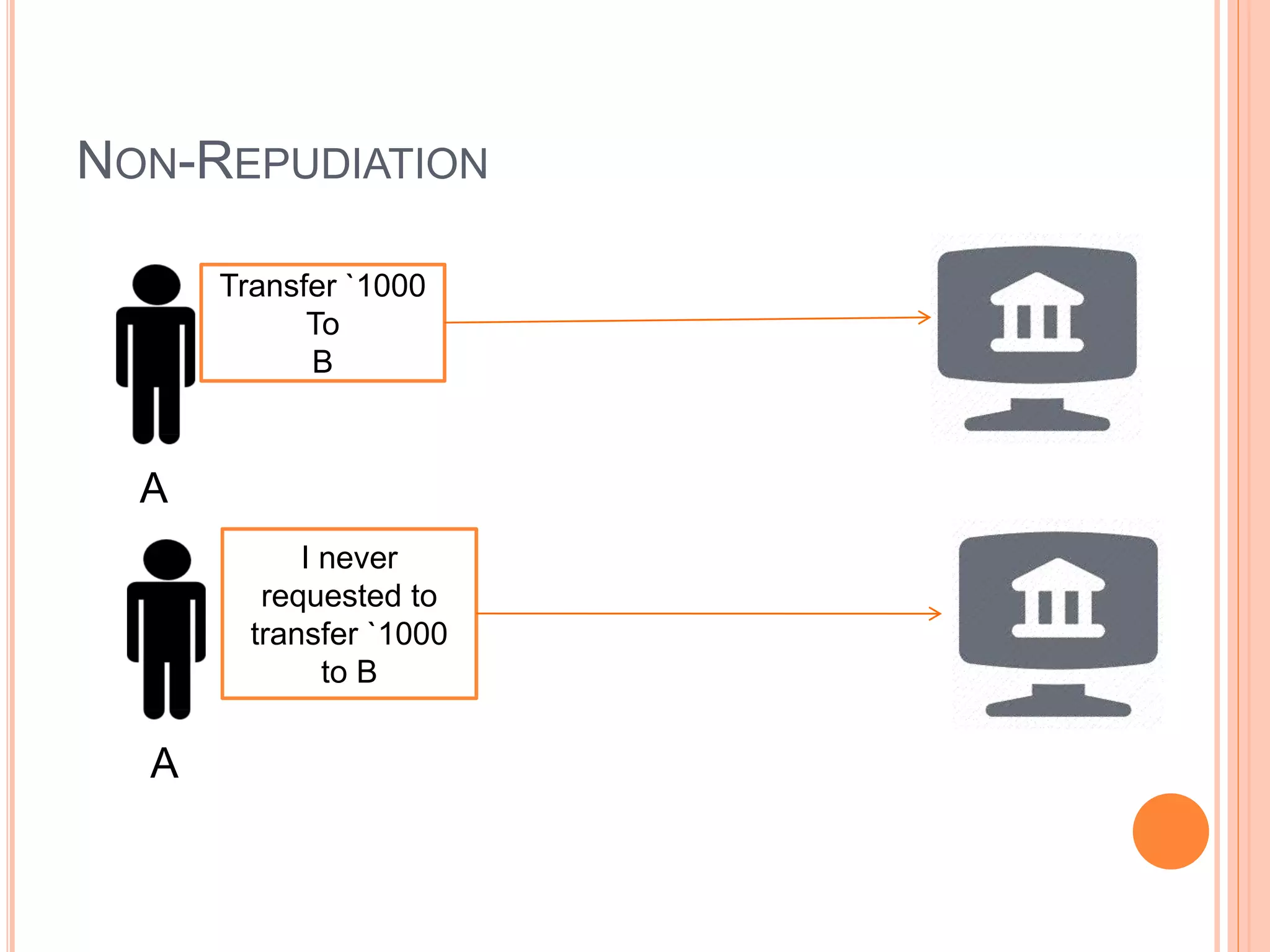
NON-REPUDIATION 
Transfer `1000 
To 
B 
I never 
requested to 
transfer `1000 
to B 
A 
A
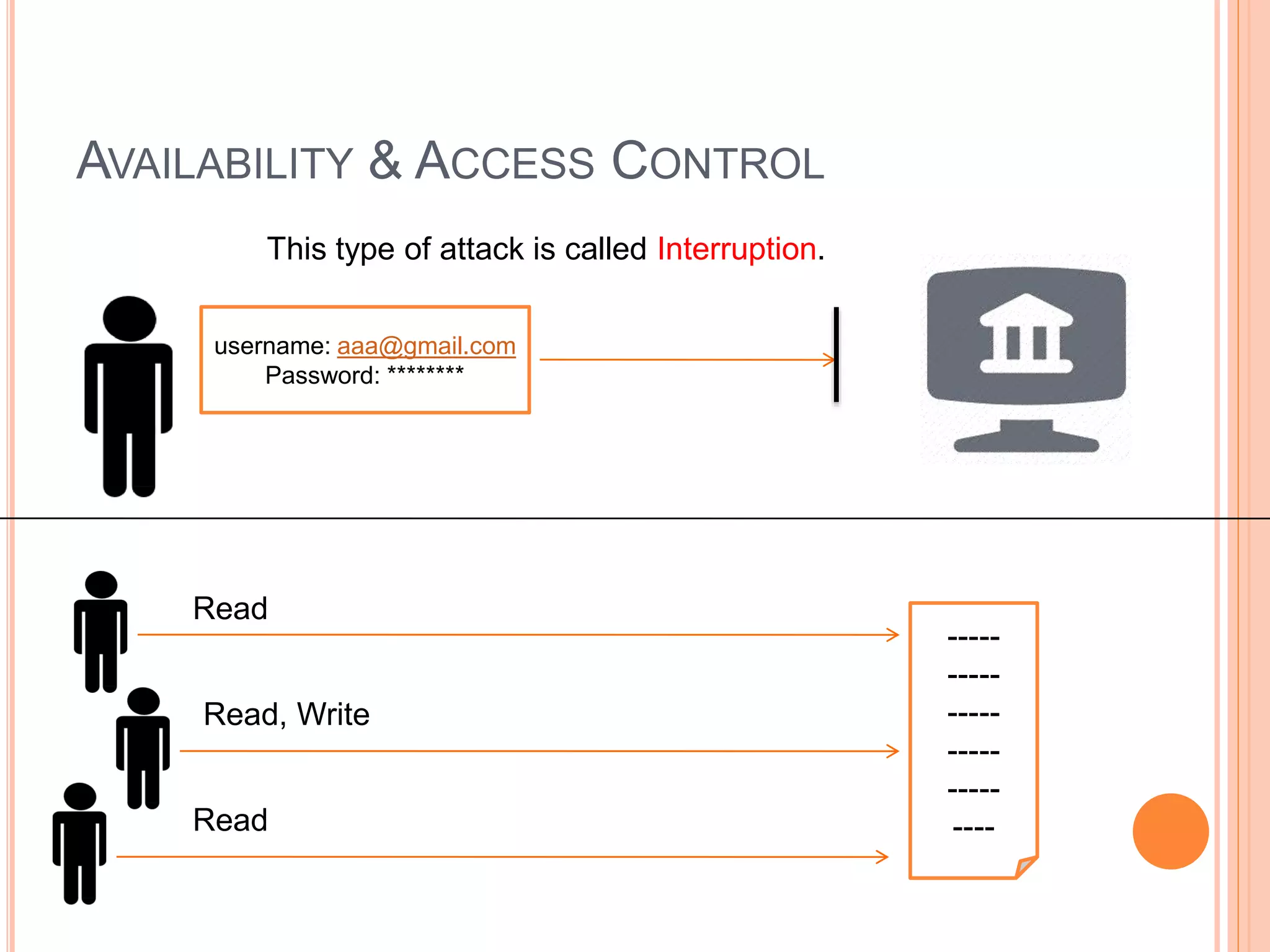
AVAILABILITY & ACCESS CONTROL 
This type of attack is called Interruption. 
username: aaa@gmail.com 
Password: ******** 
----- 
----- 
----- 
----- 
----- 
---- 
Read 
Read, Write 
Read
FAMOUS MALWARES 
 Viruses 
 Worms 
 Trojan Horse
VIRUS 
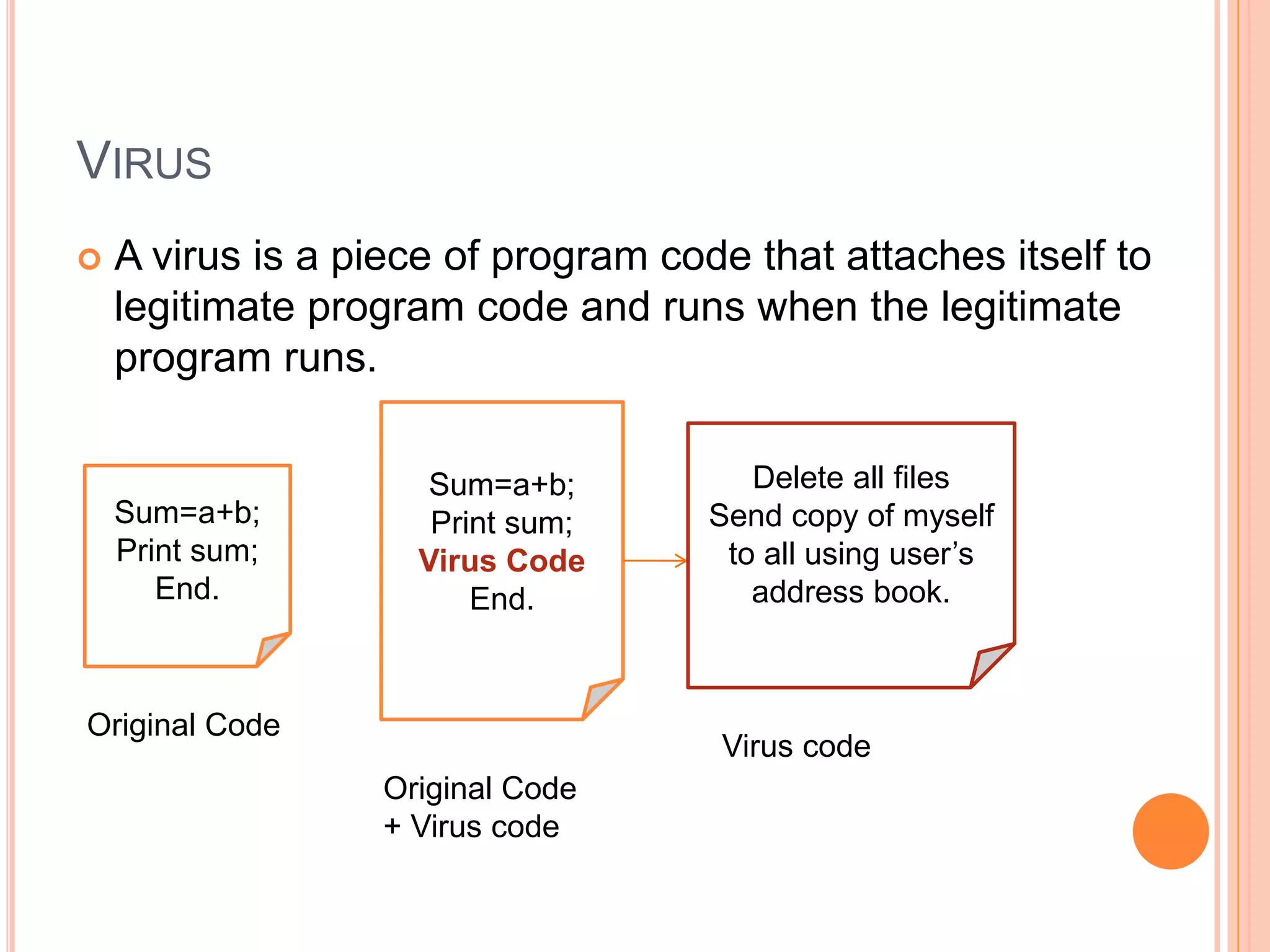
 A virus is a piece of program code that attaches itself to 
legitimate program code and runs when the legitimate 
program runs. 
Sum=a+b; 
Print sum; 
End. 
Sum=a+b; 
Print sum; 
Virus Code 
End. 
Original Code 
Original Code 
+ Virus code 
Delete all files 
Send copy of myself 
to all using user’s 
address book. 
Virus code
WORM 
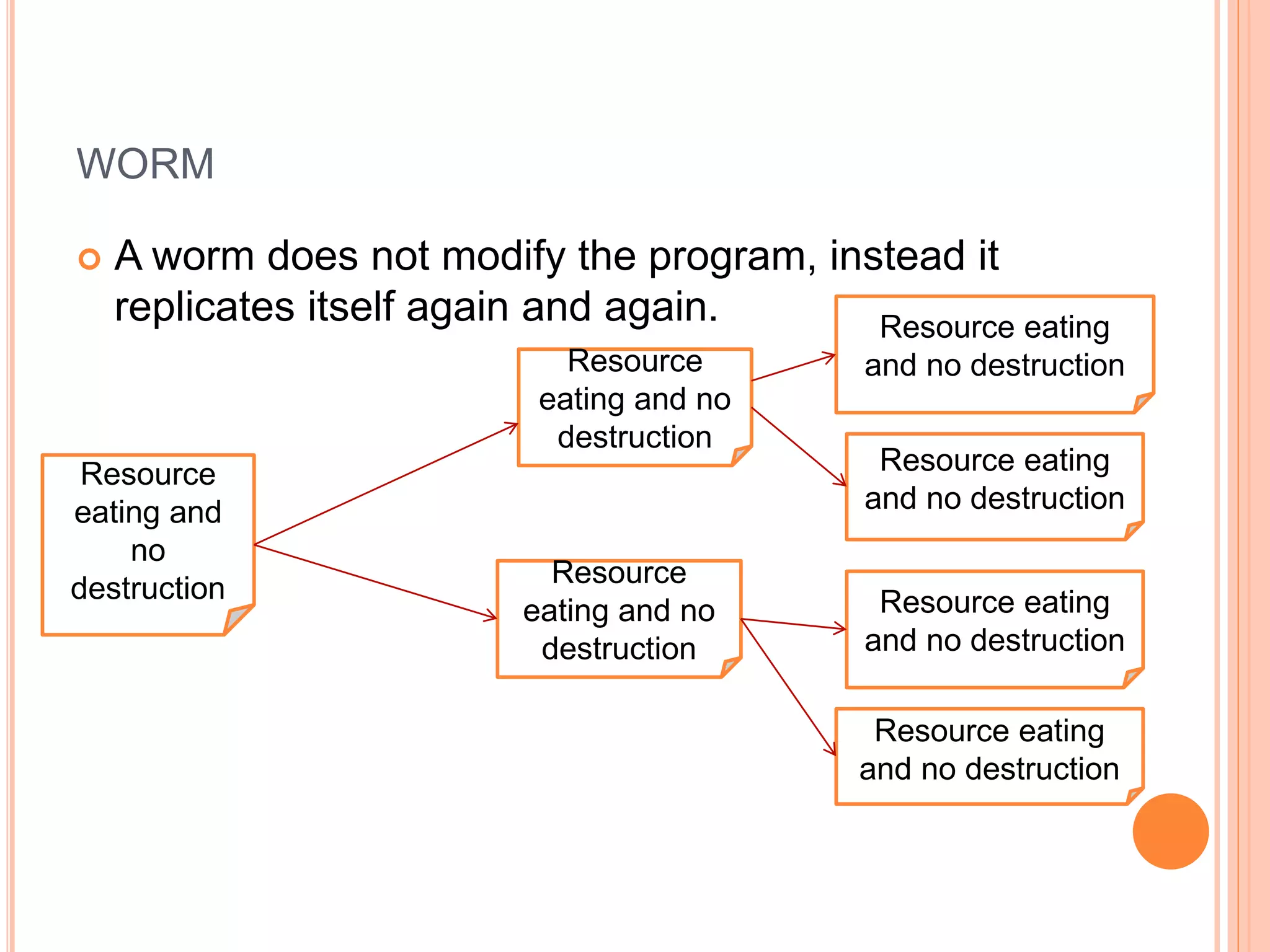
 A worm does not modify the program, instead it 
replicates itself again and again. 
Resource 
eating and 
no 
destruction 
Resource eating 
and no destruction 
Resource eating 
and no destruction 
Resource eating 
and no destruction 
Resource 
eating and no 
destruction 
Resource 
eating and no 
destruction 
Resource eating 
and no destruction
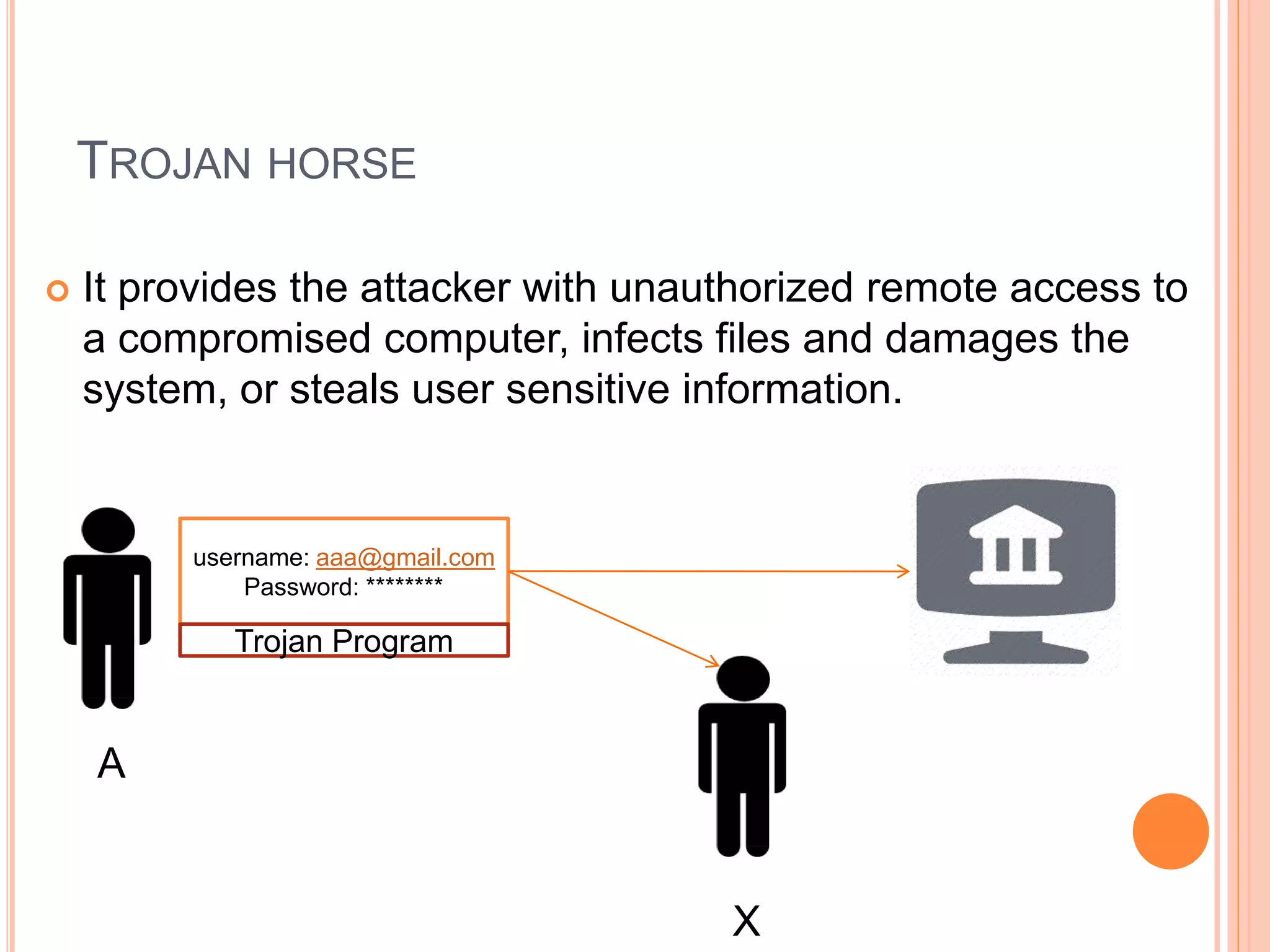
TROJAN HORSE 
 It provides the attacker with unauthorized remote access to 
a compromised computer, infects files and damages the 
system, or steals user sensitive information. 
username: aaa@gmail.com 
Password: ******** 
Trojan Program 
A 
X
X
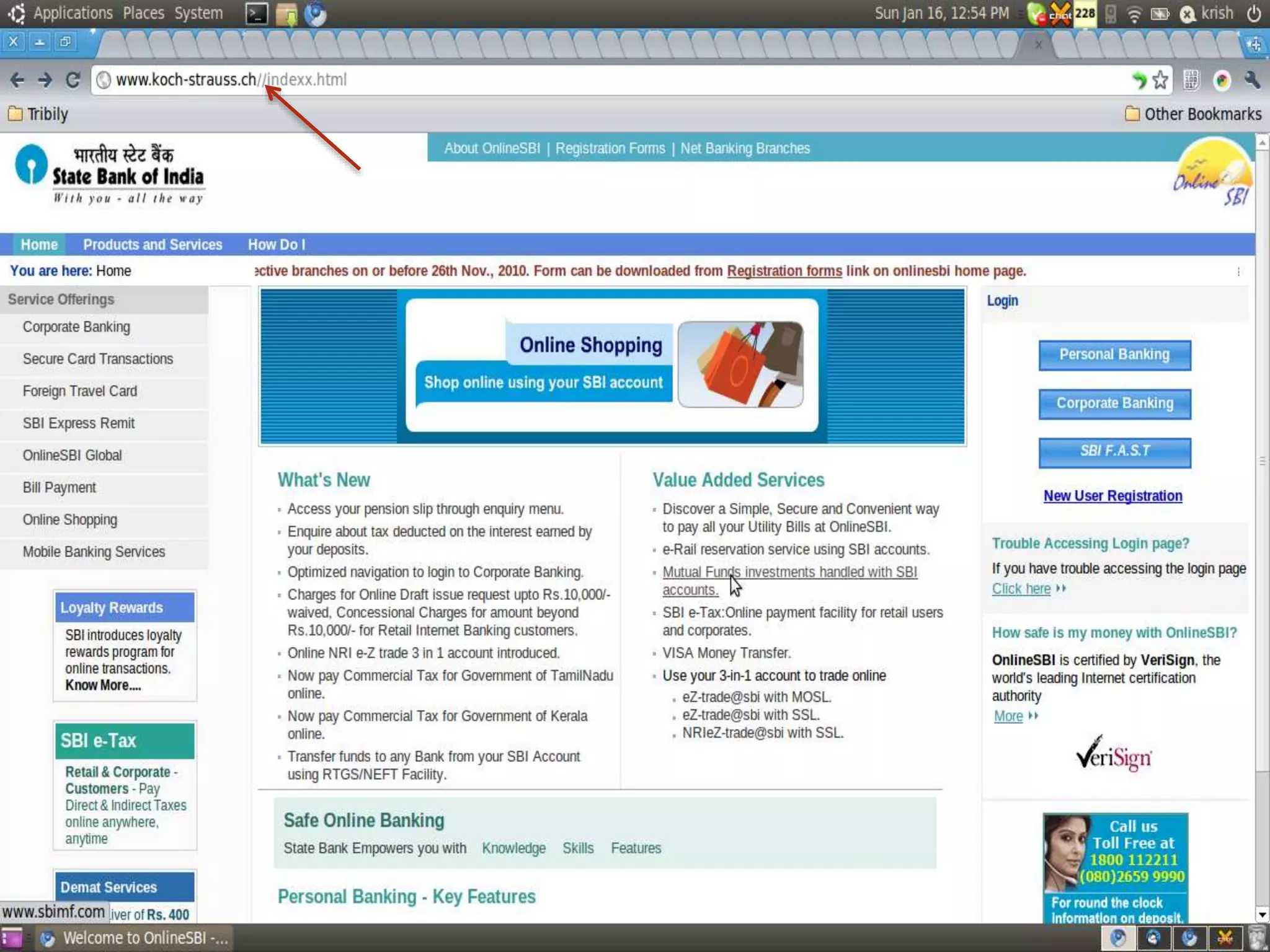
PHISHING 
 Attacker set up fake website which looks like real 
website to obtain your details.
CRYPTOGRAPHY 
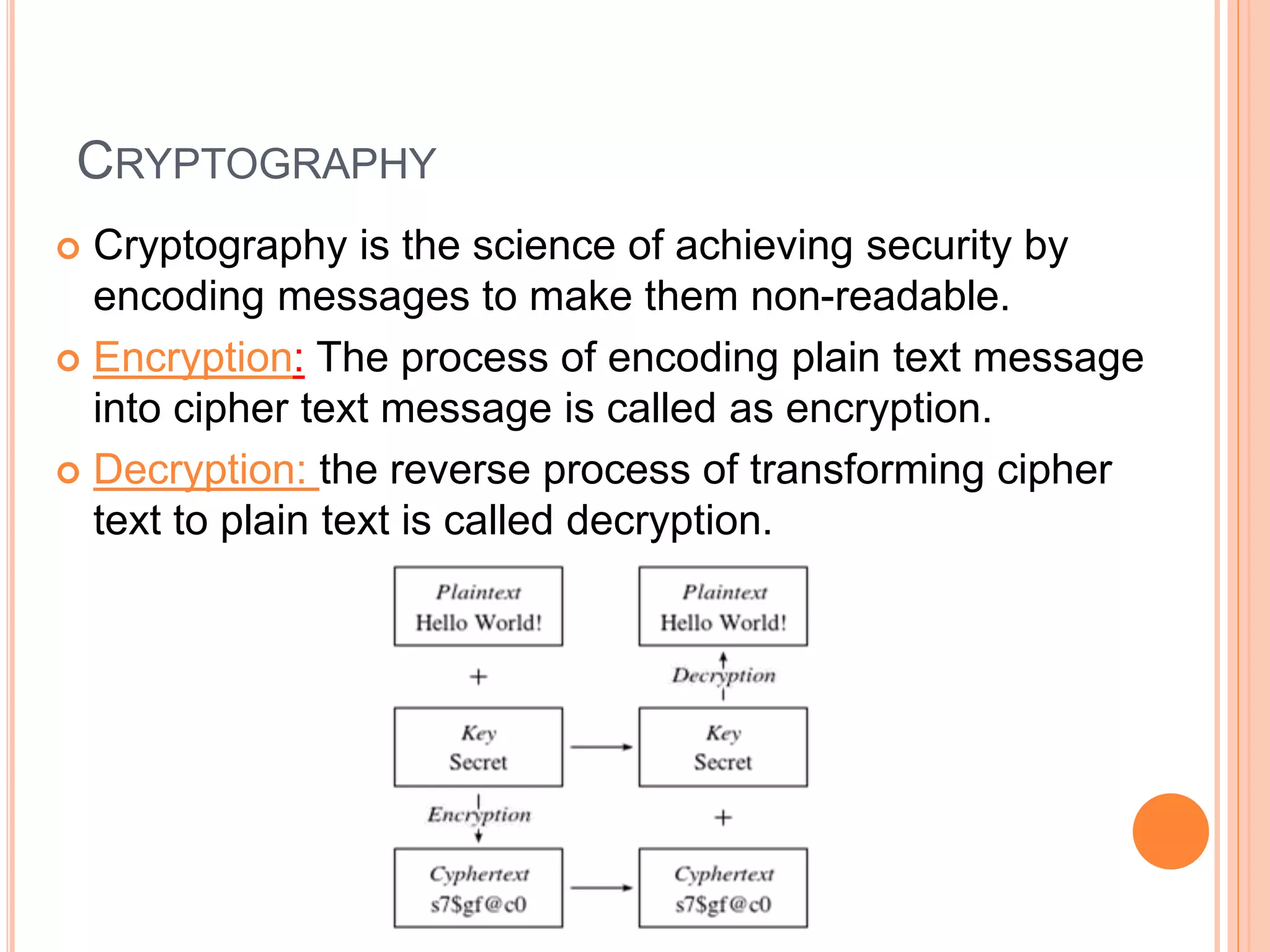
 Cryptography is the science of achieving security by 
encoding messages to make them non-readable. 
 Encryption: The process of encoding plain text message 
into cipher text message is called as encryption. 
 Decryption: the reverse process of transforming cipher 
text to plain text is called decryption.
CRYPTOGRAPHY MECHANISM 
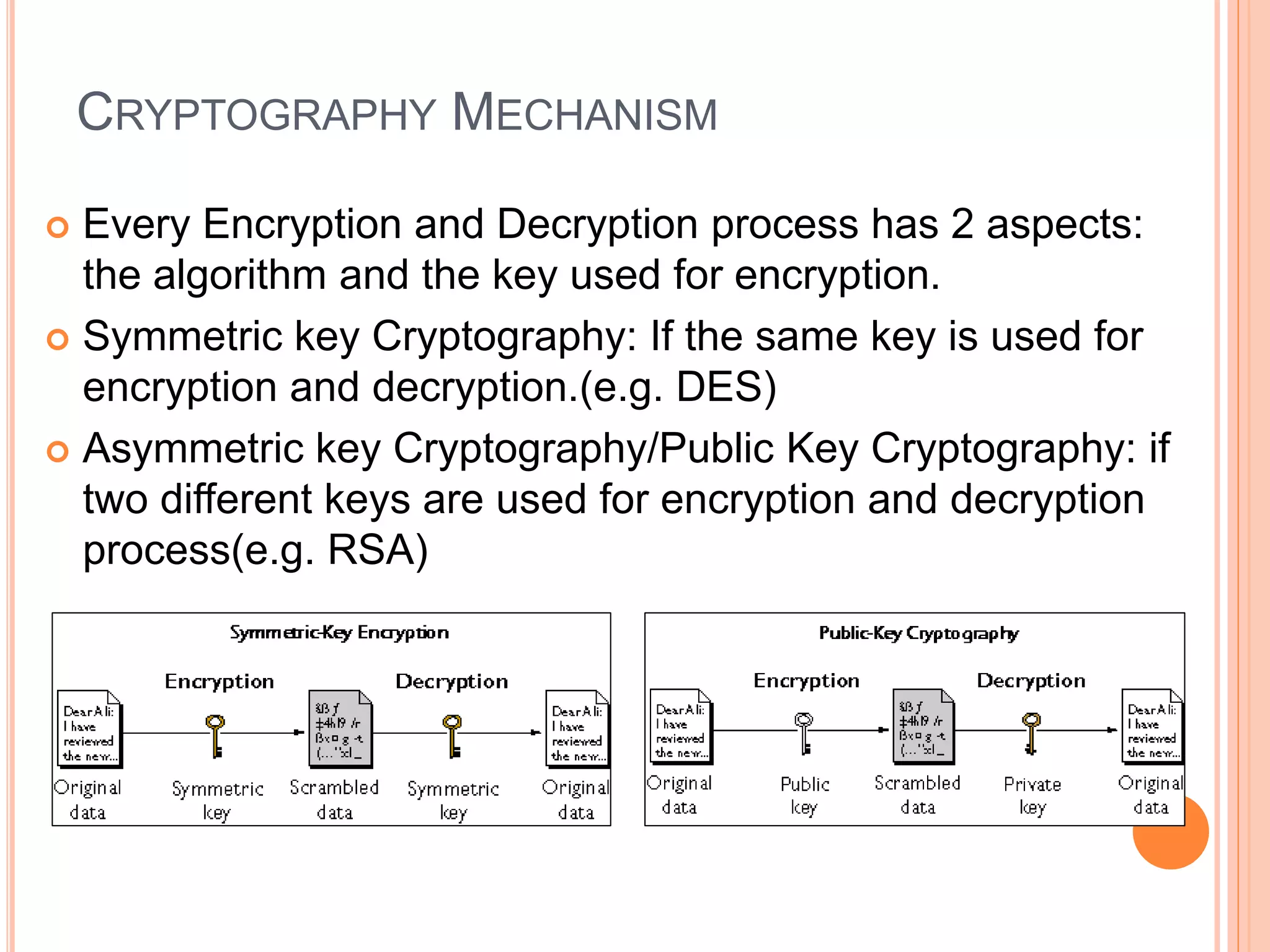
 Every Encryption and Decryption process has 2 aspects: 
the algorithm and the key used for encryption. 
 Symmetric key Cryptography: If the same key is used for 
encryption and decryption.(e.g. DES) 
 Asymmetric key Cryptography/Public Key Cryptography: if 
two different keys are used for encryption and decryption 
process(e.g. RSA)
REFERENCES 
 Cryptography and Network Security, Atul Kahate, Tata 
McGraw Hill. 
 http://en.wikipedia.org/wiki/Cryptography.- Wikipedia.
THANK YOU

Network Security Fundamental

  • 1.
  • 2.
    OVERVIEW 1. Needfor Security 2. Goals of Security 3. Famous Malwares and Phishing 4. Cryptography
  • 3.
  • 4.
    GOALS OF SECURITY  Integrity  Confendtiality  Authentication  Non-Repudiation  Availability  Access Control
  • 5.
    INTEGRITY  Protectthe information INTEGRITY This type of attack is called Modification Transfer `1000 To B Ideal route of the message Transfer `1000 To C Actual route of the message A X
  • 6.
    CONFIDENTIALITY  GuaranteeData Confidentiality This type of Attack is called Interception. To:aaa@gmail.com ATM pin is 9876 X A
  • 7.
    AUTHENTICATION Absence ofproper authentication is called Fabrication. A I am user A Transfer `5000 to X X
  • 8.
    NON-REPUDIATION Transfer `1000 To B I never requested to transfer `1000 to B A A
  • 9.
    AVAILABILITY & ACCESSCONTROL This type of attack is called Interruption. username: aaa@gmail.com Password: ******** ----- ----- ----- ----- ----- ---- Read Read, Write Read
  • 10.
    FAMOUS MALWARES Viruses  Worms  Trojan Horse
  • 11.
    VIRUS  Avirus is a piece of program code that attaches itself to legitimate program code and runs when the legitimate program runs. Sum=a+b; Print sum; End. Sum=a+b; Print sum; Virus Code End. Original Code Original Code + Virus code Delete all files Send copy of myself to all using user’s address book. Virus code
  • 12.
    WORM  Aworm does not modify the program, instead it replicates itself again and again. Resource eating and no destruction Resource eating and no destruction Resource eating and no destruction Resource eating and no destruction Resource eating and no destruction Resource eating and no destruction Resource eating and no destruction
  • 13.
    TROJAN HORSE It provides the attacker with unauthorized remote access to a compromised computer, infects files and damages the system, or steals user sensitive information. username: aaa@gmail.com Password: ******** Trojan Program A X
  • 14.
  • 15.
    PHISHING  Attackerset up fake website which looks like real website to obtain your details.
  • 16.
    CRYPTOGRAPHY  Cryptographyis the science of achieving security by encoding messages to make them non-readable.  Encryption: The process of encoding plain text message into cipher text message is called as encryption.  Decryption: the reverse process of transforming cipher text to plain text is called decryption.
  • 17.
    CRYPTOGRAPHY MECHANISM Every Encryption and Decryption process has 2 aspects: the algorithm and the key used for encryption.  Symmetric key Cryptography: If the same key is used for encryption and decryption.(e.g. DES)  Asymmetric key Cryptography/Public Key Cryptography: if two different keys are used for encryption and decryption process(e.g. RSA)
  • 18.
    REFERENCES  Cryptographyand Network Security, Atul Kahate, Tata McGraw Hill.  http://en.wikipedia.org/wiki/Cryptography.- Wikipedia.
  • 19.