Network & Referral
in the context of HIV AIDS
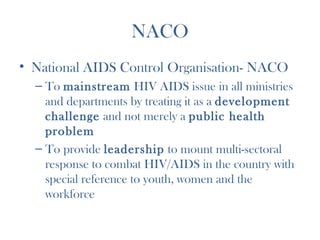
NACO
• National AIDS Control Organisation- NACO
  – To mainstream HIV AIDS issue in all ministries
    and departments by treating it as a development
    challenge and not merely a public health
    problem
  – To provide leadership to mount multi-sectoral
    response to combat HIV/AIDS in the country with
    special reference to youth, women and the
    workforce
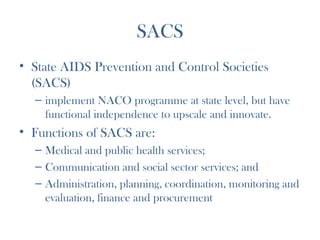
SACS
• State AIDS Prevention and Control Societies
  (SACS)
  – implement NACO programme at state level, but have
    functional independence to upscale and innovate. 
• Functions of SACS are: 
  – Medical and public health services;
  – Communication and social sector services; and
  – Administration, planning, coordination, monitoring and
    evaluation, finance and procurement
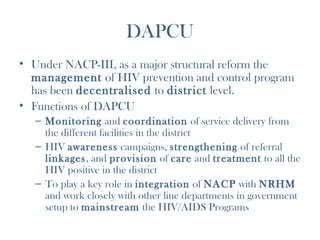
DAPCU
• Under NACP-III, as a major structural reform the
  management of HIV prevention and control program
  has been decentralised to district level.
• Functions of DAPCU
  – Monitoring and coordination of service delivery from
    the different facilities in the district
  – HIV awareness campaigns, strengthening of referral
    linkages, and provision of care and treatment to all the
    HIV positive in the district
  – To play a key role in integration of NACP with NRHM
    and work closely with other line departments in government
    setup to mainstream the HIV/AIDS Programs
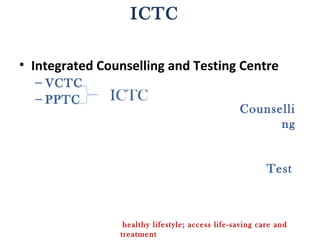
ICTC

• Integrated Counselling and Testing Centre
  – VCTC
  – PPTC       ICTC
                                                 Counselli
                                                       ng


                                                         Test


                 healthy lifestyle; access life-saving care and
                treatment
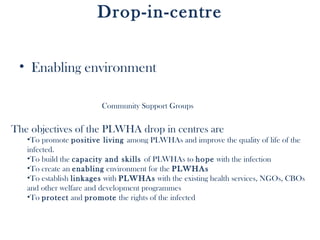
Drop-in-centre


 • Enabling environment

                        Community Support Groups


The objectives of the PLWHA drop in centres are
   •To promote positive living among PLWHAs and improve the quality of life of the
   infected.
   •To build the capacity and skills of PLWHAs to hope with the infection
   •To create an enabling environment for the PLWHAs
   •To establish linkages with PLWHAs with the existing health services, NGOs, CBOs
   and other welfare and development programmes
   •To protect and promote the rights of the infected
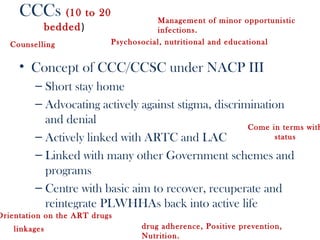
CCCs (10 to 20                   Management of minor opportunistic
               bedded)                infections.
   Counselling             Psychosocial, nutritional and educational


     • Concept of CCC/CCSC under NACP III
         – Short stay home
         – Advocating actively against stigma, discrimination
           and denial
                                                      Come in terms with
         – Actively linked with ARTC and LAC                status

         – Linked with many other Government schemes and
           programs
         – Centre with basic aim to recover, recuperate and
           reintegrate PLWHHAs back into active life
Orientation on the ART drugs
    linkages                      drug adherence, Positive prevention,
                                  Nutrition.
ccsc      (30 to 50 bedded)


• Comprehensive Care and Support Centres
• centres of excellence strategically located across the
  country to provide higher level care including:
   – management of major OIs,
   – referral for specialised services,
   – rehabilitation and palliative care.

   – These centres also play the role of learning sites and
     mentoring CCCs linked with them.

Network & referral

  • 1.
    Network & Referral inthe context of HIV AIDS
  • 2.
    NACO • National AIDSControl Organisation- NACO – To mainstream HIV AIDS issue in all ministries and departments by treating it as a development challenge and not merely a public health problem – To provide leadership to mount multi-sectoral response to combat HIV/AIDS in the country with special reference to youth, women and the workforce
  • 3.
    SACS • State AIDSPrevention and Control Societies (SACS) – implement NACO programme at state level, but have functional independence to upscale and innovate.  • Functions of SACS are:  – Medical and public health services; – Communication and social sector services; and – Administration, planning, coordination, monitoring and evaluation, finance and procurement
  • 4.
    DAPCU • Under NACP-III,as a major structural reform the management of HIV prevention and control program has been decentralised to district level. • Functions of DAPCU – Monitoring and coordination of service delivery from the different facilities in the district – HIV awareness campaigns, strengthening of referral linkages, and provision of care and treatment to all the HIV positive in the district – To play a key role in integration of NACP with NRHM and work closely with other line departments in government setup to mainstream the HIV/AIDS Programs
  • 5.
    ICTC • Integrated Counsellingand Testing Centre – VCTC – PPTC ICTC Counselli ng Test healthy lifestyle; access life-saving care and treatment
  • 6.
    Drop-in-centre • Enablingenvironment Community Support Groups The objectives of the PLWHA drop in centres are •To promote positive living among PLWHAs and improve the quality of life of the infected. •To build the capacity and skills of PLWHAs to hope with the infection •To create an enabling environment for the PLWHAs •To establish linkages with PLWHAs with the existing health services, NGOs, CBOs and other welfare and development programmes •To protect and promote the rights of the infected
  • 7.
    CCCs (10 to20 Management of minor opportunistic bedded) infections. Counselling Psychosocial, nutritional and educational • Concept of CCC/CCSC under NACP III – Short stay home – Advocating actively against stigma, discrimination and denial Come in terms with – Actively linked with ARTC and LAC status – Linked with many other Government schemes and programs – Centre with basic aim to recover, recuperate and reintegrate PLWHHAs back into active life Orientation on the ART drugs linkages drug adherence, Positive prevention, Nutrition.
  • 8.
    ccsc (30 to 50 bedded) • Comprehensive Care and Support Centres • centres of excellence strategically located across the country to provide higher level care including: – management of major OIs, – referral for specialised services, – rehabilitation and palliative care. – These centres also play the role of learning sites and mentoring CCCs linked with them.