The Role of Behavior Change
Communication in the context of
Comprehensive care
Stephen Mucheke
Senior Technical Adviser for BCC
Family Health International
Behavior Change Communication
BCC
 Coined in the early 1990 by communication experts working in HIV
and AIDS in order to give emphasis in the roles of sexual behavior in
the PREVENTION of HIV infection.
 During this time, there were probably no ARV
- VCT might have been available in limited places
- The HIV epidemic was still in its infancy
 BCC program involved the design and implementation of a package
of communication interventions targeting individuals families and
communities to reduce the risk contracting/spreading HIV.
15 Years later
 What is the role of BCC in HIV prevention and
mitigation of Impact in the context of
comprehensive care?.
Change of Concept
 The programs of early 1990 were focused on
BCC for prevention.
 Over the years, the program has expanded to
cover other components of comprehensive care.
 Therefore the need to change from BCC to
Strategic Behavioral Communication (SBC)
There is a behavioral component within the
prevention, Care and treatment continuum
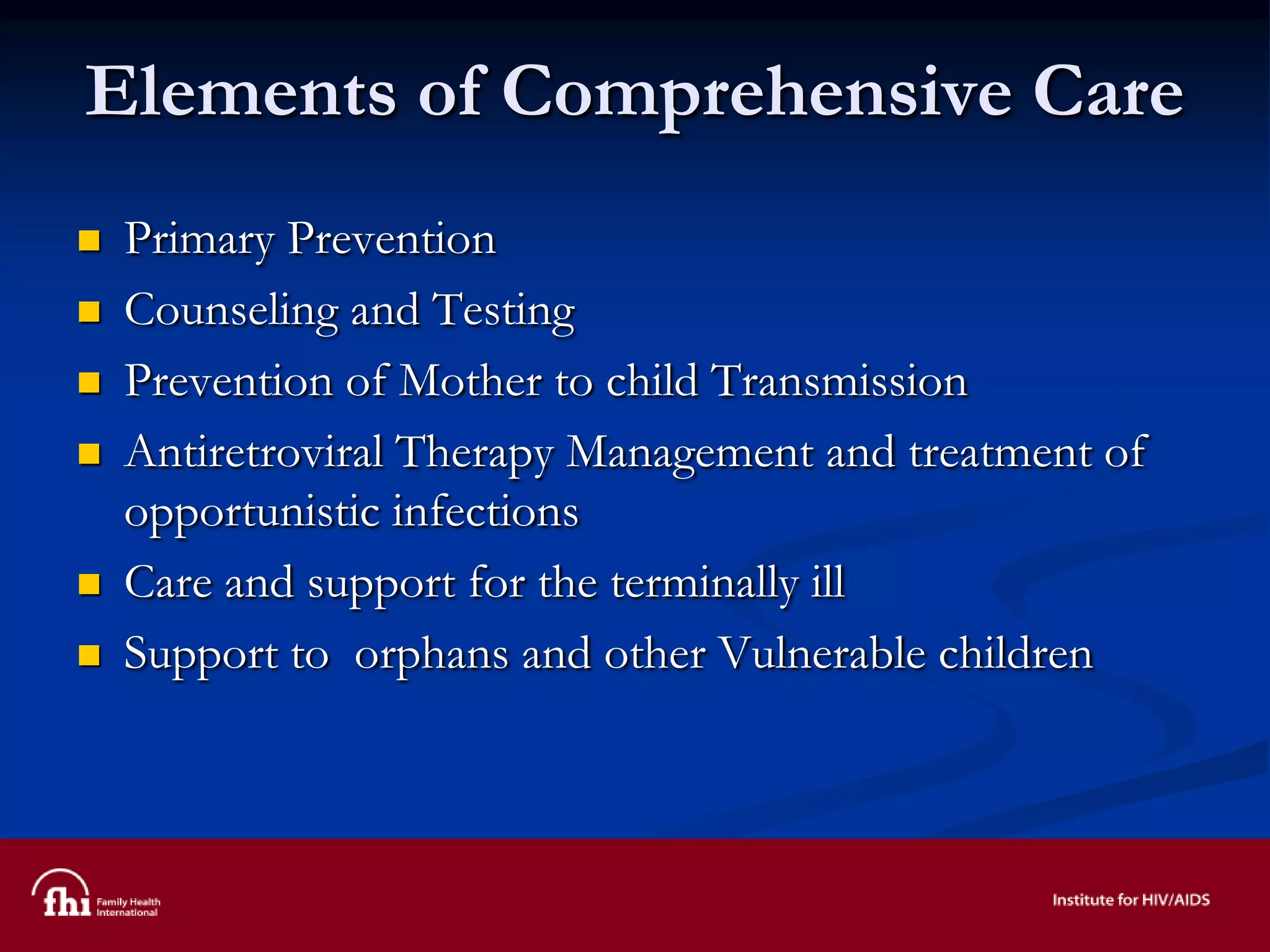
Elements of Comprehensive Care
 Primary Prevention
 Counseling and Testing
 Prevention of Mother to child Transmission
 Antiretroviral Therapy Management and treatment of
opportunistic infections
 Care and support for the terminally ill
 Support to orphans and other Vulnerable children
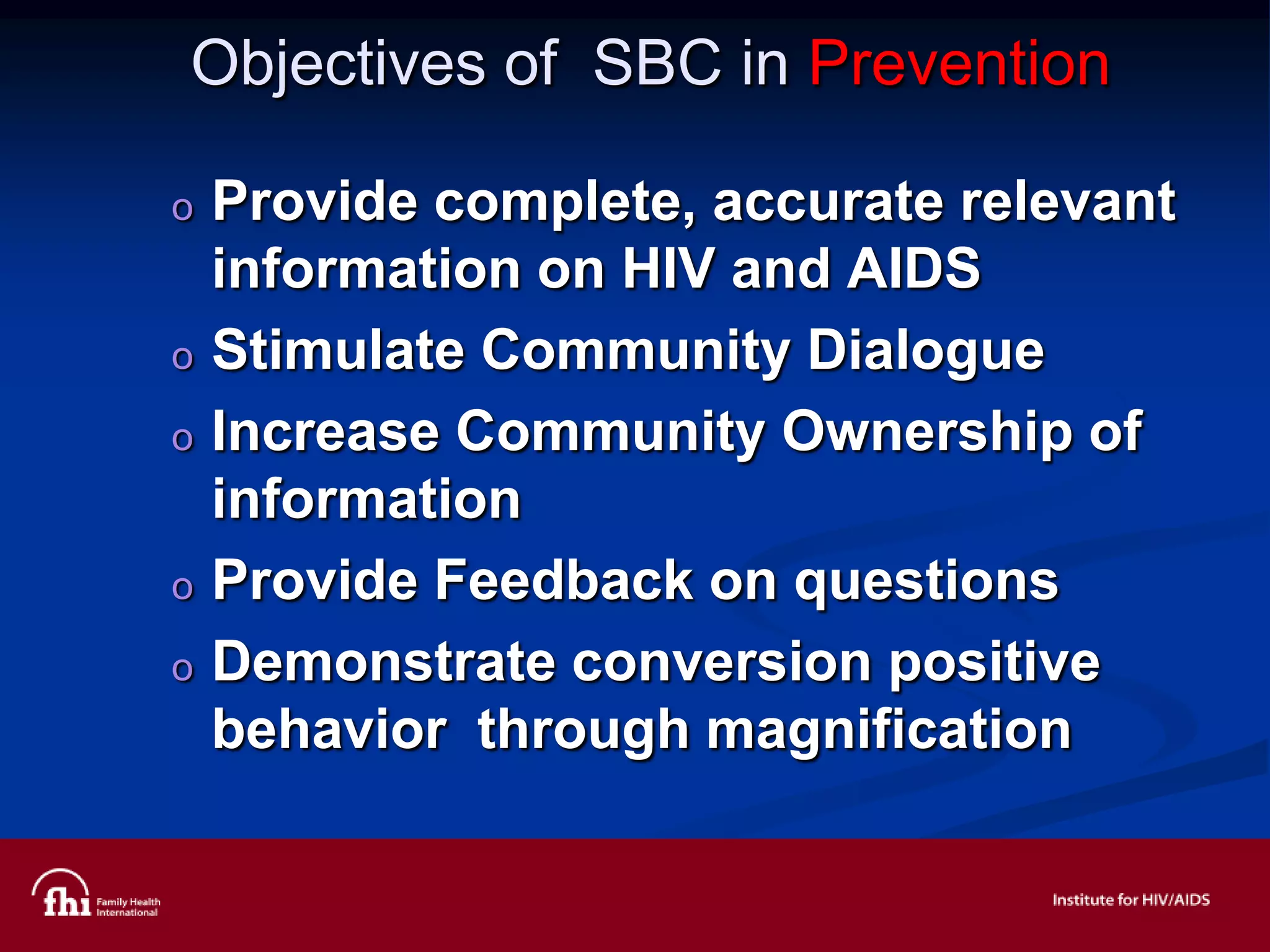
Objectives of SBC in Prevention
o Provide complete, accurate relevant
information on HIV and AIDS
o Stimulate Community Dialogue
o Increase Community Ownership of
information
o Provide Feedback on questions
o Demonstrate conversion positive
behavior through magnification
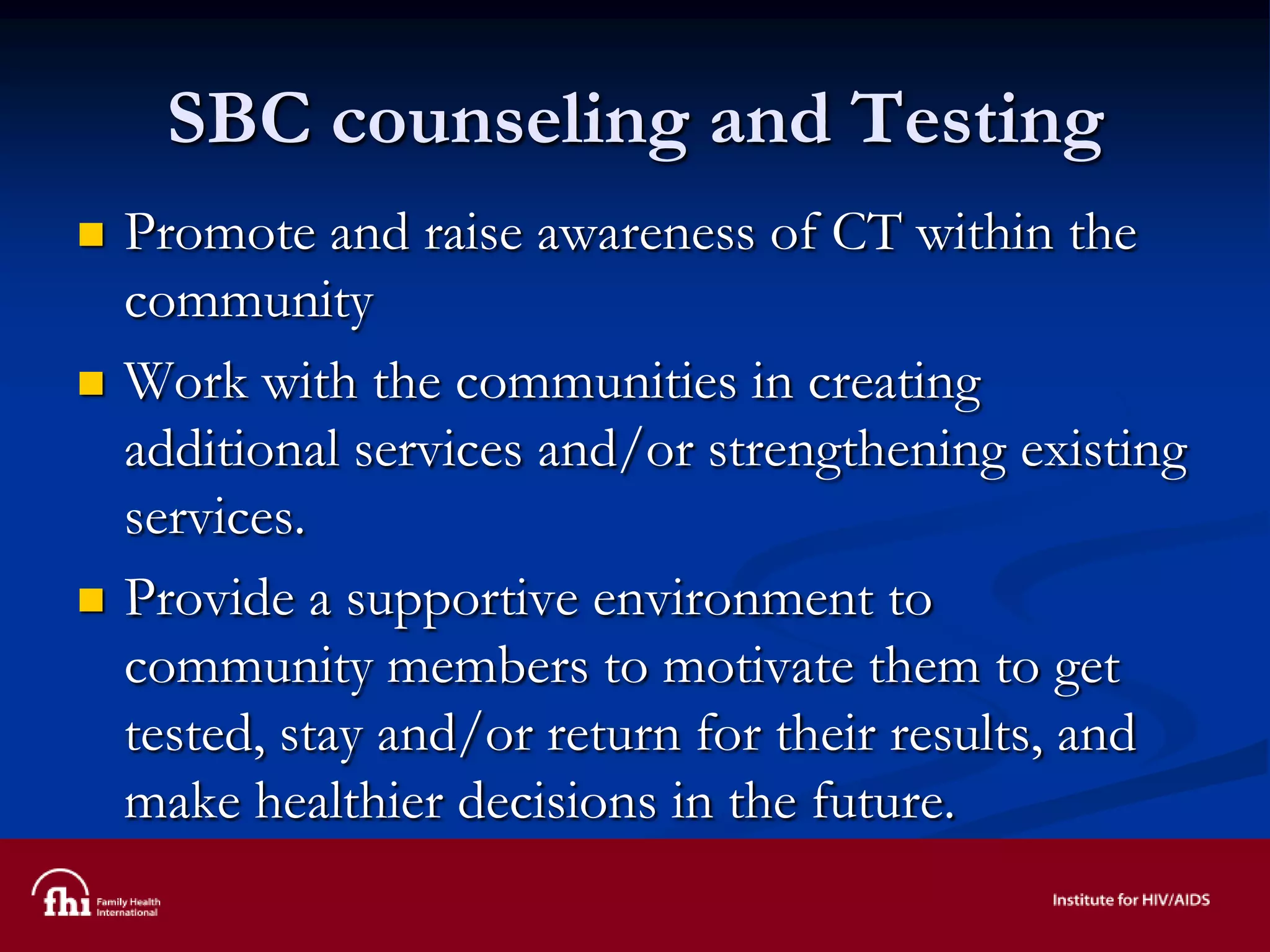
SBC counseling and Testing
 Promote and raise awareness of CT within the
community
 Work with the communities in creating
additional services and/or strengthening existing
services.
 Provide a supportive environment to
community members to motivate them to get
tested, stay and/or return for their results, and
make healthier decisions in the future.
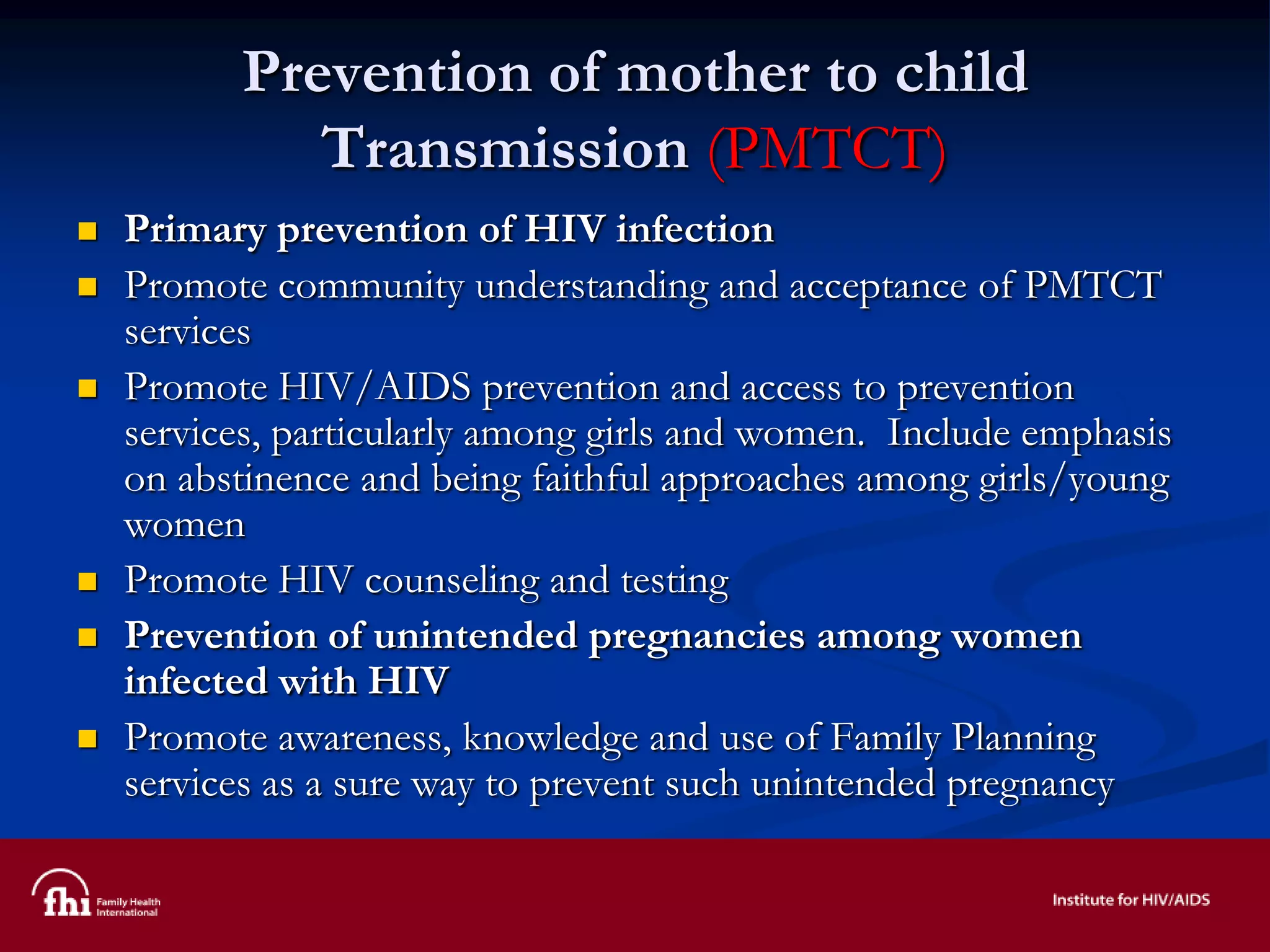
Prevention of mother to child
Transmission (PMTCT)
 Primary prevention of HIV infection
 Promote community understanding and acceptance of PMTCT
services
 Promote HIV/AIDS prevention and access to prevention
services, particularly among girls and women. Include emphasis
on abstinence and being faithful approaches among girls/young
women
 Promote HIV counseling and testing
 Prevention of unintended pregnancies among women
infected with HIV
 Promote awareness, knowledge and use of Family Planning
services as a sure way to prevent such unintended pregnancy
Prevention of mother to child
Transmission
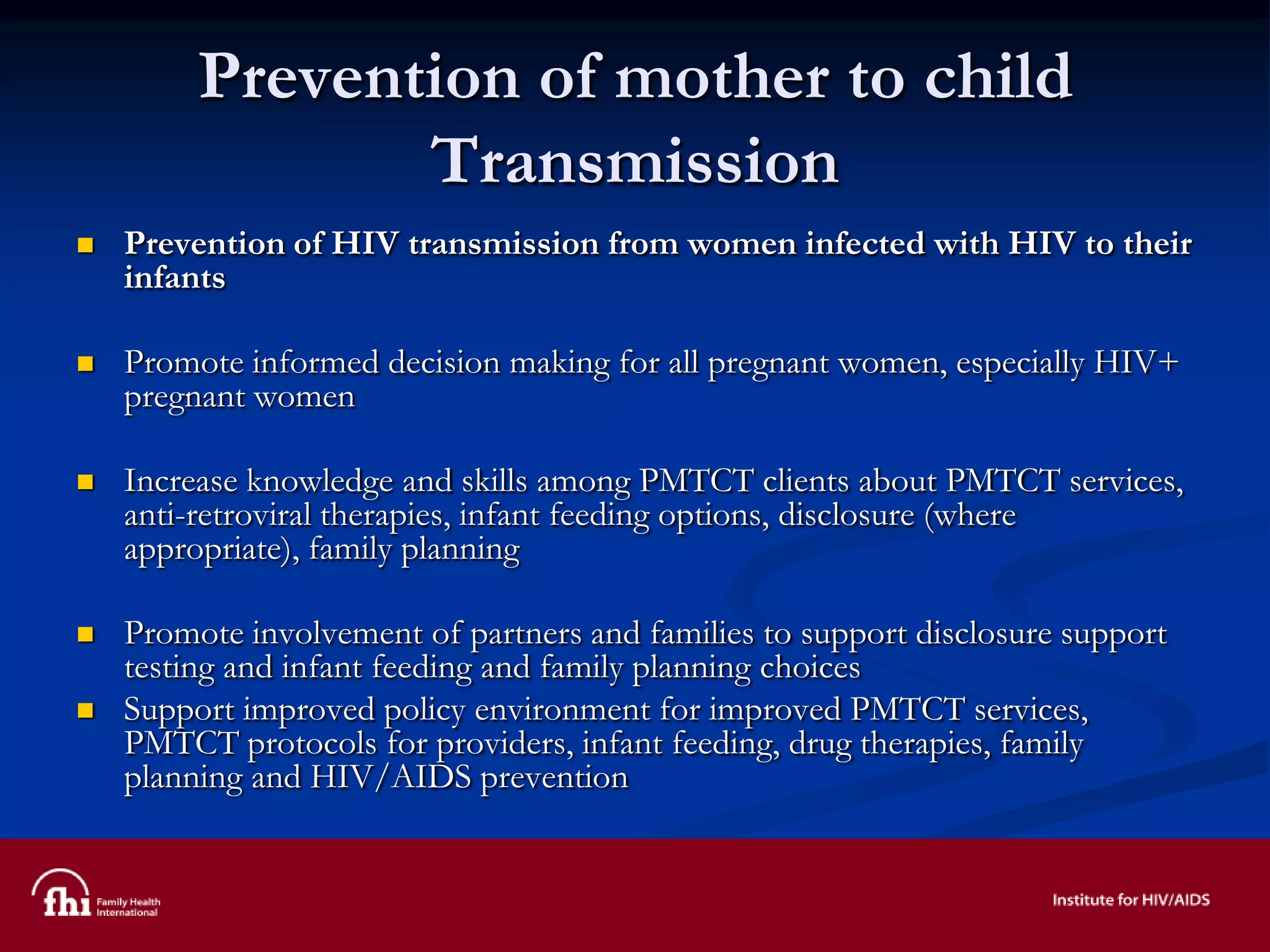
 Prevention of HIV transmission from women infected with HIV to their
infants
 Promote informed decision making for all pregnant women, especially HIV+
pregnant women
 Increase knowledge and skills among PMTCT clients about PMTCT services,
anti-retroviral therapies, infant feeding options, disclosure (where
appropriate), family planning
 Promote involvement of partners and families to support disclosure support
testing and infant feeding and family planning choices
 Support improved policy environment for improved PMTCT services,
PMTCT protocols for providers, infant feeding, drug therapies, family
planning and HIV/AIDS prevention
Prevention of mother to child
Transmission
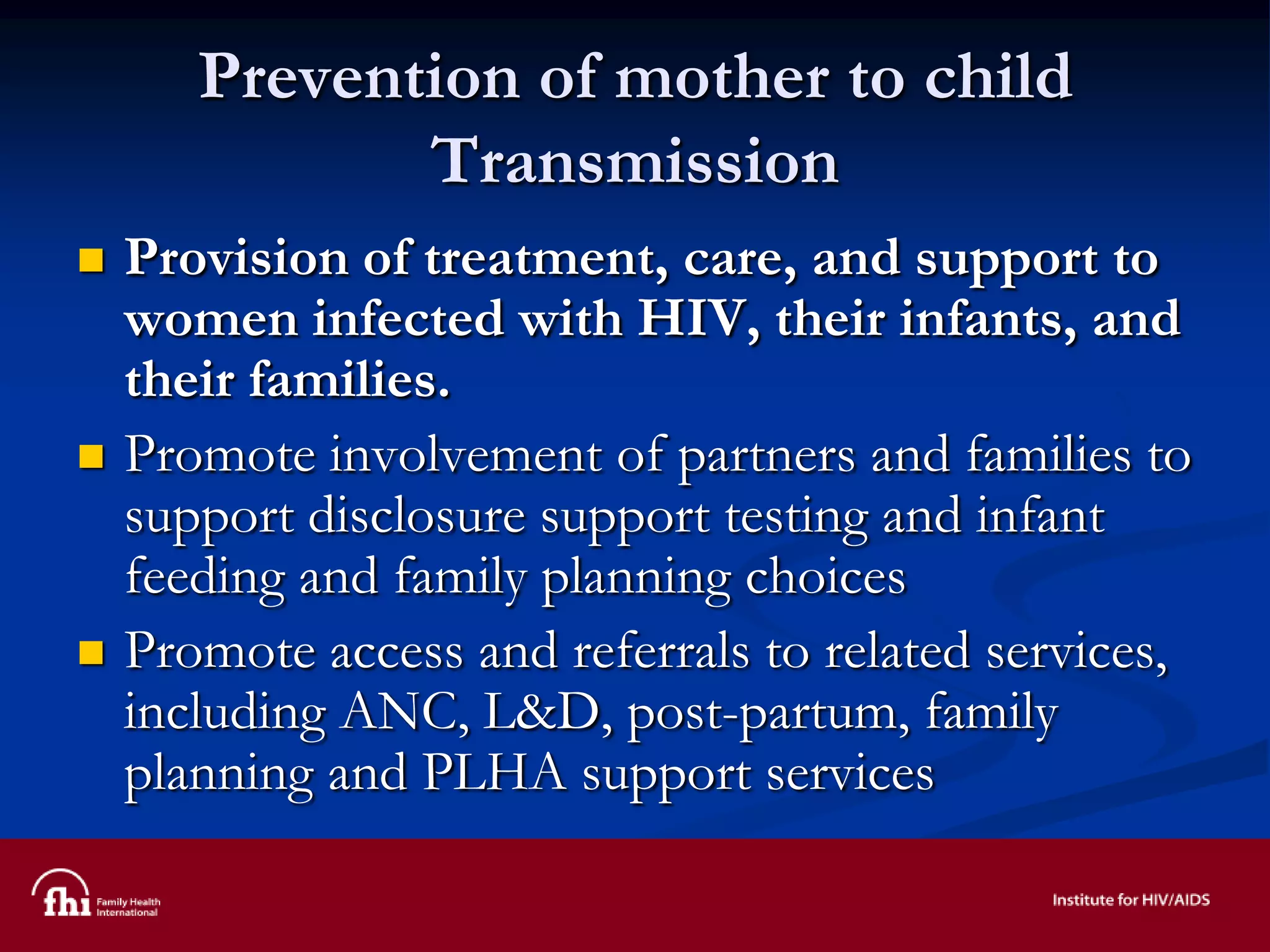
 Provision of treatment, care, and support to
women infected with HIV, their infants, and
their families.
 Promote involvement of partners and families to
support disclosure support testing and infant
feeding and family planning choices
 Promote access and referrals to related services,
including ANC, L&D, post-partum, family
planning and PLHA support services
Strengthen STI services
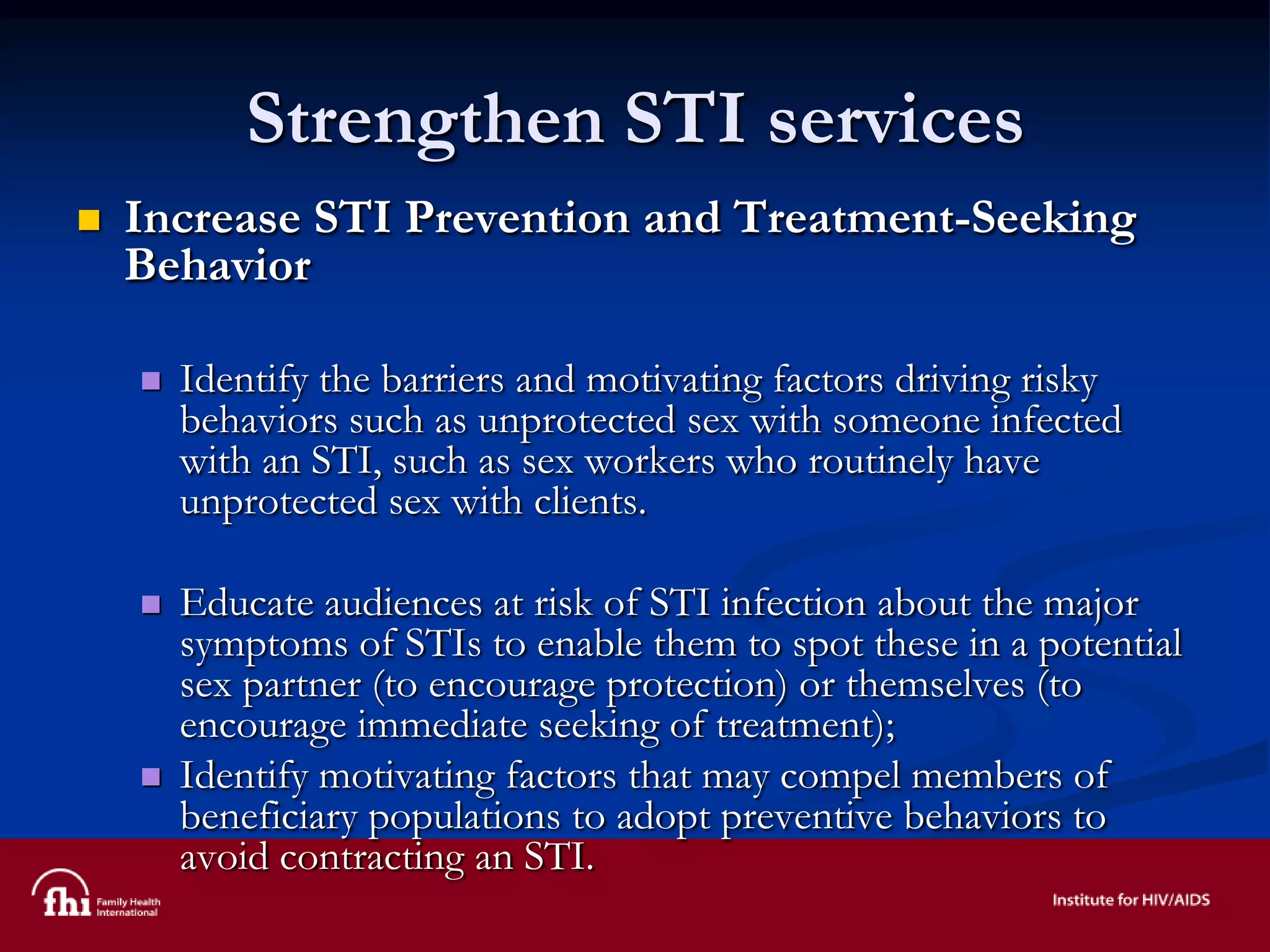
 Increase STI Prevention and Treatment-Seeking
Behavior
 Identify the barriers and motivating factors driving risky
behaviors such as unprotected sex with someone infected
with an STI, such as sex workers who routinely have
unprotected sex with clients.
 Educate audiences at risk of STI infection about the major
symptoms of STIs to enable them to spot these in a potential
sex partner (to encourage protection) or themselves (to
encourage immediate seeking of treatment);
 Identify motivating factors that may compel members of
beneficiary populations to adopt preventive behaviors to
avoid contracting an STI.
Improvement of ART Services
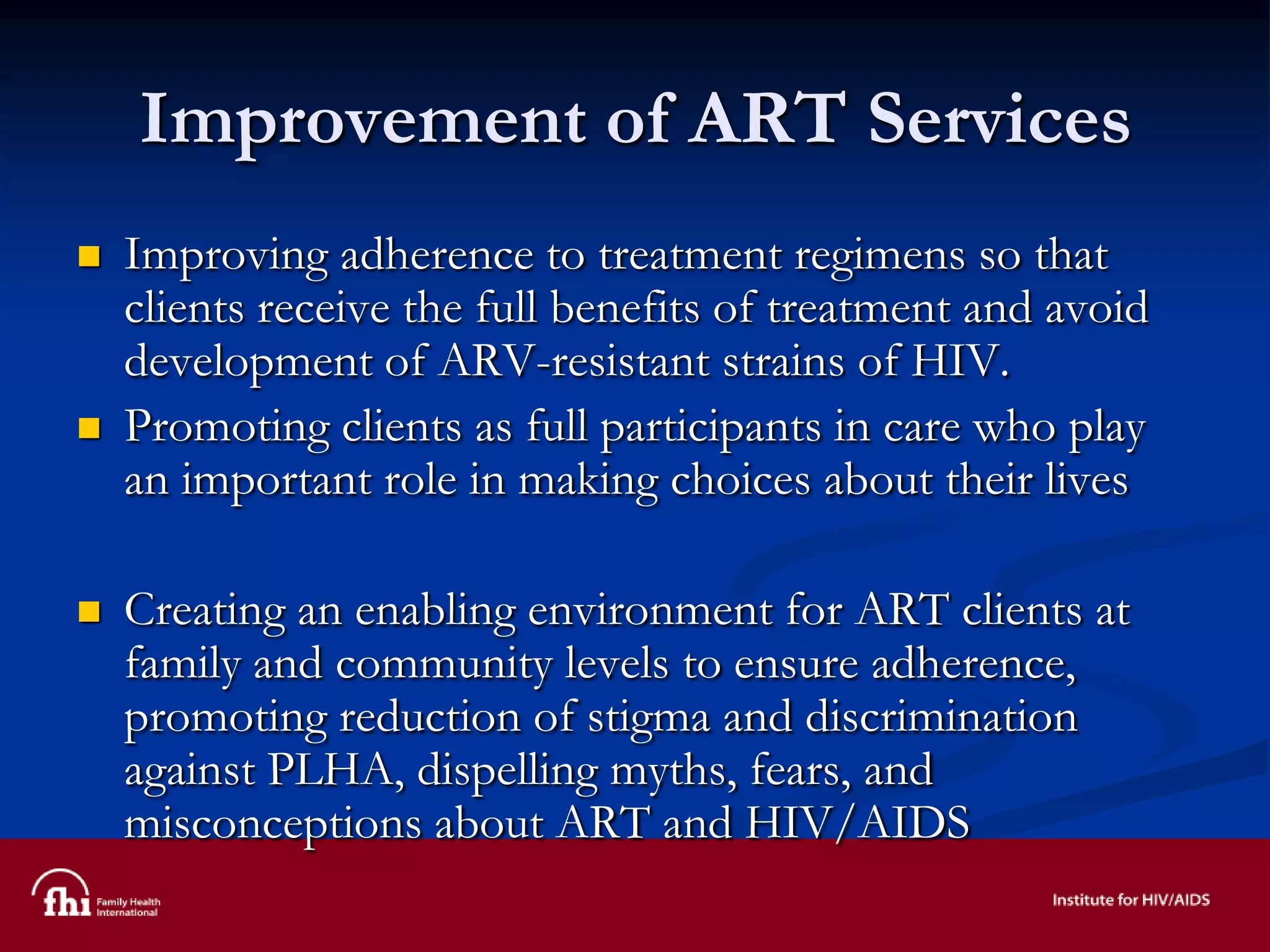
 Improving adherence to treatment regimens so that
clients receive the full benefits of treatment and avoid
development of ARV-resistant strains of HIV.
 Promoting clients as full participants in care who play
an important role in making choices about their lives
 Creating an enabling environment for ART clients at
family and community levels to ensure adherence,
promoting reduction of stigma and discrimination
against PLHA, dispelling myths, fears, and
misconceptions about ART and HIV/AIDS
Tuberculosis and other OIs
 Promote and raise awareness of tuberculosis and opportunistic
infection prevention, symptoms and treatment within the
community in a sensitive manner
 Work with the communities to mobilize them in creating
additional services and/or strengthening existing services.
 Provide a supportive environment to community members to
motivate them to seek and adhere to OI and TB treatment
Home-based care
 Increase support for and promote sustainability of
HBC programs among policy makers and
stakeholders
 Reduce stigma and discrimination of PLHA and
PABA
 Empower PLHA to demand and access essential
services including HBC
 Strengthen families and care-givers capacity to care for
PLHA
Orphans and vulnerable children
 Promote support for children and their families
before they are orphaned.
 Promote children’s basic rights.
In conclusion
 SBC interventions must be planned and
implemented in an integrated way. For instance,
the program can incorporate several different but
interrelated versions of the same key messages
in such diverse interventions (within the same
program)

The role of bcc in the context of copmrehensive care steven

  • 1.
    The Role ofBehavior Change Communication in the context of Comprehensive care Stephen Mucheke Senior Technical Adviser for BCC Family Health International
  • 2.
    Behavior Change Communication BCC Coined in the early 1990 by communication experts working in HIV and AIDS in order to give emphasis in the roles of sexual behavior in the PREVENTION of HIV infection.  During this time, there were probably no ARV - VCT might have been available in limited places - The HIV epidemic was still in its infancy  BCC program involved the design and implementation of a package of communication interventions targeting individuals families and communities to reduce the risk contracting/spreading HIV.
  • 3.
    15 Years later What is the role of BCC in HIV prevention and mitigation of Impact in the context of comprehensive care?.
  • 4.
    Change of Concept The programs of early 1990 were focused on BCC for prevention.  Over the years, the program has expanded to cover other components of comprehensive care.  Therefore the need to change from BCC to Strategic Behavioral Communication (SBC) There is a behavioral component within the prevention, Care and treatment continuum
  • 5.
    Elements of ComprehensiveCare  Primary Prevention  Counseling and Testing  Prevention of Mother to child Transmission  Antiretroviral Therapy Management and treatment of opportunistic infections  Care and support for the terminally ill  Support to orphans and other Vulnerable children
  • 6.
    Objectives of SBCin Prevention o Provide complete, accurate relevant information on HIV and AIDS o Stimulate Community Dialogue o Increase Community Ownership of information o Provide Feedback on questions o Demonstrate conversion positive behavior through magnification
  • 7.
    SBC counseling andTesting  Promote and raise awareness of CT within the community  Work with the communities in creating additional services and/or strengthening existing services.  Provide a supportive environment to community members to motivate them to get tested, stay and/or return for their results, and make healthier decisions in the future.
  • 8.
    Prevention of motherto child Transmission (PMTCT)  Primary prevention of HIV infection  Promote community understanding and acceptance of PMTCT services  Promote HIV/AIDS prevention and access to prevention services, particularly among girls and women. Include emphasis on abstinence and being faithful approaches among girls/young women  Promote HIV counseling and testing  Prevention of unintended pregnancies among women infected with HIV  Promote awareness, knowledge and use of Family Planning services as a sure way to prevent such unintended pregnancy
  • 9.
    Prevention of motherto child Transmission  Prevention of HIV transmission from women infected with HIV to their infants  Promote informed decision making for all pregnant women, especially HIV+ pregnant women  Increase knowledge and skills among PMTCT clients about PMTCT services, anti-retroviral therapies, infant feeding options, disclosure (where appropriate), family planning  Promote involvement of partners and families to support disclosure support testing and infant feeding and family planning choices  Support improved policy environment for improved PMTCT services, PMTCT protocols for providers, infant feeding, drug therapies, family planning and HIV/AIDS prevention
  • 10.
    Prevention of motherto child Transmission  Provision of treatment, care, and support to women infected with HIV, their infants, and their families.  Promote involvement of partners and families to support disclosure support testing and infant feeding and family planning choices  Promote access and referrals to related services, including ANC, L&D, post-partum, family planning and PLHA support services
  • 11.
    Strengthen STI services Increase STI Prevention and Treatment-Seeking Behavior  Identify the barriers and motivating factors driving risky behaviors such as unprotected sex with someone infected with an STI, such as sex workers who routinely have unprotected sex with clients.  Educate audiences at risk of STI infection about the major symptoms of STIs to enable them to spot these in a potential sex partner (to encourage protection) or themselves (to encourage immediate seeking of treatment);  Identify motivating factors that may compel members of beneficiary populations to adopt preventive behaviors to avoid contracting an STI.
  • 12.
    Improvement of ARTServices  Improving adherence to treatment regimens so that clients receive the full benefits of treatment and avoid development of ARV-resistant strains of HIV.  Promoting clients as full participants in care who play an important role in making choices about their lives  Creating an enabling environment for ART clients at family and community levels to ensure adherence, promoting reduction of stigma and discrimination against PLHA, dispelling myths, fears, and misconceptions about ART and HIV/AIDS
  • 13.
    Tuberculosis and otherOIs  Promote and raise awareness of tuberculosis and opportunistic infection prevention, symptoms and treatment within the community in a sensitive manner  Work with the communities to mobilize them in creating additional services and/or strengthening existing services.  Provide a supportive environment to community members to motivate them to seek and adhere to OI and TB treatment
  • 14.
    Home-based care  Increasesupport for and promote sustainability of HBC programs among policy makers and stakeholders  Reduce stigma and discrimination of PLHA and PABA  Empower PLHA to demand and access essential services including HBC  Strengthen families and care-givers capacity to care for PLHA
  • 15.
    Orphans and vulnerablechildren  Promote support for children and their families before they are orphaned.  Promote children’s basic rights.
  • 16.
    In conclusion  SBCinterventions must be planned and implemented in an integrated way. For instance, the program can incorporate several different but interrelated versions of the same key messages in such diverse interventions (within the same program)