Community Based TB
 Programming: Seeking your
          Input

 Draft- Engaging NGOs and Civil Society
 Organizations in Community Based TB
activities: A Primer and Reference Manual
        Devasena Gnanashanmugam
         Consultant, CORE Group
Why do we need yet another
    document in TB?
• The past
  • TB control delegated to Ministries of
    Health/ NTPs
  • NGOs/ Civil Societies not encouraged to
    participate
• The problem
  • Health facilities overburdened by TB
    disease (fueled by the HIV epidemic)
  • Although a “social disease”, community
    involvement was lacking
Why another one?
• The present
  • NGOs and CSOs are encouraged to get
    involved
  • But they aren’t quite sure how…
• The need
  • More awareness about scale and impact of
    TB on communities
  • Practical steps on getting started to
    address TB
Intent of the document
• Audience: NGOs and CSOs
  •    Those interested in TB by any/ all of the
      following:
      • Starting new efforts
      • Expanding to or linking to existing programs
  • Basic overview of TB & how to control it
  • Reader is referred to more exhaustive
    sources
  • Written to ENCOURAGE involvement
A sample of included items…
• educate and mobilize communities about TB
• find men, women and children with symptoms
    and get them where they need to go
•   collect sputum samples to send to labs for
    diagnosis
•   trace contacts—men, women and children
    who have been exposed to someone with TB
•   provide patient-friendly treatment support over
    the many months of taking medicine
•   locate people who stopped their treatment,
    and help get them back on track.
Key components for TB
         programs
• Partnership
• Focus on Participation
• Invest in Social Mobilization and Behavior
  Change
• Ensure a Strong Referral System
• Integrate programs into existing health
  systems and services
Current TOC: the Basics
• Global TB Burden
• A Brief History of the Fight Against TB
• The current STOP TB Strategy
TOC: How to get Started
• Infection control.
• Care for your health providers.
• Assessing viability of getting involved and
  possible roles
  • Understanding the overall TB program
    landscape
  • Assess your NGOs’ Strengths: Initial
    questions to ask
Initial Questions to Ask
• Do you have existing links in the Ministry of Health,
  Education, or other relevant entities?
• What is your current area of expertise? How might you best
  integrate TB with your current activities?
• Your NGO’s location
    •   What are the local rates and patterns of TB?
    •   Will this involve drug resistant- TB?
    •   Are you in one of the high burden countries?
    •   Will you need to consider HIV co-infection?
•   If your expertise is advocacy
    •   Can you use your advocacy/ messaging for consistent
        messaging or training in ACSM in TB?
    •   Can you leverage your capacity to reach out to inaccessible
        and remote areas, including conflict zones?
Key Program Design Elements
 • Overview of DOTS & how to expand
   current direct observed therapy goals
 • Potential Program Areas
 • Special Populations
DOTS Elements
• Sustained political commitment to TB control
• Case Detection by quality assured
  bacteriology
• Provide standardized treatment with
  supervision, and patient support
• An effective drug supply and management
  system
• Monitor and evaluate performance and impact
Potential Program Areas
• Active Case Finding and Contact
    Investigations
•   Directly Observed Therapy (DOT)—Watching
    patients take their pills
•   Methods to Improve Adherence
•   Community Health Workers and Volunteers
•   Integration of TB with other services
•   Advocacy, Communication, Social
    Mobilization and Behavior Change
    Communication
Potential Program Areas
• Stigma
• Training and Supervision to Build Local
  Capacity and Capacity building
• Public- private partnership mix
• Operations/Implementation Research
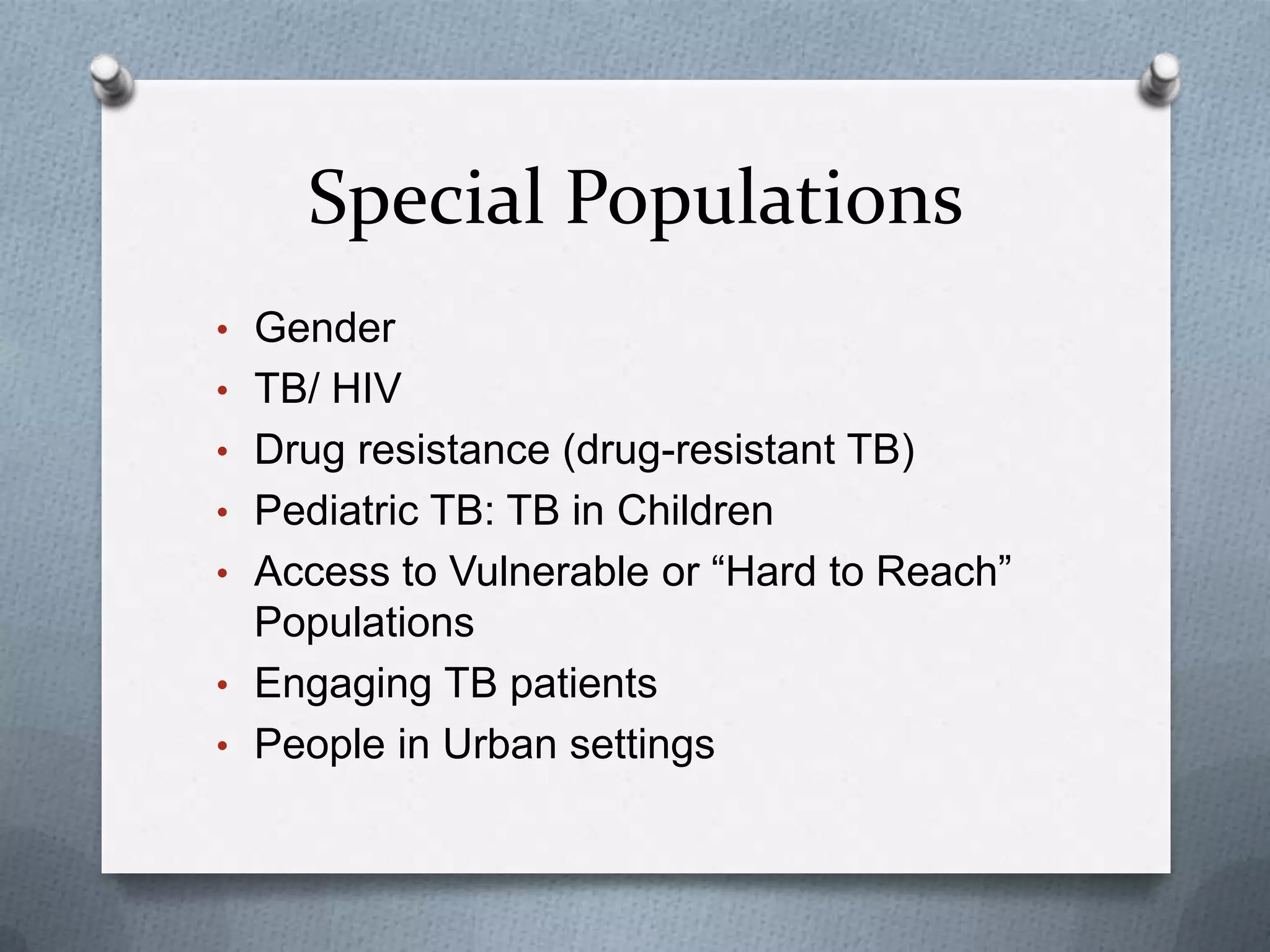
Special Populations
• Gender
• TB/ HIV
• Drug resistance (drug-resistant TB)
• Pediatric TB: TB in Children
• Access to Vulnerable or “Hard to Reach”
  Populations
• Engaging TB patients
• People in Urban settings
Conclusion
• Pitfalls/ Lessons learned
• Key documents


• Your thoughts/ ideas/ comments?

Community-based TB Programming_Gnanashanmugam_5.2.12

  • 1.
    Community Based TB Programming: Seeking your Input Draft- Engaging NGOs and Civil Society Organizations in Community Based TB activities: A Primer and Reference Manual Devasena Gnanashanmugam Consultant, CORE Group
  • 2.
    Why do weneed yet another document in TB? • The past • TB control delegated to Ministries of Health/ NTPs • NGOs/ Civil Societies not encouraged to participate • The problem • Health facilities overburdened by TB disease (fueled by the HIV epidemic) • Although a “social disease”, community involvement was lacking
  • 3.
    Why another one? •The present • NGOs and CSOs are encouraged to get involved • But they aren’t quite sure how… • The need • More awareness about scale and impact of TB on communities • Practical steps on getting started to address TB
  • 4.
    Intent of thedocument • Audience: NGOs and CSOs • Those interested in TB by any/ all of the following: • Starting new efforts • Expanding to or linking to existing programs • Basic overview of TB & how to control it • Reader is referred to more exhaustive sources • Written to ENCOURAGE involvement
  • 5.
    A sample ofincluded items… • educate and mobilize communities about TB • find men, women and children with symptoms and get them where they need to go • collect sputum samples to send to labs for diagnosis • trace contacts—men, women and children who have been exposed to someone with TB • provide patient-friendly treatment support over the many months of taking medicine • locate people who stopped their treatment, and help get them back on track.
  • 6.
    Key components forTB programs • Partnership • Focus on Participation • Invest in Social Mobilization and Behavior Change • Ensure a Strong Referral System • Integrate programs into existing health systems and services
  • 7.
    Current TOC: theBasics • Global TB Burden • A Brief History of the Fight Against TB • The current STOP TB Strategy
  • 8.
    TOC: How toget Started • Infection control. • Care for your health providers. • Assessing viability of getting involved and possible roles • Understanding the overall TB program landscape • Assess your NGOs’ Strengths: Initial questions to ask
  • 9.
    Initial Questions toAsk • Do you have existing links in the Ministry of Health, Education, or other relevant entities? • What is your current area of expertise? How might you best integrate TB with your current activities? • Your NGO’s location • What are the local rates and patterns of TB? • Will this involve drug resistant- TB? • Are you in one of the high burden countries? • Will you need to consider HIV co-infection? • If your expertise is advocacy • Can you use your advocacy/ messaging for consistent messaging or training in ACSM in TB? • Can you leverage your capacity to reach out to inaccessible and remote areas, including conflict zones?
  • 10.
    Key Program DesignElements • Overview of DOTS & how to expand current direct observed therapy goals • Potential Program Areas • Special Populations
  • 11.
    DOTS Elements • Sustainedpolitical commitment to TB control • Case Detection by quality assured bacteriology • Provide standardized treatment with supervision, and patient support • An effective drug supply and management system • Monitor and evaluate performance and impact
  • 12.
    Potential Program Areas •Active Case Finding and Contact Investigations • Directly Observed Therapy (DOT)—Watching patients take their pills • Methods to Improve Adherence • Community Health Workers and Volunteers • Integration of TB with other services • Advocacy, Communication, Social Mobilization and Behavior Change Communication
  • 13.
    Potential Program Areas •Stigma • Training and Supervision to Build Local Capacity and Capacity building • Public- private partnership mix • Operations/Implementation Research
  • 14.
    Special Populations • Gender •TB/ HIV • Drug resistance (drug-resistant TB) • Pediatric TB: TB in Children • Access to Vulnerable or “Hard to Reach” Populations • Engaging TB patients • People in Urban settings
  • 15.
    Conclusion • Pitfalls/ Lessonslearned • Key documents • Your thoughts/ ideas/ comments?