NAME: MWESSA PETER
SCHOOL: HEALTH CARE AND PARAMEDIC SCIENCE
BATCH: 2024 -2027
COURSE: RADIOLOGY AND IMAGING TECHNOLOGY
Table of contents
1. Introduction to nervous system
2. Types of nerves
3. Function of nervous system
4. Anatomy of nervous system
5. Disorders likely to affect nervous system
• THE NERVOUS SYSTEM
The nervous system is the most complex
body system !!
Constantly alive with electricity, the nervous
system is the body’s prime communication and
coordination network.
It is so vast and complex that, an
estimate is that all the individual nerves
from one body, joined end to end, could
reach around the world two and a half
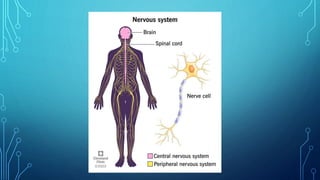
times, where as the Brain and Spinal Cord are the Central
Nervous System. Nerves and Sensory Organs Make Up the
Peripheral Nervous System.
• Gether, the central nervous system (CNS) and the peripheral nervous systems (PNS)
• transmit and process sensory information and coordinate bodily functions.
• The brain and spinal cord (the CNS) function as the control center.
• They receive data and feedback from the sensory organs and from nerves throughout the body,
• process the information, and send commands back out
What are the types of nerves?
You have two main types of nerves:
• Sensory nerves carry signals to your brain to help you touch, taste, smell and see.
• Motor nerves carry signals to your muscles or glands to help you move and function.
You also have two main groups of nerves branching out from your brain and spinal cord:
• Cranial nerves: These 12 nerve pairs originate in your brain and extend through your
face, head and neck. Cranial nerves can have sensory functions, motor functions or both.
For example, cranial nerves help you make facial expressions, move your eyes and
process smells.
• Spinal nerves: You have 31 pairs of spinal nerves branching out from your spinal cord.
These nerves can provide sensory function, motor function or both. For example, spinal
nerves may carry sensations from your joints and muscles to your spinal cord. Spinal
nerves also control some of your reflexes or involuntary responses, such as pulling your
hand away from a hot stove
Function
What does the nervous system do?
• Your nervous system’s main function is to send messages from various parts of your body to your
brain, and from your brain back out to your body to tell your body what to do. These messages
regulate your:
• Thoughts, memory, learning and feelings.
• Movements (balance and coordination).
• Senses (how your brain interprets what you see, hear, taste, touch and feel).
• Wound healing.
• Sleep.
• Heartbeat and breathing patterns.
• Response to stressful situations, including sweat production.
• Digestion.
• Body processes, such as puberty and aging.
How does the nervous system work?
Your nervous system uses nerve cells called neurons to send signals, or messages, all
over your body. These electrical signals travel among your brain, skin, organs, glands and
muscles.
The messages help you move your limbs and feel sensations, like pain.
Your eyes, ears, tongue, nose and the nerves all over your body take in information about
your environment. Then, nerves carry that data to and from your brain.
There are different types of neurons. Each type of neuron has a different job:
• Motor neurons take signals from your brain and spinal cord to your muscles. They
help you move. They also assist with breathing, swallowing and speaking.
• Sensory neurons take information from your senses (what you see, touch, taste, etc.)
to your brain.
• Interneurons communicate between motor and sensory neurons. These neurons
regulate your movement in response to sensory information (like moving away from a
hot surface) and play a role in how you learn, think and remember
• Anatomy of nervous system
What are the parts of the nervous system?
The nervous system has two main parts:
• Central nervous system (CNS): Your brain and spinal cord make up your
CNS. Your brain reads signals from your nerves to regulate how you think,
move and feel.
• Peripheral nervous system (PNS): Your PNS is made up of a network of
nerves. The nerves branch out from your spinal cord. This system relays
information from your brain and spinal cord to your organs, arms, legs,
fingers and toes.
There are two parts to your peripheral nervous system:
• The somatic nervous system guides your voluntary movements.
• The autonomic nervous system regulates the activities you do without
thinking about them (involuntary movements)
• What does the nervous system look like?
• Nerve cells (neurons) are the basis of your nervous system. There are
100 billion neurons in your brain. These cells connect throughout your
entire body.
• Imagine your nervous system as a tree. Your central nervous system is
the trunk of the tree that contains your brain and spinal cord. The tree
branches are your peripheral nervous system (nerves). The branches
extend from the truck (brain and spinal cord) to reach all parts of your
body
Conditions and Disorders
What are common conditions or disorders that affect the nervous system?
There are many conditions that affect your nervous system. Some of the most common
include:
• Alzheimer’s disease.
• Cancer.
• Cerebral palsy.
• Epilepsy.
• Huntington’s disease.
• Infection (meningitis).
• Parkinson’s disease.
• Stroke.
• Traumatic brain injury.
THANK YOU FOR LISTENING

Analysion concerning nervous system .pptx

  • 1.
    NAME: MWESSA PETER SCHOOL:HEALTH CARE AND PARAMEDIC SCIENCE BATCH: 2024 -2027 COURSE: RADIOLOGY AND IMAGING TECHNOLOGY
  • 2.
    Table of contents 1.Introduction to nervous system 2. Types of nerves 3. Function of nervous system 4. Anatomy of nervous system 5. Disorders likely to affect nervous system
  • 3.
    • THE NERVOUSSYSTEM The nervous system is the most complex body system !! Constantly alive with electricity, the nervous system is the body’s prime communication and coordination network. It is so vast and complex that, an estimate is that all the individual nerves from one body, joined end to end, could reach around the world two and a half times, where as the Brain and Spinal Cord are the Central Nervous System. Nerves and Sensory Organs Make Up the Peripheral Nervous System. • Gether, the central nervous system (CNS) and the peripheral nervous systems (PNS) • transmit and process sensory information and coordinate bodily functions. • The brain and spinal cord (the CNS) function as the control center. • They receive data and feedback from the sensory organs and from nerves throughout the body, • process the information, and send commands back out
  • 4.
    What are thetypes of nerves? You have two main types of nerves: • Sensory nerves carry signals to your brain to help you touch, taste, smell and see. • Motor nerves carry signals to your muscles or glands to help you move and function. You also have two main groups of nerves branching out from your brain and spinal cord: • Cranial nerves: These 12 nerve pairs originate in your brain and extend through your face, head and neck. Cranial nerves can have sensory functions, motor functions or both. For example, cranial nerves help you make facial expressions, move your eyes and process smells. • Spinal nerves: You have 31 pairs of spinal nerves branching out from your spinal cord. These nerves can provide sensory function, motor function or both. For example, spinal nerves may carry sensations from your joints and muscles to your spinal cord. Spinal nerves also control some of your reflexes or involuntary responses, such as pulling your hand away from a hot stove
  • 5.
    Function What does thenervous system do? • Your nervous system’s main function is to send messages from various parts of your body to your brain, and from your brain back out to your body to tell your body what to do. These messages regulate your: • Thoughts, memory, learning and feelings. • Movements (balance and coordination). • Senses (how your brain interprets what you see, hear, taste, touch and feel). • Wound healing. • Sleep. • Heartbeat and breathing patterns. • Response to stressful situations, including sweat production. • Digestion. • Body processes, such as puberty and aging.
  • 6.
    How does thenervous system work? Your nervous system uses nerve cells called neurons to send signals, or messages, all over your body. These electrical signals travel among your brain, skin, organs, glands and muscles. The messages help you move your limbs and feel sensations, like pain. Your eyes, ears, tongue, nose and the nerves all over your body take in information about your environment. Then, nerves carry that data to and from your brain. There are different types of neurons. Each type of neuron has a different job: • Motor neurons take signals from your brain and spinal cord to your muscles. They help you move. They also assist with breathing, swallowing and speaking. • Sensory neurons take information from your senses (what you see, touch, taste, etc.) to your brain. • Interneurons communicate between motor and sensory neurons. These neurons regulate your movement in response to sensory information (like moving away from a hot surface) and play a role in how you learn, think and remember
  • 8.
    • Anatomy ofnervous system What are the parts of the nervous system? The nervous system has two main parts: • Central nervous system (CNS): Your brain and spinal cord make up your CNS. Your brain reads signals from your nerves to regulate how you think, move and feel. • Peripheral nervous system (PNS): Your PNS is made up of a network of nerves. The nerves branch out from your spinal cord. This system relays information from your brain and spinal cord to your organs, arms, legs, fingers and toes. There are two parts to your peripheral nervous system: • The somatic nervous system guides your voluntary movements. • The autonomic nervous system regulates the activities you do without thinking about them (involuntary movements)
  • 9.
    • What doesthe nervous system look like? • Nerve cells (neurons) are the basis of your nervous system. There are 100 billion neurons in your brain. These cells connect throughout your entire body. • Imagine your nervous system as a tree. Your central nervous system is the trunk of the tree that contains your brain and spinal cord. The tree branches are your peripheral nervous system (nerves). The branches extend from the truck (brain and spinal cord) to reach all parts of your body
  • 10.
    Conditions and Disorders Whatare common conditions or disorders that affect the nervous system? There are many conditions that affect your nervous system. Some of the most common include: • Alzheimer’s disease. • Cancer. • Cerebral palsy. • Epilepsy. • Huntington’s disease. • Infection (meningitis). • Parkinson’s disease. • Stroke. • Traumatic brain injury.
  • 11.
    THANK YOU FORLISTENING